Emotional Integration: Feeling Fully Without Losing Stability
In short: Emotional flow isn’t a personality trait, and it isn’t a matter of “being good at feelings.” It’s a nervous-system capacity: signals rise, do their job, and then the system receives enough closure to stand down. When that closure doesn’t arrive, emotions can feel sticky, loud, or endlessly present—even when you’re doing everything you can to manage them.
Emotional flow isn’t a personality trait, and it isn’t a matter of “being good at feelings.” It’s a nervous-system capacity: signals rise, do their job, and then the system receives enough closure to stand down. When that closure doesn’t arrive, emotions can feel sticky, loud, or endlessly present—even when you’re doing everything you can to manage them.
What if “getting stuck” isn’t weakness, but an incomplete loop?
This lens matters because it reduces shame. It also makes the experience more navigable: instead of asking why you’re like this, you can start noticing what conditions increase load, interrupt completion, or keep the body on alert.
Some emotions arrive like weather: they roll in, peak, and pass. Others feel like glue. The moment they show up, they fill the whole room of your attention, and it can seem like your day is now “about” that feeling.
People often describe this as being trapped in a state—spinning in the same thought-feeling loop, bracing for another wave, or feeling hijacked by the intensity of it. That experience isn’t a character flaw. It’s often what happens when the nervous system is carrying more activation than it can complete in real time. [Ref-1]
Emotions are physiological events: shifts in arousal, attention, and readiness. Flow tends to happen when the system can register the signal, orient to what it means, and receive enough completion to return toward baseline.
Stuckness often appears when the body is doing two jobs at once: having the emotion and managing the emotion. That “management layer” can look like tightening, holding the face still, speeding up mentally, explaining, minimizing, or staying very functional while the inside is loud. This effort can increase physiological load even when it looks controlled from the outside. [Ref-2]
There’s also another kind of interruption: over-merging. When a feeling becomes the whole identity story—this is who I am—the signal doesn’t get to be a signal. It becomes a permanent state, which makes the system less likely to settle.
In threat-and-safety terms, emotions are not just “inner experiences.” They’re coordination signals. They mobilize action, allocate attention, and update the nervous system’s prediction about what’s safe.
When the system reads danger (social, physical, relational, or uncertain), it may shift into protective modes that reduce movement and narrow options: fight, flight, freeze, shutdown, or high-control monitoring. In those states, feelings can become intense and repetitive, or they can go quiet and distant—both are ways the body conserves and protects.
When protective modes stay on for too long, emotions don’t get completed; they get held. Over time, that holding can become a default pattern, especially in environments where “done” signals are rare. [Ref-3]
Control often works in the short term. If a feeling threatens to destabilize your functioning, tightening the reins can reduce immediate discomfort and help you stay oriented to tasks, roles, and expectations.
This is why many people develop sophisticated strategies—staying busy, staying logical, staying pleasant, staying ahead. These strategies are not wrong; they’re adaptive under load. The trouble is that short-term relief can come with a long-term cost: the nervous system doesn’t receive completion, so the original activation remains partially open.
Over time, “I have to keep a lid on this” can become a standing condition rather than a temporary response. [Ref-4]
A common belief is: If I don’t control this, I’ll be overwhelmed. That belief is understandable—especially if you’ve experienced flooding or spirals. But physiology often works the opposite way: when signals are repeatedly blocked from completing, they accumulate, and the system becomes more reactive to smaller triggers.
Research on suppression versus acceptance consistently finds that pushing feelings down can increase strain and rebound effects, even when the person looks composed. [Ref-5] Flow, in contrast, isn’t indulgence or collapse. It’s simply the condition where a signal can move through the full loop and then release its grip.
Sometimes the problem isn’t the size of the feeling. It’s how long the body has been carrying it without a “finished” signal.
It’s tempting to explain stuckness as fear, denial, or “not wanting to feel.” But many people who feel stuck are actually trying very hard to be responsible, stable, and functional. The loop isn’t a moral choice; it’s a structural pattern.
When a feeling arises, the system may automatically bypass the parts of processing that create closure: slowing, orienting, letting consequences land, updating expectations. Instead, it moves into quick relief: distraction, analysis, numbing, overcontrol, or chasing a different state. The feeling isn’t processed to completion; it’s routed around.
That routing-around is what keeps the loop active. The nervous system doesn’t get the evidence it needs that the event is over, so it stays partially prepared. [Ref-6]
People often assume they have one problem—“I’m too emotional” or “I feel nothing.” In reality, many patterns are protective variations of the same theme: the system is trying to regulate under incomplete closure.
None of these are identities. They’re state-dependent responses. And states shift when load, safety cues, and closure shift. [Ref-7]
When emotional signals can’t complete, the body often pays in background energy. You might not feel acutely distressed every moment—but you may notice a persistent sense of effort: sleeping but not recovering, needing more downtime than before, getting irritated easily, or feeling like small decisions are heavy.
This isn’t because you’re “too sensitive.” It’s because maintaining a partial brace takes resources. Chronic regulation effort can contribute to higher stress load, reduced flexibility, and slower return to baseline after ordinary challenges. [Ref-8]
In this frame, fatigue isn’t laziness. It’s the cost of carrying open loops while still trying to live a full life.
Once a feeling has been labeled dangerous—dangerous to your productivity, your relationships, your self-image—the system starts bracing early. That brace often increases arousal: tighter muscles, faster thoughts, more scanning for “am I okay yet?”
Paradoxically, that bracing can make the emotion feel bigger. The mind then concludes, See? This is why I can’t let myself feel. A self-reinforcing loop forms: resistance increases intensity; intensity confirms resistance. [Ref-9]
This is why people can feel afraid of the feeling itself, even when the original situation is manageable. The threat becomes the internal state—not because the person is irrational, but because the nervous system has learned that activation doesn’t reliably resolve.
It helps to separate three things that are often confused: noticing an emotion, understanding an emotion, and an emotion completing. Noticing and understanding can be valuable, but they are not the same as completion. A person can have deep insight and still feel stuck if the body never receives a “done” signal.
Many body-based and attention-based approaches are built around the idea that emotions are patterns of activation that can move when the system has enough safety cues and enough room to shift state. Breath, posture, sensation, and pacing are not “mental tricks”; they are ways the nervous system receives updated information about the present. [Ref-10]
What changes when the body believes the moment is survivable and finite?
When that belief becomes physiological—not conceptual—emotions often become less sticky. They still matter, but they don’t have to take over the whole identity story.
Humans regulate in connection. When another person is steady with you—without fixing, interrogating, or escalating—your system receives cues of safety: tone, pace, facial softness, predictable responses.
This is not about “talking it out” perfectly. It’s about co-regulation: your nervous system borrowing stability long enough for activation to shift and for incomplete loops to find an ending. In supportive contexts, feelings can move without needing to become crises or performances.
When relational environments are consistently evaluative or unpredictable, the system often stays braced. That brace makes emotional completion harder, which can intensify cycles of avoidance, overcontrol, or shutdown. [Ref-11]
When emotional flow is restored, the biggest change isn’t constant calm. It’s capacity: the ability to have a feeling and still remain oriented. The emotion can be real and specific without becoming a totalizing definition of the self.
People often describe subtle markers of completion: the body softens after a peak, attention widens again, and the mind stops rehearsing. There is more room for context—more ability to remember, “This is a state, not my whole life.”
This shift also supports connection. When emotions can move, people tend to need less distancing, less masking, and less strategic withdrawal—patterns linked with loneliness and disconnection when they become chronic. [Ref-12]
An emotion can be intense and still be temporary. Flow is the system remembering that temporariness.
Stuckness consumes bandwidth. When signals don’t resolve, the mind keeps checking, the body keeps bracing, and life can start to feel like problem-management rather than participation.
As completion becomes more available, energy often returns in a particular way: not as hype, but as clarity. Choices feel less coerced by urgency. You can respond instead of ricochet. That’s when values become more usable—because behavior is no longer being driven primarily by unfinished activation.
In this way, emotional flow isn’t just about comfort. It’s about agency and meaning: the capacity to let experiences register, conclude, and integrate into a coherent life rather than an ongoing emergency. [Ref-13]
Emotions aren’t proof that you’re failing. They’re signals shaped by physiology, context, and history. When they get stuck, it usually means the system didn’t get the conditions it needed for closure—not that you “did it wrong.”
In a world that keeps people activated and evaluated, learning to relate to emotions as movement can be profoundly stabilizing. The goal isn’t to control the weather inside you. It’s to create enough safety and completion that storms can pass and the nervous system can return to its natural baseline rhythm. [Ref-14]
Emotional flow is what happens when the body can finish what it starts: activation rises, meaning updates, and the system stands down. That completion is not a motivational trick or an intellectual insight—it’s a settling that shows up as more room inside your day.
From that steadier place, emotions don’t have to be wrestled or worshiped. They can simply be part of how a human nervous system stays oriented—pointing toward needs, limits, bonds, and what matters—then releasing when the message has been received. [Ref-15]
From theory to practice — meaning forms when insight meets action.
Some emotions arrive like weather — they roll in, peak, and pass. Others feel like glue. The difference isn't usually about the size of the feeling; it's about whether the system received enough closure for the loop to complete. Stuckness often appears when the body is doing two jobs at once: having the emotion and managing the emotion. That management layer — tightening, mentally speeding up, staying functional while inside is loud — increases physiological load even when it looks controlled. The signal can't move through the full loop, so it stays partially open and the system keeps treating it as live.
Because suppression carries a long-term cost. Control works in the short term — it can reduce immediate discomfort and help you stay oriented to tasks and roles. But once a feeling has been labeled dangerous, the system starts bracing early. That brace often increases arousal: tighter muscles, faster thoughts, more scanning. Paradoxically, that bracing makes the emotion feel bigger, which the mind reads as proof that letting yourself feel was risky. A self-reinforcing loop forms: resistance increases intensity; intensity confirms resistance. Flow isn't indulgence or collapse — it's the condition where a signal can move through and release its grip.
Different shape, same underlying issue. Flooding (emotion rises fast and wide), numbness (emotion goes offline and meaning feels flat), repetitive cycles, and overcontrol are all protective variations of the same theme: the system is regulating under incomplete closure. None of these are identities — they're state-dependent responses. Numbness isn't the absence of feeling; it's the body conserving and protecting when the threat-and-safety system has been activated too long. States shift when load shifts, when safety cues return, and when the nervous system gets enough closure to step out of protective mode.
By distinguishing three things that often get confused: noticing an emotion, understanding an emotion, and an emotion completing. You can have deep insight and still feel stuck if the body never receives a Done Signal. Completion is physiological, not just intellectual. The body needs to believe the moment is survivable and finite — and that belief becomes physiological through breath, posture, sensation, pacing, and especially co-regulation with someone steady. Flow is the system remembering temporariness: an emotion can be intense and still be temporary. From that steadier place, feelings become guides, not traps.
From Science to Art.
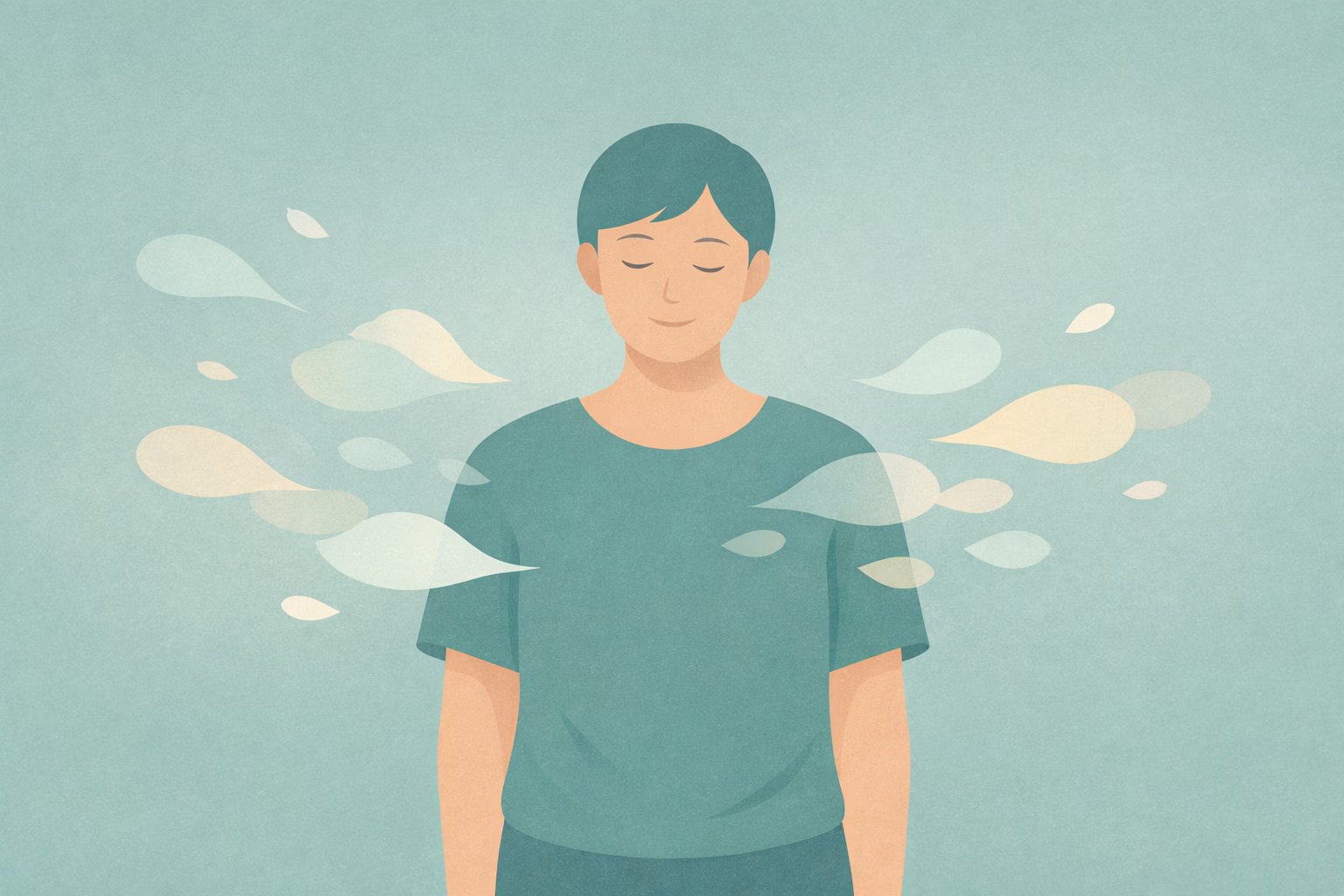
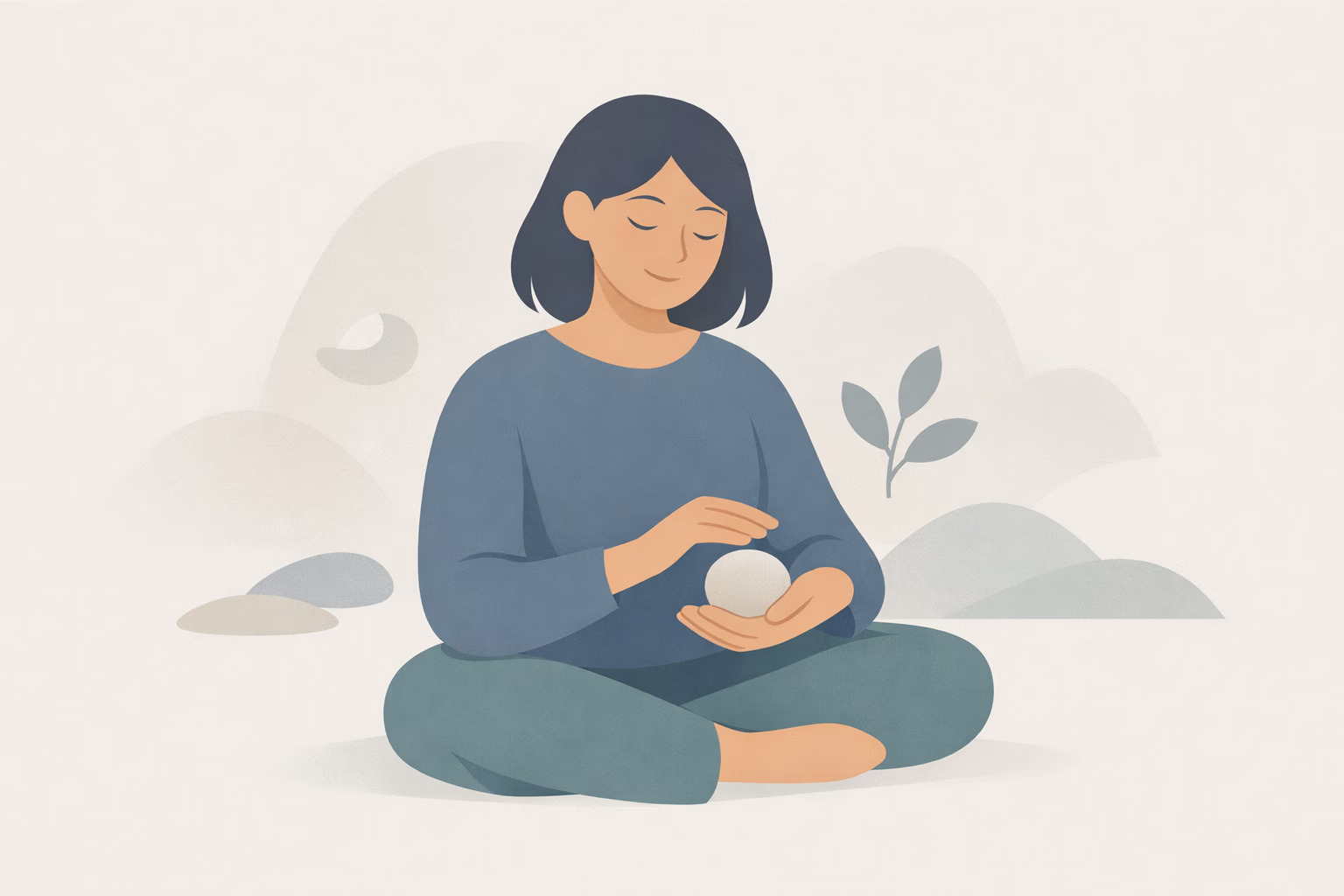
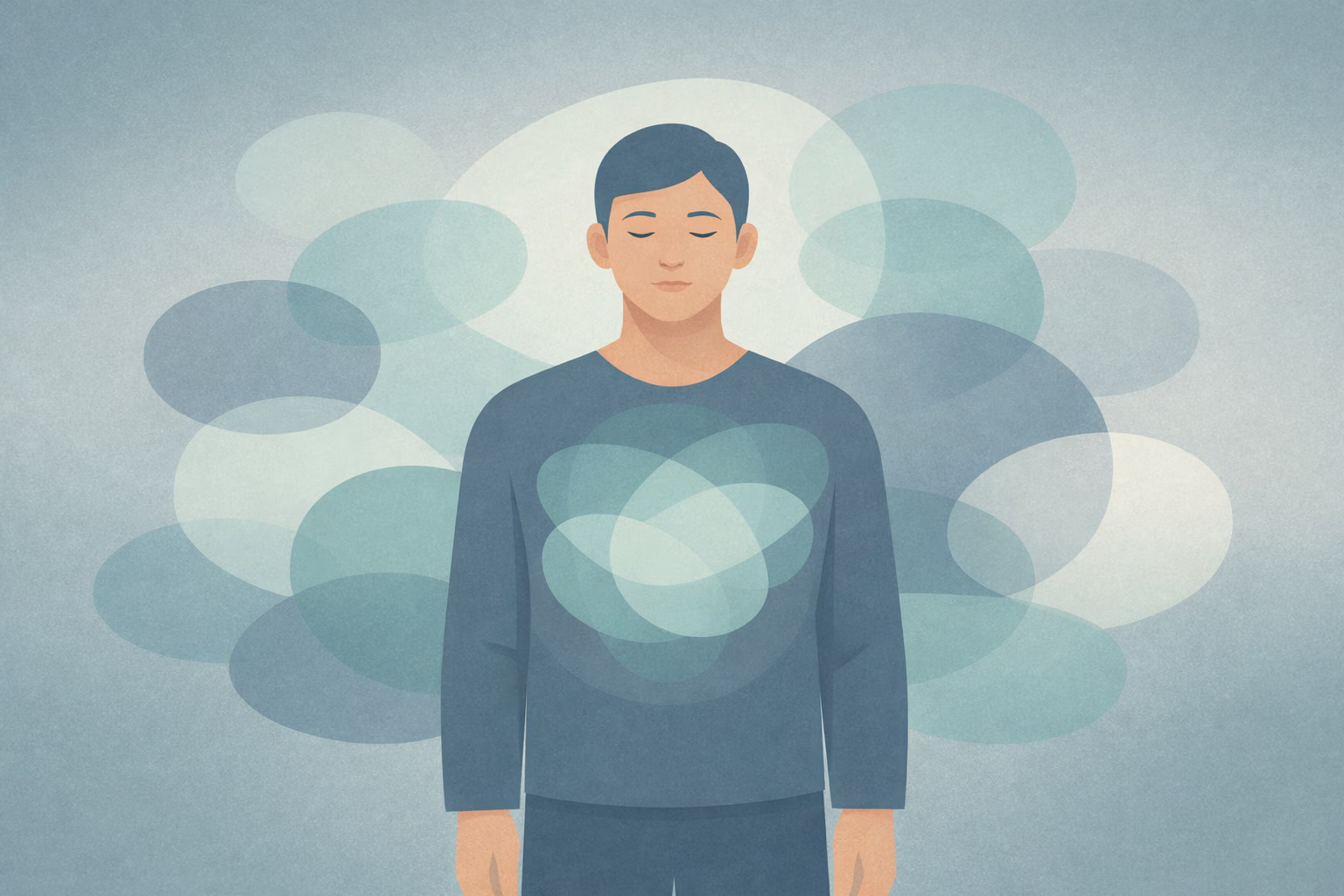
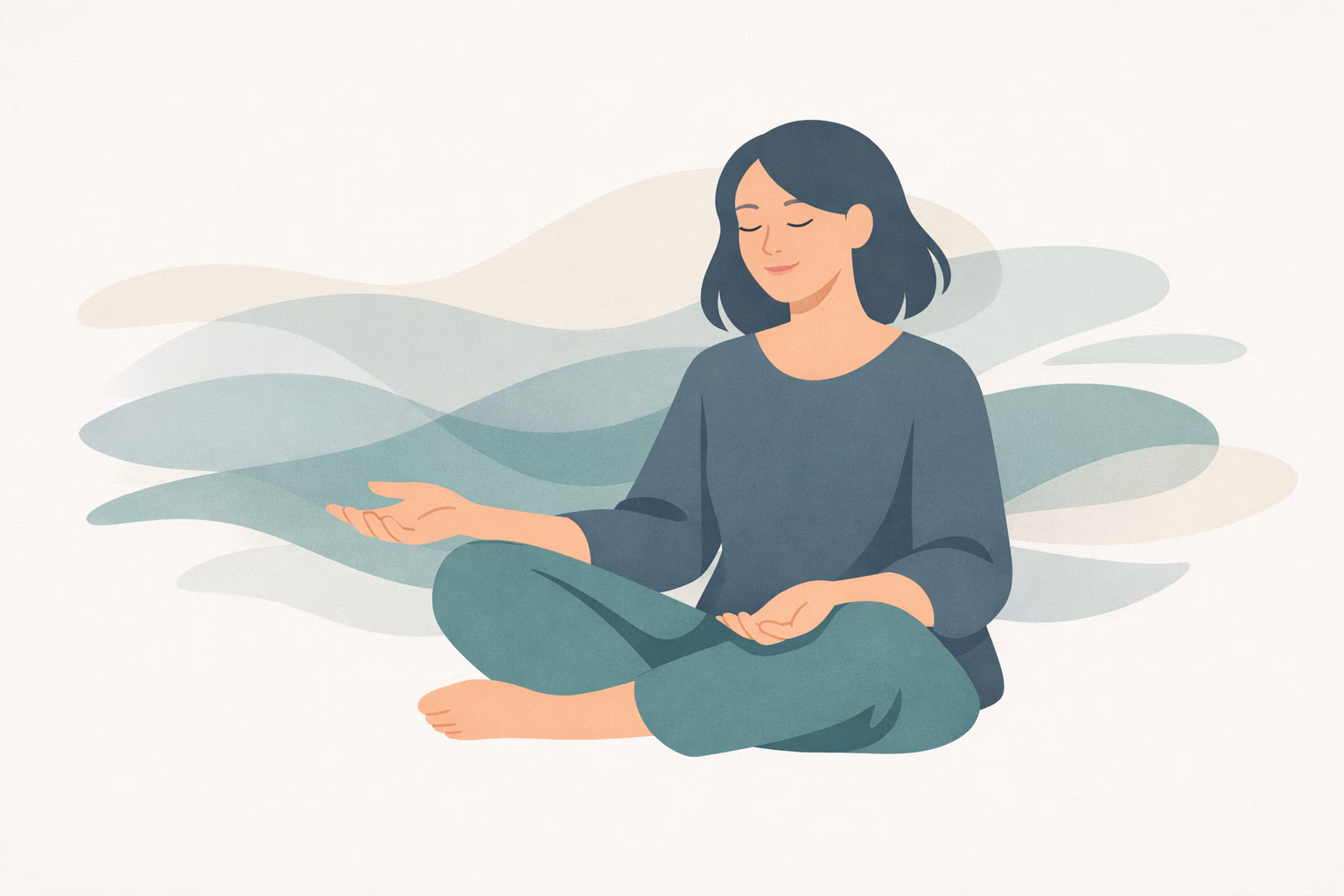
Understanding explains what is happening. Art allows you to feel it—without fixing, judging, or naming. Pause here. Let the images work quietly. Sometimes meaning settles before words do.
One Quiet Window, one insight, one reflection — every Sunday