Subscription Overload: Digital Clutter & Mental Fatigue
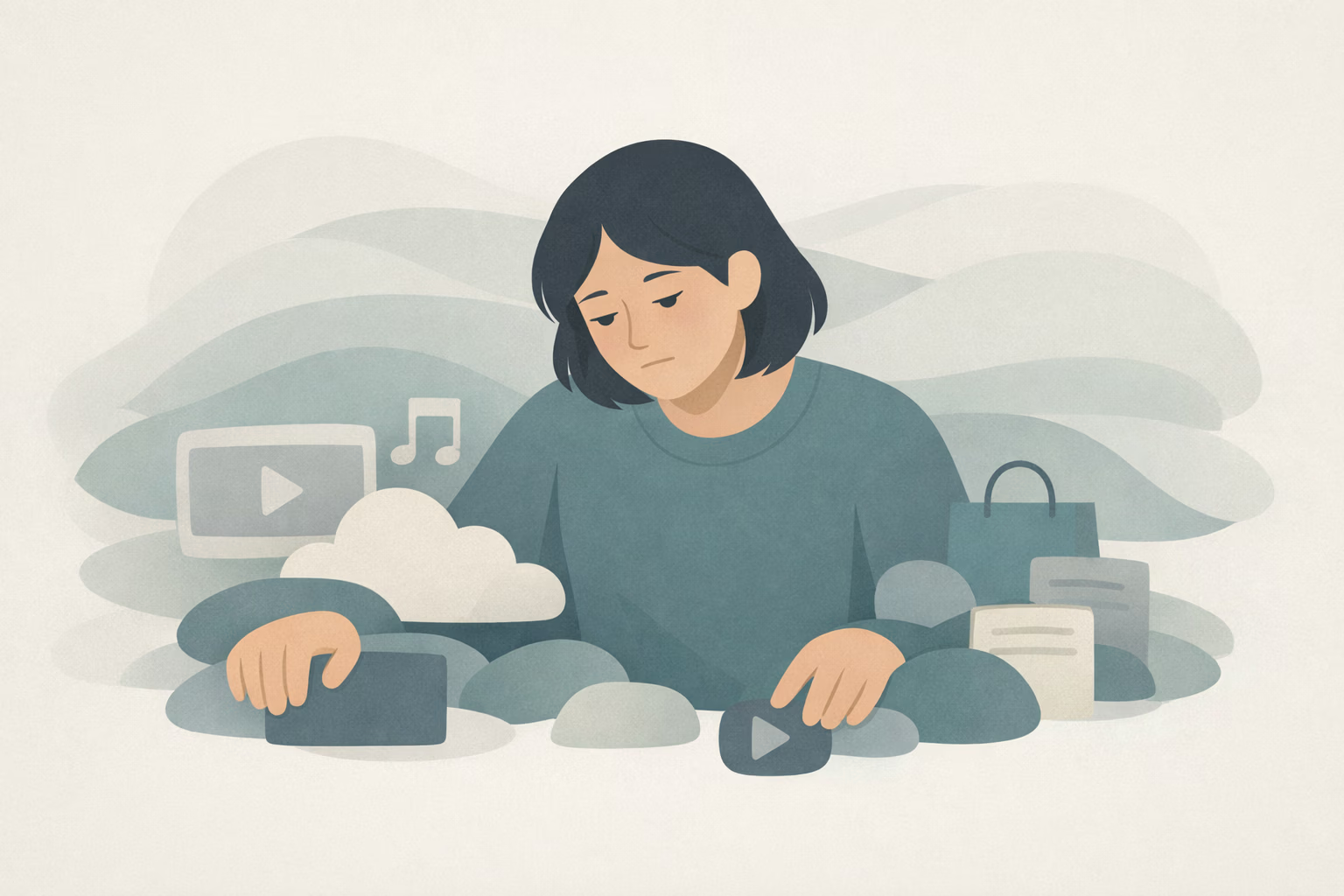
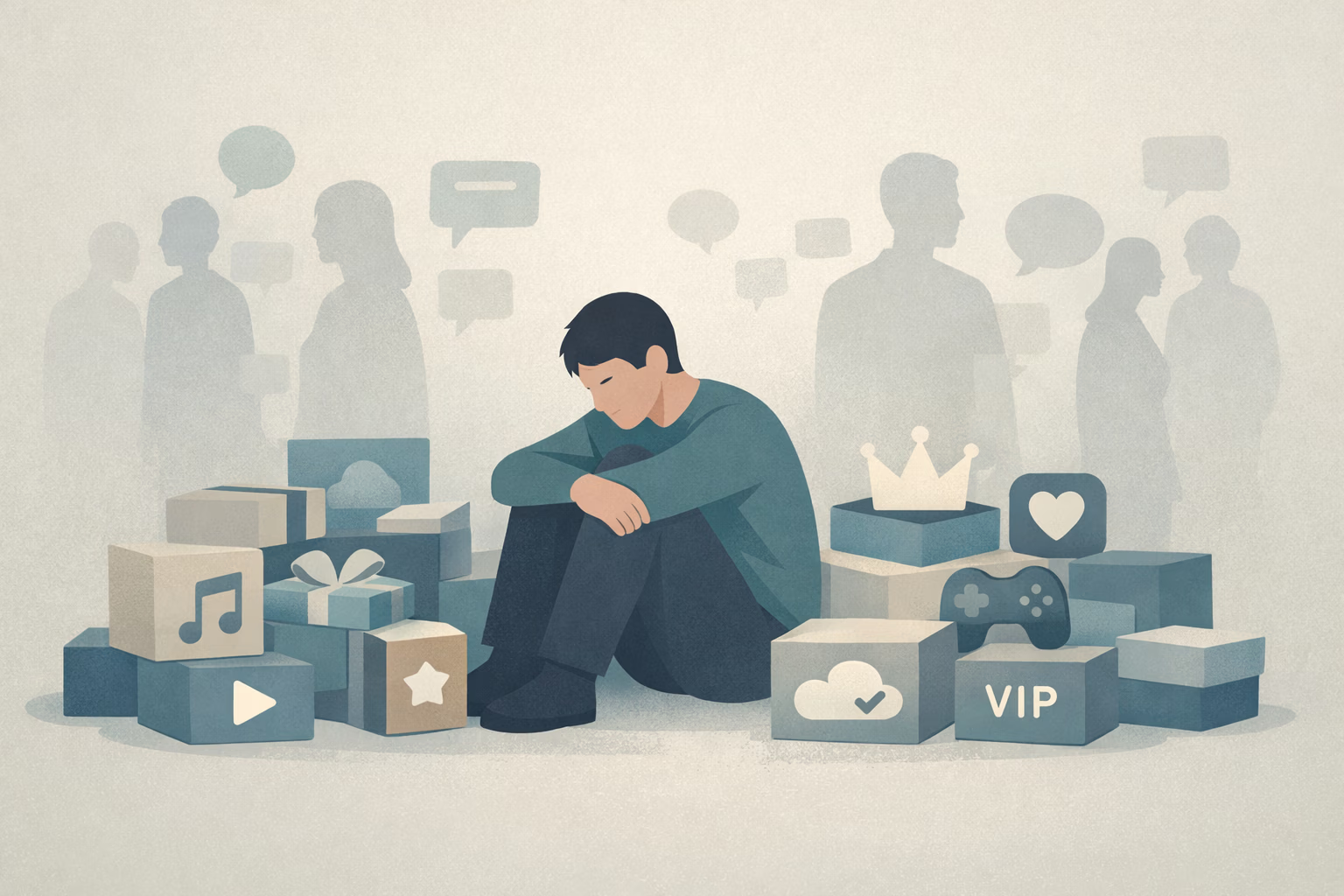
In short: Subscription fatigue isn’t only about money. It’s the strain of carrying many tiny, recurring digital commitments—each tied to a micro-need: entertainment, fitness, storage, calm, productivity, learning, sleep, food, connection. Individually they can feel reasonable.
Subscription fatigue isn’t only about money. It’s the strain of carrying many tiny, recurring digital commitments—each tied to a micro-need: entertainment, fitness, storage, calm, productivity, learning, sleep, food, connection. Individually they can feel reasonable. Collectively they can create a low-grade sense that your life is always “in progress,” always owed, always being billed.
What if the exhaustion isn’t a self-control problem—what if it’s a closure problem?
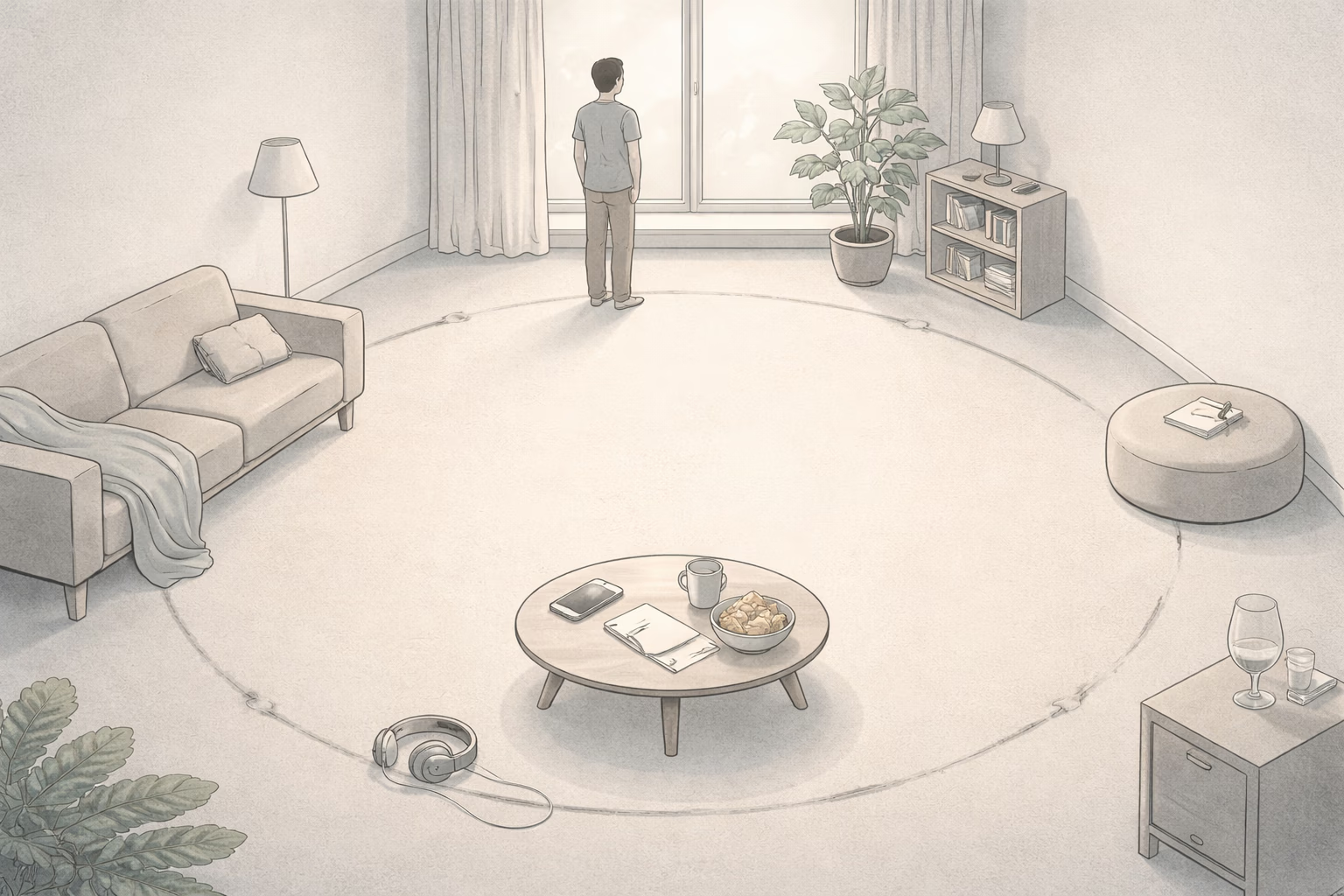
When commitments are small and automatic, they often bypass the natural “done” signals that help the nervous system stand down. The result can look like avoidance, numbness, urgency, or overcontrol—but underneath, it’s often a system trying to manage too many open loops at once.
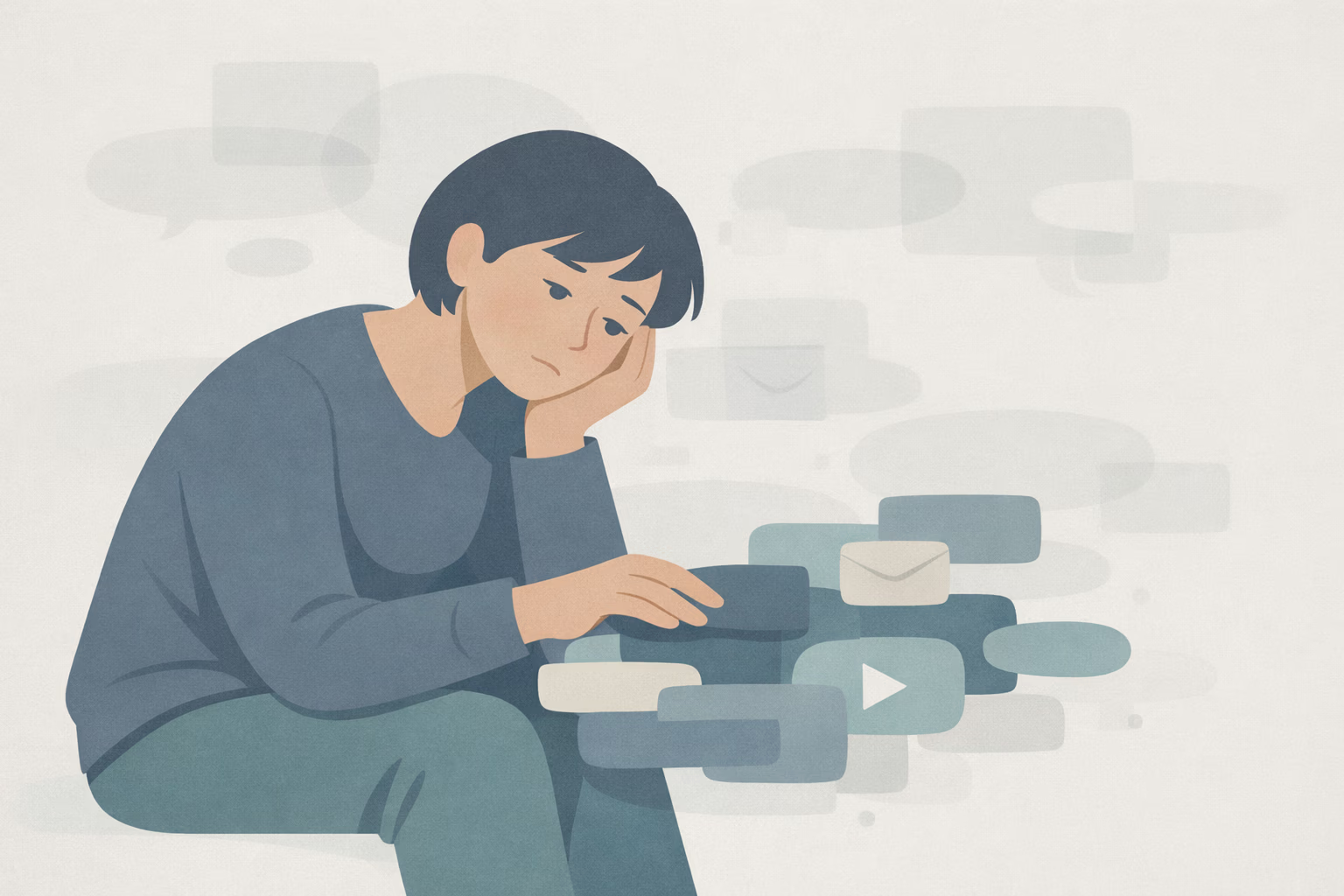
There’s a particular kind of stress that doesn’t spike—it simmers. A constant awareness that renewals are coming, trials might convert, and another email is waiting with the subject line “Your subscription has been updated.” Over time, even if nothing is “wrong,” the mind starts to treat daily life as a field of potential penalties.
This is part of what people mean when they describe subscription fatigue: a sense of being steadily taxed by recurring micro-costs, account logins, and small obligations that don’t end in a clear finish line. [Ref-1]
It’s not one big expense. It’s the feeling of being continuously “on the hook.”
Each subscription brings hidden cognitive work: remembering what it’s for, deciding whether it’s “worth it,” noticing whether you used it, tracking dates, and inhibiting impulse re-signups or upgrades. This isn’t moral weakness—it’s executive load.
Even the act of stopping something requires the brain to interrupt an automatic pathway and choose a different response, which draws on finite control capacity. Over many small moments, the cost adds up in the same way many browser tabs slow a computer. [Ref-2]
Human attention and decision systems are built for environments where choices were fewer, more tangible, and more final: take the path or don’t; store food or don’t; join the group or don’t. Modern subscription ecosystems replace those discrete choices with perpetual partial choices—choices that never fully conclude.
When a commitment renews by default, the nervous system doesn’t receive the closure signal that normally follows completion. Instead, it keeps a low-level readiness: “Check again. Reassess. Don’t forget.” Inhibition and switching costs are real biological constraints, not character flaws. [Ref-3]
Subscriptions sell something deeper than content or features: they sell friction removal. “Don’t decide later.” “Don’t miss out.” “Don’t struggle.” In a high-load life, that promise can feel like oxygen—one less thing to think about.
Many services are designed to translate discomfort into a quick solution: a meditation app for rest, meal kits for overwhelm, a course for uncertainty, a streaming bundle for recovery at the end of the day. That isn’t foolish; it’s a reasonable nervous-system response to too much demand and too little capacity. [Ref-4]
When life is already full, convenience can look like safety.
Micro-subscriptions often appear harmless because each one is below the threshold of alarm. But the nervous system doesn’t only track dollars. It tracks unfinishedness: how many things are pending, how many systems you’re enrolled in, how many places you might be charged, evaluated, or re-sold to.
There’s also a subtle emotional tax: every unused subscription is a quiet reminder of an intention that didn’t settle into lived identity. Not because you “failed,” but because the environment created an open loop without a natural ending. Some industry discussions acknowledge this tension—small recurring payments can still create disproportionate fatigue. [Ref-5]
In the Meaning Density view, avoidance isn’t primarily about fear. It’s what happens when resistance is bypassed and consequences are muted. Subscriptions are perfect for this: they let you outsource a need (rest, structure, entertainment, learning) without the friction that would normally force prioritization.
That can be adaptive in the short term. But over time, outsourcing turns into accumulation. You don’t feel a single clear “yes” or “no”—you feel a growing list of “maybe later,” kept alive by auto-renewal. In many markets, this is now a known pattern: oversubscription creates fatigue, churn, and overwhelm. [Ref-6]
Avoidance can look like doing nothing, but it often contains a lot of hidden effort.
Subscription fatigue often shows up as behavior that makes sense under load: the brain reduces contact with anything that could create more decisions, more regret, or more tracking. This isn’t denial as a personality trait—it’s load management.
Consumer research routinely finds people reporting overload and frustration when the number of services grows beyond what can be comfortably managed. [Ref-7]
Unchecked subscriptions don’t only pull funds; they fragment orientation. When spending is distributed across many micro-needs, it becomes harder to feel what you’re actually supporting in your life. You may know your total bill, but not your total story.
This can erode agency in a specific way: not “I can’t do things,” but “I can’t see what I’m doing.” The mind loses a clean signal about priorities because the environment keeps sending mixed messages: pay for everything, keep all options open, never fully close a door. Reports on subscription overload describe this as a growing consumer concern, closely tied to stress and dissatisfaction. [Ref-8]
When people are overloaded, the system tends to choose the lowest-friction path. Subscriptions are low friction: one click to add; multiple steps to remove. So the pattern can snowball: more load leads to less review, less review leads to more accumulation, and accumulation raises background load again.
At that point, avoidance becomes self-reinforcing—not because someone lacks discipline, but because the environment keeps commitments alive without requiring an intentional re-commitment. Some economic discussions of the “small payments” paradox describe how many minor charges can feel heavier than fewer larger ones, precisely because they’re harder to track and mentally close. [Ref-9]
The system isn’t failing; it’s responding to a landscape with too many open tabs.
There’s a difference between relief and integration. Relief is a state shift—temporary lightness, a quick exhale. Integration is when something genuinely completes and settles into identity: “This is what I’m about,” and the nervous system stops scanning.
In that sense, reducing and consolidating commitments isn’t about deprivation. It’s about restoring the conditions where completion is possible—where needs are met in ways that actually land, rather than staying in perpetual subscription form. Commentary on subscription fatigue often points to simplification as the route back to a more manageable consumer experience. [Ref-10]
When fewer things are asking for your attention, your attention starts to feel like yours again.
Subscription fatigue doesn’t happen in a vacuum. Many people are regulating not only their own stress, but a constant sense of social benchmarking: what everyone else is watching, using, learning, optimizing, tracking. When the norm is to rent your way through every micro-need, opting out can feel like falling behind.
Shared cultural expectations—about convenience, constant access, and staying current—can quietly inflate the baseline of what feels “necessary.” Some writers describe this as a kind of rentership culture: always enrolled, always paying for belonging and relevance. [Ref-11]
When the norm is permanent access, stopping can feel like a social risk—even when it’s simply a closure choice.
When subscription load drops, people often describe a specific kind of ease: not excitement, not a dramatic transformation—more like mental quiet. Fewer pings, fewer renewals to track, fewer “I should deal with that” thoughts circling in the background.
This matters because clarity is a physiological resource. With fewer micro-obligations, signals return: you can tell what you use, what you value, what actually supports you. Emerging research discussions frame subscription fatigue as a measurable, growing concern, with effects on stress and decision experience. [Ref-12]
When attention isn’t scattered across dozens of small contracts, it has room to attach to fewer, more coherent commitments—ones that connect to life as lived: relationships, craft, rest, play, contribution, learning that becomes part of you.
Meaning density grows when actions, values, and identity line up and then complete. Subscriptions can support that sometimes—but when they multiply, they can turn life into a set of rented intentions: many tiny “I might,” few embodied “I am.” Discussions of overload highlight psychological costs that include reduced sense of control and diminished satisfaction. [Ref-13]
It’s hard to feel like yourself when your choices never get to finish.
In a subscription-heavy world, discontinuing something can be framed as losing access. But another framing is equally true: it’s reclaiming attention, reducing cognitive coupling, and allowing the nervous system to stand down from constant monitoring. [Ref-14]
When fewer services are “running in the background,” priorities become more legible—not because you force clarity, but because the environment stops interrupting it. What returns is not just money, but the ability to feel where your life is actually going.
Subscription models are powerful because they attach to real human needs: comfort, identity, belonging, certainty. And when those needs are met in ways that complete, the system settles. When they’re met in ways that keep renewing without conclusion, the system keeps scanning.
Less isn’t a virtue here. It’s a condition that can allow coherence to reappear—so that what you pay for, what you give your time to, and what you become start to match again. [Ref-15]
From theory to practice — meaning forms when insight meets action.
Because the strain isn't really about money. Each subscription brings hidden cognitive work: remembering what it's for, deciding whether it's worth it, noticing whether you used it, tracking dates, inhibiting impulse re-signups. That's executive load. The nervous system doesn't only track dollars — it tracks unfinishedness: how many things are pending, how many systems you're enrolled in. There's also a subtle emotional tax: every unused subscription is a quiet reminder of an intention that didn't settle into lived identity. It's not one big expense; it's the feeling of being continuously on the hook.
Subscriptions sell something deeper than content — they sell friction removal. 'Don't decide later. Don't miss out. Don't struggle.' In a high-load life, that promise can feel like oxygen — one less thing to think about. Many services translate discomfort into a quick solution: a meditation app for rest, meal kits for overwhelm, a course for uncertainty. That isn't foolish; it's a reasonable nervous-system response to too much demand and too little capacity. When life is already full, convenience can look like safety. But outsourcing a need without friction often means the choice never fully completes — it just keeps renewing.
Avoidance isn't primarily about fear — it's what happens when resistance is bypassed and consequences are muted. Subscriptions are perfect for this: they let you outsource a need without the friction that would force prioritization. You don't feel a single clear yes or no; you feel a growing list of 'maybe later' kept alive by auto-renewal. Common signs: ignoring statements, keeping trials 'just in case,' guilt about unused services paired with no capacity to review them, letting renewals happen to avoid one more decision. Avoidance can look like doing nothing, but it often contains a lot of hidden effort.
Yes — reframing unsubscribing as reclamation rather than deprivation matters. Discontinuing isn't only losing access; it's reclaiming attention, reducing cognitive coupling, and allowing the system to stand down from constant monitoring. With fewer micro-obligations, signals return: you can tell what you use, what you value, what actually supports you. Meaning Density grows when actions, values, and identity align and complete. Subscriptions can support that sometimes, but when they multiply, life becomes a set of rented intentions — many tiny 'I might,' few embodied 'I am.' It's hard to feel like yourself when your choices never get to finish.
From Science to Art.
Understanding explains what is happening. Art allows you to feel it—without fixing, judging, or naming. Pause here. Let the images work quietly. Sometimes meaning settles before words do.
One Quiet Window, one insight, one reflection — every Sunday