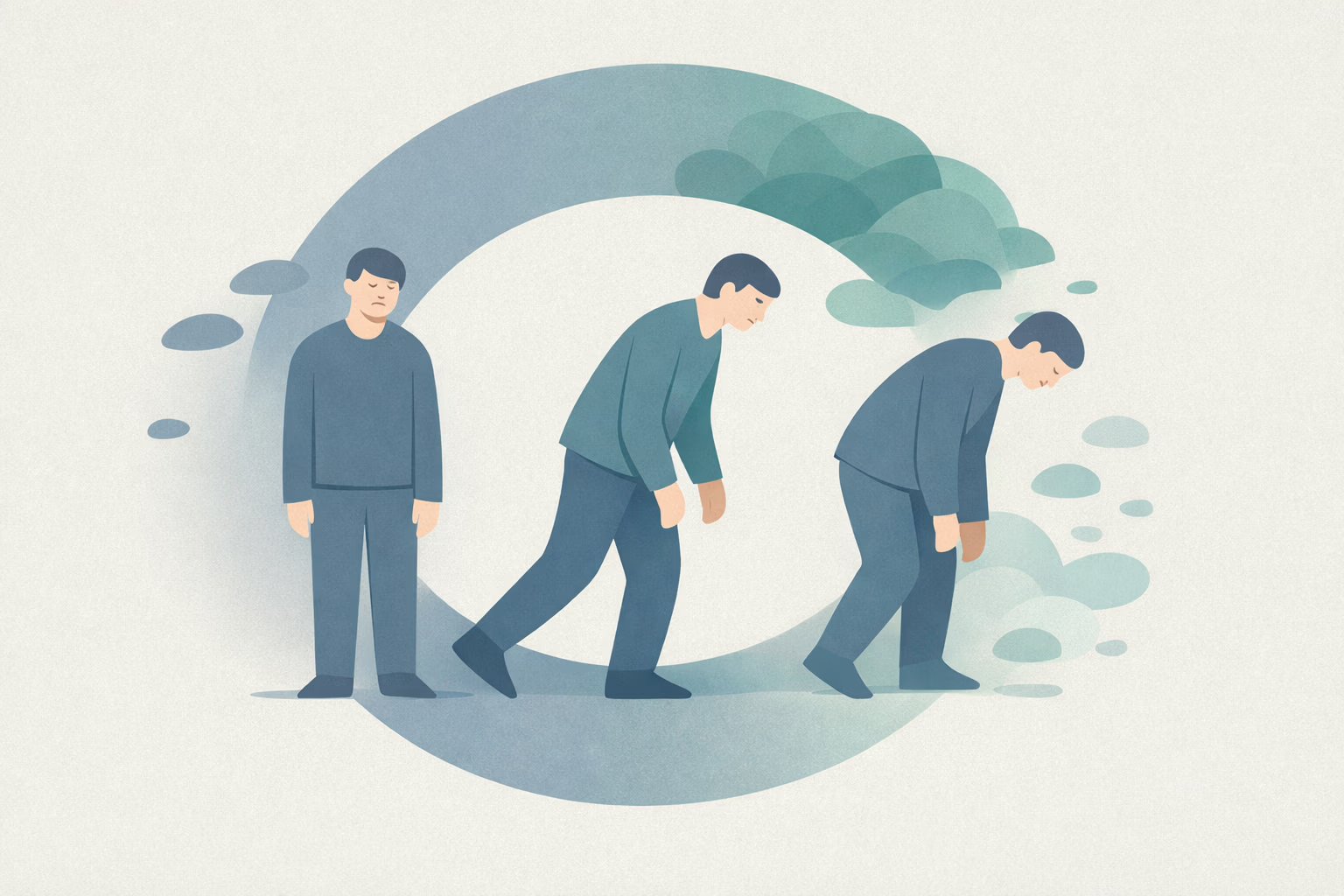
The Instant Gratification Reflex
Why your brain now expects instant rewards and how to rebuild patience.
In context: This “top-up“ urge is a common regulatory signal. When a stimulation loop ends, the sudden drop in dopamine creates a temporary deficit. Your Reward & Pursuit system suggests a small “extra hit“ to bridge the gap back to comfort.
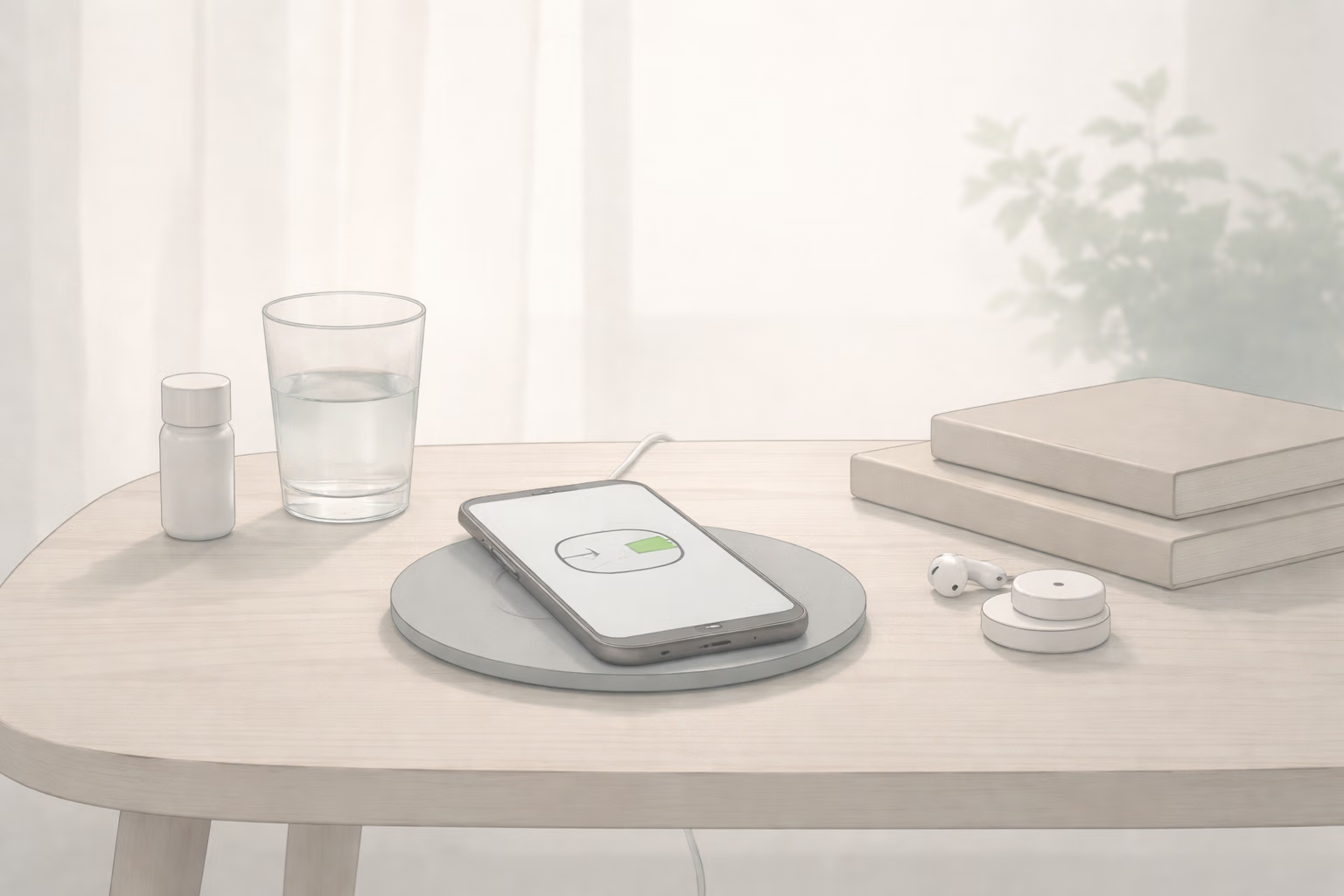
There is a feeling of needing a top-up.
Not because you failed, but because the system dipped after intensity.
The battery cycles, never fully empty, never fully satisfied.
Let the urge be noticed without obeying it immediately.
Awareness restores choice, even when desire feels mechanical.
Normalize top-up urges with DojoWell.
Explore DojowellArticles exploring the psychology behind these patterns.
This "top-up" urge is a common regulatory signal. When a stimulation loop ends, the sudden drop in dopamine creates a temporary deficit. Your Reward & Pursuit system suggests a small "extra hit" to bridge the gap back to comfort. Recognizing this as a biological adjustment rather than a personal flaw helps you stop the cycle of escalation and allows the system to settle naturally.
Not necessarily; it is a sign of how the brain manages transitions. In the Meaning Density Model™, the "top-up" is a structural attempt to avoid the "dip." By understanding that the dip is safe and temporary, you remove the necessity of the top-up. This allows your nervous system to complete the cycle and return to a stable baseline without needing constant external maintenance.
One Quiet Window, one insight, one reflection — every Sunday