Instant Gratification Traps: The Hidden Cost of Quick Rewards
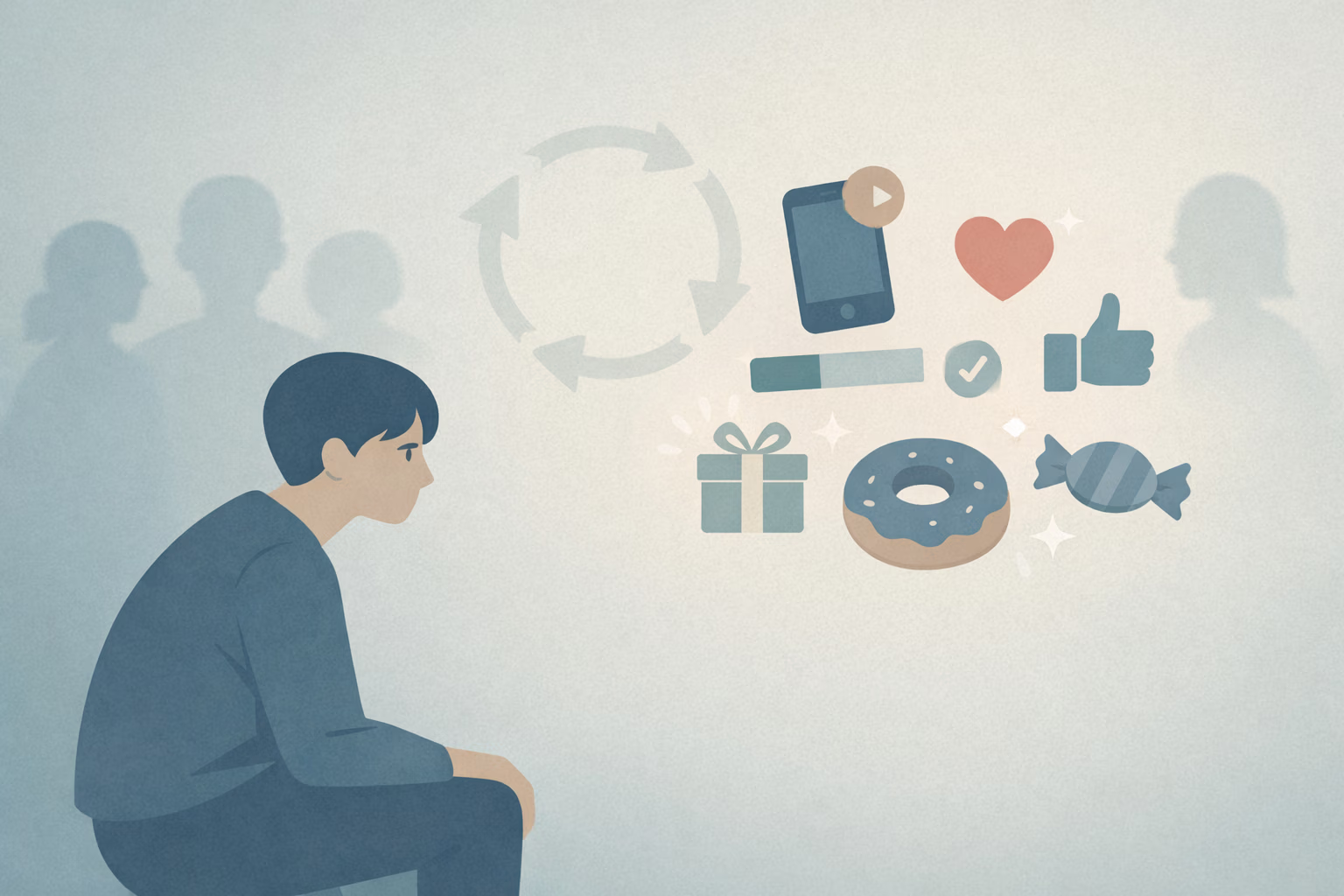
In short: Many people aren’t “less patient” than they used to be. They’re living inside conditions that repeatedly train the body to expect fast relief, fast feedback, and fast reward. When that becomes normal, waiting doesn’t just feel inconvenient—it can feel strangely agitating, like something is unfinished or unsafe.
Many people aren’t “less patient” than they used to be. They’re living inside conditions that repeatedly train the body to expect fast relief, fast feedback, and fast reward. When that becomes normal, waiting doesn’t just feel inconvenient—it can feel strangely agitating, like something is unfinished or unsafe.
What if your impatience is a regulation response to an environment that rarely lets anything feel complete?
This is the instant gratification reflex: a conditioned readiness to reach for immediate reward because modern life offers high-intensity stimulation on demand—and because that stimulation temporarily closes loops that otherwise stay open.
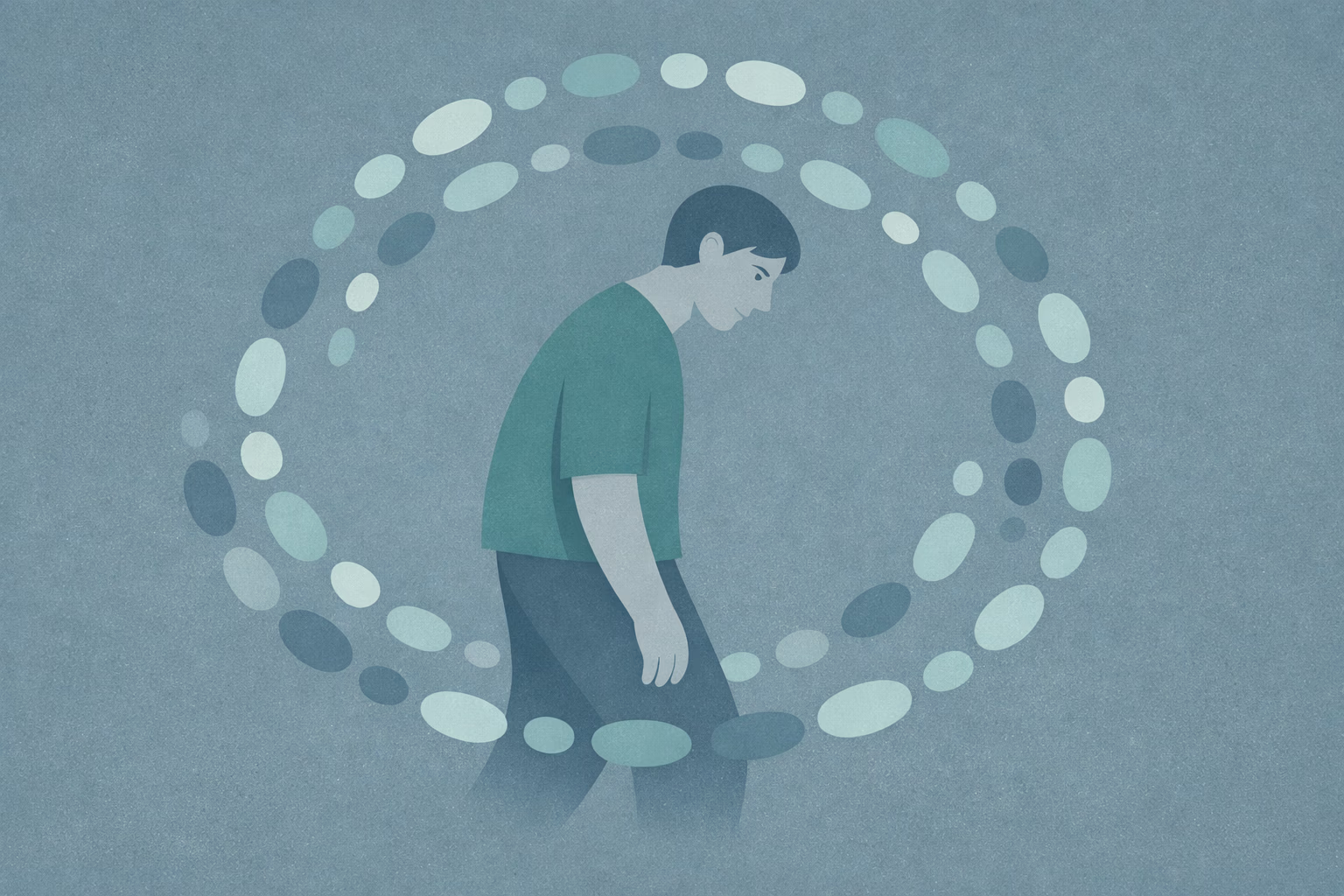
Difficulty waiting often shows up as restlessness rather than a clear thought. The body leans forward: checking, refreshing, switching tabs, changing plans, abandoning the long route for the shortcut. It’s not always dramatic; it can be a low-grade friction that appears as soon as progress becomes gradual.
In that state, slow processes can feel oddly unreal—like they won’t “count” until something external confirms them. The discomfort isn’t proof of weakness; it’s the nervous system signaling that it expects a quick reward window and doesn’t know what to do with an extended one. [Ref-1]
Waiting can feel less like patience and more like being stuck with an incomplete signal.
Brains learn timing. When rewards and novelty arrive quickly and frequently, the system starts predicting that good things should happen fast. Over time, the “prediction window” tightens: if payoff isn’t immediate, the body may register the gap as a mismatch—effort without return.
This is part of why waiting can feel aversive. The nervous system isn’t only evaluating the future outcome; it is responding to the present pattern: the absence of quick feedback can register like loss of traction. In that moment, the pull toward a fast hit (scrolling, snacks, porn, shopping, switching tasks) isn’t a moral failure—it’s a learned way to re-create a predictable reward signal. [Ref-2]
Why does effort feel “flat” so quickly?
Because high-intensity rewards can raise the contrast level of what counts as satisfying, making low-intensity, long-arc rewards harder to detect in the short term.
From an evolutionary perspective, rapid opportunity capture made sense. If food, safety, status, or connection appeared, moving quickly could matter. The reward system is designed to mobilize behavior toward what seems beneficial now—not to politely wait for modern long-term projects.
In today’s environment, “opportunities” are everywhere and nearly frictionless: entertainment, arousal, sugar, social validation, and constant updates. The same circuitry that helped humans seize real-world chances can become over-recruited by digital and consumer cues that never fully resolve. [Ref-3]
The result isn’t simply more wanting—it’s more starting. The system repeatedly initiates pursuit, but rarely reaches a natural end point that allows it to stand down.
Instant gratification doesn’t only provide pleasure. It reduces uncertainty, effort, and ambiguity in the body right now. In a fragmented day, that can be a powerful form of short-term stabilization: one click and the nervous system gets a clean, simple signal—something happened, something changed.
That is why delay can feel so hard: waiting is inherently uncertain. It asks the system to hold an open loop—unfinished work, unfinished feedback, unfinished comfort—without rushing to close it. Immediate rewards offer closure-like sensations without requiring the slower completion that builds lasting steadiness. [Ref-4]
Modern culture often treats speed as competence: quicker replies, quicker results, quicker upgrades. But the nervous system doesn’t measure “better” by speed; it measures by whether an arc completes and whether effort reliably leads somewhere.
When speed is constant, persistence can weaken—not because you “can’t commit,” but because the environment keeps teaching your system that leaving is rewarded. If every moment offers a faster payoff, staying with the slower path can feel like choosing deprivation, even when the slower path is the one that actually builds depth. [Ref-5]
Quick relief can create motion without creating resolution.
In a pleasure loop, the system learns a simple rule: discomfort or delay appears → immediate stimulation arrives → the state shifts. This can happen with porn, highly palatable food, scrolling, gaming, shopping, or constant messaging. The details differ, but the structure is similar.
Over time, immediacy becomes the main feature. Depth—learning, intimacy, mastery, long conversations, slow fitness gains—requires sustained contact with the middle of the process. But the loop trains a bypass: the body doesn’t have to stay with the middle because the exit is always available. [Ref-6]
This isn’t “lack of self-control.”
It’s a system that has been repeatedly shown that fast state-change is possible, reliable, and socially normal—so it reaches for it automatically.
The reflex often looks like “I can’t stick with anything,” but the more precise description is: the nervous system has learned to expect frequent closure signals, so it keeps scanning for them.
These are not character labels. They are adaptive responses to an ecosystem of fast reinforcement—an ecosystem that rarely provides the slow satisfaction that comes from finishing a meaningful arc. [Ref-7]
Many parts of a stable life are slow by nature: skill-building, trust, fitness, repairing relationships, building a body of work, even learning how to rest. These processes deliver their reward as a gradual accumulation, not a single hit.
When delay intolerance increases, the system may stop registering these slow signals as “real reward.” That undermines the formation of meaning—not as an idea, but as a lived sense that your actions become you over time. If nothing is allowed to complete, identity can feel thin: lots of attempts, fewer settled outcomes. [Ref-8]
Meaning often arrives as a “done” signal that lands in the body after sustained completion.
Delay tolerance isn’t built by insight; it’s shaped by what the nervous system repeatedly experiences. If every rising edge of discomfort is met with immediate relief, the system never gets a chance to recalibrate what “waiting” can safely feel like.
Importantly, the loop is maintained structurally. The costs of switching are often muted (another video, another snack, another tab) and the consequences are delayed (lost depth, lost continuity, lost trust in gradual progress). Without a clear completion point, the system keeps treating urgency as necessary. [Ref-9]
So the reflex persists not because the person “won’t change,” but because the environment keeps offering clean exits while withholding closure.
There is a difference between relief and integration. Relief is a state shift: the nervous system gets quieter for a moment because stimulation or certainty arrives. Integration is what happens when an experience fully completes and settles into identity—when the system no longer has to keep re-opening the same loop.
Rebuilding tolerance for waiting is often less about pushing harder and more about reducing the overall arousal that makes delay feel like threat. When stimulation is paced and the system can downshift, effort stops feeling like punishment and starts feeling like a coherent arc again. [Ref-10]
In other words: the capacity to wait tends to return when the body is no longer living at a constant sprint.
Humans regulate in groups. A solitary nervous system has to generate all its own continuity, all its own reassurance, all its own “keep going” signals. Shared commitments—relationships, teams, communities—provide external structure that can hold a longer timeline than a single stressed brain can carry.
This isn’t about being watched or pressured. It’s about co-regulation: predictable contact, agreed-upon standards, and social reality that reinforces gradual progress. When the environment signals reliability, waiting becomes less costly for the body. [Ref-11]
Sometimes persistence returns when life stops being a private endurance test.
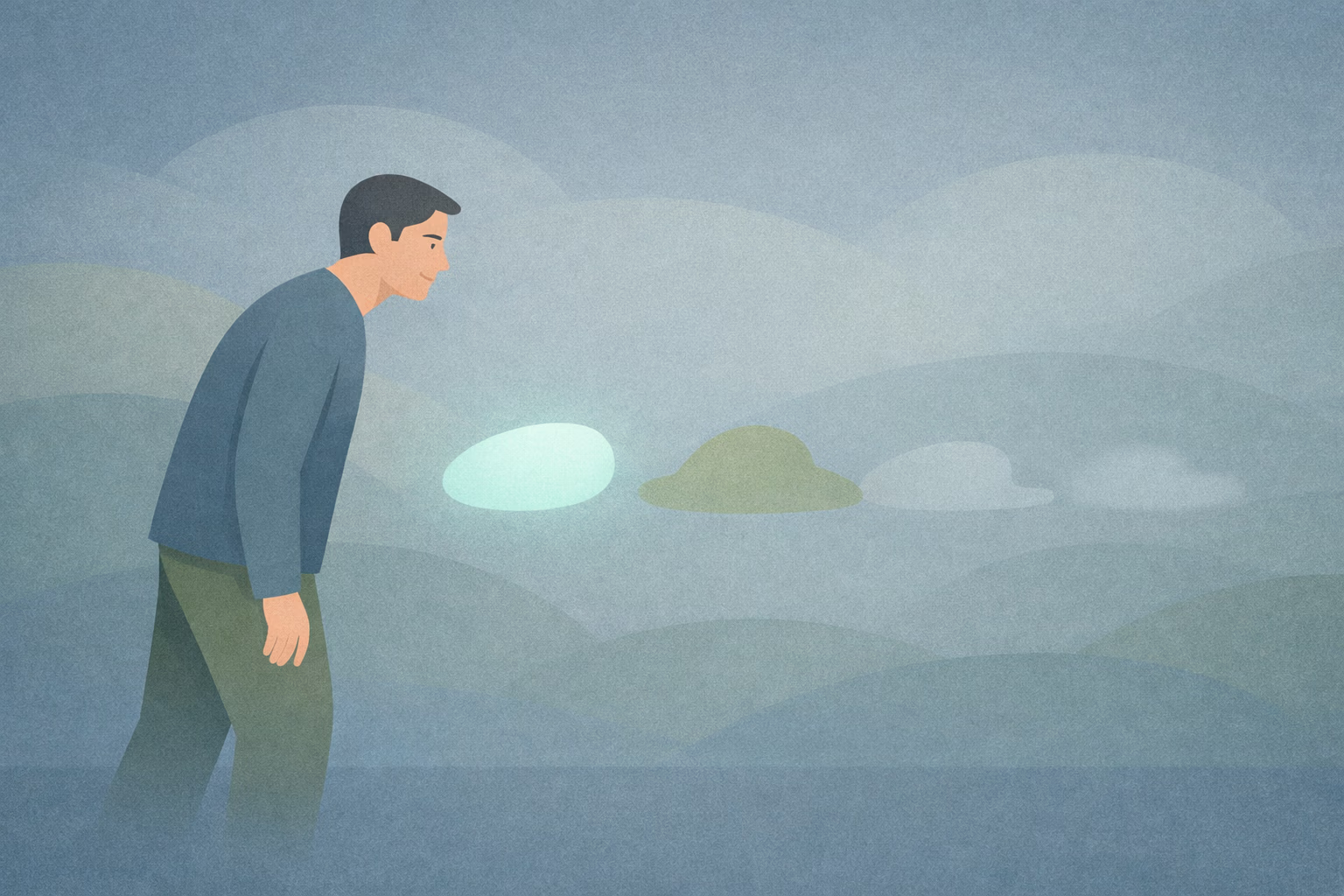
When the system recalibrates, patience isn’t a heroic mood. It feels more like reduced urgency. The mind still notices desire, but it doesn’t surge as insistently. Waiting stops feeling like “nothing is happening,” because the nervous system can register low-intensity reward again.
This shift is often accompanied by more stable pleasure—less spiky, less compulsive. The reward system becomes less dependent on extremes to feel activated, which can support steadier motivation and less chasing. [Ref-12]
When immediacy dominates, goals can shrink into whatever provides the fastest emotional return. Over time, that can flatten the reward landscape: the system learns to want what is quick, but not necessarily what is meaningful. In more extreme forms, this can resemble anhedonia-like patterns, where ordinary rewards stop registering as satisfying unless they are intense. [Ref-13]
As coherence returns, action can reorganize around values rather than speed. Not because you forced yourself to care, but because your nervous system can finally stay with a longer arc long enough for completion to land. Meaning becomes less about inspiration and more about follow-through that settles into identity.
When life contains real endings—not just constant stimulation—desire can become direction.
In a world designed to deliver immediate reward, your pull toward “now” is understandable. The instant gratification reflex is what a nervous system does when it has learned that speed equals safety, clarity, or relief.
What changes things over time is not harsher self-talk or bigger goals. It’s the reappearance of closure: experiences that actually complete, relationships and environments that feel reliable, and commitments that are chosen because they matter—not because they soothe the next ten seconds. In that kind of context, waiting becomes less like deprivation and more like a purposeful timeline. [Ref-14]
Waiting feels impossible when the nervous system has been conditioned to expect quick spikes and quick exits. But human systems are built to recalibrate when the environment supports slower completion and clearer endings.
As reward steadies, satisfaction often becomes less dramatic but more durable—less about chasing a hit, more about living inside a story that makes sense. That’s not willpower. That’s coherence returning. [Ref-15]
From theory to practice — meaning forms when insight meets action.
Because the nervous system has learned a tight prediction window — when rewards arrive quickly and frequently, the body starts expecting good things to happen fast. The article frames waiting as registering like loss of traction: effort without return, an unfinished signal. The body leans forward — checking, refreshing, switching tabs, abandoning the long route for the shortcut. The pull toward a fast hit isn't a moral failure but a learned way to re-create a predictable reward signal. Slow processes can feel oddly unreal, like they won't count until something external confirms them. Waiting becomes less like patience and more like being stuck with an incomplete signal.
Because immediate reward reduces uncertainty, effort, and ambiguity in the body right now. The article frames this carefully: in a fragmented day, one click delivers a clean simple signal — something happened, something changed. Fast reward simplifies choice, reduces mixed feelings, offers a quick Done Signal. That's why delay feels so hard: waiting is inherently uncertain, asking the system to hold open loops without rushing to close them. Immediate rewards offer closure-like sensations without requiring the slower completion that builds lasting steadiness. The pull is toward stabilization, not just toward pleasure — and the body knows the exit is always available.
Because every moment offering a faster payoff teaches the system that leaving is rewarded. The article describes the structural trap: the costs of switching are muted (another video, another snack, another tab) while the consequences are delayed (lost depth, lost continuity, lost trust in gradual progress). High-intensity rewards raise the contrast level of what counts as satisfying, making low-intensity, long-arc rewards harder to detect in the short term. Skill-building, trust, fitness, real repair — these deliver reward as gradual accumulation, not single hits. When delay intolerance increases, the system stops registering these slow signals as 'real reward.'
Through reduced overall arousal, not pushing harder. The article frames rebuilding delay tolerance as less about willpower and more about the body no longer living at a constant sprint. When stimulation is paced and the system can downshift, effort stops feeling like punishment and becomes a coherent arc again. People notice less need to switch tasks to feel okay, more ability to stay with the middle of a process, more trust in gradual progress. Patience isn't a heroic mood — it feels like reduced urgency. The reward system becomes less dependent on extremes to feel activated, and desire starts becoming direction rather than an exit.
From Science to Art.
Understanding explains what is happening. Art allows you to feel it—without fixing, judging, or naming. Pause here. Let the images work quietly. Sometimes meaning settles before words do.
One Quiet Window, one insight, one reflection — every Sunday