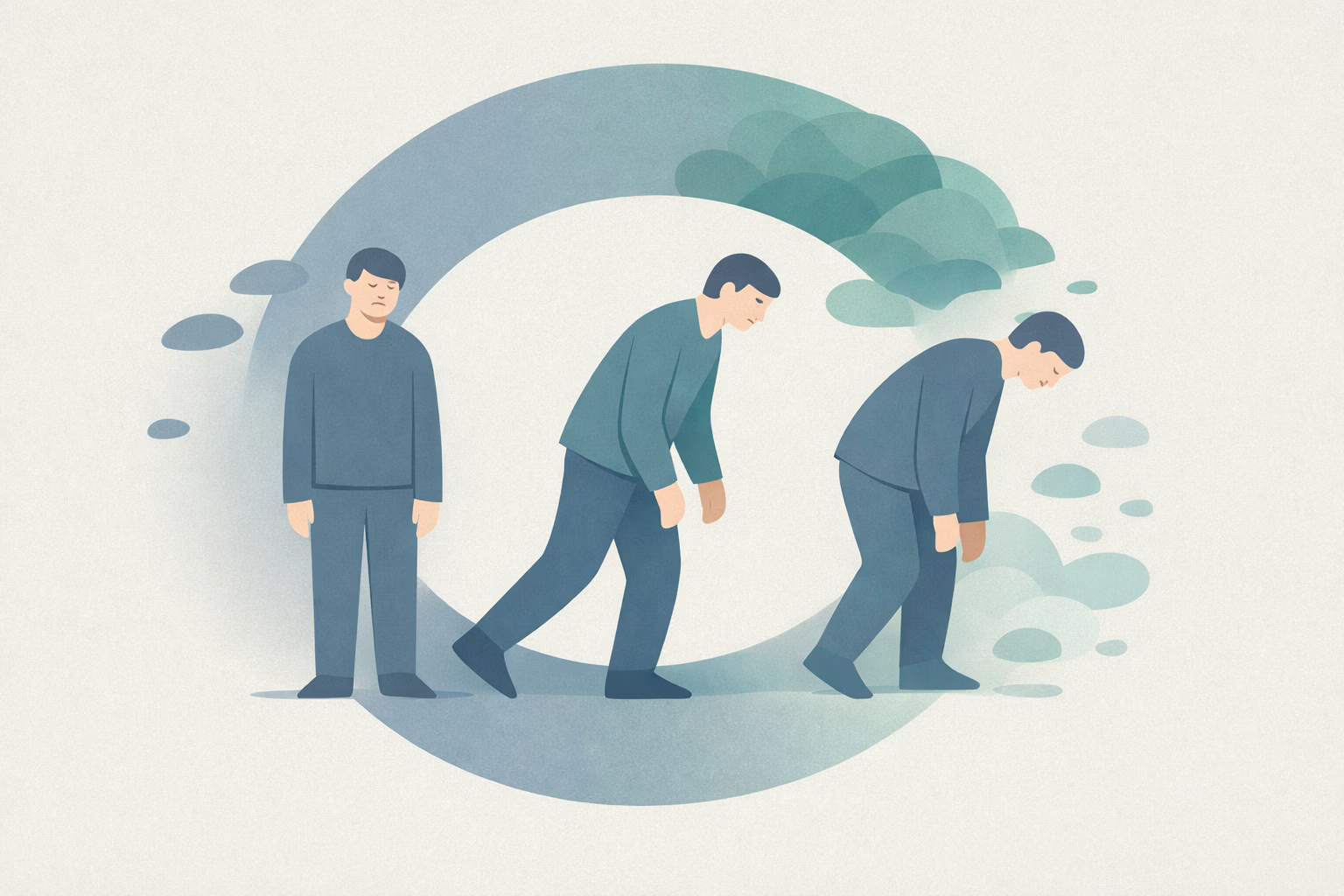
The Numb–Crave–Crash Cycle: Modern Life’s Emotional Loop
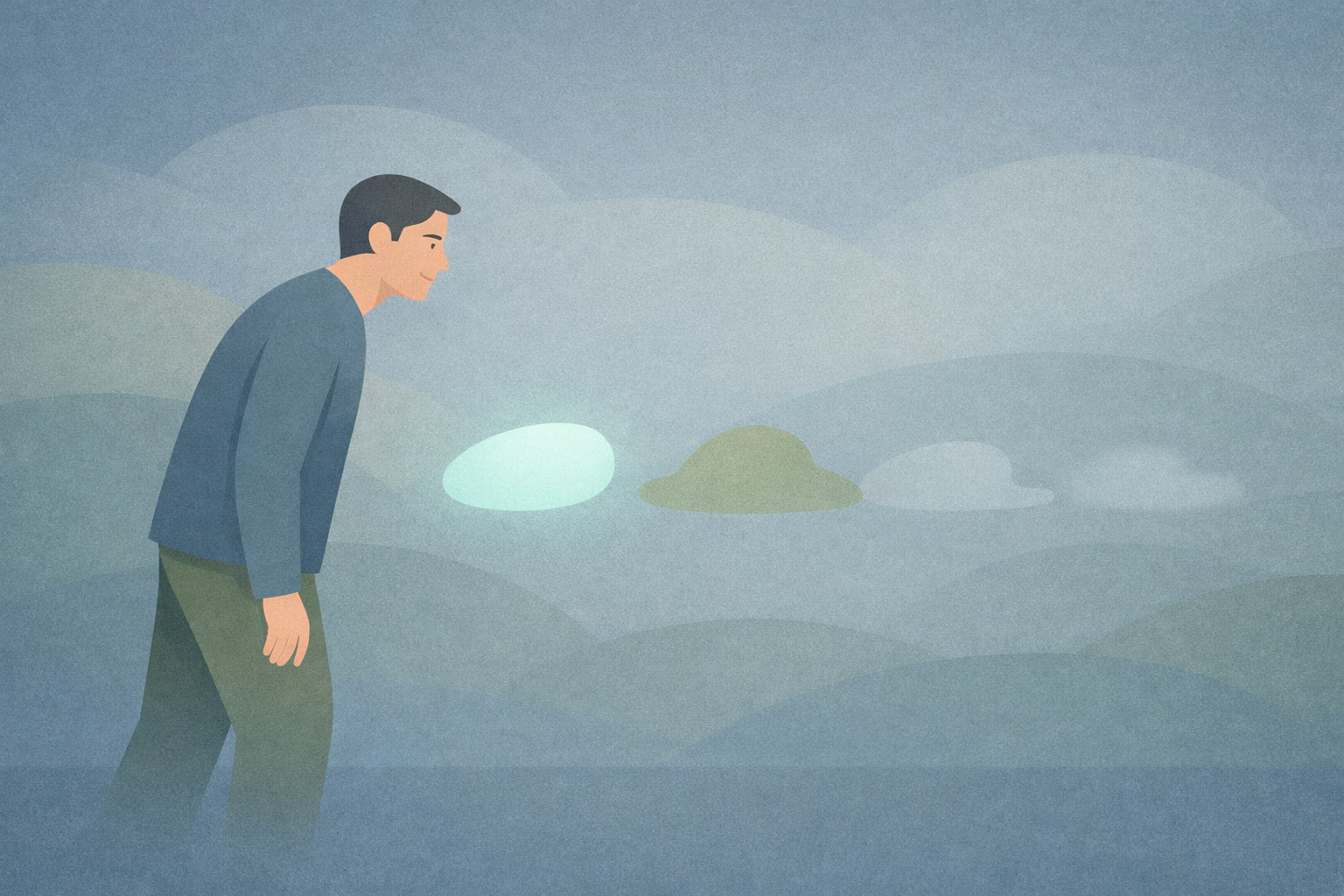
In short: Instant gratification traps aren’t a character flaw. They’re what can happen when a human nervous system—under load, under speed, under constant input—finds the quickest available “downshift.” A snack, a scroll, a purchase, a video, a hit of novelty: each one can create a brief sense of relief or lift.
Instant gratification traps aren’t a character flaw. They’re what can happen when a human nervous system—under load, under speed, under constant input—finds the quickest available “downshift.” A snack, a scroll, a purchase, a video, a hit of novelty: each one can create a brief sense of relief or lift. And each one can also leave the deeper system still running, still unresolved.
What if “I can’t stop reaching for quick rewards” is less about willpower—and more about missing closure?
This article looks at quick-reward loops as regulatory responses: ways the brain and body reduce discomfort and restore a sense of okay-ness in the moment. The hidden cost isn’t moral. It’s structural: when relief becomes the main method of regulation, meaning can thin out, effort can feel louder than it should, and longer arcs of life can start to feel strangely out of reach.
A quick reward often arrives with a clean, unmistakable signal: a small surge of interest, comfort, or “finally.” But the after-signal can be just as common: restlessness, a flatness, or a vague sense of regret that doesn’t match the size of what happened. That mismatch is one clue that the reward worked as a state-change, not as completion.
When this pattern repeats, it can start to interfere with sustained effort toward deeper goals. Not because goals stopped mattering, but because the nervous system learns that effort is expensive and relief is immediate. Over time, the space between “I want a meaningful life” and “I can’t initiate the thing” can widen—and that gap can feel personal, even when it’s largely physiological. [Ref-1]
Sometimes the hardest part isn’t choosing better. It’s staying with anything long enough for it to feel finished.
Human reward systems are built to notice what is available and certain. Dopamine-related circuits don’t simply code “pleasure.” They help assign priority: what to approach, what to repeat, what to pay attention to next. When a reward is immediate, the system gets a crisp learning signal: this works, do it again. [Ref-2]
Delayed rewards are different. They require holding a thread through time—maintaining attention, tolerating uncertainty, and keeping the future emotionally “real” enough to guide behavior. That future-oriented circuitry is real and trainable, but it is also load-sensitive. Under stress, sleep debt, loneliness, or constant interruption, the brain doesn’t become “lazy.” It becomes efficient in the shortest horizon available.
When the present feels intense, why wouldn’t the system choose the fastest relief?
In many ancestral contexts, immediate opportunities mattered. Food could spoil. Safety could change quickly. Social moments could determine belonging. A nervous system that could seize what was available—energy, shelter, connection—had an advantage. Preference for sooner rewards wasn’t a defect; it was often adaptive. [Ref-3]
What changed is not the basic machinery, but the environment feeding it. Today, “opportunity” can arrive hundreds of times a day in tiny packets: notifications, offers, novelty, fast entertainment, frictionless delivery. The reward system encounters more cues than it evolved to metabolize, and it responds accordingly: by narrowing the window of what feels worth doing.
Instant gratification often functions as rapid regulation. It can mute boredom, soften stress, interrupt mental noise, or provide a quick sense of control. The body reads this as useful: activation goes down, agitation decreases, and for a moment there’s a feeling of “handled.” This is why quick rewards can become so sticky during high-demand seasons. [Ref-4]
But because the relief is fast, it can bypass the natural sequence that creates closure. Many experiences require time to resolve—effort to finish, repair to land, conversations to settle, sleep to restore. Quick rewards can pause discomfort without completing the underlying loop, so the system returns to seeking again.
There’s a common hope embedded in quick rewards: “This will reset me, then I’ll be able to do the real thing.” Sometimes a short break truly does restore capacity. But a loop of high-frequency relief can create a different outcome: reduced patience, fragmented focus, and lower baseline satisfaction.
When the nervous system is repeatedly trained to expect fast payoff, slower processes can start to feel unusually heavy. Reading, practicing, rebuilding a relationship, learning a skill—these don’t deliver immediate completion signals. They deliver meaning through accumulation and finish. When the brain has been fed mostly fast closure, slow closure can feel strangely unreal. [Ref-5]
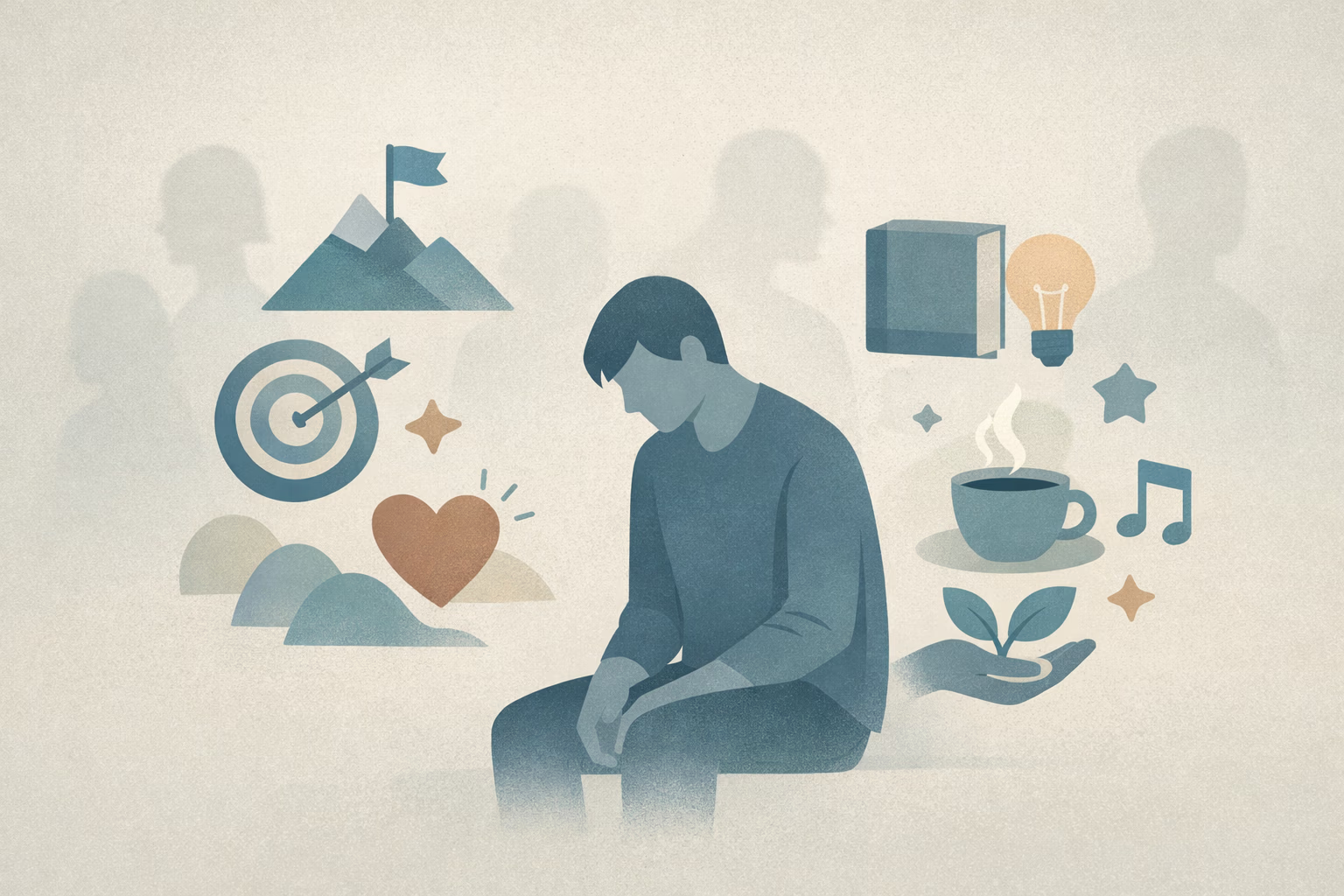
It’s not that the bigger life disappeared. It’s that the smaller rewards got louder.
A helpful distinction is relief versus fulfillment. Relief changes state. Fulfillment tends to arrive when something actually completes: a task finishes, a value is expressed, a relationship repairs, a body rests, a skill consolidates. Relief can be important, but it doesn’t automatically create the “done” signal that lets the nervous system stand down.
Instant gratification traps often form when relief becomes the default pathway to steadiness. The system stays in a wanting posture—seeking the next small downshift—while the deeper satisfactions of completion get postponed. The result can be a life that contains plenty of stimulation, but not enough integration. [Ref-6]
What if the craving is not for the thing—but for the off-switch?
Quick-reward loops don’t look the same for everyone. They often disguise themselves as “normal breaks” or “just taking the edge off.” The key is not the object, but the repeated role it plays: fast payoff that displaces slower completion.
Research on delay discounting describes how some systems learn to devalue delayed outcomes, especially under certain conditions and vulnerabilities. That doesn’t make a person broken; it describes a predictable learning bias. [Ref-7]
Purpose isn’t just an idea. It’s a lived sense that actions connect to identity over time. That connection strengthens when effort leads to completion and when completion can be felt as real. If most relief comes from quick rewards, the threads that create longer-term coherence can fray: projects stay half-started, relationships become more transactional, and personal values feel like slogans instead of anchors.
In this state, long-term goals don’t only feel difficult; they can feel unreachable in a way that’s hard to explain. It’s not necessarily pessimism. It’s the nervous system reading the goal as too delayed to regulate the present. When self-control science talks about persistence and long-term choice, it’s often describing capacity under conditions—not moral strength. [Ref-8]
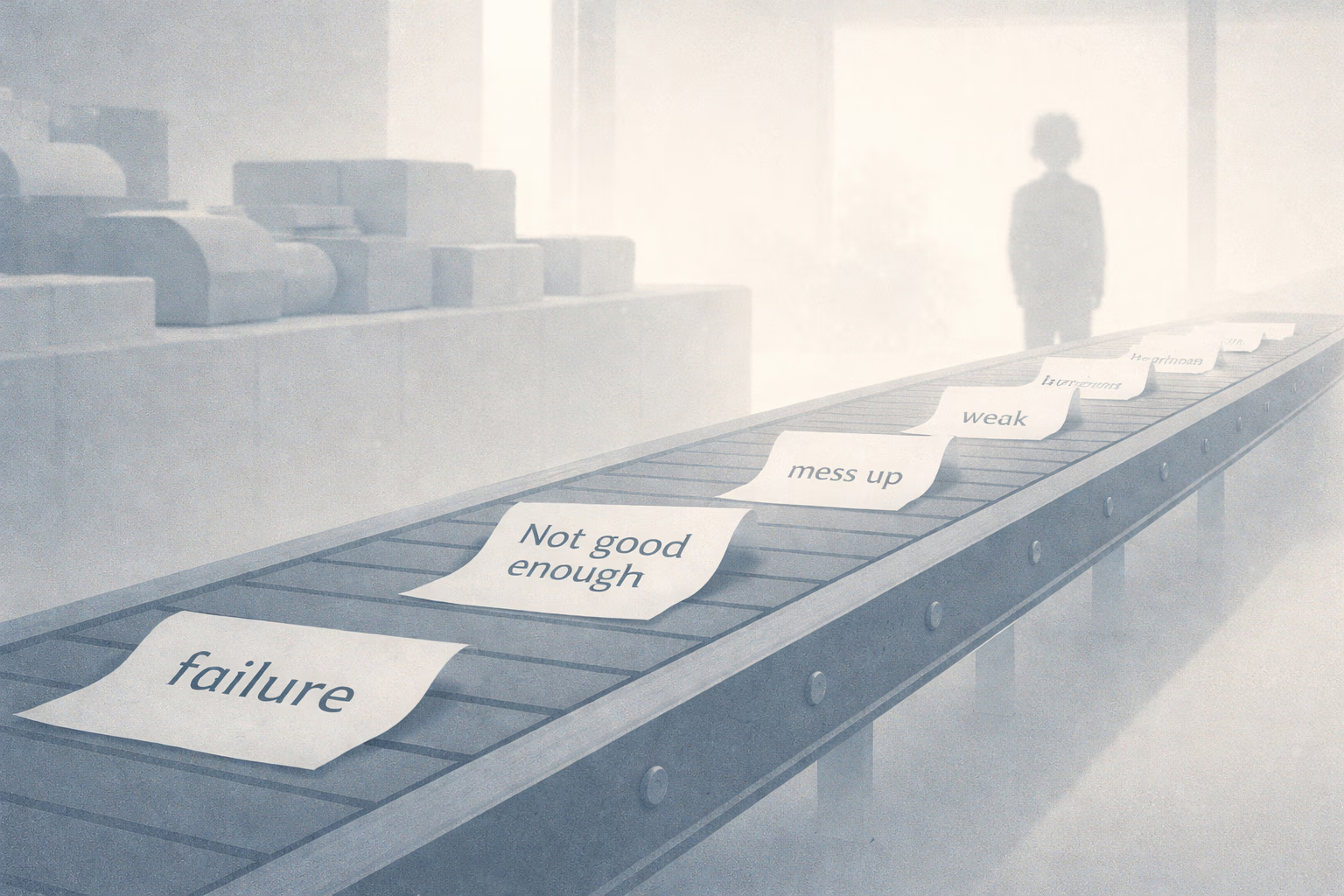
Over time, quick relief can train a predictive system: when discomfort rises, the brain expects immediate downshift. If the downshift doesn’t come, the system treats the gap as a problem to solve quickly. Effort and delay begin to carry a “costly” signal—not because they are inherently bad, but because the system has learned a shorter loop for restoring stability.
From a broader brain-theory perspective, nervous systems work to reduce prediction error and regain a workable model of what’s happening. When quick rewards reliably reduce internal friction, they become the model. When slower paths appear, they can feel noisy, uncertain, and inefficient—even when they are the ones that build a life. [Ref-9]
It’s not “I hate effort.” It’s “effort stopped promising closure.”
There’s a quiet shift that can occur when internal steadiness returns: discomfort is no longer automatically interpreted as an emergency requiring immediate escape. It can register as information—signal without alarm. This isn’t about insight or positive thinking. It’s about reduced load and restored capacity, so the system can stay oriented while something takes time.
In the research world, this territory is often discussed as distress tolerance: the ability to remain present with an uncomfortable state without needing instant state-change. Importantly, tolerance isn’t a personality trait so much as a condition-dependent capacity. When the system is resourced, delay is more tolerable; when it’s overloaded, immediacy becomes more compelling. [Ref-10]
When your system can hold a longer moment, a longer life becomes imaginable again.
Many instant gratification loops intensify in isolation. Not because people are failing socially, but because solo nervous systems have fewer external safety cues. Shared contexts—being seen, collaborating, belonging—can reduce background threat and make longer arcs feel possible again. In simple terms: it’s easier to persist when the environment is relationally settling.
This isn’t about being “dependent” on others. It’s about how humans regulate through co-presence and shared reality. When effort is connected to relationship and contribution, it tends to land as meaning, not just strain. Research on compassion and related processes points to how receiving warmth and support can influence well-being and inner threat responses. [Ref-11]
Sometimes the opposite of a quick fix isn’t discipline. It’s being accompanied.
As quick-reward dependence loosens, people often describe not a dramatic transformation, but a quieter return of range. Waiting becomes less edgy. Effort becomes less confrontational. The future feels more believable. These are signs of capacity returning—more signal bandwidth, less internal noise, and more reliable “done” signals when things actually complete.
Importantly, this isn’t a constant high-motivation state. It’s more like a steadier baseline where motivation can emerge and stay long enough to become identity: “I’m someone who follows through,” “I’m someone who builds,” “I’m someone who can finish.” Popular psychology often lists examples of instant gratification and its tradeoffs; what matters here is the felt shift from urgent relief to sustained direction. [Ref-12]
Pleasure isn’t the enemy of meaning. In a more coherent system, pleasure becomes supportive: it punctuates life, restores energy, and adds color. The difference is that pleasure no longer has to carry the whole job of regulation.
In a stabilized reward ecology, quick enjoyment doesn’t automatically trigger another reach, and it doesn’t erase the desire for long-term projects. It sits inside a larger story. Digital environments can intensify dopamine-related seeking, especially when rewards are variable and frequent; when that intensity eases, many people notice that ordinary pleasures become more satisfying again. [Ref-13]
When pleasure stops replacing the path, it can return to being part of it.
If you find yourself pulled into instant gratification, it can help to interpret it as a signal: the system is seeking fast regulation and fast closure in an environment that rarely lets experiences fully resolve. That’s not a personal deficit. It’s a predictable response to velocity, fragmentation, and constant availability of reward cues. [Ref-14]
Meaning tends to reappear when life contains more completion: endings that land, efforts that consolidate, relationships that repair, rest that actually restores. Agency grows when choices feel connected to values and identity—not because pressure increases, but because the nervous system can afford a longer horizon.
Not “how do I control myself?” but “what would make my life feel more finishable?”
Quick rewards can be comforting, especially in a world that asks for constant output while offering constant distraction. But lasting satisfaction usually arrives differently: when something completes and becomes part of who you are, not just what you consumed in a moment.
There is dignity in recognizing that the craving for immediacy often reflects a system doing its best to stabilize. When pleasure supports meaning—rather than substituting for it—life tends to feel less like chasing and more like inhabiting. [Ref-15]
From theory to practice — meaning forms when insight meets action.
The article frames it differently: it's a nervous system finding the quickest available downshift under load, speed, and constant input. A snack, a scroll, a purchase, a video — each can create brief relief, and each can leave the deeper system still running. The reward worked as state-change, not as completion. Over time, the gap between 'I want a meaningful life' and 'I can't initiate the thing' widens, and that gap can feel personal even when it's largely physiological. The hidden cost isn't moral; it's structural — when relief becomes the main method of regulation, meaning thins out.
Because reward systems are built to notice what is available and certain. Dopamine-related circuits don't simply code pleasure — they assign priority. When a reward is immediate, the system gets a crisp learning signal: this works, do it again. Delayed rewards require holding a thread through time, tolerating uncertainty, keeping the future emotionally real. That future-oriented circuitry is real and trainable, but it's load-sensitive. Under stress, sleep debt, or constant interruption, the brain doesn't become 'lazy' — it becomes efficient in the shortest horizon available. When the present feels intense, why wouldn't the system choose the fastest relief?
Yes. The article distinguishes relief from fulfillment. Relief changes state; fulfillment arrives when something completes — a task finishes, a value is expressed, a body rests, a skill consolidates. Instant gratification traps form when relief becomes the default pathway to steadiness. The system stays in a wanting posture, seeking the next small downshift, while deeper satisfactions of completion get postponed. The result: a life that contains plenty of stimulation, but not enough integration. The craving may not be for the thing — it may be for the off-switch.
It's quieter than people expect. Waiting becomes less edgy. Effort becomes less confrontational. The future feels more believable. Focus feels less brittle, small delays feel more survivable, satisfaction comes from completion rather than just stimulation. This isn't a constant high-motivation state; it's a steadier baseline where motivation can emerge and stay long enough to become identity: 'I'm someone who follows through.' Pleasure isn't the enemy of meaning — in a stabilized reward ecology, pleasure stops carrying the whole job of regulation and returns to being part of the path rather than replacing it.
From Science to Art.
Understanding explains what is happening. Art allows you to feel it—without fixing, judging, or naming. Pause here. Let the images work quietly. Sometimes meaning settles before words do.
One Quiet Window, one insight, one reflection — every Sunday