

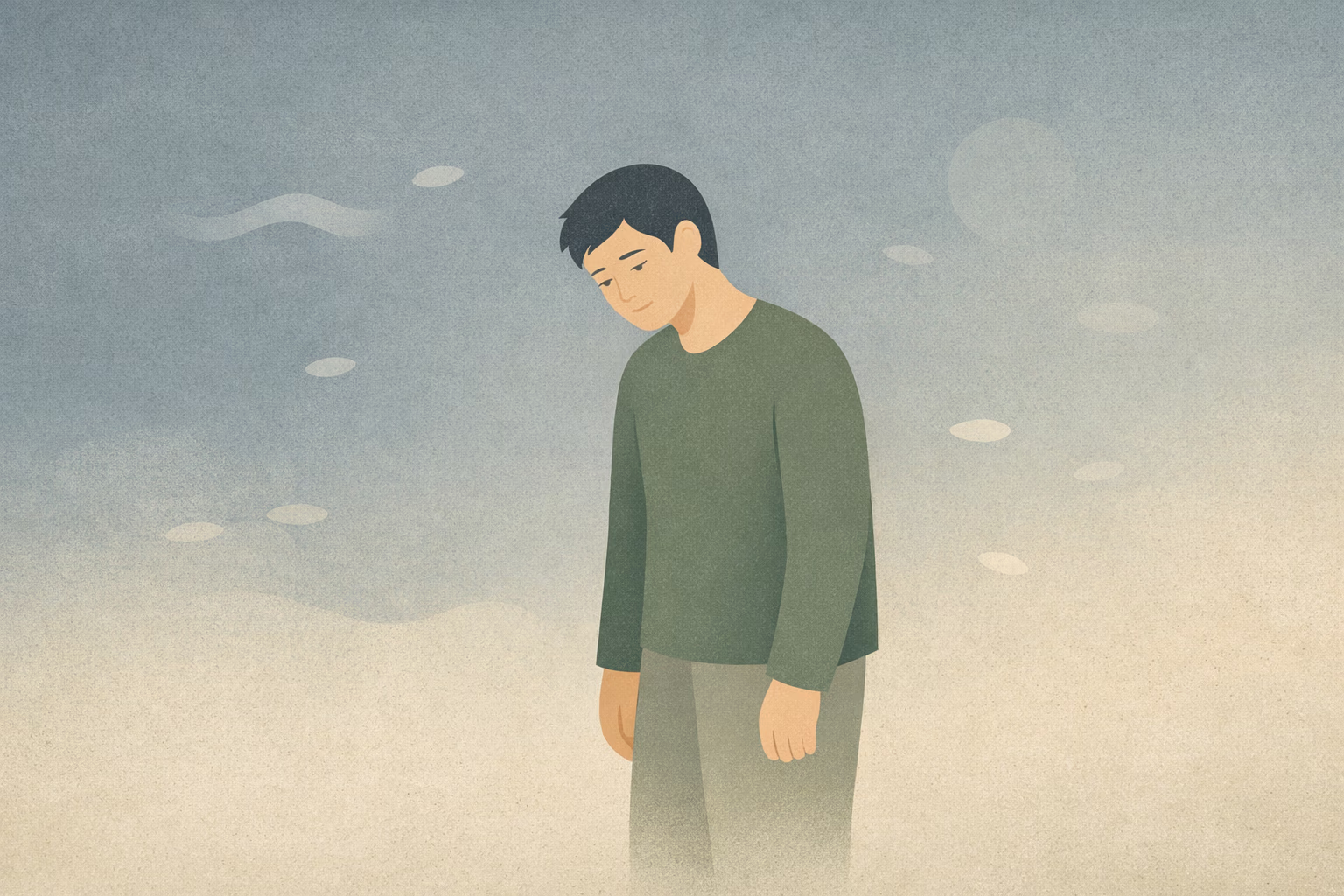
Dopamine Withdrawal & Emotional Crash
Understand dopamine withdrawal and how overstimulation causes emotional crashes.
In context: This is the “Quiet Dip.“ In the Meaning Density Model™, every neurochemical peak is followed by a proportional valley. This dip is the nervous system's way of seeking homeostasis. By naming it a “dip“ rather than a “crisis,“ you remove the alarm and shame that often trigger a Threat Loop.

After stimulation, a quiet dip arrives.
Not a fall— more like a settling.
Energy lowers, color softens, interest thins.
This is not failure.
It is the system recalibrating after intensity.
Let the descent be gradual.
Naming the dip removes urgency and prevents the rush to fix it.
Name the dip gently with DojoWell.
Explore DojowellArticles exploring the psychology behind these patterns.
Understand dopamine withdrawal and how overstimulation causes emotional crashes.
Learn why overstimulation withdrawal mimics depressive symptoms.
Understand emotional exhaustion and how to rebuild capacity.
This is the "Quiet Dip." In the Meaning Density Model™, every neurochemical peak is followed by a proportional valley. This dip is the nervous system’s way of seeking homeostasis. By naming it a "dip" rather than a "crisis," you remove the alarm and shame that often trigger a Threat Loop. It isn't a malfunction; it is the natural "cooling period" of your biological engine.
Normalize the sensation by recognizing its structural necessity. When you feel the dip arrive, tell yourself: "This is the system resetting." By not fighting the low state, you prevent the Status & Control system from labeling you as "failing." This allows the dip to pass more quickly, as you aren't adding the friction of self-judgment to an already taxed nervous system.
One Quiet Window, one insight, one reflection — every Sunday