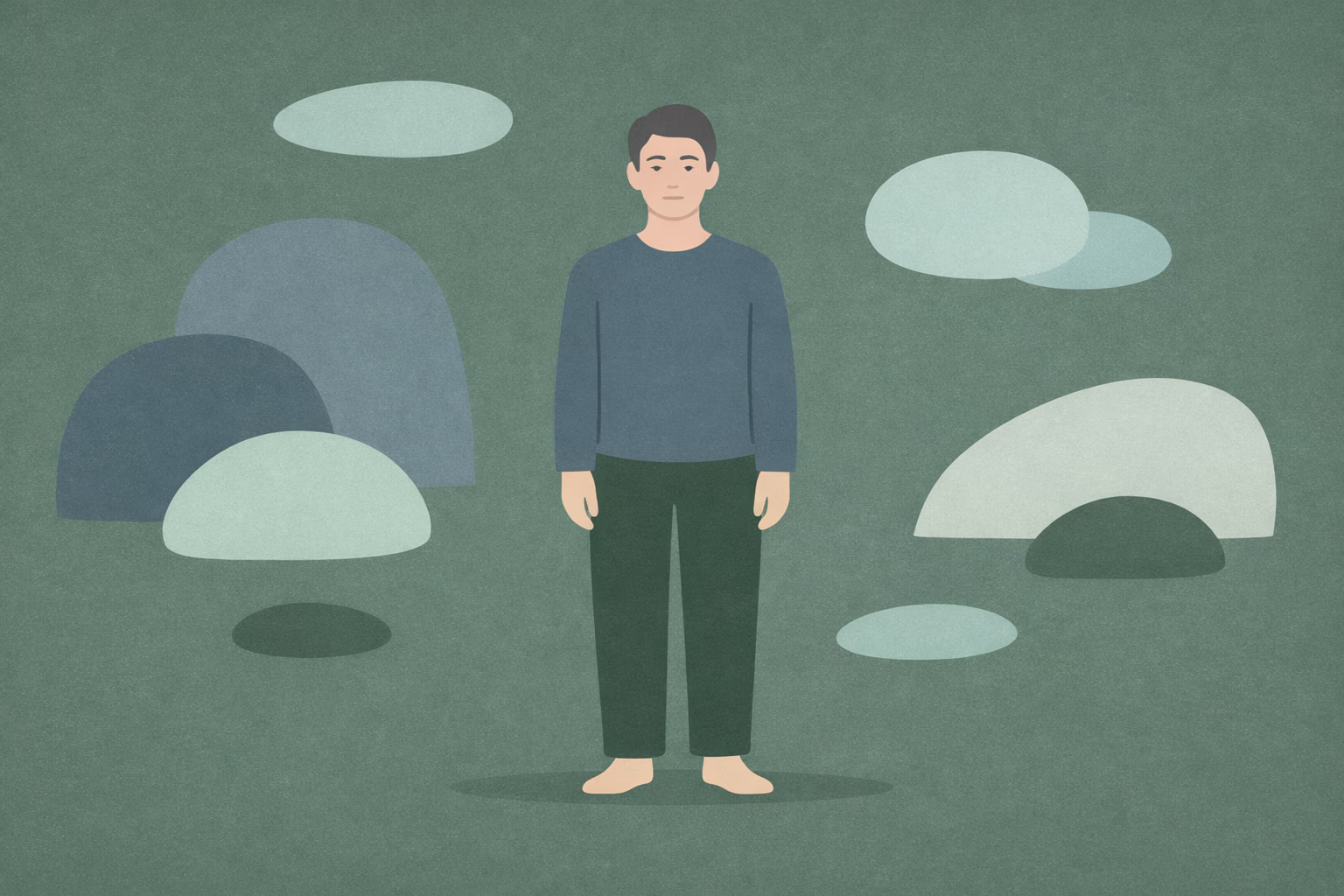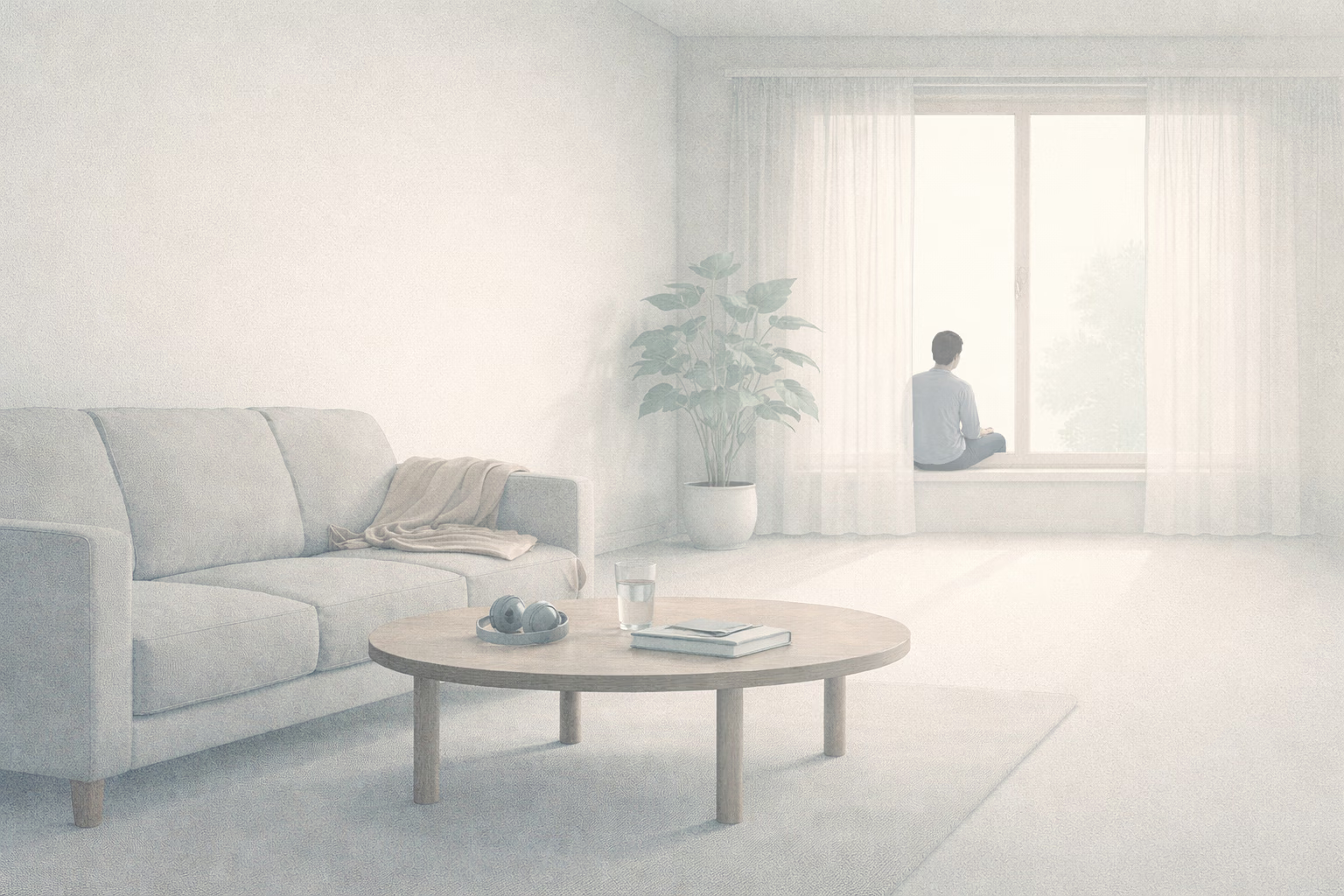

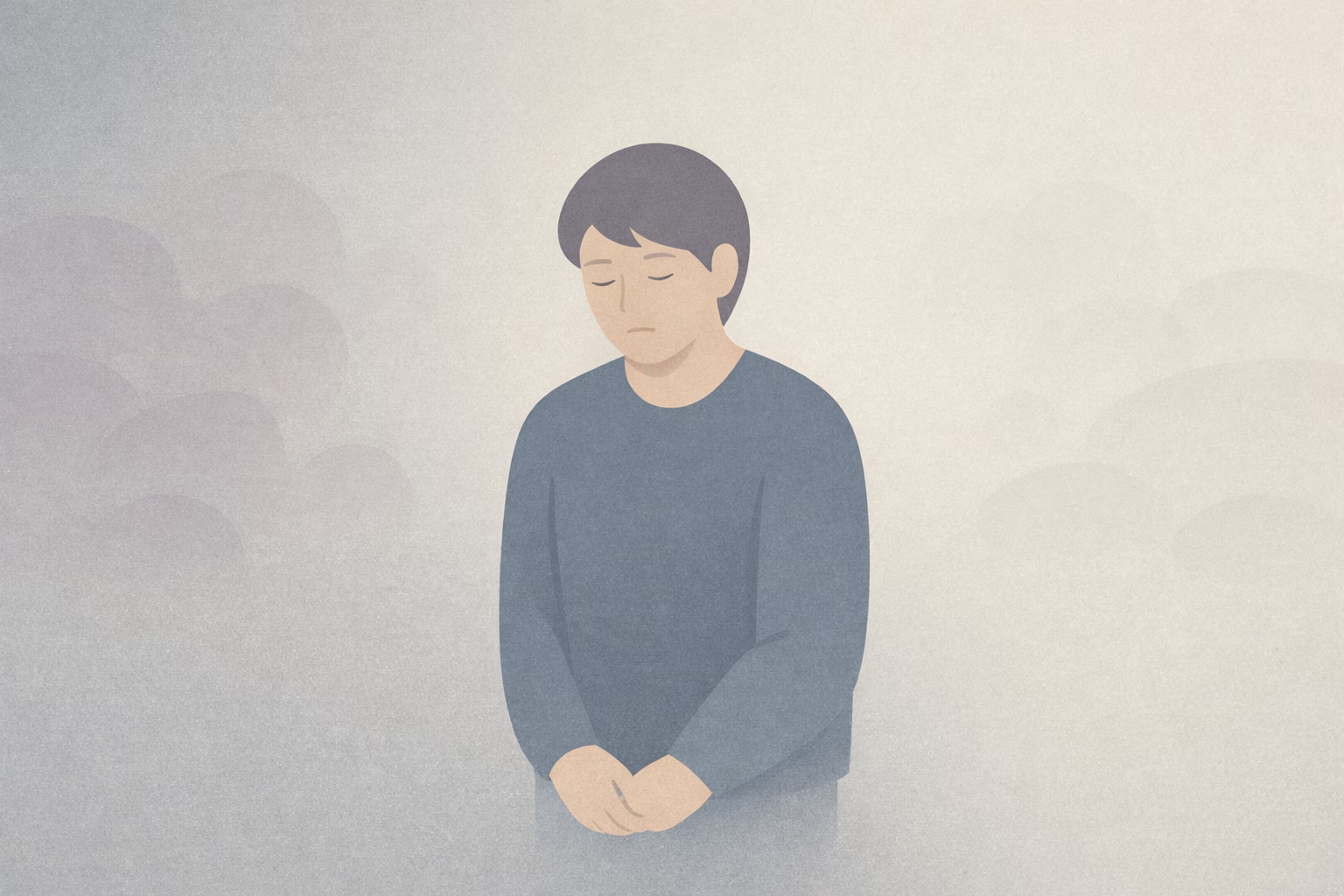
Psychological Withdrawal From Overstimulation
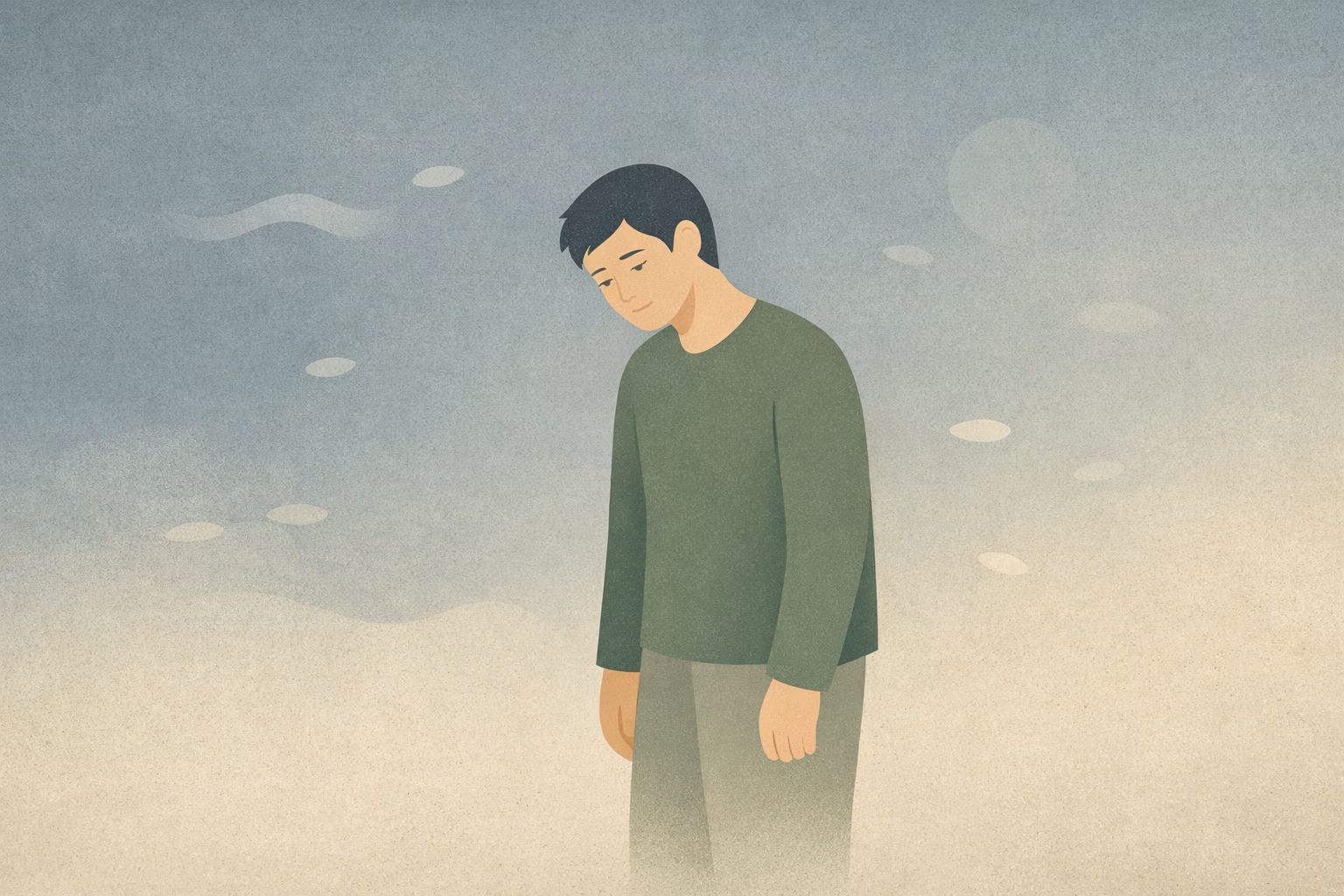
In short: The Crash After Constant Stimulation Sometimes the hardest part of “cutting back” on constant stimulation isn’t temptation—it’s the crash. The quiet can feel heavy. Your body can feel restless. Your mind can scan for something, anything, that will bring back a sense of color or momentum.
Sometimes the hardest part of “cutting back” on constant stimulation isn’t temptation—it’s the crash. The quiet can feel heavy. Your body can feel restless. Your mind can scan for something, anything, that will bring back a sense of color or momentum.
What if that flat, irritable, low-reward state is your system trying to stand down after being kept up too long?
In everyday language, people call this “dopamine withdrawal”: the slump that can follow sustained high-intensity input—endless scrolling, fast entertainment, constant novelty, frequent snacks, late-night content loops. It’s not a diagnosis or a moral verdict. It’s a predictable consequence of how reward systems adapt under load.
One of the most disorienting parts of a stimulation crash is the sense that nothing is worth doing. Not because you “don’t care,” but because your internal reward signal is temporarily muted. Ordinary cues—food, conversation, a shower, a simple task—don’t register as rewarding in the usual way. [Ref-1]
This can show up as emptiness, low mood, restlessness, irritability, or a strange impatience with anything slow. You might notice a desire to “skip ahead” in life—like the present moment is underpowered.
It’s not that life suddenly has no meaning. It’s that the meaning signal is having trouble getting through the noise floor.
Dopamine isn’t a simple “pleasure chemical.” It’s deeply involved in reward learning, salience, and the sense that something is worth moving toward. When you get repeated high-intensity reward cues, the brain can adapt by turning the sensitivity down—so that the same inputs produce less impact over time. [Ref-2]
That adaptation can be protective in the short term. But it has a cost: when the stimulation stops, baseline can feel like a drop. The crash isn’t proof that you’re broken—it’s often the after-image of a system that has been asked to run hot for too long.
Why does it feel so urgent?
Because your attention and motivation machinery has been trained to expect frequent reward signals. When the signals slow down, the system can interpret it as “something’s missing,” even if you’re physically safe.
Human reward circuitry evolved in environments where rewards were irregular: food required searching, social approval required effort, novelty came in small doses. Our brains became skilled at persisting through stretches of low reward because that was normal.
Modern stimulation is different. It can provide rapid novelty, quick social feedback, and endless “next” cues with little completion. In that mismatch, the nervous system doesn’t just consume more—it recalibrates what “normal” reward intensity feels like. Over time, low-intensity life can start to feel like deprivation, even when it’s simply baseline. [Ref-3]
This is less about weak will and more about conditioning plus physiology: repeated high-frequency reward cues teach the system to treat high intensity as expected.
Stimulation often provides immediate state change: a lift, a burst of interest, a sense of escape from dullness, pressure, or internal noise. That can look like “motivation,” but it’s frequently closer to temporary mobilization—an external spark that overrides a tired system. [Ref-4]
In Meaning Density terms, this is relief without closure. The state shifts, but the underlying loops that need completion—fatigue, unfinished tasks, social disconnection, decision overload—haven’t resolved. So the nervous system stays on standby, and the next hit becomes more compelling.
Constant stimulation can mimic restoration. You feel more awake, more interested, less stuck. But if the “better” is coming from repeated spikes rather than completion and recovery, the system may pay for it afterward.
Over time, the contrast grows: high-intensity input feels functional; regular life feels thin. This is where people start describing a deeper emptiness after the screen goes dark or the novelty ends—an emotional and motivational after-drop that can resemble anhedonia (reduced capacity to feel reward). [Ref-5]
The crash isn’t a punishment. It’s a nervous system accounting statement.
In an Avoidance Loop, the system learns that low mood or low energy should be bypassed quickly, not allowed to resolve. The sequence becomes self-reinforcing: a dip appears, stimulation removes the dip temporarily, and the brain stores that pairing as the fastest route back to “okay.”
But the dip isn’t just a mood problem—it can be a load signal. If fatigue, overstress, or depleted reward sensitivity is underneath, then the brief lift can be followed by a sharper drop, which increases urgency for the next lift. [Ref-6]
This loop can feel personal (“Why can’t I just stop?”) while being largely mechanical: cue → spike → downshift → cue.
The word withdrawal can sound dramatic, but the lived experience is often simple: a cranky, bored, under-rewarded nervous system searching for a fast reset. The discomfort isn’t necessarily “fear” or “suppression.” It’s a consequence of muted reward signaling plus an unfinished need for closure.
Common experiences include:
Many people interpret these signs as laziness or lack of character. A more accurate frame is: the system is recalibrating, and the “done signal” hasn’t returned yet. [Ref-7]
With chronic overstimulation, baseline functioning can start to rely on external inputs: not just entertainment, but background noise, constant checking, frequent treats, constant novelty. It can feel like life won’t start until the stimulation starts.
That dependence isn’t an identity. It’s a form of externalized regulation: instead of internal cycles completing and settling, the system is repeatedly propped up. Over time, this can resemble chronic fatigue and emotional numbness—not because feelings are “blocked,” but because the reward and arousal systems are taxed and flattened. [Ref-8]
Why does rest feel hard?
Because rest without closure can feel like being trapped in low signal. When the nervous system has been trained on constant “next,” stillness can register as under-stimulating rather than safe.
After a crash, reaching for stimulation is understandable. It works quickly, and the brain remembers that. The problem is structural: re-stimulation interrupts the low-reward phase before the system can complete its recalibration.
When that interruption repeats, the nervous system gets fewer chances to reestablish sensitivity and steadier reward learning. The result can be a pattern of short cycles—brief highs, then shorter and sharper lows—where baseline never quite returns. [Ref-9]
If the system never gets “enough time at idle,” it can’t relearn what calm reward feels like.
It helps to separate two experiences that can feel identical: emptiness as loss of meaning, and emptiness as a temporary low-reward state. One is existential. The other is physiological and informational—your reward system is turning down the noise and trying to find its original range again. [Ref-10]
This is why “understanding what’s happening” can be comforting but still insufficient. Insight explains the mechanism, but integration looks like something else: a gradual return of stable interest, steadier pacing, and a felt sense that small things can land again—without needing a spike.
In Meaning Density terms, the bridge isn’t built by forcing inspiration. It’s built when life starts to deliver completion: fewer open loops, fewer abrupt resets, more experiences that reach a natural end.
During a crash, high-intensity input can feel like the only thing strong enough to register. But many nervous systems respond differently to low-intensity connection: not performative, not evaluative, not optimized—just coherent and human.
This matters because reward systems are social systems too. Warmth, belonging, and predictable contact can provide safety cues that lower overall load, which indirectly supports the return of reward sensitivity. When anhedonia-like flatness is present, supportive connection can be a stabilizer even when it doesn’t feel “exciting.” [Ref-11]
Sometimes what helps isn’t more stimulation. It’s fewer demands on the system while it comes back online.
As reward expectancy and learning begin to normalize, the shift is often quiet. Not a sudden “spark,” but small signals returning: a faint pull toward a task, a little satisfaction after finishing something, a gentle preference for one choice over another. [Ref-12]
That subtlety can be confusing in a culture that equates motivation with intensity. But stability is usually low-drama. Coherence tends to arrive as:
These are signs of a system that can settle again—where reward isn’t constantly chased because it’s more reliably available.
Recovery, in this context, isn’t about becoming perfectly “disciplined” or removing pleasure. It’s about stepping out of a pattern where intensity substitutes for completion, and where stimulation replaces restoration.
When pacing returns, the nervous system doesn’t have to be convinced to participate in life. It begins to cooperate. The desire for constant spikes often softens when baseline becomes livable again—when the day contains more endings, more coherence, and fewer abrupt interruptions. [Ref-13]
In other words: the win isn’t “never wanting stimulation.” The win is not needing it to feel real.
If you’re in the crash phase, it can help to name it for what it is: a reward system downshift after prolonged upshift. That discomfort is often evidence of adaptation in progress—not a sign that you’ve ruined your brain or that your life is inherently dull. [Ref-14]
Agency returns most reliably when the nervous system gets closure: when inputs slow enough for the system to stand down, when experiences finish, and when identity isn’t forced to chase intensity to feel present. In that space, meaning tends to re-form—not as a thought, but as a settled sense of “this counts.”
There is a particular kind of temporary emptiness that isn’t a void—it’s a clearing. Not pleasant, not glamorous, but often honest: the nervous system noticing what happens when the fireworks stop.
Many people discover that what they were calling “boredom” was also a request for a different kind of life signal—one with more completion, less fragmentation, and fewer forced peaks. And that raises a gentle question worth holding: is a short season of low-reward quiet sometimes the price of long-term clarity and vitality? [Ref-15]
From theory to practice — meaning forms when insight meets action.
Because your internal reward signal is temporarily muted, not because life suddenly has no meaning. Dopamine isn't a simple pleasure chemical — it's involved in reward learning, salience, and the sense that something is worth moving toward. When you've been getting repeated high-intensity reward cues, the brain adapts by turning sensitivity down so the same inputs produce less impact. When stimulation stops, baseline can feel like a drop. Ordinary cues — food, conversation, simple tasks — don't register the way they used to. The meaning signal is having trouble getting through the noise floor while the system tries to recalibrate.
It's not a clinical diagnosis, but it describes a real pattern: a cranky, bored, under-rewarded nervous system searching for a fast reset after sustained high-intensity input. Common signs are boredom that feels agitating rather than restful, irritability at small delays, emotional flatness or 'nothing hits,' strong urges to re-stimulate immediately, and difficulty starting ordinary activities. Many people read these as laziness or character flaws. A more accurate frame: the system is recalibrating, and the Done Signal hasn't returned yet. The discomfort is consequence of muted reward signaling plus an unfinished need for closure.
Because re-stimulation interrupts the low-reward phase before the system can complete its recalibration. The Avoidance Loop runs: dip appears, stimulation removes it temporarily, brain stores that pairing as the fastest route back to okay. But the dip isn't just a mood problem — it's a load signal. The brief lift is followed by a sharper drop, which increases urgency for the next lift. When that interruption repeats, the system gets fewer chances to reestablish sensitivity. You end up in short cycles: brief highs, shorter and sharper lows, baseline that never quite returns.
Subtly. Recalibration isn't a sudden spark — it's small signals returning: a faint pull toward a task, a little satisfaction after finishing something, a gentle preference for one choice over another. That subtlety can be confusing in a culture that equates motivation with intensity, but stability is usually low-drama. Coherence arrives as less urgent scanning for a hit, more tolerance for ordinary pace, more follow-through without bargaining, more 'that was enough' after completion. The win isn't never wanting stimulation. The win is not needing it to feel real. Meaning Density rebuilds when life delivers more endings and fewer abrupt resets.
From Science to Art.
Understanding explains what is happening. Art allows you to feel it—without fixing, judging, or naming. Pause here. Let the images work quietly. Sometimes meaning settles before words do.
One Quiet Window, one insight, one reflection — every Sunday