Dopamine Withdrawal: The Crash After Constant Stimulation
In short: Many people describe a specific modern kind of tired: not sleepiness, but a restless flatness. You can be busy all day, stimulated all night, and still feel like nothing “lands.” Simple pleasures don’t register.
Many people describe a specific modern kind of tired: not sleepiness, but a restless flatness. You can be busy all day, stimulated all night, and still feel like nothing “lands.” Simple pleasures don’t register. Quiet feels irritating. Your mind keeps reaching for the next hit of novelty.
What if that isn’t a motivation problem—what if it’s your reward system trying to find baseline again?
“Dopamine recalibration” is a useful everyday phrase for a real phenomenon: when reward sensitivity has been pushed toward fast, high-intensity inputs, the nervous system can start treating ordinary life as underwhelming. Recalibration is the gradual return of signal clarity and steadier reward response after chronic overstimulation—not a moral reset, and not a personal defect.
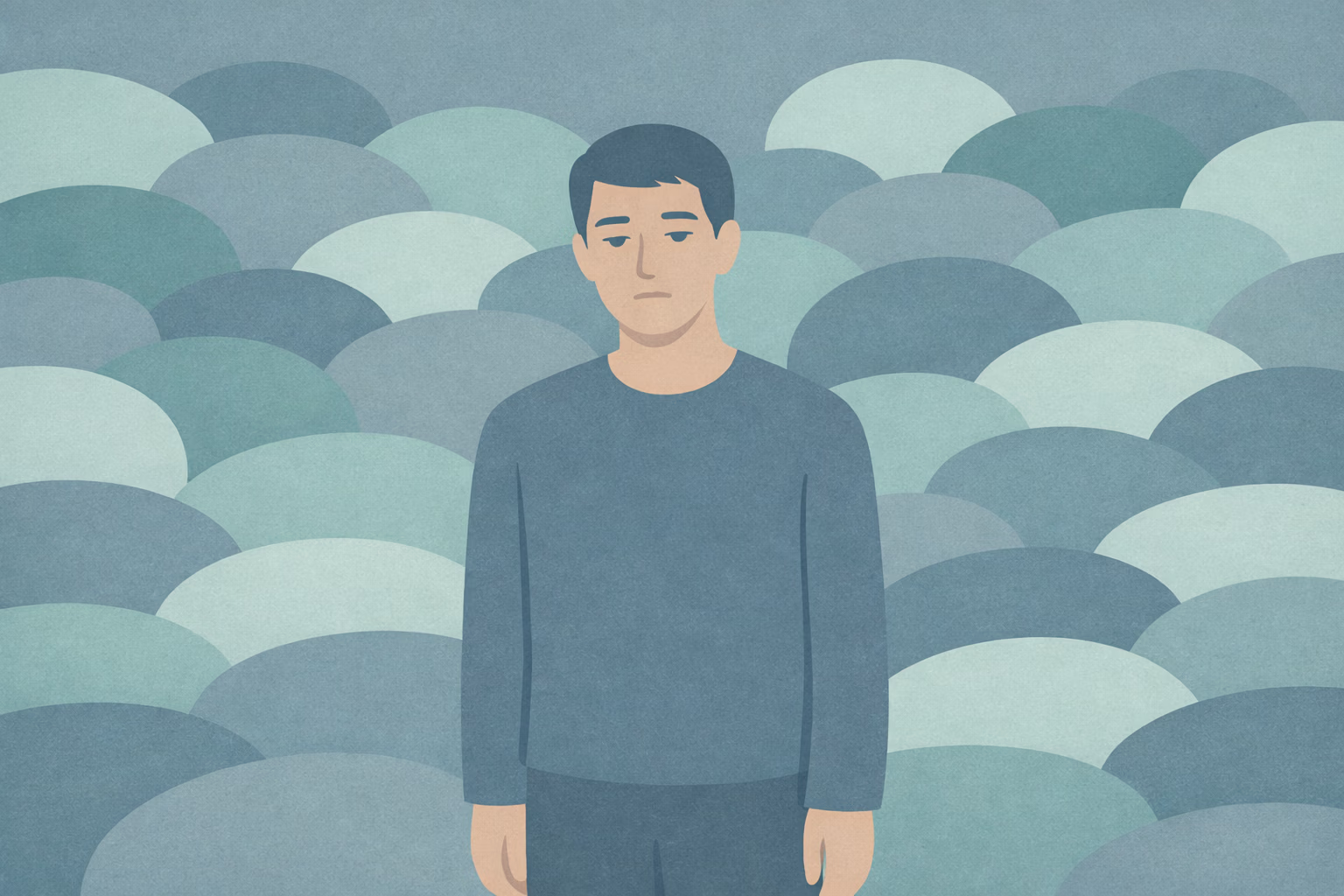
A common sign of reward overload is the combination of drained and restless at the same time. You’re not energized, but you also can’t settle. You may keep cycling through apps, snacks, tabs, purchases, or plans—then wonder why you feel even less satisfied afterward.
This pattern can look like “lack of discipline,” but it often reflects a nervous system that has been trained to expect frequent reward spikes. When the baseline has shifted, ordinary cues (a meal, sunlight, a conversation, a book) can feel too quiet to register as rewarding. That can create a state where your system keeps scanning for intensity just to feel normal. [Ref-1]
Dopamine is often described as “pleasure,” but in the brain it’s deeply tied to learning, salience, and reward prediction—what stands out, what feels worth moving toward, what your system flags as important. When life contains frequent, rapid novelty (endless feeds, short videos, constant alerts), the reward system can adapt by reducing responsiveness to lower-intensity rewards. [Ref-2]
This is not a character flaw. It’s a normal biological adjustment to repeated high-amplitude inputs. If your daily environment repeatedly delivers fast reward cues with minimal effort or delay, your nervous system can start treating that intensity as the expected baseline. Over time, slower activities may not trigger the same “this matters” signal—even if you still intellectually value them.
Sometimes the problem isn’t that life has nothing to offer—it’s that the signal-to-noise ratio has collapsed.
Human reward circuitry evolved in environments where novelty was intermittent, effort mattered, and rewards were often delayed. In that context, strong reward signals helped survival: seek food, pursue learning, maintain social bonds, conserve energy when resources were uncertain.
Modern digital environments invert that pattern. Novelty is abundant, friction is low, and cues are engineered to be frequent and personalized. The system that once helped you orient toward meaningful gains can become saturated by constant opportunities for micro-reward. A mismatch like this can create dysregulation without anyone doing anything “wrong.” [Ref-3]
High-stimulation inputs don’t only create pleasure; they also create temporary state change. When your nervous system is carrying pressure—uncertainty, social evaluation, incomplete tasks, unclosed conversations—fast stimulation can interrupt that load and give a short-lived sense of relief or momentum.
That’s why the loop can feel so compelling. The stimulation isn’t “bad”; it’s doing a job: providing a quick bypass of internal friction and a fast route to activation. The cost is that frequent bypass can prevent the system from completing loops that would naturally settle the body and restore baseline reward sensitivity. [Ref-4]
When you reach for stimulation, what might your system be trying to change: energy, relief, or closure?
In an overstimulated rhythm, “reward” can become synonymous with peaks: bigger, faster, louder, more. But the nervous system distinguishes between a sharp spike and a sustainable sense of reward. Spikes are brief. They can be followed by a trough—fatigue, irritability, or the sense that you need “one more” to feel okay.
Sustainable reward tends to feel quieter: satisfaction, ease, and a sense of “done.” That “done” signal matters because it tells the system it can stand down. When experiences don’t complete, the nervous system keeps scanning, seeking, and refreshing—often mistaking more stimulation for completion. [Ref-5]
One way to describe dopamine recalibration is to name the loop that often forms in high-stimulation environments. The loop isn’t a moral failure; it’s a predictable regulatory cycle under conditions of rapid reward.
Over time, this cycle can fragment attention and reduce the brain’s tolerance for low-intensity states—states that are often necessary for integration, learning consolidation, and natural completion. [Ref-6]
Because this is a systems issue, it often shows up as patterns rather than one dramatic symptom. People may say: “I can’t enjoy anything,” “I’m bored instantly,” or “I have no motivation,” while still being highly reactive to notifications, short-form content, or last-minute urgency.
Common presentations include:
These are not identities. They’re the nervous system doing its best to regulate in a context of high frequency reward cues and limited closure. [Ref-7]
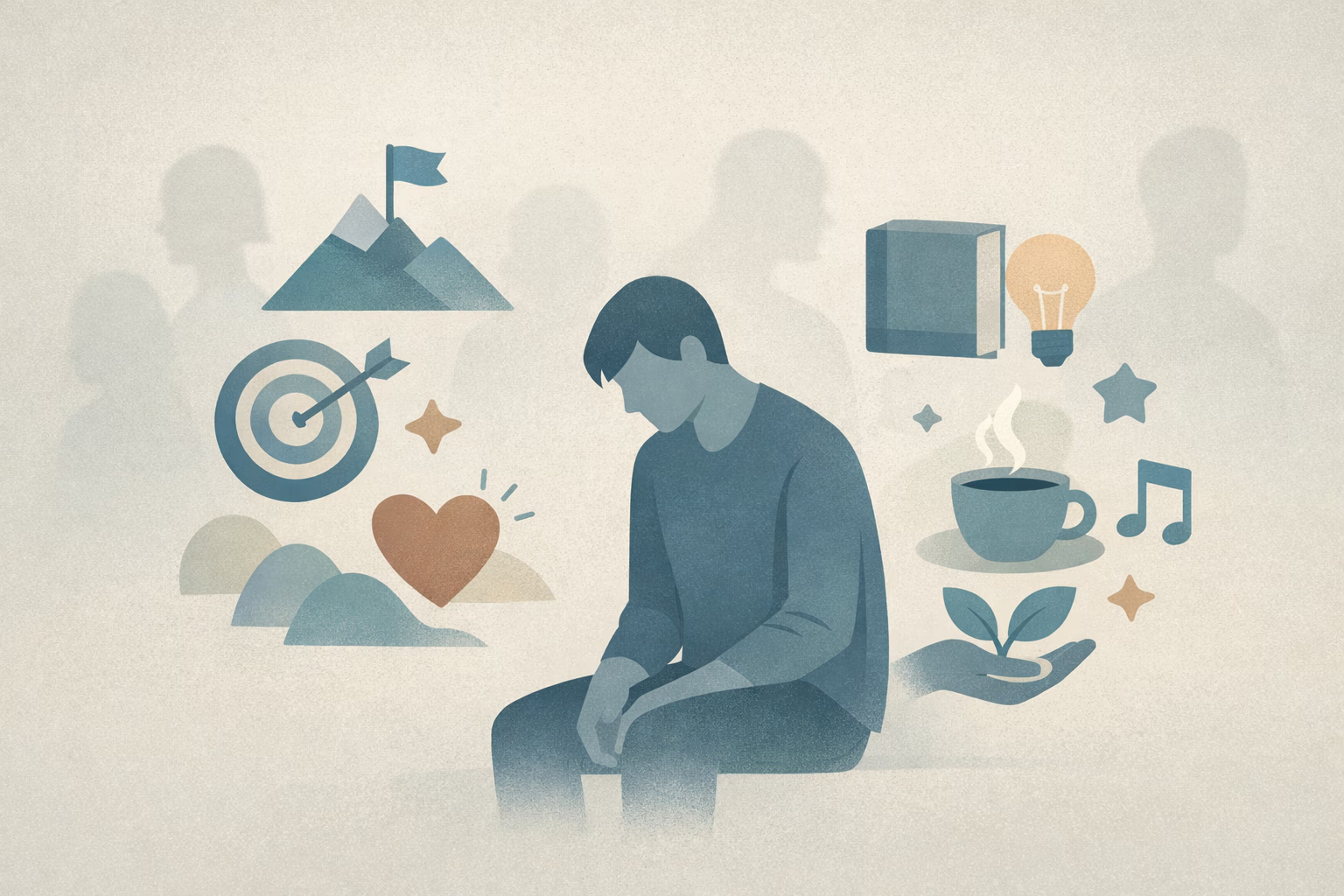
Joy often requires a certain kind of room: enough quiet for cues to register, enough continuity for experiences to complete, enough steadiness for the body to feel safe staying with something. In a high-velocity attention economy, those conditions are repeatedly interrupted.
When interruption becomes the norm, intrinsic motivation can weaken—not because you don’t care, but because the system has learned that reward is external, fast, and constantly replaceable. Patience declines. Depth feels like effort without payoff. Meaning can start to feel like a concept you agree with rather than a lived orientation that stabilizes you. [Ref-8]
Sometimes the ache isn’t “I need more.” Sometimes it’s “I need things to be finishable.”
Recalibration is often slowed by a structural problem: many low-intensity states (waiting, single-tasking, ordinary effort, mild loneliness, uncertainty) are the very states where the nervous system would normally return to baseline. But in an overstimulated environment, those states are quickly interrupted.
This isn’t best explained as “fear of feelings.” It’s more mechanical: discomfort becomes a cue for immediate state-change. The moment friction appears, a bypass is available. And when bypass becomes automatic, the system doesn’t get the chance to complete the cycle that would produce closure and allow reward sensitivity to normalize.
In this sense, overstimulation can function like perpetual “open tabs” in the body—nothing catastrophically wrong, but too many unfinished loops to fully rest. [Ref-9]
The popular phrase “dopamine detox” can be misleading if it suggests a toxin or a quick cleanse. Dopamine isn’t something to purge; it’s a core signaling system. What people are often pointing to, more accurately, is a reduction of extreme peaks so the nervous system can regain sensitivity to ordinary rewards. [Ref-10]
Recalibration, in this frame, is less about dramatic deprivation and more about restoring proportion: fewer rapid spikes, more experiences that can complete, and a gradual reintroduction of rewards that are lower-intensity but more stable. The goal isn’t to become “pure” or perfectly disciplined. It’s for the body to stop needing constant intensity to feel oriented.
What changes when you stop treating stimulation as the only doorway to relief?
Human connection isn’t merely “nice”—it is a powerful regulator of reward and safety systems. Social cues (warmth, shared attention, being understood, small moments of reciprocity) provide a different kind of reward: one that often reduces threat load while increasing meaning coherence.
Where digital stimulation tends to amplify speed and novelty, relational reward tends to support steadiness, pacing, and completion. A conversation ends. A shared meal has a natural arc. Even brief, kind contact can carry a “settled” quality that the nervous system recognizes as safe enough to stand down.
This is one reason connection can recalibrate more effectively than intensity. It doesn’t just change state; it helps restore baseline conditions where reward can be felt again. [Ref-11]
When reward sensitivity begins to return, it often doesn’t arrive as a dramatic “high.” It can show up as small, almost forgettable shifts: music sounding fuller, food tasting more nuanced, a walk feeling mildly satisfying, a task feeling startable without a surge of urgency.
This matters because it points to a deeper change than mood. It suggests the system is regaining its ability to register low-intensity rewards and to learn from them. Over time, this can support clearer motivation—not forced motivation, but the kind that arises when actions reliably lead to completion and a sense of internal “yes, that counted.” [Ref-12]
Overstimulation trains the nervous system to equate “more” with faster and louder. But human reward systems also respond to depth: learning, mastery, relationship, craft, nature, spiritual orientation, service, play with continuity. These experiences tend to build meaning because they have arcs—beginnings, middles, endings—and they leave a residue of identity: “this is part of who I am.”
From an evolutionary mismatch perspective, many modern high-reward environments function like supernormal stimuli—intense signals that outcompete older, steadier rewards. That can narrow the field of what feels worth doing. Recalibration widens it again, making room for pleasures that are slower but more stabilizing. [Ref-13]
Pleasure that integrates you is different from pleasure that only accelerates you.
It can help to hold dopamine imbalance with dignity: not as “damage,” and not as a personal failure, but as a reversible adaptation to an environment that runs faster than human nervous systems evolved to process. When conditions repeatedly interrupt closure and amplify reward peaks, many bodies respond in the same predictable ways. [Ref-14]
Agency often returns not through pressure, but through coherence—when life contains more experiences that can complete, more cues of safety, and more alignment between what matters to you and what your days repeatedly reinforce. In that kind of context, the reward system doesn’t have to be forced into balance; it can gradually remember it.
The modern promise is often intensity: unlimited options, constant novelty, endless “next.” But the nervous system isn’t restored by endlessness. It stabilizes when experiences resolve, when attention can land, and when rewards connect to a life that feels like it belongs to you.
In a culture shaped by hedonic adaptation, it’s easy to mistake bigger stimulation for better living. Recalibrated reward tends to feel quieter than the peak—but more trustworthy. Less like a rush, more like presence. Less like chasing, more like arriving. [Ref-15]
From theory to practice — meaning forms when insight meets action.
Because reward sensitivity has shifted. The article describes this specific modern tired — drained and restless at the same time. When the nervous system has been trained to expect frequent high-amplitude reward spikes, ordinary cues like a meal, sunlight, or a real conversation start feeling too quiet to register. The signal-to-noise ratio collapses. It looks like 'lack of discipline,' but it's really a normal biological adjustment to repeated rapid inputs. Your system isn't broken — it's keeping pace with an environment that taught it intensity is the baseline, so anything slower stops triggering the 'this matters' response.
No, and the article draws the distinction carefully. Spikes are brief peaks often followed by a trough — fatigue, irritability, or the sense that you need 'one more' to feel okay. Sustainable reward feels quieter: satisfaction, ease, and a Done Signal. That settled signal matters because it tells the system it can stand down. When experiences don't complete, the nervous system keeps scanning, seeking, and refreshing — often mistaking more stimulation for completion. The Pleasure Loop runs on intensity; vitality runs on closure. Bigger and louder doesn't restore baseline; it usually pushes it further out of reach.
Because the very states that allow recalibration — waiting, single-tasking, ordinary effort, mild boredom, uncertainty — are the ones an overstimulated environment interrupts fastest. The article frames this mechanically rather than as a feelings problem: discomfort becomes a cue for immediate state-change. The moment friction appears, a bypass is available, and bypass becomes automatic. The system never gets the chance to complete the cycle that would produce closure and let reward sensitivity normalize. Overstimulation runs like perpetual open tabs in the body — nothing catastrophically wrong, but too many unfinished loops to fully rest.
Gradual and ordinary, not dramatic. The article describes small, almost forgettable shifts: music sounding fuller, food tasting more nuanced, a walk feeling mildly satisfying, a task feeling startable without a surge of urgency. Patience returns. Experiences feel finishable. Identity feels less fragmented. This isn't a 'high' returning — it's the system regaining its ability to register low-intensity rewards and learn from them. Recalibration isn't a purge or a moral reset; it's the reduction of extreme peaks so baseline can return. Pleasure that integrates you is different from pleasure that only accelerates you.
From Science to Art.
Understanding explains what is happening. Art allows you to feel it—without fixing, judging, or naming. Pause here. Let the images work quietly. Sometimes meaning settles before words do.
One Quiet Window, one insight, one reflection — every Sunday