
The Numb–Crave–Crash Cycle: Modern Life’s Emotional Loop
In short: Sometimes life doesn’t feel terrible—it just feels muted. The shows are fine, the food is fine, the scrolling is fine, and yet nothing lands. You can keep adding stimulation and still feel oddly unsatisfied, like your internal “yes” signal is stuck on low volume.
Sometimes life doesn’t feel terrible—it just feels muted. The shows are fine, the food is fine, the scrolling is fine, and yet nothing lands. You can keep adding stimulation and still feel oddly unsatisfied, like your internal “yes” signal is stuck on low volume.
This is not a character flaw. It’s often what a loaded reward system looks like when it’s been asked to run at high intensity without enough recovery or completion. When inputs arrive faster than the nervous system can integrate them, pleasure can flatten—not because you’re broken, but because your system is protecting itself from constant peaks.
What if “flat” isn’t the absence of joy—just a nervous system that hasn’t been able to come to rest?
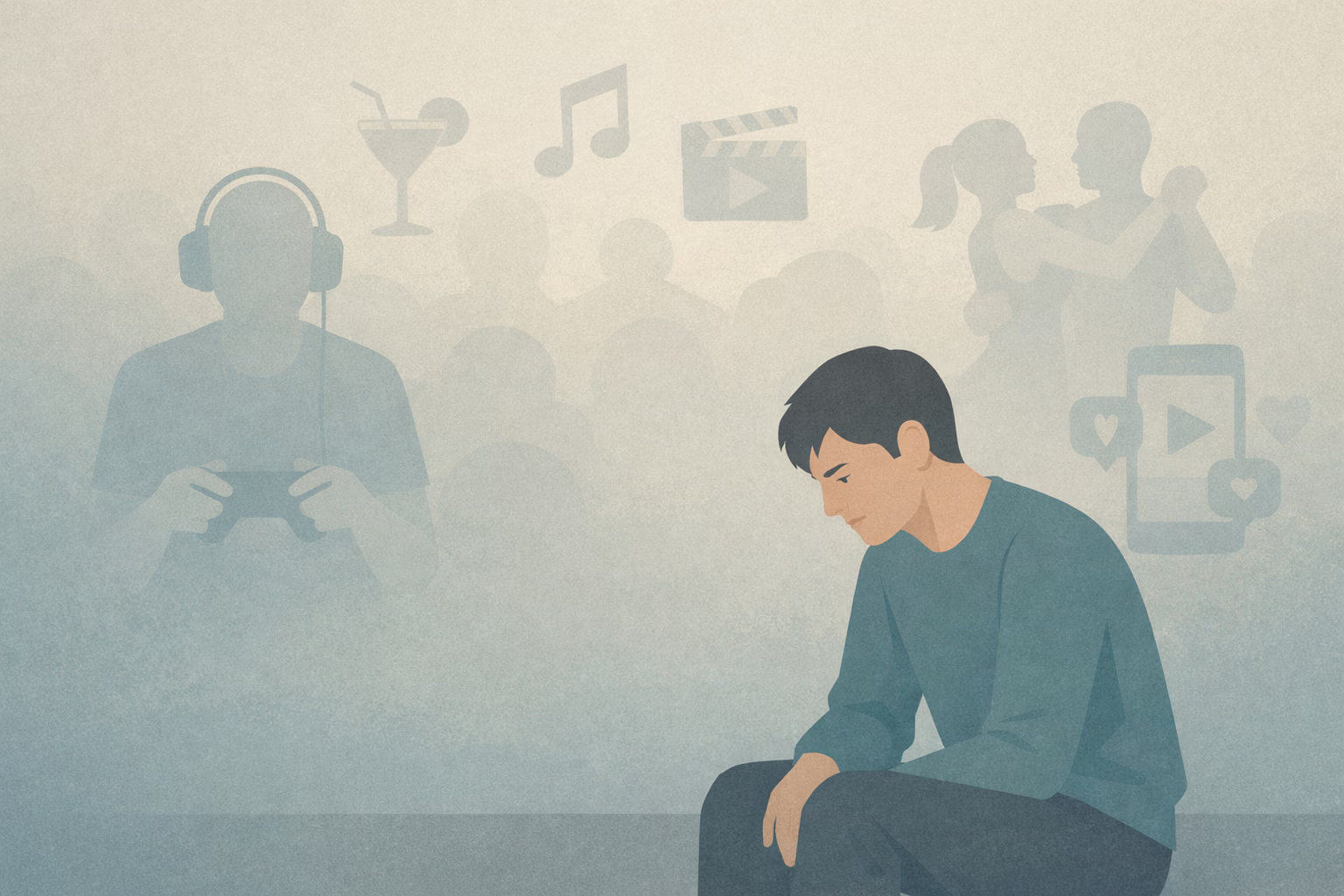
A pleasure plateau often shows up as a strange mismatch: you’re surrounded by options, yet you’re bored; you’re entertained, yet you’re restless. The reward system can keep pursuing “something,” even while the felt experience of liking doesn’t fully arrive. This gap between wanting and enjoying is a common feature of overstimulated reward circuitry. [Ref-1]
People describe it in everyday language: nothing hits, everything is “meh,” small joys feel distant, and quiet moments feel intolerably blank. It can be confusing because the external life may look full, but the internal signal of satisfaction doesn’t complete.
Reward systems are plastic. When a circuit receives frequent high-intensity signals, it doesn’t stay equally responsive forever; it recalibrates. This can look like reduced sensitivity to everyday rewards and a stronger pull toward whatever is louder, faster, or more novel.
It’s easy to interpret this as “I’m unmotivated” or “I don’t appreciate anything.” But a more accurate frame is: the system is adjusting its gain. That adjustment can be influenced by stress load and repetitive mental loops that keep the brain engaged without completion, which can further reduce the felt return of ordinary experiences. [Ref-2]
When the nervous system is constantly fed peaks, it stops treating peaks as special.
From an evolutionary perspective, reward is not meant to be a continuous stream of highs. It’s meant to guide behavior in environments where resources were intermittent and effort had clear endpoints: seek, find, consume, then rest. Those endpoints matter because they deliver closure—an internal “done” signal that allows the system to stand down.
Modern stimulation often removes the endpoint. There is always another clip, another snack, another tab, another update. Novelty becomes continuous, but completion becomes rare. The result isn’t just “too much pleasure.” It’s too much pursuit with too little settling, so the body stays in a state of ongoing readiness rather than integration. [Ref-3]
In real life, stimulation doesn’t only offer enjoyment. It can also offer relief from discomfort: uncertainty, social strain, fatigue, or the blankness that appears when the day finally gets quiet. In that sense, the reward isn’t the content—it’s the state change.
This matters because state change can become the nervous system’s primary goal under load. When relief is immediate and available on demand, the loop can run without needing to resolve what was incomplete underneath. That’s not “avoidance because of fear.” It’s a structural bypass of resistance and consequence: the system learns it can exit activation fast, without closure. [Ref-4]
What if the pull toward stimulation is your system’s way of finding an off-switch?
One hallmark of the pleasure plateau is a widening contrast: the highs get more intense (or more frequent), while the baseline gets flatter. Everyday life—meals, conversations, walks, music—can feel less rewarding, not because those things lost value, but because the baseline signal is being compared to a faster, brighter standard.
Dopamine is often discussed here, and while it’s not “the pleasure chemical,” it does play a role in learning what matters and what is worth pursuing. When cues and rewards arrive in rapid, repeated bursts, the system can shift toward cue-driven pursuit and away from settled satisfaction. Over time, it can take more input to get the same sense of “worth it.” [Ref-5]
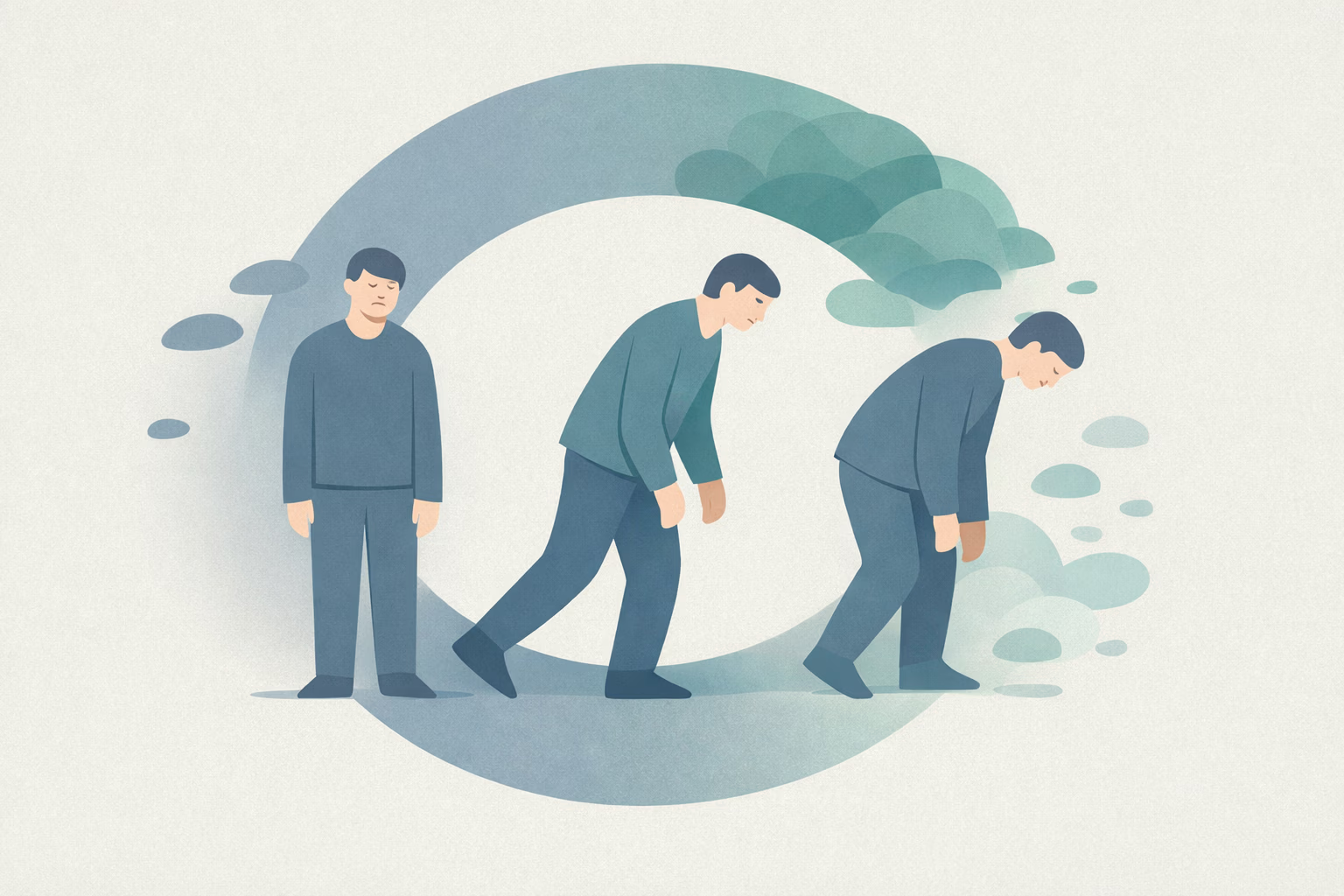
A Pleasure Loop isn’t simply “liking fun things.” It’s a pattern where stimulation becomes the organizing principle for regulation. The loop runs like this: a dip in energy or meaning appears, stimulation produces an immediate change, and the nervous system learns to repeat the fastest route back to movement.
The long-term cost is subtle: the system becomes excellent at pursuit and less practiced at completion. This is one way overstimulation erodes long-term enjoyment—by training attention toward the next hit instead of letting experiences land, resolve, and become part of lived identity. [Ref-6]
When reward sensitivity drops, the system often compensates by escalating. Not necessarily into dramatic behavior—often into micro-escalations: more tabs, stronger flavors, faster content, more frequent checking, more background noise. It can look like restlessness, not excess.
This can overlap with anhedonia-like experiences—reduced ability to enjoy—and it can be present even when life is “fine on paper.” The key point is that emotional dullness here can be a regulatory outcome of chronic overstimulation and stress load, not an identity statement about who you are. [Ref-7]
Meaning isn’t created by intensity. It emerges when experiences complete—when effort, values, and outcome cohere enough for the system to register: “This mattered, and it’s done.” Overstimulation interrupts that process by keeping attention fragmented and keeping reward signals in constant motion.
As that happens, motivation can drop. Not because you “don’t care,” but because the internal map that links action to satisfaction gets less reliable. If the nervous system rarely reaches a settled end point, it becomes harder to feel why something is worth doing in the first place. This is one way hedonic dysregulation can touch identity: the world offers plenty, but little feels like it belongs to you. [Ref-8]
Tolerance is the nervous system doing math. When the same category of reward is repeated often, the brain predicts it more accurately, and the impact can shrink. The person then needs either a higher “dose” (more time, more intensity) or a different novelty to get a similar shift.
This isn’t a moral story; it’s a learning story. The loop becomes cue-driven: the promise of relief or excitement pulls you forward, while the actual experience delivers less completion than expected. Over time, this can feel like chasing something that keeps moving away.
Importantly, not all reward is identical. Social reward, safety cues, and relational presence draw on overlapping but distinct pathways, and they can restore a different kind of nourishment than high-velocity stimulation. [Ref-9]
There is a difference between “being entertained” and being regulated. Entertainment can shift state quickly; regulation is when the nervous system returns to baseline with enough safety that signals can be subtle again. Recalibration is not a mindset. It’s a physiological change in how easily the system can come down after activation.
When reward overload eases, many people notice a slow return of contrast: quiet becomes less threatening, ordinary experiences start to register again, and the body is less compelled to keep the dopamine treadmill moving. Nature exposure is often studied as one context that supports restoration—partly because it offers soft fascination and fewer evaluative demands, allowing attentional and stress systems to downshift. [Ref-10]
Not everything has to be exciting for it to feel real.
Human nervous systems are social. Connection isn’t just “nice”—it’s regulatory information: tone of voice, facial expression, timing, responsiveness, and the sense of being seen without evaluation. These cues can reduce threat load and make reward signals easier to receive.
Oxytocin and related social neurobiology are often discussed here, not as a simplistic “bonding chemical,” but as part of a larger system that links affiliation with stress regulation and reward processing. When safety cues increase, the brain can spend less energy scanning and more energy integrating. [Ref-11]
What if the richest reward isn’t intensity, but being met?
As the pleasure plateau loosens, pleasure often returns in smaller units first: noticing taste, feeling interest, enjoying a slow conversation, sensing warmth from sunlight, finding a song genuinely moving. This isn’t “more emotion.” It’s more signal fidelity—less noise, more nuance.
In research on social reward processing, oxytocin-related pathways are associated with how rewarding connection can feel, especially in contexts of trust and presence. When the system isn’t saturated with constant peaks, these rewards can become more accessible again—less like a performance, more like nourishment. [Ref-12]
In a high-stimulation culture, it’s easy to assume pleasure should always be available, intense, and immediate. But human satisfaction is shaped by adaptation: the system normalizes what’s frequent, even if it’s wonderful. When pleasure is always “on,” it stops feeling like a gift and starts feeling like background. [Ref-13]
Depth is different. Depth comes from experiences that complete—effort that matches values, connection that leaves a residue of safety, work that resolves into “I did that,” rest that actually stands down the body. The shift isn’t toward less pleasure as a rule; it’s toward pleasure that integrates into identity instead of evaporating into the feed.
When life feels flat, many people assume they need more stimulation or more discipline. But the deeper issue is often structural: a nervous system carrying too much load, in an environment that provides endless activation and very few natural endings.
Hedonic adaptation reminds us that intensity alone doesn’t secure lasting satisfaction; the system adjusts. [Ref-14] What tends to endure is meaning—when experiences resolve into a sense of contribution, belonging, and continuity. Not as an idea, but as a lived “this is part of my life” feeling that reduces the need to keep chasing the next upgrade.
Joy returns more reliably when life has edges—beginnings, middles, endings—and a reason to be here for them.
The pleasure plateau can feel like you’ve lost something essential. But very often, what’s missing isn’t your capacity—it’s your system’s ability to register small rewards after too much speed, too much input, and too little completion.
As load decreases and experiences start to land again, people frequently discover that “color” was not gone; it was drowned out. The return is usually quiet: a steadier baseline, a more reliable sense of enough, and enjoyment that feels real because it can finally finish. [Ref-15]
From theory to practice — meaning forms when insight meets action.
It's that strange mismatch where life isn't terrible — it's just muted. Shows are fine, food is fine, scrolling is fine, and yet nothing lands. The reward system keeps pursuing 'something' while the felt experience of liking doesn't fully arrive. The article frames this as a loaded reward system asked to run at high intensity without enough completion. When inputs arrive faster than the nervous system can integrate them, pleasure flattens — not because you're broken, but because the system is protecting itself from constant peaks. The internal 'yes' signal gets stuck on low volume not from defect but from desensitization.
Reward circuits are plastic. When they receive frequent high-intensity signals they don't stay equally responsive — they recalibrate by reducing sensitivity to everyday rewards while strengthening the pull toward whatever is louder, faster, or more novel. The article frames this as the system adjusting its gain, not unmotivation or ingratitude. Tolerance is the nervous system doing math: when the same category of reward repeats often, the brain predicts it more accurately and the impact shrinks. The person needs more dose or different novelty for the same shift, and the actual experience delivers less completion than expected.
By making stimulation the organizing principle for regulation rather than enjoyment. The loop runs as: a dip in energy or meaning appears, stimulation produces immediate state change, and the nervous system learns to repeat the fastest route back to movement. The system becomes excellent at pursuit and less practiced at completion. Quick pleasure is also quick relief, and when relief is immediate and on-demand the loop can run without resolving what was incomplete underneath. The chase replaces the enjoyment because the body learned it can exit activation fast — without the closure that would have let the experience land and become part of identity.
Quietly. As load decreases and the system is allowed to come down, contrast slowly returns: quiet becomes less threatening, ordinary experiences register again, the body is less compelled to keep the dopamine treadmill moving. The article frames this as physiological recalibration rather than mindset — entertainment shifts state quickly, but regulation is when the system can come down after activation. People notice enjoyment that lingers after the moment ends, attention that stays with one thing long enough to complete, a clearer sense of enough. Color wasn't gone; it was drowned out. Joy returns when life has edges — beginnings, middles, endings — and a reason to be here for them.
From Science to Art.
Understanding explains what is happening. Art allows you to feel it—without fixing, judging, or naming. Pause here. Let the images work quietly. Sometimes meaning settles before words do.
One Quiet Window, one insight, one reflection — every Sunday