Dopamine Withdrawal: The Crash After Constant Stimulation
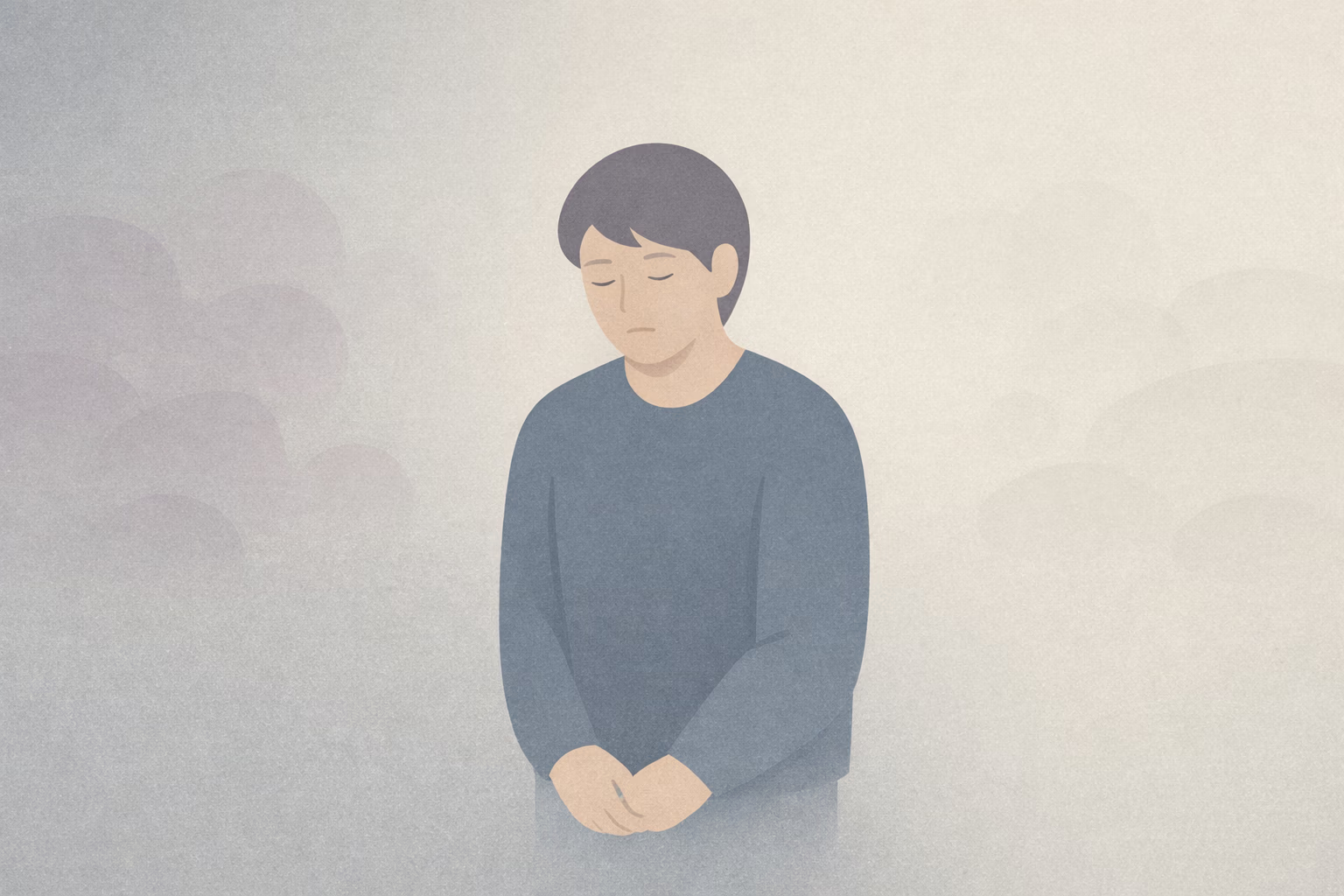
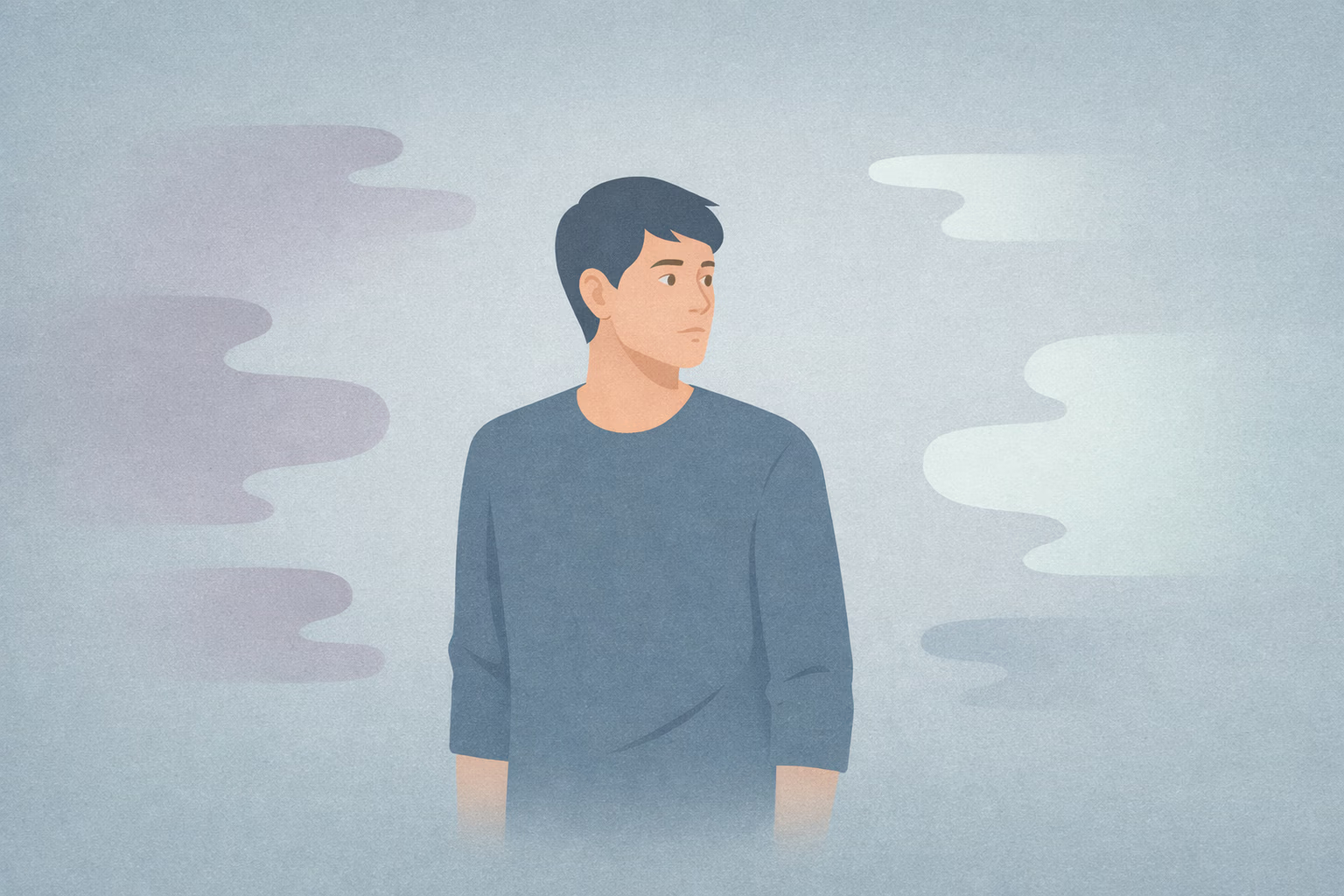
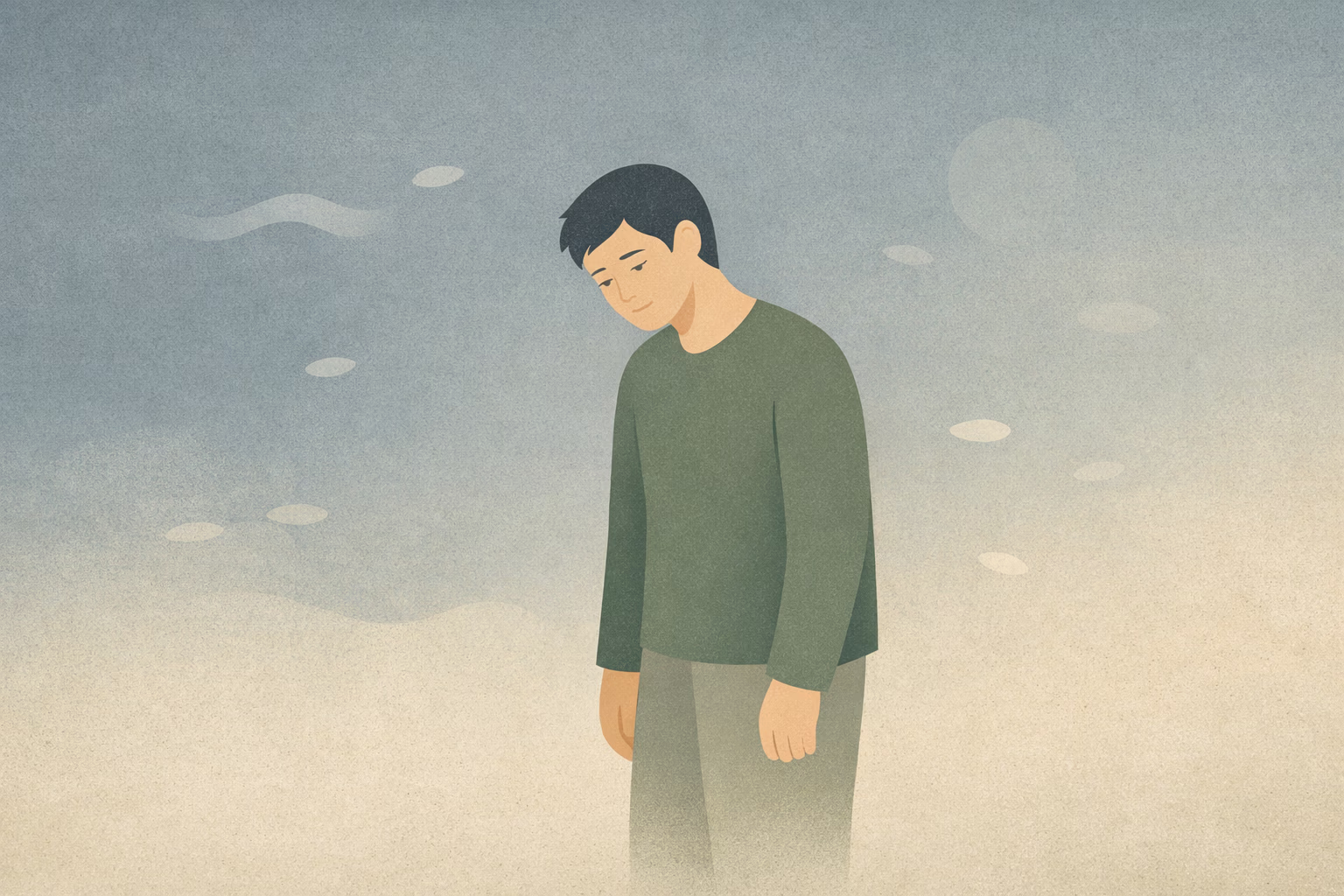
In short: Sometimes the hardest part of modern life isn’t the stress itself—it’s the strange flatness that shows up after something “fun.” A binge of videos, a social rush, a late-night scroll, a burst of novelty, even a big win can be followed by a heavy quiet: low mood, fog, fatigue, or a sense that nothing is appealing.
Sometimes the hardest part of modern life isn’t the stress itself—it’s the strange flatness that shows up after something “fun.” A binge of videos, a social rush, a late-night scroll, a burst of novelty, even a big win can be followed by a heavy quiet: low mood, fog, fatigue, or a sense that nothing is appealing.
What if that drop isn’t a personal failure—just your nervous system trying to return to baseline?
Psychological withdrawal from overstimulation is a useful phrase for this pattern. It points to a biological swing: when stimulation spikes fast and high, the body often asks for recovery afterward. That recovery can feel like emptiness, but it’s often the system’s way of rebalancing and looking for “done.”
A common experience: you stop the stimulating thing—and instead of feeling satisfied, you feel oddly down. Not always sad in a story-based way, but heavy, unmotivated, or thinly irritated. People describe it as “nothing hits,” “everything feels gray,” or “I can’t get myself to start anything.” [Ref-1]
This isn’t proof that you’re broken or ungrateful. It can be what a high-velocity reward system feels like when it comes off a peak. The mind may interpret the contrast as “something is wrong,” but the body may simply be registering a dip after a surge.
Reward systems don’t only respond to pleasure; they respond to change, novelty, and whether something is better or worse than expected. Dopamine is involved in reward learning and prediction—especially the “prediction error” signal that helps the brain update what to pursue next. [Ref-2]
After repeated peaks, the nervous system can register a kind of contrast effect: the baseline state feels underpowered compared to what just happened. This can resemble depletion, but it’s also a recalibration problem—signals that were loud now feel quiet, and quiet can be misread as absence.
Importantly, this is not about willpower. It’s about a system designed to allocate energy and attention efficiently. When the environment keeps providing high-amplitude inputs, the system has to keep adjusting—and adjustment has a cost.
In evolutionary terms, big rewards were often occasional and effort-linked: finding food, earning safety, gaining social belonging. The nervous system learned from spikes because spikes were information. A strong prediction error signal meant: “That mattered—remember it.” [Ref-3]
In a high-stimulation world, the same circuitry can get flooded with “important!” signals that aren’t actually life-structuring. The body still has to metabolize the activation. So the rebalancing phase can arrive as low energy, low interest, or a desire to withdraw.
Withdrawal, in this sense, can be a protective downshift: a biological attempt to restore capacity after too much “up.” It may feel unkind, but it can be the system searching for closure.
Overstimulation often lands because it works. It can bring quick relief from pressure, uncertainty, loneliness, or mental noise—without requiring the slow completion that real closure usually needs. In the moment, the nervous system gets a fast state change: from tense to absorbed, from restless to captured.
Prediction errors also shape this. When something surprises you—another clip, another message, another reward—the brain marks it as salient and leans in. [Ref-4]
“It’s not that I wanted more. It’s that stopping felt like falling.”
That “falling” sensation isn’t moral weakness. It’s what rapid transitions can feel like to a system that hasn’t had time to settle.
Some experiences are enjoyable but not restoring. They stimulate without completing. They create motion without “done.” The body may interpret this as ongoing demand, even if you were laughing or entertained.
In brain reward models, repeated high stimulation can recruit counterbalancing processes—sometimes described as “anti-reward” mechanisms—that push back after prolonged activation. [Ref-5]
So the crash can be less about the content and more about the physiology: activation accumulates, and later the system requests repayment. The bill arrives as heaviness, irritability, or a sense of being oddly behind on yourself.
Once the post-stimulation low shows up, the nervous system often tries to manage it structurally: by reducing friction and minimizing additional demand. That can look like withdrawal from people, tasks, or even ordinary pleasures—not because of a single “fear,” but because the system is conserving capacity.
At the same time, the brain may remember that stimulation reliably changed the state quickly, so it becomes a favored route. This is how avoidance loops can form: not as a character flaw, but as a predictable result of relief being fast and baseline being slow. [Ref-6]
When baseline feels thin, fast relief starts to look like the only available door.
Withdrawal from overstimulation can masquerade as many things: “burnout,” “boredom,” “depression,” “laziness,” “social fatigue.” Labels vary, but the felt pattern is often consistent—reduced reward sensitivity and a heightened pull toward something that spikes the system again. [Ref-7]
These are regulatory responses. They are the nervous system attempting to re-stabilize when normal cues of satisfaction and completion aren’t landing.
If peaks and dips repeat without enough closure in between, the baseline can start to feel persistently low. Not necessarily acutely distressed—sometimes just muted. The world may still function, but it doesn’t feel like it reaches you.
Research on anhedonia and reward circuitry describes how reduced responsiveness to reward can show up as a diminished “wanting” or “liking” signal. [Ref-8] In everyday language, it can feel like the internal “yes” is harder to access, even when you know something matters.
This is where shame often enters: people assume the problem is attitude. But structurally, it may be that the system has learned to expect stronger inputs for the same impact, while simultaneously carrying recovery load from repeated activation.
Withdrawal states are uncomfortable not because they’re dramatic, but because they’re ambiguous. They don’t tell a clear story. The body just registers: “Not enough signal. Not enough reward. Not enough momentum.” That ambiguity can itself be activating.
Dopamine-related learning processes are sensitive to changes in expected value and the gap between expectation and reality. [Ref-9] When baseline feels worse than expected, the system can generate urgency—an internal push to correct the mismatch quickly.
That urgency can be mistaken for desire. But often it’s a drive for state repair. The person may not even like the next stimulus; they may just want the uncomfortable quiet to stop.
Baseline restoration is not a motivational pep talk. It’s a physiological re-centering that tends to happen when inputs stop escalating and the nervous system receives enough safety cues to downshift.
In reward models, what matters is not only getting rewards, but updating predictions and reducing error signals over time. [Ref-10] When life is less spiky, the system doesn’t have to keep recalibrating. It can regain a steadier “signal return”—the capacity for ordinary experiences to register again.
“It’s not that life got louder. It’s that my baseline got audible.”
That steadiness is often experienced as less urgency, fewer sharp swings, and more continuity between one hour and the next—an internal sense of “I’m here, and this is enough to be in.”
Humans regulate in connection. Not always through intense conversation or emotional processing, but through ordinary co-presence: predictable tone, shared attention, non-demanding interaction. These are safety cues the nervous system can use.
Research on social support suggests it can buffer stress physiology and shape how the brain responds under load. [Ref-11] In overstimulation withdrawal, that buffering can matter because the low state can feel isolating and self-referential—even when nothing “bad” is happening.
Calm contact can also provide something overstimulation often lacks: completion. A conversation ends. A walk together has an ending. A shared meal reaches “done.” Those endpoints help the system stand down.
When the system has space to rebalance, improvement often shows up as less compulsion rather than constant positivity. The first shift may be a quieter relationship with discomfort: fewer emergency signals demanding immediate relief.
Over time, many people notice more reliable emotional and motivational steadiness—less dramatic, but more usable. Social buffering can support that process, though it varies by context and safety. [Ref-12]
This is what restored capacity can resemble: not a permanent high, but a baseline that doesn’t feel like a deficit.
A long-term shift often isn’t about rejecting stimulation; it’s about relating to it differently. When life contains more completion—clear beginnings, middles, and endings—reward systems don’t have to hunt as hard for signal. Identity feels less fragmented when experiences land and resolve.
In that steadier rhythm, meaning tends to reappear as a quiet form of coherence: your time aligns more often with what you recognize as “mine,” not just what is available. Social support and belonging can reinforce that stability by reducing threat load and increasing safety cues. [Ref-13]
Intensity can be exciting. Coherence is what makes a life inhabitable.
Psychological withdrawal from overstimulation is often your biology communicating through contrast: “That was a lot,” “I need a quieter baseline,” “I’m looking for closure.” When those messages are misread as personal deficiency, people tend to reach for more intensity to escape the discomfort—continuing the loop.
Another framing is available: wellbeing as consistency and depth. The nervous system stabilizes when life contains recoverable rhythms, real endpoints, and relationships that carry safety. Meaning tends to return when experiences integrate into a stable sense of self—when days don’t just happen, they complete.
Agency, here, is less about pushing and more about orientation: noticing what kinds of experiences leave you more coherent afterward, and which ones leave a recovery debt. Social context matters too—support can buffer load, while constant evaluation can amplify it. [Ref-14]
The low, flat, “what’s the point” feeling after overstimulation can be deeply discouraging. But it often isn’t an identity statement. It’s a state signal—your nervous system asking for fewer spikes and more completion.
In a world built to keep you activated, withdrawal can be the body’s attempt at care. And when support, safety cues, and steady connection are present, the system has more room to recover its baseline and regain signal return. [Ref-15]
Nothing about this pattern makes you weak or defective. It makes you human in an environment that rarely lets anything feel truly done.
From theory to practice — meaning forms when insight meets action.
Because reward systems respond to change, not just pleasure. Dopamine is involved in reward-prediction signals — the brain registers contrast between expected and actual states. After repeated peaks, the baseline can register as underpowered relative to what just happened, which feels like depletion but is actually recalibration. Signals that were loud now feel quiet, and quiet gets misread as absence. That heaviness, fog, or 'nothing hits' sensation isn't proof you're broken or ungrateful. It's what a high-velocity reward system feels like coming off a peak. The body is registering a dip after a surge — searching for Done — not delivering a verdict on your character.
No — it's a protective downshift. Repeated high stimulation recruits counterbalancing 'anti-reward' processes that push back after prolonged activation. The crash isn't really about the content; it's about physiology. Activation accumulates, and the bill arrives later as heaviness, irritability, or being oddly behind on yourself. Some experiences are enjoyable but not restoring — they stimulate without completing, creating motion without 'done.' The body interprets that as ongoing demand even when you were laughing or entertained. Withdrawal in this sense is the nervous system asking for fewer spikes and more closure. It's the body's attempt at care, not a failure of will.
Because withdrawal states are uncomfortable in an ambiguous way — they don't tell a clear story, just register 'not enough signal, not enough momentum.' That ambiguity itself is activating. When baseline feels worse than expected, the system generates urgency to correct the mismatch quickly, and that urgency gets mistaken for desire. Often you don't even like the next stimulus; you just want the uncomfortable quiet to stop. The brain also remembers that stimulation reliably changed state quickly, so it becomes the favored route. That's how the Avoidance Loop reinforces itself: relief is fast, baseline restoration is slow, and the door that opens easiest gets used most.
Less compulsion before constant positivity. The first shift tends to be a quieter relationship with discomfort — fewer emergency signals demanding immediate relief. Over time, more reliable emotional and motivational steadiness arrives: less dramatic, but more usable. Ordinary activities feel mildly engaging again. Small tasks require less internal force. There's more continuity in self-image across the day. Calm social contact buffers the process by providing safety cues and natural endpoints — a conversation ends, a walk has an ending, a shared meal reaches done. Wellbeing here isn't constant intensity; it's depth, continuity, and enoughness. The crash isn't a verdict — it's a request for pacing.
From Science to Art.
Understanding explains what is happening. Art allows you to feel it—without fixing, judging, or naming. Pause here. Let the images work quietly. Sometimes meaning settles before words do.
One Quiet Window, one insight, one reflection — every Sunday