
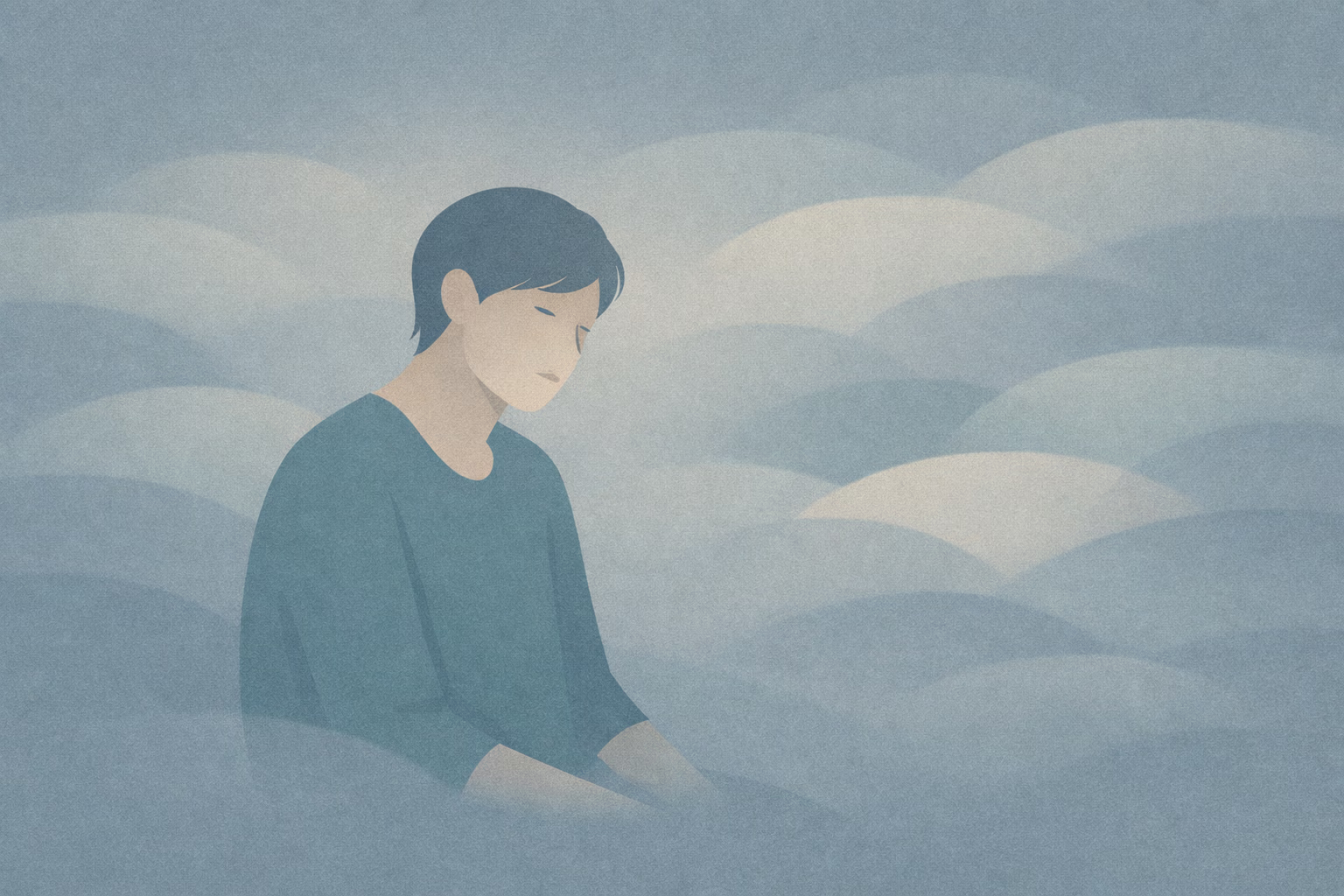
Patterns of Numbing: The Subtle Ways You Escape Yourself
In short: Phone craving often gets described like a simple “dopamine problem” or a bad habit. But for many people, the urge is more like a body-level pull: a quick reach for relief, contact, or orientation when something inside feels slightly unfinished.
Phone craving often gets described like a simple “dopamine problem” or a bad habit. But for many people, the urge is more like a body-level pull: a quick reach for relief, contact, or orientation when something inside feels slightly unfinished.
What if the craving isn’t the problem—what if it’s a signal?
In modern life, attention is constantly split, social cues are always available, and “done” rarely arrives. In that environment, checking a phone can become a fast way to steady the system. Not because you’re broken, but because your nervous system is doing what nervous systems do: seeking safety cues, closure, and coherence.
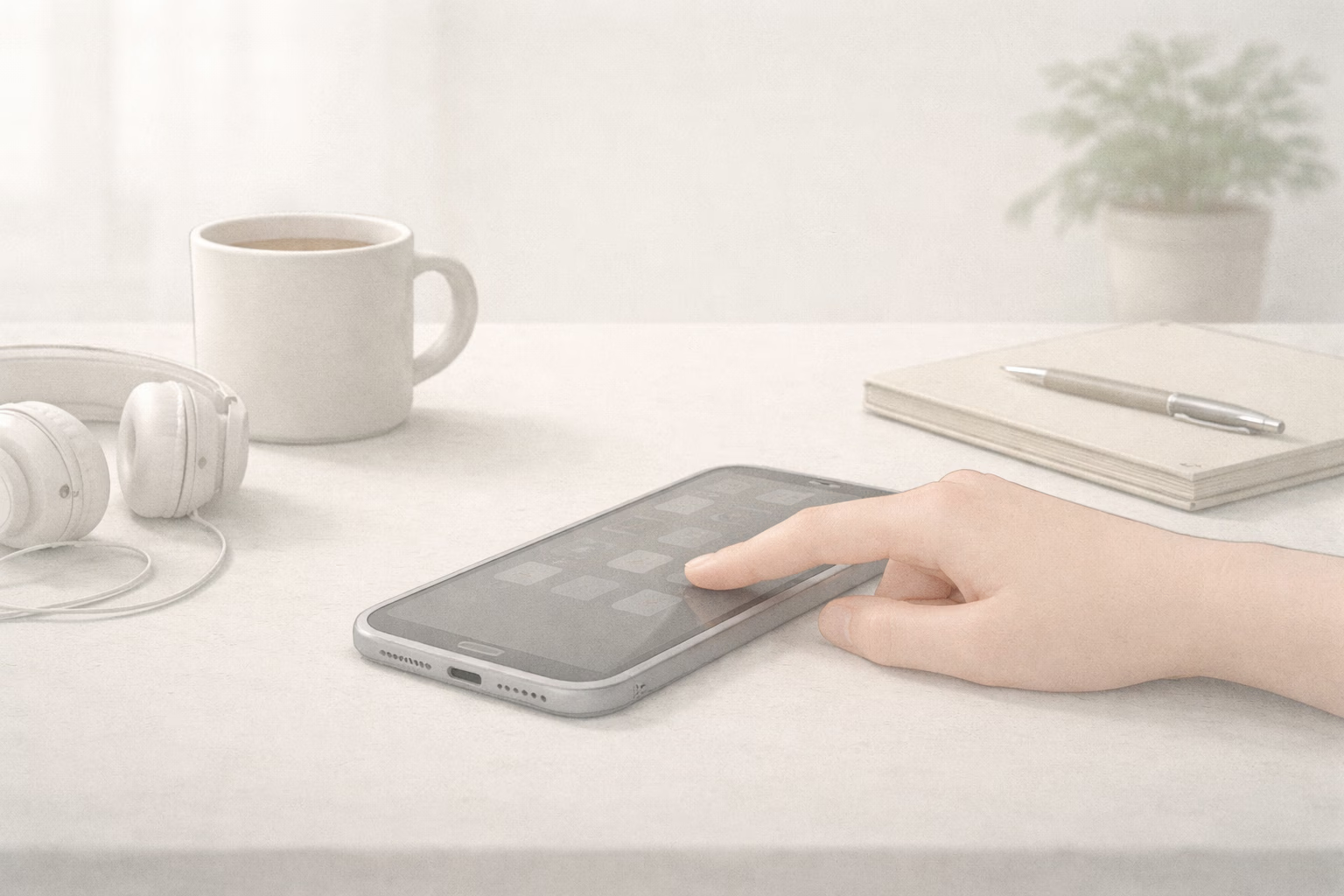
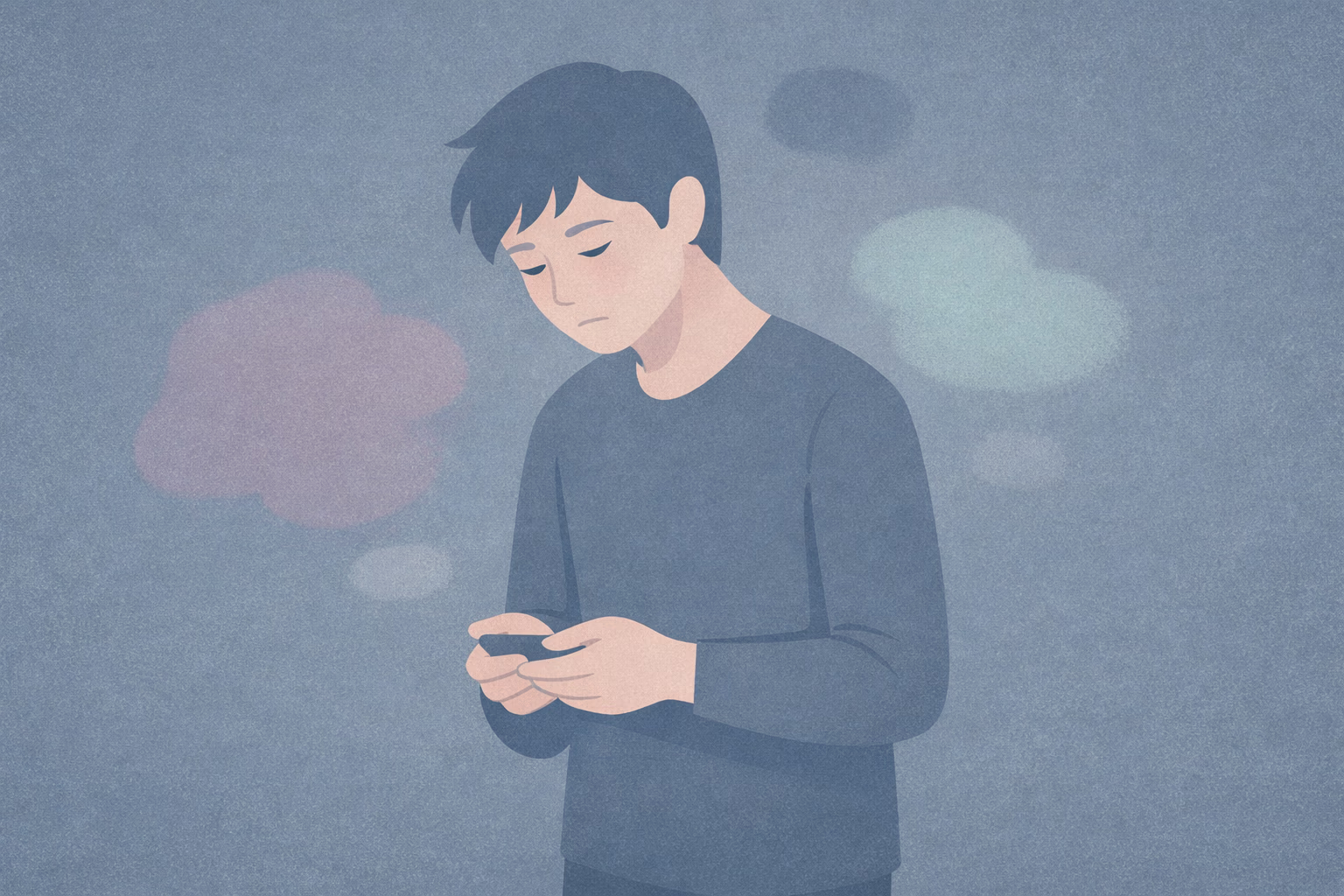
Many people recognize the moment: your hand moves before you decide. No buzz, no ping—just a subtle restlessness that gets answered by a screen. It tends to show up in the in-between spaces: waiting, transitioning, feeling socially exposed, or carrying quiet stress.
This urge isn’t necessarily about content. It’s often about state. A phone is a portable “regulation tool” that can shift attention, deliver social information, or provide novelty within seconds. In research, smartphones are commonly used for everyday emotion regulation—especially when discomfort is low-grade, ambiguous, and hard to resolve directly. [Ref-1]
Sometimes the phone isn’t what you want. It’s what your system reaches for when it can’t find a clean landing.
Craving tends to form through pairing: a specific internal state (boredom, uncertainty, social drift, mental fatigue) repeatedly meets a fast external response (scrolling, messaging, checking). Over time, the body learns a shortcut: discomfort → phone → small release.
This doesn’t require dramatic emotion or conscious intent. A slight drop in stimulation, a moment of “not sure what’s next,” or a brief hit of social comparison can be enough to activate the loop. Studies link boredom and FoMO with increased smartphone craving and use, suggesting the urge is often anchored in an uncomfortable gap rather than a strong desire for a particular app. [Ref-2]
Humans are built for connection and for scanning the environment for relevant change. In older settings, this meant reading faces, tracking group movements, and noticing meaningful shifts in the surroundings. In modern settings, those same systems can lock onto a phone because it reliably delivers social cues and novelty on demand.
Digital life also increases boredom in a particular way: not the “nothing to do” kind, but the fragmented kind—where attention is busy yet unsatisfied. When the mind can’t complete a cycle of engagement, the system may keep searching for a better signal. That rising baseline boredom in digital environments is increasingly documented. [Ref-3]
So the urge isn’t irrational.
It’s your social-and-orientation machinery doing its job in a landscape where the fastest cues now live in your pocket.
Phones offer several types of quick relief that the nervous system tends to trust:
These shifts can feel like a tiny exhale—especially when the day contains persistent evaluation, social ambiguity, or stress. Research often finds smartphone overuse associated with stress, anxiety, and depressive symptoms, not as moral weakness, but as a sign that people are leaning on a readily available regulator. [Ref-4]
The key detail is timing: relief arrives quickly, but completion often doesn’t. The system calms for a moment, then returns to searching.
Phone craving can feel urgent: “I need to check.” But urgency isn’t proof of importance. Often it’s a sign that something underneath is unresolved—socially, cognitively, or relationally.
For example, loneliness doesn’t always show up as a clear emotion with a clean label. It can show up as restlessness, scanning, or a drive to confirm connection. Research links loneliness with problematic phone use, suggesting that the device can become a substitute channel for belonging signals when real connection feels thin or inconsistent. [Ref-5]
The phone can mimic an answer without delivering closure.
It provides cues (someone posted, someone liked, something happened), but those cues don’t always settle into the body as “I’m connected” or “I’m safe with people.”
Many people assume they check because it feels good. But pleasure loops are often powered more by anticipation than by actual satisfaction. The brain leans forward: maybe there will be something rewarding. That leaning-forward state can be activating on its own.
When boredom proneness and low self-control are in the picture, the anticipation cycle can intensify—not because of weak character, but because the environment keeps offering high-frequency, low-cost chances for reward. Research on smartphone addiction highlights how boredom and control demands interact with use severity. [Ref-6]
In that loop, satisfaction is short. The system gets a brief “something happened” signal, then returns to seeking—because nothing truly completed.
Over time, repeated checking can become less of a decision and more of a reflex. People may notice:
Phantom vibrations and rings are documented experiences, especially in people who use phones frequently—less a mystery and more a sign of a nervous system trained to expect cues. [Ref-11]
Boredom proneness and loneliness can also mediate heavier, more automatic phone use, which fits the pattern: when the environment or social field doesn’t provide enough settling signals, the body looks for them elsewhere.
When attention is repeatedly broken into small pieces, the nervous system adapts. Not by “getting weaker,” but by staying in a more vigilant, cue-seeking mode. Stillness can start to feel oddly uncomfortable—not because stillness is dangerous, but because the system has learned that stimulation is the fastest route to state change.
This can look like reduced capacity for sustained focus, reduced tolerance for ambiguity, and a faster jump into scanning behaviors. Stress load matters here: higher stress is associated with more severe problematic smartphone use, suggesting that fragmentation and strain amplify each other. [Ref-8]
In this state, the phone can become a constant bridge over small gaps—gaps that used to resolve through ordinary completion: a finished thought, a settled conversation, a natural pause.
Relief is a powerful teacher. When checking reduces tension even slightly, the brain marks the behavior as useful. Over time, regulation can shift outward: instead of returning to baseline through natural completion, the system learns to reach for an external prompt.
This is one reason problematic smartphone use can track daily emotional experiences. When emotional states fluctuate, the device becomes a consistent, immediate moderator—one that changes state without necessarily creating resolution. [Ref-9]
The phone doesn’t cause the need. It becomes the place the need goes.
And because the underlying loop often stays incomplete, the signal returns.
It can be disorienting to realize the urge isn’t really about the phone. But that realization doesn’t automatically create integration. What it can do is restore a little dignity: the craving becomes interpretable rather than shameful.
In many people, the body sends “notification-like” sensations even when nothing happened—phantom vibrations are one vivid example of how expectation can become sensory. [Ref-10] In a softer form, that same expectation can show up as a persistent felt sense that you should check, even without a reason.
If the urge is a signal, what might it be signaling?
Often it points toward a missing “done”: a social loop left hanging, a day without enough completion, a self that hasn’t had time to cohere.
One quiet consequence of phone-based regulation is that human contact can start to feel slower, less predictable, or more effortful. A screen offers immediate cues with minimal risk. Real interaction carries timing, nuance, and the possibility of not getting the response you want.
This isn’t about avoiding feelings; it’s about how the system allocates resources under load. When capacity is low, the nervous system will favor the lowest-cost path to relief. Phantom ring/vibration patterns are one example of how deeply the expectation of phone cues can embed. [Ref-11]
Over time, the difference between “contact” and “connection” can widen. Contact is information. Connection is a settling signal that lands in the body as orientation: I know where I stand, and with whom.
There is a subtle but important shift that can happen when the urge is named accurately: not as “I’m addicted,” but as “my system is seeking something.” This isn’t a mindset trick; it’s a way the brain updates predictions when a signal is put into a clear category.
Research supports that labeling internal states can reduce reactivity and change behavioral trajectories by decreasing the sense of undifferentiated urgency. [Ref-12] In plain language, specificity can lower the volume.
When the signal becomes legible, it stops needing to shout.
That doesn’t complete the underlying need by itself—but it can reopen a small space where a person is not being driven.
As the loop becomes clearer, the story changes. The phone stops being “the thing you can’t stop,” and starts looking like what it often is: a tool your nervous system recruited to manage unfinishedness.
In a more coherent state, needs become easier to distinguish:
Studies continue to describe meaningful links between problematic phone use and variables like stress, loneliness, and self-control—not as personal defects, but as predictable outcomes in high-friction, high-fragmentation conditions. [Ref-13]
Coherence is not constant calm. It’s the sense that signals return, choices reappear, and attention belongs to you again.
Phone craving is often less about the device and more about what the device reliably provides: a quick shift in state, a hit of social information, a sense of “something happening.” When life is fragmented, those cues can stand in for completion.
Seeing the urge as a signal changes the moral tone. It becomes possible to relate to it with respect: a nervous system doing its best with the tools available. And when the underlying need becomes clearer—belonging, closure, orientation—the craving becomes less absolute.
Even phantom-notification experiences have been described as a product of learned expectation and attentional conditioning, which underscores the bigger theme: the system adapts to what it’s repeatedly asked to do. [Ref-14]
Reclaiming agency over attention is rarely a matter of pushing harder. It tends to follow coherence: when life provides more genuine completion and more reliable belonging signals, the nervous system doesn’t have to keep reaching for substitutes.
Excessive smartphone use has been associated with health impacts and insecure attachment patterns, which is another way of saying: when connection feels uncertain, people lean on the quickest available proxy. [Ref-15]
Your urge to check is not an identity. It’s a regulatory movement—an attempt to stabilize. And stability becomes more likely when the signals underneath get enough clarity and closure to finally let the system stand down.
From theory to practice — meaning forms when insight meets action.
Because the urge isn't really about the phone — it's about state. The hand often moves before the decision, especially in in-between moments: waiting, transitioning, feeling socially exposed, or carrying low-grade stress. The phone is a portable regulation tool that can shift attention, deliver social information, or supply novelty in seconds. The nervous system reaches for whatever reliably produces a quick state change when something inside feels slightly unfinished. Calling this an addiction misses the mechanism. It's regulatory movement — the system trying to find a clean landing in an environment where Done Signals rarely arrive on their own.
Often yes — and not in the obvious dramatic way. Craving forms through pairing: a specific internal state (boredom, uncertainty, social drift, mental fatigue) repeatedly meets a fast external response (scrolling, messaging, checking). The body learns the shortcut: discomfort → phone → small release. Loneliness rarely arrives with a clear label; it shows up as restlessness, scanning, or a drive to confirm connection. The phone mimics an answer for the Attachment & Belonging System without actually delivering closure. You get cues that something happened, but those cues don't always settle in the body as I'm connected or I'm safe with people.
Because the loop is powered by anticipation more than satisfaction. The brain leans forward — maybe there will be something rewarding — and that leaning-forward state is itself activating. Each check delivers a brief something-happened signal, then the system returns to seeking because nothing actually completed. Add Evolutionary Mismatch: ancient social-and-novelty machinery built for slow signals now meets a feed designed to deliver them every few seconds. The Pleasure Loop runs short, fast cycles that produce micro-relief without integration, which is why satisfaction is brief and the urge regenerates within minutes.
Usually a missing Done Signal — a social loop left hanging, a day without enough completion, a self that hasn't had time to cohere. The article suggests four needs hiding under the urge: stimulation (the system wants novelty), belonging (a relational anchor), completion (a loop wants to end), or orientation (what matters next). Naming the urge accurately — not I'm addicted but my system is seeking something — changes the prediction the brain runs and lowers the felt volume. Specificity reduces undifferentiated urgency. The phone stops being the thing you can't stop and starts looking like a tool your nervous system recruited to manage unfinishedness.
From Science to Art.
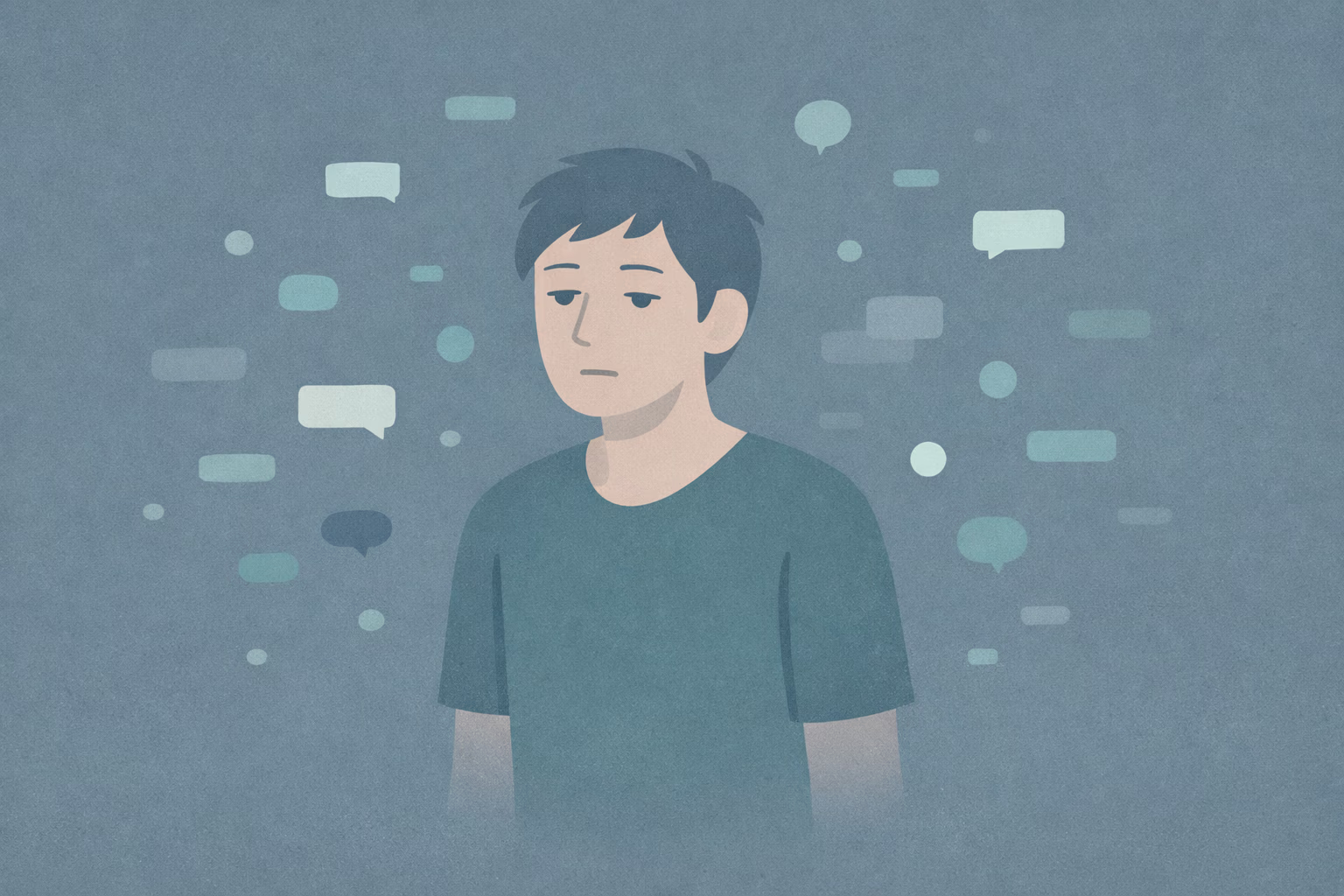
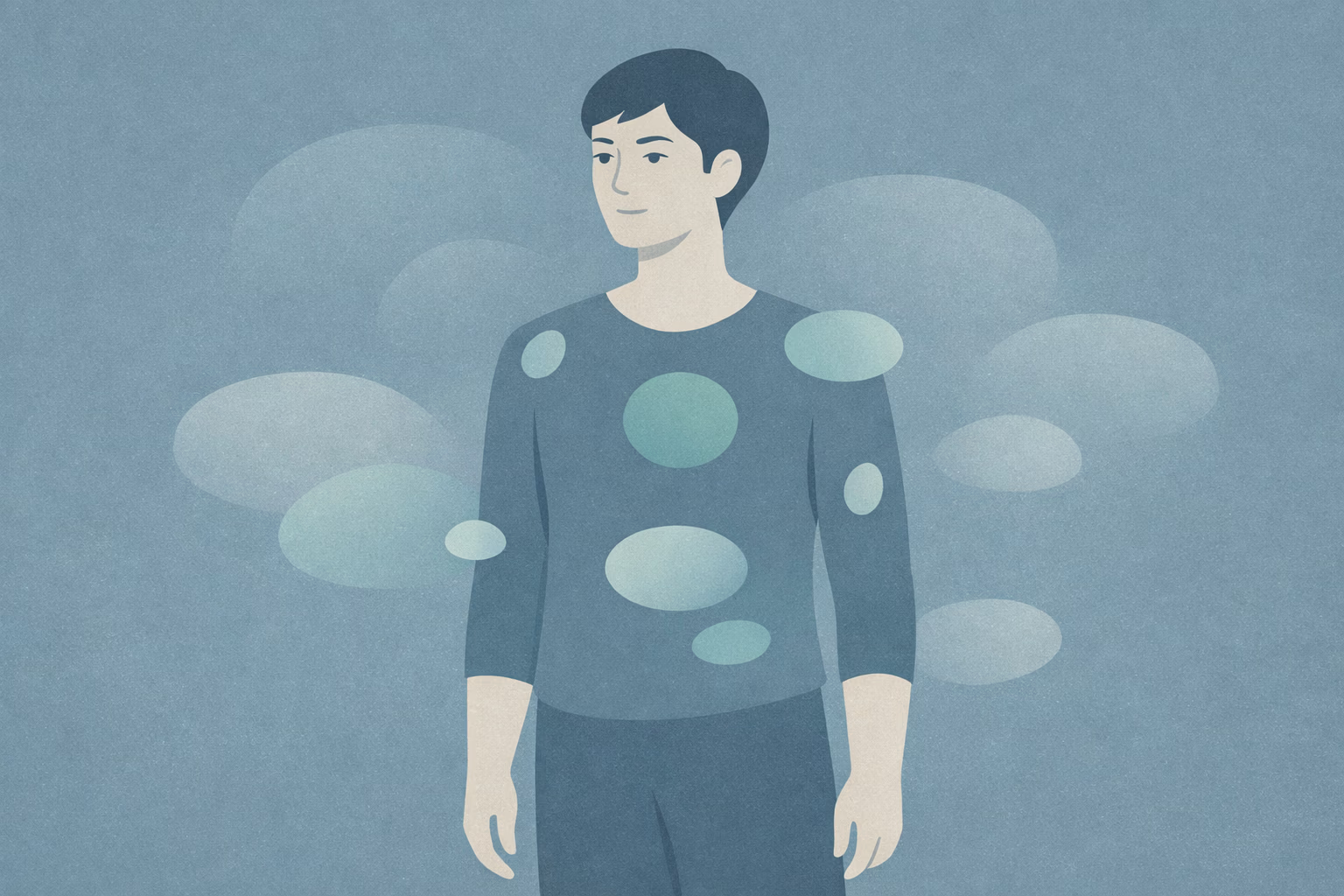
Understanding explains what is happening. Art allows you to feel it—without fixing, judging, or naming. Pause here. Let the images work quietly. Sometimes meaning settles before words do.
One Quiet Window, one insight, one reflection — every Sunday