
Pleasure Plateau: When Too Much Stimulation Makes Life Feel Flat
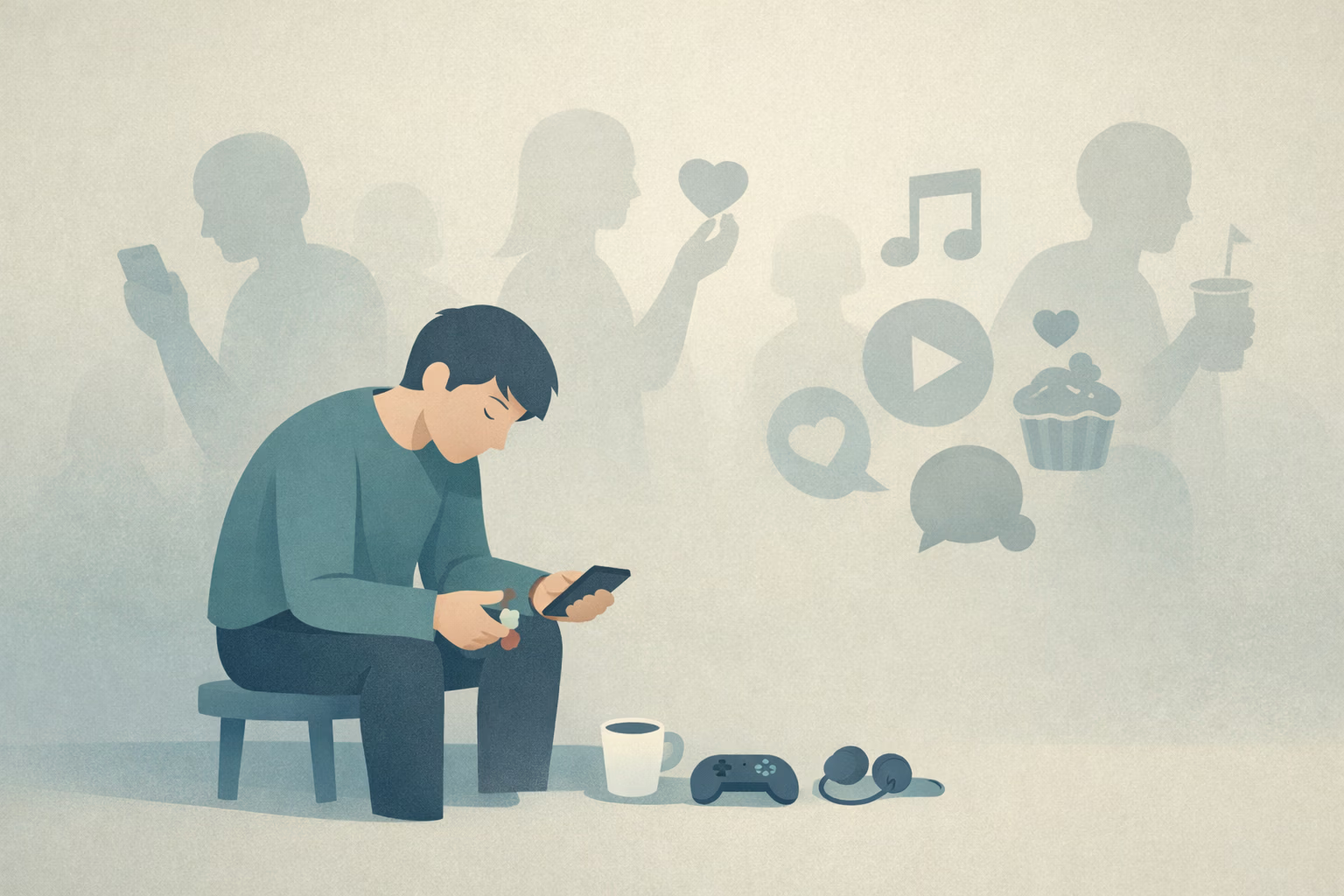
In short: Micro-pleasures are small, fast comforts: a quick snack, a notification check, a short video, a scroll “just for a minute,” a little online shopping, a brief sexual hit, a sip, a swipe. None of these are inherently a problem.
Micro-pleasures are small, fast comforts: a quick snack, a notification check, a short video, a scroll “just for a minute,” a little online shopping, a brief sexual hit, a sip, a swipe. None of these are inherently a problem. The trouble is the rhythm: when tiny hits become the main way the system gets relief and closure.
Why can something so small make you feel so tired, scattered, and strangely unmotivated?
From a Meaning Density perspective, this isn’t a character flaw. It’s what happens when a nervous system lives in an environment that offers endless mini-rewards but fewer experiences that fully complete—so the body keeps reaching for quick “done signals” that don’t actually finish anything.
Micro-pleasure overuse often announces itself indirectly: not as dramatic collapse, but as a persistent sense that your attention won’t settle. You may notice frequent urges for small comforts, irritation at minor delays, and a kind of low-grade fatigue that doesn’t match your day. [Ref-1]
Because each micro-pleasure is brief, the experience can feel confusing: “I didn’t do anything big—why do I feel so depleted?” But the nervous system doesn’t only track intensity. It tracks repetition, interruption, and whether experiences reach closure.
Executive functions—planning, prioritizing, resisting distractions, staying with complexity—depend on available cognitive capacity. When the day is filled with frequent micro-decisions (“check or not check,” “one more or stop,” “reply now or later”), the system spends energy on repeated selection and inhibition. Over time, this can look like decision fatigue: not laziness, but reduced bandwidth. [Ref-2]
Micro-pleasures also create rapid state shifts. Each small hit nudges attention away from sustained effort and toward immediate resolution. The more often the system is trained to expect quick reward and quick relief, the harder it can be to mobilize for slower, meaning-heavy activities that don’t pay out instantly.
When the brain is asked to switch tracks all day, “motivation” often isn’t missing—capacity is.
Human reward circuitry evolved in conditions where high-value stimuli were relatively scarce and effortful. Quick rewards had meaning because they were signals: food found, social safety gained, opportunity secured. In that context, a dopamine-driven “go get it” surge helped survival.
Modern life offers low-effort reward cues in near-infinite supply. The system isn’t broken for responding; it’s doing what it was designed to do—orienting toward what feels immediately valuable. The mismatch is environmental: rarity became abundance, and signals that once pointed to real completion became constant pings without an endpoint. Discussions of ego depletion and self-regulatory fatigue often circle this idea: capacity can feel reduced when demands and temptations stay high. [Ref-3]
Micro-pleasures function as rapid downshifts. They can soften stress load, blur boredom, and temporarily mute the friction that comes with starting, waiting, or staying with uncertainty. This isn’t best understood as “fear of discomfort.” It’s more mechanical: the nervous system learns that a small stimulus reliably changes state right now. [Ref-4]
In other words, the micro-pleasure becomes a portable relief valve. The body reaches for it the way it reaches for a handrail—especially when the day is full of open loops that never resolve.
What if the urge is less a craving for pleasure and more a search for a quick “done”?
A tiny reward can feel like a break, but breaks restore capacity when they reduce load and allow completion. Micro-pleasures often do the opposite: they introduce a new mini-loop (more input, more cues, more wanting) while postponing the completion of the original task or moment.
Over time, this can create a subtle depletion pattern: more switching, more partial attention, more internal negotiation. You may still be moving all day, yet end the day with less satisfaction—because fewer experiences fully landed as finished. This is one reason “more small relief” can correlate with less real energy. [Ref-5]
In an avoidance loop, the system learns to bypass the natural resistance of effort by inserting quick relief before completion happens. This isn’t moral weakness. It’s a structural pattern: a short stimulus interrupts the moment where the nervous system would otherwise gather itself, tolerate transition, and finish a sequence.
Modern devices amplify this because they are not neutral objects; they are cue-machines. Even their presence can pull cognitive resources into monitoring and anticipating. Research suggests that simply having a smartphone nearby can reduce available cognitive capacity, even when it’s not in use. [Ref-6]
So the loop can run like this: open loop → tension → quick hit → temporary ease → open loop remains → tension returns. No one is “choosing badly” in a vacuum; a loaded system is taking the fastest available exit.
Micro-pleasure overuse rarely looks like a single dramatic behavior. It looks like many small, socially normal actions that become tightly coupled to transitions and friction points—before work, between emails, after a hard conversation, during a lull.
These patterns fit well with present-biased preference: the nervous system discounts later benefits when immediate relief is available. This doesn’t require dramatic pathology; it’s a predictable response to high-frequency reward cues. [Ref-7]
When micro-pleasures become the default response to friction, the system practices leaving rather than completing. Over time, persistence can feel harder—not because you “can’t commit,” but because the body expects fast state-change and gets restless when reality is slower.
This is also where social meaning matters. When people interpret the pattern as a personal defect, shame adds load. Load reduces capacity. The loop tightens. Research on stigma in behavioral addictions highlights how moralized interpretations can intensify distress and hinder recovery environments. [Ref-8]
What looks like “no willpower” is often a nervous system trying to conserve itself in a world that doesn’t let anything feel finished.
Micro-pleasure overuse can create a quiet form of craving: not always an intense urge, but a persistent readiness to reach. The nervous system stays slightly forward—scanning for the next cue, the next hit, the next small resolution. That ongoing orientation is a kind of activation.
Micro-interruptions matter because they keep the system from downshifting into deeper focus or true rest. Even when notifications are silenced, the habit of checking can maintain an internal “listening.” This is one reason people feel tired even after “doing nothing” on their phone. [Ref-9]
What if your mind isn’t distracted—what if it’s repeatedly being re-cued?
Many people try to solve micro-pleasure overuse with pressure: stricter rules, harsher self-talk, bigger goals. But pressure often increases nervous system load—exactly what makes quick relief feel necessary.
A different frame is coherence. When stimuli are paced and experiences are allowed to complete, executive capacity tends to return because the system is no longer spending the day in constant switching. Awareness can be a starting signal, but it isn’t the same as integration; integration shows up later as a settled “stand-down” in the body and a clearer identity-level sense of choice.
Approaches that emphasize values and self-compassion often reduce self-stigma and help people relate to urges without escalating them into identity conclusions. [Ref-10]
Micro-pleasure loops thrive in private, unstructured space—especially when days are fragmented and accountability is purely internal. Shared routines and relational cues can provide external closure signals: meals that begin and end, work blocks that actually finish, conversations that have a clear wrap-up.
This isn’t about being “watched.” It’s about nervous system coordination. Humans regulate better when the environment carries some of the organizing load. Research on present-bias and immediate rewards underscores how structure can change choices without requiring constant effort. [Ref-11]
When life contains more predictable endpoints, the system needs fewer emergency exits.
As micro-pleasure overuse loosens, the shift is often subtle at first. Not a permanent high, not a perfect calm—more like capacity returning. Small triggers don’t yank as hard. Waiting is a little more tolerable. Attention “catches” on a single thing and stays there longer.
Another sign is reduced self-stigma. When behavior is understood as a regulatory response under conditions, people often experience less collapse into shame and more room for consistent identity-aligned choices. That reduction in shame is not just emotional; it reduces load, which supports persistence. [Ref-12]
Micro-actions don’t disappear. They become different. Instead of being reflex exits, they can become small, intentional supports—because the system isn’t constantly trying to escape unfinishedness.
This is where meaning density quietly returns: tiny behaviors start to align with values and lived identity. Not as a motivational speech, but as an embodied sense of “this is who I am being today.” Integration shows up as less internal debate and more natural follow-through—because actions now close loops rather than multiply them. [Ref-13]
When the nervous system trusts that life will complete, it stops grabbing at every shortcut to relief.
Micro-pleasure overuse is often a sign of intelligent adaptation in a high-cue world. Your nervous system found reliable, portable ways to downshift. The cost is that these mini-solutions can prevent the deeper closure that would let your system truly stand down.
Meaning and agency tend to return when the story shifts from “something is wrong with me” to “my environment and my load shaped a predictable loop.” Reducing self-stigma matters here because shame fragments identity and increases urgency—two conditions that make micro-hits more compelling. [Ref-14]
In a more coherent life, pleasure doesn’t have to be tiny and frantic. It can be part of experiences that actually end, land, and become yours.
Willpower is often treated like a moral muscle. But in real life, “willpower” usually reflects capacity, cue-load, and whether your day contains completion. When micro-habits are no longer automatically triggered, energy and focus don’t need to be forced—they reappear as the system settles.
If this pattern has carried shame, it’s worth remembering: shame is not a necessary ingredient of change, and it commonly deepens loops by adding more load. [Ref-15] Coherence—small actions that match what you care about and actually reach an endpoint—is what allows the nervous system to relax and the self to feel whole again.
From theory to practice — meaning forms when insight meets action.
The individual hit isn't the issue — the rhythm is. A snack, a notification check, a short scroll, a quick swipe — none of these are inherently harmful. The trouble starts when tiny hits become the main way the system gets relief and closure, because each one introduces a new mini-loop while postponing completion of the original moment. Meaning Density drops not because you did one big wrong thing, but because the day stopped containing experiences that fully landed. The body keeps reaching for quick Done Signals that don't actually finish anything, and capacity quietly leaks out under the radar.
Because executive function — planning, prioritizing, resisting distraction — runs on capacity that gets spent on every micro-decision. When the day is filled with check-or-not-check, one-more-or-stop, reply-now-or-later, the system burns energy on repeated selection and inhibition. Each micro-pleasure also creates a rapid state shift, training the nervous system to expect quick reward. Then slower, meaning-heavy work feels disproportionately hard. What looks like no willpower is often a system practicing leaving instead of completing. Add shame on top, and load increases further. The Avoidance Loop tightens not from weakness but from depletion.
It evolved for rarity. In ancestral conditions, high-value rewards were scarce and effortful, so a quick dopamine surge meant something real — food found, social safety gained. The system isn't broken for responding now; it's doing exactly what it was designed to do, orienting toward what feels immediately valuable. The mismatch is environmental: rarity became abundance. Signals that once pointed to genuine completion are now constant pings without an endpoint. This is classic Evolutionary Mismatch — modern cue-machines pressing ancient orienting buttons all day. Devices aren't neutral objects, they're cue layers, and even their presence reduces available cognitive capacity.
Pressure usually tightens it. Stricter rules and harsher self-talk add nervous system load, which is exactly what makes quick relief feel necessary in the first place. The frame the article points toward is coherence: pacing stimuli and letting experiences actually complete so the system stops spending the day in constant switching. Shared routines and relational cues help by carrying some of the organizing load — meals that begin and end, work blocks that finish, conversations with clear wrap-ups. As closure returns, micro-impulses ease. Pleasure stops being tiny and frantic; it becomes part of experiences that actually land and become yours.
From Science to Art.
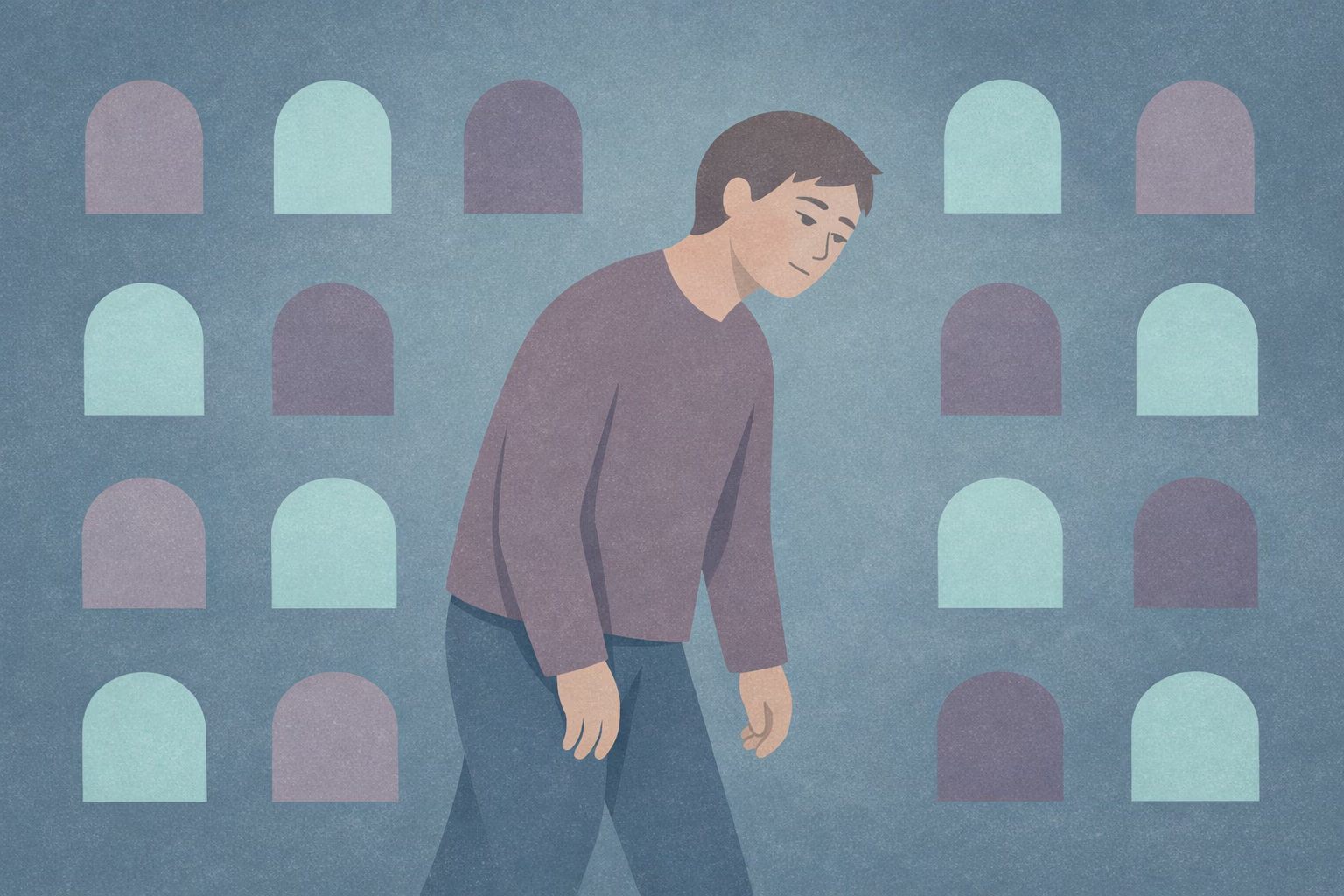
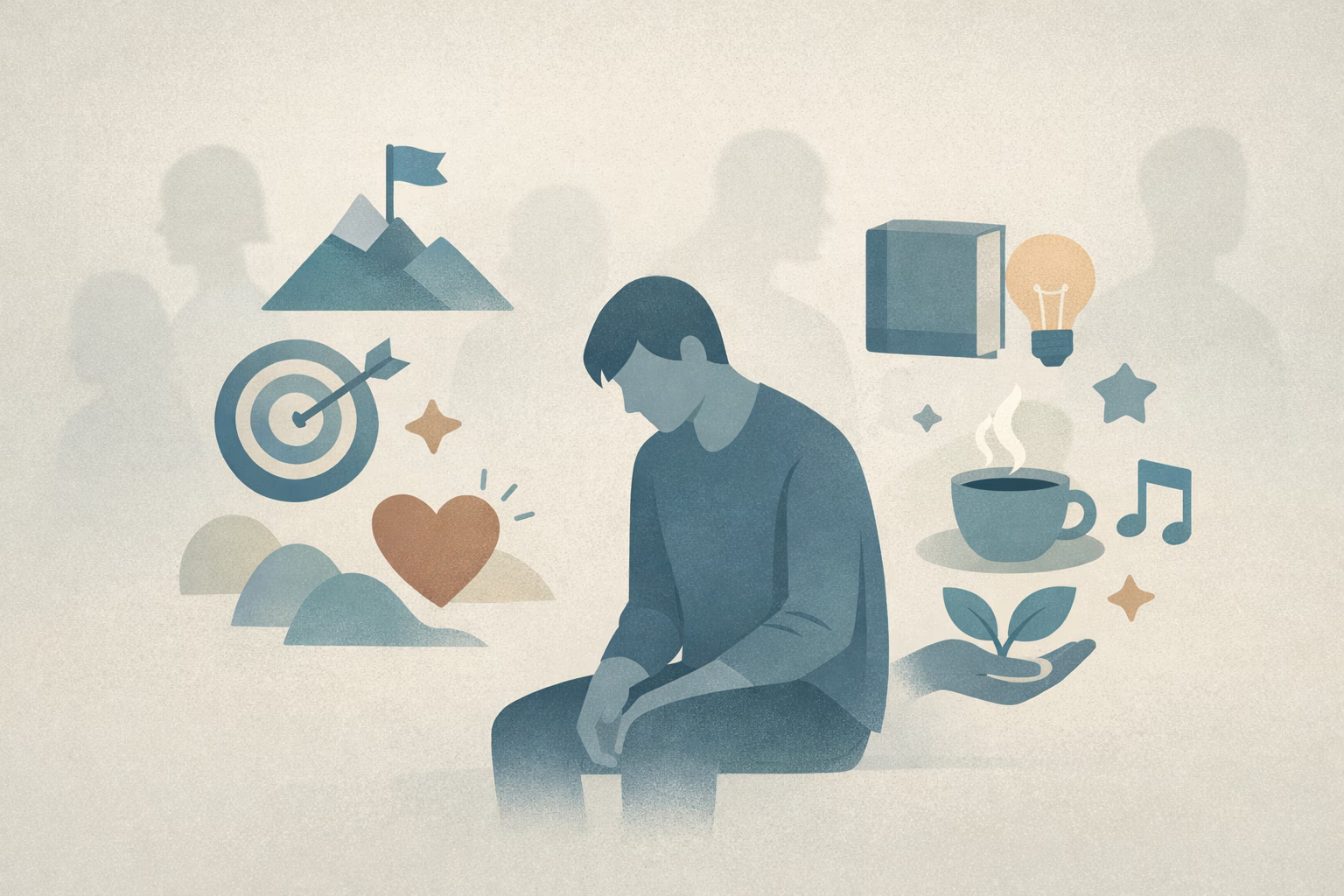
Understanding explains what is happening. Art allows you to feel it—without fixing, judging, or naming. Pause here. Let the images work quietly. Sometimes meaning settles before words do.
One Quiet Window, one insight, one reflection — every Sunday