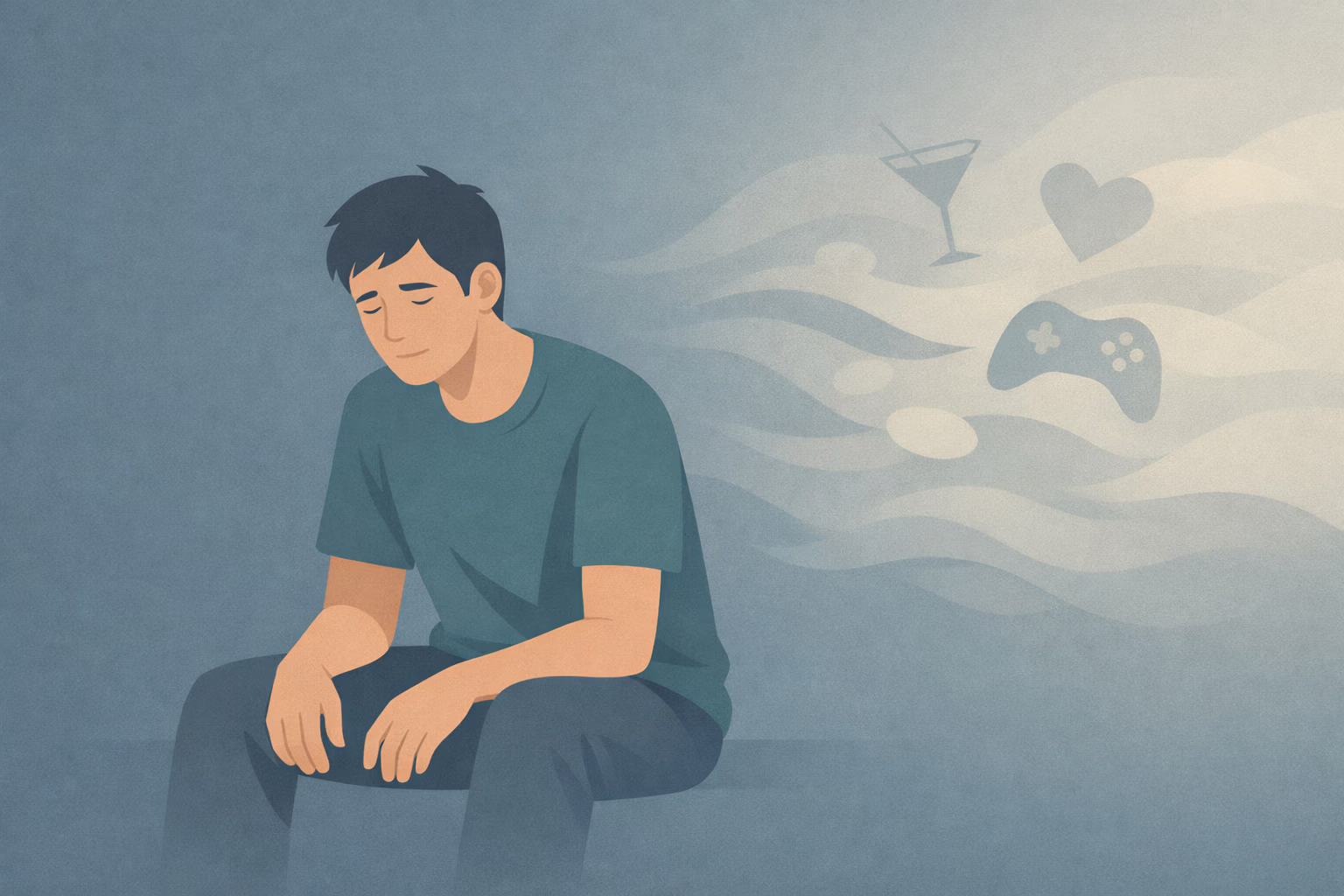
Pleasure Plateau
Learn why pleasure stops feeling good.
In context: This is the “Incomplete Satisfaction Gap.“ When you engage in high-velocity, low-density loops, the stimulation ends before your Narrative & Identity system can integrate the experience. You get the “hit,“ but not the “landing.“ Naming this gap as a structural mismatch between speed and integration removes self-blame.

This cycle never fully satisfies.
Each piece almost fits, yet something remains open.
The gap is not a mistake— it is how the loop keeps moving.
Seeing the missing piece prevents endless rearranging.
You can stop trying to complete what was never meant to close this way.
Name incomplete satisfaction with DojoWell.
Explore DojowellArticles exploring the psychology behind these patterns.
This is the "Incomplete Satisfaction Gap." When you engage in high-velocity, low-density loops, the stimulation ends before your Narrative & Identity system can integrate the experience. You get the "hit," but not the "landing." Naming this gap as a structural mismatch between speed and integration removes self-blame. You aren't ungrateful; your nervous system simply hasn't been given the time to register a "done" signal.
You bridge it by slowing the "exit phase" of an experience. Instead of rushing to the next trigger, stay with the current one for a few moments after it ends. This allows the Reward system to settle and the Narrative system to claim the experience. By increasing the density of your attention, you allow satisfaction to become a complete structural event rather than a fleeting chemical spike.
One Quiet Window, one insight, one reflection — every Sunday