Pleasure Plateau: When Too Much Stimulation Makes Life Feel Flat
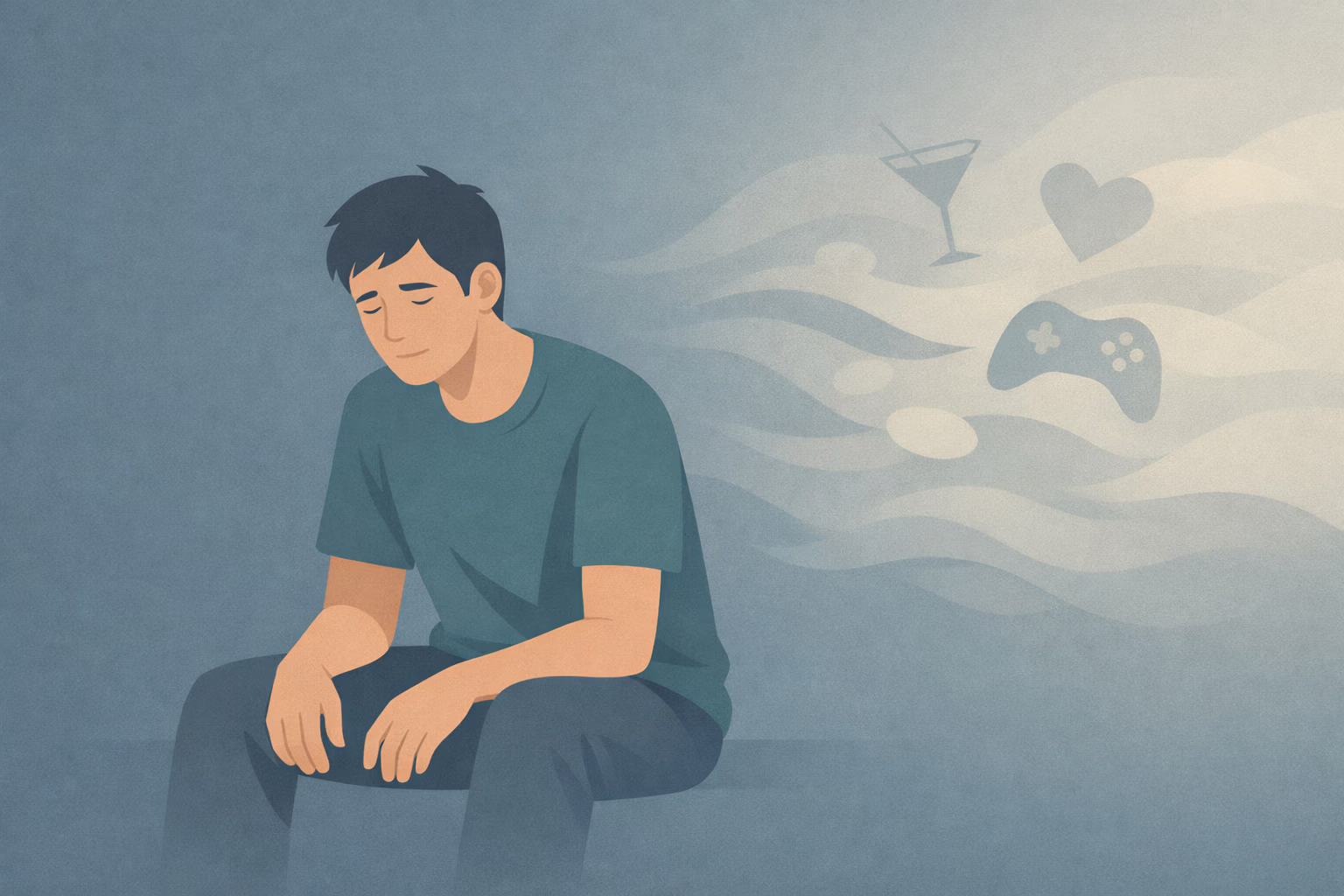
In short: There’s a particular kind of emptiness that can show up after objectively “good” experiences: a fun night, a string of treats, a weekend of scrolling and comfort, even a long-awaited purchase. Nothing is wrong on paper—yet your inner world feels strangely quiet, flat, or untethered.
There’s a particular kind of emptiness that can show up after objectively “good” experiences: a fun night, a string of treats, a weekend of scrolling and comfort, even a long-awaited purchase. Nothing is wrong on paper—yet your inner world feels strangely quiet, flat, or untethered.
Why can pleasure leave you feeling less alive afterward?
This isn’t a character flaw, and it isn’t proof you’re ungrateful. It’s often a coherence problem: pleasure is a powerful state-changer, but it doesn’t automatically create closure, direction, or identity-level settling. When pleasure accumulates without contributing to a sense of “this is who I am” or “this is what I’m building,” meaning can thin out—like a song played loudly enough to drown out the rest of your life, until the silence returns.
Many people recognize the sequence: anticipation, enjoyment, then a quick drop-off—sometimes within minutes, sometimes the next day. The activity may have been genuinely pleasant. The body may have relaxed. And still, afterward, there’s a faint sense of “Is that it?”
This can happen because pleasure is designed to be temporary. Reward states move us toward something, then fade so we can return to baseline and keep orienting. When life offers repeated comfort and novelty, the nervous system can learn that satisfaction is brief—and the mind starts scanning for the next uplift. That scanning can feel like restlessness, boredom, or a low-grade emptiness even in a full calendar. [Ref-1]
Pleasure can be real and still not feel like it lands anywhere.
Enjoyable stimuli activate reward circuitry: attention narrows, urgency softens, and the moment feels more tolerable. But reward is not the same system as meaning. Reward is about “that felt good” and “do it again.” Meaning is more like “that belongs to my life” and “that fits who I’m becoming.” When the first happens without the second, people often describe a subtle flattening.
Over time, repeated spikes can lead to quicker adaptation: what once felt satisfying starts to feel neutral, and the system needs stronger or more frequent inputs to reach the same lift. This is a normal feature of human neurobiology, not evidence that you’re broken. [Ref-2]
Other mammals organize around safety, proximity, and reward. Humans do that too, but we also run a narrative system: we track continuity, contribution, belonging, and the sense that our days add up to something. This system is less about intensity and more about coherence—how experiences integrate into identity and values.
When life is rich in stimulation but poor in completion, the narrative system can’t “file” experiences into a stable sense of self. The result isn’t necessarily sadness; it’s often vagueness. A drifting feeling. Like you’re living many moments, but not inhabiting a life. [Ref-3]
Not “What do I want next?” but “What am I inside of?”
Pleasure has a second function beyond enjoyment: it can reduce contact with inner disquiet. When you’re stimulated, comforted, or entertained, the system receives a temporary “all clear.” Questions about direction, belonging, and purpose quiet down.
The problem is structural: if pleasure becomes the main way the system finds relief, the quieter signals that point to orientation don’t get enough space to return. Then, when the stimulation ends, the unanswered sense of “unfinished” can come back louder—not because you did anything wrong, but because nothing actually completed. [Ref-4]
Modern culture often implies that well-being is a matter of adding more enjoyable experiences: better food, better travel, better entertainment, better upgrades. And for many people, this is confusing because they do add these things—yet the felt sense of satisfaction doesn’t accumulate.
That’s because fulfillment isn’t a stack of pleasant states. It’s a kind of internal “done signal,” a settled coherence that comes after experiences contribute to your life narrative and values. Pleasure can be part of that, but pleasure alone tends to reset rather than resolve. In that sense, excess pleasure can accelerate emptiness: it fills time while leaving the deeper system still waiting for completion. [Ref-5]
A pleasure loop forms when the nervous system starts using stimulation as the primary regulator: not occasionally, but as a dominant pattern. The loop isn’t about weakness; it’s about efficiency. If relief reliably arrives through quick reward, the system will keep selecting it—especially under chronic load.
But reward is a fast signal with fast decay. As adaptation increases, the gap between “before” and “after” can widen. You may notice that enjoyment still happens, yet it doesn’t translate into lasting steadiness. This is one reason hedonic adaptation can feel like an invisible treadmill: movement without arrival. [Ref-6]
Meaning collapse after excess pleasure usually doesn’t look dramatic. It often looks like a subtle loss of traction: life is fine, but you can’t feel your own direction. The body and mind respond with patterns that are trying to regulate an incomplete loop.
Chasing highs that feel necessary for the day to “count,” because baseline feels too thin. [Ref-7]
Rapid boredom after enjoyment, because novelty resolves state but not closure.
Emotional flatness following fun, as the system downshifts and finds no deeper landing.
Overcontrol around food, spending, screens, or routines—an attempt to rebuild predictability when meaning feels unstable.
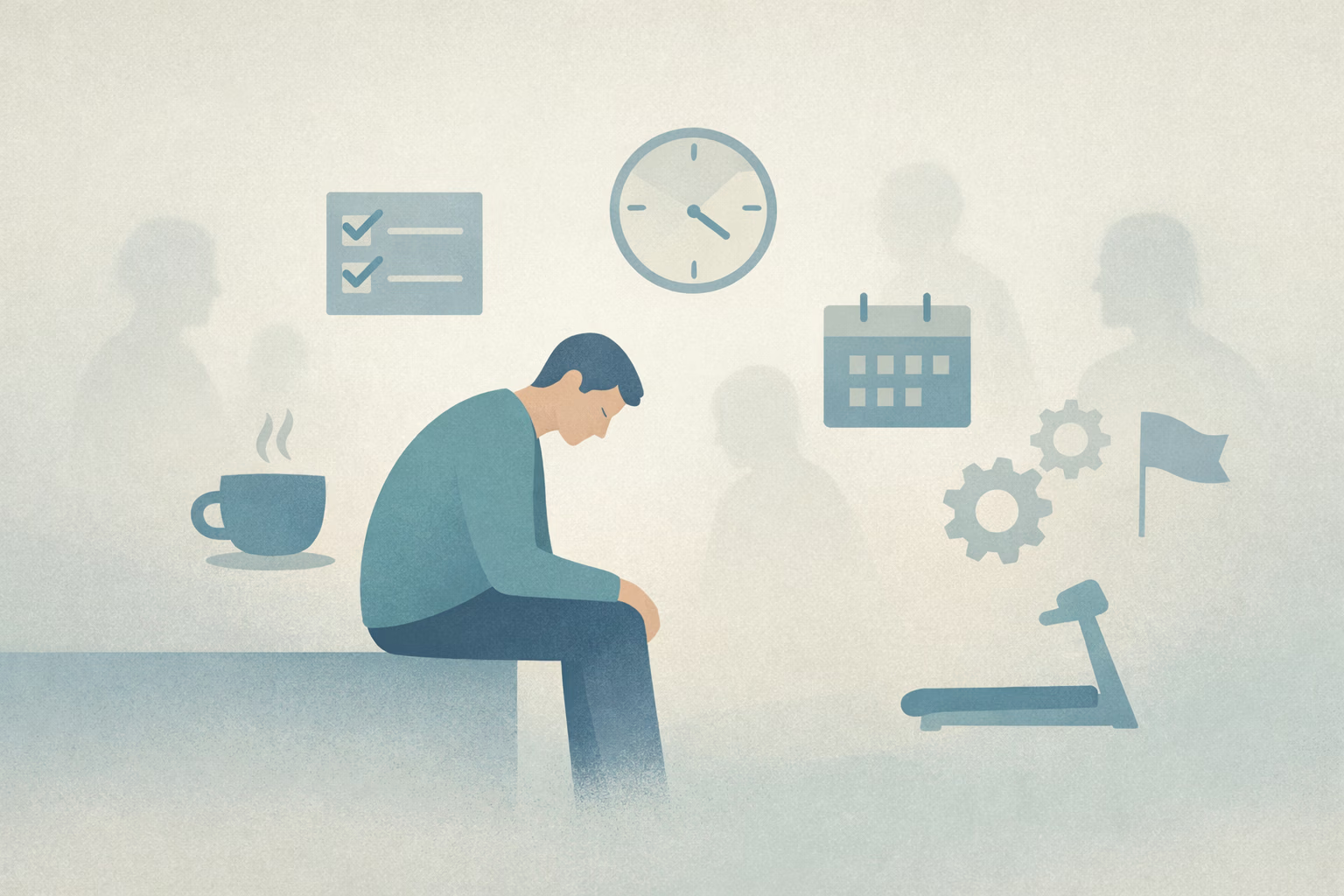
Avoidance by busyness, where constant input prevents the quieter “unfinished” signals from returning.
None of these patterns are identities. They are regulation strategies under conditions that don’t provide completion.
Identity isn’t just a self-concept; it’s an embodied orientation: what you reliably stand for, what you return to, what your life seems to be about. That orientation strengthens when experiences become part of a coherent arc—when they land as “this mattered,” not only “this felt good.”
When pleasure dominates without contribution, identity can become more situational: you feel like yourself only when the right stimulus is present. Motivation then becomes fragile—not because you lack willpower, but because the system doesn’t have a stable “why” to organize effort. Satisfaction shrinks to moments instead of extending into days. [Ref-8]
When meaning thins, the nervous system often responds by looking for something that reliably changes state. Pleasure is efficient, available, and socially reinforced—so the cycle tightens: a dip in orientation leads to seeking; seeking leads to a spike; the spike fades; the dip returns. The person isn’t “choosing emptiness.” The system is searching for regulation with the tools at hand.
Research and theory on well-being often distinguish pleasure-based well-being from self-realization and purpose-based well-being—both matter, but they don’t substitute for each other. When the balance tips too far toward short-term reward, people can report less life satisfaction even while consuming more enjoyable experiences. [Ref-9]
The loop isn’t “too much joy.” It’s too little landing.
Meaning signals are typically quieter than reward signals. They don’t shout; they repeat. They show up as a sense of fit, continuity, or inner agreement—often after the nervous system is no longer being pulled from spike to spike.
This is not about insight or reframing. Many people understand the loop perfectly and still feel stuck. The shift usually begins when internal pacing returns—when there’s enough space for experiences to complete, so the body can stand down rather than immediately search for the next input. In that slower rhythm, the question changes from “What will make me feel better right now?” to “What actually holds me over time?” [Ref-10]
Humans stabilize through connection that has substance: being needed, offering care, building something with others, participating in a shared world. These experiences tend to generate a different kind of satisfaction—less like a spark and more like a steady warmth—because they create closure in the narrative system: “I mattered here,” “I belong,” “I contributed.” [Ref-11]
Pleasure can be social too, of course. The difference is whether the experience adds to coherence. Shared purpose often does, because it links the moment to identity and to a larger continuity beyond the moment.
Not “more people,” but “more belonging that counts.”
When the pleasure loop loosens, many people describe not a constant high, but a return of dimensionality. Ordinary moments register again. Enjoyment becomes less urgent. Rest feels like rest instead of a brief pause before the next pull.
Sometimes this looks like the opposite of numbness: not big emotion, but signal return—subtle preferences, clearer no’s and yes’s, an ability to feel satisfied without needing to escalate. In some frameworks, chronic overindulgence is linked with anhedonia-like flattening, where reward stops landing the way it used to; when load reduces and pacing returns, sensitivity can gradually normalize. [Ref-12]
As coherence returns, pleasure often changes role. It becomes a companion to a life—rather than the main structure holding life together. The question becomes less about maximizing enjoyment and more about living in a way that feels internally consistent.
This is the pivot from pleasure as the primary regulator to meaning as the organizer. Pleasure still matters; it simply stops being asked to do the job of purpose. In the language of well-being, this resembles a shift from primarily hedonic focus toward eudaimonic orientation—where fulfillment comes from alignment, contribution, and growth that actually completes into identity. [Ref-13]
Meaning collapse after excess pleasure isn’t a sign that pleasure is “bad,” or that you should remove enjoyment from your life. It’s more like a dashboard light: your system is signaling that pleasure is being used as a substitute for orientation.
When that signal appears, it can help to interpret it as intelligence rather than deficiency. Your nervous system is asking for experiences that create closure—experiences that leave behind a stable trace in identity, relationships, and values—so your life feels like it’s adding up. Hedonic well-being is real, but it tends to be moment-based; coherence is what lets moments connect. [Ref-14]
Enjoyment becomes nourishing when it’s nested inside a life that feels coherent—when it supports what you care about, rather than competing with it. Meaning isn’t manufactured by intensity; it emerges when experiences complete and settle into who you are.
If you’ve felt hollow after “too much fun,” it may not mean you’re hard to satisfy. It may mean your system is ready for a different kind of satisfaction: the kind that lasts because it contributes to a life with shape. [Ref-15]
From theory to practice — meaning forms when insight meets action.
The hollow after the high isn't imaginary — it's a coherence problem. Pleasure is a powerful state-changer, but it doesn't automatically generate closure or identity-level settling. Reward circuitry says 'that felt good, do it again'; meaning says 'that belongs to my life.' When the first happens without the second, experiences don't get filed into a stable sense of self, and the system flattens once stimulation ends. This is the Pleasure Loop at work: novelty resolves state but not closure. The emptiness isn't proof you're ungrateful; it's feedback that pleasure is being asked to do the job of orientation.
Partly. Repeated reward spikes lead to faster adaptation: what once felt satisfying drifts toward neutral, so the system needs stronger or more frequent inputs to reach the same lift. That's a normal feature of neurobiology, not a defect. But the deeper reason fun stops landing is structural — the narrative system that tracks contribution, belonging, and continuity isn't being fed. Pleasure resets; meaning resolves. When stimulation dominates, the Done Signal that lets a day actually finish never arrives, so you live many moments without inhabiting a life. The treadmill is real, but the missing piece is landing, not intensity.
Pleasure is a fast signal with fast decay — it changes state and fades. Meaning is slower and quieter; it shows up as fit, continuity, and inner agreement when an experience contributes to identity and values. The article frames this as the gap between the Pleasure Loop and the Identity & Meaning System. Pleasure can mute existential noise briefly by giving the nervous system a temporary 'all clear,' but the unanswered orientation signals return louder once stimulation stops. Fulfillment isn't a stack of pleasant states — it's experiences that complete and leave a stable trace in who you are.
The shift isn't removing pleasure; it's letting pleasure stop carrying the weight of purpose. Coherence usually returns when internal pacing slows enough for experiences to actually complete — when the body can stand down rather than immediately scan for the next input. Contribution and shared purpose generate a different kind of satisfaction: less spark, more steady warmth, because they create closure in the narrative system ('I mattered here,' 'I belong'). In that slower rhythm, pleasure becomes a companion to a life rather than the structure holding life together. Enjoyment is sweetest when it has somewhere to belong.
From Science to Art.
Understanding explains what is happening. Art allows you to feel it—without fixing, judging, or naming. Pause here. Let the images work quietly. Sometimes meaning settles before words do.
One Quiet Window, one insight, one reflection — every Sunday