Emotional Exhaustion: When Your Tank Is Empty but Life Keeps Going
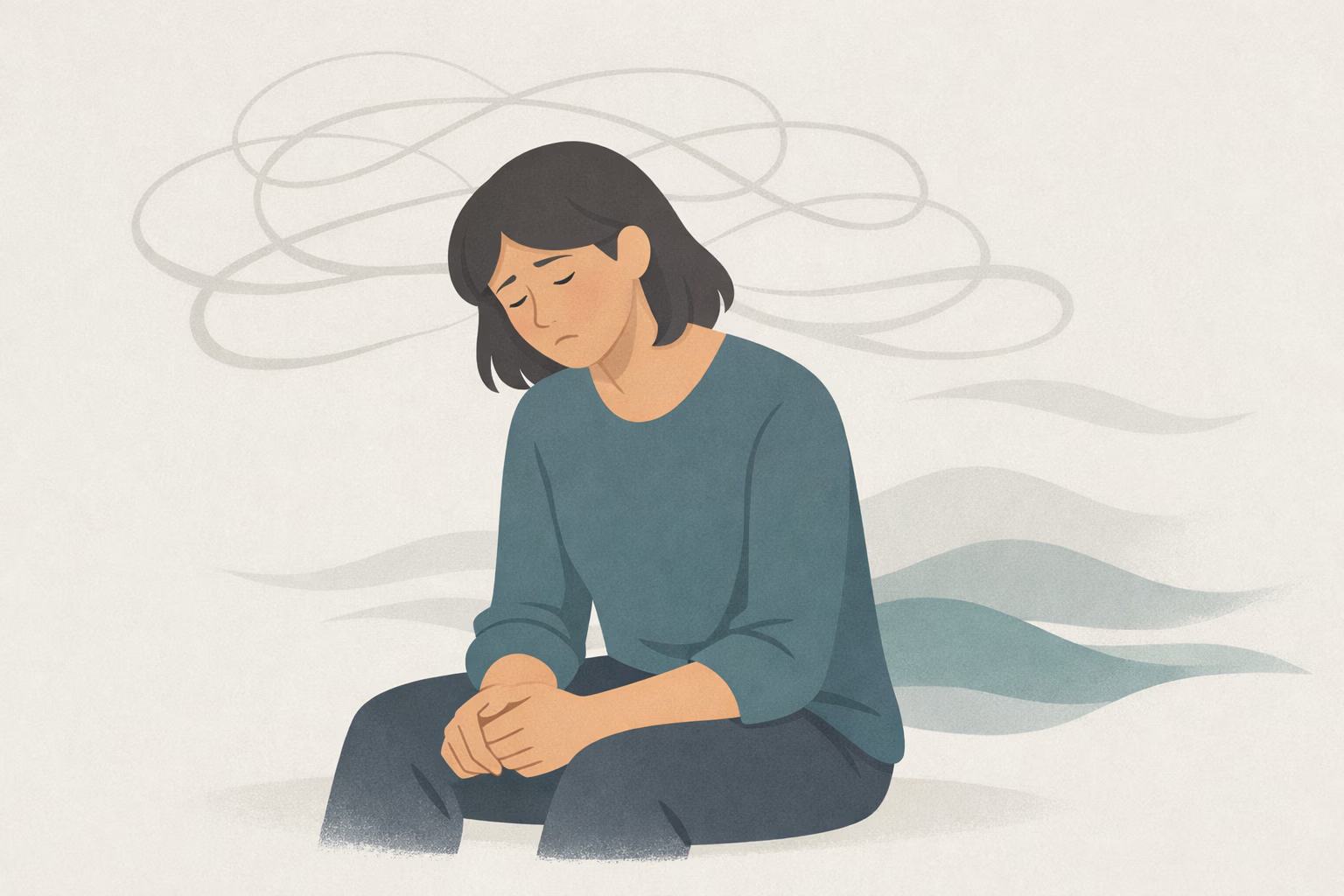
In short: It can be confusing to feel physically tired when you haven’t done anything “physical.” Your body feels heavy, your limbs feel slow, and even after resting you don’t fully bounce back. In these moments, fatigue isn’t a character flaw—it’s often a sign that your system has been spending energy on sustained mental load.
It can be confusing to feel physically tired when you haven’t done anything “physical.” Your body feels heavy, your limbs feel slow, and even after resting you don’t fully bounce back. In these moments, fatigue isn’t a character flaw—it’s often a sign that your system has been spending energy on sustained mental load.
Overthinking isn’t just “thinking a lot.” It’s prolonged internal problem-solving that keeps your nervous system subtly mobilized, as if something still needs handling. The more unfinished the loop feels, the more your brain keeps running it—using real metabolic resources along the way.
What if the exhaustion isn’t laziness—what if it’s your body signaling that it’s been on quiet standby for too long?
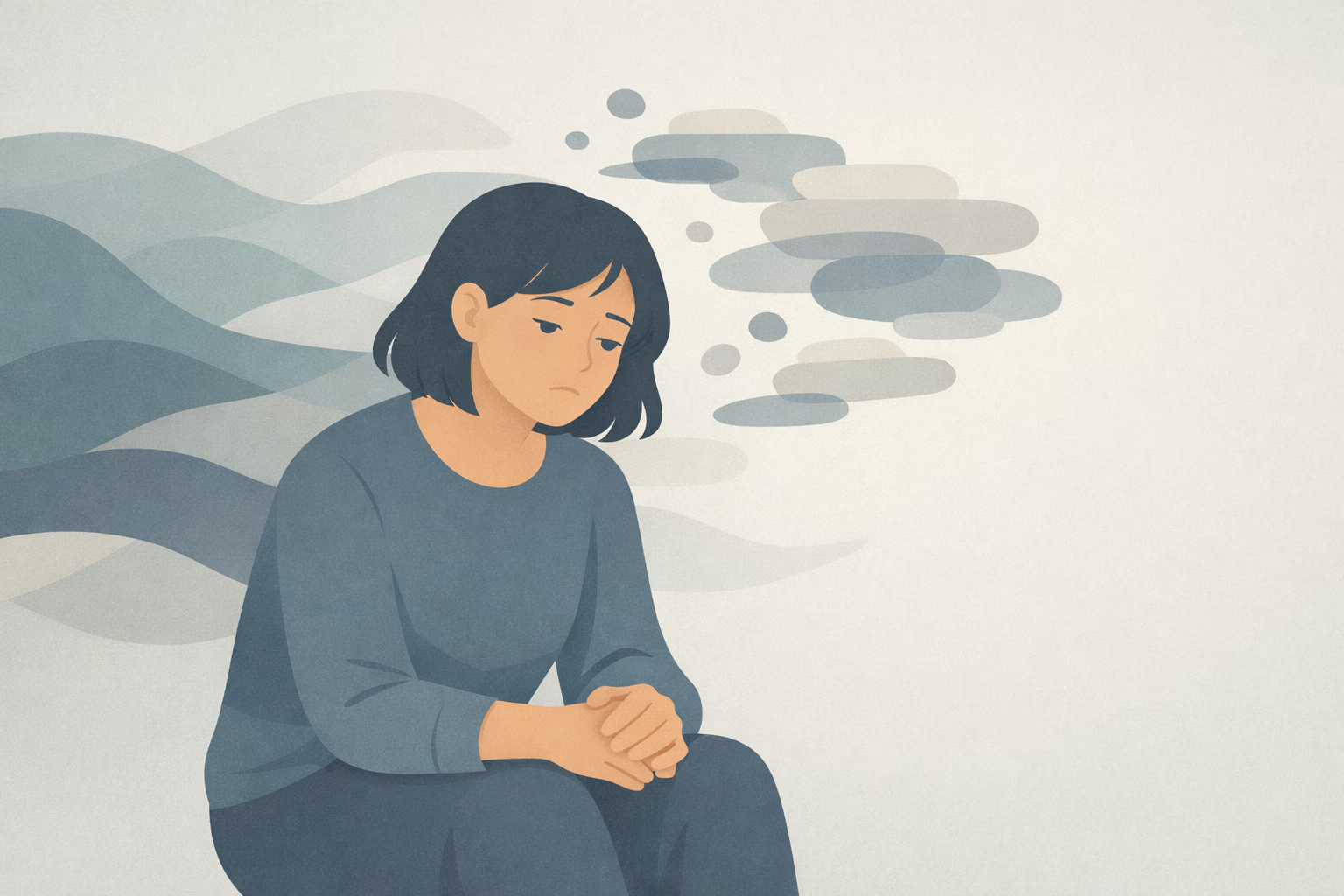
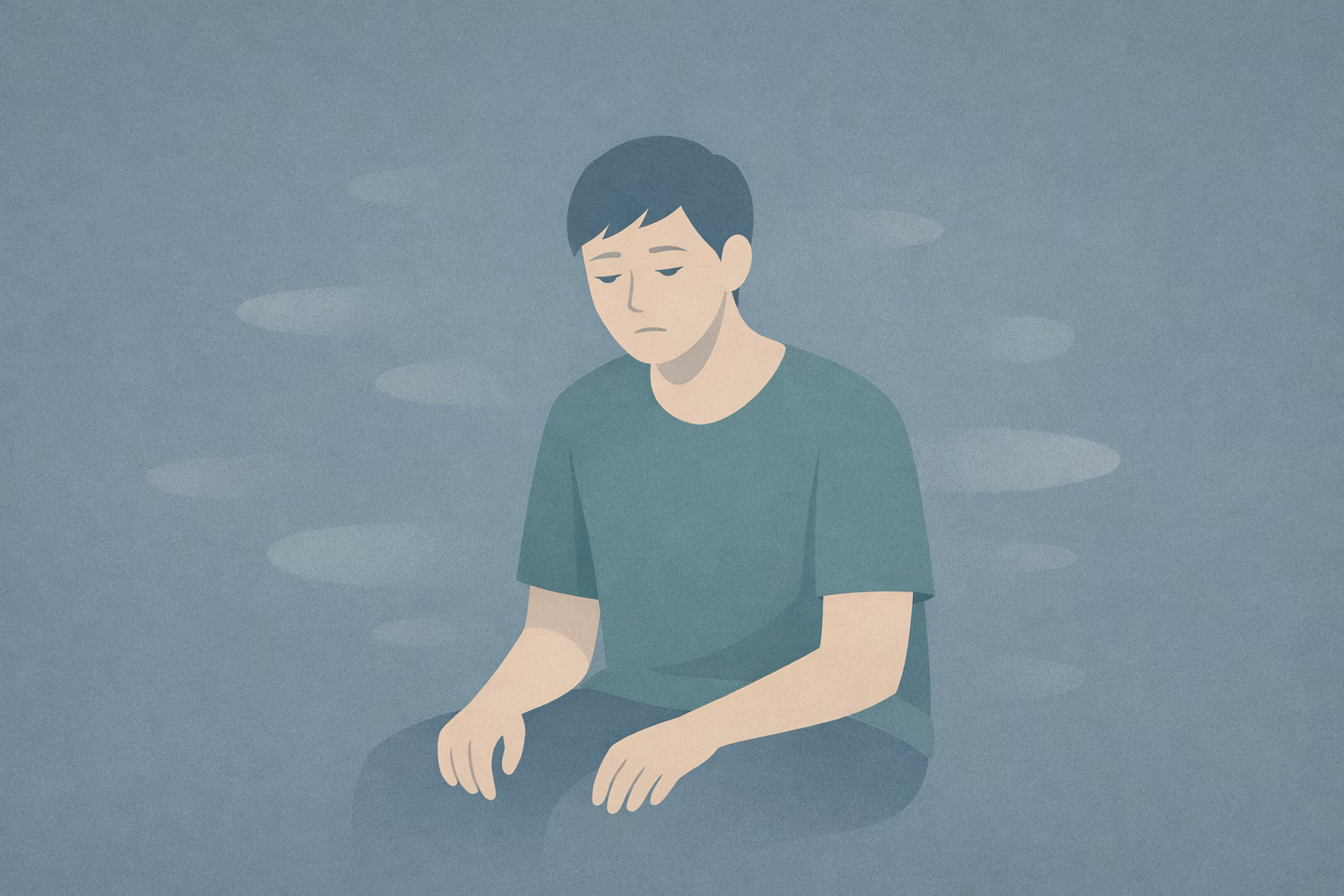
Mental strain can show up as physical depletion: a dense tiredness, a “weighted blanket” feeling in the body, or the sense that simple tasks require extra effort. This can happen even on days with very little outward activity, because the energy cost isn’t coming from movement—it’s coming from sustained internal work.
One reason rest doesn’t always restore you is that rest is most replenishing when the system receives a “done” signal. If your attention stays tethered to unresolved questions—what happened, what might happen, what you should have said—the body may not fully downshift, even while you’re lying still. Prolonged cognitive load is a known driver of mental fatigue, and mental fatigue can spill into physical functioning and stamina. [Ref-1]
Overthinking tends to keep the nervous system in a mild but persistent state of readiness. Not the dramatic surge of acute panic—more like a background hum of vigilance. That state often pairs with subtle muscular tension (jaw, neck, shoulders), shallow breathing patterns, and a narrowed attentional field.
Physiologically, sustained mental effort can maintain stress-related signaling—elevating the sense of demand on the system and increasing the cost of regulation over time. Reviews of mental fatigue describe measurable changes in performance, attention, and perceived effort under prolonged cognitive strain. [Ref-2]
When the mind keeps scanning for certainty, the body keeps supplying “just in case” energy.
Human cognition evolved to solve problems in episodes: assess, act, update, and then return to baseline. Overthinking is different—it keeps the “assess and simulate” phase running without the stabilizing feedback of completion.
This matters because sustained cognitive demand can create mental fatigue that affects physical performance and perceived exertion, even when the body is capable. In other words, the brain’s sustained effort can make the whole organism feel more effortful. [Ref-3]
So the drain isn’t imaginary—it’s a real budget problem.
Overthinking often creates a short-lived sense of control: “If I keep tracking it, I won’t be caught off guard.” That can feel regulating in the moment because it reduces uncertainty. The mind stays close to the perceived edge of risk.
But there’s a tradeoff. Cognitive and physical systems draw from overlapping resources; prolonged mental effort can make subsequent tasks feel harder and more taxing. What feels like preparedness can quietly become depletion. [Ref-4]
Many people learn, implicitly, that more thinking equals more safety: anticipate every outcome, review every interaction, find the perfect explanation. In a complex world, this can look like responsibility.
Yet fatigue research consistently shows that performance and endurance are shaped by limited resources and perceived effort. When internal demand is constant, energy isn’t conserved for living—it's allocated to continuous monitoring. Over time, the body experiences this as reduced capacity. [Ref-5]
Not because you’re failing—because your system is funding a full-time internal security team.
It can help to see overthinking as a loop where mental effort replaces other forms of completion. The loop isn’t “caused by fear” as a personality trait; it’s often shaped by conditions where consequences are unclear, timelines stay open, and resolution is delayed. The brain keeps working because the situation hasn’t landed anywhere stable.
In this structure, thinking becomes a stand-in for closure. It creates motion without arrival—activity without the “done” signal that allows the nervous system to stand down. Cognitive fatigue descriptions often include this exact feel: ongoing mental effort paired with diminished restoration. [Ref-6]
Overthinking is often recognized by its mental texture—replaying, analyzing, drafting, forecasting. But the body usually tells the story first. The signals can be quiet, practical, and repetitive.
Chronic cognitive strain and stress-related exhaustion are associated with changes in perceived energy and cognitive functioning, and can correlate with structural and functional patterns in stress-related conditions. [Ref-7]
When overthinking becomes chronic, it doesn’t just cost attention—it can shape the body’s longer-term stress profile. Rumination has been studied in relation to cortisol activity, suggesting that repetitive, unresolved mental loops can be linked with ongoing physiological stress signaling. [Ref-8]
Over time, this can contribute to a broader exhaustion picture: reduced resilience, getting sick more easily, slower recovery, and a thinning of emotional bandwidth. Not because you “can’t cope,” but because the organism has been running without true closure.
Burnout often isn’t a dramatic collapse. It’s the slow disappearance of spare capacity.
There’s a compounding effect: as fatigue increases, cognitive flexibility tends to decrease. Your mind has fewer “degrees of freedom”—fewer alternate interpretations, fewer creative routes, less patience for ambiguity. That narrowing makes repetitive loops more likely, because the system defaults to familiar pathways when resources are low.
Sleep disruption and daily rumination can also interact with stress physiology across the day, creating a cycle where the body doesn’t fully reset and the mind stays more sticky and reactive. [Ref-9]
So the spiral isn’t just mental—it’s a resource loop.
It can be tempting to aim for “better thinking” as the solution. But overthinking drains energy largely because it keeps the system mobilized without completion. Restoration tends to appear when load reduces and the body receives credible safety cues—signals that the situation has landed somewhere, even if imperfectly.
Research discussions on rumination and physiology often point toward the role of state shifts—how certain kinds of embodied regulation and reduced cognitive looping are associated with different stress profiles. [Ref-10] What matters here isn’t insight alone. It’s when the organism stops needing to rehearse the same scenario and can reallocate energy back to baseline functioning.
Relief isn’t the same as distraction. Relief has a “settled” quality—like the system can finally stop guarding the same doorway.
Overthinking is often solitary work: you become the only container for uncertainty, ambiguity, and decision-weight. When problems stay private, the mind tends to keep them “active,” because there’s no external boundary that signals completion or shared responsibility.
Shared problem-solving—being witnessed, clarified, or helped to name what’s actually happening—can reduce rumination and its self-reinforcing quality. This isn’t about “venting to feel better.” It’s about changing the structure: the brain no longer has to hold every variable alone. The APA has described rumination as self-defeating in part because it can maintain distress without producing resolution; relational context can interrupt that closed circuit. [Ref-11]
When load decreases and closure increases, the earliest signs are often physical and practical: steadier energy through the day, less urgency in the chest and gut, fewer tension spikes, and a quieter baseline. People often describe a return of “bodily lightness”—not euphoria, just less drag.
Importantly, this isn’t about feeling constantly calm. It’s about capacity returning: the ability to respond to signals and then come back, rather than staying activated long after the moment has passed. Wellness-oriented descriptions of nervous system reset often point to this steadier baseline and improved restoration. [Ref-12]
Not more intensity—more return.
Overthinking often functions like mental defense: an attempt to prevent future harm by running continuous simulations. When that defense relaxes—through reduced load and more genuine completion—energy doesn’t just “come back.” It becomes available for direction: relationships, creativity, contribution, repair, play, and ordinary daily care.
This is where meaning shows up, not as an idea but as an organizing force. When your actions can land—when moments feel complete enough to become part of who you are—identity coherence strengthens. Some wellness frameworks describe burnout recovery in terms of reducing nervous system overload so the body can re-enter a steadier, more connected mode of functioning. [Ref-13]
Energy feels different when it’s moving toward your life, not guarding you from it.
If overthinking has been draining you, it may help to interpret the fatigue as feedback: your system has been spending energy on protection, prediction, and internal rehearsal—often for longer than it was designed to. Cognitive fatigue is widely described as a real, functional state, not a moral weakness. [Ref-14]
In that light, the question shifts from “Why can’t I push through?” to “What has been left unresolved enough that my system won’t stand down?” When fatigue is understood as a signal of sustained load, shame tends to loosen—and agency can return as orientation, not pressure.
Your mind’s persistence is not proof that you’re broken. It’s proof that something has mattered, and your system has been trying to keep you prepared. But preparation without completion is costly.
Energy often returns when thinking is no longer a round-the-clock substitute for closure—when the nervous system can stop scanning and start settling, and when attention can be used for living rather than guarding. In conversations about burnout and brain changes, the throughline is consistent: chronic strain reshapes capacity, and relief follows when the load becomes livable again. [Ref-15]
From theory to practice — meaning forms when insight meets action.
Mental strain shows up as physical depletion: a dense tiredness, a weighted-blanket feeling, a sense that simple tasks require extra effort. The energy cost isn't coming from movement — it's coming from sustained internal work. Rest is most replenishing when the system receives a Done Signal. If your attention stays tethered to unresolved questions — what happened, what might happen, what you should have said — the body doesn't fully downshift even while you're lying still. Prolonged cognitive load is a known driver of mental fatigue, and that fatigue spills into physical functioning. The exhaustion isn't laziness; it's your body signalling that it's been on quiet standby for too long.
Overthinking keeps the nervous system in a mild but persistent state of readiness — not acute panic, more a background hum of vigilance. That state pairs with subtle muscular tension (jaw, neck, shoulders), shallow breathing, narrowed attention. Sustained mental effort maintains stress-related signalling, raising the cost of regulation over time. When the mind keeps scanning for certainty, the body keeps supplying just-in-case energy. Common signs: persistent jaw clenching, frequent sighing, head pressure, eye strain, a wired-but-tired feeling, afternoon energy crashes out of proportion, sleep that happens but doesn't fully refresh. Cognitive and physical systems draw from overlapping resources; the drain is real.
Mental effort replaces other forms of completion. Thinking becomes a stand-in for closure — motion without arrival, activity without the Done Signal that allows the system to stand down. The brain keeps working because the situation hasn't landed anywhere stable. Fatigue makes overthinking more likely too: as fatigue increases, cognitive flexibility decreases, fewer alternate interpretations are available, and the system defaults to familiar repetitive pathways. Sleep disruption and rumination interact across the day so the body never fully resets. This is an Avoidance Loop in resource form: the spiral isn't just mental, it's metabolic. Burnout often isn't dramatic collapse; it's the slow disappearance of spare capacity.
Not better thinking — closure. Restoration appears when load reduces and the body receives credible safety cues that the situation has landed somewhere, even imperfectly. Relief isn't the same as distraction; relief has a settled quality, like the system can finally stop guarding the same doorway. Shared problem-solving helps because the brain no longer has to hold every variable alone — co-regulation interrupts the closed circuit. As capacity returns, the earliest signs are physical: steadier energy through the day, less urgency in the chest and gut, fewer tension spikes, a quieter baseline. Energy feels different when it's moving toward your life, not guarding you from it.
From Science to Art.
Understanding explains what is happening. Art allows you to feel it—without fixing, judging, or naming. Pause here. Let the images work quietly. Sometimes meaning settles before words do.
One Quiet Window, one insight, one reflection — every Sunday