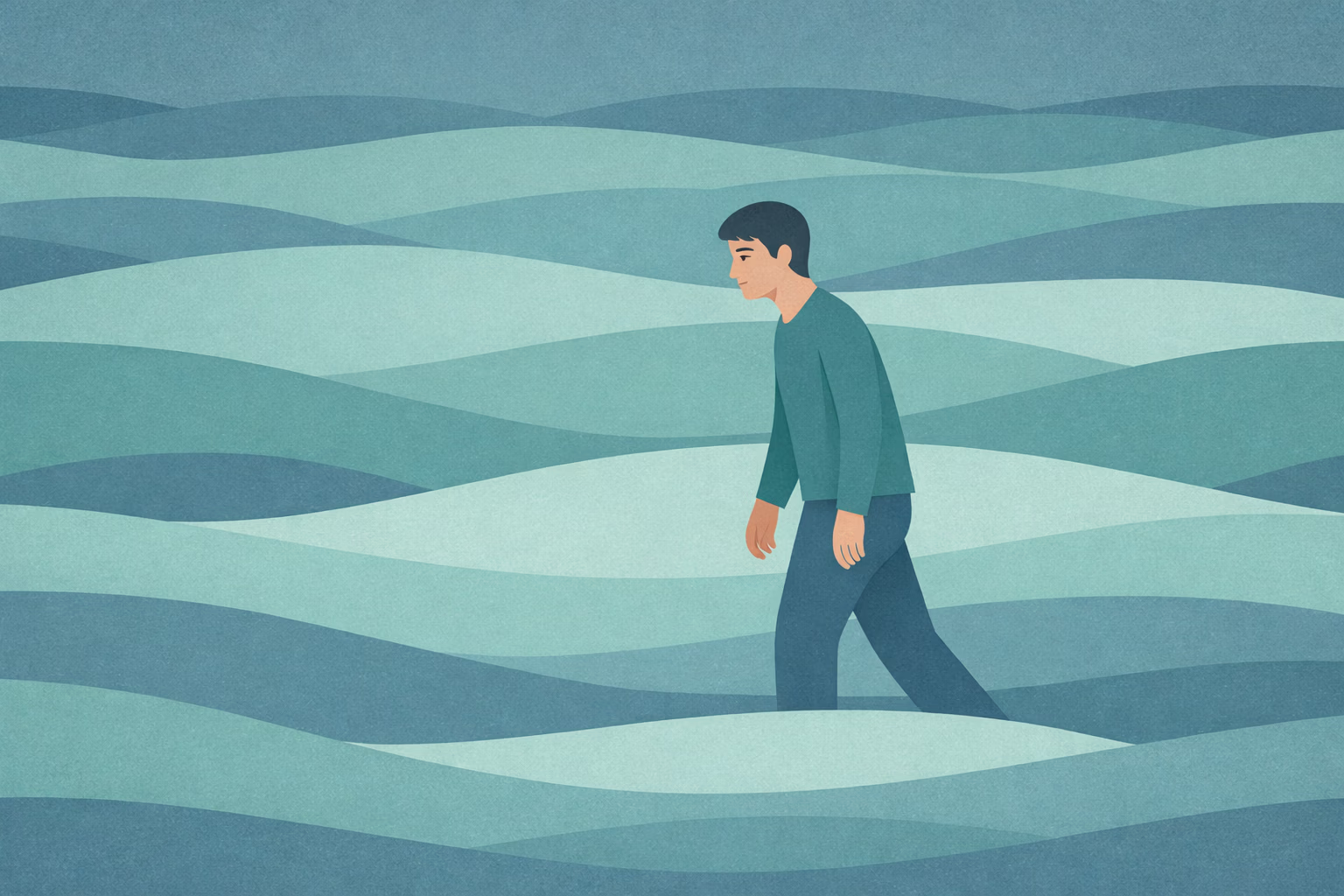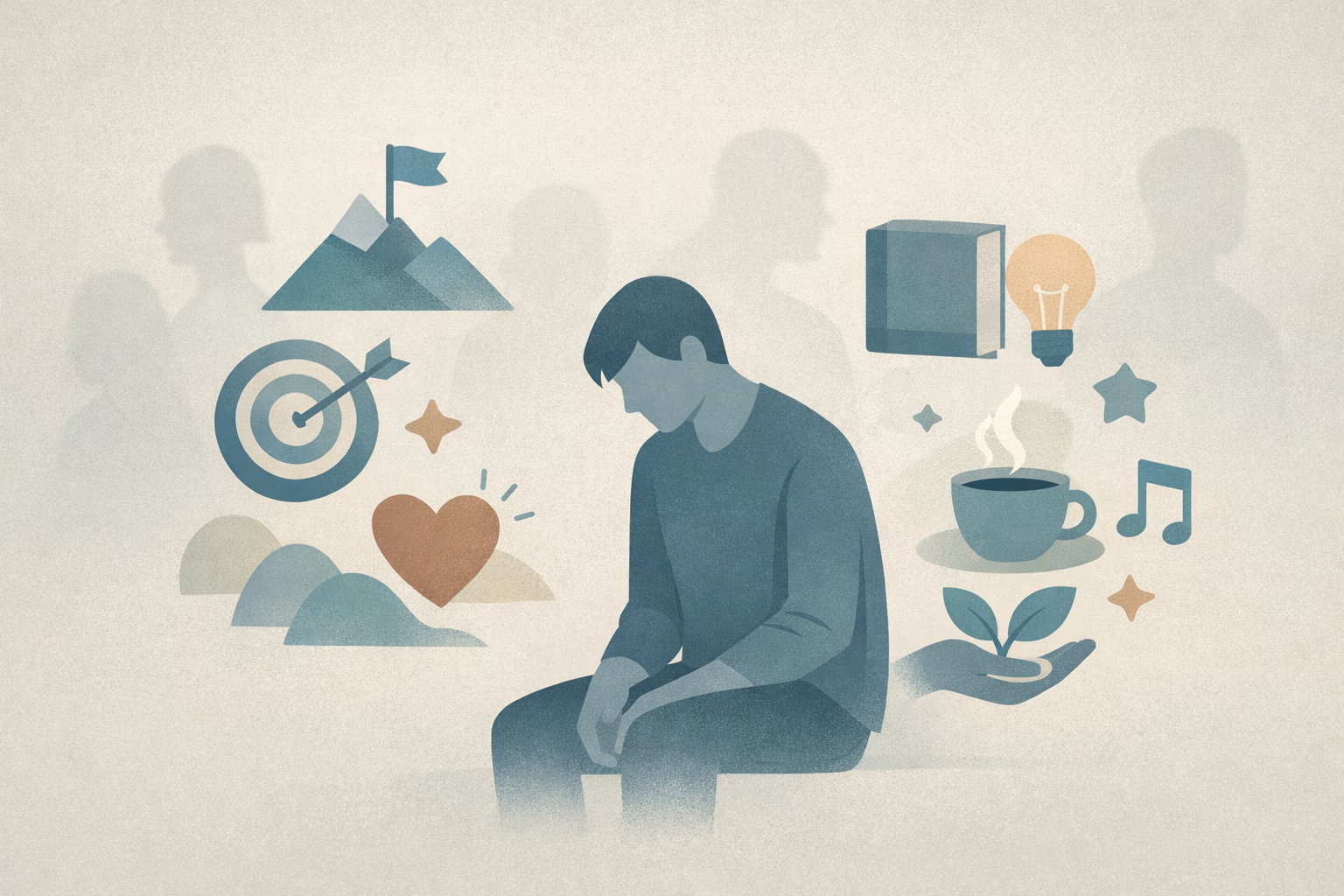

Pleasure Plateau: When Too Much Stimulation Makes Life Feel Flat
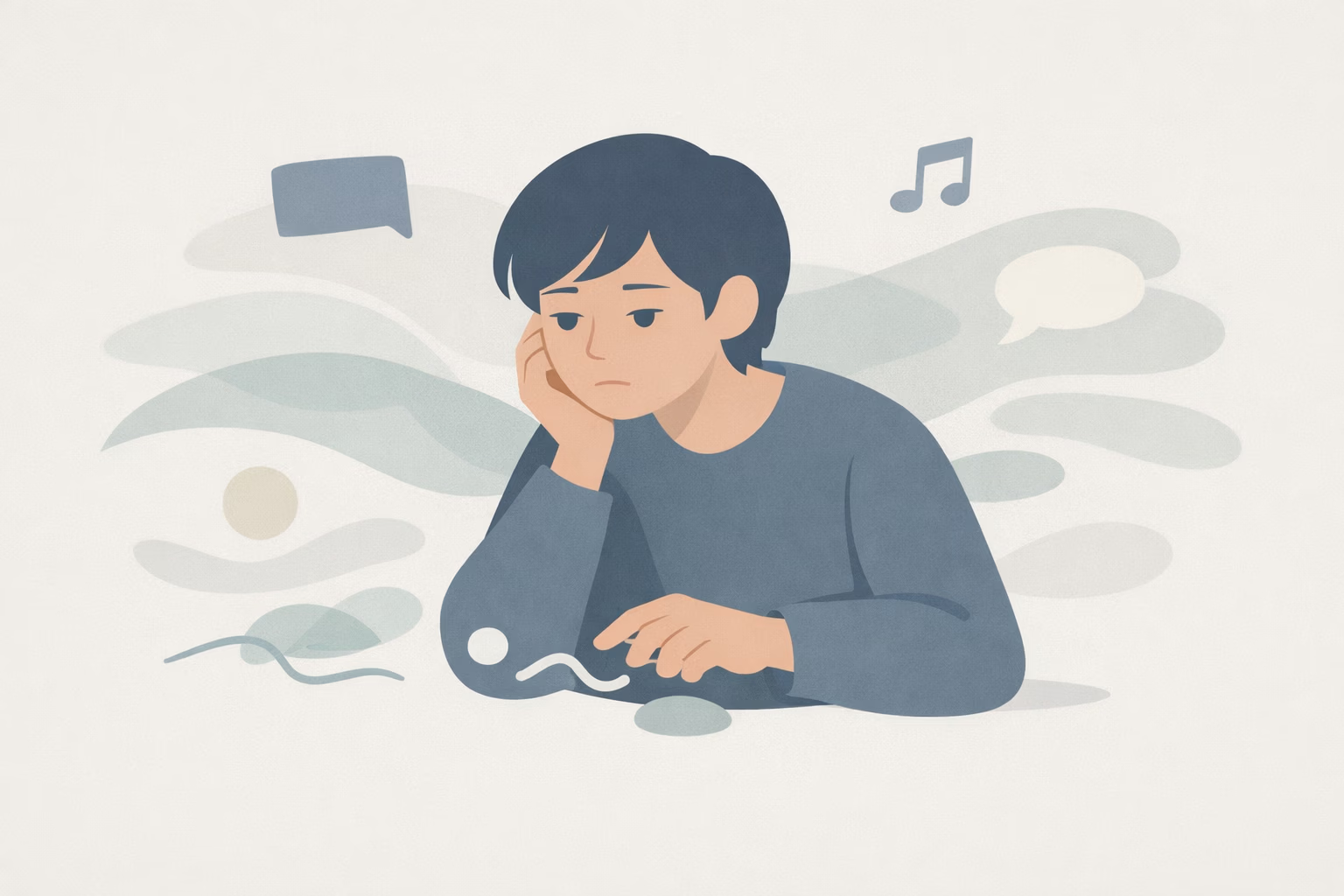
In short: For many people, “boredom” isn’t a neutral lull anymore. It can feel like friction in the body: a restless edge, a sudden impatience, an almost automatic reach for something—anything—that adds input.
For many people, “boredom” isn’t a neutral lull anymore. It can feel like friction in the body: a restless edge, a sudden impatience, an almost automatic reach for something—anything—that adds input.
This isn’t a character flaw, and it isn’t proof your attention is “broken.” It’s often what a human nervous system does when it has been trained by the environment to expect frequent reward signals and rapid closure.
What if boredom isn’t emptiness—what if it’s your system noticing a missing “done” signal?
When a stream of input ends—an episode finishes, a feed runs out, the room gets quiet—many people notice a fast internal shift: fidgeting, scanning, opening apps without deciding to, or a vague sense that something needs to happen now.
That state can be misunderstood as “lack of self-control,” but it often reflects a nervous system that hasn’t received closure. Without an ending that registers as complete, the system stays oriented toward “find the next cue.” In modern life, the next cue is usually within a thumb’s reach. [Ref-1]
Human reward systems adapt. When the baseline environment contains frequent novelty—alerts, short videos, fast-switching tabs—the nervous system can begin to treat that level of input as ordinary.
Over time, quieter states may register as under-stimulating, not because they are bad, but because the system has recalibrated what “enough” feels like. The result can be a persistent lean toward the phone during pauses, or “phubbing” during moments that used to hold attention on their own. [Ref-2]
When your baseline becomes “always something,” silence can feel like a drop—not a rest.
Novelty-seeking isn’t new. In uncertain environments, orienting toward new information helped humans find resources, update plans, and stay safe. A quick “what’s that?” response was adaptive.
But today, novelty is engineered to be constant and effortless. The same system that once helped track opportunities can become saturated—fed by infinite scroll, rapid clips, and a steady supply of social comparison cues. Under these conditions, boredom proneness and short-form video patterns can reinforce each other, not as a personal defect, but as a predictable match between biology and environment. [Ref-3]
Stimulation changes state. A new clip, a fresh headline, a notification, a quick game—these can create an immediate shift in arousal and engagement. The body moves from “flat” or “edgy” into “occupied.”
This is part of why stimulation becomes a default regulator: it produces quick relief without needing resolution. The nervous system gets a burst of orienting and reward signaling that temporarily replaces the need for completion. Novelty-seeking traits and novelty-related pathways are closely tied to these fast pivots in behavior. [Ref-4]
And if relief is immediate, why wouldn’t the system learn to reach for it?
It makes sense to assume that more stimulation “solves” boredom. In the moment, it often does. The problem is the after-effect: if every quiet dip is rapidly filled, the system gets fewer chances to settle into low-input states and register them as safe.
So the threshold changes. The ordinary—waiting in line, washing dishes, a slow conversation—can start to feel insufficient. This isn’t because those experiences lost value; it’s because the reward system has been repeatedly paired with higher-intensity cues and faster payoff patterns. [Ref-5]
A “pleasure loop” isn’t just liking pleasure. It’s a structural pattern: cue → quick reward → brief relief → the next cue. The loop doesn’t end with completion; it ends with another prompt.
In this loop, novelty becomes a stand-in for closure. Instead of an experience settling into “done,” the nervous system stays in a mild seeking mode, because the environment keeps offering more to orient toward. This fits with neurocomputational views of reward and novelty processing: prediction, update, and re-orient become continuous. [Ref-6]
When endings are rare, the system learns to live in “next.”
Stimulation chasing can look ordinary from the outside—modern, even. Internally, it often feels like an inability to stay with a single channel of experience long enough for it to land.
When novelty is frequent, habituation changes too: predictable inputs may lose impact quickly, and the mind may escalate to new content to restore the feeling of engagement. [Ref-7]
High-frequency stimulation isn’t only about time spent. It’s about what the nervous system doesn’t get: sustained attention, slower appraisal, and the bodily “stand-down” that comes after completion.
When inputs keep arriving, the system remains in an orienting posture. That can reduce tolerance for ambiguity and increase the need for quick resolution. Over time, this can erode the capacity to stay with a single thread—whether that thread is a task, a relationship moment, or an inner signal that needs time to resolve. Novelty-related pathways can contribute to this pull toward constant updating. [Ref-8]
One of the most discouraging parts of stimulation chasing is the dulling effect: the more novelty you consume, the more “regular” experiences can feel muted. Not because life is empty, but because your system has learned to expect faster, brighter feedback.
Repeated novelty can raise the intensity needed to feel engaged, creating a widening gap between real-life pace and digital pace. Many popular explanations describe this as a “dopamine” dynamic in everyday terms; while the details are complex, the lived experience is simple: higher inputs make lower inputs harder to register as satisfying. [Ref-9]
If the nervous system is calibrated to fireworks, candles can feel like darkness.
It can help to separate two different experiences: relief versus restoration. Relief is the immediate state change you get from new input. Restoration is what happens when the nervous system can complete cycles—start, middle, end—until “done” becomes real in the body.
When stimulation decreases over time, many people notice that the reward system can become more responsive to smaller, slower cues again. This is not a moral victory and not a willpower contest; it’s a biological recalibration that becomes possible when loops are allowed to close instead of being continually reopened. [Ref-10]
Not more effort—more completion. Not more intensity—more settling.
Humans co-regulate. When there’s a steady, low-drama social environment—walking beside someone, cooking together, sitting near another person while each does something quiet—the nervous system often receives safety cues that don’t require novelty.
These shared contexts can support tolerance for presence because they offer gentle structure and predictability. Instead of chasing input, the system can borrow rhythm from connection: paced speech, familiar rituals, mutual attention. In sensation-seeking cultures, this can feel almost unfamiliar at first—which is a sign of mismatch, not failure. [Ref-11]
When the nervous system is less saturated, people often report the return of something subtle: interest without urgency. Not constant excitement—just a steadier ability to stay with what’s here. Attention can hold longer. The impulse to switch can soften. Quiet becomes more tolerable.
This isn’t about becoming a different person. It’s about capacity coming back online as the system needs fewer high-intensity cues to feel engaged. The shift can show up as more stable mood, less jumpiness, and a clearer sense of “enough.” [Ref-12]
When constant input is no longer acting as the main regulator, attention has a different job available: tracking what matters. Meaning tends to emerge when experiences complete and integrate—when the nervous system can register an ending and the self can register, “This is part of my life.”
In high-stimulation environments, identity can become reactive—organized around what grabs you next. In quieter conditions, identity becomes more directional—organized around what you stand for, what you’re committed to, what you want to live inside of. Concerns about “brain rot” in the digital era often point to this broader issue: not only cognition, but coherence. [Ref-13]
Stillness isn’t empty time. It’s where life becomes legible again.
What gets called “boredom” is often a transition state: the old stimulation has ended, and the next meaningful thread hasn’t formed yet. In modern life, that doorway is frequently patched over with instant input—so the system rarely learns what could have arrived after the pause.
When boredom is met with immediate novelty, the nervous system gets state change but not closure. When boredom is allowed to pass through, it can become a threshold where orientation returns: “What am I actually doing? What is this moment for? What do I want my attention to serve?” Discussions of excessive screen-time cycles often circle this same point: the loop keeps spinning when pauses never get to become endings. [Ref-14]
There is nothing shameful about wanting stimulation. It’s a human system doing what it was designed to do: seek cues, seek reward, seek engagement.
But when stimulation becomes the main way the day feels tolerable, it can quietly displace something deeper: the sense of a life that is finishing what it starts and becoming coherent as it goes. Over time, many people find that steadiness grows not from chasing more, but from needing less—because purpose, connection, and completion start carrying the weight that novelty used to carry. [Ref-15]
From theory to practice — meaning forms when insight meets action.
Because what gets called boredom is often a transition state — the old stimulation has ended and the next meaningful thread hasn't formed yet — and the modern environment patches that doorway over with instant input. The nervous system never gets to learn what could arrive after the pause. The restless edge you feel isn't lack of self-control; it's a system trained by frequent reward signals to expect rapid closure. Without an ending that registers as complete, it stays oriented toward find the next cue. Boredom isn't emptiness; it's your system noticing a missing Done Signal.
Reward systems adapt to their environment. When the baseline contains frequent novelty — alerts, short videos, fast-switching tabs — the nervous system starts treating that level of input as ordinary. Quieter states then register as under-stimulating, not because they're bad, but because the system has recalibrated what enough feels like. The reach during micro-pauses (elevators, kettle boiling, between conversations) is automatic because your baseline became always something. Silence stops feeling like rest and starts feeling like a drop. This is the Pleasure Loop: cue, quick reward, brief relief, next cue — endings replaced with prompts.
It does both — relief in the moment, intolerance over time. Stimulation produces an immediate state change: from flat or edgy into occupied. That's why the system learns to reach for it. The paradox: if every quiet dip is rapidly filled, the system gets fewer chances to settle into low-input states and register them as safe. The threshold rises. Ordinary experiences — washing dishes, waiting in line, slow conversation — start feeling insufficient, not because they lost value but because the reward system was repeatedly paired with higher-intensity cues and faster payoff.
Not through more effort or more intensity — through more completion. When stimulation decreases over time, the reward system can become more responsive to smaller, slower cues again. This is biological recalibration, not willpower. In high-stimulation environments, identity becomes reactive, organized around what grabs you next. In quieter conditions, identity becomes directional, organized around what you stand for. Shared low-drama moments help here too: walking beside someone, cooking together — co-regulation supplies safety cues that don't require novelty. Meaning emerges when experiences complete and integrate, when the system can register an ending and the self can register, this is part of my life.
From Science to Art.
Understanding explains what is happening. Art allows you to feel it—without fixing, judging, or naming. Pause here. Let the images work quietly. Sometimes meaning settles before words do.
One Quiet Window, one insight, one reflection — every Sunday