
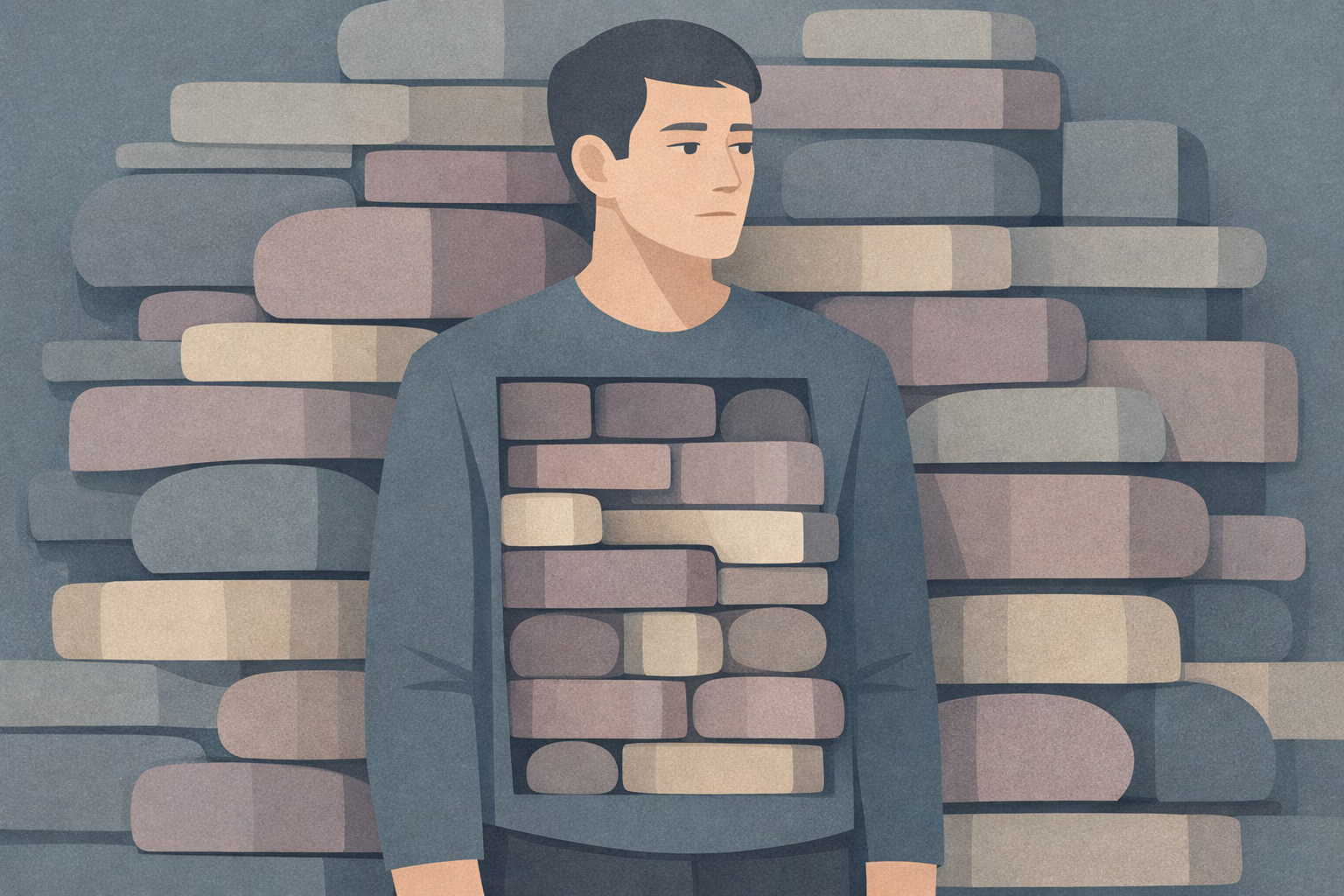
Emotional Suppression: The Silent Architecture of Stress
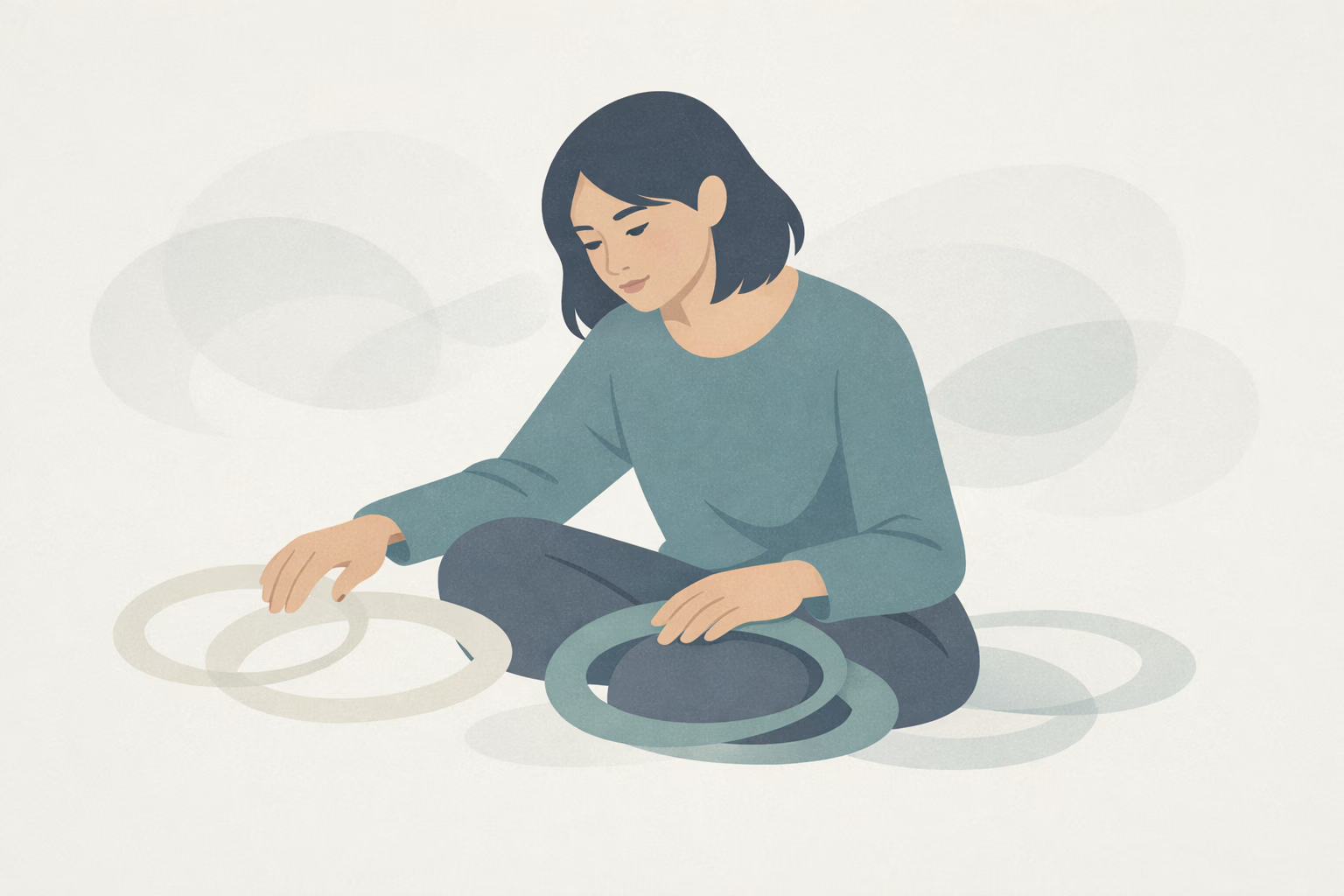
In short: It can be disorienting to notice that the “same” feelings keep returning—irritability in new jobs, dread in different relationships, a familiar heaviness on weekends, or a sudden spike of urgency when nothing obvious is wrong. The details change, yet your inner weather seems to repeat.
It can be disorienting to notice that the “same” feelings keep returning—irritability in new jobs, dread in different relationships, a familiar heaviness on weekends, or a sudden spike of urgency when nothing obvious is wrong. The details change, yet your inner weather seems to repeat.
What if the repetition isn’t proof that you’re stuck—what if it’s proof that your system is trying to conserve energy and find closure?
From a biological standpoint, recurring emotional patterns are often the brain’s efficiency strategy under pressure: it reaches for well-worn pathways that have helped you stay functional before. In modern life, many experiences never fully “finish,” so your system keeps re-running what it knows, looking for a settling that doesn’t arrive.
Repeating emotions can feel personal, like a verdict: “This is just who I am.” But what’s often repeating isn’t your character—it’s a learned response pattern that shows up whenever your system detects a familiar load profile: uncertainty, ambiguity, evaluation, distance, pressure, or too much input. [Ref-1]
That’s why the pattern can appear across different life chapters. You can change cities, partners, routines, and still find the same internal sequence: tension → scanning → spiraling → shutdown, or hope → overinvestment → disappointment → self-protection. The repetition can feel like helplessness, but it’s also a clue: your nervous system is running a known program because it expects that program to produce stability.
Your brain is an efficiency machine. When something resembles a previous situation—even loosely—it tends to pull forward the response that was most practiced, most immediate, and most available. Over time, that response becomes a shortcut: a pre-loaded set of interpretations, sensations, impulses, and behaviors that launch quickly. [Ref-2]
This reuse isn’t laziness; it’s speed. Building a new pathway takes more energy and more reliable feedback than most daily environments provide. So the system defaults to “known routes,” especially under stress load, sleep debt, social uncertainty, or chronic multitasking.
Sometimes an emotion repeats because it’s the only inner route that has a clear map.
Across evolution, nervous systems that conserved energy—and didn’t overthink every variation—had advantages. When conditions were uncertain or resources limited, reusing proven responses reduced risk and metabolic cost. The brain’s “default” activity patterns also support self-referential thinking and social prediction, which can become especially active when the environment feels unresolved. [Ref-3]
In other words, repetition can be the system’s attempt to keep you coherent: to maintain a stable internal narrative and predictable reactions when external conditions are shifting. This is not about being “afraid of change” as a personality trait. It’s about how biological systems lean on familiarity when they can’t confidently complete the loop and stand down.
Unpleasant emotions can still carry a strange sense of certainty. The known disappointment, the known self-critique, the known vigilance—these are predictable. Predictability reduces cognitive effort. It also reduces the number of possible stories your brain must evaluate.
When the mind is left to generate meaning without enough closure in real life, it tends to keep running internal simulations—reviewing, replaying, anticipating. This is one reason familiar emotional states can become a default backdrop, especially when your days don’t offer clear “done” signals. [Ref-4]
What if the pattern is less about what you “feel,” and more about what your system can reliably complete?
When an emotion repeats for years, it can feel inevitable—like gravity. But many repeating emotional sequences are conditioned: built from earlier pairings of cues (tone of voice, silence, deadlines, closeness, conflict), body states (fatigue, hunger, overstimulation), and learned interpretations about what tends to happen next. [Ref-5]
Conditioning doesn’t mean the pattern is “all in your head.” It means your system learned an efficient response to a recurring kind of situation. The problem is that modern situations often resemble old ones enough to trigger the same pathway—without offering the same resolution that would allow the system to update and settle.
Many recurring emotions live inside an avoidance loop: not an intentional refusal to face something, but a structural bypass of completion. The emotion rises, and the system moves quickly toward relief—distraction, over-analysis, pleasing, scrolling, tightening control, numbing, optimizing—anything that changes state fast.
Relief works in the short term because it reduces activation. But relief is not the same as closure. When the loop ends with state-change rather than completion, the nervous system doesn’t receive a strong “resolved” signal—so the pattern remains ready to fire again under similar conditions.
Over time, certain forms of attention training (including practices that increase present-moment stability) are associated with changes in resting-state connectivity—suggesting that what repeats can be influenced by what the brain rehearses. [Ref-6]
Repetition isn’t always dramatic. Often it’s a recognizable internal sequence that returns across different contexts. You might notice it as a “signature” pattern: a predictable tempo of thought, body tension, and behavior.
Across emotion research, healthy regulation is often described less as “never feeling strongly” and more as flexibility: the capacity to return to baseline and respond in varied ways depending on context. Repetition can signal that flexibility is being narrowed by load and unfinished loops. [Ref-7]
When the same emotional program runs repeatedly, it doesn’t only create discomfort—it can shrink the range of what feels possible. You may start to anticipate your own reaction before anything happens. That anticipation becomes another cue, tightening the loop further.
This narrowing is not a moral failure. It’s what systems do under chronic strain: they reduce degrees of freedom. A flexible system can shift gears; an overloaded system sticks to the gear that has worked before, even if it costs more over time. Models of healthy regulation emphasize “flexible, yet firm” responding—adaptation without chaos, steadiness without rigidity. [Ref-8]
When your range gets smaller, life feels smaller—even if your calendar is full.
Neural pathways strengthen with use. Each time a familiar emotional sequence activates and completes its usual cycle—especially when it ends in immediate relief—the brain learns: “This is the route.” The next trigger requires less input to produce the same output.
Over time, the pattern can feel automatic: it launches before there’s time to evaluate, and it becomes harder to interrupt not because you lack willpower, but because the system is now optimized for speed. Psychological flexibility research highlights how repeated, rigid responses can reduce well-being, while varied responses support adaptation. [Ref-9]
It’s common to treat repeating emotions as evidence of a defective self. But a more coherent frame is structural: a repeating emotion is often a signal that some part of your lived experience hasn’t landed as complete—so the system keeps generating a familiar state in search of a finish line.
This doesn’t mean that simply understanding the pattern resolves it. Insight can be clarifying, but integration is different: it’s when the body stops recruiting the same emergency resources for the same class of situation. That settling usually follows completion—new outcomes that are lived through, not just thought through.
Self-regulation develops through experience-dependent learning, shaped over time by what repeatedly happens after activation: whether the environment provides safety cues, repair, and real endpoints. [Ref-10]
Emotional patterns are not only internal—they are relational and environmental. Brains update through prediction error: when something expected doesn’t happen, and the system can remain present long enough to register the new outcome. In humans, some of the most powerful updates occur through relationships: moments of repair, accurate reflection, and non-catastrophic endings.
This is why “trying harder” often fails, while new kinds of experience can quietly change what your system predicts. Evolving brains make decisions by integrating emotion and reason, but the weighting shifts depending on perceived safety and uncertainty. When safety cues and variation are present, the system has more bandwidth to revise its defaults. [Ref-11]
What changes when your system learns, in the body, that this time has a different ending?
When a long-running pattern loosens, people often describe something surprisingly ordinary: pauses where the old reaction used to be automatic, a wider menu of responses, less predictability about what they’ll feel next. It can feel like space. It can also feel unfamiliar, because the old pattern—however painful—was consistent.
In high-stimulation environments, it can be harder to notice novelty because the system is constantly being re-triggered by inputs, alerts, comparisons, and rapid context switching. Digital stress research has linked heavy, fragmented input environments with increased strain and reduced well-being, which can keep emotional loops “hot” and ready. [Ref-12]
Emotional novelty isn’t constant calm. It’s more like regained capacity: the ability to return to signal, to orient, and to let a moment end instead of carrying it forward all day.
As repetition softens, identity often feels less like a fixed story (“I’m always like this”) and more like orientation (“I care about this, so I tend to move this way”). That’s a meaning shift: behavior becomes guided by what matters rather than by the fastest route to relief.
This doesn’t require perfection or permanent serenity. It looks like more congruence—small moments where actions align with values and then settle into lived experience. In contrast, high-frequency internet environments can amplify comparison and urgency, which can pull attention away from values and back into looped reacting. [Ref-13]
Coherence isn’t intensity. It’s when life begins to feel like it adds up.
When you notice the same emotions returning, it can help to hold a dignified assumption: your system learned something that kept you going. The repetition is not an identity; it’s a regulatory strategy that became efficient under certain conditions.
Often, what the pattern points to is not a “broken trait,” but an unmet need for closure—clear endings, repair after rupture, accurate reflection, rest after load, and environments that let experiences complete rather than endlessly reopen. In high-cognitive-load settings, including social media contexts, attention can be repeatedly fragmented in ways that increase strain and reduce the sense of “done.” [Ref-14]
Agency grows when life becomes more coherent—not through pressure, but through contexts and experiences that allow your nervous system to stand down and update what it expects.
Repeating emotions can be understood as the mind-body’s attempt to keep a story coherent when parts of life remain unfinished. The brain naturally generates self-relevant thought, especially when it’s searching for resolution; these default processes are part of how humans make meaning, not evidence of failure. [Ref-15]
Over time, emotional freedom tends to grow not from pushing the pattern away, but from the quiet arrival of completion—when experiences resolve enough that the old pathway no longer has to run. What remains is not a new personality, but a steadier ability to move through life with more coherence, and less compulsory repetition.
From theory to practice — meaning forms when insight meets action.
Because your brain reuses well-worn pathways under load. When something resembles a previous situation — even loosely — the brain pulls forward the response that's most practiced and immediate. Over time, that becomes a shortcut: a pre-loaded set of interpretations, sensations, impulses, and behaviors that launch quickly. This isn't laziness; it's speed. Building a new pathway takes more energy and reliable feedback than most days provide. So you can change cities, partners, routines, and still find the same internal sequence: tension, scanning, spiraling, shutdown. The repetition can feel like helplessness, but it's also a clue: your nervous system is running a known program because it expects that program to produce stability.
Because predictability reduces cognitive effort. The known disappointment, the known self-critique, the known vigilance — these are predictable, even when they hurt. Predictability also reduces the number of possible stories your brain has to evaluate. When the mind doesn't get enough closure in real life, it keeps running internal simulations: reviewing, replaying, anticipating. That's why familiar emotional states can become a default backdrop, especially when days don't offer clear Done Signals. The pattern is less about what you 'feel' and more about what your system can reliably complete. Familiar pain has an end point; uncertainty doesn't.
They're conditioned, not fixed. Many repeating emotional sequences were built from earlier pairings of cues — tone of voice, silence, deadlines, closeness, conflict — paired with body states and learned interpretations. Conditioning means your system learned an efficient response to a recurring situation. Brains update through prediction error: when something expected doesn't happen, and the system can stay present long enough to register the new outcome. Some of the most powerful updates occur through relationships — moments of repair, accurate reflection, non-catastrophic endings. So 'trying harder' often fails, while new kinds of experience can quietly change what your system predicts.
Surprisingly ordinary. People describe pauses where the old reaction used to be automatic, a wider menu of responses, less predictability about what they'll feel next. It can feel like space — and also unfamiliar, because the old pattern, however painful, was consistent. Emotional novelty isn't constant calm; it's regained capacity. The ability to return to signal, to orient, and to let a moment end instead of carrying it forward all day. As repetition softens, identity feels less like a fixed story ('I'm always like this') and more like orientation ('I care about this, so I tend to move this way'). Coherence isn't intensity. It's when life begins to feel like it adds up.
From Science to Art.
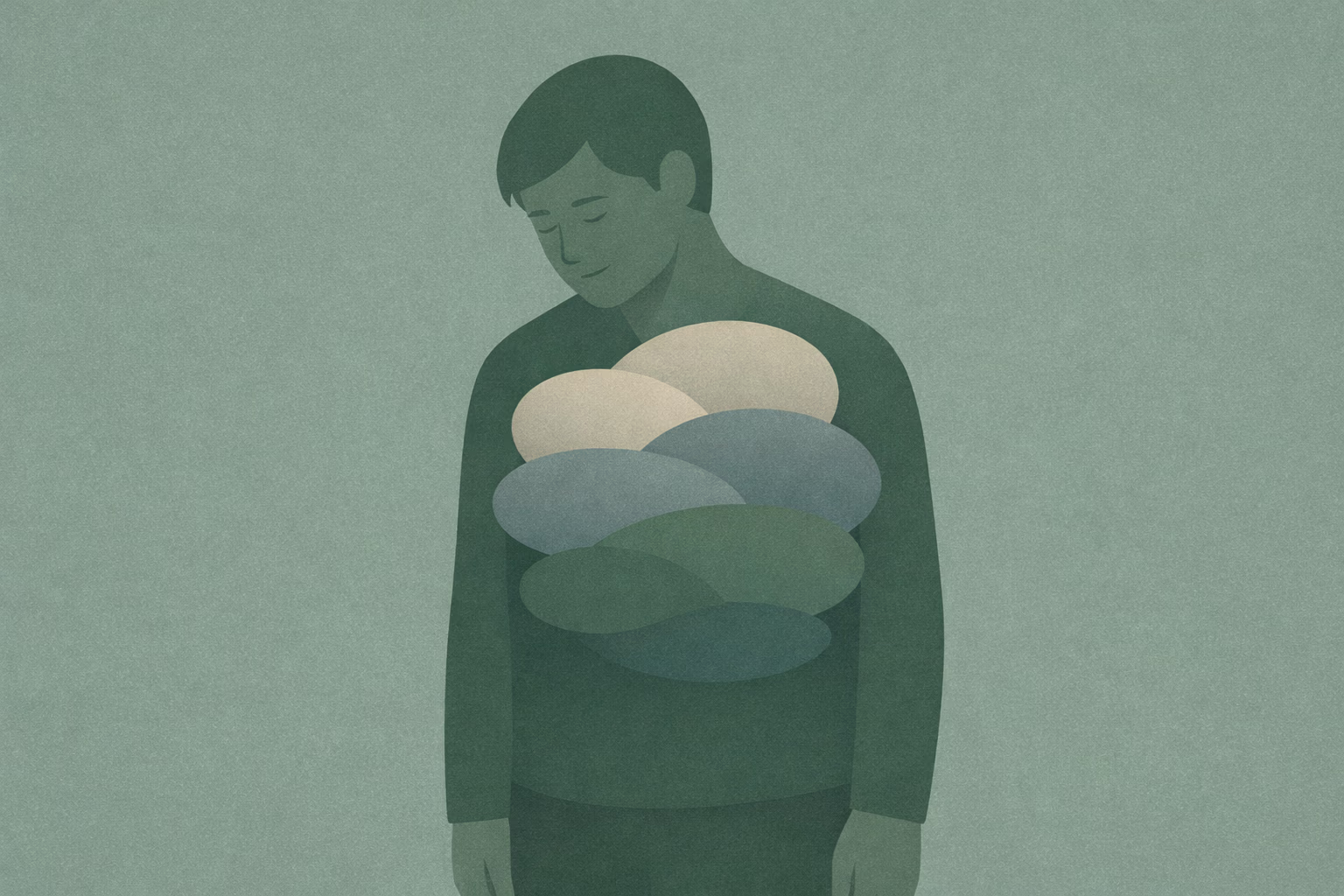
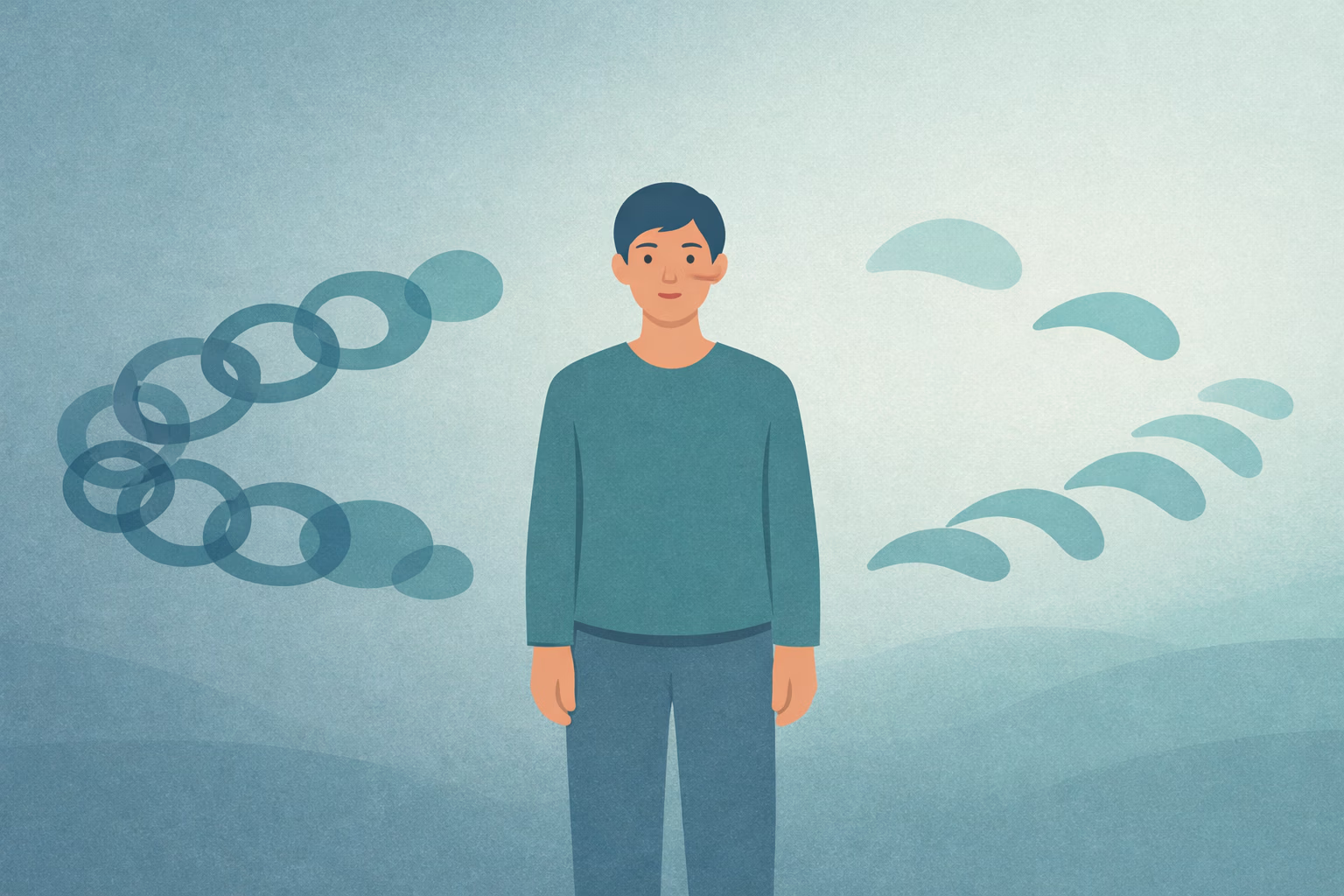
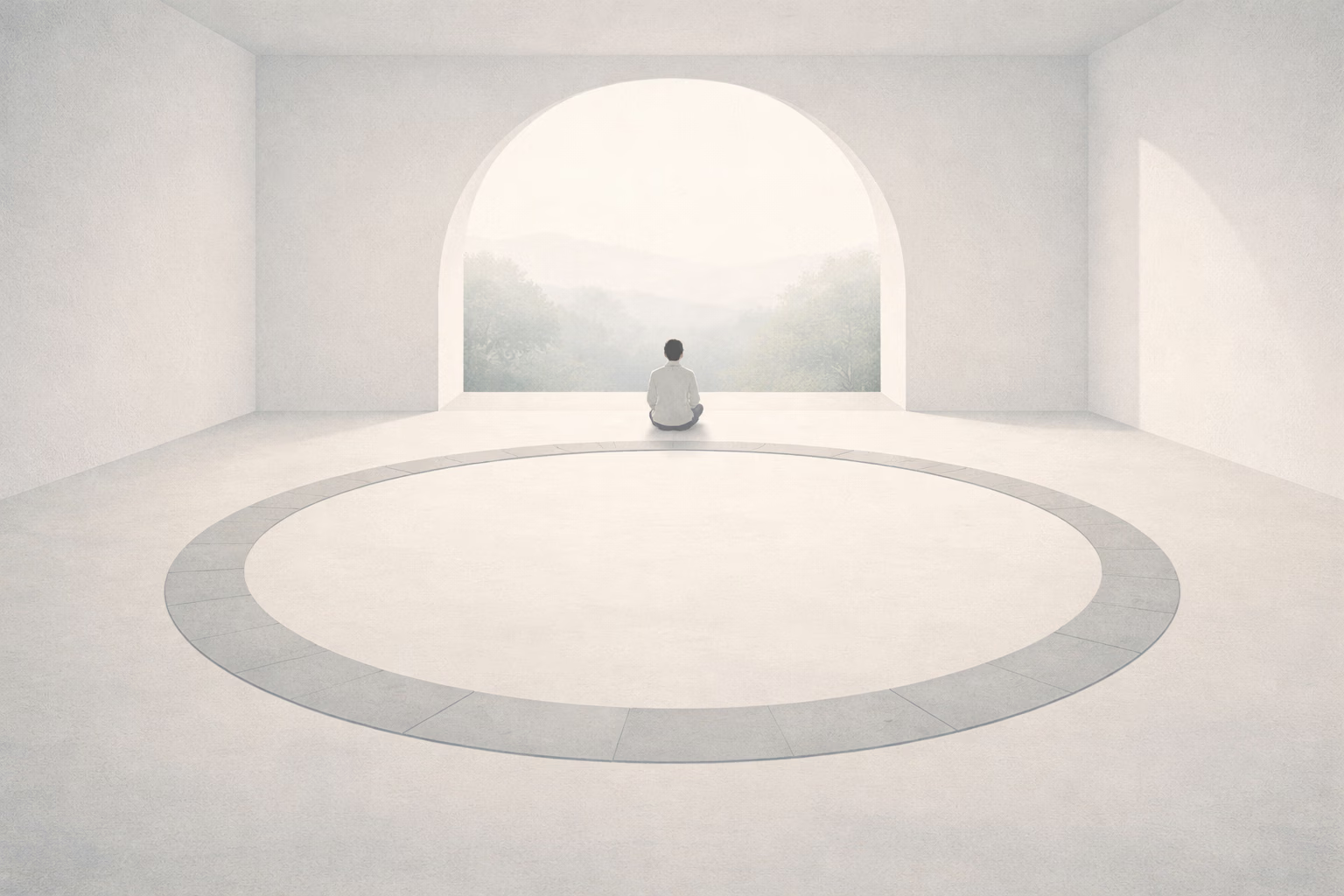
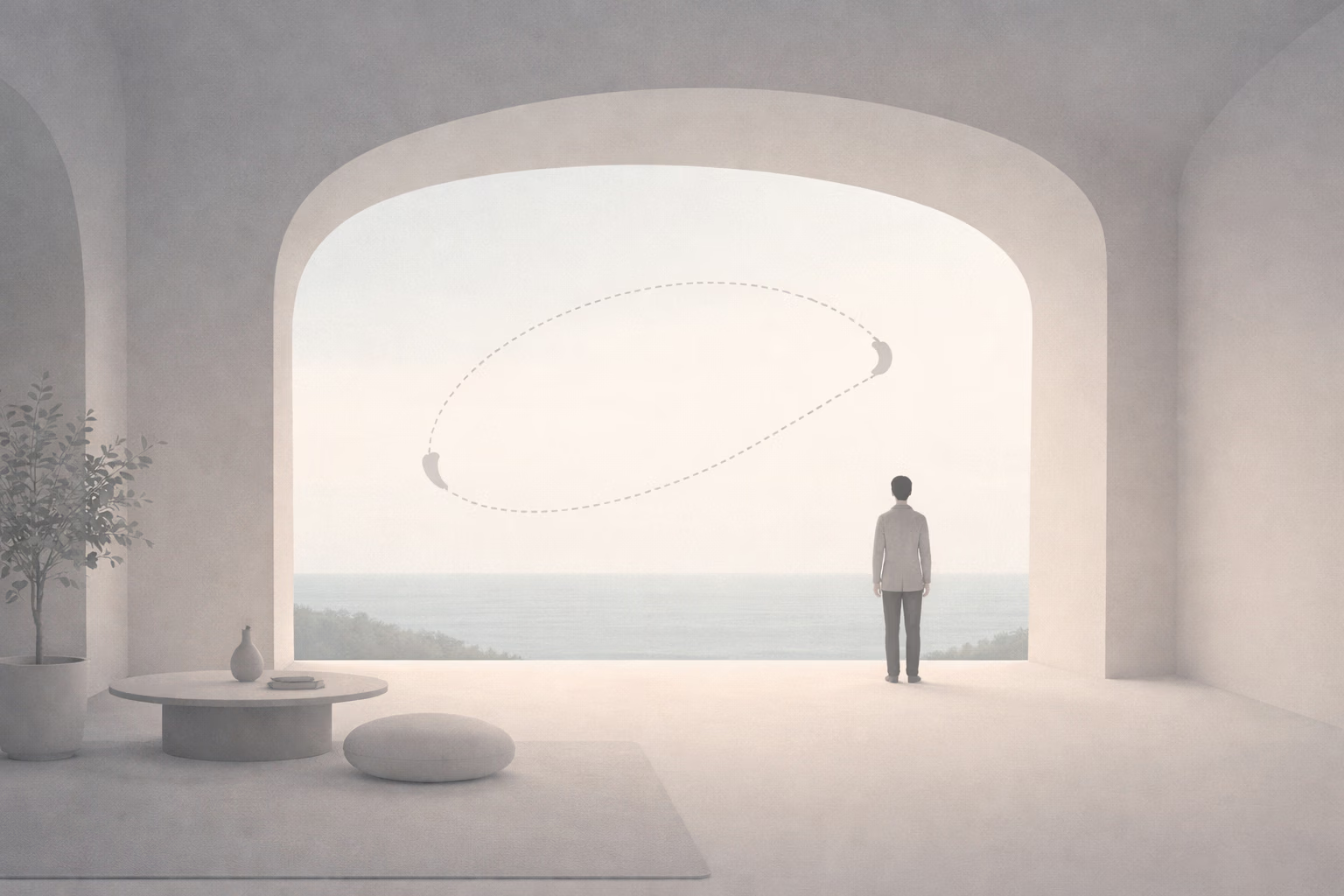
Understanding explains what is happening. Art allows you to feel it—without fixing, judging, or naming. Pause here. Let the images work quietly. Sometimes meaning settles before words do.
One Quiet Window, one insight, one reflection — every Sunday