
Psychological Loops: The Invisible Patterns Controlling Behavior
In short: Emotional loops can feel like living the same inner scene on repeat: the same surge, the same story, the same afterward. People often describe it as “I know better,” yet the body and mind keep returning to the familiar sequence.
Emotional loops can feel like living the same inner scene on repeat: the same surge, the same story, the same afterward. People often describe it as “I know better,” yet the body and mind keep returning to the familiar sequence. That gap can create shame, but it’s usually not a character issue—it’s a regulation issue.
In a nervous system, repetition is often a sign of unfinished processing and incomplete closure. When something hasn’t fully resolved into a settled sense of meaning, the system keeps scanning for completion. The loop isn’t random; it’s the organism trying to reduce uncertainty and regain coherence.
What if “stuck” is less about weakness, and more about an incomplete loop looking for closure?
Many emotional loops don’t announce themselves as “big feelings.” They show up as the same tone of impatience in the morning, the same tightness before a meeting, the same collapse after scrolling, the same internal argument on the drive home. The details change, but the sequence stays remarkably consistent.
This is one reason loops can be so disorienting: the conscious mind experiences time moving forward, while the regulatory system keeps returning to a well-worn track. That track can include thoughts, bodily sensations, urges, micro-avoidances, and a familiar kind of relief afterward.
From the brain’s perspective, a repeated pattern is often a sign of an established pathway: “When this cue appears, run this program.” Habit circuitry is designed to make responses fast and reliable under load. [Ref-1]
Loops persist because the brain is a prediction engine. When it detects cues that resemble a previous situation—tone of voice, pace, facial expression, a notification ping—it doesn’t wait to gather perfect information. It generates a likely model and prepares the body to respond.
Over time, repeated pairings of cue → response → consequence become learned and increasingly automatic. This is not “you choosing wrong”; it’s the nervous system conserving time and energy by using stored templates. Neural systems supporting habit learning and automaticity are especially good at locking in responses that reliably reduce uncertainty or discomfort, even if the long-term cost is high. [Ref-2]
So the loop can feel personal, but it’s often procedural: a trained sequence firing quickly, before reflection has much leverage.
From an evolutionary standpoint, repeating what worked is sensible. When the system finds a response that lowers immediate strain—mentally, socially, physically—it tends to reuse it. That’s how organisms conserve resources in uncertain environments.
Emotion regulation isn’t only a conscious skill; it includes automatic processes that shift attention, shape interpretations, and organize behavior to manage demand. In that sense, a loop can be understood as a regulatory shortcut: a compressed pathway that reliably changes state. [Ref-3]
The difficulty is that “efficient” is not the same as “integrated.” A shortcut can reduce pressure without creating the kind of completion that allows the system to truly stand down.
One reason loops are sticky is that predictability is regulating. Even unpleasant predictability can be easier for the brain to manage than open-ended uncertainty. When outcomes are unclear, attention stays mobilized; when a script is known, the system spends less energy scanning.
Rumination is a classic example: repetitive thinking can create the sense of “working on it,” while also narrowing attention into a controllable channel. It reduces uncertainty in the short term, even as it sustains distress over time. [Ref-4]
In other words, the loop can function like a temporary brace. It holds things steady—at the cost of flexibility.
Loops often have a paradoxical quality: they can feel constricting and familiar at the same time. Familiarity can register as safety because it lowers cognitive demand—no new decisions, no new risks, no unknown outcomes.
But the trade-off is that the system becomes less able to adapt. Instead of responding to what’s actually happening, it responds to what the loop expects to happen. Worry and panic spirals, for example, can maintain themselves by repeatedly recruiting threat-oriented interpretations and bodily readiness, reinforcing the cycle. [Ref-5]
When this goes on for long enough, “stability” starts to mean “the same.” And growth starts to feel like instability—simply because it requires the nervous system to do something unpracticed.
Loops are self-sustaining because they organize attention. Once the sequence begins, it prioritizes certain inputs (danger cues, rejection cues, performance cues) and reduces bandwidth for other signals (context, nuance, alternative interpretations). The world gets narrower.
This isn’t necessarily about fear or suppression. Often it’s structural: the loop creates a short circuit around friction points by shifting attention away from what would require completion. The result can look like avoidance, but it functions more like bypassing an unresolved “not-yet-done” signal.
In research language, experiential avoidance describes the tendency to alter or escape internal experiences when they’re costly to carry, which can strengthen rigid patterns over time. [Ref-6]
Some loops aren’t loud. They’re just the same small turn away, again and again, until the turn becomes automatic.
Loops can take many forms, but they often share a recognizable shape: cue → activation → narrowing → a familiar response → temporary shift → return. The content differs across people, yet the architecture is similar.
Some common patterns include:
Self-criticism and repetitive negative thinking are often less about self-hatred and more about a high-pressure regulation attempt: “If I tighten control, maybe the outcome will be safer.” Over time, this can fuse with shame and become exhausting. [Ref-7]
Even when a loop provides short-term steadiness, it extracts a physiological cost. Constant monitoring, constant evaluation, and repeated activation keep the stress system involved. That can reduce cognitive flexibility and make it harder to access perspective—not because you “aren’t trying,” but because capacity is being spent on maintaining readiness.
With chronic load, the brain becomes more efficient at prioritizing threat detection and less available for integration and planning. Over time, people often report mental fog, irritability, sleep disruption, and a shrinking window of tolerance for normal friction. These shifts are consistent with what stress neurobiology predicts under sustained demand. [Ref-8]
Agency can start to feel like a thin layer on top of momentum: you can see the loop, yet it still carries you.
Loops don’t continue because people enjoy suffering. They continue because they reliably change state. The relief might be obvious (numbing out, distraction), or subtle (a brief sense of certainty, a quick discharge of tension, a feeling of being “right,” a momentary quiet after self-criticism).
When a response reduces distress even slightly, learning systems treat it as useful information and store it for next time. This is how negative reinforcement works: the removal of discomfort strengthens the behavior that removed it. Over time, the loop becomes the brain’s fastest route to a predictable shift.
Reviews of mindfulness-based approaches often highlight how relapse prevention relates to disrupting these automatic chains—especially the moment when a familiar response promises immediate relief. [Ref-9]
Noticing the “relief reward” can be more illuminating than analyzing the original trigger.
There’s a difference between understanding a loop and having it lose its grip. Insight can coexist with repetition. What often changes the trajectory, even briefly, is a pause in the automatic sequence—a moment where the body isn’t propelled into the next step as quickly.
This kind of pausing is sometimes described as awareness, decentering, or regulation: seeing thoughts as events rather than commands, and allowing a bit more space before the next move. Mechanism-focused discussions in mindfulness-based cognitive therapy describe how this shift can weaken automatic reactivity by changing the relationship to internal cues. [Ref-10]
Still, a pause is not completion. It doesn’t magically resolve the underlying “unfinished” signal. But it can keep the loop from closing in the same old way—creating conditions where new outcomes are possible later.
Emotional loops rarely live only inside one person. They are often reinforced—or softened—by repeated interpersonal patterns. A familiar dynamic can act like a cue: the same role assignment, the same misattunement, the same subtle evaluation, the same pressure to perform.
On the other hand, certain relational contexts naturally lower load. Co-regulation doesn’t mean someone “fixes” you; it means the presence of safety cues (tone, pacing, predictability, attunement) can reduce the nervous system’s need to run a high-alert program. Social buffering research suggests supportive connection can measurably reduce stress responses. [Ref-12]
Psychological flexibility and values-based behavior are also shaped in context: when environments allow room for choice and meaning, rigid loops have less necessity.
When a loop loosens, people often describe something surprisingly ordinary: more quiet between thoughts, less urgency to conclude, a wider view of the situation. It isn’t always dramatic. It can feel like the system finally stopped bracing.
Importantly, this isn’t just “feeling your feelings.” It’s a shift in load and completion: fewer unfinished alarms demanding attention, fewer compensatory maneuvers to manage internal pressure. With reduced activation, signals can return to baseline more easily, and the mind can organize information without forcing an immediate outcome.
Connection can amplify this stand-down. When social buffering is present, the body receives cues that it doesn’t have to carry the whole threat-mitigation job alone, which can create a marked sense of relief. [Ref-12]
Sometimes freedom isn’t a breakthrough. It’s the first quiet moment where nothing inside you needs to chase, solve, or brace.
As loops weaken, a subtle reorientation can emerge: less living from recoil, more living from direction. This isn’t about forcing positivity. It’s about the nervous system having enough capacity to let values and identity carry more weight than immediate relief.
In a stabilized state, choice becomes more available—not because every trigger disappears, but because the body isn’t compelled to answer every cue with the same program. Attachment and emotion regulation research highlights how regulation is shaped by history and context, and how safety cues can support more flexible responding. [Ref-13]
Over time, coherence grows when experiences reach completion and settle into “this is part of my life story, and it’s integrated enough to stop shouting.” That kind of settling changes identity at the level of what feels true in the body—not just what sounds true in the mind.
It can help to hold emotional loops in a different category: not as evidence of brokenness, but as signals that something is still trying to resolve. A loop often points to an unmet need for closure, protection, belonging, or truthful orientation—things the nervous system organizes around automatically.
When the environment is fast, evaluative, and fragmented, loops can look like personal problems when they’re actually the system’s best available strategy under load. A more dignified frame is: the pattern is doing a job, and the job makes sense in context. Concepts in coping and emotion regulation emphasize that responses are shaped by demands, resources, and meaning—not simply willpower. [Ref-14]
Agency tends to return when life offers more completion: when moments actually end, when consequences are clear, when relationships provide steadiness, and when what matters can be lived as something real rather than performed.
Inner freedom isn’t the absence of activation; it’s the capacity to not be organized entirely by it. The first step is often simply the moment the sequence is seen as a sequence—something the nervous system learned, not something you are.
And as meaning consolidates through lived completion, identity becomes less fragmented: not a collection of reactions, but a coherent narrative you can inhabit. Narrative identity research describes how people construct personal meaning through the stories that become integrated into who they are. [Ref-15]
When a loop is interrupted, even briefly, it creates a small opening: not a demand to change, but a chance for life to move from repetition toward coherence.
From theory to practice — meaning forms when insight meets action.
Insight rarely beats prediction. The brain is a prediction engine — when it detects cues that resemble a previous situation, it doesn't wait for fresh data; it fires a stored template. Cue, response, consequence get bundled into an automatic sequence that runs faster than reflection. So 'I know better' lives in conscious thought, while the loop lives in habit circuitry. This isn't a character flaw or weakness — it's the nervous system using procedural shortcuts to conserve energy under load. Real change comes from interrupting the chain, not from arguing with it after it's already fired.
Because predictability itself is regulating. Even unpleasant predictability is easier for the brain to manage than open-ended uncertainty. A known script — even a painful one — lowers cognitive demand: no new decisions, no unknown outcomes. Rumination feels like working on it, panic spirals feel like preparing, self-criticism feels like control. They function as temporary braces inside the Threat & Safety System. The trade-off is range: the system stops responding to what's actually happening and responds to what the loop expects. Familiarity gets confused with safety, and growth starts to feel like instability.
Loops continue because they reliably change state. The relief might be obvious — numbing, distraction — or subtle: a brief sense of certainty, a quick discharge of tension, a moment of being right, a quiet after self-criticism. Whenever a response reduces distress even slightly, learning systems tag it as useful and store it for next time. Negative reinforcement: the removal of discomfort strengthens whatever removed it. Over time, the loop becomes the brain's fastest route to a predictable shift. Noticing the relief reward is often more illuminating than analyzing the original trigger — that's where the loop actually closes.
It's surprisingly ordinary. More quiet between thoughts. Less urgency to conclude. A wider view of the situation. The system finally stops bracing. Inner freedom isn't the absence of activation — it's the capacity to not be organized entirely by it. A pause isn't completion, but it interrupts the chain so the loop can't close in the same old way. Co-regulation amplifies this: when supportive presence supplies safety cues, the body learns it doesn't have to carry threat-mitigation alone. Over time, completion grows, identity coheres, and life moves from repetition toward direction.
From Science to Art.
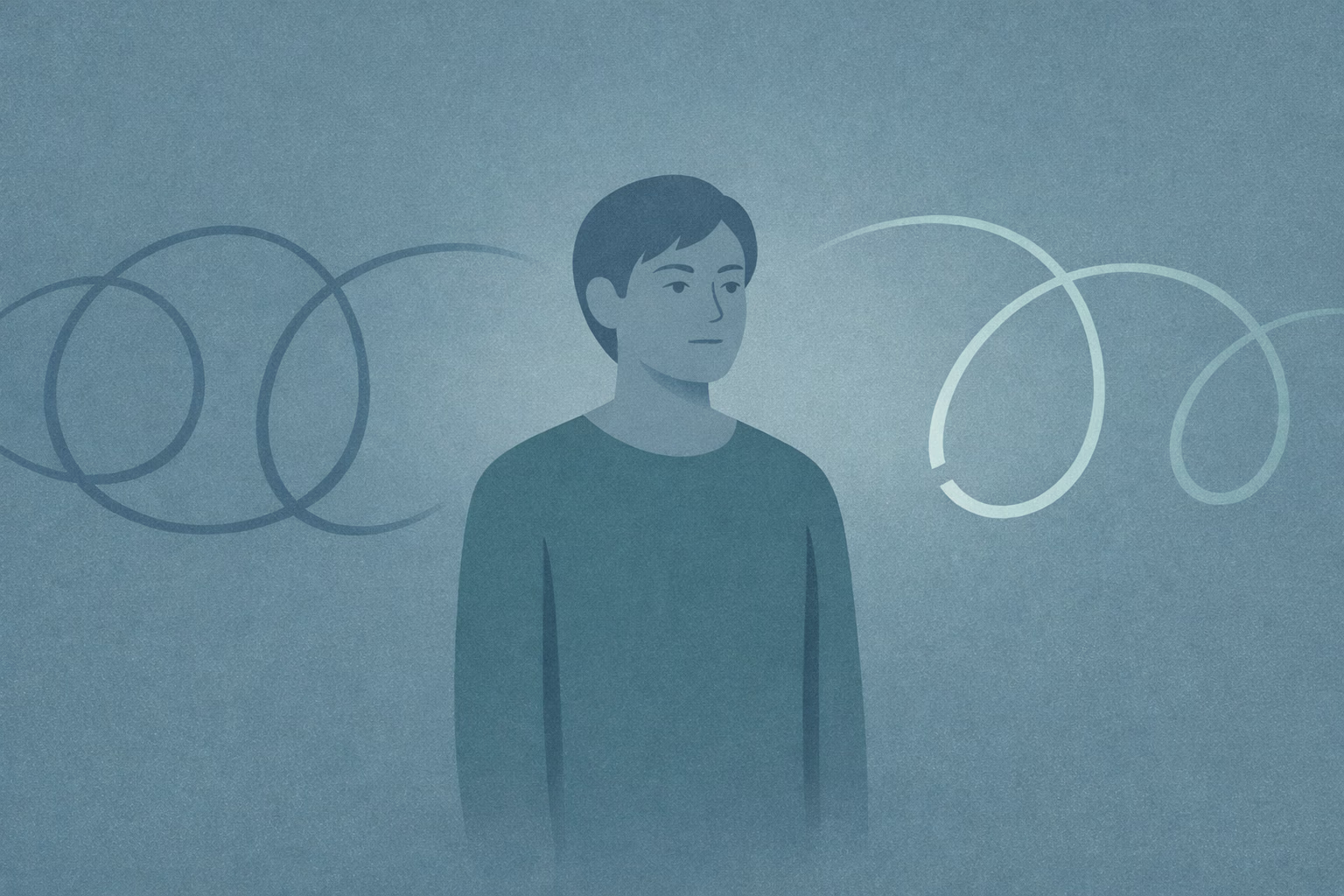
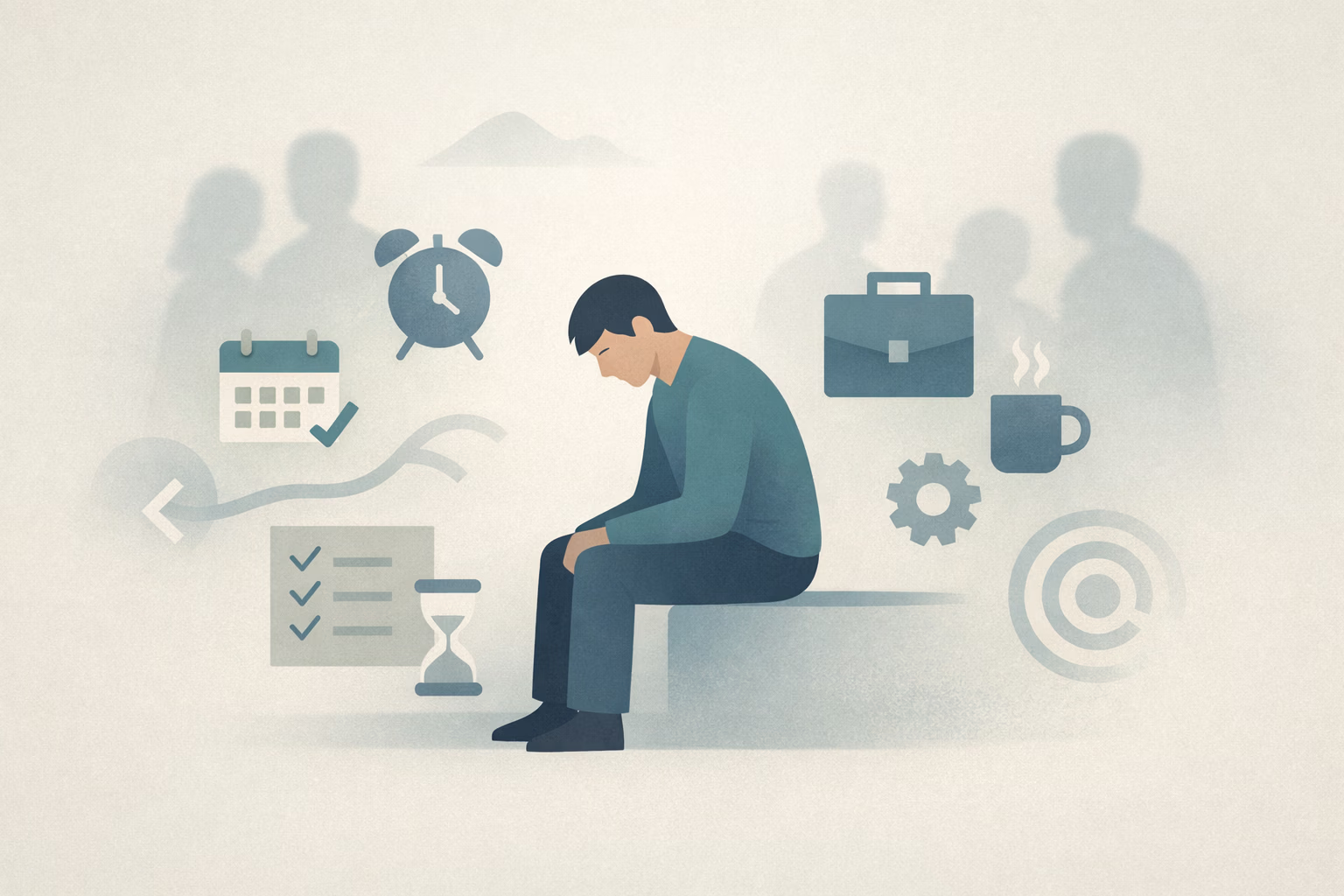
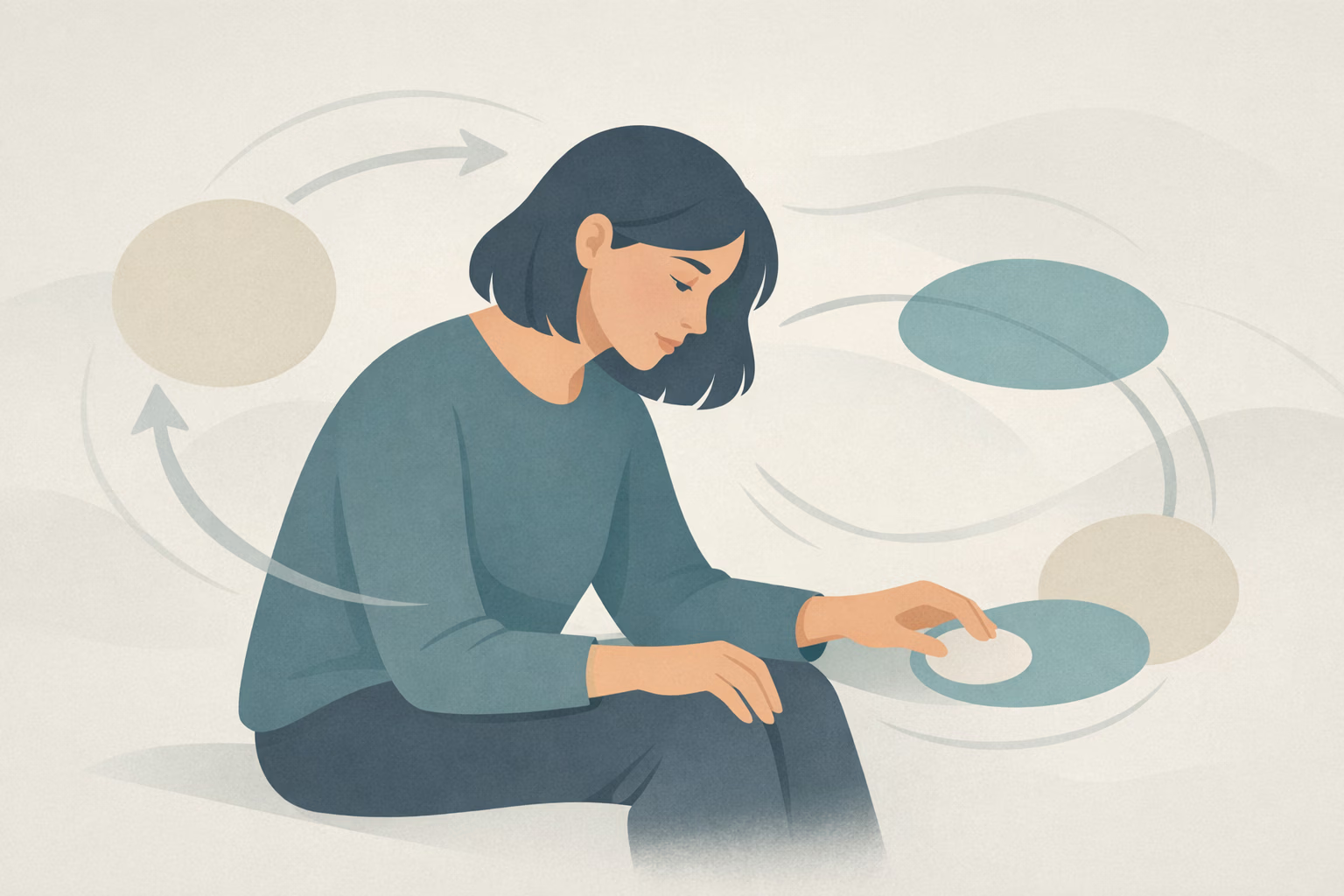
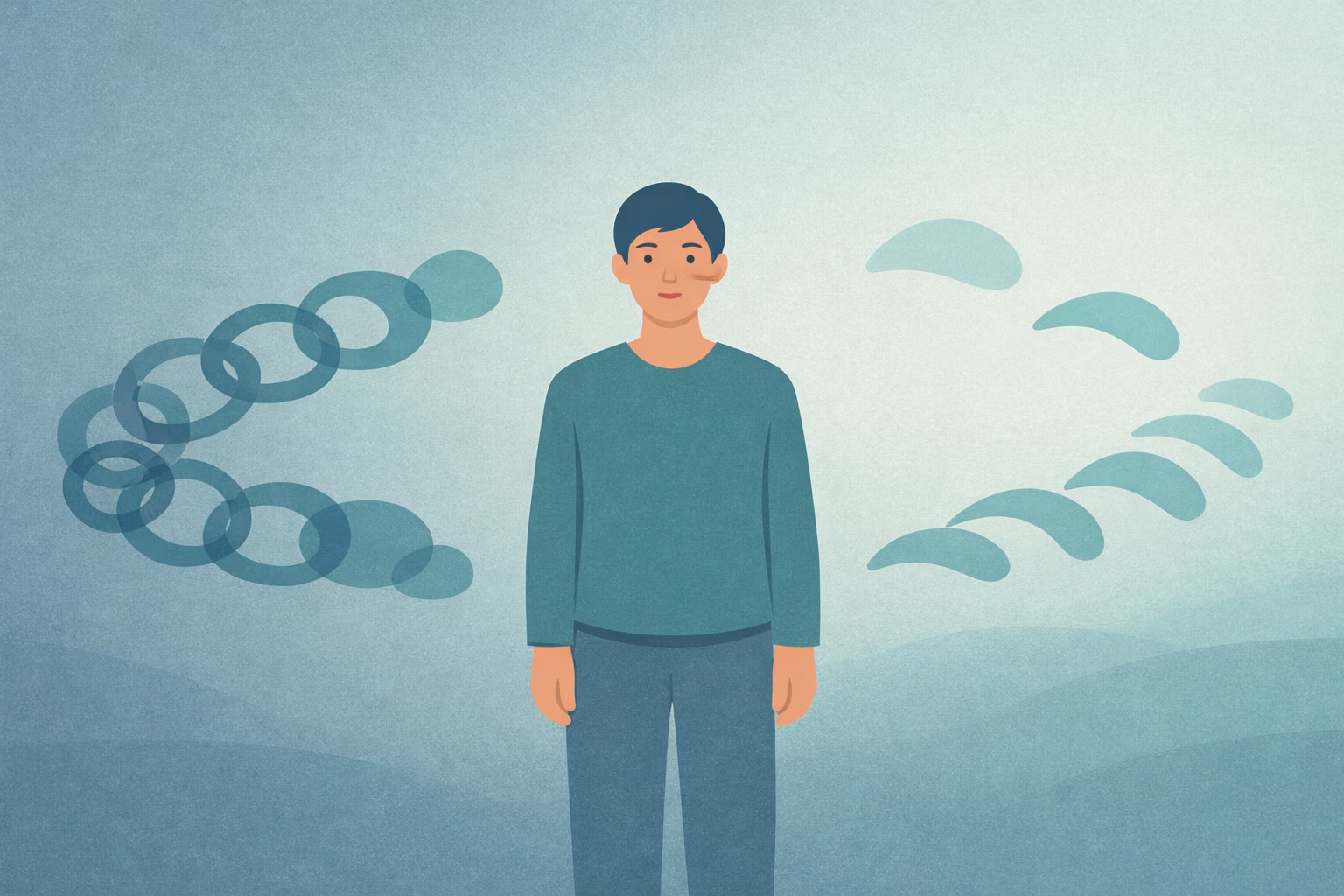
Understanding explains what is happening. Art allows you to feel it—without fixing, judging, or naming. Pause here. Let the images work quietly. Sometimes meaning settles before words do.
One Quiet Window, one insight, one reflection — every Sunday