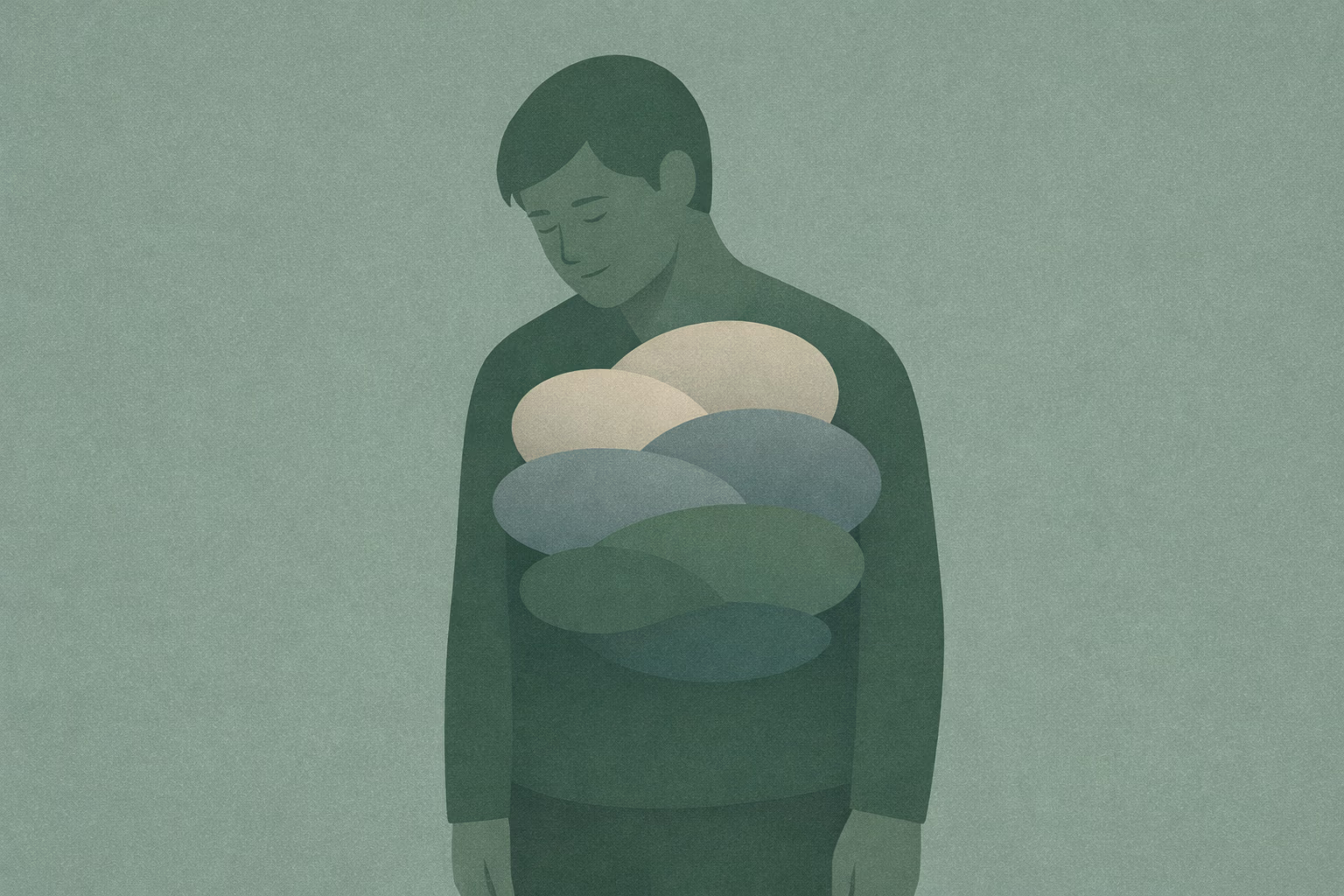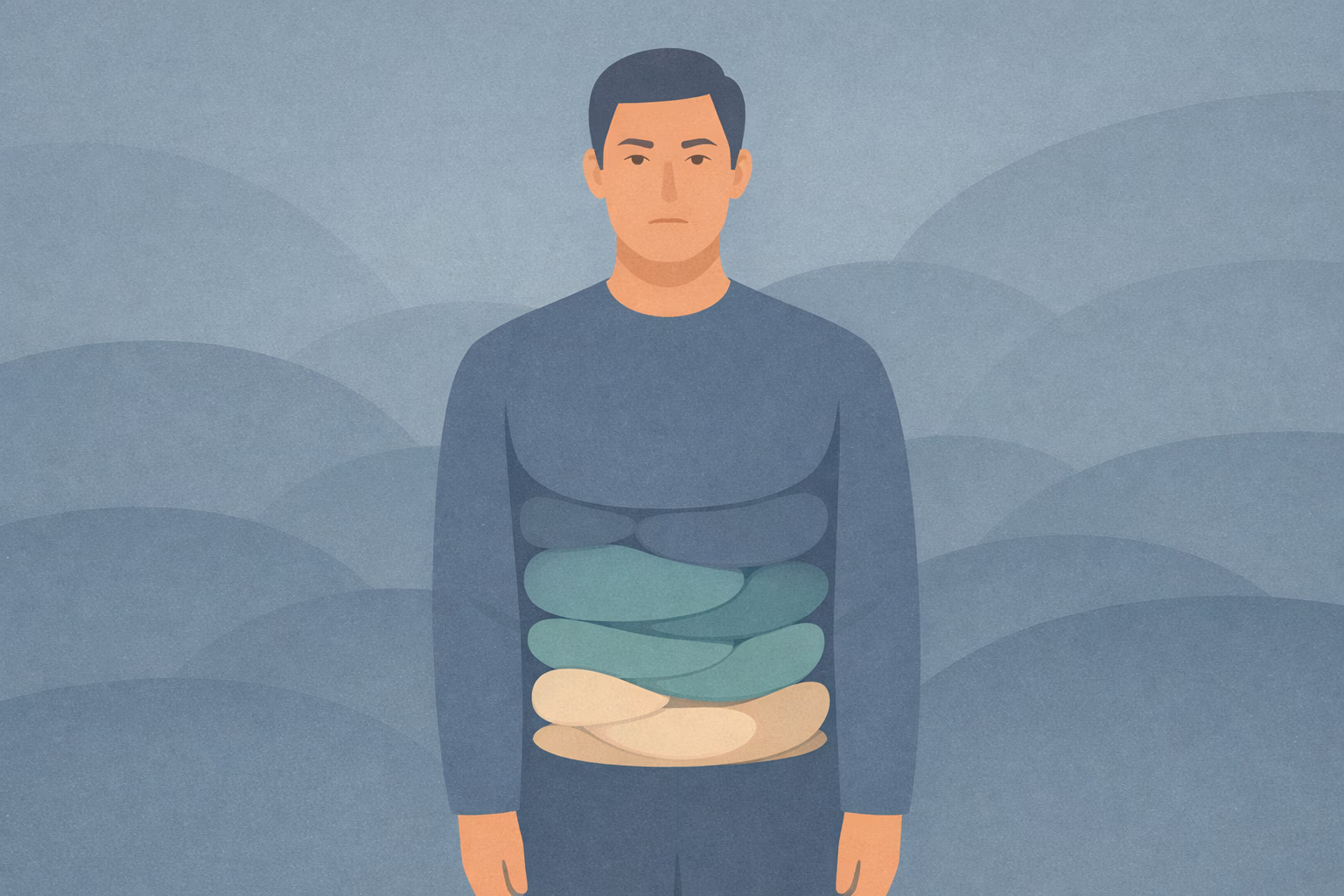
Emotional Compression: When You Push Everything Down to Function
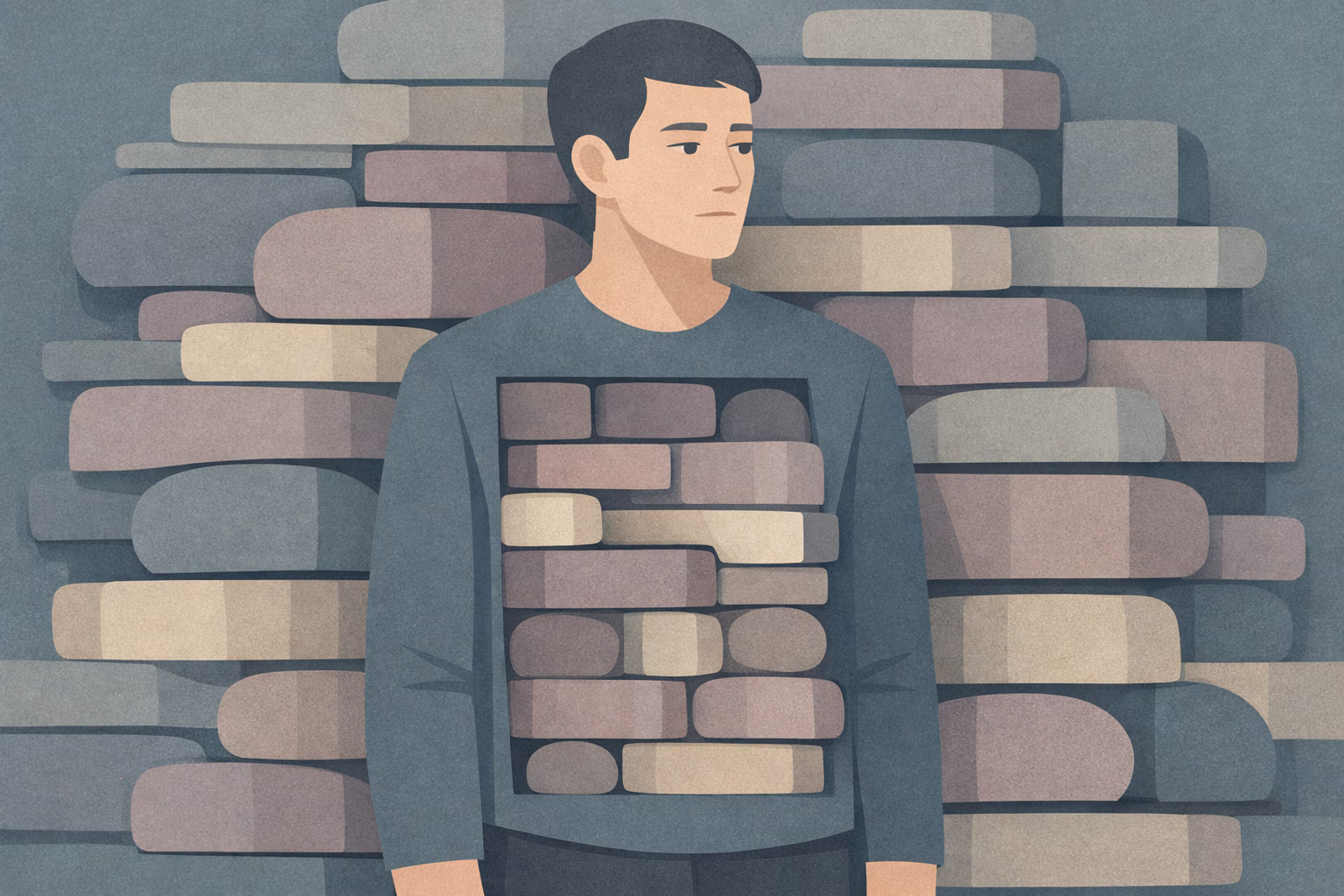
In short: Emotional suppression is often described like a personality trait—someone who “doesn’t show much” or “keeps it together.” But in real bodies and real lives, it’s usually a regulation strategy: a way the system reduces social risk, keeps things moving, and avoids escalating conflict or chaos. What if the strain isn’t that you have emotions—what if it’s that your system keeps having to hold them without closure?
Emotional suppression is often described like a personality trait—someone who “doesn’t show much” or “keeps it together.” But in real bodies and real lives, it’s usually a regulation strategy: a way the system reduces social risk, keeps things moving, and avoids escalating conflict or chaos.
What if the strain isn’t that you have emotions—what if it’s that your system keeps having to hold them without closure?
This article frames suppression without blame. Not as a defect, and not as a moral failure of honesty—more like a quiet architecture that can keep life stable in the short term while building invisible load in the long term.
Many people don’t experience emotional suppression as “not feeling.” It can feel like a tight inner grip: a steady pressure to stay composed, to keep the voice even, to keep the face neutral, to keep functioning even when something in the body is clearly mobilized.
Common descriptions include numbness that isn’t restful, calm that feels forced, and exhaustion that doesn’t match the day’s events. The nervous system can look regulated from the outside while running hot underneath—like holding a beach ball underwater with both hands. [Ref-1]
Emotions are not only “feelings.” They are signal packages: shifts in attention, body preparation, and meaning-making. When expression is blocked—whether that means not speaking, not moving, not crying, not reacting—the underlying activation still has to go somewhere.
So the system pays twice: once for the original trigger, and again for the sustained effort of inhibition. That second cost is often invisible, but it shows up as elevated physiological load, reduced flexibility, and a longer time to return to baseline. The body is trying to complete a cycle; suppression holds the cycle in a suspended state. [Ref-1]
Over time, this can blend with self-monitoring—an internal “control layer” that tracks what is acceptable moment to moment. When that layer stays online for long periods, the nervous system can become less efficient at standing down, even when the environment is safe.
Suppression often develops in contexts where expression had a cost: misunderstanding, punishment, ridicule, withdrawal, escalation, or social exclusion. In those environments, staying unreadable can be a form of safety. It reduces the odds of conflict, keeps attachment channels open, and protects belonging.
This isn’t about “not wanting to feel.” It’s about a system learning what keeps the relational field stable. When the consequences of expression are unpredictable, suppression becomes a reasonable adaptation—an avoidance loop that prioritizes connection and safety cues over internal completion. [Ref-3]
When expression feels risky, the body doesn’t debate it. It organizes around what keeps you included.
In the short term, suppression can work. It can prevent arguments, smooth over tense rooms, help someone stay professional, keep a family system calm, or allow a person to perform under pressure. It can also reduce visible vulnerability in environments that treat vulnerability as leverage.
This is why suppression is so sticky: it produces immediate external stability. The nervous system receives a “crisis averted” signal—social threat didn’t escalate, consequences didn’t land, belonging stayed intact.
The tradeoff is that the body may not receive an internal “done” signal. The event ends socially, but it remains incomplete physiologically, which is one pathway by which chronic stress can accumulate and later show up as somatic strain. [Ref-4]
Suppression can look like control because it controls output. But regulation isn’t only output—it’s recovery. It’s how efficiently the nervous system resolves activation and returns to flexible responsiveness.
When suppression is frequent, the person may appear steady while the body quietly builds a backlog of unfinished responses. Over time, that backlog can express itself as headaches, muscle tension, gastrointestinal disruption, sleep issues, shallow breathing, or a persistent sense of being “on.” This is not the body being dramatic; it’s the cost of sustained load without closure. [Ref-5]
When you’re “fine,” does your body actually get to be done?
An avoidance loop isn’t defined by fear or denial. It’s defined structurally: the system bypasses resistance and mutes consequences, so the short-term path stays available. Suppression does this by postponing internal resolution in exchange for immediate social manageability.
Each time suppression reduces external fallout, it reinforces itself as the default. The nervous system learns: “This works.” But what “works” here means “keeps things from happening,” not “finishes what started.”
That gap—between activation and completion—can contribute to allostatic load: the wear and tear that accumulates when stress systems stay engaged or repeatedly react without sufficient recovery. [Ref-6]
Suppression rarely appears as a single choice. It often becomes a cluster of small, fast habits that keep activation contained and expression minimal. These are not character flaws; they are efficient tools the nervous system uses when the environment rewards restraint. [Ref-7]
These patterns can be socially rewarded. Over time, the reward can replace closure: the system gets praise, peace, or predictability instead of completion.
When suppression is chronic, the costs often show up indirectly. People may report burnout without a clear cause, feeling “flat” in moments that used to be enjoyable, or feeling disconnected during intimacy—not because they lack care, but because their capacity to register and transmit internal signals has been overloaded.
Relationships can also strain. If one person is constantly containing themselves, the relationship loses live data: preferences, limits, truth-in-motion. Others may experience the suppressing person as distant or hard to read, and the suppressing person may experience others as demanding without understanding why. Social disconnection itself can increase stress load, creating a feedback loop. [Ref-8]
None of this means suppression is “bad.” It means the strategy was built for short bursts and high stakes, and modern life often turns it into a lifestyle.
A key feature of suppression is immediate relief: the conversation stays calm, the relationship stays intact, the meeting stays productive, the room doesn’t turn on you. That relief is a powerful teacher.
But relief is not the same as completion. Relief changes state; completion ends a cycle. When the system repeatedly gets relief without resolution, it learns to prioritize “don’t trigger consequences” over “finish the internal sequence.” Over time, this can become a default emotional posture: anticipate impact, contain it early, keep moving. [Ref-9]
Sometimes the habit isn’t “don’t feel.” The habit is “don’t let anything become an event.”
When people imagine “not suppressing,” they often picture intensity—big catharsis, big disclosures, big emotional waves. But the deeper shift is usually quieter: the nervous system starts to recognize safety cues that allow signals to pass through without escalating into overwhelm.
Internal safety is not an insight. It’s a condition—created by predictable responses, adequate support, and a reduction in threat cues—where the body can permit more honest micro-movements (a boundary, a pause, a truth, a no) because the anticipated cost is lower.
Social buffering matters here: human nervous systems regulate differently in the presence of reliable, attuned connection. When safety is shared, completion is more available—not because someone “tries harder,” but because the context changes what is metabolizable. [Ref-10]
Suppression tends to intensify in environments of conditional acceptance: when care, respect, or belonging is tied to being easy, useful, composed, or agreeable. Invalidation doesn’t have to be dramatic. It can be subtle: being interrupted, corrected for tone, dismissed, mocked, or routinely met with problem-solving instead of acknowledgment.
In those conditions, the system learns that expression increases cost. So it adapts by compressing signals before they reach the outside world.
By contrast, when a person experiences steadier forms of acceptance, their system doesn’t have to spend as much energy on self-protection. Research on self-compassion points to a related dynamic: reducing harsh self-judgment can lower threat activation and create more supportive internal conditions for regulation. [Ref-11]
As load decreases and more cycles reach completion, people often describe changes that are practical and body-level: less bracing, fewer spikes of irritability, fewer “mystery” crashes, more accurate appetite and fatigue signals, more natural social timing.
This is not a constant state of softness. It’s a return of capacity—the ability to register a signal and let it move through without needing to clamp down or spin up. Some frameworks link this to improved emotion regulation and interoceptive stability: the body becomes a clearer instrument again. [Ref-12]
The shift away from suppression isn’t simply “express more.” It’s a movement toward congruence: when what matters inside has a pathway to the outside world in proportionate, reality-based ways—without the system needing to either flood or freeze.
Over time, this can reform identity. Instead of “I’m the calm one” or “I’m low-maintenance,” the person may start to recognize a more accurate orientation: “I can be real and still belong.” That identity-level settling is part of what makes the change stable—because it’s no longer held together by constant monitoring.
Trauma-informed perspectives emphasize that the body stores incomplete defensive responses and unfinished activation; when conditions support completion, the system can reorganize toward greater integration and connection. [Ref-13]
Emotional suppression often began as intelligence. It protected relationships, reduced conflict, and made life workable in places where expression had consequences. Seeing it this way can reduce shame: the pattern is not “wrong,” it’s context-shaped.
And patterns that were built for survival can soften when the conditions that required them are no longer present. As meaning becomes more coherent—values, relationships, and daily life aligning in ways that allow completion—agency tends to return naturally. Not as willpower, but as a steadier sense of “I can respond from who I am, not just from what keeps me safe.” [Ref-14]
Emotional honesty isn’t a performance, and it isn’t a demand to disclose. It’s what happens when the nervous system doesn’t have to spend so much energy containing itself—when there is enough safety and enough closure for the body to stand down.
In that steadier state, health and connection often support each other: the body recovers more efficiently, and relationships carry more truth with less strain. Over time, that recovery can look like sustainability—less depletion, more continuity, and a quieter confidence that life can be lived without constant internal bracing. [Ref-15]
From theory to practice — meaning forms when insight meets action.
It's often functional in the short term and costly in the long term. Suppression usually isn't a personality trait — it's a regulation strategy that reduces social risk and keeps things moving. Composure looks regulated from outside while running hot underneath, like holding a beach ball underwater. Emotions are signal packages: shifts in attention, body preparation, meaning-making. When expression is blocked, the underlying activation still has to go somewhere. The system pays twice — once for the original trigger, again for sustained inhibition. That second cost is invisible but real: elevated physiological load, longer time to baseline, eventual somatic strain.
Because suppression is an active process, not a neutral one. Frequent suppression often blends with self-monitoring — an internal control layer tracking what's acceptable moment to moment. When that layer stays online for long periods, the autonomic system stays partially mobilized, which is one pathway by which chronic stress accumulates. Praise for composure can hide the receipt your body is keeping: tension, disrupted sleep, shallow breath, persistent inner urgency without a target. You can be socially regulated while internally never finishing the cycle. Holding yourself together is still effort, even when no one sees it.
Because suppression is reinforced by immediate external stability. Crisis is averted, the meeting stays productive, the relationship stays intact. The Threat & Safety System tags the strategy as effective. Each time it reduces fallout, it strengthens as the default. But what "works" here means "keeps things from happening," not "finishes what started." Relief isn't completion. The system gets praise, peace, or predictability instead of closure — that's how the Avoidance Loop deepens. Patterns developed in invalidating environments are especially sticky because expression there had real costs: misunderstanding, ridicule, withdrawal, exclusion.
By building enough internal safety that signals can pass through without escalating. The shift away from suppression isn't "express more." It's congruence — what matters inside finding a proportionate, reality-based pathway outward. That requires conditions where the anticipated cost of honesty is lower: predictable responses, adequate support, reduced threat cues. Co-regulation matters because human nervous systems regulate differently in attuned company. Restored coherence feels practical: less bracing, more genuine yes/no signals, less post-event replay, more presence in conversation. Suppression was protection — context-shaped intelligence, not a defect — and patterns built for survival can soften when the conditions that required them are no longer present.
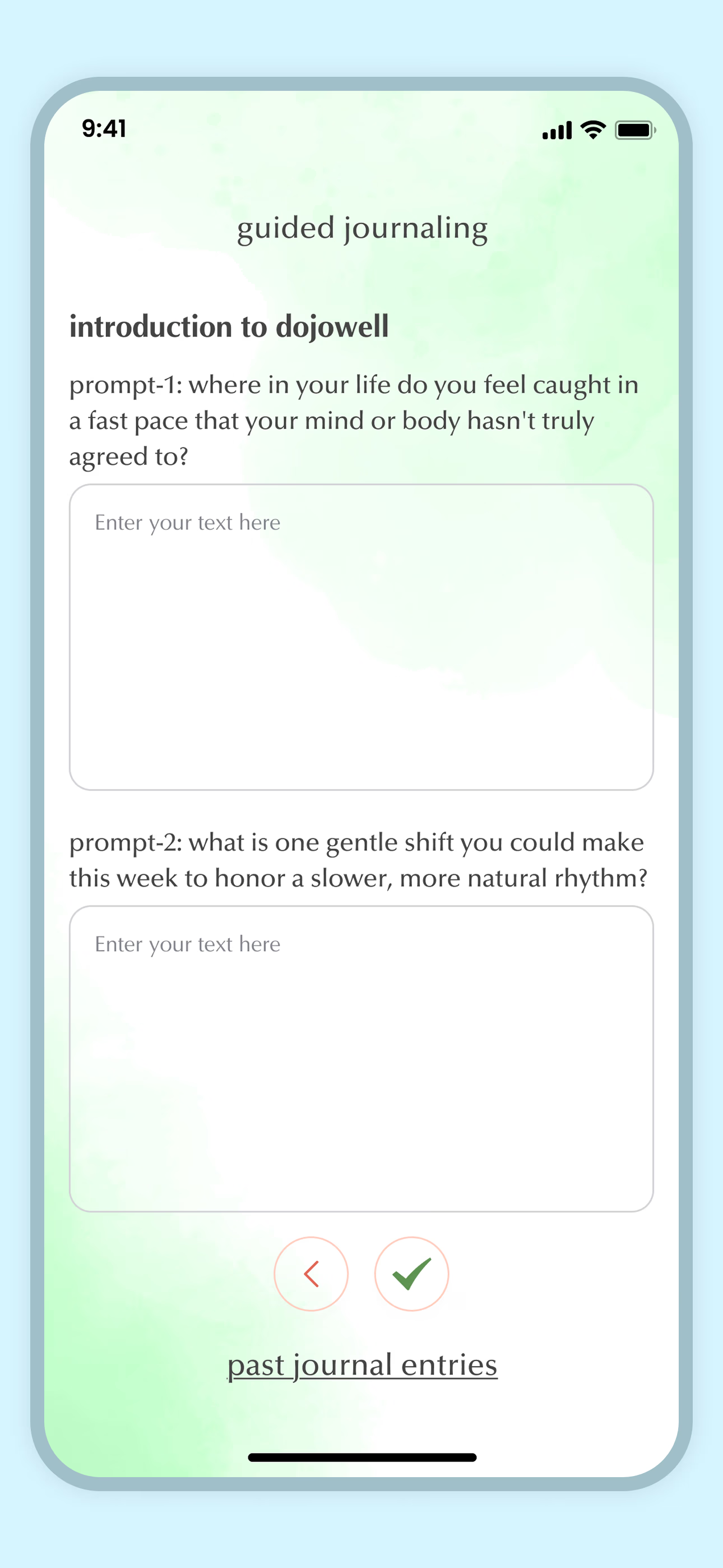
From Science to Art.
Understanding explains what is happening. Art allows you to feel it—without fixing, judging, or naming. Pause here. Let the images work quietly. Sometimes meaning settles before words do.
One Quiet Window, one insight, one reflection — every Sunday