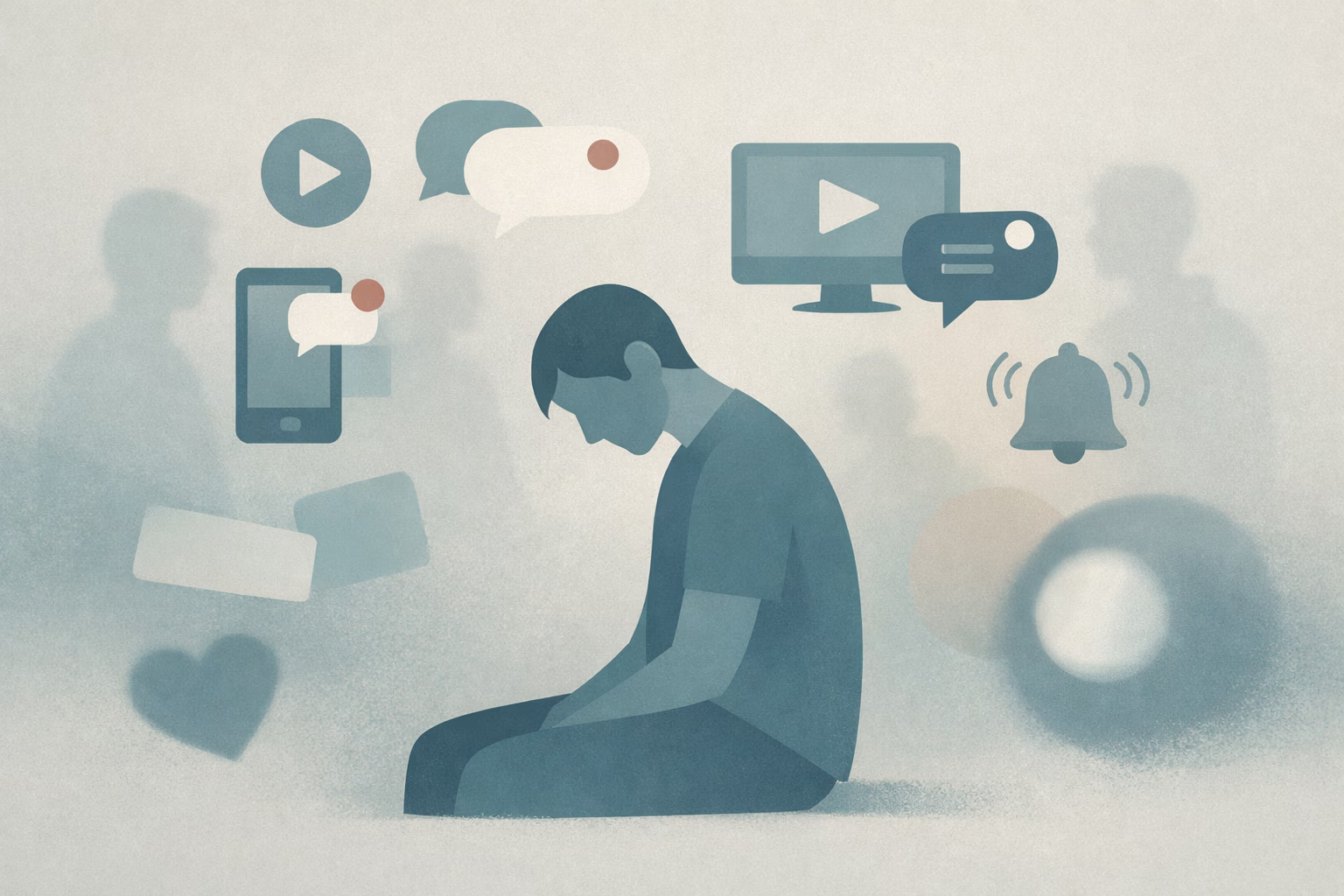


Cognitive Overload: When Your Brain Reaches Its Limit

In short: Many people aren’t “too sensitive” or “bad at coping.” They’re carrying a level of complexity that doesn’t resolve. Too many tabs open—externally and internally—means the system rarely receives a clear signal that anything is done.
Many people aren’t “too sensitive” or “bad at coping.” They’re carrying a level of complexity that doesn’t resolve. Too many tabs open—externally and internally—means the system rarely receives a clear signal that anything is done.
What if your stress isn’t a personal flaw—but a predictable response to too much unfinished complexity?
Stress simplification is the intentional reduction of cognitive, emotional, and environmental complexity so the mind can return to a workable pace. Not as deprivation or aesthetic minimalism, but as a way to restore closure—so attention can land, decisions can settle, and meaning can become palpable again.
Overwhelm often looks like having “nothing dramatic” happening—yet feeling like you can’t catch up. Multiple responsibilities compete for the same limited resource: attention. When everything feels equally urgent, the nervous system treats the day like a series of alarms with no off switch.
Complexity isn’t only the number of tasks. It’s also the number of micro-decisions, unfinished conversations, lingering obligations, and background inputs that keep the mind scanning for what it might be missing. The result is a constant sense of partialness—many starts, few finishes. [Ref-1]
When was the last time your day contained a real “done” moment?
Your executive attention system is built to prioritize, sequence, and complete. But it has limits: it tires under sustained decision-making, frequent context switching, and competing goals. When demands exceed capacity, stress arousal rises—not because you’re failing, but because the system is signaling overload.
Under high complexity, thinking can become both faster and less effective: more checking, more second-guessing, more mental rehearsing. The mind tries to compensate for missing closure by increasing monitoring. This can feel like “being responsible,” but it often functions as a physiological attempt to keep threats from slipping through. [Ref-2]
The strain is especially sharp when inputs keep arriving faster than completion can occur. In that condition, calm isn’t a mindset—it’s a capacity problem.
Human nervous systems evolved in environments where attention moved between a smaller number of meaningful cues: weather, food, group dynamics, immediate safety. Complexity existed, but it was often slower, more legible, and more physically bounded.
Modern complexity is different: it’s abstract, rapid, and frequently infinite. There’s always another update, another option, another metric, another responsibility that can be carried. The organism is asked to live as if it can track everything, even though it cannot. That mismatch predictably increases stress load and reduces the felt sense of stability. [Ref-3]
When the environment supplies endless “next,” the system struggles to reach completion. And without completion, the body stays mobilized.
Complexity can masquerade as safety. When many plates are spinning, the mind may interpret the constant motion as evidence that things are being handled. It can also create short-term relief: adding another list, another tool, another plan can temporarily reduce uncertainty by giving the brain a fresh structure to hold onto.
But that relief is often state-based rather than stabilizing. The system feels briefly organized, yet the underlying load remains. Over time, the cost appears as irritability, insomnia, dread around simple tasks, and a sense that even free time has “requirements.” [Ref-4]
Sometimes the most exhausting part isn’t the work—it’s the feeling that nothing ever fully lands.
A common belief in high-complexity living is that relaxation is a reward earned after total control. If every email is answered, every choice optimized, every obligation tracked, then calm will arrive.
The problem is structural: the horizon keeps moving. Complexity expands to fill available attention, and modern systems are designed to keep new inputs coming. So the nervous system stays in a management posture—hyper-attentive, future-oriented, and ready to respond—while waiting for a finish line that doesn’t appear. [Ref-5]
In that loop, “keeping up” can become a full-time job. Calm gets postponed, not because you’re doing it wrong, but because the environment and the load don’t allow a clear stand-down signal.
Unmanaged complexity can form an avoidance loop—not as fear-based running away, but as a structural bypass of completion. Instead of simplifying, the system adds: more commitments, more organization methods, more contingency plans, more information. Accumulation can reduce immediate friction by postponing decisive closure.
This is why complexity can grow even when you “know better.” The nervous system is often choosing the path of least immediate resistance. Leaving things open feels easier than closing them—because closure requires tolerating the consequences of choice: saying no, disappointing someone, dropping an option, letting an identity shift.
In that sense, simplification isn’t about becoming more motivated. It’s about reducing the conditions that keep the system from completing. [Ref-6]
Complexity overload has a recognizable signature. It’s not only “stress.” It’s the way stress reorganizes behavior around keeping options open and preventing mistakes.
These are not character defects. They are regulatory responses to an environment where completion is rare and consequences feel diffuse. [Ref-7]
Resilience depends on recovery—periods where the nervous system can return to baseline and reallocate resources. Sustained complexity interrupts that. Even if nothing is “wrong,” the system remains alert because there is always something pending, something to monitor, something that could tip into problem status.
Over time, this can flatten the ability to feel settled. Attention becomes more reactive. Small disruptions feel bigger. Transitions become harder. The mind may start treating ordinary life as a high-stakes juggling act, because its internal buffers are depleted.
When load stays high, clarity is often the first thing to go. Not because you lost wisdom—because you lost capacity. [Ref-8]
Complexity has a self-reinforcing quality. The more overwhelmed you are, the harder it is to see what matters. And the harder it is to see what matters, the more likely you are to keep everything—because dropping something feels risky when your internal map is blurry.
In that state, choices don’t feel like choices. They feel like bets. The system can default to keeping commitments, keeping inputs, keeping options—because the immediate cost of reducing feels sharper than the slow cost of carrying.
This is why “just prioritize” often doesn’t land. Overload changes what the mind can do. Simplification is not only cognitive; it depends on the nervous system having enough spare capacity to allow closure to register. [Ref-9]
It can be helpful to view simplification as a physiological permission slip. When inputs and commitments reduce, arousal often lowers—not as a moral victory, but because there are fewer signals requiring response. The body gets clearer evidence that it is safe to stop scanning.
This is also where meaning becomes more available. Meaning isn’t manufactured through positive thinking; it tends to emerge when experiences complete and integrate into lived identity. Excess complexity interrupts that completion. Fewer competing demands can make room for sequences to finish—conversations to settle, decisions to solidify, roles to become coherent.
What returns is often a specific kind of quiet: not emptiness, but legibility. Life becomes easier to read. [Ref-10]
Not all complexity is in your to-do list. A large portion can be interpersonal: unclear expectations, shifting roles, implied availability, and relationships where the “rules” are unsaid. This creates a constant background computation—trying to predict reactions, track obligations, and maintain harmony without clear endpoints.
When shared expectations become more explicit, interpersonal load often decreases. It’s less about asserting control and more about reducing ambiguity so the nervous system isn’t forced to guess. In fast-paced cultures, ambiguity and constant responsiveness can become normalized, even though they keep people chronically activated. [Ref-11]
How much of your stress is actually “social bookkeeping”?
When complexity reduces enough for closure to occur, many people notice a shift that is more physical than philosophical. Thoughts slow down. The urge to check decreases. Transitions get easier. There’s more space between stimulus and response.
This isn’t about becoming emotionless or perfectly serene. It’s more like the return of signal fidelity: hunger cues are clearer, tiredness is more honest, interest is more trustworthy, and the mind can hold one thing at a time without feeling endangered by everything else.
Often, the biggest relief is that small decisions stop costing so much. The day contains fewer “should I?” loops, and more moments that simply proceed. [Ref-12]
When complexity loosens, attention becomes less about prevention and more about orientation. Instead of constantly managing what might go wrong, the mind can track what is meaningful, sustaining, and worth returning to.
That’s where agency changes shape. It’s no longer only the capacity to push through. It becomes the capacity to recognize what fits—what aligns with values, relationships, and identity in a way that can actually settle. With fewer competing claims, the system can register completion, and meaning can consolidate rather than evaporate.
In that state, “what matters” is not a motivational slogan. It becomes easier to feel because it is no longer drowned out by constant choice pressure. [Ref-13]
Stress simplification is often misunderstood as taking things away. But for many nervous systems, it functions more like returning attention to its rightful scale. When fewer inputs demand response, the mind is less fragmented, and the body has a chance to receive closure signals.
What becomes possible then is not perfect control—it's coherence. Life can become simple enough for decisions to land, for roles to feel less performative, and for effort to translate into outcomes that actually register as finished. In that sense, simplification is an act of respect for meaning: it protects the conditions under which meaning can form. [Ref-14]
When complexity is high, the nervous system stays in a management stance, and even good things can feel like more to handle. When complexity reduces, the system can stand down—and the world becomes more navigable, not because you forced it, but because it finally has edges.
Over time, that “finished” feeling matters. It’s how the brain learns safety, how identity coheres, and how the day stops feeling like an endless set of open loops. Decision fatigue is not a personal deficiency; it’s often a sign that life has asked for too many choices without enough closure. [Ref-15]
Calm, then, isn’t something you win. It’s what becomes available when your life is simple enough for meaning to be felt—and for completion to be real.
From theory to practice — meaning forms when insight meets action.
Because complexity isn't only the number of tasks — it's the number of micro-decisions, unfinished conversations, lingering obligations, and background inputs keeping the mind scanning for what it might be missing. The result is a constant sense of partialness: many starts, few finishes. Multiple responsibilities compete for the same limited resource (attention), and when everything feels equally urgent, the nervous system treats the day like a series of alarms with no off switch. Executive systems strain under continuous complexity. Thinking becomes faster but less effective — more checking, more second-guessing, more rehearsing. Calm isn't a mindset under these conditions. It's a capacity problem. When was the last time your day contained a real Done Signal?
Because complexity can masquerade as safety. With many plates spinning, the mind interprets the constant motion as evidence things are being handled. Adding another list, tool, or plan creates short-term relief by giving the brain a fresh structure to hold. But that relief is state-based, not stabilizing. The system feels briefly organized while the underlying load remains. Over time, the cost surfaces as irritability, insomnia, dread around simple tasks, and free time that has 'requirements.' Endless organizing creates motion without completion. Sometimes the most exhausting part isn't the work — it's the feeling that nothing ever fully lands. Accumulation is often the Avoidance Loop in structural form: bypassing closure by adding instead of finishing.
Because overload changes what the mind can do. Complexity has a self-reinforcing quality: the more overwhelmed you are, the harder it is to see what matters. And the harder it is to see what matters, the more likely you are to keep everything — because dropping something feels risky when your internal map is blurry. Choices stop feeling like choices and start feeling like bets. The system defaults to keeping commitments, keeping options, keeping inputs, because the immediate cost of reducing feels sharper than the slow cost of carrying. Simplification isn't only cognitive. It depends on the nervous system having enough spare capacity to allow closure to register. Telling an overloaded system to prioritize is like asking a tired muscle to lift more.
More physical than philosophical. Thoughts slow down. The urge to check decreases. Transitions get easier. There's more space between stimulus and response. Hunger cues are clearer, tiredness more honest, interest more trustworthy. The mind can hold one thing at a time without feeling endangered by everything else. The biggest relief is often that small decisions stop costing so much. Fewer 'should I?' loops, more moments that simply proceed. With fewer competing claims, the system registers completion, and meaning consolidates instead of evaporating. Simplification is respect, not deprivation. It protects the conditions under which Meaning Density can form. Calm isn't something you win — it's what becomes available when life is simple enough for closure to be real.
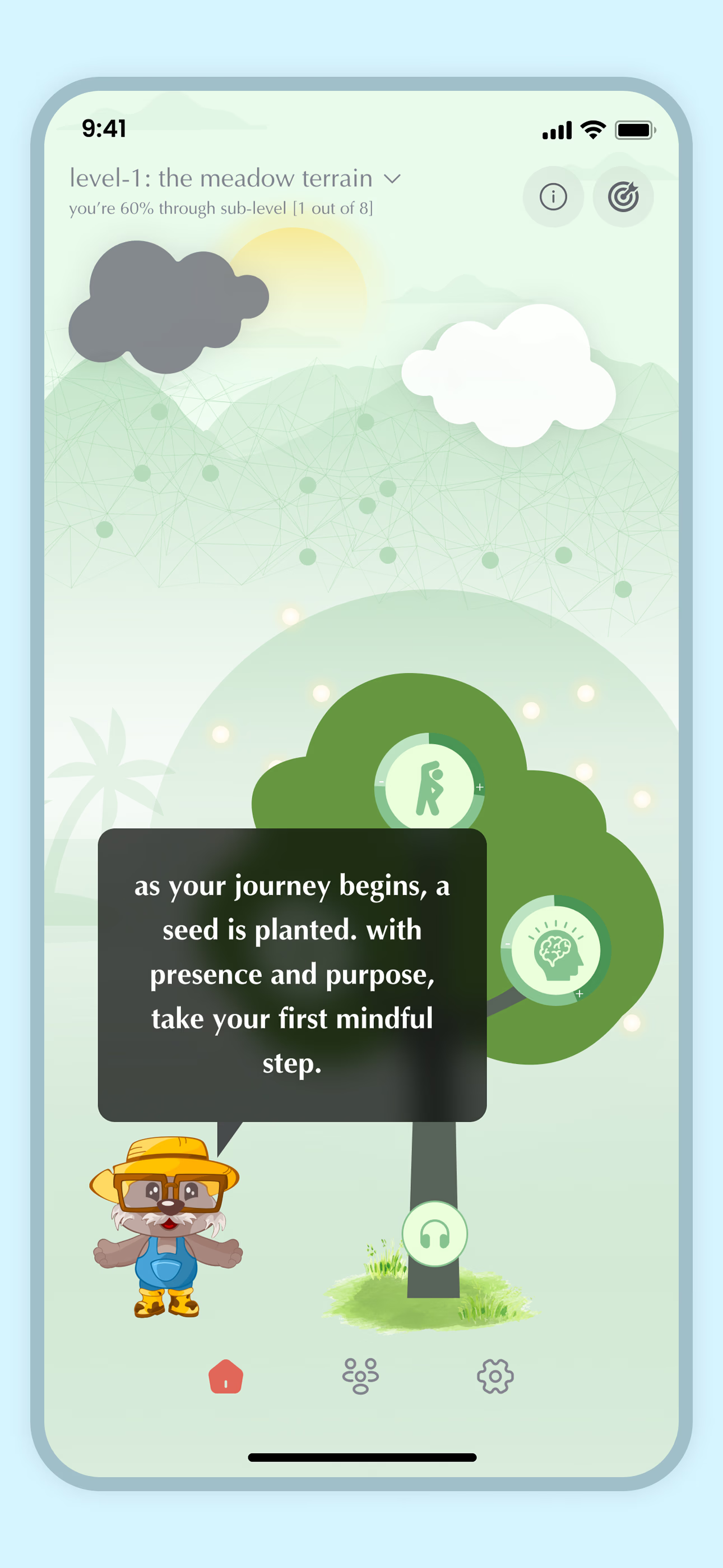
From Science to Art.
Understanding explains what is happening. Art allows you to feel it—without fixing, judging, or naming. Pause here. Let the images work quietly. Sometimes meaning settles before words do.
One Quiet Window, one insight, one reflection — every Sunday