
Internal Resistance: Why You Fight the Good Habits You Want
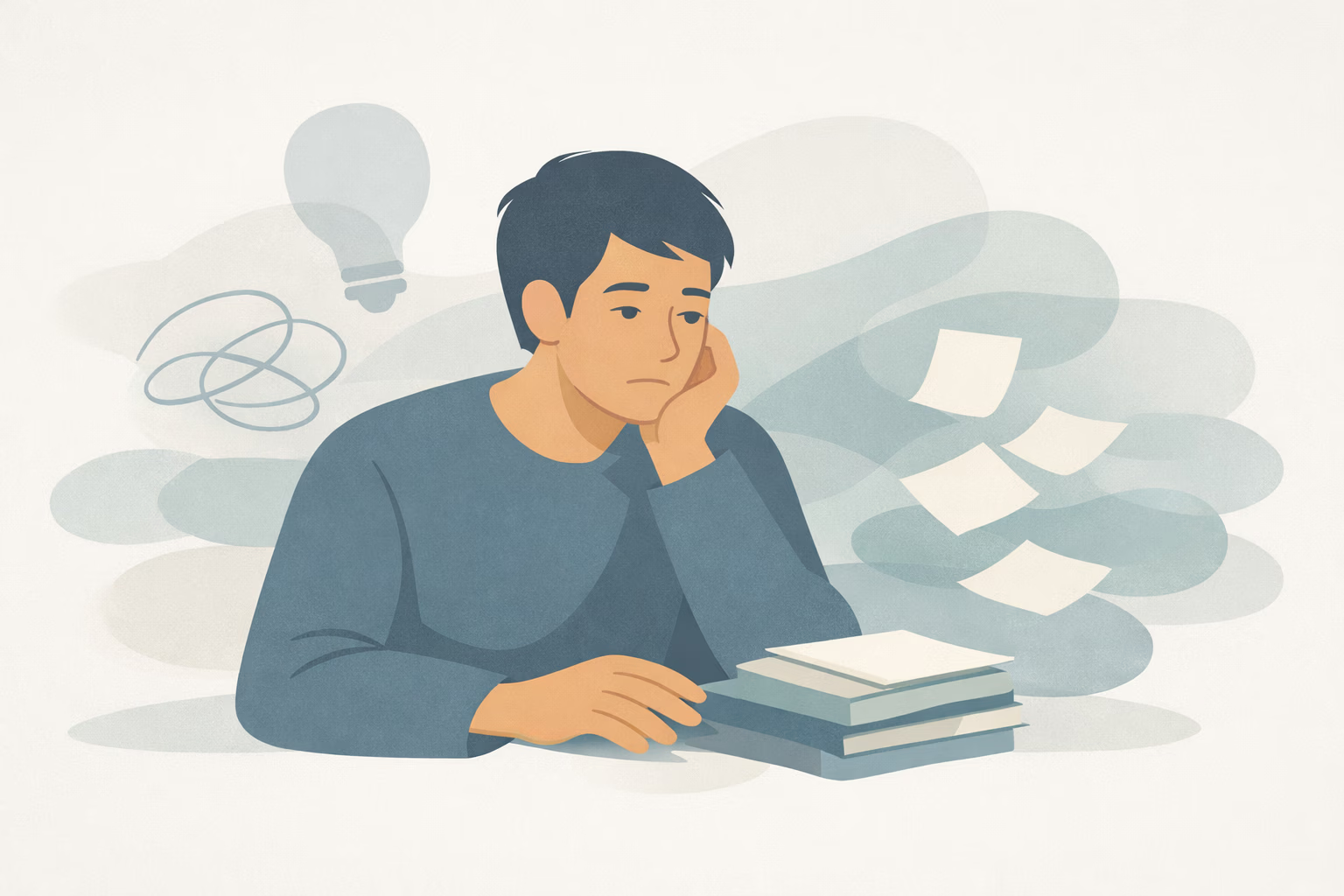
In short: There’s a particular kind of stuckness that can look, from the outside, like growth: you read the books, listen to the podcasts, take the notes, save the threads, and collect the frameworks. Your mind becomes well-equipped.
There’s a particular kind of stuckness that can look, from the outside, like growth: you read the books, listen to the podcasts, take the notes, save the threads, and collect the frameworks. Your mind becomes well-equipped. And yet your days don’t change in the places you actually care about.
This pattern is often treated like a character flaw—“undisciplined,” “unmotivated,” “afraid of failure.” But many people are not failing at motivation. They are regulating load. Learning is one of the cleanest ways the brain creates a sense of preparedness without having to enter the messier world of consequence, friction, and uncertainty.
What if the problem isn’t that you aren’t trying—what if your system is choosing the safest kind of progress it can find?
“Learning but never applying” often contains a painful internal split: you can clearly describe what would help, and you can even teach it to someone else, but you can’t reliably translate it into behavior. That mismatch can create a steady drip of self-doubt—especially when your understanding keeps expanding while your results stay flat.
From a nervous-system perspective, this is less about laziness and more about competing signals. One part of you is oriented toward change. Another part is oriented toward conserving capacity and avoiding open-ended demands. When those signals don’t reconcile, the mind tends to choose the option with the most immediate sense of completion.
Information overload also changes metacognitive “stop” decisions—how you decide you’ve done enough—making it easier to keep studying while postponing application. [Ref-1]
Learning can create an internal completion signal: you understand the steps, the theory clicks, the story makes sense. The brain is a prediction machine, and when a prediction becomes coherent, it can register as progress—even when the environment has not changed yet.
This is not “fake growth.” It’s a real shift in your internal model of the world. The trouble is that the body and identity systems often require a different kind of completion: contact with real constraints, real timing, real feedback, and real consequences. When that contact doesn’t happen, knowledge can sit in the mind like a finished plan that never becomes a finished experience.
Reward-learning systems can reinforce the loop: information reduces uncertainty, and reduced uncertainty is inherently regulating. [Ref-2]
Humans evolved in environments where being unprepared could be costly. Gathering information, watching others, learning patterns—these are ancient strategies that increase safety. In that light, “more research” isn’t irrational. It’s a form of readiness-seeking.
The modern problem is volume and velocity. When information is abundant, you can keep feeding the preparedness system indefinitely. The mind continues to receive signals of “getting ready,” while the rest of life waits for proof of readiness through completion.
Information overload is known to tax attention, decision quality, and the ability to settle on a course of action—especially when options keep multiplying. [Ref-3]
Learning can deliver a clean, repeatable reward: novelty, insight, and relief. It offers reassurance—“I’m improving,” “I’m serious,” “I’m not stuck”—without requiring you to enter the phase where outcomes are uncertain and feedback is mixed.
In everyday terms, learning is high-control. You can pause, rewind, switch sources, curate your inputs, and keep your self-image intact. Application is lower-control: it involves timing, awkward first attempts, and the possibility that something won’t work the way the theory promised.
Dopamine-related systems are not just about pleasure; they’re implicated in learning, prediction, and the drive to pursue what seems informative or promising. [Ref-4]
It makes sense that the mind equates “more knowledge” with “more capability.” But capability isn’t only what you can explain. It’s what your system can execute under real conditions—when you’re tired, interrupted, imperfect, or uncertain.
When application is postponed, identity growth can also stall. You may have a self-concept of being someone who is “working on it,” but not the settled identity of being someone who has lived through the early friction and come out the other side. That identity shift tends to require completion, not comprehension.
In overloaded conditions, focus and follow-through are often reduced not because people don’t care, but because cognitive capacity is being consumed by constant input and switching. [Ref-5]
It’s common to explain this pattern as fear-based: “You’re afraid to fail.” Sometimes that language fits, but it can miss the structural reality. Many people avoid application because the path to application contains unclosed loops: unclear criteria, too many variables, no stable endpoint, or consequences that feel socially exposed.
Learning, then, becomes a substitute behavior that restores coherence quickly. It creates a neat loop: input → insight → relief → a sense of progress. Application creates a messier loop: attempt → feedback → adjustment → repetition → eventual closure. If your current load is high, the nervous system often prefers the loop that closes fastest.
This can resemble intellectualization—using thinking and concepts to maintain stability when direct engagement would be more activating. [Ref-6]
The pattern usually isn’t “doing nothing.” It’s doing a lot—just mostly in the preparation channel. The behavior can be sincere, diligent, and even exhausting.
These behaviors often function as load management: they keep you engaged while minimizing exposure to friction and consequence. They can also preserve the sense of being a “serious person,” even when the lived results haven’t arrived yet.
Descriptions of intellectualization often include a shift into analysis and abstraction when direct engagement feels destabilizing or too costly right now. [Ref-7]
Over time, prolonged non-application can begin to change the internal relationship you have with yourself. When you repeatedly gather knowledge without seeing yourself move, the system may start to discount your own intentions. Not because you are unreliable as a person, but because the brain learns from outcomes.
That erosion can show up as:
This is one of the crueler parts of the loop: the very strategy that provides short-term relief can slowly undermine the sense that your actions lead anywhere.
Chronic over-reliance on thinking and analysis can carry costs in wellbeing and self-connection, especially when it replaces lived engagement for long periods. [Ref-8]
When results don’t appear, the mind naturally searches for the missing variable. In a high-information environment, the easiest explanation is: “I just haven’t found the right method yet.” That belief reopens the learning loop with fresh urgency.
At the same time, the longer application is delayed, the more activating it can feel—because stakes seem to rise. Knowledge accumulates, and with it a quiet pressure: “I should be further along by now.” Learning then becomes both the remedy and the amplifier: it soothes the pressure briefly while reminding you of everything you know you’re not yet living.
“I keep studying because it feels like I’m staying responsible, even when I’m standing still.”
Some discussions of avoidance and intellectualizing note how cognition can become the preferred channel when direct engagement feels too exposing or demanding in the moment. [Ref-9]
There’s a turning point in this pattern that isn’t about a better concept. It’s about tolerance: the nervous system’s ability to stay present with uncertainty long enough for real-world loops to close.
In many modern lives, the issue isn’t a lack of understanding. It’s constant activation—notifications, comparison, speed, and evaluation—leaving too little capacity for the slower kind of completion that produces settled change. When input is continuous, the system rarely receives a clear “done” signal, and action can feel like stepping into a storm without shelter.
What if “applying” is less about pushing harder, and more about having enough internal quiet to let a small attempt become a complete experience?
Reviews on information overload describe how high input volume strains cognition, increases fatigue, and can impair decision-making and follow-through—conditions that make application harder to sustain. [Ref-10]
Knowledge becomes stable when it is carried by the body and the social world, not only by the mind. This is one reason shared practice—learning alongside others, watching a model, moving in the presence of accountability—so often changes what “sticks.” Not because you’re weak alone, but because humans are designed to calibrate through other nervous systems.
When a skill is practiced in a relational context, feedback becomes clearer and less abstract. The loop closes faster: you see what “counts,” what happens next, what recovery looks like after mistakes, and how effort can be imperfect and still legitimate.
Dopamine-related frameworks emphasize its role in learning signals and updating behavior based on outcomes, not just in feeling rewarded by ideas. [Ref-11]
Mental readiness is often a checklist: “I understand it. I have the plan. I’ve covered the edge cases.” Settled readiness is quieter. It shows up as a greater capacity to begin without needing perfect clarity, because your system trusts it can metabolize feedback.
This shift is not the same as “being more aware,” and it isn’t created by another reframe. It tends to emerge when experiences complete: you start, you meet the real constraints, you adapt, and something in you registers, physiologically, that you can survive the unfinished middle.
When input levels are high, focus and follow-through commonly degrade; when load reduces, the brain can return more readily to sustained attention and sequential action. [Ref-12]
In a saturated environment, information can become a substitute for orientation. There’s always another angle, another expert, another nuance—so the mind stays in scanning mode. But direction tends to appear when the noise drops enough for your own values to become audible again.
Values are not motivational slogans. They are organizing principles that help the system decide what deserves energy and what can be left incomplete. When information intake decreases, your choices can become less theory-driven and more identity-driven: “This is who I am becoming,” not “This is what the internet says is optimal.”
Information overload research describes how excessive input can impair prioritization and decision quality, making it harder to choose a path and stay with it long enough for closure. [Ref-13]
When learning replaces applying, it’s easy to conclude that something is wrong with you. A more accurate conclusion is often that your system has found a reliable way to feel safe, coherent, and oriented in a world that rarely provides clean endpoints.
Application isn’t primarily about proving anything. It’s about letting your life generate completed experiences—experiences that can settle into identity and become part of what you can rely on. Insight can illuminate, but lived completion is what tends to stabilize.
And when thinking becomes the primary way of coping with uncertainty, it can help to treat that as a protective strategy under load rather than a personal defect. [Ref-14]
Real growth often begins at the smallest point where learning stops being a refuge and becomes contact. Not perfect contact. Not optimized contact. Just enough engagement for a loop to close and for your system to register: “This is now part of my life.”
That moment is not a triumph of willpower. It’s a shift from internal simulation to external evidence—where prediction meets reality, and the nervous system can finally update what it believes you can do. [Ref-15]
From theory to practice — meaning forms when insight meets action.
This isn't a failure of motivation — it's often the nervous system regulating load. Learning creates a clean internal completion signal: you understand the steps, the theory clicks, the story makes sense. The brain registers that as progress. But the body and identity systems require a different kind of completion: contact with real constraints, real timing, real feedback. Learning is high-control — pause, rewind, switch sources, keep your self-image intact. Application is lower-control: awkward first attempts, mixed feedback, possible disappointment. When current load is high, the system reaches for whichever loop closes fastest, and learning closes faster than applying.
Because reduced uncertainty is genuinely regulating. Information gives the prediction system more coherence, and the brain treats coherence as a kind of completion — even when the external world hasn't changed. Combined with the modern abundance of inputs, you can keep feeding the preparedness system indefinitely while the rest of life waits for proof of readiness through actual completion. So the loop becomes: input → insight → relief → a sense of progress, repeated. The learning is real, but it sits in the mind like a finished plan that never becomes a finished experience. The body doesn't get the update.
When results don't appear, the mind naturally searches for the missing variable. In a high-information environment, the easiest explanation is 'I just haven't found the right method yet,' so the learning loop reopens with fresh urgency. At the same time, the longer application is delayed, the more activating it becomes — stakes appear to rise, and a quiet pressure builds: 'I should be further along.' Learning becomes both the remedy and the amplifier: it soothes the pressure briefly while reminding you of everything you know but aren't yet living. This is intellectualization functioning as load management, not weakness.
The shift usually isn't about a better concept. It's about tolerance — the nervous system's ability to stay present with uncertainty long enough for a real-world loop to close. In overloaded conditions, application feels like stepping into a storm without shelter. As load reduces, your own values become audible again rather than drowned out by competing inputs. Settled readiness is quieter than mental readiness: less 'I have the plan' and more 'I trust my system can metabolize feedback.' That trust forms through small completed experiences, not more analysis — your body needs evidence it can survive the unfinished middle.
From Science to Art.
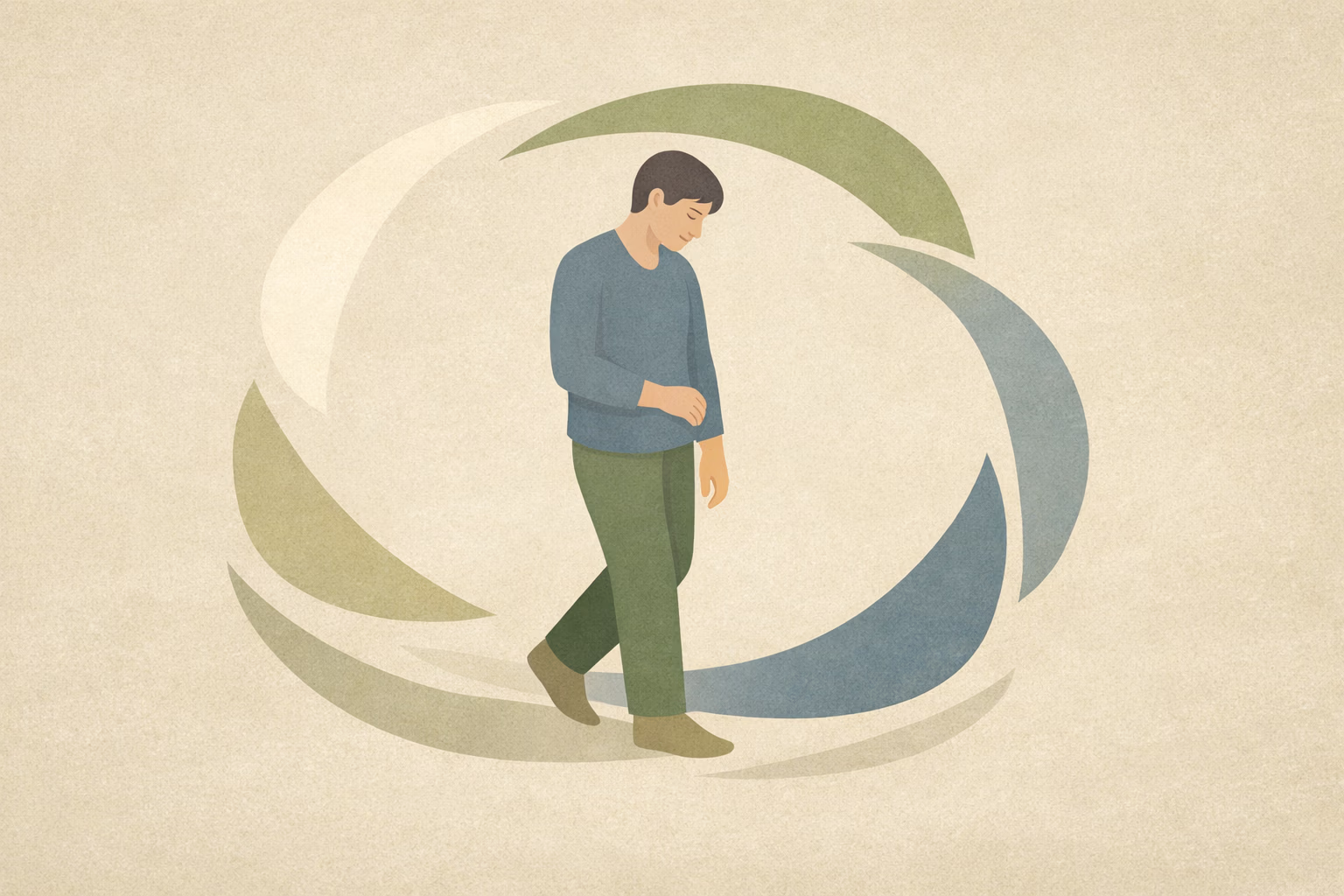
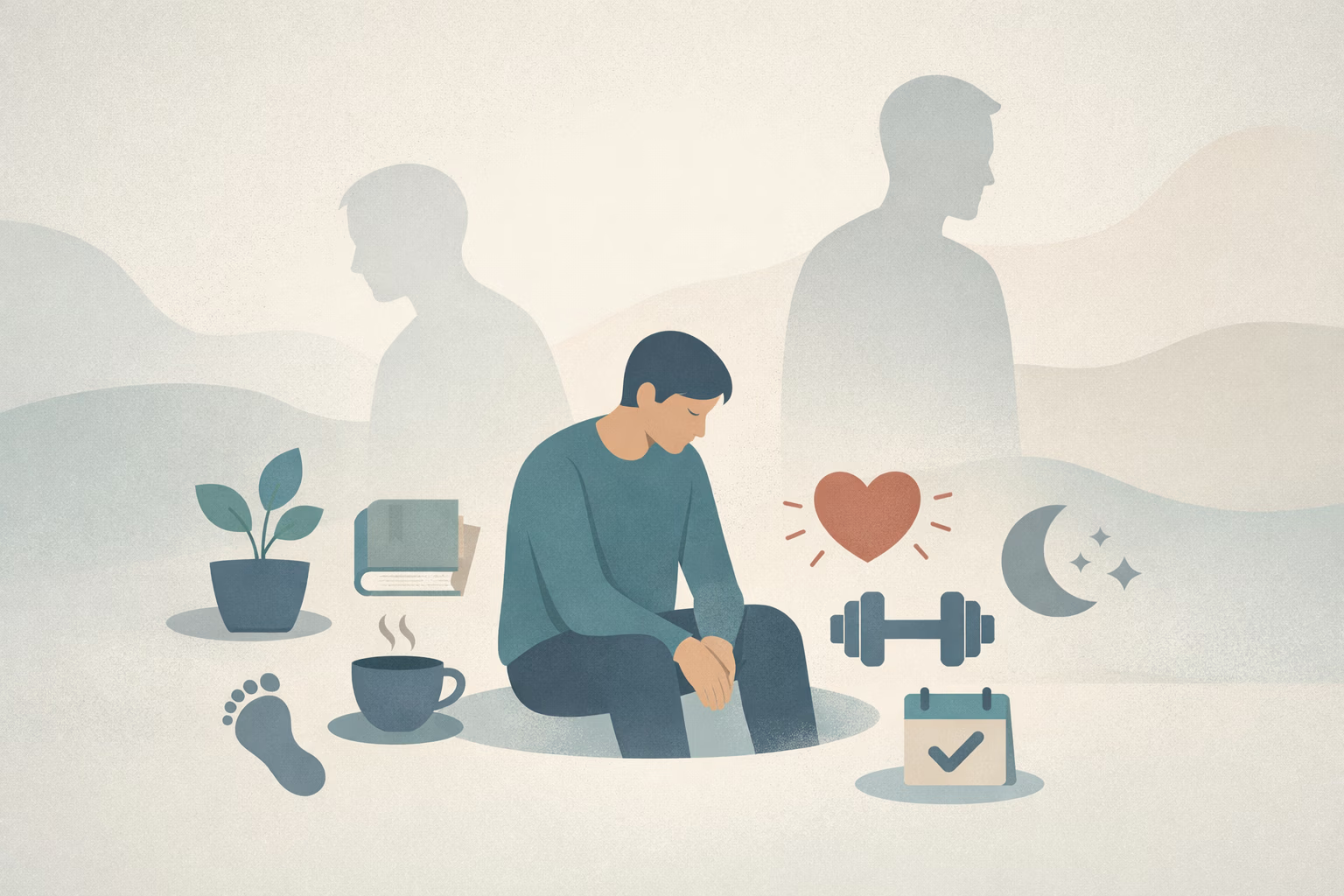
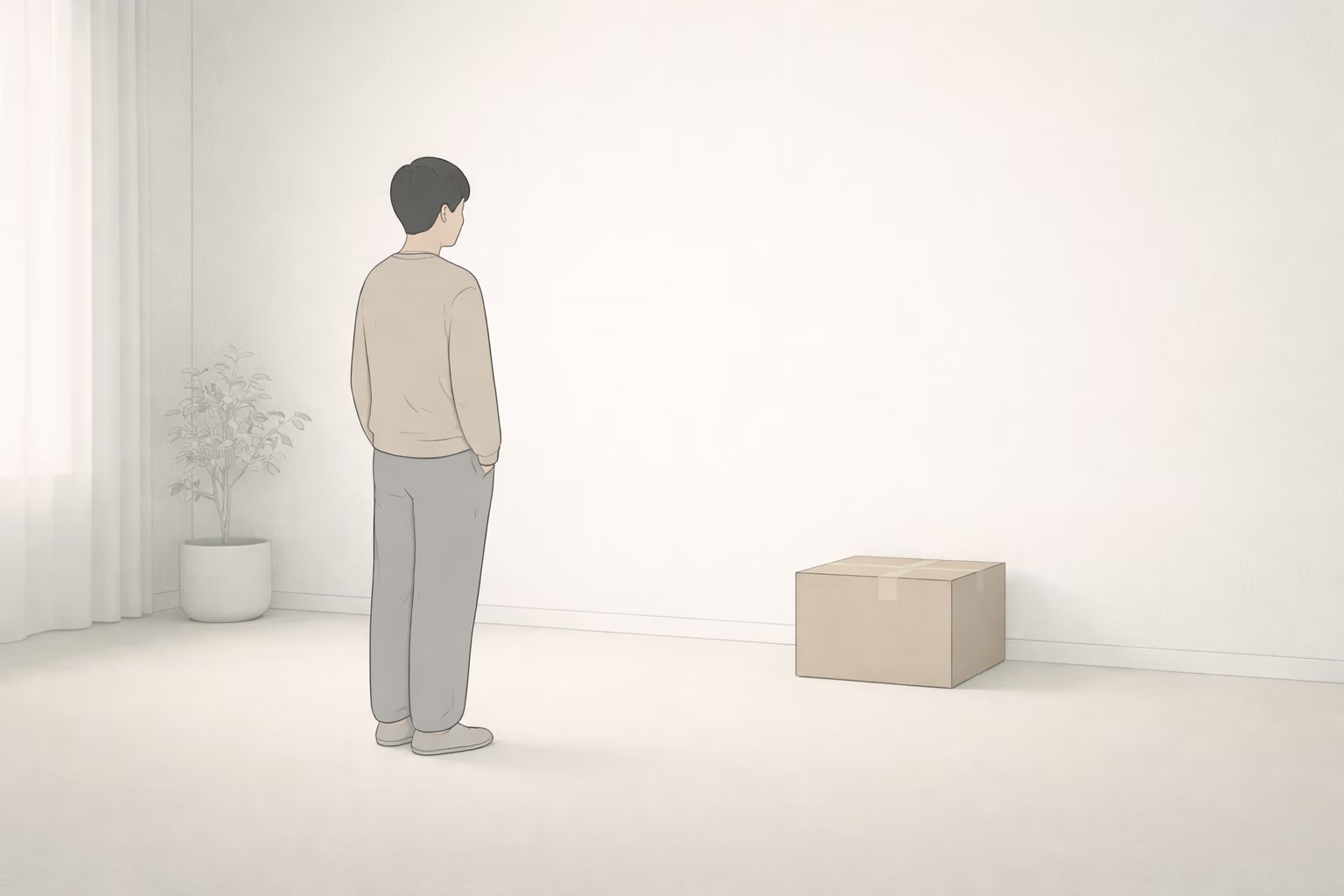
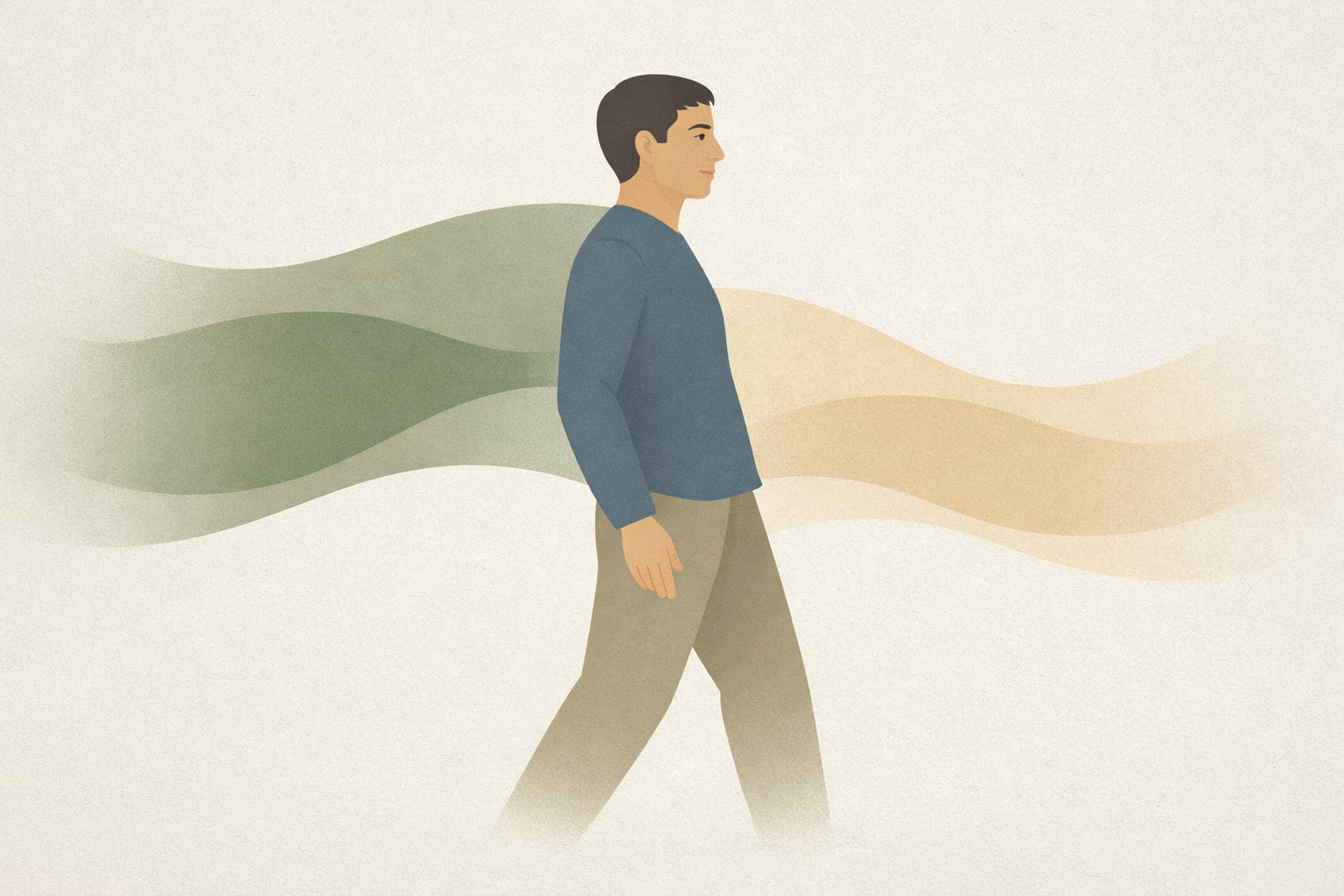
Understanding explains what is happening. Art allows you to feel it—without fixing, judging, or naming. Pause here. Let the images work quietly. Sometimes meaning settles before words do.
One Quiet Window, one insight, one reflection — every Sunday