Inner Friction: The Internal Push-Pull That Drains Your Energy
In short: There’s a particular kind of frustration that shows up when you genuinely want a habit—sleep, movement, finishing a task, taking a walk, drinking water, turning the phone off—and yet something in you blocks the start. More like a soft wall: delays, distractions, sudden tiredness, or a strangely convincing reason to do it “later.” It can look like inconsistency from the outside.
There’s a particular kind of frustration that shows up when you genuinely want a habit—sleep, movement, finishing a task, taking a walk, drinking water, turning the phone off—and yet something in you blocks the start. Not dramatically. More like a soft wall: delays, distractions, sudden tiredness, or a strangely convincing reason to do it “later.”
It can look like inconsistency from the outside. Inside, it often feels like an argument you didn’t choose. And because the habit is “good for you,” the default explanation becomes personal defect: laziness, lack of discipline, not wanting it enough.
What if that pushback isn’t a character flaw, but a stability system doing its job?
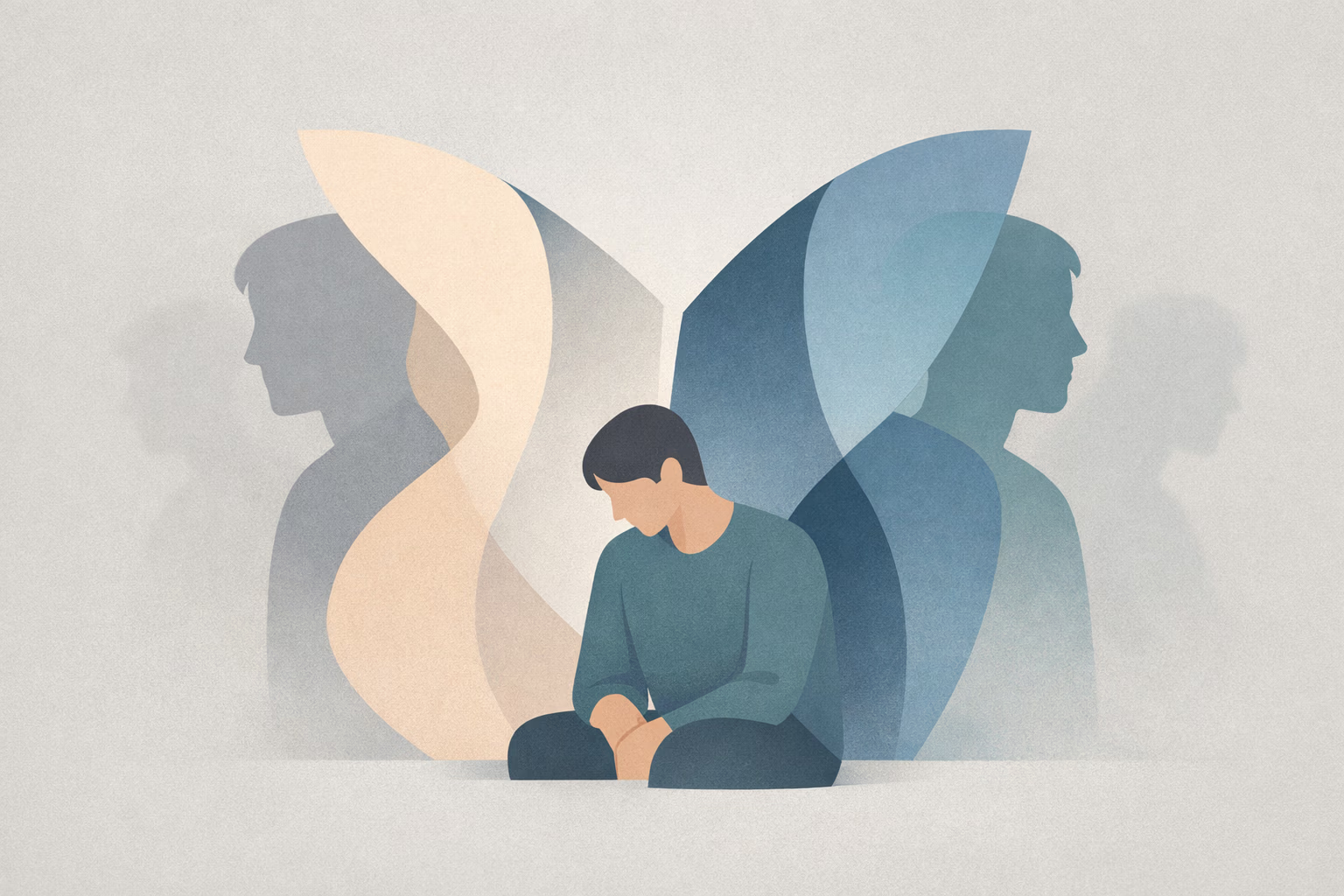
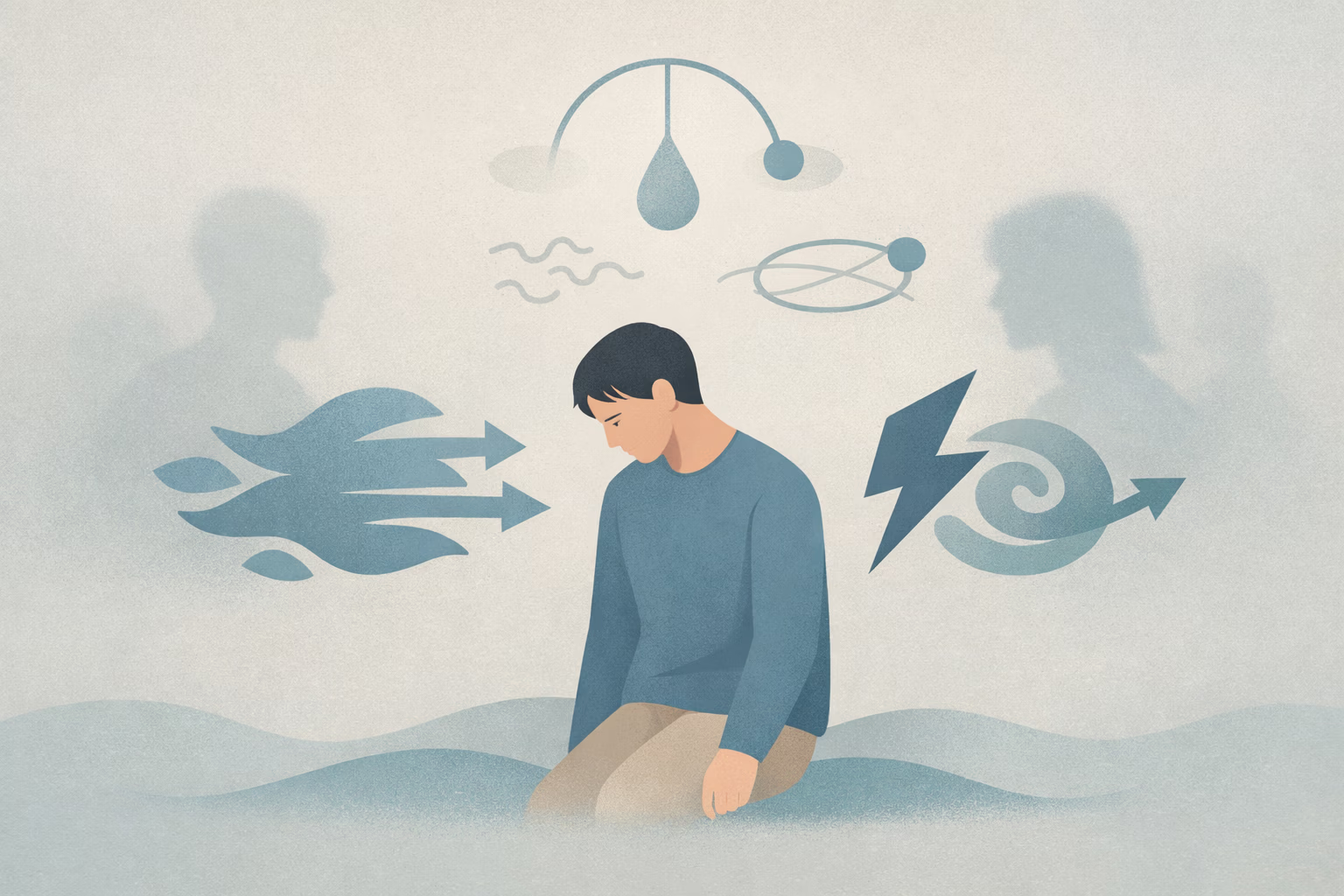
Internal resistance is the experience of being pulled in two directions: one part oriented toward a beneficial change, another part applying brakes. The strange part is that the “brakes” don’t always feel like fear or panic. They can feel like neutrality, fog, or a sudden preference for anything else.
Many people respond by tightening pressure: stricter rules, bigger promises, harsher self-talk. But when pressure goes up, resistance often goes up with it—because the nervous system interprets pressure as demand, and demand as risk when capacity is already loaded.
In that moment, self-blame can become an extra layer of strain: now it’s not only hard to change, it’s hard to make sense of why it’s hard. Identity-related threat responses can make change feel unexpectedly unsafe even when it’s objectively beneficial. [Ref-1]
Human brains don’t only track whether something is healthy or logical. They also track whether something is predictable, socially coherent, and consistent with who you have been. A new habit isn’t just a behavior; it’s a signal that your routines, roles, and self-definition may be shifting.
When a change implies “I will be different,” threat circuits can activate—not because growth is bad, but because rapid identity disruption can resemble loss of control. Under load, the system prioritizes equilibrium: familiar rhythms, familiar self-story, familiar outcomes.
In this framing, resistance is less “I don’t want the habit” and more “I can’t afford the destabilization right now.” Identity threat is a known contributor to resistance to change, including in everyday behavior patterns. [Ref-2]
Across human evolution, predictability was protective. Sudden shifts in behavior could carry real costs: social exclusion, conflict, loss of status, or misreading danger cues. Consistency helped groups coordinate and helped individuals stay legible to others, which mattered for safety and belonging.
So when you reach for a new habit, your system may run an old calculation: “Will this change make me less safe, less accepted, or less stable?” This can be true even if your conscious mind is excited about the habit. Your body may still treat it as an unknown.
In many contexts, resistance to change is linked to perceived identity threat—an internal signal that something about “me” is at stake. [Ref-3]
When you avoid the new habit—skip the gym, delay the email, scroll instead of going to bed—something immediate happens: the nervous system receives a “stand down” cue. The demand has been removed. The self stays familiar. The day’s identity remains intact.
This is not “self-sabotage” in a moral sense. It’s a short loop that creates quick relief. And quick relief is powerful because it reduces arousal now, even if it increases friction later.
When people are depleted, self-regulatory effort tends to become more costly and less reliable, which can make the pull toward the familiar feel stronger. [Ref-4]
Resistance can feel protective because it lowers immediate strain. But over time, the same loop that preserves short-term stability can stall long-term coherence. The habit stays “important,” but it never becomes lived. It remains a dangling thread in the mind.
That dangling thread matters. Unfinished intentions keep attention partially recruited. They create background noise: subtle guilt, repeated renegotiation, mental rehearsal. The system doesn’t receive a clean “done” signal, so it keeps returning to the problem—often at the least convenient time.
Over time, cycles of starting and stopping can increase the sense of internal conflict. Self-control research consistently shows that effort alone is not a stable foundation when context and load keep escalating. [Ref-5]
An avoidance loop doesn’t always look like running away. It can look like planning, reading, researching, reorganizing, or “getting ready.” The intention stays alive—but contained. This preserves the identity of being someone who cares about growth, without requiring the destabilizing step of becoming different in public and in daily rhythm.
In this loop, the mind can hold two self-stories at once: “I value this” and “I’m not doing this.” That gap can create strain. Not because you are broken, but because self-systems prefer alignment between who you are, what you value, and what your days actually contain.
Self-discrepancy frameworks describe the stress that can arise when the “actual” self and “ideal/ought” self stay chronically misaligned. [Ref-6]
Resistance often shows up as pattern, not drama. It’s usually efficient: it finds the smallest off-ramp that returns you to the familiar.
Notice how many of these are not about desire. They’re about preserving coherence and reducing immediate load. Identity and value associations strongly shape self-regulation patterns, including whether a behavior feels like “me” or like pressure. [Ref-7]
One of the quieter costs of chronic resistance is the erosion of self-trust. Each restart can feel like proof that change is fragile, that your intentions don’t hold, that you can’t rely on yourself under real-life conditions.
This matters because confidence is not just an emotion—it’s a nervous-system expectation. When the system expects that an attempt will collapse, it may reduce investment up front. Less energy is allocated, less risk is taken, and the habit stays shallow.
Models of behavior change increasingly include habits as a stabilizing mechanism, partly because repeated, completed loops reduce cognitive load and increase predictability. When loops remain incomplete, stability is harder to build. [Ref-8]
A key feature of avoidance loops is reinforcement: avoiding the habit produces relief, and relief teaches the system that avoidance works. Over time, “not doing it” can become part of the identity-level map of safety.
Then the next attempt feels more charged, not less. It’s not because you’ve gotten weaker—it’s because the system has learned a clean association: attempt → destabilization, avoid → settle. Even if the settling is temporary, it’s immediate, and immediacy tends to win under load.
Research on habit-identity associations suggests that when behaviors become linked with identity, they are more likely to persist; the same principle can operate in reverse when avoidance becomes the identity-consistent pattern. [Ref-9]
There’s a different kind of change that doesn’t rely on forcing. It happens when the internal conditions shift so that the habit no longer signals danger, disruption, or identity loss. In those conditions, the behavior can register as supportive—less like an interruption, more like a continuation of life.
This isn’t about “thinking positively” or finding better hacks. It’s about whether the system can complete the loop without paying an overwhelming cost. When the load is lower and closure is possible, the nervous system can allow new patterns to settle into the background.
In other words: the habit becomes less of a confrontation. Avoidance is often an understandable attempt to secure safety; when safety cues increase, defensive avoidance can loosen. [Ref-10]
The same action can feel impossible in one season of life, and quietly natural in another—not because you changed your personality, but because your system isn’t bracing anymore.
Humans regulate in groups. We borrow calm, pacing, and norms from the people around us. When a new habit is mirrored in a community—friends, family, colleagues, a partner—it can stop feeling like a solitary identity leap and start feeling like a normal human behavior.
This matters because part of what makes change feel threatening is the sense of going alone: “If I become different, will I still belong?” Shared modeling can reduce that perceived risk and make the new behavior more socially legible.
Approach and avoidance dynamics are often shaped by environment and cues of safety, not just individual intention. [Ref-11]
When defensive resistance eases, people often describe a practical change: less friction at the threshold. The habit may still require effort, but it doesn’t trigger the same internal counterforce. The body doesn’t need to create distractions to restore equilibrium.
This is not a dramatic emotional breakthrough. It’s more like signal return: you can sense the next step, start it, and finish it with less internal negotiation. Completion becomes possible, and completion is what tells the nervous system: “We’re safe now. This is handled.”
Identity threat research across domains shows that when people feel less threatened, behavioral flexibility tends to increase—because the system no longer has to protect the self-concept as aggressively. [Ref-12]
What changes when you don’t have to defend who you are?
Sustainable habits tend to stabilize when they become part of a coherent direction: they express what you value and the kind of life you’re inhabiting. At that point, the habit isn’t a referendum on your worth or a test of discipline. It’s simply one of the ways your life organizes itself.
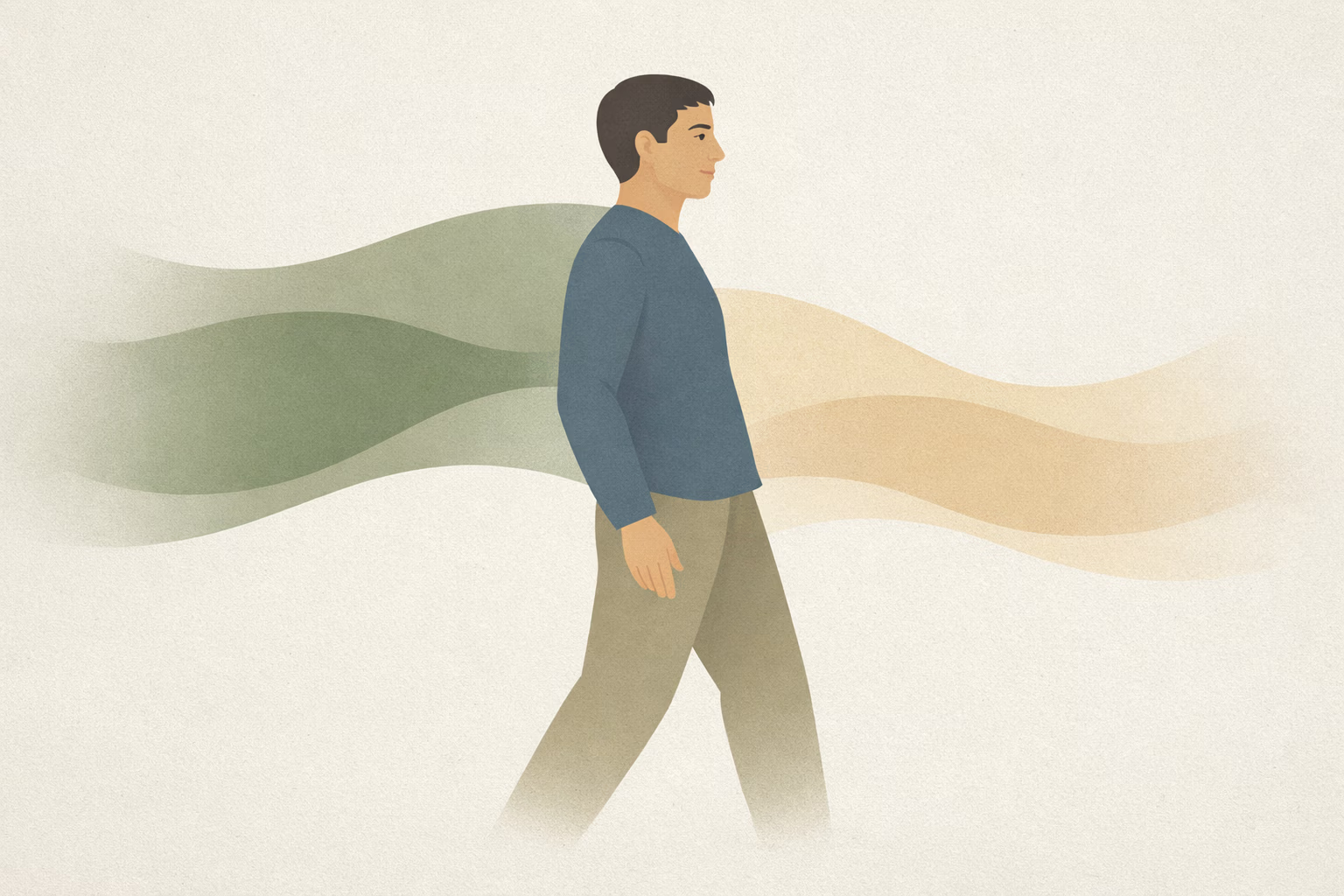
In this state, identity isn’t a rigid box; it’s an orientation. You can be loyal to what matters while still evolving. The habit doesn’t have to fight the old self. It becomes evidence of continuity: “This is still me—just with a little more alignment.”
Tools that assess coping with identity threat highlight how strongly perceived threat shapes protective responses; when threat is lower, coping can look more like adaptation than defense. [Ref-13]
Internal resistance often makes more sense when you see what it’s protecting. Not necessarily protecting you from the habit itself, but from the destabilization the habit implies: different routines, different expectations, different social signals, a different relationship with time.
In that light, resistance can be understood as loyalty to an older coherence—an identity that once helped you function, belong, survive a hard chapter, or stay readable to others. The issue isn’t that the loyalty is wrong. It’s that life changes, and the old coherence can become too small.
Meaning tends to return when the self no longer has to split: when what you value and what your days contain can belong to the same story. Self-affirmation research suggests that when identity feels more secure, defensiveness can lessen and openness to change can increase. [Ref-14]
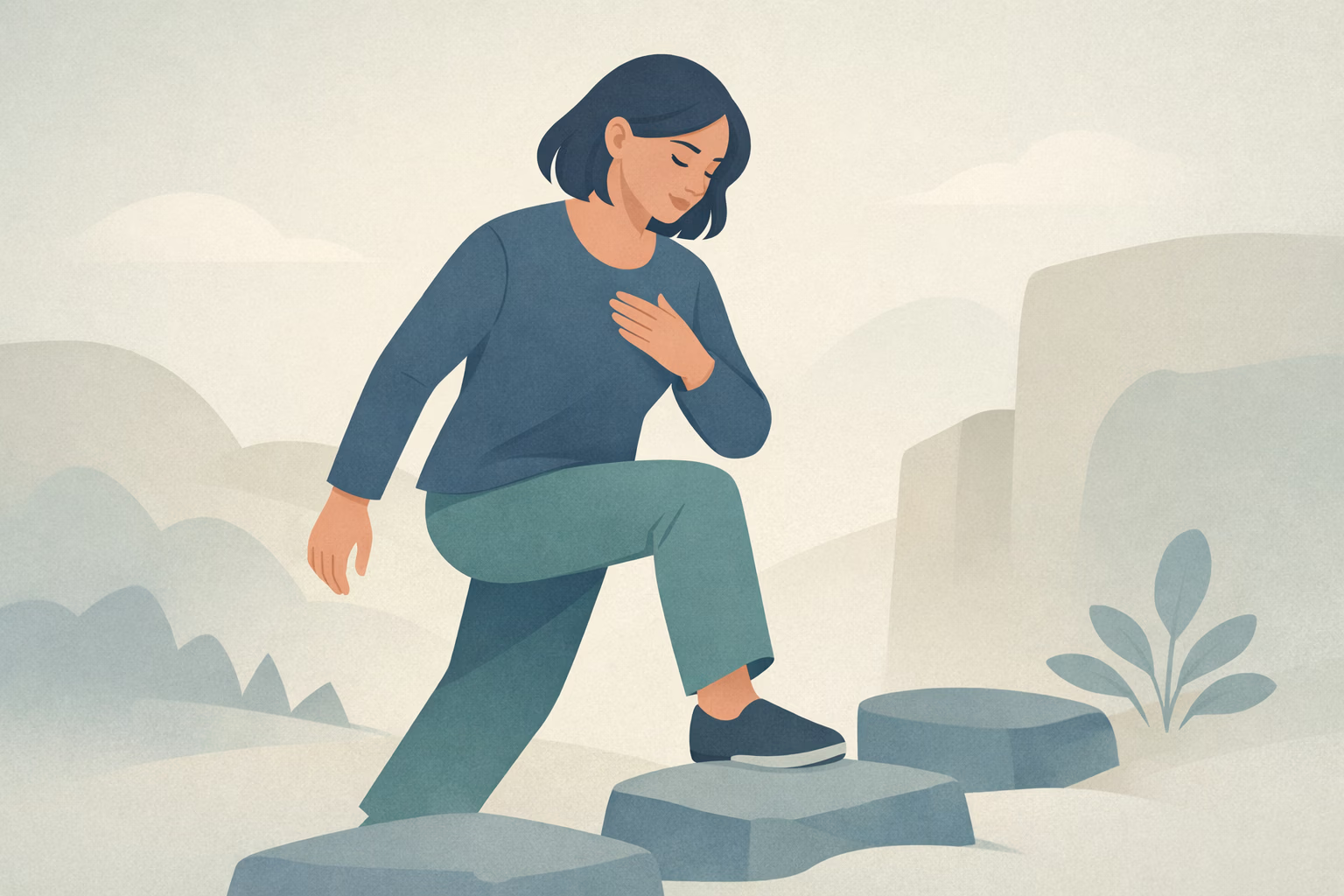
The goal isn’t to overpower the part of you that resists. It’s to understand that it has been doing a job—maintaining stability when stability mattered. When a new habit eventually holds, it’s often because it stops feeling like a threat to who you are and starts feeling like a true expression of your direction.
And that shift is dignifying: not “I finally fixed myself,” but “my life is coherent enough now that I can follow what matters without fighting myself.” Self-affirmation findings align with the idea that when the self feels less at risk, growth requires less defense. [Ref-15]
From theory to practice — meaning forms when insight meets action.
Because new habits don't only require behavior change — they signal identity change, and the system reads that as destabilization. The article explains this directly: when a change implies 'I will be different,' threat circuits can activate. Not because growth is bad, but because rapid identity disruption can resemble loss of control. Under load, the system prioritizes equilibrium: familiar rhythms, familiar self-story, familiar outcomes. Resistance is less 'I don't want the habit' and more 'I can't afford the destabilization right now.' The brakes don't always feel like fear — they can feel like neutrality, fog, or sudden preference for anything else. That softness is what makes self-blame so easy.
Because pressure registers as demand, and demand registers as risk when capacity is loaded. The article explains the mechanics: stricter rules, bigger promises, harsher self-talk often increase the very pushback they're trying to overcome. Avoiding the new habit creates an immediate Done Signal — demand removed, self stays familiar, day's identity intact. This isn't self-sabotage in a moral sense. It's a short loop that produces quick relief, and quick relief is powerful because it reduces arousal now even if it increases friction later. When people are depleted, self-regulatory effort becomes more costly and the pull toward familiar feels stronger.
Because each avoidance reinforces a clean association the system learns from. The article maps this directly: attempt produces destabilization, avoid produces settling. Even temporary settling is immediate, and immediacy wins under load. The intention stays alive but contained — planning, reading, researching, getting ready. You hold two self-stories at once: 'I value this' and 'I'm not doing this.' That gap creates strain because self-systems prefer alignment between who you are, what you value, and what your days contain. Cycles of starting and stopping increase internal conflict. Not because you're broken — because effort alone isn't a stable foundation when context and load keep escalating.
When it stops signaling identity threat. The article frames this as a kinder reframe: resistance is loyalty, not failure. It often protects an older coherence — an identity that once helped you function or survive a hard chapter. The issue isn't that the loyalty is wrong; it's that life changes and the old coherence becomes too small. Habits last when they express who you're becoming rather than threatening who you've been. The goal isn't overpowering the resistant part; it's letting the new habit become an expression of direction rather than a referendum on worth. When identity feels less at risk, openness to change increases — defense softens into adaptation.
From Science to Art.
Understanding explains what is happening. Art allows you to feel it—without fixing, judging, or naming. Pause here. Let the images work quietly. Sometimes meaning settles before words do.
One Quiet Window, one insight, one reflection — every Sunday