
Internal Conflict: The Battle Between Who You Are and Who You Want to Be
In short: Identity conflict can feel strangely personal: part of you wants to move forward, and part of you seems to pull the emergency brake. The mind narrates it as weakness or inconsistency.
Identity conflict can feel strangely personal: part of you wants to move forward, and part of you seems to pull the emergency brake. The mind narrates it as weakness or inconsistency. But in many cases, what you’re experiencing is a normal regulatory response to competing “maps” of who you are—old loops that once kept life workable, and new loops that haven’t fully stabilized yet.
What if the tension isn’t proof you’re failing—what if it’s proof your system is updating?
When identity is under strain, the nervous system often defaults to what is familiar: roles, habits, and self-stories that come with predictable consequences. The problem isn’t that you lack motivation. The problem is that your system hasn’t received enough closure to treat the new version of you as safe, real, and socially usable.
Humans don’t just “have” a personality—we maintain a running sense of self that helps us predict what will happen if we speak up, change course, disappoint someone, or succeed. That inner storyline is a biological tool for continuity: it reduces uncertainty by linking yesterday’s choices to today’s expectations. [Ref-1]
So when you start changing, it can feel like two versions of you are arguing. Not because you’re broken, but because your nervous system is trying to keep the world legible: Who am I in this room? What do people expect? What happens if I act differently? A familiar identity script can offer immediate stability—even when it no longer matches your values.
Inside the brain, “old self” and “new self” aren’t philosophical concepts—they’re patterns of prediction, memory, and response that have been reinforced by repetition. When a new behavior or belief starts to form, it can collide with older networks that still carry strong expectations about outcomes and belonging.
This collision often produces a sense of dissonance: mental noise, tension, or a subtle agitation that says, something doesn’t fit. The system then tries to reduce that friction quickly—sometimes by retreating to familiar behavior, sometimes by creating harsh explanations, and sometimes by stalling decision-making until the discomfort drops. [Ref-2]
These are not moral failures. They are fast ways the nervous system lowers uncertainty when two internal maps disagree.
Identity isn’t only about self-expression. It’s also about coordination: making yourself readable to others, maintaining continuity across contexts, and signaling reliability. Over time, your life story becomes a social interface—people learn what to expect from you, and you learn what costs and rewards come with certain roles. [Ref-3]
That’s why changing can feel socially risky even when no one is actively opposing you. An identity shift quietly alters the “contract” your system expects: different boundaries, different reactions, different consequences. Your nervous system may treat that as a high-load scenario—because unpredictability has always been expensive for social mammals.
Familiar identity scripts provide quick safety cues: you know how to behave, what to tolerate, what to expect, and how to recover. Even if the script includes stress, it may still be predictable stress—and predictability is regulatory.
When you move toward a new identity, the system can register mismatch: behavior says one thing, self-concept says another, and the social world might not have “caught up” yet. That mismatch is often experienced as internal strain or self-questioning. Dissonance is essentially a pressure for resolution, a demand that the system return to a coherent story. [Ref-4]
Sometimes the old self isn’t trying to ruin your life. It’s trying to keep your life understandable.
The old identity often formed around real conditions: a family system, a workplace culture, a survival strategy, or a season of life where a certain role was required. When conditions shift, the role can remain even after it stops fitting. Then “protection” becomes a kind of delay—less alignment, less growth, more background friction.
Developmental psychology has long described identity as something people move through in phases—exploring, committing, revising, and re-committing as life changes. When revision is blocked or rushed, the system can get stuck in a holding pattern: not fully old, not fully new. [Ref-5]
The tension you feel may be the cost of running two operating systems at once.
Meaning isn’t something you “think up” and then feel better. Meaning stabilizes when experiences complete—when actions, consequences, and self-understanding land in the body as a settled sense of: that happened, and it belongs to me now.
Identity conflict interrupts that completion. The old self-loop keeps pulling attention back to unresolved questions—Is this really me? Will I lose people? What if I can’t maintain this?—and the new self-loop can’t fully consolidate because it keeps getting paused mid-formation.
In that suspended state, dissonance tends to recycle: small decisions feel heavier, choices feel irreversible, and the mind tries to resolve uncertainty through quick narratives or reversals. [Ref-6]
When the system can’t reach closure, it looks for ways to lower immediate load. That can create recognizable patterns—not because you “are” those patterns, but because they are efficient short-term stabilizers when coherence is missing.
These are common dissonance-reduction moves—ways the nervous system reduces mismatch when two stories compete for “true” status. [Ref-7]
Over time, unresolved identity tension can drain the sense of self-efficacy—not because you lack capability, but because every action carries an extra tax: What does this mean about me? When ordinary choices become identity-defining, the system may conserve energy by narrowing options.
People often interpret this as “lost motivation.” Structurally, it can be closer to reduced psychological flexibility: fewer behaviors feel available, fewer futures feel believable, and the mind becomes preoccupied with managing internal friction. Research on identity disruption and recovery shows how destabilizing it can be when a previously coherent role or self-concept no longer fits. [Ref-8]
In other words, the struggle isn’t laziness. It’s load.
Old scripts can lower discomfort quickly. They restore the familiar story: I know who I am, I know my place, I know the rules. That reduction in tension can feel like relief.
But if the new self represents real values, real needs, or real maturity, returning to the old script doesn’t remove the underlying mismatch—it postpones completion. The nervous system gets a brief downshift, but the meaning loop remains open, so the pressure resurfaces later—often as irritability, numbness, urgency, or renewed self-debate.
Studies of cognitive dissonance and self-evaluation suggest that unresolved mismatch can keep self-related stress active, even when a person temporarily “chooses” the familiar path. [Ref-9]
There’s a difference between understanding identity conflict and resolving it. Insight can be accurate and still not produce the settled feeling of completion. What often changes the experience is not a better argument, but a better ability to stay with the in-between without escalating pressure.
Reflection and self-compassion are sometimes described as “soft,” but they can serve a practical function: they reduce threat signaling so the system can keep updating without needing immediate reversal. When people have low self-esteem or fragile self-coherence, dissonance can trigger stronger efforts to restore consistency—sometimes by clinging to old self-definitions even when they hurt. [Ref-10]
What if the goal isn’t to defeat the old self—but to reduce the internal emergency?
When the emergency tone drops, the new self has more room to become real through lived continuity—through experiences that reach an endpoint and can be carried forward without constant debate.
Identity isn’t built in isolation. Much of what makes a self-concept feel stable is relational: being seen consistently, receiving feedback that matches your emerging role, and having at least a few contexts where the new behavior is met with predictability rather than surprise.
Supportive social input can function like co-regulation: it reduces uncertainty and gives the system evidence that the new identity is not only internally desired, but externally workable. Research on self-continuity suggests that feeling connected across time—past self to future self—is strengthened by narratives and relationships that link “who I was” to “who I’m becoming.” [Ref-11]
This doesn’t mean you need universal approval. It means the nervous system often settles faster when it has some stable mirrors.
A key sign of restored coherence isn’t constant confidence. It’s reduced internal negotiation. Decisions begin to feel less like courtroom trials and more like simple steering—because fewer choices threaten your identity.
As self-continuity strengthens, the past becomes usable rather than adversarial: not a set of labels you must obey, but a record of what you’ve lived through and what it shaped. Memory research suggests that people create continuity through how they remember and integrate personal experiences over time. [Ref-12]
In practical terms, the nervous system spends less energy on monitoring and more energy on presence. The “done” signal becomes more available, and life requires less internal force to keep moving.
When identity conflict eases, attention often stops orbiting the question of whether you’re allowed to change. The system becomes more oriented toward living: relationships, craft, service, play, contribution—whatever matters in your ecology of meaning.
Importantly, integration is not the same as declaring a new identity in words. Integration shows up as a quieter body, fewer rehearsals, less “checking,” and a sense that your actions belong to you without constant explanation. The old self doesn’t disappear; it becomes contextualized—part of a larger story that can hold both history and direction.
Contemporary work on identity development emphasizes that growth is ongoing and context-sensitive, not a single decisive transformation. [Ref-13]
In a high-speed, high-evaluation world, identity is asked to stay stable while everything else changes. That’s a heavy load. If you feel pulled between versions of yourself, it can be a sign that your system is trying to update meaning without losing belonging.
Rather than treating the old self as the enemy, it can be understood as an earlier coherence strategy—one that may have helped you function in a previous environment. And rather than treating the new self as a performance, it can be understood as a direction your life is already testing for fit.
Modern social environments—especially those shaped by constant comparison and visibility—can intensify identity strain by keeping the self under continuous evaluation rather than allowing experiences to complete and settle. [Ref-14]
Sometimes agency returns not when you push harder, but when your life story is allowed to catch up to your life.
The most stable form of change usually isn’t a dramatic reinvention. It’s a gradual increase in continuity: the sense that your past and future can belong to the same person without constant internal conflict.
When old and new self-concepts can coexist in one narrative, the nervous system often relaxes its grip. Choices become less about proving who you are and more about expressing what matters. Research suggests that feeling connected to your future self is linked with steadier behavior over time—not through pressure, but through continuity. [Ref-15]
Identity conflict can be tiring. It can also be the doorway to a more coherent life—one where you don’t have to fight yourself to be yourself.
From theory to practice — meaning forms when insight meets action.
It usually isn't sabotage — it's a story system under load. Old self and new self aren't philosophical concepts; they're patterns of prediction, memory, and response reinforced by repetition. When new behavior starts to form, it collides with older networks that carry strong expectations about outcomes and belonging. The collision produces dissonance — mental noise, tension, agitation that says something doesn't fit. The system reduces friction quickly: retreating to familiar behavior, creating harsh explanations, stalling decisions until discomfort drops. These aren't moral failures. They're ways the nervous system lowers uncertainty when two internal maps disagree. Sometimes the old self isn't trying to ruin your life — it's trying to keep your life understandable.
Because identity isn't only self-expression — it's coordination. Your life story is a social interface: people learn what to expect from you, and you learn the costs and rewards of certain roles. An identity shift quietly alters the contract your system expects: different boundaries, different reactions, different consequences. The nervous system treats that as high-load, because unpredictability has always been expensive for social mammals. Even when no one is actively opposing you, the system registers risk. Familiar identity scripts provide quick safety cues — even if the script includes stress, predictable stress is regulatory. Change can feel like running two operating systems at once.
Because understanding identity conflict isn't the same as resolving it. Insight can be accurate and still not produce the settled feeling of completion. Meaning stabilizes when experiences complete — when actions, consequences, and self-understanding land in the body as a settled sense of 'that happened, and it belongs to me.' Identity conflict interrupts that completion. The old self-loop keeps pulling attention back to unresolved questions; the new self-loop can't fully consolidate because it keeps getting paused mid-formation. What changes the experience isn't a better argument — it's a better ability to stay with the in-between without escalating pressure. Reduce the internal emergency, and the new self has room to become real through lived continuity.
Reduced internal negotiation. Decisions feel less like courtroom trials and more like simple steering, because fewer choices threaten your identity. The past becomes usable rather than adversarial — not labels you must obey, but a record of what shaped you. Integration isn't declaring a new identity in words. It shows up as a quieter body, fewer rehearsals, less checking, and a sense that your actions belong to you without constant explanation. The old self doesn't disappear; it becomes contextualized — part of a larger story that holds both history and direction. A coherent self isn't a perfect self; it's a continuous one. You don't have to fight yourself to be yourself.
From Science to Art.
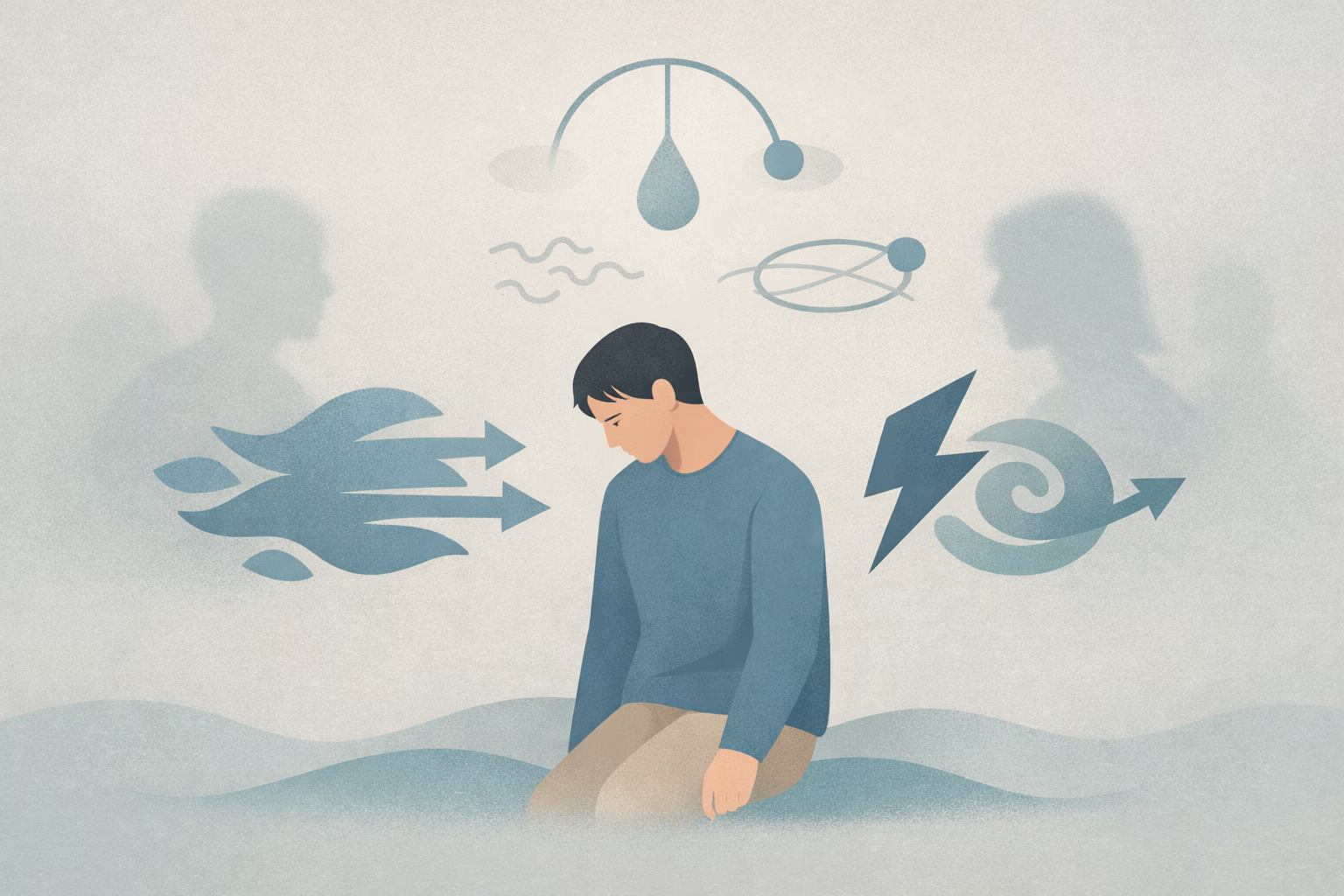
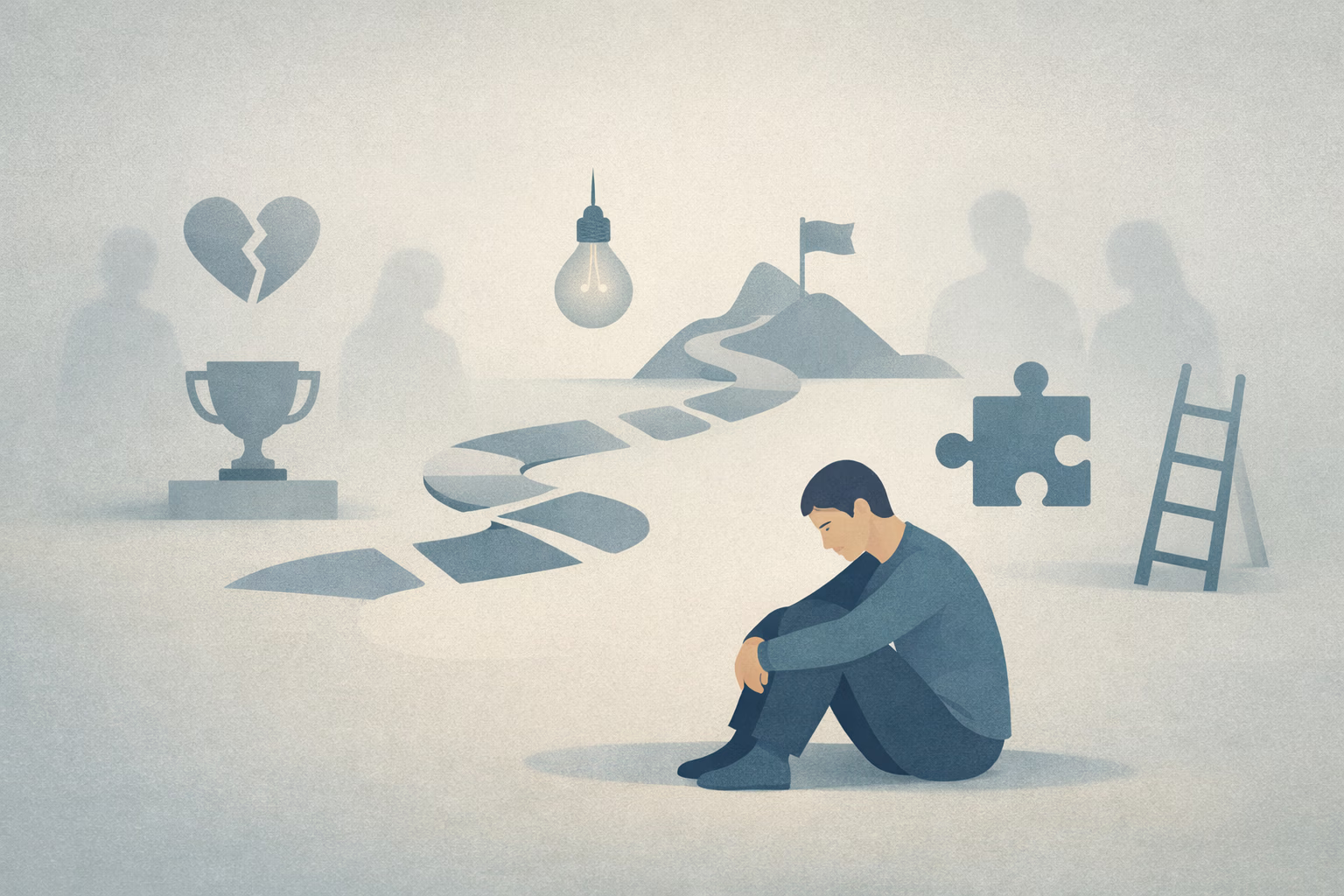
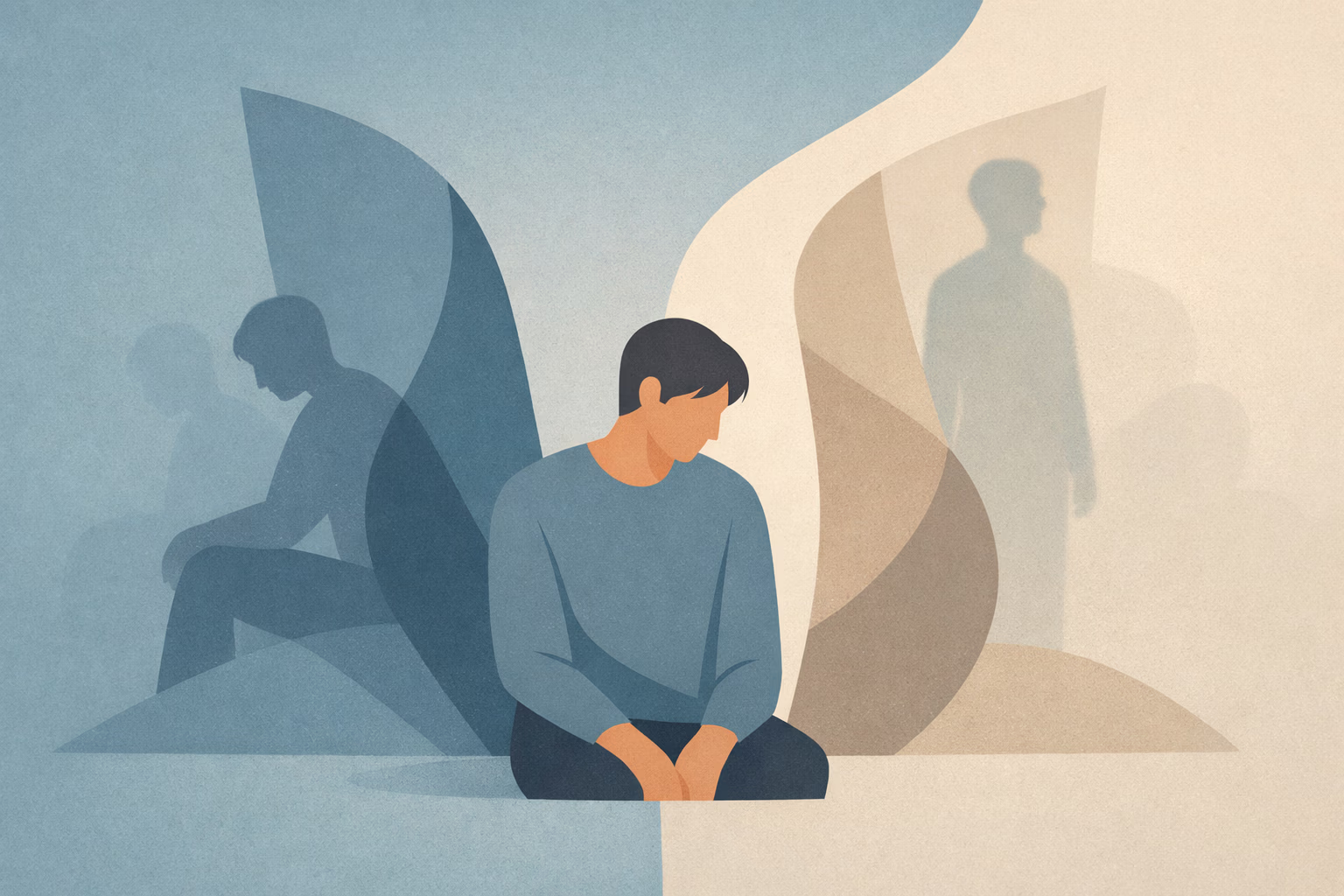
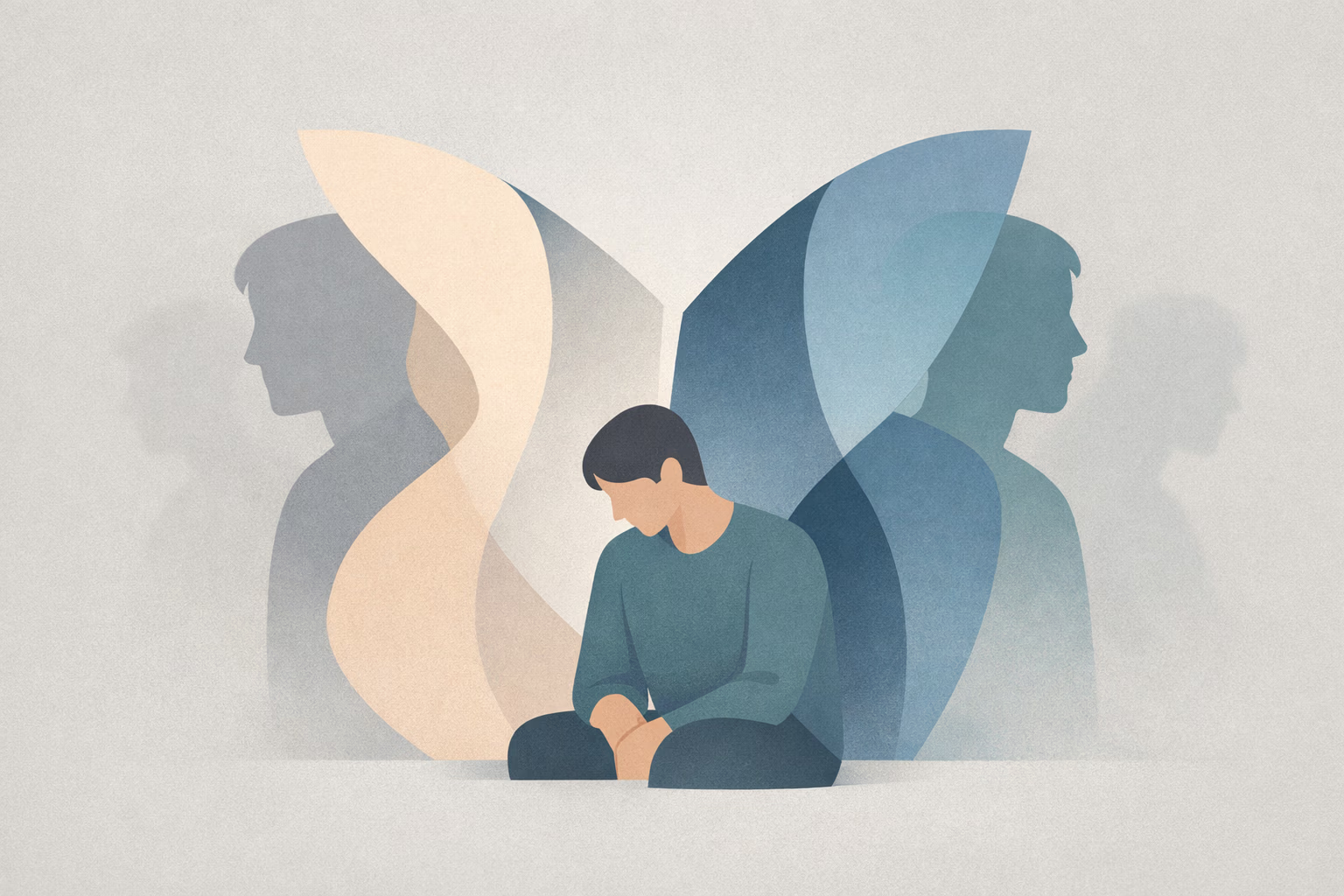
Understanding explains what is happening. Art allows you to feel it—without fixing, judging, or naming. Pause here. Let the images work quietly. Sometimes meaning settles before words do.
One Quiet Window, one insight, one reflection — every Sunday