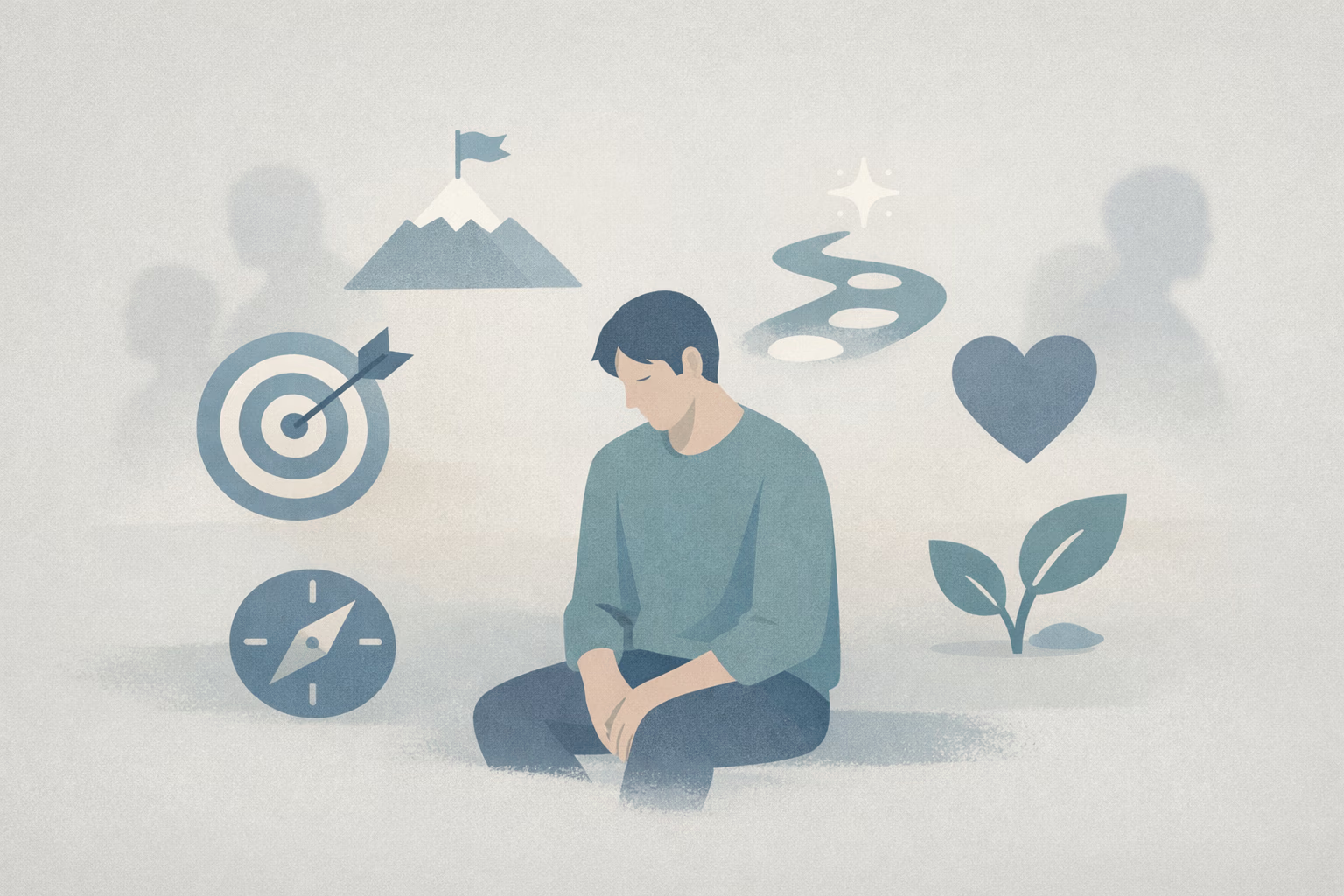

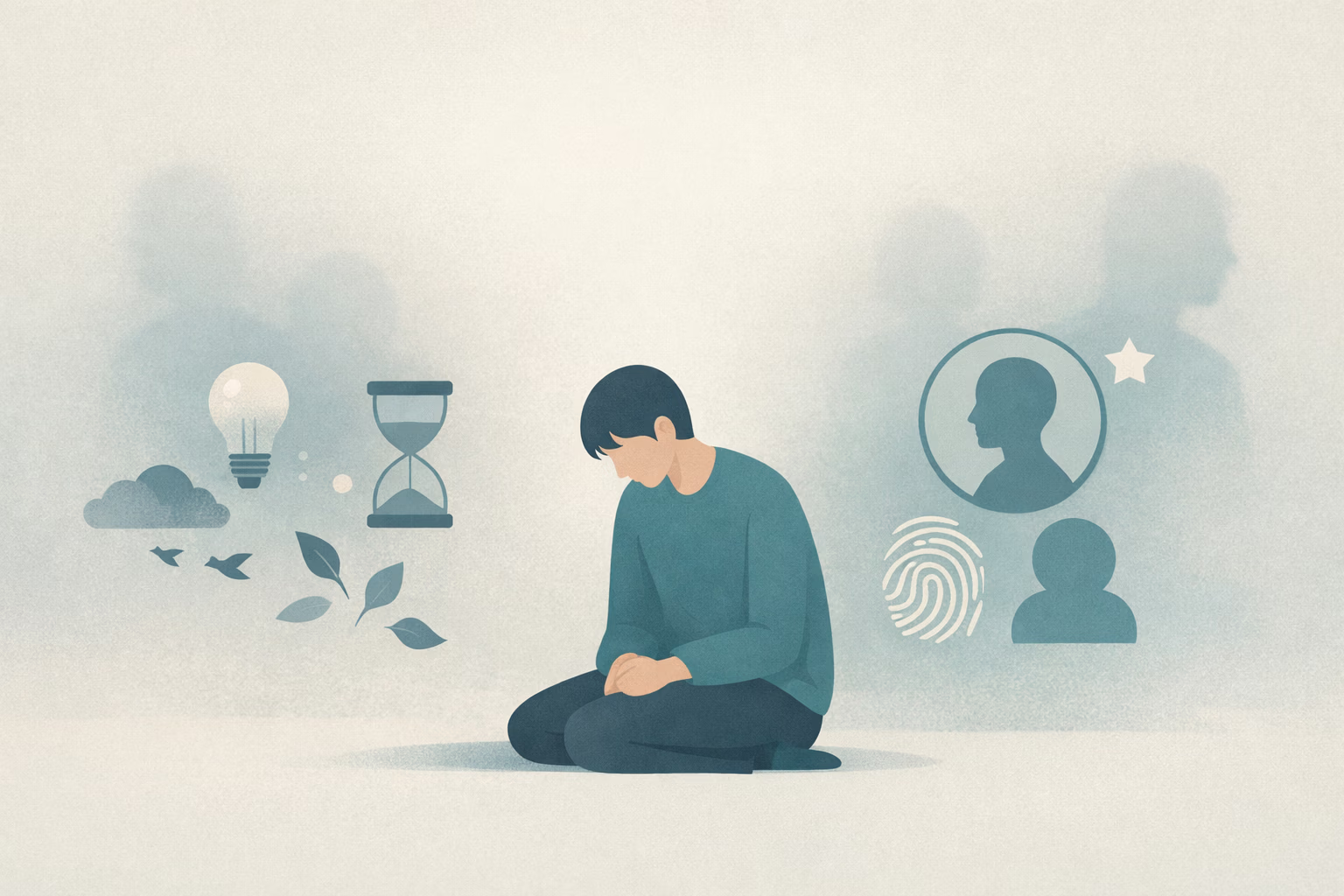
Why Motivation Fades but Identity Remains
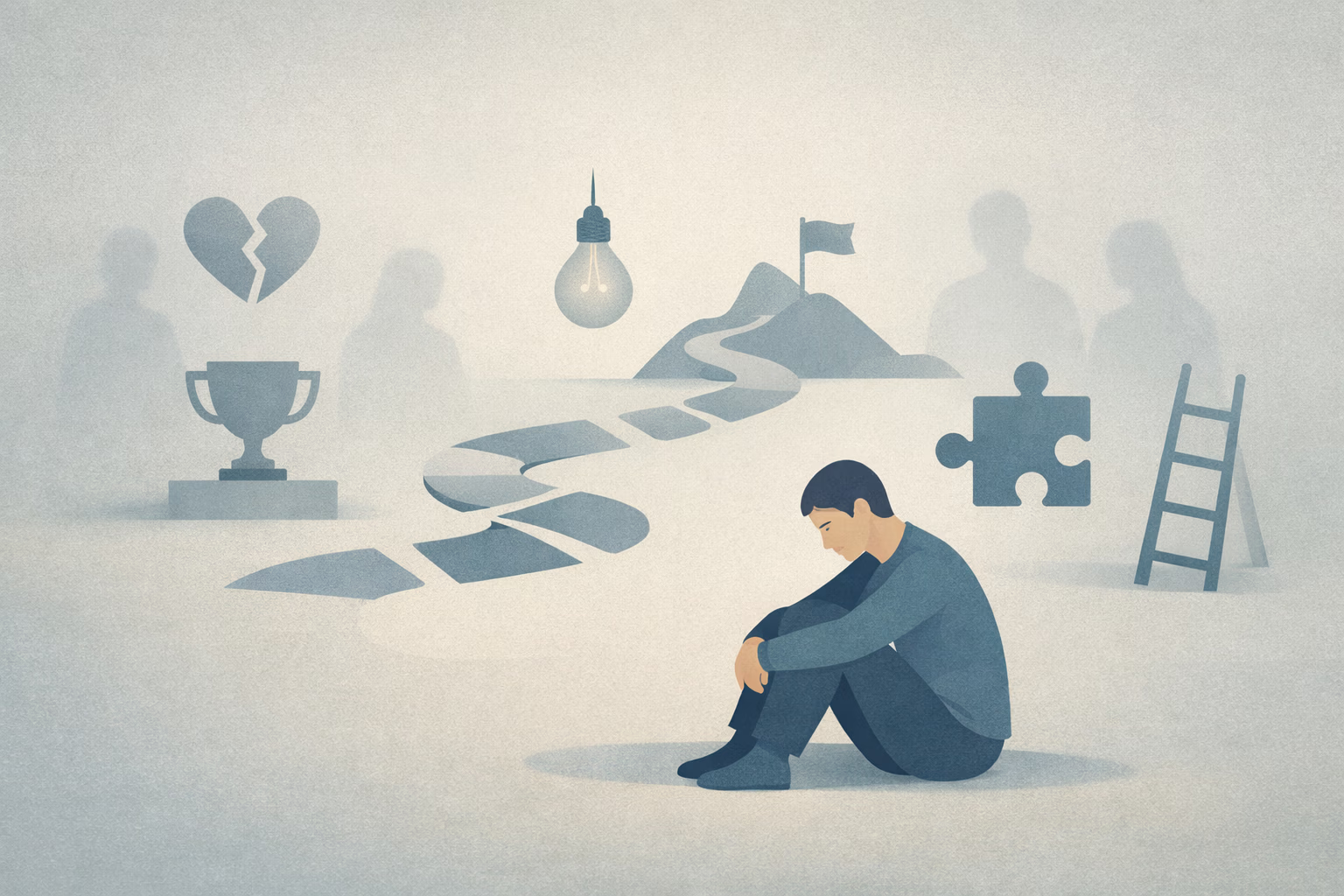
In short: Many people can remember a moment of being fully “on”: a surge of energy, a clean plan, a new notebook, a new identity in mind. For a few days or weeks, the momentum feels effortless.
Many people can remember a moment of being fully “on”: a surge of energy, a clean plan, a new notebook, a new identity in mind. For a few days or weeks, the momentum feels effortless. Then the charge drops, life gets busy, and what looked like transformation starts to look like inconsistency.
This isn’t a character issue. It’s often a biology-and-environment issue: nervous systems respond quickly to novelty and reward cues, but they stabilize through closure, coherence, and lived identity—things that take longer than a motivational spike can carry.
What if the problem isn’t that you can’t stay motivated—what if motivation was never built to be the engine?
Motivation tends to arrive like weather. It can be bright and convincing, then vanish without asking permission. When it fades, many people interpret the stall as proof that they didn’t want it “enough,” or that they’re missing discipline.
But in human systems, starting and sustaining are governed by different mechanisms. Starting is often powered by novelty, urgency, social visibility, and the clean sensation of a fresh loop beginning. Sustaining is more about whether the loop can complete—whether effort leads to a “done” signal that allows the nervous system to stand down rather than stay activated. [Ref-1]
When a loop doesn’t complete, the body doesn’t receive closure. The result can look like procrastination, drifting, or abandoning a goal—yet structurally it’s often an incomplete cycle rather than a personal failure.
Motivation is commonly tied to short-term reward signals and external cues: a deadline, a compliment, a new program, a dramatic before-and-after story. These cues can create a real surge of energy, attention, and willingness.
Meaning is different. It tends to form when actions connect to identity and values in a way that produces internal coherence—when what you do makes sense inside you, not only in the scoreboard outside you. In research on human motivation, sustained engagement is strongly associated with the satisfaction of autonomy, competence, and relatedness—conditions that make behavior feel self-owned, workable, and connected. [Ref-2]
Notice the shift: motivation asks, “Do I feel like it today?” Meaning asks, “Does this belong to who I am becoming?” That question doesn’t always create a rush. But it can create steadiness.
Human nervous systems evolved in environments where short-term rewards mattered. If food appeared, you moved. If danger appeared, you mobilized. Quick dopamine-linked learning helped organisms repeat what worked and avoid what didn’t.
In modern life, many of the most important changes are slow and complex: healing relationships, building a craft, shifting health patterns, creating stability. These require sustained attention and repeated closure across time—yet our environments often deliver rapid reward signals that compete with long horizons.
So it’s not strange that “big life” goals can feel harder to stay with than quick wins. That mismatch is predictable, especially when external cues are loud and internal completion is quiet. [Ref-3]
A motivational spike can create a convincing sense of movement: reorganizing, researching, announcing, planning, buying supplies, making a schedule. These behaviors can be meaningful in context—but they can also substitute for the deeper closure that comes from repeated, identity-consistent completion.
From a nervous system perspective, activation can feel satisfying on its own. It signals “something is happening.” But activation is not the same as integration. A system can be highly stimulated while still carrying unfinished loops underneath.
Have you ever felt accomplished just by setting the plan?
That’s not self-deception; it’s a normal brain-body response to novelty and a clean beginning. The trouble comes when the beginning keeps repeating, because closure never arrives. [Ref-4]
Motivation tends to be contingent: it rises when conditions are exciting, affirming, or urgent, and falls when conditions are ordinary, private, or slow. Meaning tends to be durable because it is less dependent on mood and more dependent on coherence.
When actions align with values and identity, the nervous system often experiences a quieter kind of reinforcement: steadiness, self-trust, and reduced internal friction. This is closely aligned with what research distinguishes as intrinsic motivation—engagement that is supported by internal satisfaction and psychological needs rather than external pressure or reward. [Ref-5]
In other words, motivation can start motion. Meaning is more likely to keep motion organized.
Relying on motivation can unintentionally create a repeating cycle: a rush of energy leads to a burst of effort, which creates strain, which leads to a drop, which then triggers a search for a new rush. The system doesn’t do this because it is weak; it does it because the environment makes stimulation easy and closure hard.
Importantly, this cycle isn’t always about “avoiding feelings.” Often it’s structural. The loop doesn’t complete, consequences are delayed or muted, and resistance is bypassed by excitement. When the excitement fades, the unfinished parts return—so the system looks for another surge to get moving again.
Research on purpose- and meaning-oriented approaches suggests that articulating a coherent life direction can support sustained engagement over time, not by forcing effort, but by giving behavior a stable organizing frame. [Ref-6]
Motivation dependence often shows up as patterns that look personal, but functionally reflect a regulation strategy under load. You can recognize it without blaming yourself.
These patterns make sense in a world that rewards beginnings. But sustained learning and development tend to grow when meaning and coherence are present, supporting steadier engagement. [Ref-7]
When behavior is driven mainly by spikes, the self-story can become unstable: “I’m the kind of person who gets inspired… but doesn’t follow through.” Not because your identity is flawed, but because your evidence stream is fragmented. Many starts, fewer completions.
Identity is shaped by what repeatedly reaches closure. When completion is rare, the nervous system stays partially “on,” scanning for the next push. Over time, you may feel less clear about what matters and more reliant on external cues to tell you what to do next.
When life is mostly beginnings, the body learns to expect interruption.
Meaning tends to restore direction because it links action to a consistent inner orientation—something you can recognize even when nobody is clapping. [Ref-8]
Today’s environments train motivation dependence extremely well. Notifications, streaks, likes, rankings, and constant exposure to other people’s highlight reels create dense reward feedback. The system learns: short bursts get immediate signals; slow commitments get silence.
Social comparison can also keep loops open. There is always someone doing more, doing it faster, doing it better. That can sustain activation without providing closure—so the nervous system remains in evaluation mode, which can feel like restlessness, pressure, or numb scrolling.
In meaning-oriented frameworks, a life feels more stable when it is anchored in purpose and contribution rather than constant external evaluation. That stability is less about positive thinking and more about where your attention is repeatedly asked to land. [Ref-9]
It can help to distinguish “understanding what matters” from meaning actually organizing behavior. Insight is valuable, but it isn’t the same as integration. Integration is the quieter physiological settling that follows repeated completion—when the body stops needing constant activation to maintain direction.
Meaning loops are supported when life answers a few basic organizing questions:
When these conditions are present, behavior can become less dependent on mood and more guided by a stable inner narrative. This is not a hack; it’s a shift in what the nervous system treats as safe and coherent. [Ref-10]
Humans don’t form identity in isolation. We calibrate through contact: being seen, mirrored, and responded to. Supportive relationships can reduce nervous system load, which makes completion more available.
In this context, “accountability” is less about pressure and more about continuity: someone remembers what matters to you when your attention is fragmented. Mentors and peers can also provide reality-based feedback that strengthens a sense of competence—helping the system register genuine progress rather than chasing stimulus.
Values-based models emphasize that committed action is easier to sustain when it is linked to chosen values and reinforced by a relational field that makes those values feel livable. [Ref-11]
When meaning begins to organize behavior, the shift often feels less dramatic than a motivational surge—but more relieving. The nervous system uses less energy negotiating. Attention returns more easily after distraction. The inner storyline becomes less brittle.
People often describe outcomes like:
Values clarity is frequently associated with increased psychological flexibility and sustained engagement—not because it forces change, but because it reduces internal contradiction. [Ref-12]
In a meaning-led system, values function like orientation points. They don’t demand constant intensity; they provide direction. Over time, action can become less about chasing a feeling and more about living into a recognizable identity.
This doesn’t mean life becomes perfectly consistent. It means the system doesn’t need extreme activation to return to center. When a loop is interrupted, it can be resumed without a full restart narrative.
Many values frameworks describe themes like care, honesty, learning, steadiness, connection, and service—not as ideals to achieve, but as ways of being that can organize choices across situations. [Ref-13]
If motivation keeps rising and falling, it may be pointing to a simple truth: your nervous system is responding to cues, not failing a test. A spike can be a signal that something matters. A drop can be a signal that the structure needed for closure and coherence isn’t in place right now.
When transformation is framed as “staying motivated,” people often end up in self-judgment. When it’s framed as “building meaning that can complete,” the experience becomes more dignified: you’re not broken—you’re living in conditions that constantly interrupt completion.
Intrinsic and extrinsic motivation are often discussed as different fuel sources; one depends more on outside reward, the other on internal alignment. Over time, the more durable changes tend to be the ones that are supported by internal coherence rather than repeated external pushes. [Ref-14]
Motivation can open a door. Meaning is what makes a path feel inhabitable.
When actions repeatedly reach closure—when they match values, build trustworthy evidence, and fit into a coherent self-story—the nervous system doesn’t need to keep sounding the alarm to keep you moving. Change becomes less of a campaign and more of a lived identity.
That kind of transformation is not powered by constant intensity. It’s carried by coherence. [Ref-15]
From theory to practice — meaning forms when insight meets action.
Because starting and sustaining are governed by different mechanisms. Starting is powered by novelty, urgency, social visibility, and the clean sensation of a fresh loop beginning. Sustaining depends on whether the loop can complete — whether effort produces a Done Signal that lets the nervous system stand down. Motivation arrives like weather; it can be bright and convincing, then vanish without permission. When it fades, people often interpret the stall as missing discipline, but structurally it's an incomplete cycle. The body never received closure, so the burst of energy couldn't anchor into anything stable. Motivation is built to ignite. It was never built to be the engine.
Motivation rides on spikes; meaning rides on coherence. Motivation is tied to short-term reward signals and external cues — deadlines, compliments, fresh programs, dramatic before-and-afters. These can create a real surge but they're contingent: they rise when conditions are exciting and fall when conditions are ordinary. Meaning forms when actions connect to identity and values in a way that produces internal coherence. The shift is from 'do I feel like it today?' to 'does this belong to who I am becoming?' That second question rarely creates a rush, but it produces steadiness — the quieter reinforcement of self-trust and reduced internal friction that doesn't depend on mood.
Because activation feels satisfying on its own. Reorganizing, researching, announcing, buying supplies, making schedules — these create a convincing sense of movement and signal 'something is happening.' From a nervous system view, a clean beginning produces a small reward without requiring follow-through. But activation is not integration. A system can be highly stimulated while still carrying unfinished loops underneath. The trouble starts when the beginning keeps repeating because closure never arrives. Each restart resets the narrative without building evidence. Over time, the self-story becomes 'I get inspired but don't follow through' — not because identity is flawed, but because completions are rare and beginnings are abundant.
Values function like orientation points. They don't demand constant intensity; they provide direction. In a meaning-led system, action becomes less about chasing a feeling and more about living into a recognizable identity. When a loop is interrupted, it can be resumed without a full restart narrative. Sustained engagement is supported when life answers three organizing questions — does this feel self-owned (autonomy), does it build workable evidence of capability (competence), does it connect me to people or purposes that feel real (relatedness). When those conditions are present, behavior depends less on mood and more on a stable inner narrative. The system stops needing extreme activation to return to center.
From Science to Art.
Understanding explains what is happening. Art allows you to feel it—without fixing, judging, or naming. Pause here. Let the images work quietly. Sometimes meaning settles before words do.
One Quiet Window, one insight, one reflection — every Sunday