Motivation Loss: When You Can’t Start Even Simple Tasks
In short: Most people know the feeling: a clean surge of motivation, a fresh start, a week (or two) of momentum—and then the drop. The common story is that something is wrong with you: you’re inconsistent, undisciplined, or not “serious enough.” But motivation fading is not a character verdict.
Most people know the feeling: a clean surge of motivation, a fresh start, a week (or two) of momentum—and then the drop. The common story is that something is wrong with you: you’re inconsistent, undisciplined, or not “serious enough.” But motivation fading is not a character verdict. It’s a predictable shift in biology, attention, and meaning.
What if the problem isn’t that you can’t stay motivated—but that motivation was never designed to do the long-term job?
Motivation is great at ignition. Identity is what carries the pattern when the spark is gone. Identity isn’t a slogan you repeat or a mindset you force—it’s what your system has learned to treat as “true enough” through lived completion, repeated consequences, and a sense of being done with the debate.
Inconsistency rarely feels neutral. When motivation disappears, people often interpret it as personal unreliability: “I always do this,” “I can’t follow through,” “I’m not the kind of person who sticks with things.” That interpretation adds load—because now you’re not just managing a task; you’re managing your standing with yourself.
Under stress load, the nervous system tends to prioritize short-term stabilization: quick relief, quick certainty, quick escape from ambiguity. That can look like procrastination, over-planning, distraction, or rigid control. These aren’t identities; they’re regulatory responses that become more likely when the environment keeps offering unfinished loops and no “done” signal. [Ref-1]
Motivation often rides on reward prediction: anticipation, novelty, and a sense that progress is about to happen. That’s why new plans feel so energizing—your brain is estimating payoff. But prediction-based drive is designed to fluctuate. When the payoff is delayed, unclear, or repetitive, the spike naturally drops.
Identity, by contrast, is built through reinforcement and coherence: what you repeatedly do, what it costs, what it closes, and what becomes believable as “this is how I move through life.” It’s not sustained by excitement; it’s sustained by reduced internal negotiation. When identity is carrying the behavior, it doesn’t require a daily surge—it requires fewer unresolved questions. [Ref-2]
Humans evolved in social environments where continuity mattered: reputation, trust, role, and belonging all depended on being legible over time. That legibility isn’t just social; it becomes internal. The brain leans toward actions that preserve a coherent story of self, because coherence reduces conflict and stabilizes decisions. [Ref-3]
This is one reason motivation can feel unreliable: it’s sensitive to changing cues. Identity is sensitive to story-consistency. When your actions can “fit” your narrative—when they resolve rather than multiply inner contradictions—behavior becomes easier to sustain without constant emotional fuel.
Motivation can start a chapter. Identity is what makes the chapter feel like it belongs in the same book.
Motivation creates a convincing sense of movement because it changes state quickly. Planning, researching, buying supplies, reorganizing, telling someone your new goal—these can all produce a felt sense of engagement. Your system gets stimulation and relief: stimulation from novelty, relief from the hope of closure.
None of that is fake. It’s just not the same as integration. Integration is what happens after a sequence completes and the nervous system can stand down—when “I did this” becomes a settled fact rather than an ongoing argument. Motivation is often the beginning signal, not the completion signal. [Ref-4]
It’s easy to assume that if you could just keep the motivation high, the behavior would stay consistent. But when a change doesn’t match your lived self-concept—your roles, values, social reality, and what your life actually makes room for—motivation becomes a temporary overlay.
Without identity alignment, the behavior stays effortful because it continues to require translation: “How do I justify this today?” “Who am I to do this?” “Where does this fit?” That ongoing translation keeps the loop open. Identity processes support well-being partly because they reduce this constant internal renegotiation. [Ref-5]
When the excitement fades, what remains is the question: does this belong to me?
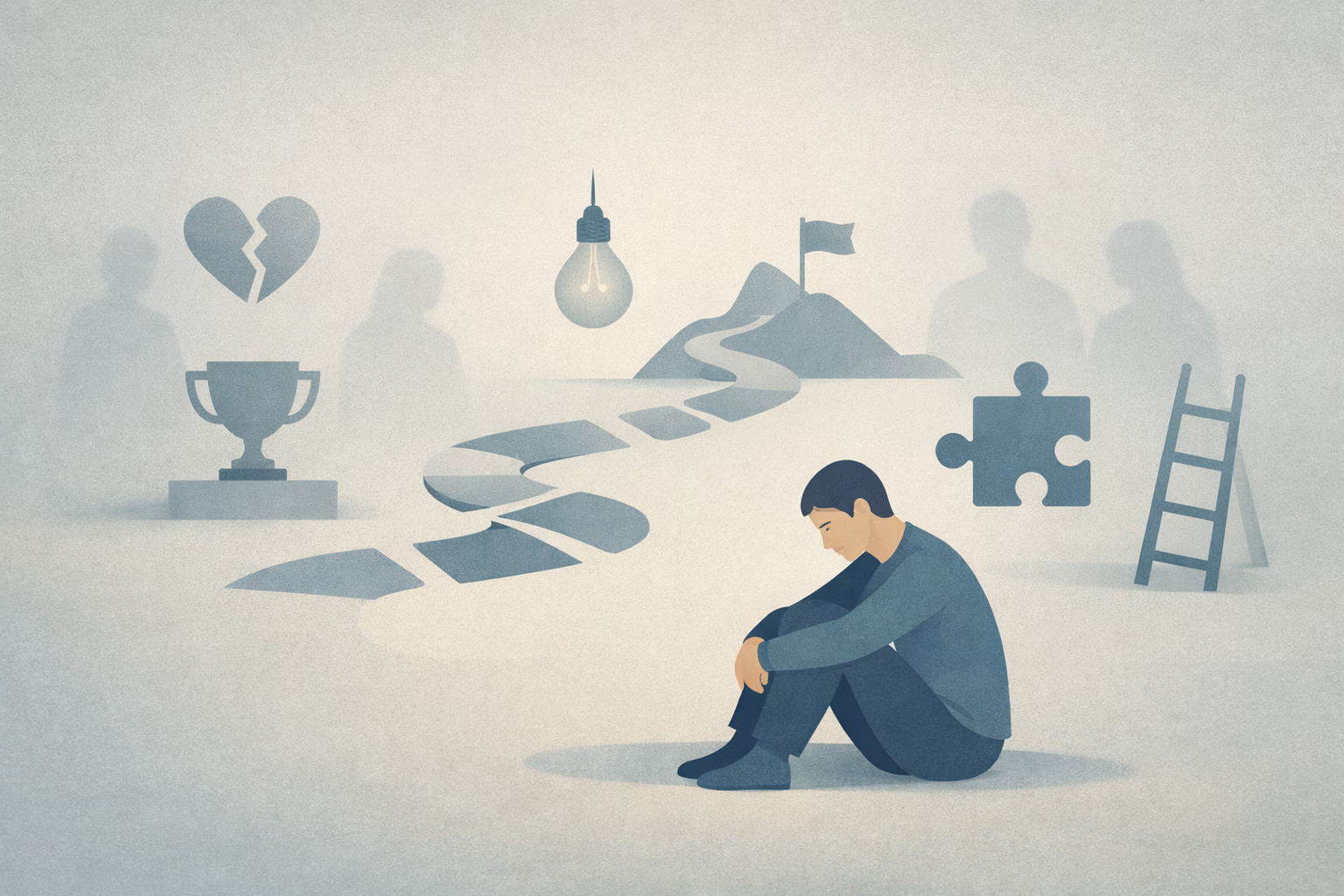
Many people end up in a cycle: burst of effort → short run of results → drop → self-critique → another restart. The issue isn’t a lack of wanting. It’s that each cycle produces activation without completion. The nervous system spends energy gearing up, but doesn’t receive enough “done” signals to justify sustained investment.
Over time, that pattern can create burnout-like wear: not necessarily from doing too much, but from repeatedly mobilizing resources and then losing coherence. When motivation becomes the primary fuel, the system learns to associate change attempts with strain and uncertainty rather than settled capability. [Ref-6]
When motivation is treated as the engine, the environment begins to train you to chase the engine rather than build the track. Common patterns aren’t “self-sabotage”—they’re predictable adaptations to missing closure and inconsistent reinforcement.
These patterns often intensify when the nervous system is already loaded: poor sleep, chronic evaluation, social comparison, and competing demands can all reduce capacity for sustained follow-through. [Ref-7]
When the cycle repeats, the most costly loss is often self-efficacy: the quiet belief that your intentions can reliably become behavior. If motivation is the only bridge you use, every low-motivation day feels like a structural failure rather than a normal fluctuation in state.
From a self-determination perspective, behaviors that are more self-concordant—more aligned with personal values and lived identity—tend to be easier to sustain because they don’t depend as heavily on external pressure or temporary excitement. Over time, this supports a steadier sense of agency. [Ref-8]
After enough restarts, the mind often protects itself by lowering commitment. Not because you don’t care, but because repeated open loops create a kind of meaning debt: each new attempt risks adding another unfinished story. Avoidance and procrastination can appear here as nervous-system strategies to prevent more internal fragmentation.
Self-doubt isn’t just a thought; it’s a learned prediction: “This will cost me and won’t resolve.” When goals are not self-concordant, people are more likely to experience strain, reduced well-being, and disengagement—even when they “succeed” on paper. That mismatch can quietly train your system to step back before it invests again. [Ref-9]
If every restart becomes evidence, the nervous system eventually chooses less exposure to evidence.
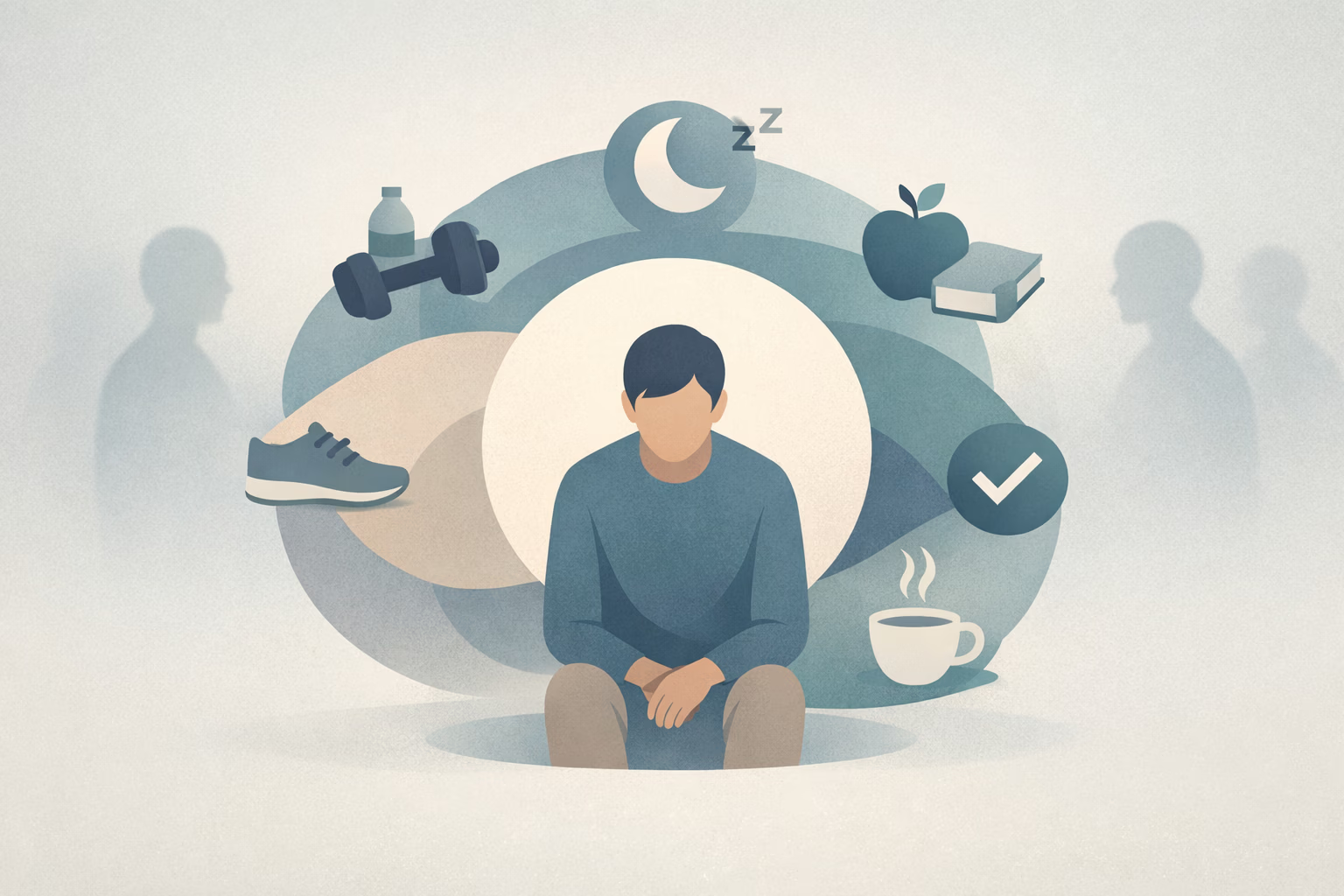
Identity-driven action doesn’t usually feel like a constant high. It can feel ordinary—sometimes even quiet—because it’s less dependent on arousal. The stabilizer is not “more insight” or “better self-talk,” but a shift in how the body and brain allocate effort when something is experienced as belonging.
When actions are identity-aligned, they generate cleaner closure: fewer internal counterarguments, less threat of self-evaluation, and a more predictable payoff in meaning. That predictability changes autonomic load—less mobilization required to begin, less crash afterward—because the system expects the loop to complete rather than stall. [Ref-10]
Not “Can I force myself?” but “Can this become part of who I already am becoming?”
Identity is not built in isolation. Social environments provide modeling (“this is normal”), mirroring (“I see you doing it”), and containment (“you don’t have to hold the whole story alone”). These are not motivational tricks; they are coherence cues. They reduce uncertainty and make the behavior more legible—internally and externally.
Supportive relationships can buffer stress reactivity and help the brain interpret effort as safe and worthwhile, which increases capacity for consistency. This is one reason mentorship, community, and stable accountability structures can matter: they make the narrative more real, more continuous, and less dependent on mood. [Ref-11]
When identity begins to carry the load, consistency often increases without requiring bigger motivational surges. The change is not that you “feel inspired all the time,” but that the behavior requires fewer dramatic state shifts to occur.
This is the logic behind many identity-based habit frameworks: what you repeat becomes what you are willing to believe about yourself—and that belief becomes a stabilizing context, not a hype source. [Ref-12]
Over time, motivation becomes less central. It still appears—especially at beginnings—but it’s no longer the thing you must manufacture in order to move. The primary driver becomes the identity loop: actions that fit your values and roles, actions that close cleanly, actions that reduce fragmentation instead of increasing it.
This doesn’t make life effortless. It makes it more coherent. Energy that used to go into restarting, self-judgment, and re-earning permission can shift into steadier participation. Identity processes support well-being partly because they create continuity: you don’t have to persuade yourself from scratch each time. [Ref-13]
When motivation fades, it’s often a sign that the system has moved from novelty to reality. That transition is where many people get stuck—not because they lack character, but because modern life offers endless stimulation and evaluation with very few completion signals.
Seen through this lens, a lapse can be feedback about coherence: whether the change is supported by your environment, whether it fits your values, whether it can close into a believable identity. Identity is durable because it’s built from what gets lived through to completion, not from what gets felt intensely for a week. [Ref-14]
Motivation is a wave: useful, real, and temporary. Identity is what remains when the wave passes—what your nervous system trusts, what your life can hold, and what your story no longer needs to argue for.
When sustainable change happens, it often looks less like constant drive and more like reduced fragmentation: fewer restarts, fewer open loops, more lived continuity. Not because you became stricter, but because the pattern finally had a place to land. [Ref-15]
From theory to practice — meaning forms when insight meets action.
Because motivation rides on reward prediction — anticipation, novelty, a sense that progress is about to happen. New plans feel energizing because the brain is estimating payoff. But prediction-based drive is designed to fluctuate. When the payoff is delayed, unclear, or repetitive, the spike naturally drops. Motivation is great at ignition; it was never designed for the long-term job. Identity is what carries the pattern when the spark is gone — built through reinforcement and coherence: what you repeatedly do, what it costs, what closes, and what becomes believable as 'this is how I move through life.' Identity doesn't require a daily surge; it requires fewer unresolved questions.
Not on its own — not when the change doesn't match your lived self-concept. Without identity alignment, behavior stays effortful because it requires constant translation: 'how do I justify this today?' 'Who am I to do this?' 'Where does this fit?' That ongoing translation keeps the loop open. When excitement fades, what remains is the question: does this belong to me? Many people end up cycling: burst of effort, short results, drop, self-critique, restart. Each cycle produces activation without completion. The system spends energy gearing up but doesn't receive enough Done Signals to justify sustained investment. Repeated restarts train the body to expect strain, not capability.
Because the mind narrates the drop as a verdict: 'I always do this, I can't follow through, I'm not the kind of person who sticks with things.' That interpretation adds load — now you're not just managing a task, you're managing your standing with yourself. Under stress load, the system prioritizes short-term stabilization: quick relief, quick certainty, quick escape from ambiguity. That looks like procrastination, over-planning, distraction, or rigid control. These aren't identities; they're regulatory responses that become more likely when the environment offers unfinished loops and no Done Signal. The most costly loss is self-trust — every low-motivation day starts feeling like structural failure rather than normal fluctuation.
Less dramatic. It can feel ordinary, sometimes quiet, because it's less dependent on arousal. The stabilizer isn't more insight or better self-talk — it's a shift in how the body and brain allocate effort when something is experienced as belonging. Identity-aligned actions generate cleaner closure: fewer internal counterarguments, less threat of self-evaluation, more predictable payoff in meaning. That predictability changes autonomic load — less mobilization required to begin, less crash afterward — because the system expects the loop to complete. Intentions and actions match more often, with less internal debate. Missed days register as information, not collapse. Progress feels like continuity rather than reinvention. Identity is a settlement, not a mood.
From Science to Art.
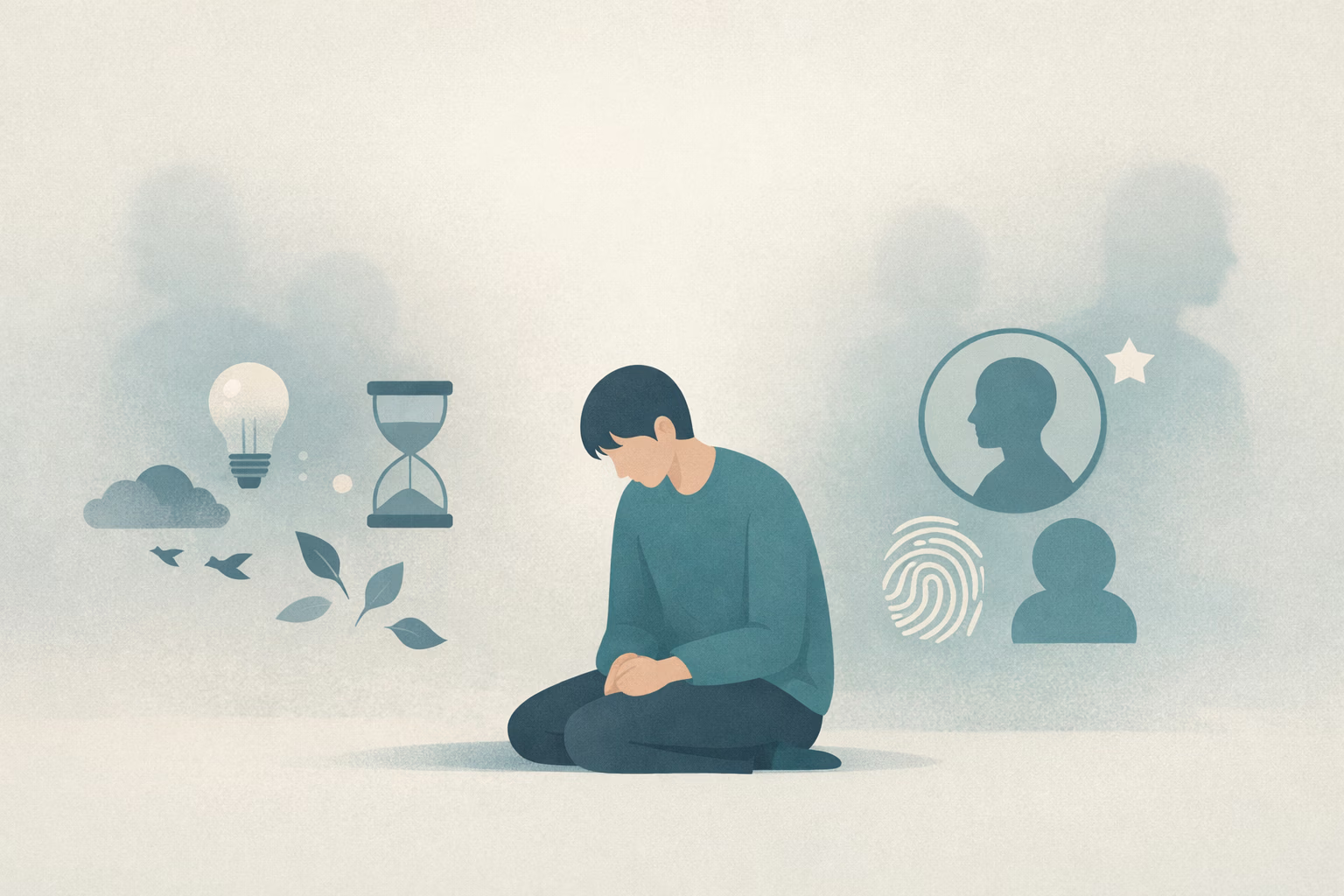
Understanding explains what is happening. Art allows you to feel it—without fixing, judging, or naming. Pause here. Let the images work quietly. Sometimes meaning settles before words do.
One Quiet Window, one insight, one reflection — every Sunday