Low Motivation & Emotional Shutdown: When the System Overloads
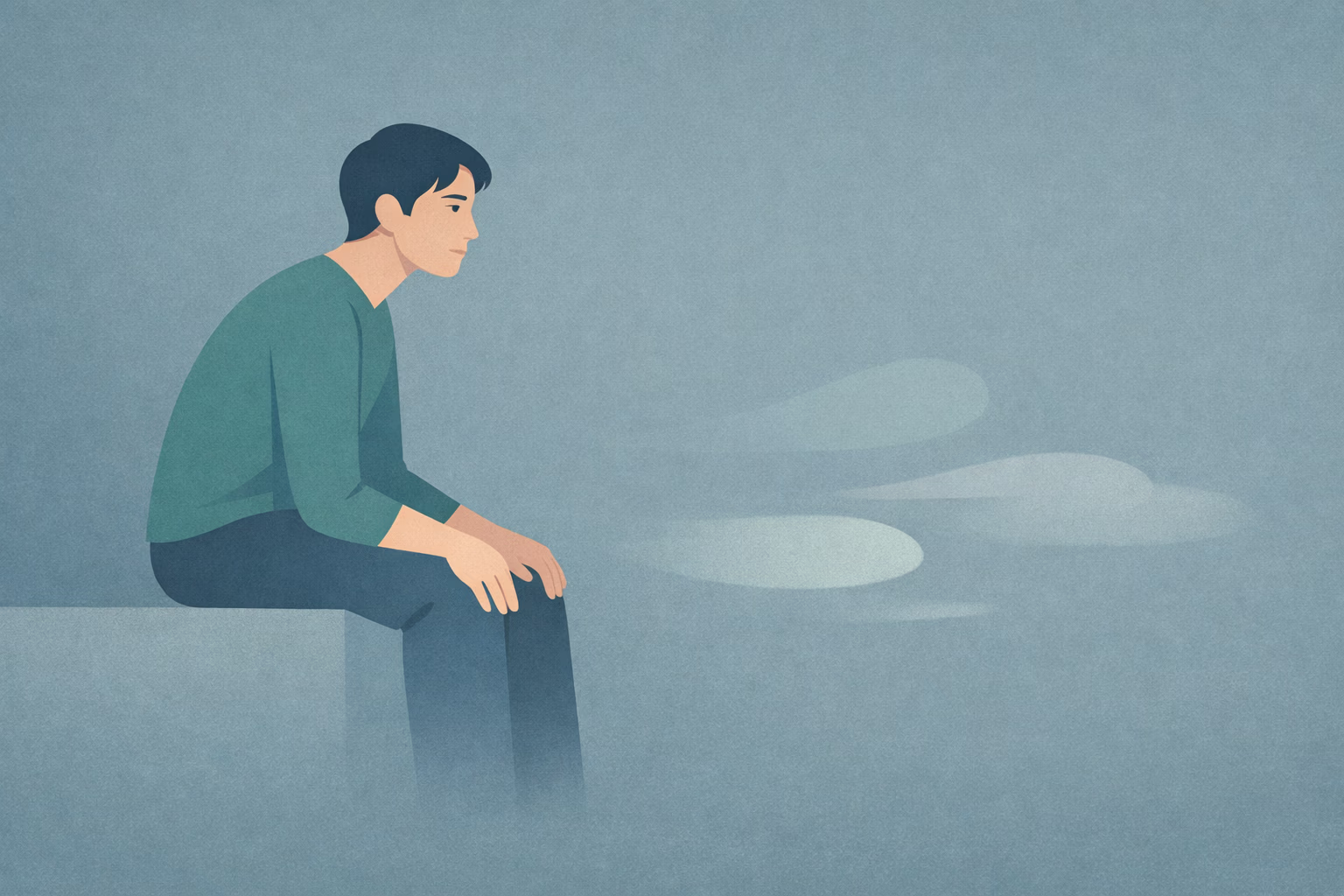
In short: When You Can’t Start Even Simple Tasks There’s a particular kind of stuck that doesn’t look dramatic from the outside. You can see the task. You may even want the outcome. And still, the first step feels oddly unreachable—like your body and brain won’t “hand you” the starting gear.
There’s a particular kind of stuck that doesn’t look dramatic from the outside. You can see the task. You may even want the outcome. And still, the first step feels oddly unreachable—like your body and brain won’t “hand you” the starting gear.
In a Meaning Density view, this isn’t a personal defect. It’s what can happen when a nervous system has been carrying too much load for too long, while too many experiences remain unfinished—no clear “done” signal, no stable closure, and no reliable sense that effort leads anywhere.
What if your lack of motivation is actually your system conserving what it can?
Motivation loss often gets described as not caring. But many people describe the opposite: they care, sometimes intensely, and that’s part of what makes the immobility so confusing.
When initiation collapses, even simple tasks can feel heavy, distant, or strangely unreal—like they require an energy you can’t access on demand. The mind may stay busy (planning, worrying, rehearsing), while the body doesn’t mobilize.
Over time, this gap—between intention and initiation—can become its own stressor, raising the background load the nervous system is already carrying. In physiology terms, this resembles a rising allostatic load: the cumulative wear of prolonged adaptation. [Ref-1]
Starting is not only a decision. It’s a coordinated biological event: attention narrows, effort becomes available, and the brain predicts a meaningful payoff for moving. Chronic stress can interfere with that chain.
Under sustained stress, systems that manage threat detection and energy budgeting stay more active, and circuits involved in motivated behavior can become less responsive. In plain language: the brain gets less confident that effort will be worth it, and the initiation signal weakens even when the task is objectively manageable. [Ref-2]
This is why “just push through” can feel like trying to override a dimmed ignition. The issue isn’t desire in the abstract; it’s reduced access to mobilizing energy.
From an evolutionary lens, action is expensive. In uncertain conditions—especially prolonged ones—organisms conserve energy, narrow options, and become more cautious about spending effort. That’s not a mindset; it’s an adaptive energy strategy.
Chronic stress can change how acute stress responses function and how the brain estimates future reward and threat. When stress becomes the background, the system may start treating “doing more” as a risk rather than a solution. [Ref-3]
So the shutdown around starting can be understood as a protective downshift: a survival-oriented calculation that says, “Not now,” even if your life goals say otherwise.
When resources are low, withdrawal from action can temporarily reduce energy drain. It can also reduce exposure to evaluation, unpredictability, and the internal friction of forcing output. In this sense, “not starting” can function like an emergency brake.
Stress affects the brain’s balance between activation and recovery. When recovery is insufficient, the system can slide into patterns of inhibition—less movement, less reach, fewer initiations—because constant mobilization without completion isn’t sustainable. [Ref-4]
Sometimes the pause isn’t procrastination. It’s a system trying to stop the leak.
“Laziness” is a moral story applied to a biological state. It frames reduced output as a character flaw, which adds pressure and shame—two inputs that typically increase stress load.
A more accurate framing is protective inhibition: when stress systems stay engaged, the brain can become more threat-oriented and less reward-responsive, making initiation harder. [Ref-5]
In other words, the behavior is understandable given the conditions. The system isn’t refusing life. It’s operating under constraints.
Motivation collapse often becomes cyclical. The less you start, the more urgent everything feels. The more urgent it feels, the more the nervous system treats action as a high-stakes demand rather than a workable step.
This is how an avoidance loop forms structurally: not because someone is “afraid of success,” but because pressure adds load, load reduces reward signaling, and reduced reward signaling makes initiation less available. Over time, this can resemble burnout patterns where exhaustion and reduced efficacy reinforce one another. [Ref-6]
What if the problem isn’t your willpower—but the cost your system associates with starting?
When initiation capacity is muted, the day can fill up with motion that doesn’t lead to completion: scrolling, reorganizing, researching, mentally rehearsing, or doing “tiny tasks” while the meaningful task remains untouched.
This pattern often includes a drop in anticipation—the sense of “I’ll feel better once I begin.” Some research describes motivational anhedonia: reduced ability to anticipate reward from effort, which can make starting feel pointless rather than merely hard. [Ref-7]
Humans stabilize through completion. When actions lead to endings—clean consequences, clear “done” signals—identity can form around competence, reliability, and direction. But when starting is repeatedly blocked, life begins to feel like a series of open tabs.
Over time, the brain can start learning a bleak lesson: that trying doesn’t change the result. This is not a personality shift; it’s a predictable adaptation when effort repeatedly fails to restore safety or progress. Learned helplessness research describes how repeated non-contingency can reduce initiative and expectation of control. [Ref-8]
The result is often a thinning sense of forward movement. Not because you lack values, but because values can’t easily express through action when the initiation channel is offline.
Here’s the structural trap: stress disrupts the dopamine-linked reward system that supports motivation and initiation. [Ref-9] When reward sensitivity drops, starting takes more effort, so tasks accumulate. Accumulated tasks increase perceived threat and self-evaluation, which increases stress.
In that loop, the nervous system gets fewer natural closure moments. Each unfinished task remains a low-grade signal of “not done,” keeping activation simmering. The mind may interpret this as personal failure, but the engine is often physiological: too much activation, too little completion.
What looks like “no motivation” can actually be a system caught between chronic activation and chronic incompletion.
Motivation tends to reappear when the body can once again predict that action is safe enough and will lead to an end point. This isn’t a pep-talk effect. It’s a gradual reopening of capacity as stress chemistry settles and reward circuits regain sensitivity. [Ref-10]
Importantly, this is not the same as “understanding what’s going on.” Insight can reduce confusion, but integration is more like a physiological stand-down: fewer alarm signals, more stable energy availability, and a clearer sense that effort leads somewhere real.
When the system begins to trust completion again, initiation stops feeling like a cliff edge and starts feeling like a step.
Humans are not regulated in isolation. Supportive environments—especially those with low evaluation and low demand—can reduce the nervous system’s need to stay guarded. When the social field feels safer, the body often spends less energy on self-monitoring and threat prediction.
This is one reason “being around someone who isn’t measuring you” can change your internal weather. It’s not motivation being “given” by another person; it’s load being shared or softened, which frees capacity for initiative. Social buffering research describes how supportive presence can reduce stress responses. [Ref-12]
Even without solving anything, steadier relational cues can make the next step feel less costly.
When capacity starts returning, it can be subtle. The first signal is often not excitement. It’s reach: you notice a task and the body doesn’t immediately recoil. The distance between intention and action shortens.
Curiosity may reappear as a quiet “maybe.” Time feels less compressed. The nervous system can hold a bit more activation without tipping into shutdown, and completion gives a more recognizable “done” sensation—enough to allow the next loop to start. [Ref-12]
It’s not that life suddenly becomes easy. It’s that starting becomes possible again.
As initiation stabilizes, behavior can reconnect with values rather than urgency. Instead of acting to escape pressure, action begins to express identity: the kind of person you are, the relationships you want to be part of, the direction that feels coherent.
This is where meaning density increases. Life contains fewer fractured fragments and more completed arcs—promises kept, conversations finished, tasks that end cleanly. The nervous system gets clearer safety cues from follow-through, and identity becomes less about managing overwhelm and more about lived direction.
Social context matters here too. When isolation or perceived disconnection is high, stress load rises and meaning can thin out; when connection is steadier, coherence is easier to sustain. [Ref-13]
Motivation loss is often a signal that capacity and demand have drifted out of alignment. The system is communicating, in the only language it has, that something is too open-ended, too evaluative, too relentless, or too unfinished to metabolize right now.
When you view this state as a regulation response, shame becomes less necessary. The question shifts from “What’s wrong with me?” to “What conditions would allow completion to happen again?”—because completion is what gives the nervous system permission to stand down and lets meaning settle into identity. [Ref-14]
Agency often returns not as a surge of motivation, but as a quieter kind of coherence: actions that fit the body’s capacity and the life you actually want to be living.
When starting feels impossible, self-criticism can sound like a solution because it creates intensity. But intensity is not the same as capacity, and pressure rarely produces the “done” signals a nervous system needs.
Over time, motivation tends to return through regulation, supportive conditions, and the rebuilding of completion—until effort and outcome feel connected again. And when meaning can land in lived experience, behavior becomes steadier without needing to be forced. A kinder inner stance supports this process more reliably than blame. [Ref-15]
From theory to practice — meaning forms when insight meets action.
Because starting isn't only a decision — it's a coordinated biological event. Attention has to narrow, effort has to become available, and the brain has to predict that moving will be worth it. Chronic stress interferes with that chain. Threat detection and energy budgeting stay over-active, while circuits involved in motivated behavior become less responsive. The brain gets less confident that effort will pay off, and the initiation signal weakens — even when you care intensely about the outcome. The gap between intention and action isn't apathy. It's reduced access to mobilizing energy from a system already carrying too much.
No. Laziness is a moral story applied to a biological state, and the article reframes it as protective inhibition. When stress systems stay engaged, the brain becomes more threat-oriented and less reward-responsive, so initiation costs more than the system feels it can spend. Withdrawal from action temporarily reduces drain and shields the body from further depletion — it functions like an emergency brake. Adding shame on top makes it worse: pressure increases load, load reduces reward signaling, and reduced signaling makes starting even less available. The behavior is intelligent given the conditions, even when it doesn't feel that way.
Because of the structural feedback loop the article describes. Stress blunts the dopamine-linked reward system that supports motivation. Reduced reward sensitivity makes starting take more effort, so tasks accumulate. Accumulated tasks raise perceived threat and self-evaluation, which raises stress, which blunts reward further. Each unfinished task remains a low-grade not-done signal, keeping the Threat & Safety System simmering without delivering closure. Self-attack creates intensity, which can mimic motivation, but intensity isn't capacity. The Avoidance Loop tightens not because of weakness but because pressure feeds the very chemistry that's already preventing the start.
Not as a surge — as a quieter return of capacity. Reward circuits regain sensitivity when stress chemistry settles and the body can again predict that action is safe enough and will lead somewhere real. The first signal is usually reach, not excitement: you notice a task and the body doesn't immediately recoil. Low-demand connection helps because supportive presence reduces the performance alarm and shares load. As experiences are allowed to complete, the nervous system gets cleaner Done Signals from follow-through, and identity reorganizes around lived direction rather than urgency. Starting stops feeling like a cliff and becomes a step.
From Science to Art.
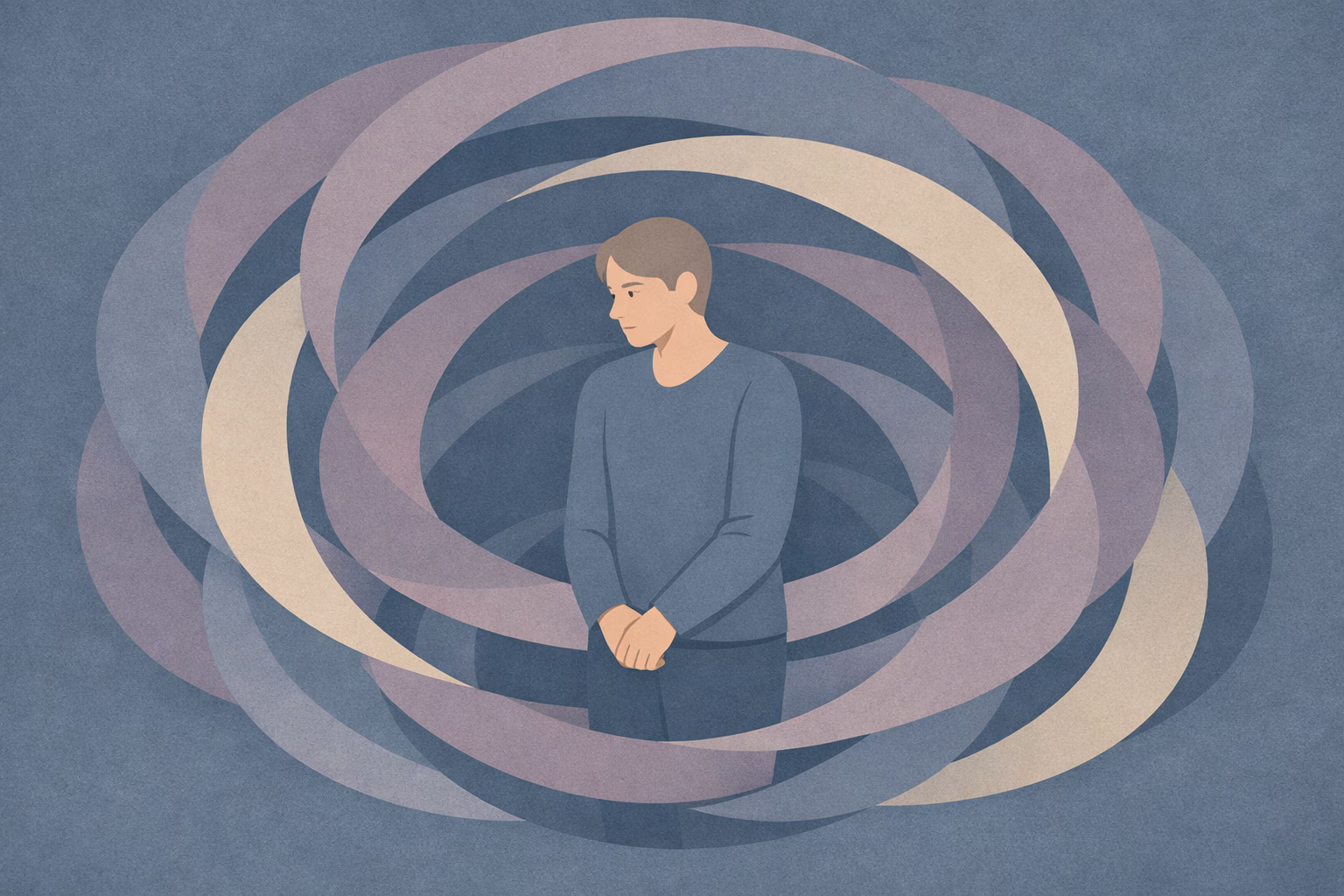
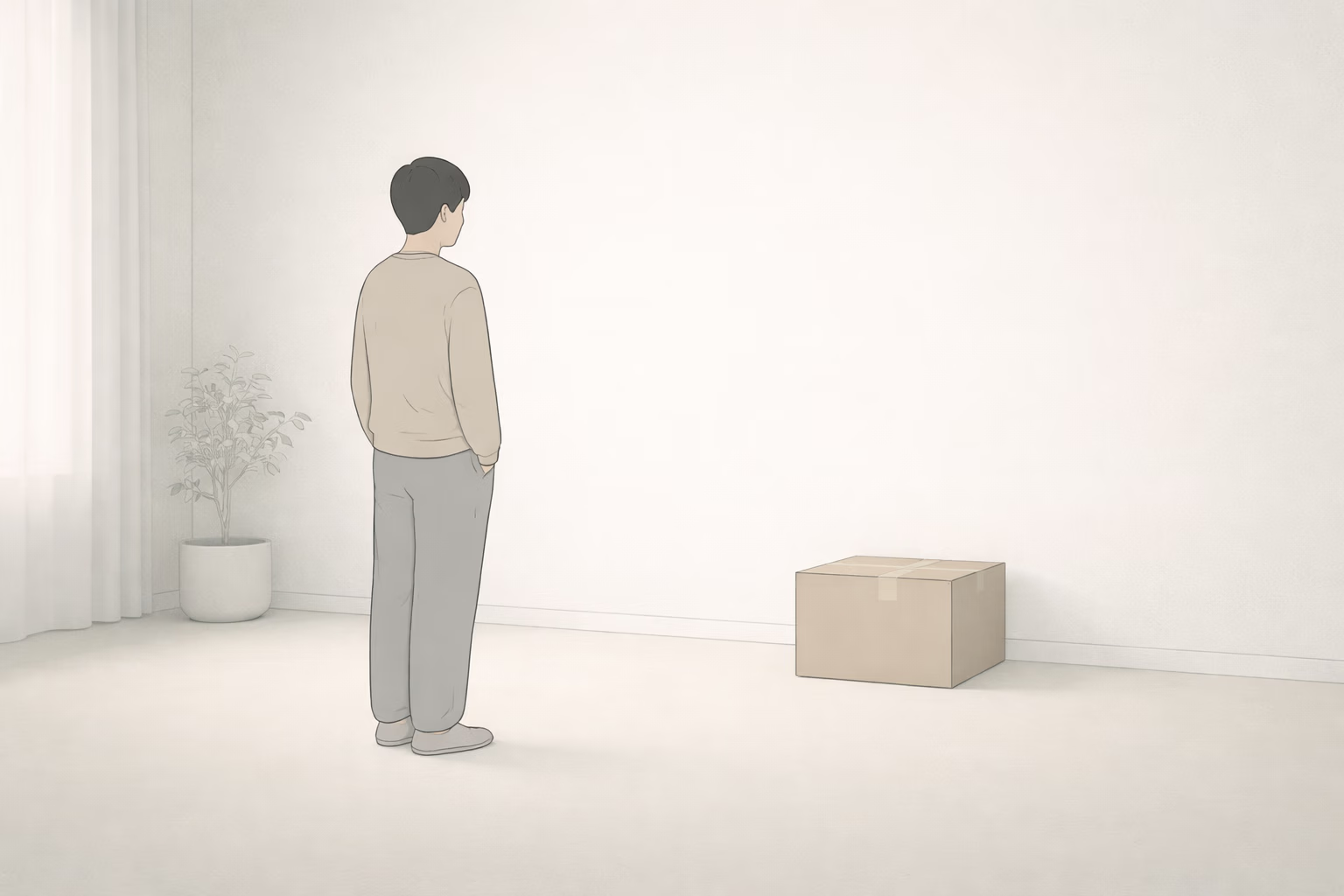
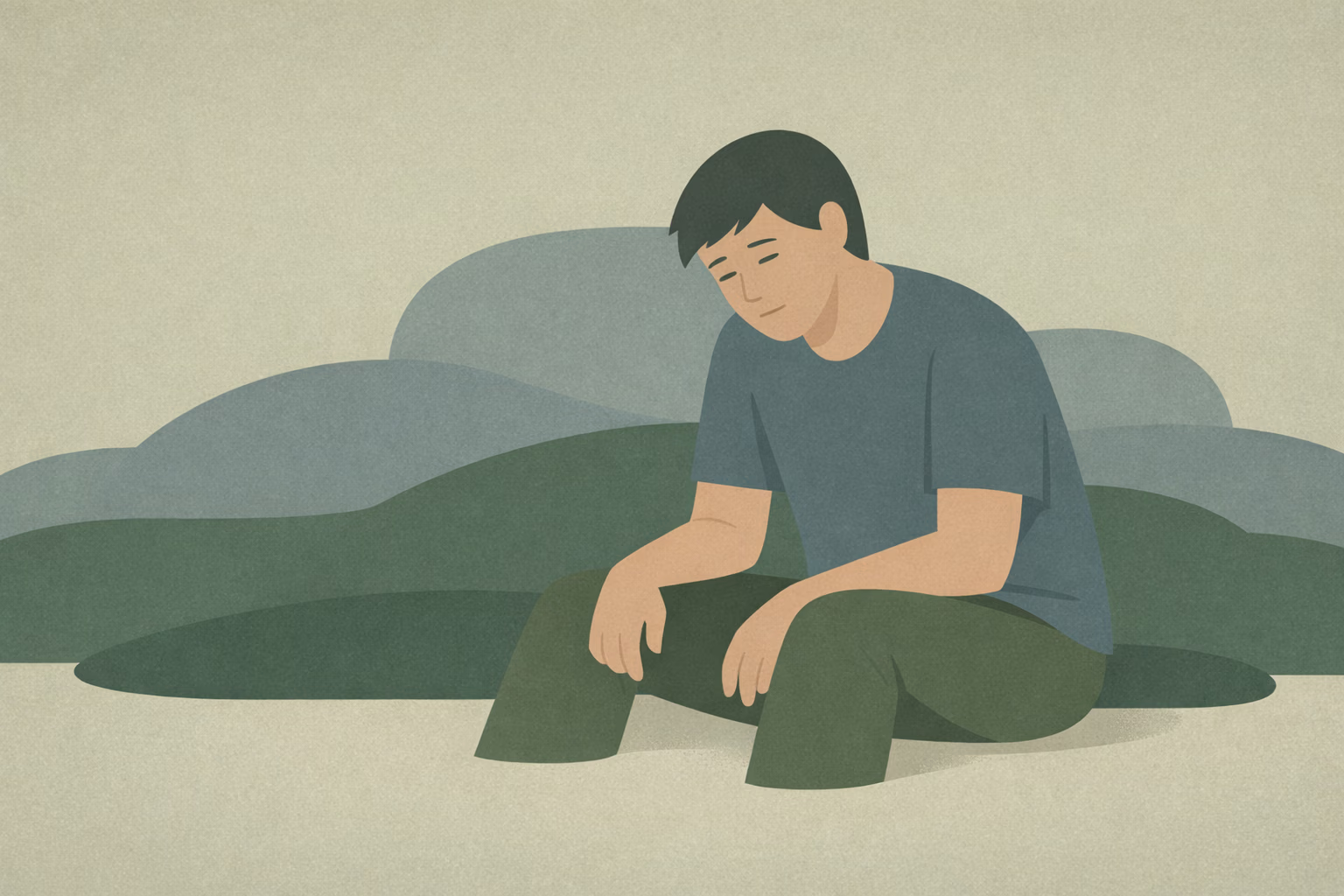
Understanding explains what is happening. Art allows you to feel it—without fixing, judging, or naming. Pause here. Let the images work quietly. Sometimes meaning settles before words do.
One Quiet Window, one insight, one reflection — every Sunday