Avoidance Loops: Why You Delay What You Care About
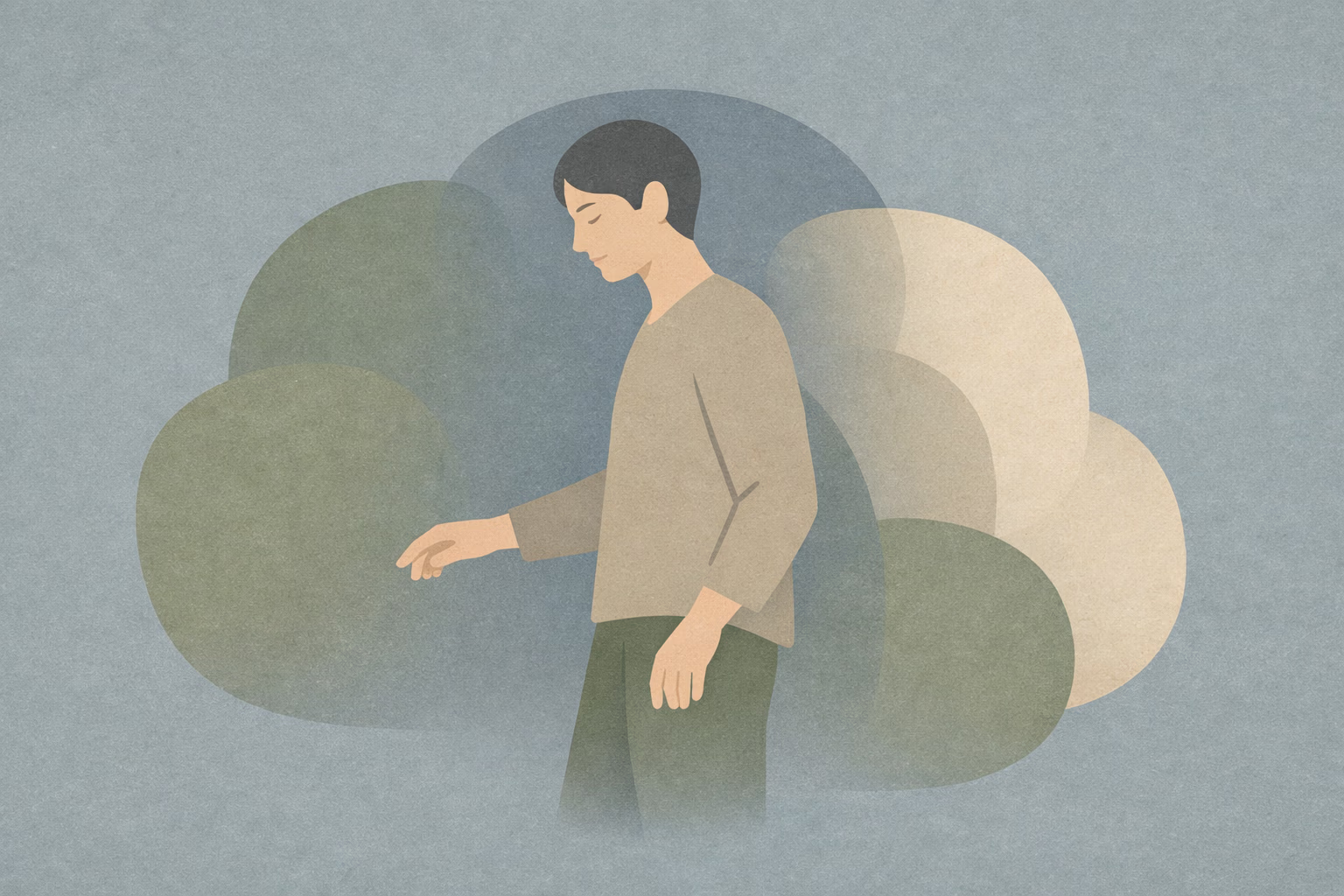
In short: A lack of discipline, motivation, or “willpower.” But for many people, the lived experience is different. There’s genuine intention, even care—followed by a strangely heavy inability to begin.
Procrastination is often talked about like a character flaw: a lack of discipline, motivation, or “willpower.” But for many people, the lived experience is different. There’s genuine intention, even care—followed by a strangely heavy inability to begin.
What if procrastination isn’t a moral problem, but a protection strategy?
From a nervous-system perspective, delay can function like a short-term safety move: it reduces immediate internal load. Not because you’re broken, but because something about the task is registering as costly—uncertain, exposed, evaluated, or too sprawling to reach a “done” signal.
One of the most confusing parts of procrastination is that it can happen alongside sincere commitment. You can care about the outcome, understand the stakes, and still find yourself circling the task instead of entering it.
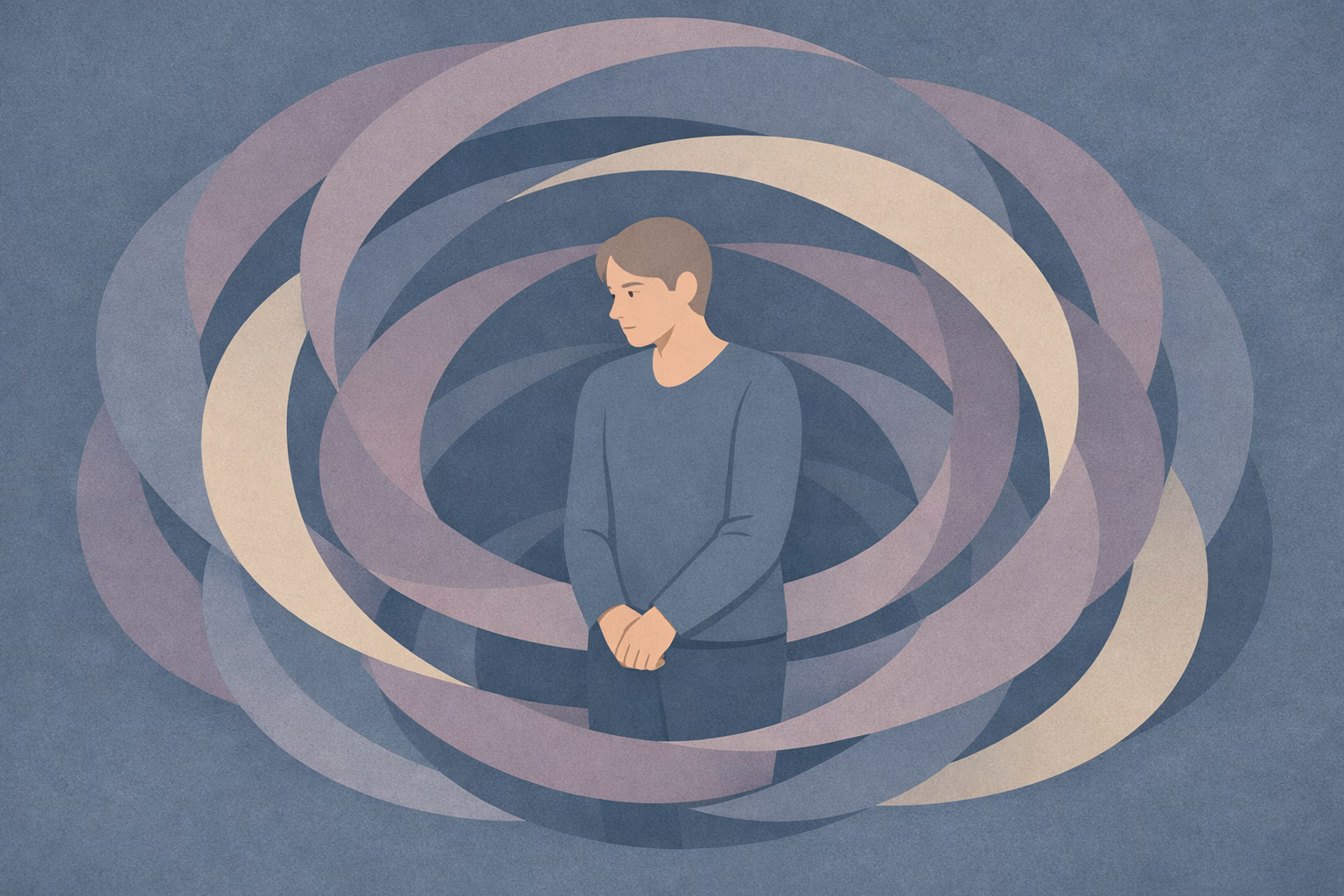
This creates a specific kind of inner tension: the mind keeps the task “on,” while the body treats starting as an escalation. The longer it stays unresolved, the more pressure accumulates—often followed by self-criticism, bargaining, and a sense of shrinking capacity. In research on procrastination and regulation, this pattern often shows up as a stress-and-avoidance cycle rather than simple lack of effort. [Ref-1]
Human brains don’t only respond to physical danger. They also respond to perceived threat: loss of standing, uncertainty, evaluation, conflict, or the possibility of failing in public or private. When that kind of threat is detected, the nervous system naturally prioritizes immediate stabilization.
In that state, attention often narrows toward whatever reduces discomfort fastest. This is why “not starting” can feel oddly calming in the moment: it postpones exposure to whatever the task implies. Context matters here—stress load, time pressure, ambiguity, and ongoing demands can all increase how threatening a task feels, even if the task itself seems manageable on paper. [Ref-2]
Procrastination can look like indecision, but inside it often feels like an internal “stand back” signal.
From an evolutionary angle, hesitation makes sense. When outcomes are unclear and costs could be high, organisms conserve energy, scan for more information, and avoid unnecessary exposure. In modern life, many “threats” are social and cognitive—grades, performance reviews, money, reputation—yet the body can respond with similar protective logic.
When choices multiply and standards are unclear, the system has more to compute and fewer cues that completion is possible. This “too many options, too many implications” feeling can increase strain and stall action, not because you’re careless, but because the environment is asking for decisions without offering closure. Research on choice overload and decision complexity shows how expanded options can raise friction and reduce follow-through. [Ref-3]
Procrastination often works in the short term. The moment you step away from the task, your system may register a drop in activation: less urgency, less self-evaluation, less internal noise. That drop is meaningful—your body learns from it.
In other words, procrastination can be reinforced because it provides quick relief. The task stays unfinished, but the present moment feels more tolerable. This is one reason procrastination can persist even in people who are capable, conscientious, and tired of the pattern. The immediate nervous-system payoff can outweigh the distant cost. [Ref-4]
So why does it keep happening even when the consequences are real?
Avoidance can feel like safety because it lowers activation now. But it rarely provides closure. The task remains “open,” which keeps a background layer of strain running—mental tabs, unfinished loops, and low-grade self-surveillance.
Over time, the costs compound: deadlines shrink, options narrow, and the task often becomes objectively harder. Stress rises not only from the task itself, but from the growing mismatch between intention and follow-through. This is where people commonly lose trust in themselves—not because they lack values, but because the environment has trained their system to associate starting with overload. Educational and psychological writing often notes that procrastination tends to carry emotional roots and accumulative stress effects. [Ref-5]
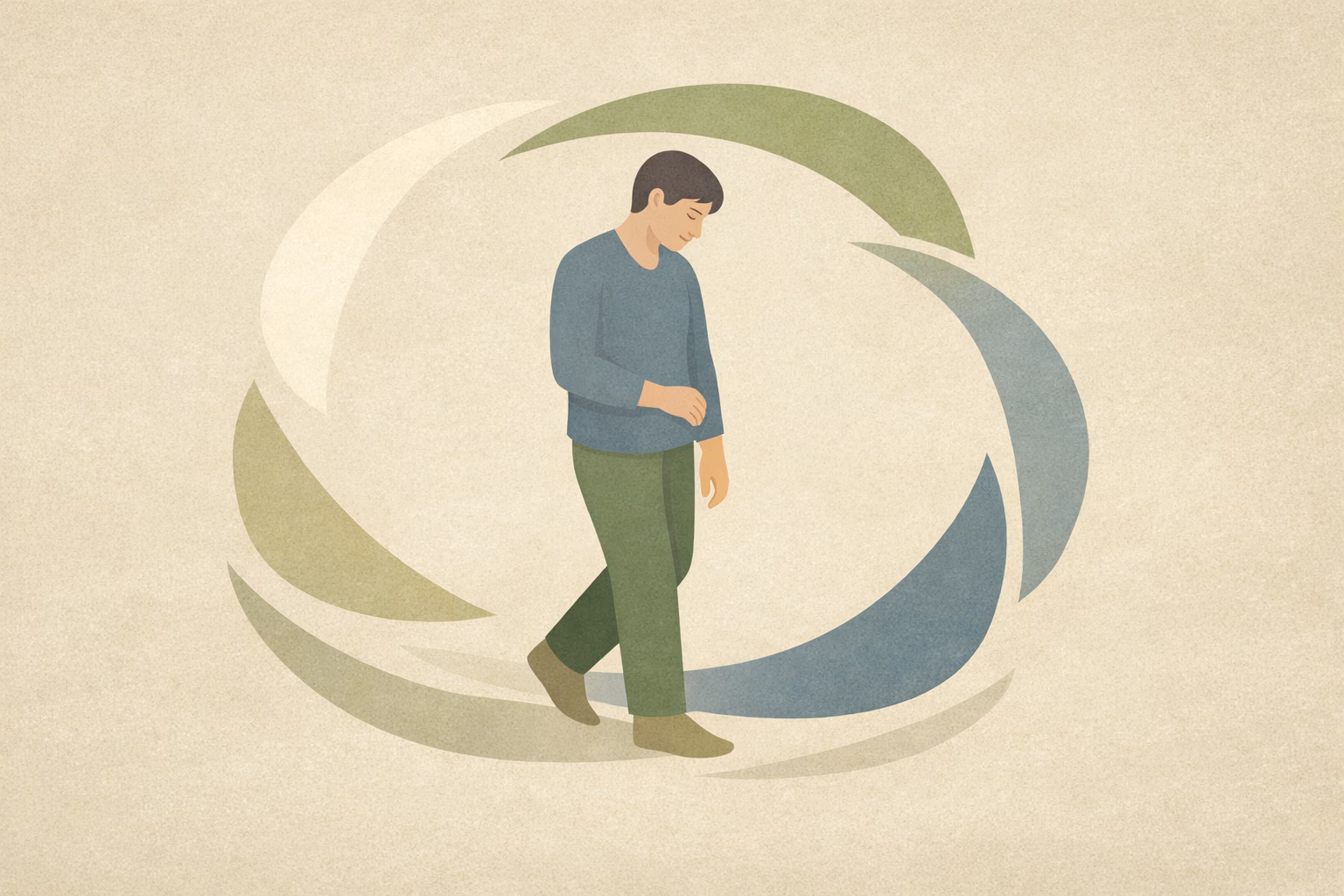
Procrastination can be understood as a loop: perceived threat → delay → relief → stronger association between delay and safety. Each time relief follows avoidance, the nervous system gets a clear message: not acting works (at least for right now).
This doesn’t mean someone is choosing poorly. It means the system is doing what nervous systems do under load: selecting the option that reduces immediate strain. In many models of procrastination, the issue isn’t ignorance of priorities—it’s regulation under pressure, where short-term state change outcompetes long-term goals. [Ref-6]
Because procrastination is a regulation response, it doesn’t always look like doing nothing. Often it looks like doing many things—just not the one that carries the most exposure or uncertainty.
Common forms include: [Ref-7]
None of these are identities. They’re patterns that tend to emerge when the system can’t find a clean path to safe completion.
Repeated procrastination doesn’t just affect outcomes; it affects orientation. When a person repeatedly experiences “I can’t begin,” the system updates its expectations about what is possible—especially under stress. This can feel like shrinking agency: fewer choices feel workable, and fewer actions feel stable.
Over time, people may start to interpret the pattern as personal deficiency. But from a coherence perspective, it’s often a predictable result of repeated incomplete loops: the nervous system learns that engagement leads to prolonged activation, while avoidance leads to short-term settling. That learning can erode confidence without anyone doing anything “wrong.” [Ref-8]
When you stop trusting your own follow-through, even simple tasks can start to feel heavy.
As avoidance continues, the task gathers extra meaning: it’s no longer just “the email” or “the report.” It becomes a symbol of pressure, backlog, potential judgment, and lost time. The nervous system responds not only to the work involved, but to the accumulated consequences that now surround it.
This is how the loop tightens. The relief of delay strengthens the association, and the growing consequences increase perceived threat. The result is deeper resistance and stronger urgency swings—often alternating between numb postponement and frantic last-minute surges. Many explanations of procrastination as a protective mechanism describe this reinforcement pattern: short-term comfort, long-term intensification. [Ref-9]
In a threat-leaning state, “motivation” is not a reliable lever. The system is prioritizing protection and relief. But when internal safety cues increase—when load drops, when the task feels more containable, when self-attack quiets—action can reappear without being forced.
This isn’t a mindset trick. It’s a shift in conditions: the nervous system has more capacity to stay with uncertainty long enough for the task to move toward completion. And as completion becomes possible, meaning can start to consolidate: not as an idea, but as an embodied sense that effort leads somewhere and can actually end. Self-compassion is often discussed as one factor that reduces threat and supports re-engagement, not by “cheering yourself on,” but by lowering internal hostility and keeping the system from escalating. [Ref-10]
Procrastination often thrives in isolation, especially when the person feels watched only by standards, deadlines, or imagined disappointment. A non-judgmental presence—someone or something that signals “you are still in connection”—can reduce threat load.
This matters because humans regulate socially. When there’s less sense of being evaluated as a person, the task can become just a task again, instead of a referendum on worth. Some neuroscience-informed discussions of procrastination note how stress, emotion regulation demands, and self-evaluative threat interact—making supportive contexts a real variable in whether engagement is available. [Ref-11]
What changes when you’re not alone with the pressure?
When the system is less overloaded, the shift isn’t necessarily enthusiasm. More often it’s a quieter form of readiness: less internal friction, fewer derailments, and more ability to stay with a task even if it’s imperfect or unfinished.
People often describe this as a return of “signal”: clearer prioritization, more stable attention, and less need for urgency as a fuel source. In emotion-regulation accounts of procrastination, the aim isn’t to generate stronger feelings—it’s to reduce the need for relief-seeking, so engagement becomes tolerable and completion becomes reachable. [Ref-12]
As avoidance decreases, a subtle but important shift can occur: behavior becomes less organized around threat and more organized around meaning. Not motivational slogans—real alignment between what matters and what gets completed.
This is where identity stabilizes. You’re no longer negotiating every action through urgency or self-criticism. Instead, actions can accumulate into a lived story: I can begin; I can continue; I can finish. Many clinical and counseling-oriented discussions frame procrastination as an emotional struggle with real regulatory functions, which means the path out isn’t moral intensity—it’s restored coherence and reduced threat. [Ref-13]
Procrastination can be a signal: not that you don’t care, but that something about the situation is registering as unsafe, indefinite, or too costly for your current capacity. When that’s the frame, shame makes less sense—because shame adds load without adding closure.
Agency often returns when life becomes more coherent: when tasks are attached to real values, when endings are possible, and when the nervous system isn’t forced to choose between action and protection. Seen this way, procrastination isn’t proof of laziness; it’s information about conditions. [Ref-14]
If procrastination has been part of your life, it doesn’t mean you’re defective. It may mean your system learned to use delay as a way to stay intact under pressure—and it kept using what worked in the short term.
Lasting change usually isn’t born from harsher demands. It’s born from reduced load, clearer endings, and a steadier sense that your actions can complete and “count” inside your identity. Understanding the pattern can soften the blame, but stability comes when experience actually settles through completion—when your system learns, again, that effort can lead to closure. [Ref-15]
From theory to practice — meaning forms when insight meets action.
Usually not. The lived experience for most people isn't 'I don't care' — it's genuine intention followed by a strangely heavy inability to begin. From a nervous-system perspective, delay functions as a short-term safety move: it reduces immediate internal load. Something about the task is registering as costly — uncertain, exposed, evaluated, or too sprawling to reach a Done Signal. The mind keeps the task on while the body treats starting as an escalation. That's not a moral failing. It's an Avoidance Loop running in plain sight. The question isn't 'why are you lazy' but 'what is your system trying to protect you from by stalling?'
Because the system reads short-term state changes more strongly than long-term consequences. The moment you step away from the task, activation drops: less urgency, less self-evaluation, less internal noise. That drop is meaningful — your body learns from it. Procrastination gets reinforced because it provides quick relief, even though it leaves the task open. So the loop tightens: perceived threat, delay, relief, stronger association between delay and safety. Each cycle teaches the nervous system 'not acting works,' at least for right now. That's why even capable, conscientious people stay stuck. The immediate payoff outcompetes the distant cost.
Because as avoidance continues, the task gathers extra meaning. It's no longer just 'the email' or 'the report.' It becomes a symbol of pressure, backlog, potential judgment, and lost time. The nervous system responds to the accumulated consequences surrounding it, not just the work itself. The relief of delay strengthens the association, and growing consequences increase perceived threat — so resistance deepens and urgency swings get sharper. This often shows up as task-switching to easier wins, distraction at decision points, last-minute frantic surges, and self-judgment that adds load. None of these are identities. They're patterns from a system that can't find a clean path to safe completion.
Conditions, not pressure. In a threat-leaning state, motivation is unreliable because the system is prioritizing protection. Action becomes available again when internal safety cues increase: when load drops, when the task feels more containable, when self-attack quiets. Self-compassion isn't cheering yourself on — it lowers internal hostility so the system stops escalating. Non-judgmental support reduces threat too, because procrastination thrives in isolation with imagined disappointment. What returns isn't necessarily excitement; it's readiness — less wrestling with starting, more continuity once begun, more Done Signals that actually land. Progress tends to follow dignity, not self-punishment. The path out is restored coherence, not moral intensity.
From Science to Art.
Understanding explains what is happening. Art allows you to feel it—without fixing, judging, or naming. Pause here. Let the images work quietly. Sometimes meaning settles before words do.
One Quiet Window, one insight, one reflection — every Sunday