When Your Old Self Fights Your New Self: Identity Conflict
In short: Inconsistency, lack of discipline, or “not wanting it badly enough.” But a more grounded explanation is simpler and kinder. When your life is asking for an identity update—new priorities, new boundaries, new ways of relating—older identity scripts can keep running because they once provided stability, predictability, and social safety.
Internal conflict often gets framed as a character problem: inconsistency, lack of discipline, or “not wanting it badly enough.” But a more grounded explanation is simpler and kinder. When your life is asking for an identity update—new priorities, new boundaries, new ways of relating—older identity scripts can keep running because they once provided stability, predictability, and social safety.
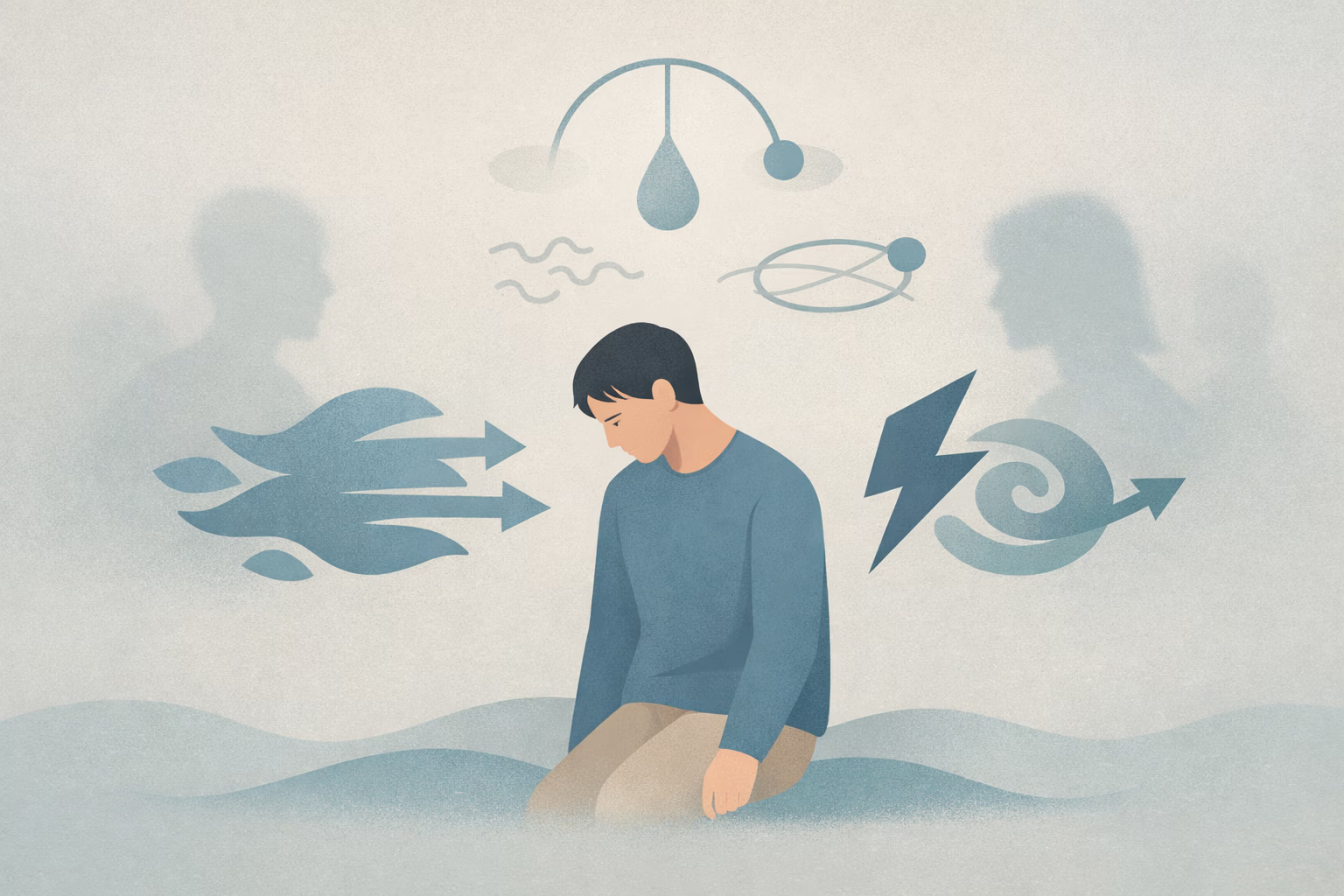
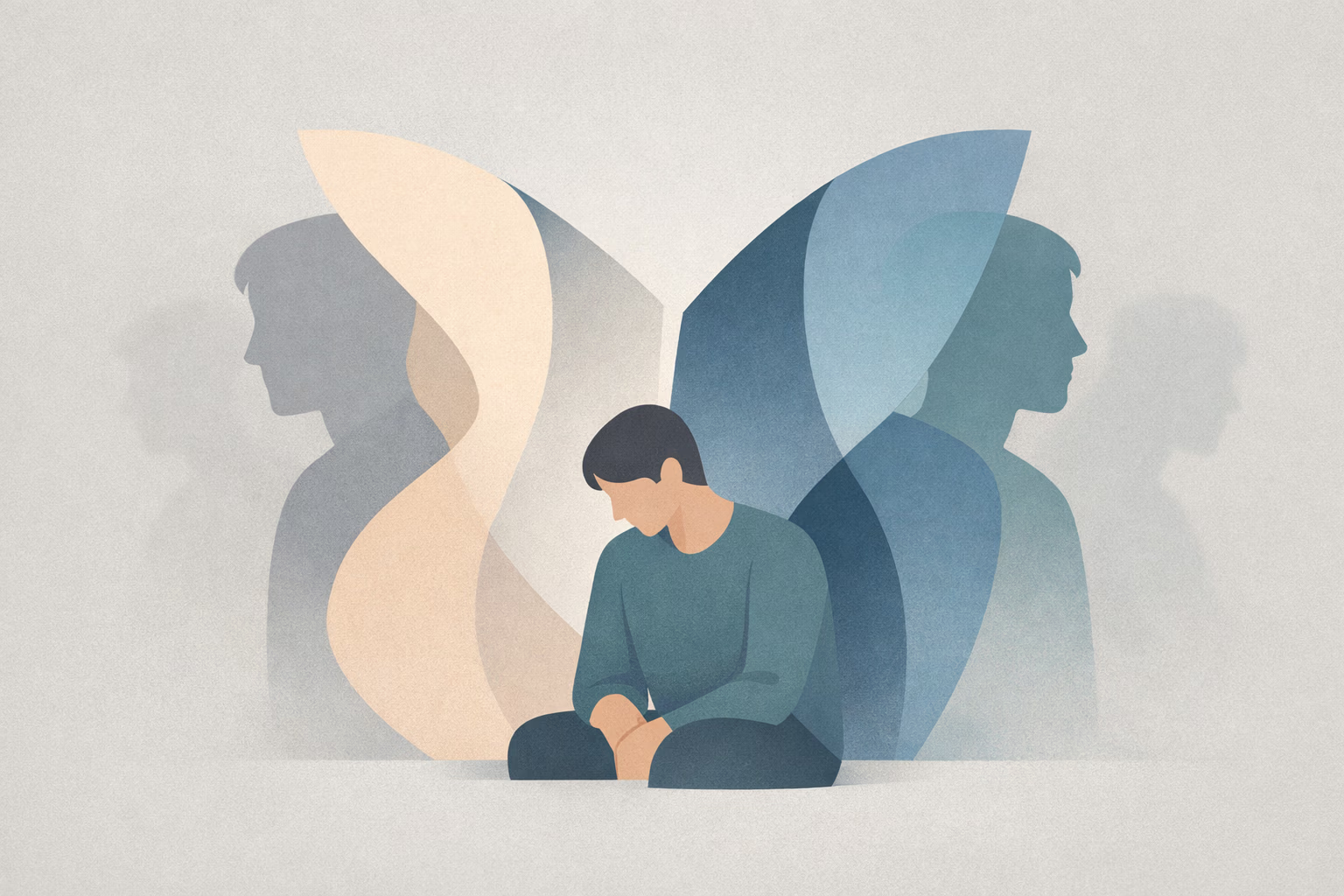
That tension can feel like a private battle: one part of you reaching toward something that matters, another part pulling you back toward what’s familiar. In the Meaning Density view, this isn’t a defect. It’s what happens when your system hasn’t reached closure between the old story and the emerging one—so your nervous system stays activated, scanning for “which self” is safe to inhabit.
What if the conflict is information—not failure?
When you want to transform but feel tethered to old habits or self-concepts, the strain is real. Not because you’re “resisting growth,” but because your system is managing two competing demands at once: maintain continuity (so life stays predictable) and adapt (so life stays meaningful).
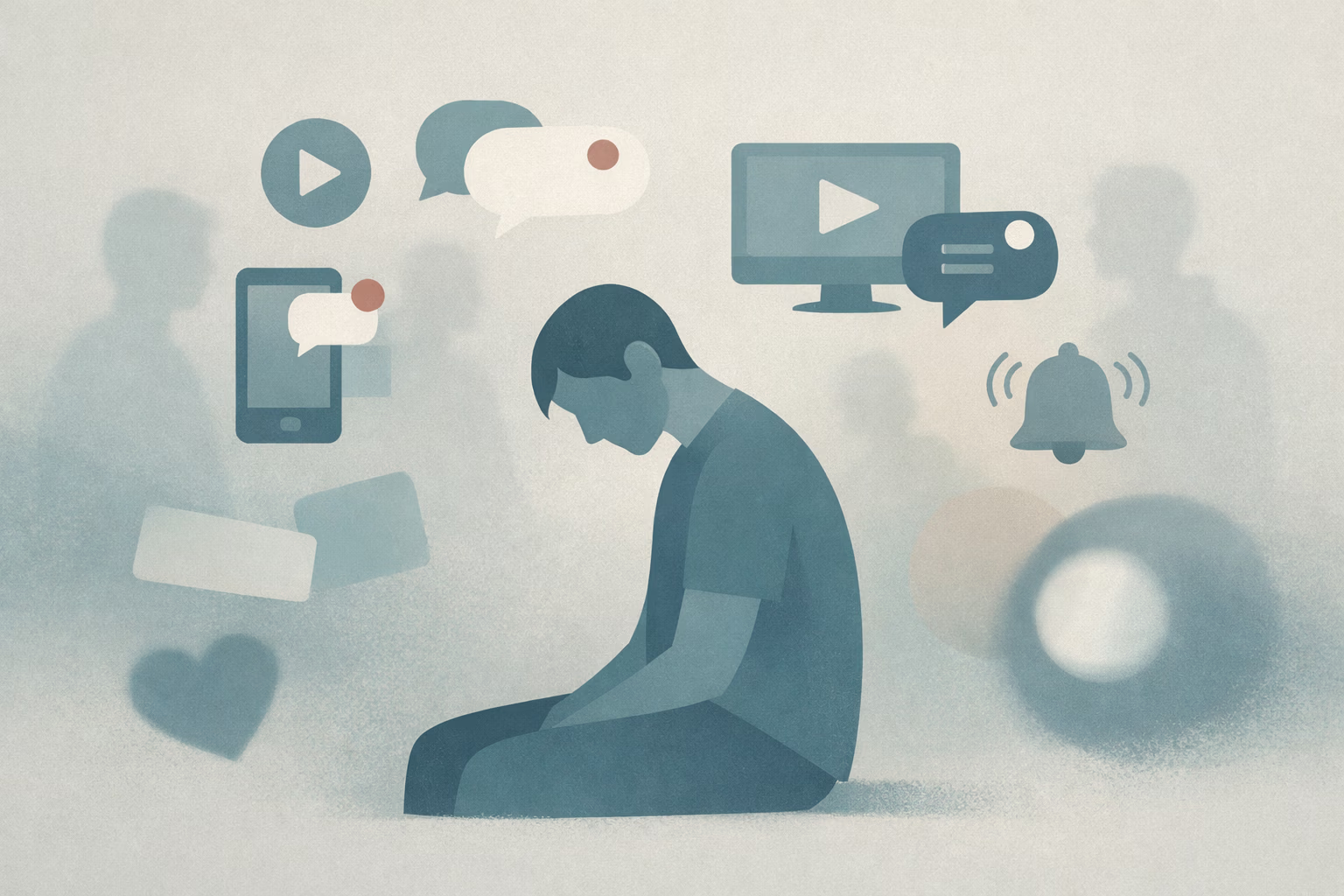
This is why self-doubt can spike during transitions. The mind naturally checks: “Can I pull this off?” while the body asks: “Will this cost me stability?” That strain can show up as fatigue, irritability, restlessness, or a heavy sense of stuckness—signals of load, not proof that you’re incapable. [Ref-1]
Sometimes the hardest part isn’t deciding what you want—it’s living in the in-between where the old you still has momentum.
Internal conflict often reflects competing neural and behavioral loops. One loop is well-rehearsed: it knows the shortcuts, the social scripts, the reward patterns. The other loop is emerging: it carries new values, new boundaries, or a new sense of who you want to be—but it’s not automated yet.
Running both at once can drain capacity. Even when the “new direction” is meaningful, it requires sustained regulation under uncertainty. That ongoing regulation can feel like inertia or “self-sabotage,” when it’s actually the cost of holding an unfinished identity transition. [Ref-2]
In fatigue research, self-regulatory strain is often described less as moral weakness and more as a system under load—similar to physical fatigue, where effort becomes harder when resources are stretched.
Humans evolved in environments where being legible to others mattered. A stable identity—“this is who I am, this is what you can expect from me”—reduced conflict, protected belonging, and made cooperation possible. Rapid shifts in identity can register as risk, because unpredictability can change how others respond.
This is one reason change can feel oddly physical: increased vigilance, tighter control, more scanning. Your system may be monitoring for social consequences, even when nobody is openly judging you. It’s not overthinking; it’s your narrative system trying to preserve coherence under transition.
When you change, it isn’t just a choice—it’s a signal to your whole ecosystem.
Clinging to an old identity often provides immediate stabilization. Familiar patterns come with known outcomes, even when those outcomes are limiting. The nervous system tends to prefer a predictable “done signal” over an uncertain possibility.
The old self also tends to have ready-made explanations: why you do what you do, what you can handle, what you “should” want. In a transition, those explanations may be incomplete, but they’re available—and availability can be calming in the short term. [Ref-4]
So the pull toward the old story isn’t necessarily fear. It’s the body choosing the path that reduces uncertainty fastest.
Resisting change can look like protection because it reduces immediate friction: fewer conversations, fewer risks, fewer moments of “Who am I now?” But avoidance doesn’t remove the need for meaning. It often postpones it—keeping the system in a low-grade state of activation where nothing fully resolves.
When identity wants to evolve and the environment keeps pushing you back into an older role, you may end up spending more energy managing the mismatch than you would spend living the new alignment. Over time, that can resemble depletion: less patience, less flexibility, and less capacity to make choices that reflect what matters. [Ref-5]
Stability isn’t always peace. Sometimes it’s just the absence of movement.
In the Meaning Loop, internal conflict is what it feels like when an identity transition doesn’t complete. The emerging self sends signals—curiosity, longing, clarity about what matters—while the established self keeps generating default behaviors that are already wired for fast execution.
If the transition stays incomplete, the system repeats: a glimpse of a new direction, a return to the old pattern, a burst of self-evaluation, and then another attempt. This repetition isn’t proof you don’t care. It’s what looping looks like when closure hasn’t been reached and the nervous system doesn’t get to stand down.
Under sustained strain, effort can start to feel “expensive,” and the mind may interpret that expense as evidence that change isn’t real or possible. In depletion frameworks, this can mirror the experience of running low on regulatory resources. [Ref-6]
When the system is carrying two scripts, it often tries to reduce load quickly. That reduction can show up as recognizable patterns—not as personalities, but as regulatory responses to an unfinished transition.
These patterns can intensify with fatigue and high cognitive load, especially when you’re trying to hold yourself to an ideal while living inside uncertainty. [Ref-7]
Unresolved identity conflict can narrow psychological flexibility. Not because you “lack confidence,” but because your system is busy allocating resources to internal management: monitoring, comparing, evaluating, and trying to keep life from wobbling.
In that narrowed state, values can become harder to feel as lived orientation. You may still know what you care about, but acting from it can feel inconsistent or distant—like your actions and your meaning aren’t landing in the same place.
Over time, this can reduce self-efficacy: not as a belief problem, but as a repeated experience of starting and stopping, which teaches the body that follow-through is costly. [Ref-8]
The old script usually offers fast rewards: familiarity, predictability, fewer disruptions. The new script often offers slower rewards: alignment, dignity, a life that fits. When you’re already loaded, the nervous system may default to what resolves quickly—even if it doesn’t resolve deeply.
This is one reason internal conflict can feel like constant background stress. You get temporary comfort, but the mismatch remains. The mind then tries to reconcile the gap between what you value and what you’re doing, which can amplify tension and self-evaluation. [Ref-9]
When your actions and your values don’t meet, the system doesn’t relax—it keeps checking.
There is a meaningful shift that can happen in identity conflict: the tension stops being evidence of “what’s wrong with me” and starts reading more like a transitional signal—your system tracking an unfinished update.
Reflection and emotional regulation are often discussed as tools, but in a meaning-based frame they’re better understood as conditions that reduce noise. When the nervous system is less loaded, the mind can hold complexity without immediately collapsing into judgment or urgency. This doesn’t equal integration by itself; it’s more like clearing the static so the next chapter can be completed when life provides real closure.
In identity-change discussions, this is the phase where people often notice the difference between performing insight and living a settled identity. The body is waiting for completion—not just understanding. [Ref-10]
Identity doesn’t form in isolation. It stabilizes in relational space—through being witnessed, mirrored, and responded to in ways that confirm, “This version of you can exist here.” When supportive relationships are present, the nervous system receives safety cues that reduce the cost of change.
Social modeling and mentorship can also provide a missing ingredient: a believable pathway. Seeing someone embody a coherent identity you’re moving toward can reduce uncertainty and make the transition feel less like a leap and more like a progression.
Research and personal accounts of identity change often highlight how belonging, narrative support, and relational continuity make it easier for new identity layers to consolidate over time. [Ref-11]
When coherence starts to return, it often shows up less as constant inspiration and more as reduced internal friction. There’s less need to negotiate every choice, less background scanning, and more capacity for consistent follow-through because the identity “fit” is improving.
Importantly, coherence isn’t the same as always feeling certain. It’s more like your system can hold uncertainty without immediately reverting or escalating. The signals return faster: you can sense what matters, what doesn’t, and what is complete.
Many descriptions of identity crises note that resolution brings clearer self-concept and steadier functioning—not because life becomes easy, but because the internal story becomes less contested. [Ref-12]
Coherence feels like fewer internal meetings.
Internal conflict is expensive. It consumes energy through constant switching, self-monitoring, and repeated re-starting. As the identity transition completes in real-world ways—through experiences that land, relationships that adjust, and roles that become stable—less energy goes into management.
That reclaimed energy often shows up as purposeful engagement: not a burst of motivation, but a steadier willingness to inhabit the person you are becoming. Habits begin to look less like battles and more like expressions—because they’re supported by identity-level closure.
In identity and depletion research, reduced internal tug-of-war is associated with lower strain and greater consistency over time, as fewer resources are spent on suppression, conflict, and compensatory control. [Ref-13]
Internal conflict can be understood as a natural signal that your meaning system is updating. Something in you is reaching for a truer fit, while something in you is preserving continuity until that fit is proven safe and sustainable.
Seen this way, the conflict isn’t a verdict on your character. It’s information about load, about unfinished closure, and about the difference between a familiar identity and an emerging one that hasn’t fully settled into lived reality yet. In many frameworks on self and identity conflict, this tension is described as common—especially during periods of transition, reevaluation, or growth. [Ref-14]
Agency returns when the story stops being “I’m failing” and becomes “I’m in a transition.” Not as a pep talk, but as an accurate map.
The person you’ve been is not the enemy. It’s a set of adaptations that once kept things workable. The person you want to be isn’t a fantasy. It’s often a real signal of where meaning wants to consolidate next.
When identity conflict resolves, it tends to do so through completion: experiences that close loops, relationships that accommodate the new shape, and a narrative that becomes livable without constant self-argument. That resolution strengthens coherence and autonomy—not by forcing change, but by allowing your life to make sense again. [Ref-15]
From theory to practice — meaning forms when insight meets action.
Because your system is managing two competing demands at once. The article explains directly: maintain continuity so life stays predictable, and adapt so life stays meaningful. Self-doubt can spike during transitions because the mind checks 'can I pull this off' while the body asks 'will this cost me stability.' That strain shows up as fatigue, irritability, restlessness, or heavy stuckness — signals of load, not proof you're incapable. The hardest part isn't deciding what you want. It's living in the in-between where the old you still has momentum, while the new direction hasn't been automated yet.
Because it offers quicker closure. The article frames this clearly: clinging to an older identity provides immediate stabilization. Familiar patterns come with known outcomes, even when limiting. The nervous system prefers a predictable Done Signal over uncertain possibility. The old self also has ready-made explanations: why you do what you do, what you can handle, what you should want. In a transition, those explanations may be incomplete but they're available — and availability is calming under load. The pull toward the old story isn't necessarily fear. It's the body choosing the path that reduces uncertainty fastest.
Yes — the article reframes these patterns as the system trying to reduce load when carrying two scripts. Procrastination postpones moments that would require the new identity to take the wheel. Reverting returns to old behaviors that deliver predictable outcomes and quick relief. Self-criticism is an attempt to create control through evaluation when coherence is missing. Indecision keeps you in a holding pattern to avoid committing to an unstabilized identity. Ambivalence values change while also valuing the safety of continuity. These intensify with fatigue and high cognitive load. They're not character flaws; they're regulatory responses to an unfinished transition.
Through completion, not through new personality. The article is specific: the person you've been is not the enemy — it's a set of adaptations that once kept things workable. The person you want to be isn't fantasy; it's a real signal of where meaning wants to consolidate next. Resolution happens through experiences that close loops, relationships that accommodate the new shape, and a narrative that becomes livable without constant self-argument. Coherence feels like fewer internal meetings — less need to negotiate every choice, less background scanning. The story stops being 'I'm failing' and becomes 'I'm in a transition' — not as pep talk, but as accurate map.
From Science to Art.
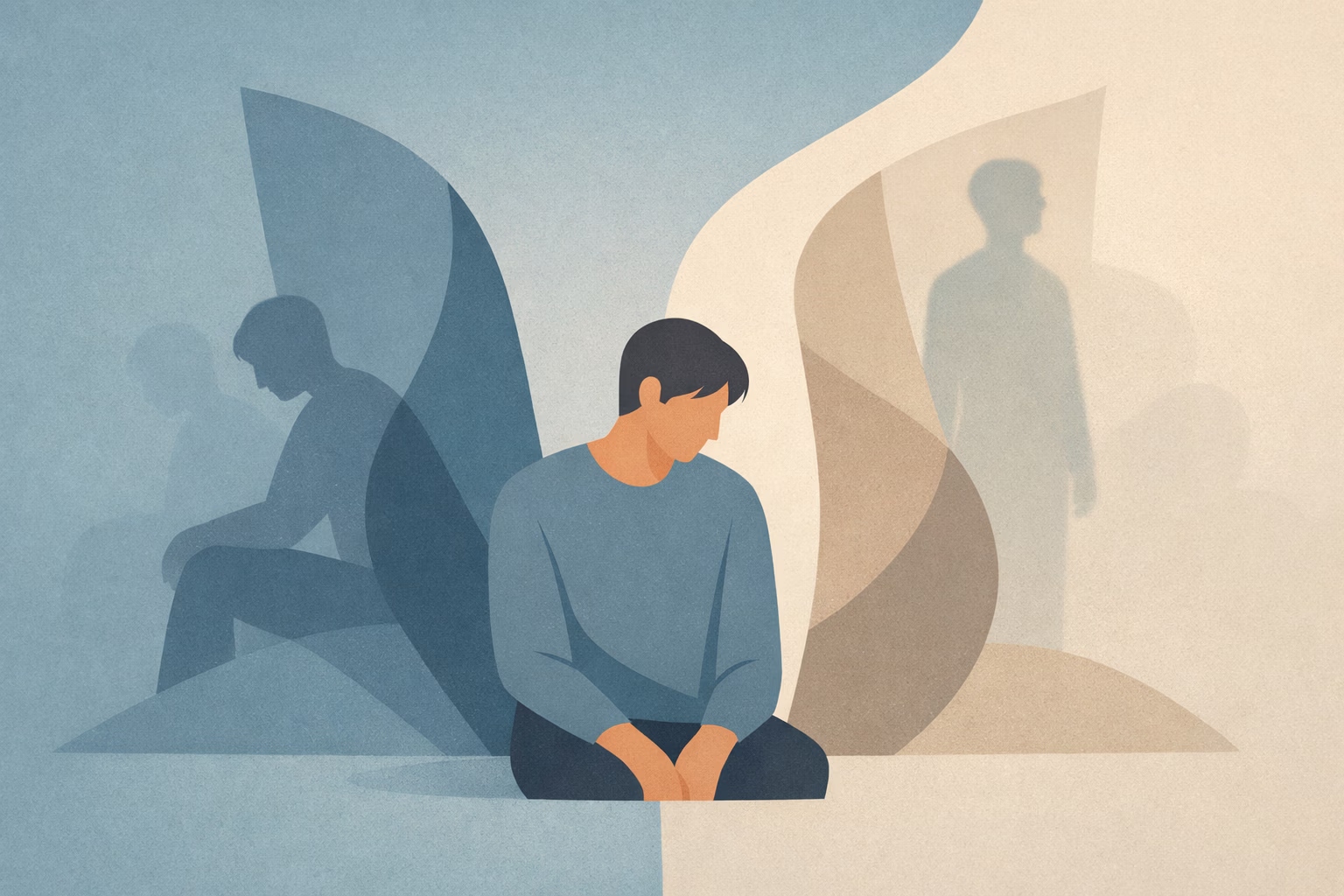
Understanding explains what is happening. Art allows you to feel it—without fixing, judging, or naming. Pause here. Let the images work quietly. Sometimes meaning settles before words do.
One Quiet Window, one insight, one reflection — every Sunday