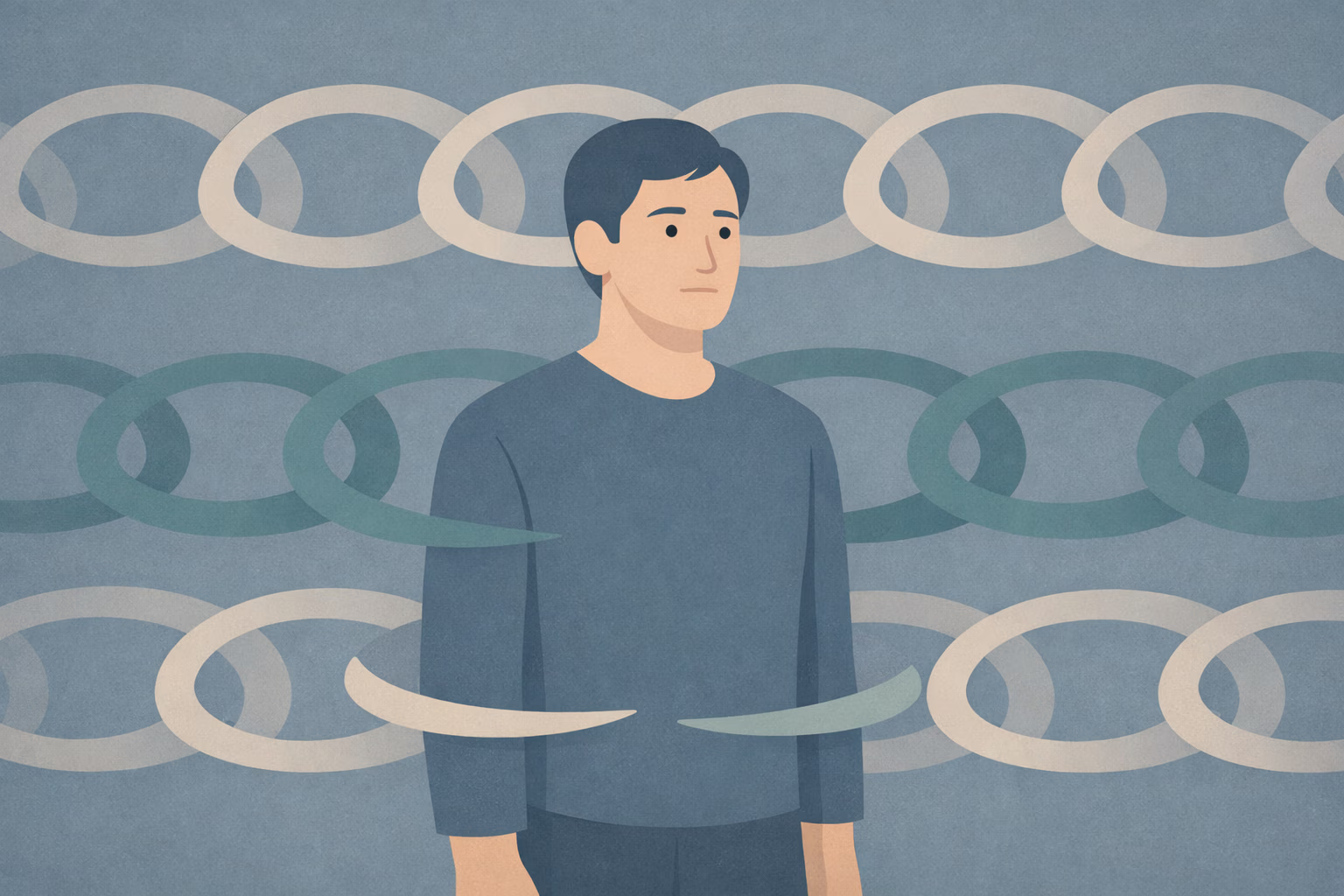
Chronic Stress Patterns: The Loops You Stop Noticing
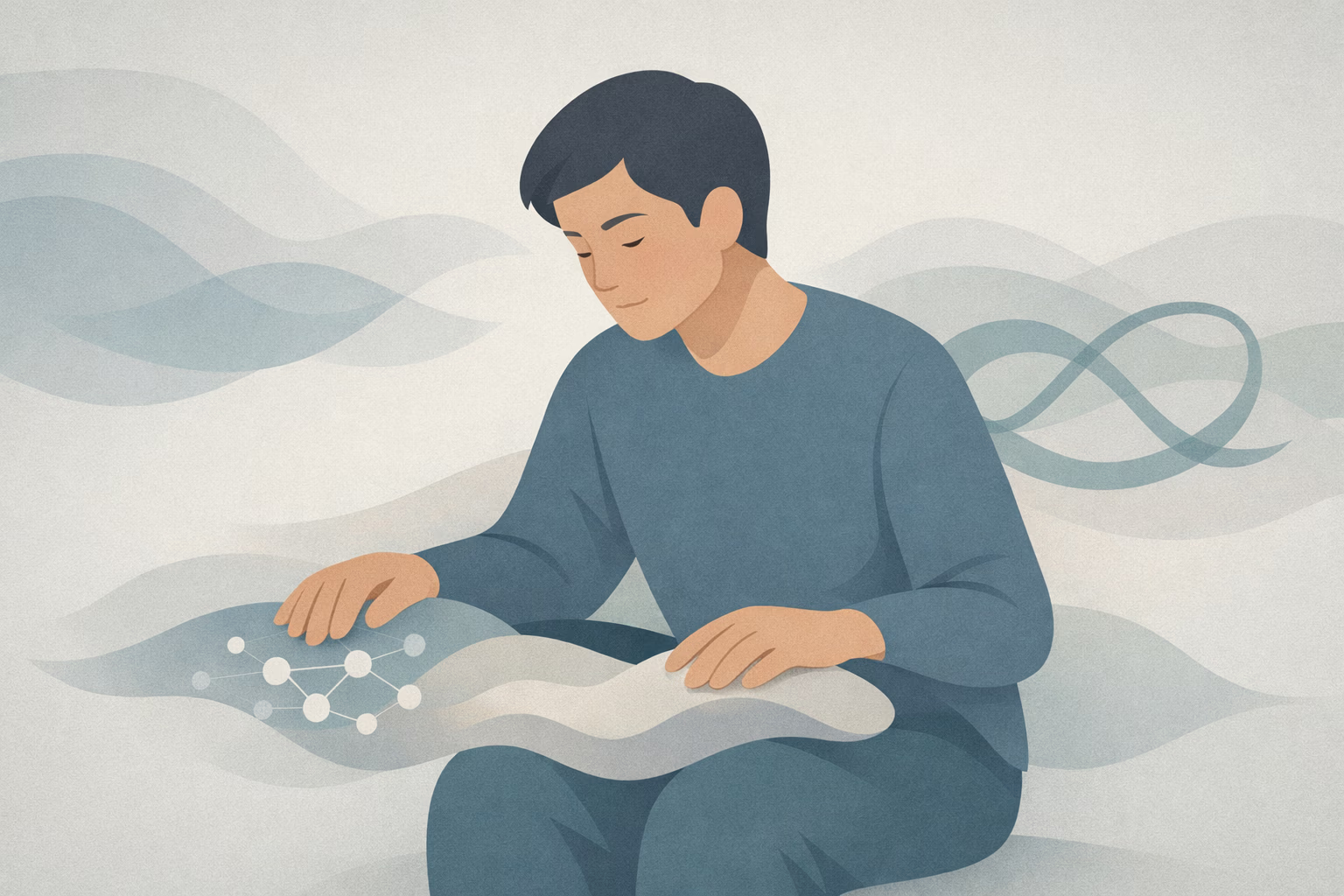
In short: Stress conditioning is what happens when repeated strain trains the nervous system to respond automatically—often before you’ve had a chance to assess what’s actually happening. The result can look like “overreacting,” but it’s usually a well-practiced protective pattern running on speed.
Stress conditioning is what happens when repeated strain trains the nervous system to respond automatically—often before you’ve had a chance to assess what’s actually happening. The result can look like “overreacting,” but it’s usually a well-practiced protective pattern running on speed.
What if your stress response isn’t a personality trait—but a learned reflex?
This lens matters because it reduces shame. It shifts the focus from “Why can’t I handle life?” to “What has my system learned to expect, and what signals does it trust?” In modern life—fast, evaluative, and rarely complete—your body can end up treating ordinary demands like alarms.
A stress response can begin in fractions of a second: muscles brace, breathing changes, heart rate rises, attention narrows. This happens through fast pathways that prioritize readiness over deliberation. [Ref-1]
That speed is not a flaw. It’s how survival physiology works: mobilize first, interpret later. When the system has learned that “something happens and it’s not safe,” it will often choose rapid activation even when the conscious mind hasn’t labeled a situation as threatening.
Sometimes the body answers a question the mind hasn’t finished asking.
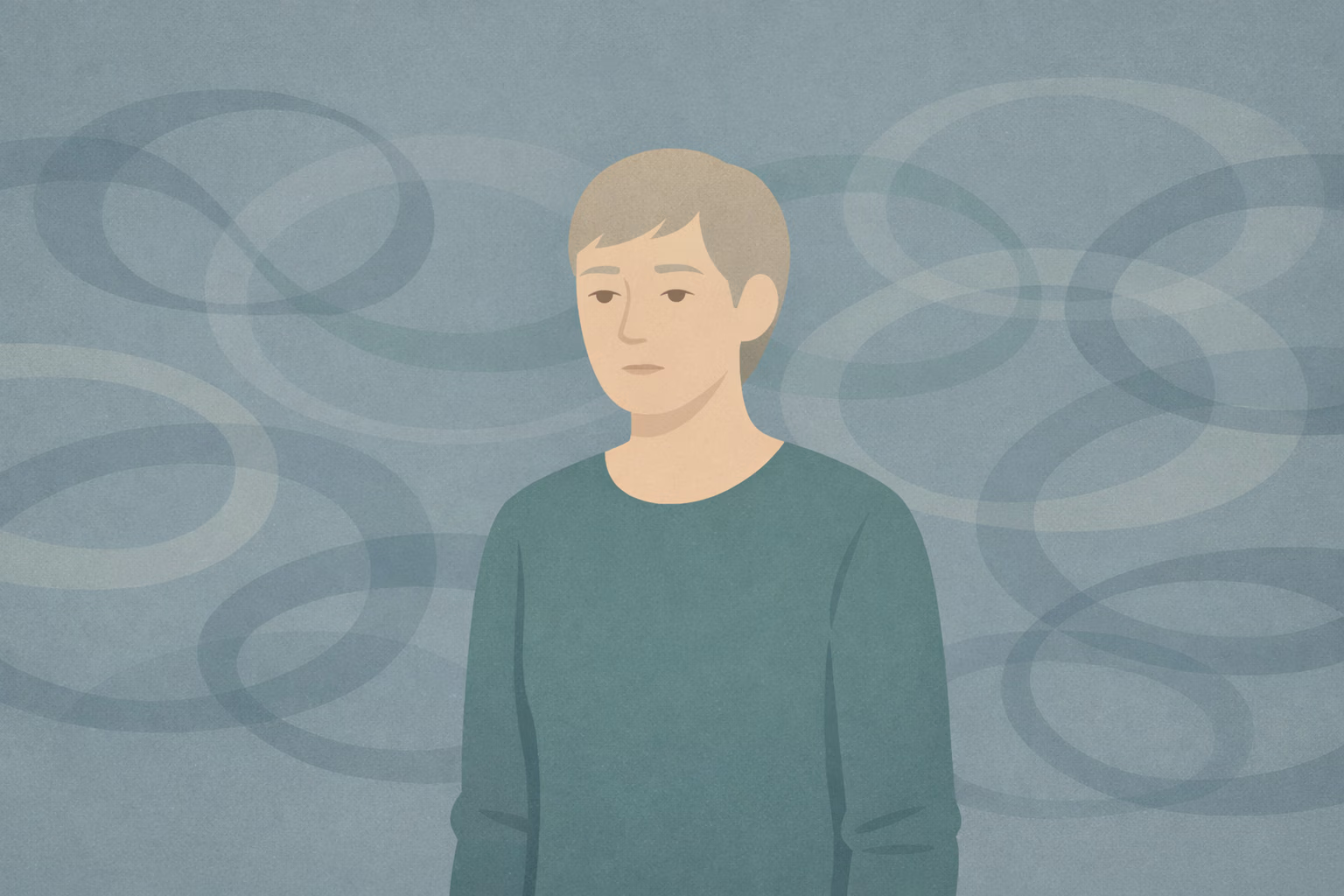
Nervous systems learn through repetition. When stress activation happens again and again, the brain and body get more efficient at producing that state: stress hormones rise more readily, vigilance becomes more automatic, and the threshold for activation can lower. [Ref-2]
This isn’t “being dramatic.” It’s a form of biological learning. The system builds a well-worn route: cue → mobilize → stay ready. Over time, the response can arrive with less input, last longer, and feel less like a choice.
Importantly, knowing this is happening is not the same as it resolving. Integration is not insight; it’s when the body receives enough completion and stand-down signals that the learned pathway stops dominating by default.
From an evolutionary perspective, rapid learning around threat is protective. Missing danger once can be costly; false alarms are usually survivable. So the body is built to remember patterns associated with stress—times, tones, social signals, environments—and to prepare early. [Ref-3]
That learning can be incredibly subtle. The nervous system doesn’t require a “big event” to map risk; it can condition to ongoing uncertainty, repeated conflict, constant monitoring, or sustained overload. The common denominator is not drama—it’s persistent activation without clean closure.
When the threat is concrete, stress activation helps: you move faster, focus tighter, prioritize what matters in the moment. Hormonal and autonomic shifts are part of a coordinated readiness package. [Ref-4]
The problem is not the existence of this response. The problem is what happens when the same circuitry is recruited for situations that require nuance, patience, creativity, or connection—especially when stress is frequent and recovery is incomplete.
It’s easy to assume that being keyed up is protective: if you stay on alert, you won’t be blindsided. But sensitization can occur—where repeated stress exposure makes later stress responses larger, quicker, and more easily triggered. [Ref-5]
In that state, the nervous system may interpret low-threat signals as high-importance signals: a notification, a facial expression, an email subject line, a minor mistake. Not because you’re “too sensitive,” but because the system has been trained to treat ambiguity as a reason to mobilize.
What if your body is reacting to probability, not reality?
An avoidance loop doesn’t always look like running away. Often it looks like automatic regulation: tightening, controlling, checking, rushing, bracing, staying busy—anything that reduces uncertainty in the short term.
When stress is conditioned, the body may pre-emptively activate to prevent the discomfort of not knowing. The loop can be self-reinforcing: activation makes the world feel sharper and more urgent; urgency makes it harder to experience completion; the lack of completion keeps activation online. Research on repeated stress shows that biological responses can shift across exposures in ways that shape what the body expects next. [Ref-6]
Notice the structure here: it’s not “I’m avoiding because I’m afraid.” It’s “my system is selecting the fastest available path to reduce load right now,” even if it costs long-term steadiness.
Conditioned stress often becomes visible through consistent, predictable signatures. These are not identities; they’re regulatory responses under strain.
People vary in parasympathetic reactivity to daily stressors, which helps explain why some systems rev up quickly and take longer to settle. [Ref-7]
When activation becomes frequent, the system can start living in fewer states: on/urgent, on/guarded, or off/numb. This can feel like chronic anxiety, persistent fatigue, or a tight, brittle kind of functioning that leaves little room for play, spontaneity, or repair.
Under sustained stress, large-scale brain networks can shift in ways associated with increased affective reactivity—meaning the whole system becomes more ready to respond strongly. [Ref-8]
Over time, the costs are not only emotional. They’re attentional and relational: less bandwidth for complexity, more scanning for what could go wrong, and a reduced ability to experience “done.”
Once a stress response is conditioned, activation can become a default prediction. The brain learns associations and generalizes: if one context required bracing, similar contexts begin to call for bracing too. Conditioning and extinction processes reflect overlapping learning systems, which helps explain why old pathways can remain available even when life changes. [Ref-9]
This is one reason people can feel trapped in reactivity: they’re not choosing stress; they’re encountering a system that has learned “mobilize first” as the reliable option. Without repeated experiences of safe completion, the nervous system keeps selecting the known route.
“I’m not trying to be on edge. My body just arrives there.”
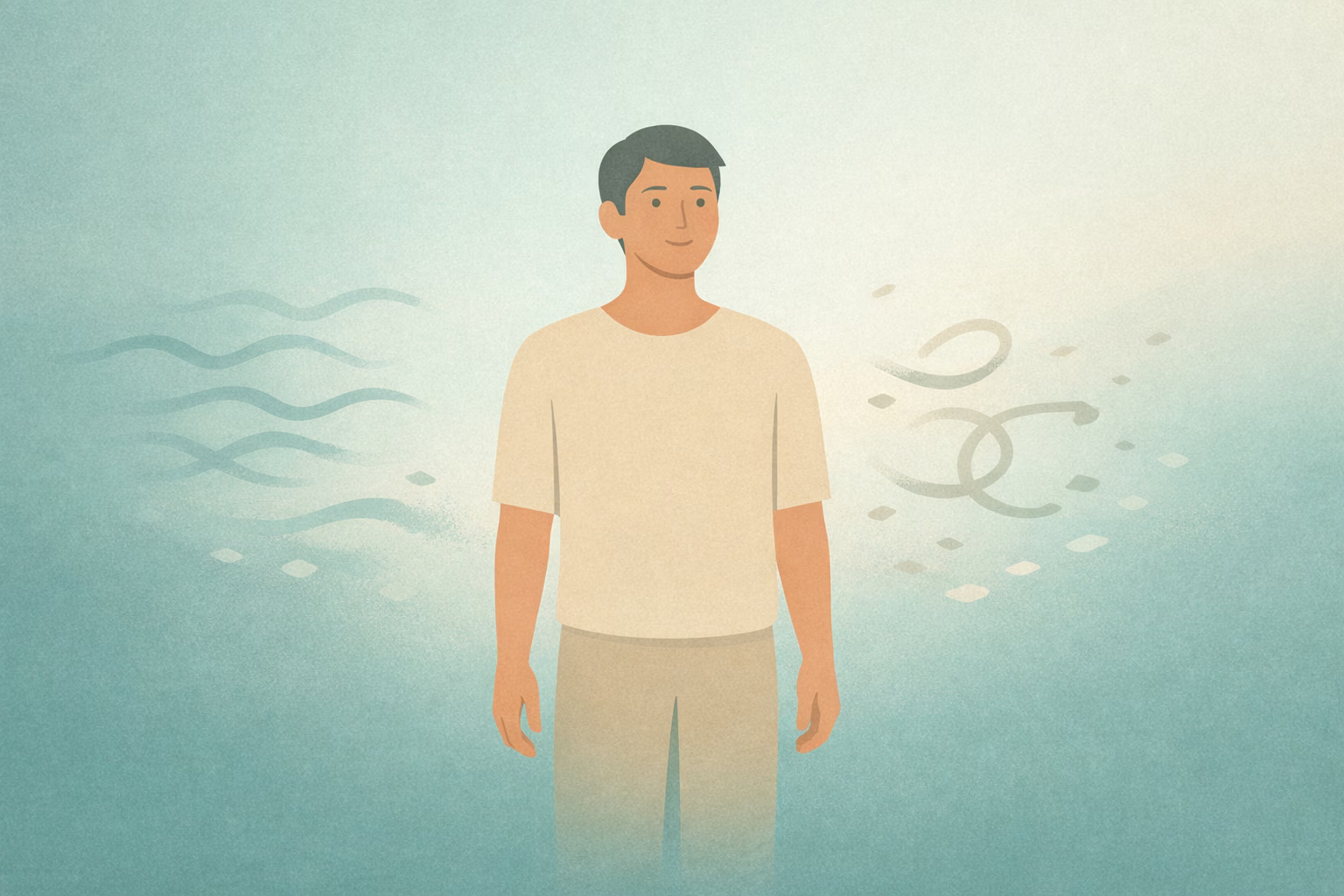
Reconditioning is not about forcing calm or talking yourself into safety. It’s closer to new learning: the nervous system updates when it repeatedly meets cues that once meant “brace” and then receives enough safety evidence and enough recovery time to stand down. [Ref-10]
In other words, balance is not a mindset. It’s an earned physiological conclusion. When the system experiences completion—an arc that ends, a conflict that repairs, a demand that resolves—the body gets a “done” signal. Over time, those “done” signals can compete with the old prediction that activation must stay online.
This is a meaning bridge: when stress stops being constant background noise, attention can return to what matters, not just what threatens.
Humans regulate in connection. A steady presence, a predictable response, a tone that communicates “you’re not alone with this”—these are not sentimental extras. They are safety cues that the nervous system can use to revise its expectations.
Co-regulation is one way the body learns that activation can rise and still return. That learning has biological correlates: extinction and safety learning involve specific neural circuitry that can become more capable with experience. [Ref-11]
Notice what’s doing the work: not pep talks, not pressure, but repeated relational completion—rupture and repair, signal and response, stress and settling.
As conditioning loosens, changes can be quiet: a slightly longer pause before reacting, less intensity from the same trigger, an easier return after a hard moment. These are signs of increased choice, not because you’re trying harder, but because the system has more room to compute options.
Extinction learning can generalize, meaning new safety learning may begin to carry across contexts over time—especially when it’s reinforced by consistent “not dangerous after all” outcomes. [Ref-12]
It can feel like internal safety not as a constant pleasant feeling, but as a dependable capacity: signals rise, signals fall, and the body trusts that a stand-down is possible.
Chronic reactivity pulls life toward avoidance—not as a conscious decision, but as a structural tilt. Attention goes to scanning, preventing, bracing, and managing. When that tilt reduces, something important becomes available again: orientation.
Orientation is the ability to notice what matters, who matters, and what direction fits your values—without your whole system being commandeered by threat prediction. Frameworks emphasizing safety cues and autonomic state help describe why connection and safety can reopen access to social engagement and purposeful action. [Ref-13]
In this space, meaning becomes less like a concept and more like a lived coherence: you recognize yourself in your choices because your body is no longer spending all its resources on staying ready.
Stress conditioning is, at its core, learned protection. Your nervous system took the information it had—repetition, urgency, uncertainty, lack of closure—and built a response that could run without permission. That’s not a character problem; it’s a system doing its job under modern conditions.
And systems can update. Not through pressure, but through new patterns of safety evidence, co-regulation, and real completion—enough for the body to receive a credible “it’s over” signal. Many accessible explanations of polyvagal ideas emphasize how safety cues and relational steadiness support this shift. [Ref-14]
As that shift happens, agency often returns in a particular way: less forcing, more alignment—where attention can move toward what you care about, not just what you’re trying to prevent.
A stress response is not a verdict on who you are. It’s a learned state—an adaptive pattern that can persist even after the original conditions change.
When the nervous system receives enough signals of safety, completion, and connection, it can reorganize toward steadier regulation. The capacity for change is built into our biology. [Ref-15]
Over time, what once felt like “always” can start to feel like “sometimes”—and that difference is often where dignity and possibility re-enter the picture.
From theory to practice — meaning forms when insight meets action.
Usually a learned reflex. Stress conditioning happens when repeated strain trains the nervous system to respond automatically — often before you've had a chance to assess what's actually happening. The result can look like overreacting, but it's usually a well-practiced protective pattern running on speed. Sometimes the body answers a question the mind hasn't finished asking. This lens reduces shame because it shifts the focus from why can't I handle life to what has my system learned to expect. In modern environments — fast, evaluative, rarely complete — the body can end up treating ordinary demands like alarms because that's what repetition trained it to do.
Through sensitization. Nervous systems learn through repetition: when stress activation happens again and again, the brain and body get more efficient at producing that state. Stress hormones rise more readily, vigilance becomes more automatic, and the threshold for activation can lower. The system builds a well-worn route — cue, mobilize, stay ready — that arrives with less input, lasts longer, and feels less like a choice. That's not being dramatic; it's biological learning. The body is built to remember patterns associated with stress (times, tones, environments) because in survival terms, false alarms are usually survivable while missed danger is costly.
Because avoidance doesn't always look like running away. Often it looks like automatic regulation: tightening, controlling, checking, rushing, bracing, staying busy — anything that reduces uncertainty in the short term. When stress is conditioned, the body pre-emptively activates to prevent the discomfort of not knowing. The Avoidance Loop becomes self-reinforcing: activation makes the world feel sharper and more urgent, urgency makes it harder to experience completion, and incompletion keeps activation online. The structure isn't I'm avoiding because I'm afraid. It's my system is selecting the fastest available path to reduce load right now, even if it costs long-term steadiness.
Yes, but not through forcing calm. Reconditioning is closer to new learning: the system updates when it repeatedly meets cues that once meant brace and then receives enough safety evidence and recovery time to stand down. Balance isn't a mindset; it's an earned physiological conclusion. When the system experiences completion — an arc that ends, a conflict that repairs, a demand that resolves — the body gets a Done Signal that competes with the old prediction. Co-regulation amplifies this: a steady presence and consistent response give the nervous system safety cues it can use to revise expectations. New learning plus real recovery, not pep talks.
From Science to Art.
Understanding explains what is happening. Art allows you to feel it—without fixing, judging, or naming. Pause here. Let the images work quietly. Sometimes meaning settles before words do.
One Quiet Window, one insight, one reflection — every Sunday