The Role of Guilt & Shame in Daily Decisions
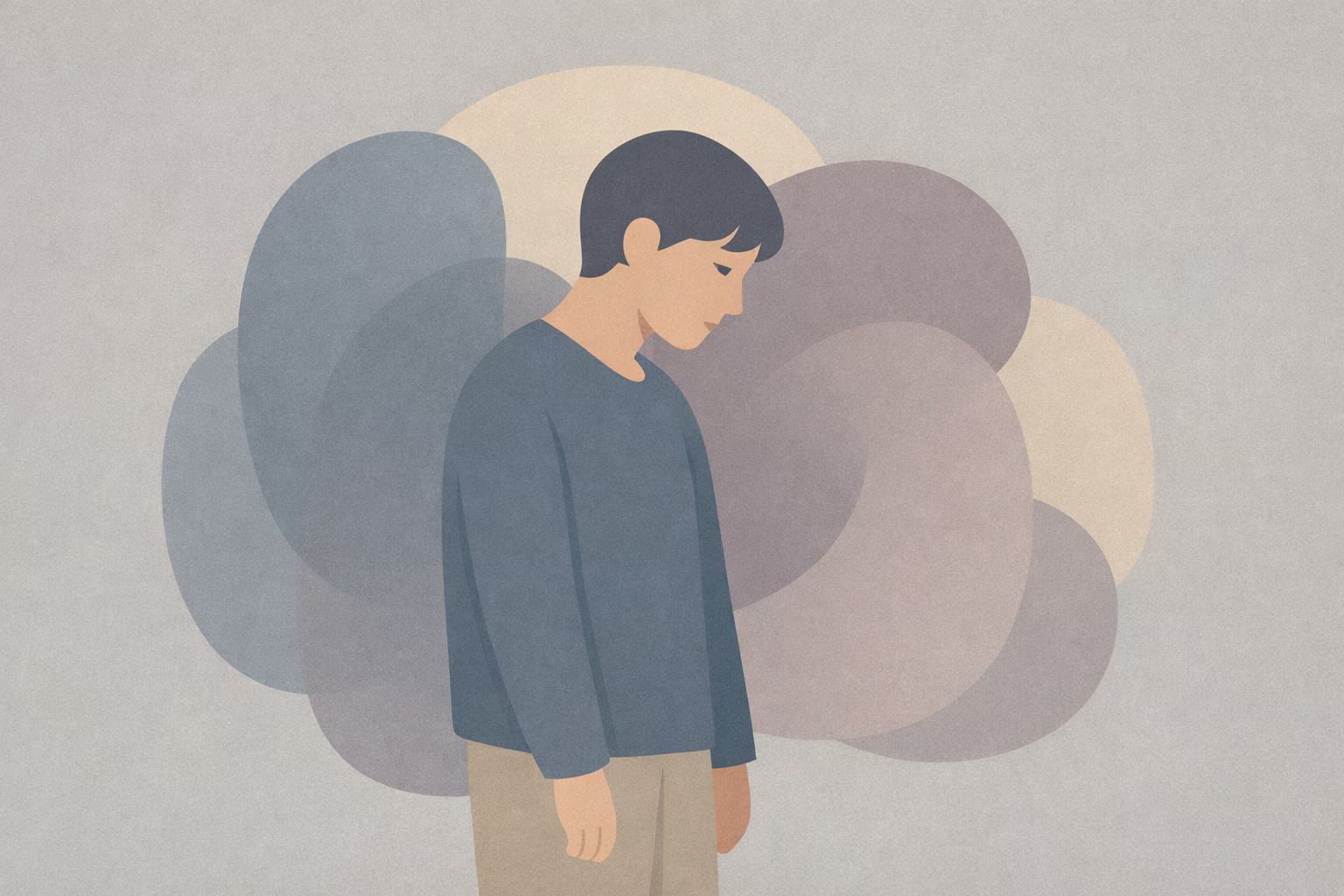
In short: Guilt and shame often get described as “negative emotions,” but in a human nervous system they function more like social survival signals. They evolved to keep us connected, acceptable, and safe inside groups—especially when the cost of rejection was real and immediate.
Guilt and shame often get described as “negative emotions,” but in a human nervous system they function more like social survival signals. They evolved to keep us connected, acceptable, and safe inside groups—especially when the cost of rejection was real and immediate.
What if the intensity of your self-blame isn’t proof that you’re broken, but proof that your system is trying to prevent social threat?
When these signals stay “on” for too long, they stop serving repair and start shaping identity, choices, and visibility. Not because you are weak or dramatic—because unfinished loops keep the system activated, and activation tends to look for a reason.
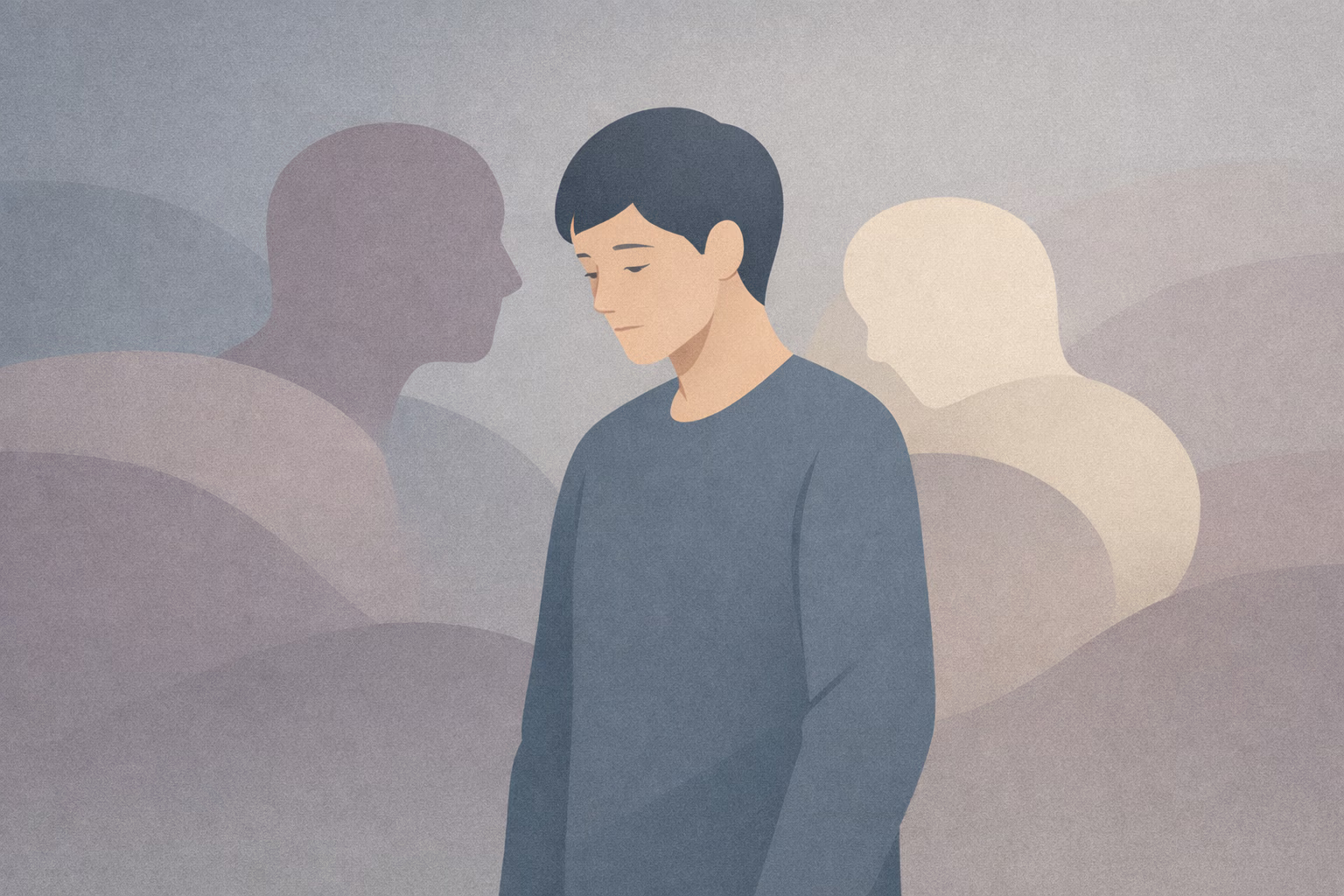
Some people live with a background feeling of being at fault—even on neutral days. It can sound like chronic apologizing, over-explaining, or a reflex to take responsibility before anyone asks. Sometimes it’s quieter: a constant sense of being “wrong” without a clear event attached.
This isn’t a personality flaw. It’s what happens when a nervous system learns that social safety depends on staying ahead of blame. The mind scans for what could be criticized, because being unprepared once may have carried a high cost. Over time, self-blame becomes a pre-emptive strategy: a way to reduce uncertainty by assigning a cause—often to yourself. [Ref-1]
Guilt and shame can feel similar, but they organize the nervous system in different ways. Guilt tends to point at behavior: something happened that should be repaired. Shame tends to point at the self: my existence is the problem. That difference matters because identity-level threat recruits stronger protection responses—hiding, shrinking, appeasing, or going numb. [Ref-2]
In other words: guilt can sometimes support clean correction and reconnection, because the self is still “allowed.” Shame often pushes the system toward compliance and concealment, because it implies that being seen is unsafe. It’s not that shame is “irrational.” It’s that it treats the social world like a tribunal, not a relationship.
Guilt asks, “What needs to be made right?” Shame asks, “What does this say about who I am?”
Humans are a social species. For most of our history, staying connected to others meant access to food, protection, caregiving, and shared problem-solving. So the brain developed systems that track acceptance and rejection risk, and that shape behavior to preserve group standing. [Ref-3]
Guilt and shame are part of that tracking system. They often rise when there’s a perceived rupture: you broke a rule, disappointed someone, violated an expectation, or simply became “too visible” in a context where visibility wasn’t safe. These emotions aren’t proof of bad character; they’re information that your system is running a belonging-protection protocol.
In the short term, guilt and shame can reduce rejection risk by quickly changing behavior. Guilt can push toward repair—acknowledging impact, restoring trust, rejoining the group. Shame can push toward withdrawal—reducing exposure until the threat passes. Both can create a temporary “stand-down” in the environment because they broadcast submission, remorse, or low threat. [Ref-4]
That’s part of why these states can feel strangely compelling: they once worked. If a younger version of you learned that self-blame prevented conflict, softened authority, or stopped criticism, your system may still run that program automatically—even when the current situation doesn’t require it.
What if the self-attack is less about truth, and more about attempted closure?
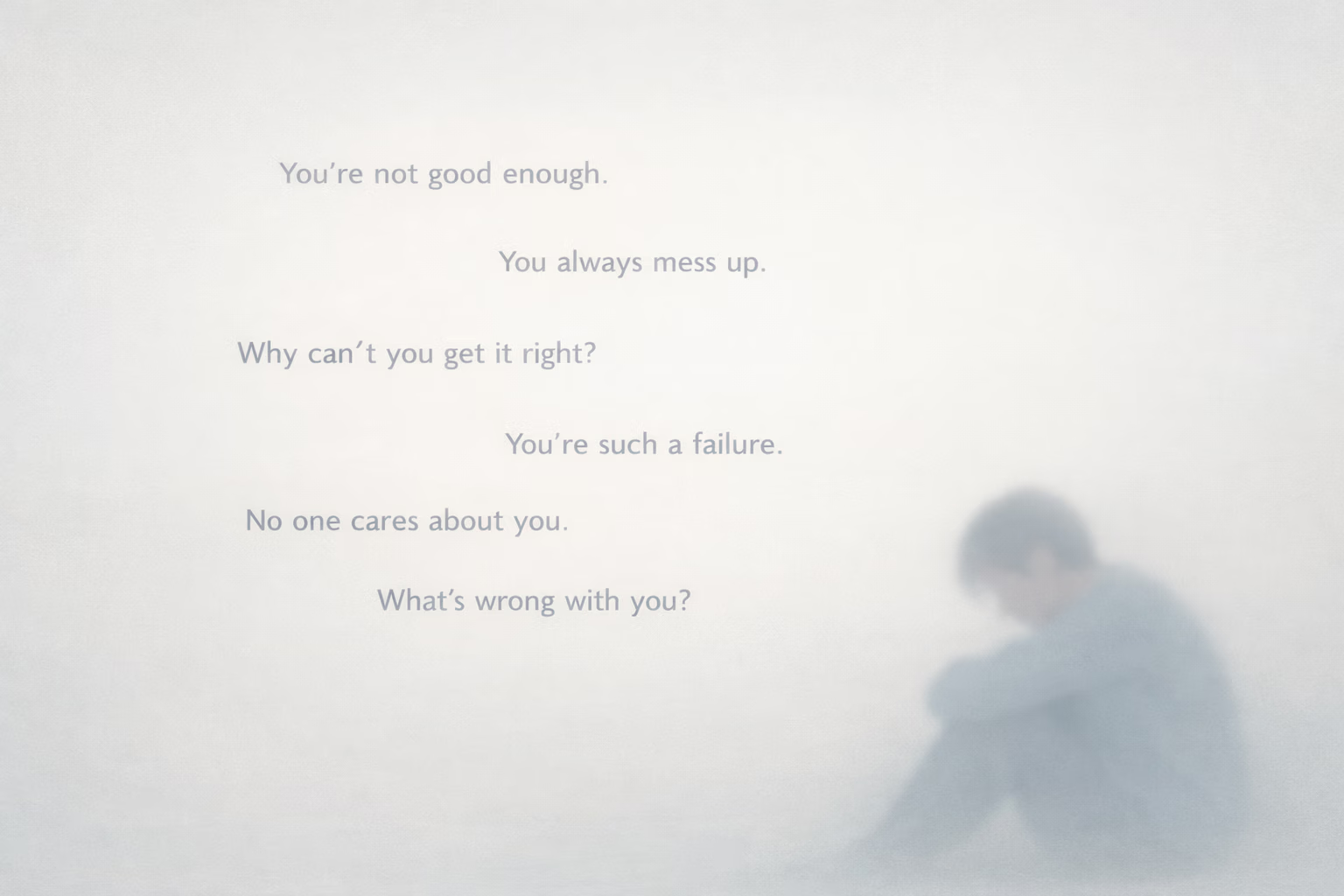
Healthy guilt is often proportional, specific, and time-limited: it points to a behavior and supports repair. Chronic self-punishment is different. It’s diffuse, repetitive, and not clearly tied to a solvable problem. Instead of guiding reconnection, it becomes a way to keep pressure on the self—like an internal monitor that never clocks out. [Ref-5]
One way to tell the difference is by the “done signal.” In healthy repair, there is a natural settling after amends or learning. In chronic shame, the system doesn’t register completion. The loop stays open, so the nervous system stays on alert.
Guilt and shame can become internal power mechanisms. Not necessarily because someone is consciously controlling you, but because rejection threat is a powerful organizer of behavior. When acceptance feels conditional, the nervous system may adopt self-control as a safety strategy: stay small, stay good, stay useful, stay uncontroversial. [Ref-6]
This is a form of regulation through pressure. The self is treated like a project that must be managed to avoid social consequences. The result can look like high responsibility on the outside and high tension on the inside—because the system is constantly trying to prevent a drop in status, closeness, or approval.
When guilt and shame run in the background, they often shape behavior in predictable ways. These patterns can look like preferences or personality, but they frequently function as risk-reduction strategies—ways to avoid exposure, conflict, or being evaluated. [Ref-7]
Notice how little of this requires a story about “fear” or “suppressed feelings.” These are structural solutions to a social problem: if exposure brings cost, the system reduces exposure.
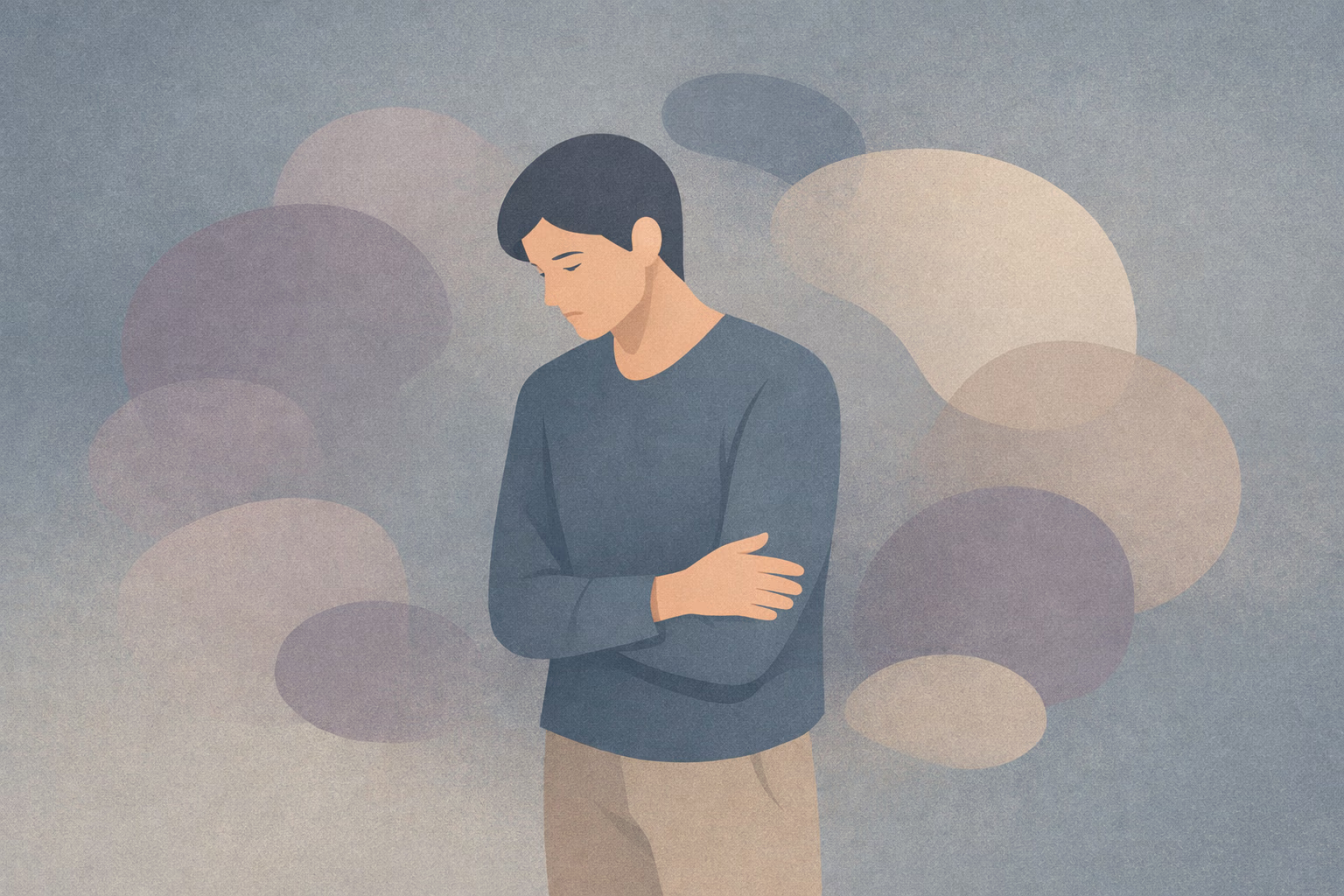
When shame becomes chronic, it doesn’t just hurt emotionally—it changes the environment inside your body. The baseline shifts toward threat monitoring, and everyday choices start getting filtered through “how will this look?” and “will this cost me belonging?” Over time, that load can erode a felt sense of safety and worth. [Ref-8]
Autonomy can shrink under this pressure. Not because you lack strength, but because the system learns that independent choice increases risk. The more your behavior is organized around avoiding disapproval, the harder it becomes to sense your true “yes” and “no” as reliable signals.
Chronic shame doesn’t only say “be better.” It says “don’t be seen.”
A common hidden belief underneath chronic shame is: if I suffer enough, I’ll be allowed. Self-attack becomes a kind of internal payment. It can create a temporary sense of control—because if you punish yourself first, you’re less vulnerable to being punished by others.
But self-punishment also reinforces the idea that you are only acceptable under pressure. The nervous system learns: closeness is conditional, and the condition is self-erasure. That loop is strongly associated with ongoing distress because it blocks completion; the system never gets evidence that acceptance can exist without ongoing self-penalty. [Ref-9]
When the mind keeps “charging you,” it often means the account never closes.
One of the most stabilizing distinctions the human system can make is the difference between behavior and identity. Behavior can be evaluated, repaired, and learned from. Identity-level condemnation keeps the nervous system in a global threat state, because it implies there is no path to resolution—only permanent exclusion. [Ref-10]
This distinction isn’t a mindset trick and it isn’t “positive thinking.” It’s a structural change in how the event is encoded. When the system is allowed to register: “something went wrong” rather than “I am wrong,” the possibility of closure returns. And with closure, the body can stand down.
Shame often claims that accountability requires harshness. But many social systems work the opposite way: repair is clearest when it’s specific, bounded, and oriented toward relationship rather than self-attack. Responsibility can exist without turning the self into the punishment. [Ref-11]
From a nervous-system perspective, what dissolves shame isn’t endless self-judgment—it’s the experience of a loop completing. That completion might come through a repaired interaction, a clarified boundary, a context finally making sense, or a moment where the body registers “I am still connected.” The key isn’t intensity; it’s resolution.
There is a difference between carrying your impact and carrying a global sentence about your worth.
When chronic guilt and shame reduce, it often shows up less as a dramatic emotional shift and more as a capacity shift. The system stops bracing as much. Social cues feel easier to read. Decisions carry less internal argument. There is more room for clean moral judgment because the self isn’t constantly under prosecution. [Ref-12]
This isn’t about becoming indifferent. It’s about returning to proportionality, where signals match the situation and resolution is possible.
Chronic shame doesn’t just hurt—it narrates. It tells a story that you are fundamentally behind, defective, or indebted. When that story dominates, choices become narrow: stay hidden, stay perfect, stay useful, stay small.
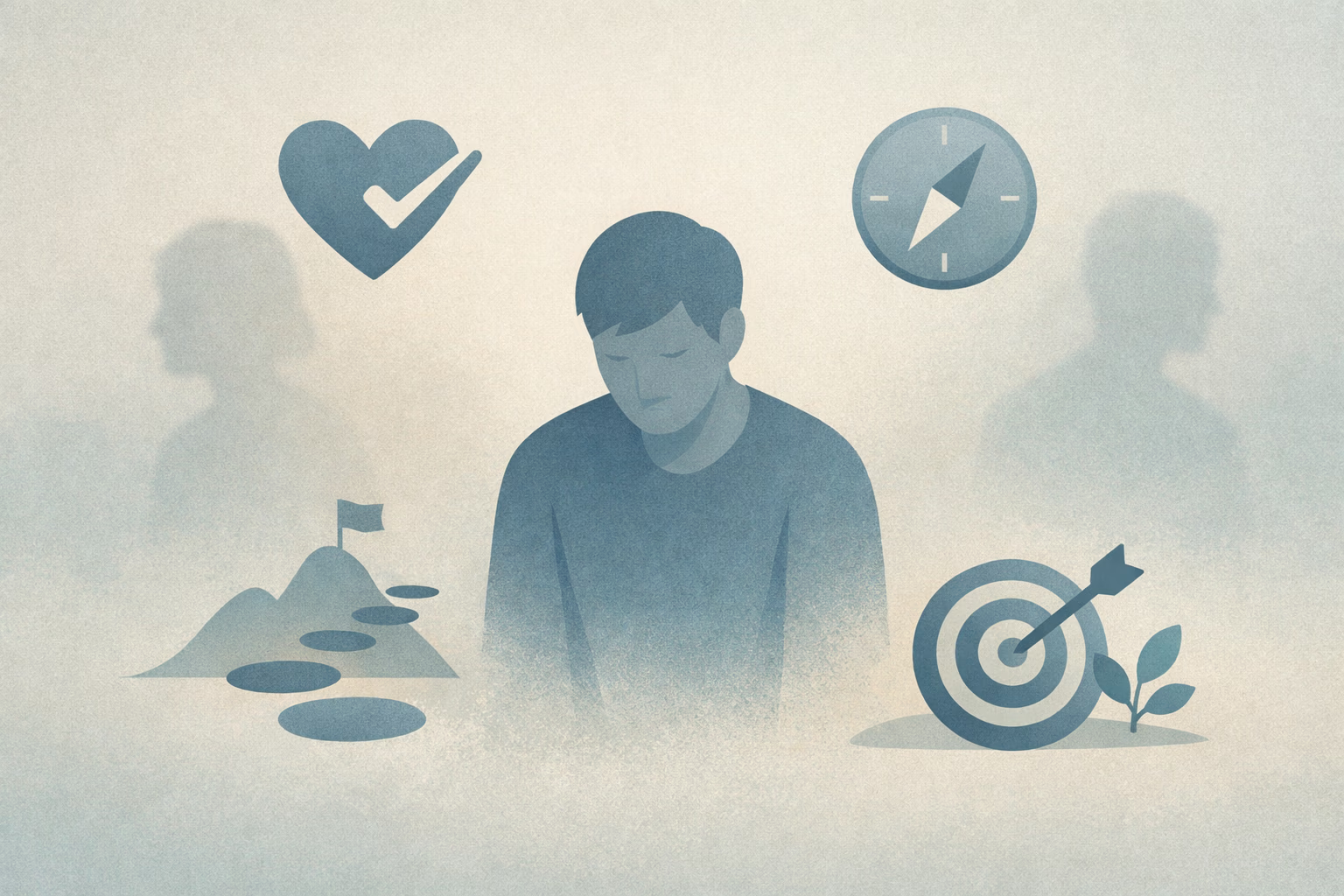
As shame loosens, agency tends to reappear in ordinary ways: more authentic choices, more honest pacing, more willingness to be a real person in relationships. Not as rebellion, but as alignment—when your behavior can come from values and identity rather than from constant threat management. Over time, this supports a more coherent narrative of self: not “someone who must earn permission to exist,” but “someone who learns, repairs, and belongs.” [Ref-13]
Guilt and shame can be functional signals: they highlight impact, relationships, and the importance of integrity. They can also become overextended systems that keep you in permanent self-monitoring long after repair is possible. [Ref-14]
When you hold them as signals rather than identities, something subtle changes. The focus shifts from proving your worth to restoring coherence—so life can feel more “done,” more integrated, and less governed by invisible social alarms. Dignity grows not from denying mistakes, but from no longer turning mistakes into a verdict about your right to belong.
Guilt and shame have shaped human behavior for a long time because they are powerful organizers of belonging. But they don’t have to be permanent narrators. When these signals are understood in context—when behavior, values, and identity can separate and then rejoin with integrity—the nervous system can finally register completion.
And with completion, your story becomes less about self-control through pressure and more about moral meaning that actually settles into who you are. [Ref-15]
From theory to practice — meaning forms when insight meets action.
Because chronic apologizing can be pre-emptive social-safety work. The article describes this as a nervous system learning that social safety depends on staying ahead of blame. The mind scans for what could be criticized because being unprepared once may have carried a high cost. Self-blame becomes a strategy to reduce uncertainty by assigning a cause — often to yourself. Common patterns: automatically saying 'sorry' for taking up space, feeling responsible for others' moods, replaying conversations to find what you 'did wrong.' This isn't a personality flaw; it's a belonging-protection protocol running in the background.
Guilt points at behavior: something happened that should be repaired. Shame points at the self: my existence is the problem. Guilt asks, 'What needs to be made right?' Shame asks, 'What does this say about who I am?' Identity-level threat recruits stronger protection responses — hiding, shrinking, appeasing, going numb. Guilt can support clean correction and reconnection because the self is still 'allowed.' Shame pushes toward compliance and concealment, treating the social world like a tribunal rather than a relationship. The nervous system organizes very differently around each.
Yes — and the article names this directly. Guilt and shame can become internal power mechanisms, organizing behavior around rejection threat. When acceptance feels conditional, the nervous system adopts self-control as a safety strategy: stay small, stay good, stay useful, stay uncontroversial. The self gets treated like a project that must be managed to avoid social consequences. High responsibility on the outside; high tension on the inside. Self-punishment can start feeling like the price of acceptance — 'if I suffer enough, I'll be allowed' — but it reinforces the idea you're only acceptable under pressure.
Repair, not self-attack. Shame claims accountability requires harshness, but repair is clearest when it's specific, bounded, and oriented toward relationship rather than self-erasure. What dissolves shame isn't endless self-judgment — it's the experience of a loop completing: a repaired interaction, a clarified boundary, a moment where the body registers 'I am still connected.' The key distinction is between behavior and identity. 'Something went wrong' is workable; 'I am wrong' is permanent threat. Responsibility can exist without turning the self into the punishment.
From Science to Art.
Understanding explains what is happening. Art allows you to feel it—without fixing, judging, or naming. Pause here. Let the images work quietly. Sometimes meaning settles before words do.
One Quiet Window, one insight, one reflection — every Sunday