Stress Decoding: Understanding What Your Stress Is Trying to Say
In short: Stress often gets treated like an error message: proof that something is wrong with you, your mindset, or your ability to cope. But stress is also a communication system—one that uses body sensations, urgency, and mental narrowing to flag that something important is still unresolved.
Stress often gets treated like an error message: proof that something is wrong with you, your mindset, or your ability to cope. But stress is also a communication system—one that uses body sensations, urgency, and mental narrowing to flag that something important is still unresolved.
What if your stress isn’t a failure—what if it’s a signal waiting to be translated?
“Stress translation” is the process of making that signal intelligible: not as a dramatic story, and not as a self-improvement project, but as a grounded read on load, boundary strain, depleted capacity, or value conflict. When the message becomes clear, your system doesn’t have to keep amplifying it.
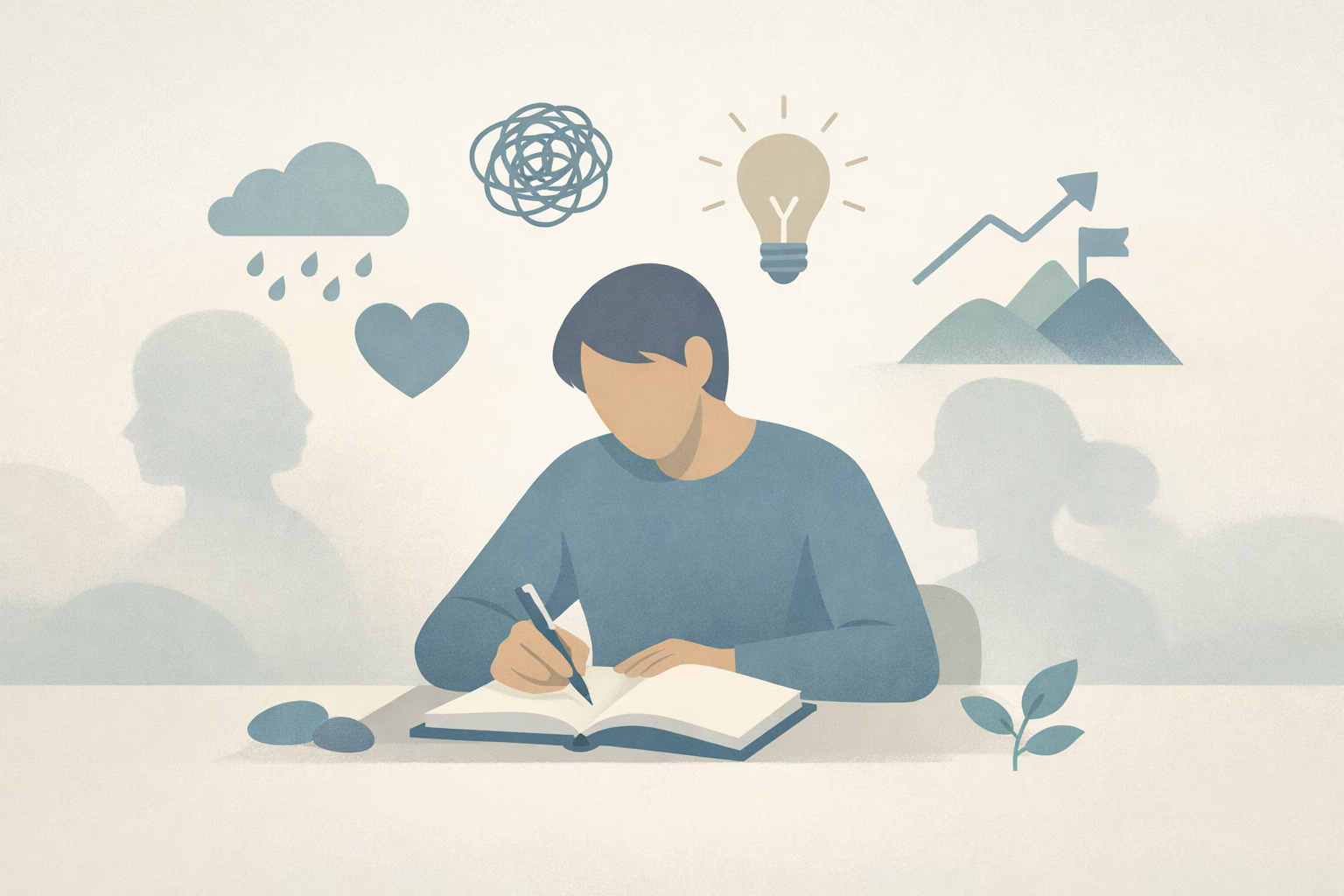
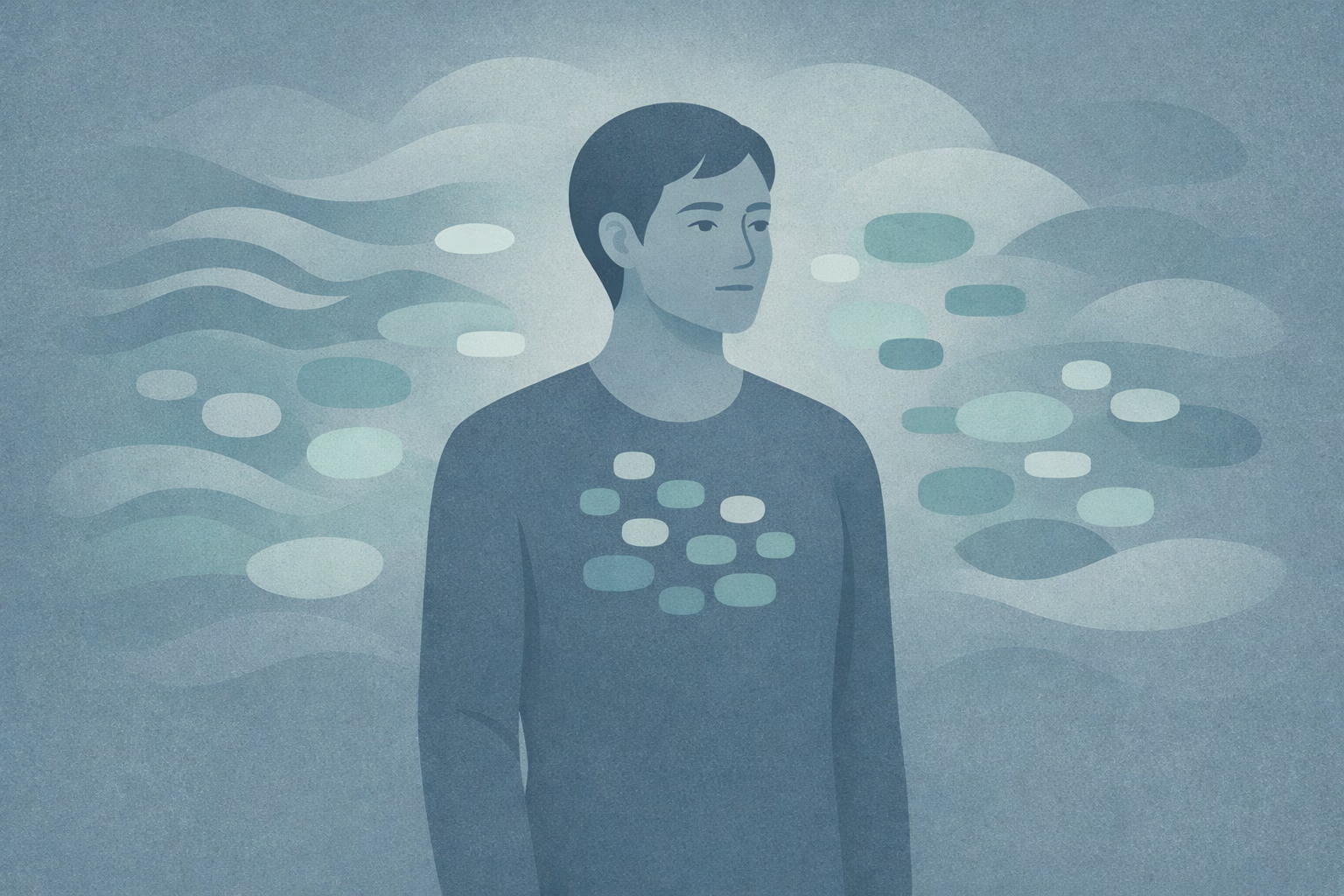
One of the most draining forms of stress is the kind that doesn’t point to a single obvious problem. You might be functioning—working, parenting, responding to messages—yet your body keeps running a background alarm: tight chest, fast mind, shallow breathing, restless energy.
That ambiguity can create a second layer of strain. Not only is your system activated, but you’re also carrying the extra burden of not knowing what the activation is “for.” In meaning terms, it’s an unfinished loop: your system is spending energy without receiving a clean “done” signal. [Ref-1]
The nervous system doesn’t communicate like a thoughtful narrator. It communicates like a dashboard: pressure, heat, tension, nausea, insomnia, irritability, scanning for threat, sudden fatigue. These signals often show up before your conscious mind has a coherent explanation.
This is not mysterious or personal—it’s biological. Stress physiology is designed to mobilize resources when demand rises or safety feels uncertain. When the system can’t resolve the demand (or even name it clearly), the signals can persist as a way of keeping attention oriented toward the unresolved. [Ref-2]
Stress responses are not modern inventions. They’re ancient coordination programs: detect possible danger, allocate energy, and prioritize what needs immediate handling. Your body is built to shift heart rate, breathing, muscle tone, and attention in a way that increases short-term readiness. [Ref-3]
In a simpler environment, the loop often completed: a threat passed, an action resolved it, social repair happened, rest followed. In modern life, the trigger can be abstract and ongoing—deadlines, social evaluation, financial uncertainty, constant contactability—so the loop doesn’t naturally close. The system stays mobilized because it never receives a reliable completion cue.
Humans can keep going while stressed. That capacity is part of our adaptability. We can override signals temporarily, compartmentalize, and push through—sometimes for years. This isn’t denial in a moral sense; it’s a structural feature of a system designed to maintain function under pressure.
The cost is that the stress loop remains open. When signals are repeatedly bypassed, the body may increase intensity to get the message through, or it may conserve energy through numbness, collapse, and reduced responsiveness. Over time, this can contribute to cumulative “wear and tear” (allostatic load): a state where regulation becomes more expensive and less flexible. [Ref-4]
“If I can’t slow down, my body will eventually slow me down.”
A common cultural story says: if you were coping “well,” you wouldn’t feel stressed. But stress often appears precisely where something important is at stake—health, relationships, integrity, belonging, survival needs, or the need for rest.
In that sense, stress can be information about salience. It highlights areas where demands exceed capacity, where expectations exceed resources, or where your life structure doesn’t match your values. Regulation research consistently distinguishes between simply dampening signals and actually restoring stability through conditions that allow settling. [Ref-5]
Stress may be less about what’s “wrong with you” and more about what your system can’t close.
When stress is uncomfortable and unclear, the most available response is often to move away from it: distract, numb, tighten control, overwork, overthink, scroll, snack, plan, fix. These responses can reduce immediate discomfort by changing state, even if they don’t resolve the underlying signal.
Structurally, this creates an avoidance loop: the nervous system learns that quick relief is possible without completion. The original message remains unprocessed at the level of closure, so the system keeps generating activation—sometimes louder, sometimes duller, but persistent. Interoceptive signals (the body’s internal sensing) can become harder to interpret when they’re repeatedly overridden or flooded by constant stimulation. [Ref-6]
Stress becomes more translatable when you notice its shape. Not as self-analysis, but as pattern recognition: when does it spike, what does it pull you toward, what contexts reliably produce the same body signature?
Many people discover their stress is surprisingly consistent. It clusters around certain roles, certain relationships, certain kinds of uncertainty, or certain forms of overstimulation. Body-based awareness research highlights that stress often has recognizable somatic markers even when the story changes. [Ref-7]
If early stress cues don’t lead to closure, the system typically adapts in one of two directions: escalation or conservation. Escalation looks like higher reactivity, more urgency, more irritability, more rumination, more startle. Conservation looks like fatigue, numbness, avoidance, reduced motivation, or a sense of disconnection.
Neither pathway is a character flaw. They are different strategies for managing prolonged load. Over time, chronic activation can narrow attention and reduce recovery efficiency, while shutdown can reduce access to nuanced signals that would otherwise guide adjustment. Both are signs of a system doing its best with insufficient completion and rest. [Ref-8]
Escalation is not drama; it’s signal amplification. When softer cues (tension, mild worry, subtle fatigue) don’t change the trajectory, the nervous system may increase volume to protect you—because from its perspective, the situation is still unresolved.
Safety and threat detection systems are tuned to prioritize survival, not comfort. If uncertainty persists, the body can shift into stronger mobilization states: vigilance, urgency, irritability, social withdrawal, or rigid control. Polyvagal-informed frameworks describe how the system moves between states depending on perceived safety cues and capacity for connection and regulation. [Ref-9]
“My stress gets bigger when it feels like no one—including me—is listening.”
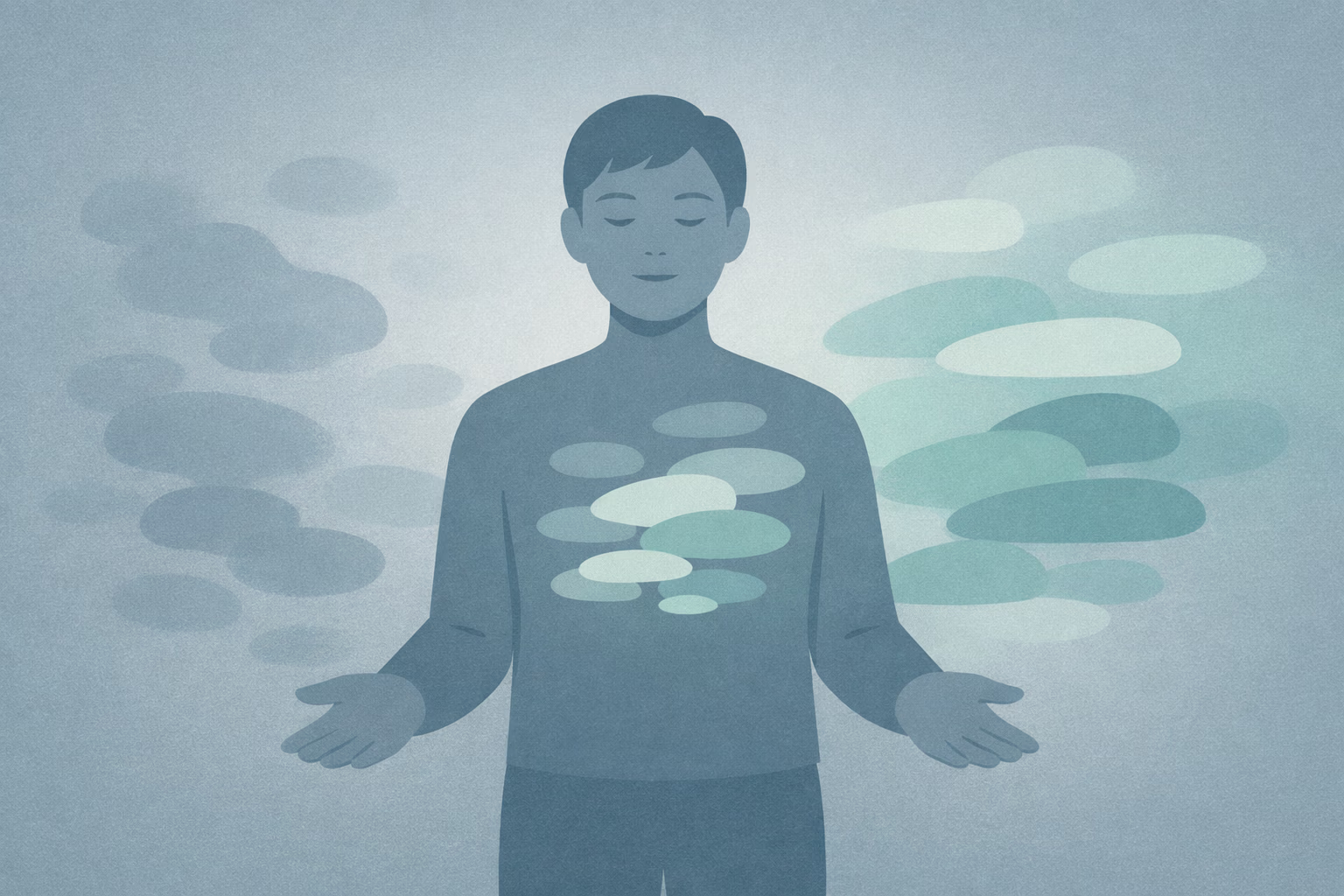
Stress translation begins when the signal becomes readable enough to locate. Not as an intellectual interpretation, and not as a motivational speech—more like adjusting a radio until the static turns into a clear station.
Sometimes that clarity arrives when the pace of input drops and the body’s cues can be detected without being immediately overwritten by the next demand. Somatic symptom research describes how chronic stress can create ongoing bodily sensations that function as communication about load and unmet recovery needs, especially when life doesn’t allow completion. [Ref-10]
In Meaning Density terms, the bridge is: this activation belongs to something. It is connected to a real cost, a real constraint, a real value, or a real mismatch—and the nervous system is trying to keep that link from disappearing.
Humans are social regulators. Often, stress becomes more intelligible in the presence of a steady other—someone who can reflect reality, hold context, and reduce the burden of carrying the whole map alone. This isn’t about being “dependent”; it’s about how mammalian nervous systems downshift when safety and attunement are available. [Ref-11]
Reflective dialogue can help separate signal from noise: what is pressure from the environment, what is grief about a loss, what is boundary strain, what is exhaustion, what is identity conflict. When the message is shared and accurately mirrored, the system can stop spending energy on proving that the signal exists.
Not because you were “talked out of it,” but because the loop gained witness and coherence.
Clarity doesn’t always reduce the amount you have to handle, but it often reduces the chaos of handling it. When stress is untranslated, everything feels urgent and shapeless. When it becomes intelligible, the nervous system can allocate energy more precisely, and the signal can soften because it has finally been recognized as meaningful.
Social disconnection and perceived isolation reliably increase stress burden, partly because they remove key buffering mechanisms and increase the sense that threats must be managed alone. When connection and context return, many people notice their stress feels more specific, less global, and less consuming. [Ref-12]
“The moment I could name what was happening, my body stopped acting like it had to shout.”
When stress is translated, it often reveals what your system has been protecting: time, dignity, rest, fairness, belonging, competence, safety, or integrity. The signal becomes a compass rather than a constant alarm.
This is where agency quietly returns—not as forced willpower, but as orientation. Boundaries stop being abstract ideals and start feeling like realism. Adjustments stop feeling like “giving up” and start feeling like coherence.
Self-compassion research suggests that when people relate to distress as a human signal rather than a personal defect, they become more capable of stable, values-consistent responding. That stability is less performative and more durable—because it’s built on reduced internal conflict and clearer meaning. [Ref-13]
If your stress has been persistent, it doesn’t necessarily mean you’re broken. It may mean your life has been asking your nervous system to hold too many open loops at once—too much input, too little completion, too much self-interruption, too little settling.
Seen this way, stress becomes a form of guidance: evidence that something needs clarity, protection, support, or closure. And in many lives, the most healing shift is not eliminating stress at all costs, but restoring the conditions where the body can trust that signals will be received and resolved.
Attachment-informed perspectives emphasize that felt security and supportive connection help people orient toward care and coherence rather than self-criticism. When those conditions are present, stress is less likely to harden into identity and more likely to function as a temporary message. [Ref-14]
Chronic stress often brings emotional exhaustion, irritability, and reduced tolerance—not because you lack character, but because sustained activation consumes regulatory capacity. [Ref-15]
Stress translation doesn’t make life perfect. It makes the signal legible enough that your nervous system doesn’t have to keep escalating to be heard. Over time, that legibility can turn stress from a burden you drag into a compass you can orient by—quietly, realistically, and with more room to be yourself.
From theory to practice — meaning forms when insight meets action.
Because the nervous system communicates in sensations, not sentences. Pressure, heat, tension, nausea, irritability, scanning — these signals show up before your conscious mind has a coherent explanation. That ambiguity creates a second layer of strain: not only are you activated, you're carrying the burden of not knowing what the activation is for. It's an unfinished loop — your system is spending energy without a clean Done Signal. Overload tends to show up as fog or shutdown. Boundary strain shows up as irritability or a 'trapped' feeling. Internal conflict shows up as agitation and compulsive checking. The body uses different signatures for different unmet needs.
No — it's often a sign that something matters. Stress appears precisely where something important is at stake: health, relationships, integrity, belonging, rest. It can be information about salience, highlighting where demands exceed capacity, where expectations exceed resources, or where life structure doesn't match values. The story that good copers don't feel stressed is misleading. Stress isn't proof something is wrong with you. It's often proof that something can't close. The question shifts from 'why can't I handle this?' to 'what is my system trying to keep me oriented toward, and what would it take for that loop to actually finish?'
Because the system increases volume when softer cues don't change the trajectory. Escalation isn't drama — it's signal amplification. When tension, mild worry, or subtle fatigue don't lead to closure, the nervous system shifts into stronger mobilization: vigilance, urgency, irritability, withdrawal, rigid control. From its perspective, the situation is still unresolved. Alternatively, the system may conserve through fatigue, numbness, and reduced motivation. Neither is a character flaw — they're different strategies for managing prolonged load. Both signal a system doing its best with insufficient completion and rest. My stress gets bigger when it feels like no one — including me — is listening.
When the signal becomes readable, the system doesn't have to keep escalating to be heard. Stress translation isn't an intellectual interpretation or a motivational reframe; it's adjusting the radio until static turns into a clear station. The activation belongs to something — a real cost, a real constraint, a real value, a real mismatch. Reflective dialogue with someone steady can help separate signal from noise: what's environmental pressure, what's grief, what's boundary strain, what's identity conflict. When the message is mirrored and understood, the loop gains witness and coherence. The body stops shouting because it's finally been received.
From Science to Art.
Understanding explains what is happening. Art allows you to feel it—without fixing, judging, or naming. Pause here. Let the images work quietly. Sometimes meaning settles before words do.
One Quiet Window, one insight, one reflection — every Sunday