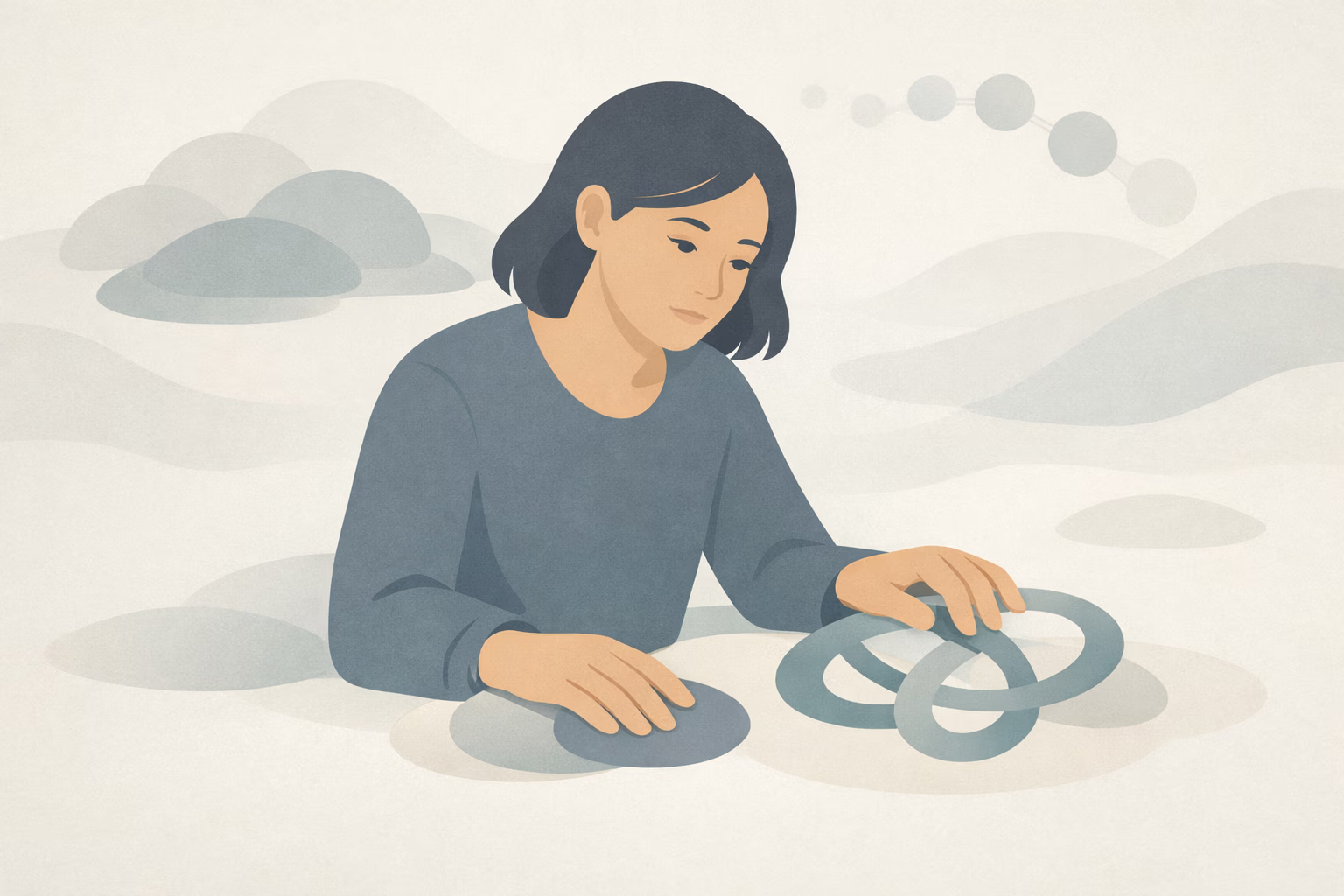
Pattern Awareness: Seeing the Thoughts That Guide Your Life
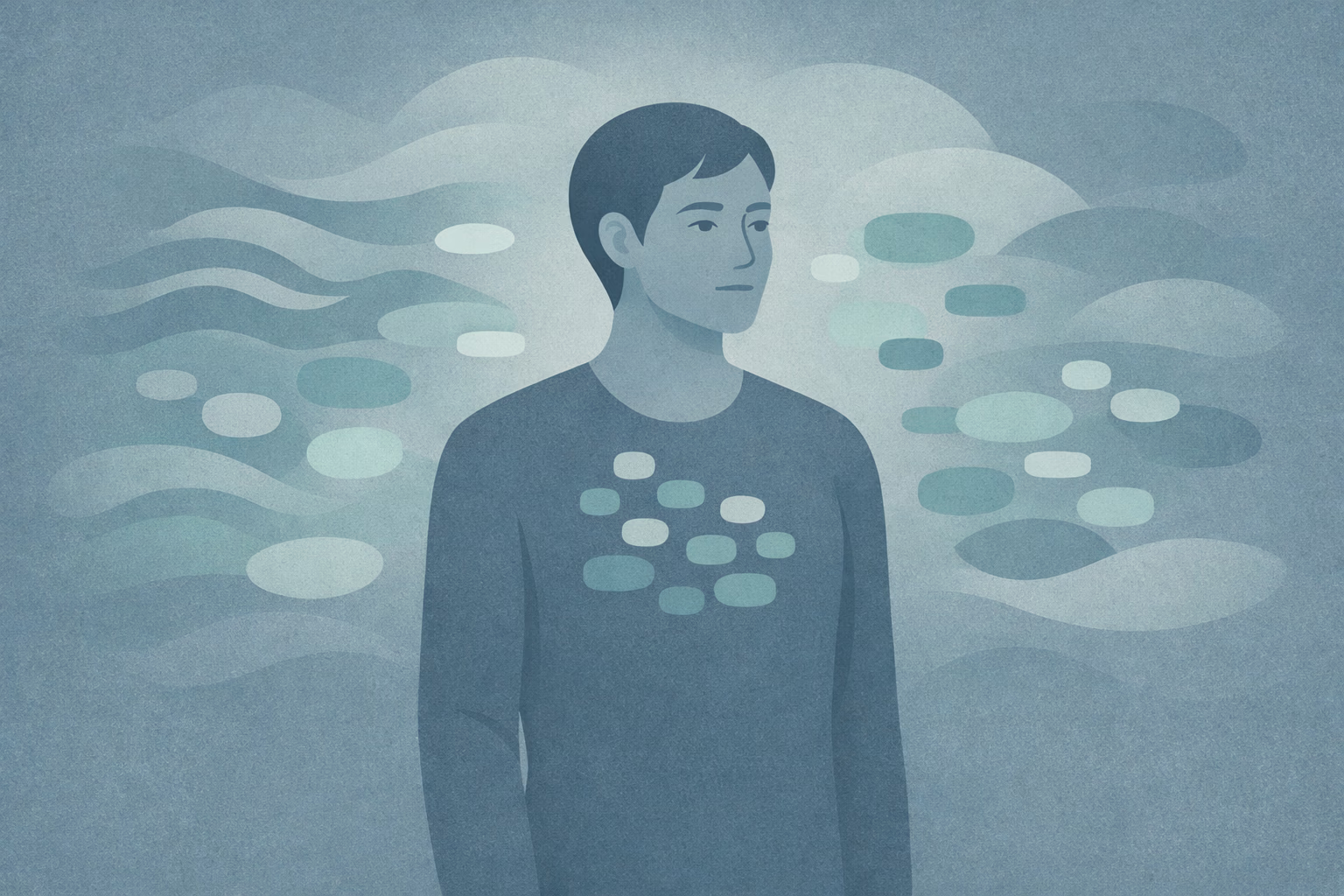
In short: Stress can show up in the middle of an ordinary day: a tight chest while answering email, a sudden irritability at home, a heavy fatigue that doesn’t match the calendar. When there’s no obvious “reason,” it’s easy to conclude that something is wrong with you.
Stress can show up in the middle of an ordinary day: a tight chest while answering email, a sudden irritability at home, a heavy fatigue that doesn’t match the calendar. When there’s no obvious “reason,” it’s easy to conclude that something is wrong with you.
What if stress isn’t proof you’re failing—what if it’s feedback?
Stress decoding is the practice of treating stress responses as signals about load, limits, and misalignment. Not as drama. Not as weakness. As a nervous system doing its job: tracking what’s too much, what’s unfinished, and what’s costing more than it’s giving.
A common stress experience isn’t panic—it’s confusion. You’re doing what you’re supposed to do, yet your body acts like something is wrong. That mismatch can create a second layer of strain: frustration with yourself.
When stress doesn’t have a single clear cause, people often reach for a character explanation: “I’m too sensitive,” “I’m not built for this,” “Other people handle more.” But stress is not a personality verdict. It’s a systems message that can become louder when the original message wasn’t received. [Ref-1]
Sometimes stress isn’t a sign of fragility. It’s a sign that your system has been compensating for longer than you realized.
The nervous system constantly estimates demand versus capacity. When demand rises (deadlines, conflict, uncertainty, sensory overload) or capacity drops (sleep debt, illness, grief, prolonged vigilance), stress signaling increases. This is not a mistake; it’s a protective shift in the brain–body system. [Ref-2]
Stress can also appear when boundaries are being crossed—externally (too much asked of you) or internally (pushing through depletion, overriding discomfort, living in constant evaluation). The signal is often less about a single event and more about the total cost of adaptation.
In other words, stress is frequently a measurement problem: the system is tracking “more is required than we can sustainably supply.”
Stress systems evolved for survival. They mobilize energy, sharpen attention, and prioritize what seems most urgent. In short bursts, this can be useful. Over time, it becomes expensive. [Ref-3]
From a biological standpoint, stress signaling tends to cluster around three themes:
Stress isn’t only about threat “out there.” It can also be the body’s way of flagging internal incompatibility: when the life you’re living can’t fully settle into a stable sense of “this fits.”
Many people become highly functional under stress. They keep moving, keep producing, keep showing up. This isn’t denial as a character flaw; it’s a common regulatory strategy: the system narrows attention, mutes certain signals, and prioritizes immediate demands.
In the short term, overriding stress can preserve momentum. But the original signal remains incomplete. When the body doesn’t get a “done” cue—when the loop never closes—stress physiology tends to accumulate as allostatic load: the wear-and-tear cost of repeated adaptation without sufficient completion and recovery. [Ref-4]
Not feeling it doesn’t mean it resolved.
It often means the system postponed processing because there wasn’t enough safety, time, or capacity to complete the cycle.
Culturally, stress is often treated like a personal deficiency: poor coping, poor mindset, poor discipline. But biologically, stress is closer to a dashboard light. It doesn’t tell you you’re bad. It tells you something needs attention—usually load, pacing, boundaries, or conflicting priorities. [Ref-5]
When stress is interpreted as shame, the message gets distorted. The nervous system doesn’t receive adjustment; it receives pressure. And pressure tends to amplify stress rather than resolve it.
Stress decoding starts with a quieter premise: your system is communicating. The goal isn’t to argue with the signal; it’s to understand what conditions are producing it.
When stress is uncomfortable, the nervous system naturally searches for relief. In modern life, relief is everywhere: scrolling, snacking, overworking, over-planning, people-pleasing, checking, numbing. These are not “bad habits” in a moral sense; they are fast state-changes.
The loop becomes sticky when the relief interrupts learning. The signal rises, a quick regulator lowers it, and the system never gets to complete the underlying adjustment. Over time, stress begins to feel both persistent and mysterious: it keeps returning because it never reached closure. [Ref-6]
From the outside it can look like procrastination, overcontrol, or inconsistency. From the inside it often feels like living with an alarm you can temporarily silence—but not fully turn off.
Stress can feel global (“I’m just stressed”), but it often has a repeatable shape. The body tends to announce overload in familiar channels. Not because you’re “stuck,” but because your system has preferred pathways for signaling. [Ref-7]
Common pattern clusters include:
These patterns are not random. They’re often context-linked signals that the system has learned to send when it predicts more demand than it can comfortably meet.
Un-decoded stress doesn’t simply disappear. If activation can’t resolve through completion, the body may shift into conservation: lower energy, lower enthusiasm, lower tolerance. People often describe this as burnout, collapse, or “I can’t access myself the way I used to.” [Ref-8]
This isn’t laziness. It’s a protective budget cut. When the system has spent too long in high output without enough closure, it may reduce available energy to prevent further depletion.
Over time, accumulated stress can show up as persistent sleep disruption, digestive shifts, pain sensitivity, frequent illness, or ongoing emotional volatility. These are not “in your head.” They are common downstream expressions of sustained load and incomplete settling.
When stress feedback is repeatedly overridden, the nervous system often escalates the signal. This is not punishment; it’s basic communication: if a quieter signal didn’t change conditions, a louder one has a better chance. The body increases urgency to protect you from ongoing cost.
Safety systems are especially sensitive to unpredictability and isolation. When you’re carrying too much alone, or when you can’t predict whether support will be available, the system may stay on guard—even during “downtime.” [Ref-9]
At this stage, stress may feel disproportionate. But “too much” is often “too long.” The signal matches the accumulated load, not just the current moment.
Stress decoding is sometimes described as “listening to your body,” but it’s not about constant self-analysis. It’s about allowing signals to be treated as relevant data early enough that the system doesn’t have to escalate.
When stress is recognized as meaningful, it can support regulation in a practical way: the nervous system updates its predictions. It learns, “Signals lead to adjustment; I don’t have to shout.” This is one reason supportive contexts buffer stress physiology—being understood changes the body’s expectation of what happens when it signals. [Ref-10]
When a signal is met with credibility, the body doesn’t have to keep proving it.
Stress isn’t only internal. It affects tone, timing, and interpretation. When stress goes unnamed, other people often fill in their own explanations: “They’re mad at me,” “They don’t care,” “They’re unpredictable.” That misunderstanding can add social threat to an already loaded system.
Humans regulate in connection. When stress signals are communicated clearly—without dramatizing, without minimizing—relationships can provide orienting cues: predictability, mutual understanding, and reduced vigilance. Social support is consistently linked with better health outcomes, while perceived isolation intensifies stress load. [Ref-11]
This isn’t about performing calm. It’s about making the signal legible enough that the environment can respond, rather than accidentally escalating it.
A meaningful shift happens when stress stops being interpreted as “something wrong with me” and starts being understood as “something important is being flagged.” That shift is not mere positive thinking; it changes the relational stance toward your own signals.
Self-criticism tends to increase threat load: it adds pressure to an already activated system. A more compassionate orientation—treating stress as a human response under strain—reduces internal conflict and makes the signal easier to use. [Ref-12]
People often notice this as increased clarity: less arguing with the body, fewer frantic detours, and more accurate recognition of what is and isn’t sustainable.
When stress is decoded over time, it begins to point toward alignment: where your values, limits, and daily demands do or don’t match. This is where meaning becomes stabilizing—not as a slogan, but as lived coherence.
Decoded stress often highlights:
As coherence increases, stress doesn’t necessarily vanish—but it becomes more proportionate, more specific, and less identity-threatening. Secure connection and self-compassion are linked with healthier self-care pathways, partly because they reduce the need to manage everything through force. [Ref-13]
Stress can be unpleasant, but it’s often trying to protect what matters: health, relationships, integrity, and the ability to keep going without self-erasure. When stress is treated as guidance, the question shifts from “How do I get rid of this?” to “What is this pointing to?”
Not every stress signal requires a big life change. Sometimes it simply marks a threshold: too fast, too much, too long, too alone. When those thresholds are recognized, the system can move toward closure instead of escalation—toward a life that feels more inhabitable from the inside. [Ref-14]
Stress doesn’t mean you’re failing. It often means your nervous system has been doing sustained work—adapting, covering gaps, staying alert, keeping things running. When the signal is decoded, it can shift from a constant burden into a compass: not demanding perfection, just pointing toward what needs completion and what deserves protection.
Over time, that kind of understanding can support a deeper settling—where the body doesn’t have to keep insisting, because life is no longer organized in a way that requires constant override. [Ref-15]
From theory to practice — meaning forms when insight meets action.
Because stress isn't a single-event response — it's a measurement of total load against capacity. The nervous system constantly compares demand (deadlines, conflict, uncertainty, sensory overload) against capacity (sleep, recovery, support). When the equation tips, signaling rises, even if no single trigger explains it. Stress can also flag boundary crossings — externally too much asked of you, or internally pushing through depletion. Confusion happens because we expect stress to point at one thing, but it's often tracking the cumulative cost of adaptation. It's not a personality verdict. It's a system message that gets louder when the original message wasn't received.
Yes. Culturally we treat stress as poor coping or weak mindset, but biologically it's closer to a dashboard light. It doesn't tell you you're bad — it tells you something needs attention: load, pacing, boundaries, or conflicting priorities. When stress gets interpreted as shame, the message gets distorted. The nervous system doesn't receive adjustment; it receives more pressure, which amplifies the signal rather than resolving it. Stress decoding starts with a quieter premise: your system is communicating. The aim isn't to argue with the signal or muscle through it. It's to read what conditions are producing it and adjust there.
Because the nervous system escalates signals when quieter ones don't change conditions. It's not punishment — it's basic communication: a louder version has a better chance of getting through. Repeatedly overriding stress also creates allostatic load, the wear-and-tear cost of repeated adaptation without sufficient closure or recovery. Quick relief habits — scrolling, snacking, overworking, people-pleasing — interrupt the signal without completing the underlying adjustment, so the loop never resolves. Disproportionate reactions usually mean too long, not too much. The signal matches accumulated cost, not just the current trigger. The Done Signal hasn't landed in a long time.
The system updates its predictions. It learns signals lead to adjustment, so it doesn't have to shout. That's why supportive contexts buffer stress physiology — being understood changes the body's expectation of what happens when it signals. Decoded stress also becomes a compass: it points to boundary mismatches, identity strain, relational uncertainty, or completion gaps. As coherence increases, stress doesn't necessarily vanish, but it becomes proportionate, specific, and less identity-threatening. The shift is from how do I get rid of this to what is this pointing to. Stress stops being an enemy and becomes the orientation system that protects what matters most.
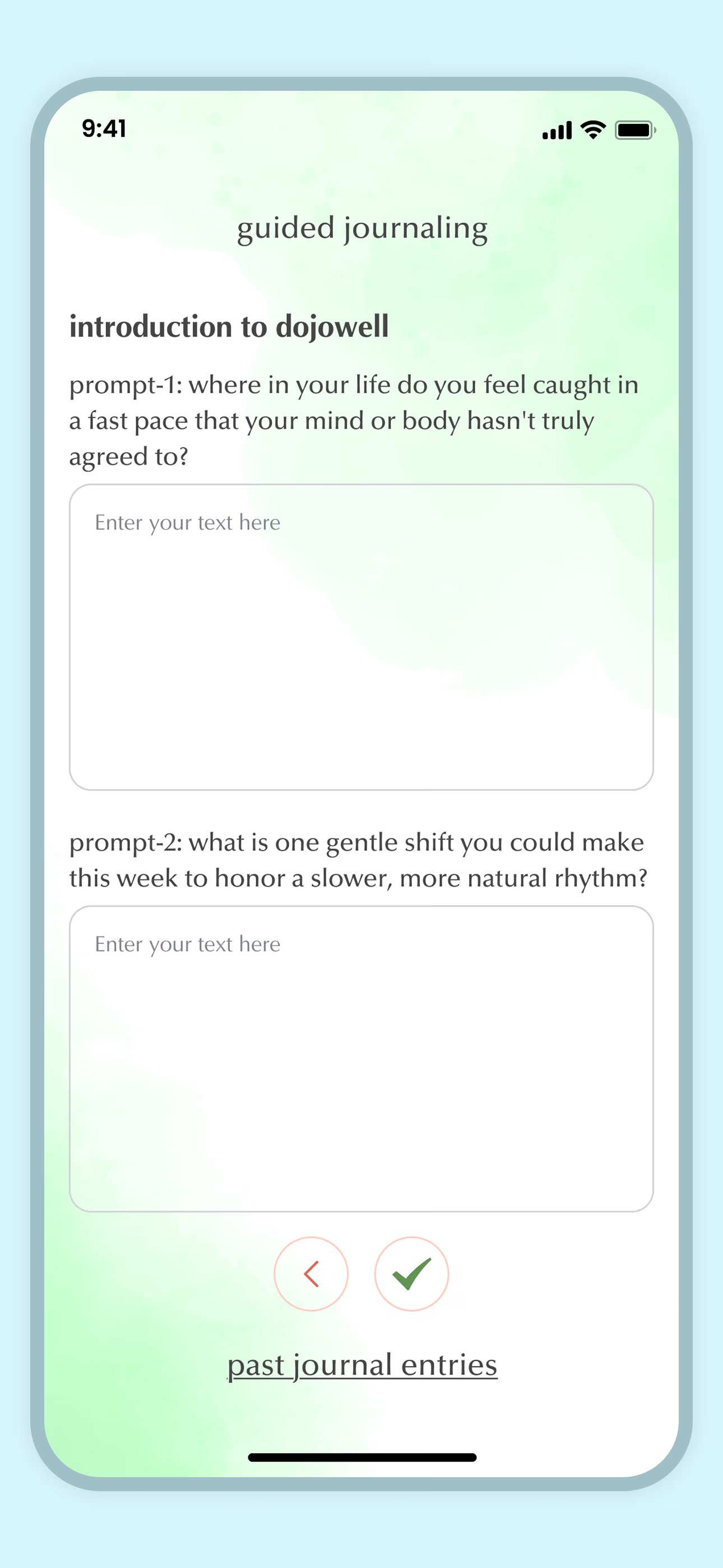
From Science to Art.
Understanding explains what is happening. Art allows you to feel it—without fixing, judging, or naming. Pause here. Let the images work quietly. Sometimes meaning settles before words do.
One Quiet Window, one insight, one reflection — every Sunday