

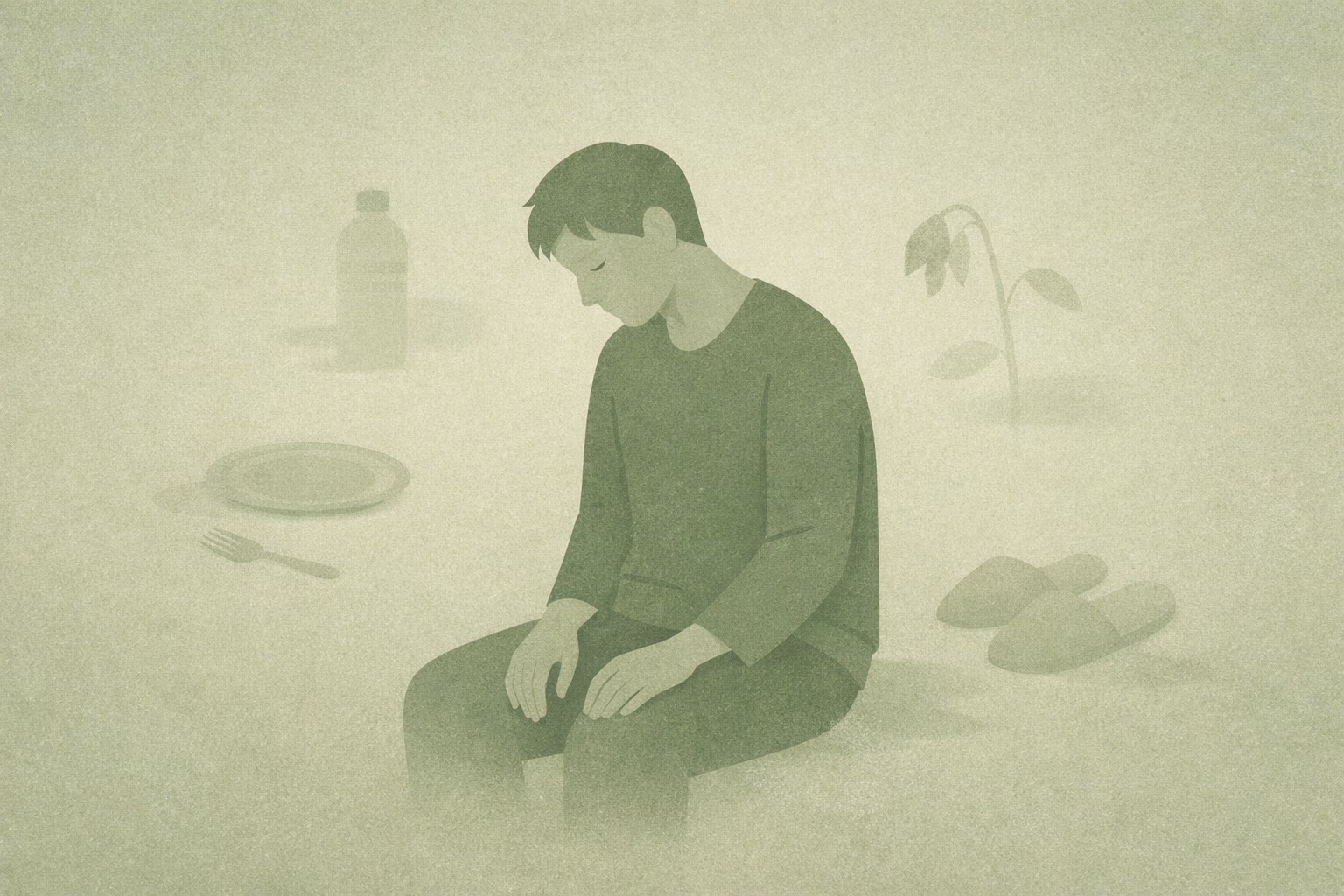
Self-Neglect & Internalized Unworthiness
Understand self-neglect as a quiet, destructive emotional pattern rooted in old wounds.
In context: Your system is seeking “Distance.“ This is a flight impulse signaling a need for “Meaning Space.“ In the Meaning Density Model™, when the “Internal Room“ is full, any new emotional data feels like an intrusion. Seeking distance is a “Safety Strategy“ to prevent Saturation. Recognizing this as a structural need for space—rather than “antisocial behavior“—removes the shame loop.

The system wants distance.
Space feels protective.
This impulse does not mean avoidance— it means regulation through separation.
Identifying the flight impulse removes shame.
You are not running away.
You are seeking enough room to feel safe.
Recognition allows the impulse to soften without acting on it.
Identify flight impulses gently with DojoWell.
Explore DojowellArticles exploring the psychology behind these patterns.
Understand self-neglect as a quiet, destructive emotional pattern rooted in old wounds.

Learn how emotional tension is stored in the body and how to release it.

Learn why achievement loses meaning over time.
Your system is seeking "Distance." This is a flight impulse signaling a need for "Meaning Space." In the Meaning Density Model™, when the "Internal Room" is full, any new emotional data feels like an intrusion. Seeking distance is a "Safety Strategy" to prevent Saturation. Recognizing this as a structural need for space—rather than "antisocial behavior"—removes the shame loop.
Use "Micro-Distance." Take a step back, look at a far object, or briefly excuse yourself for water. These are "Safe Distance-Seeking" behaviors. By physically creating space, you tell your Threat & Safety system that it is not "trapped." This small release of "density" often provides enough room to return to the conversation with your Identity intact.
One Quiet Window, one insight, one reflection — every Sunday