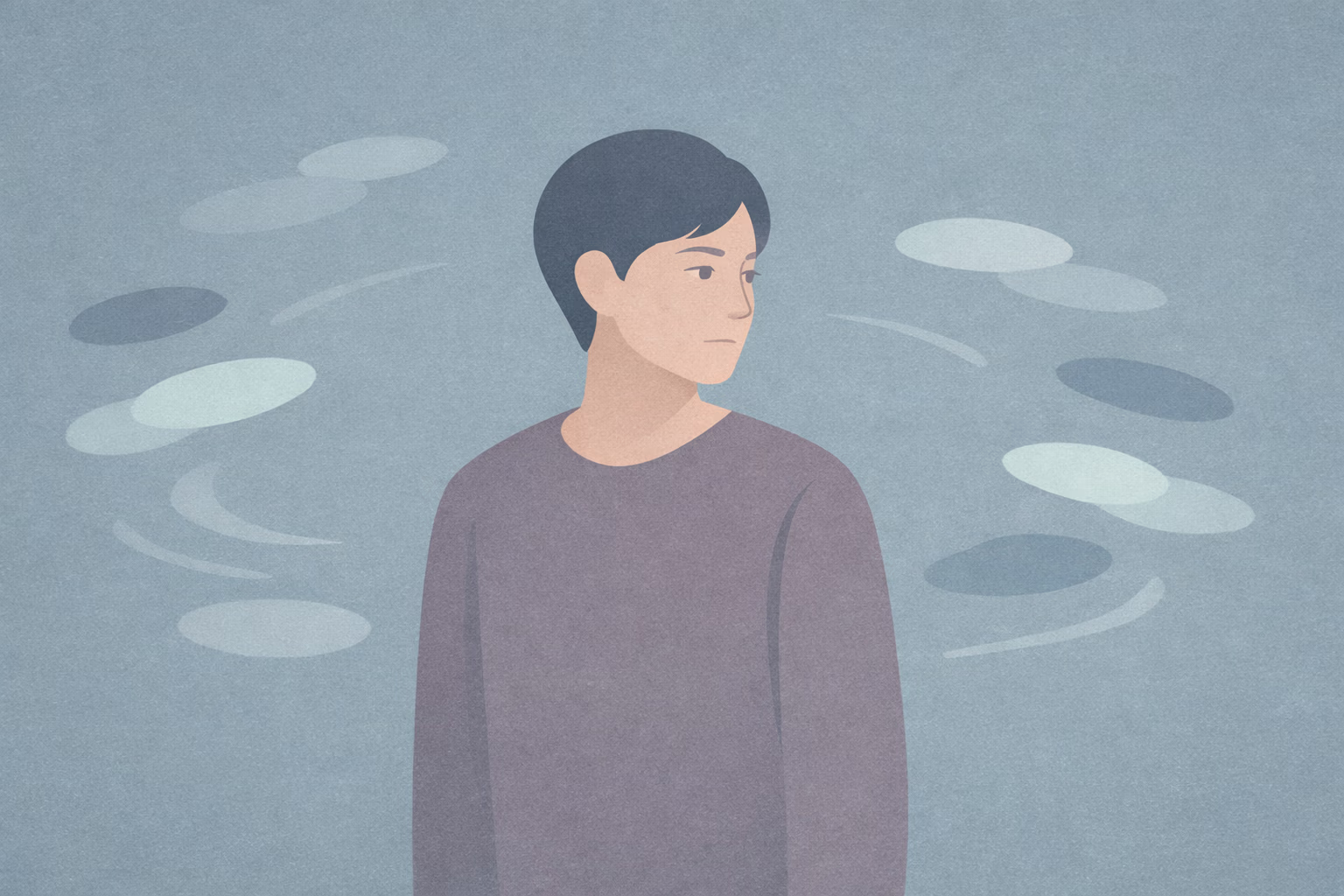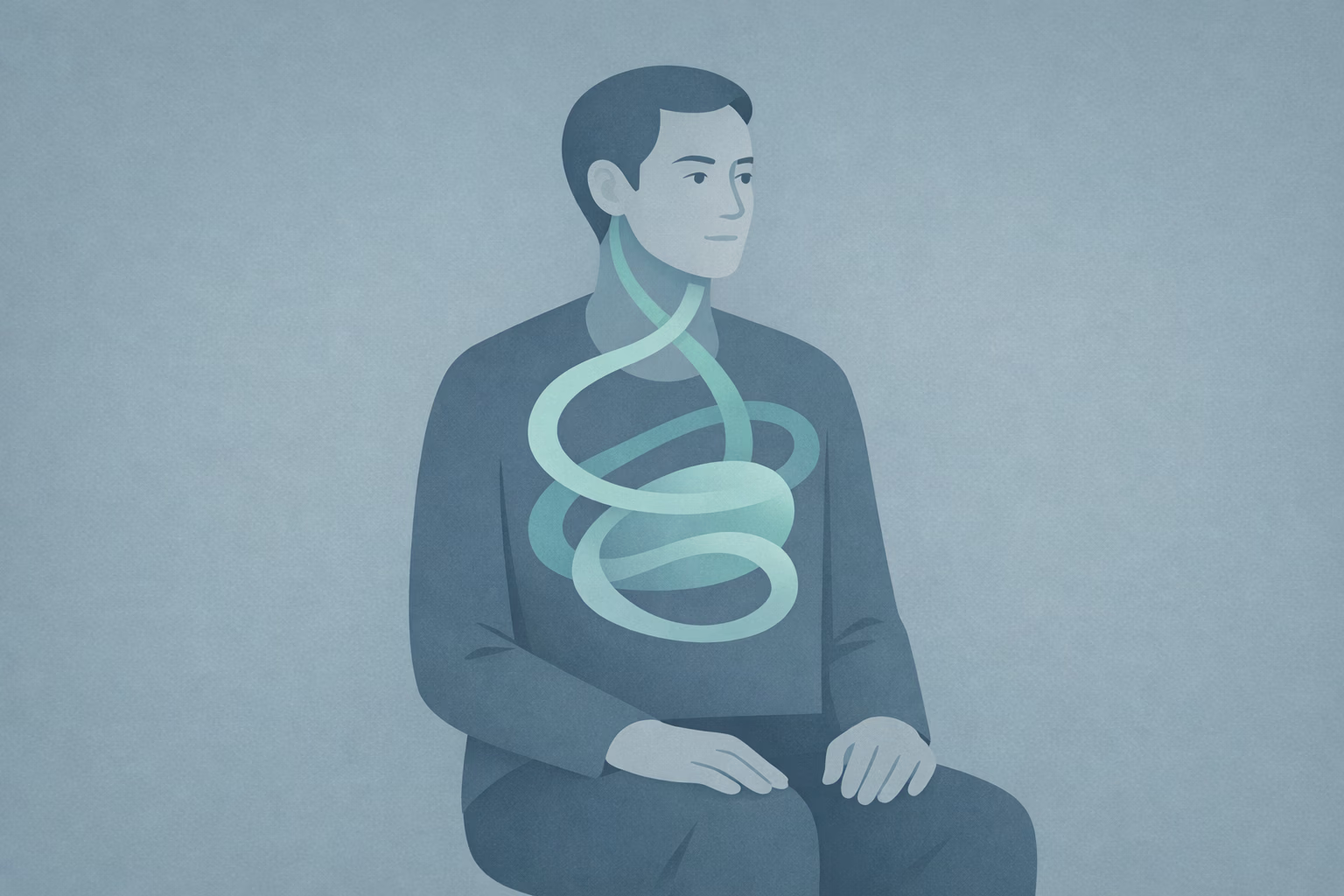

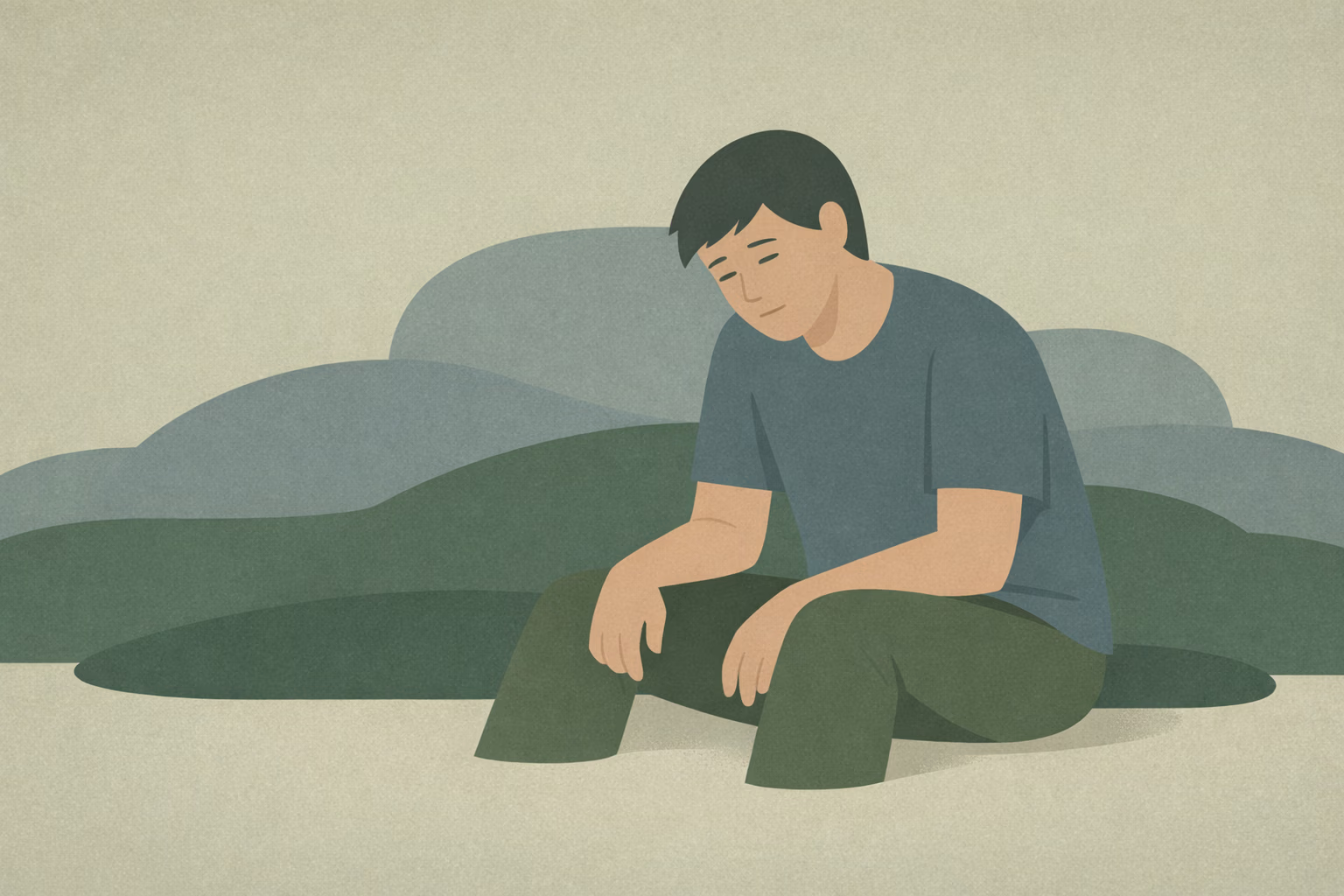
Low Motivation & Emotional Shutdown: When the System Overloads
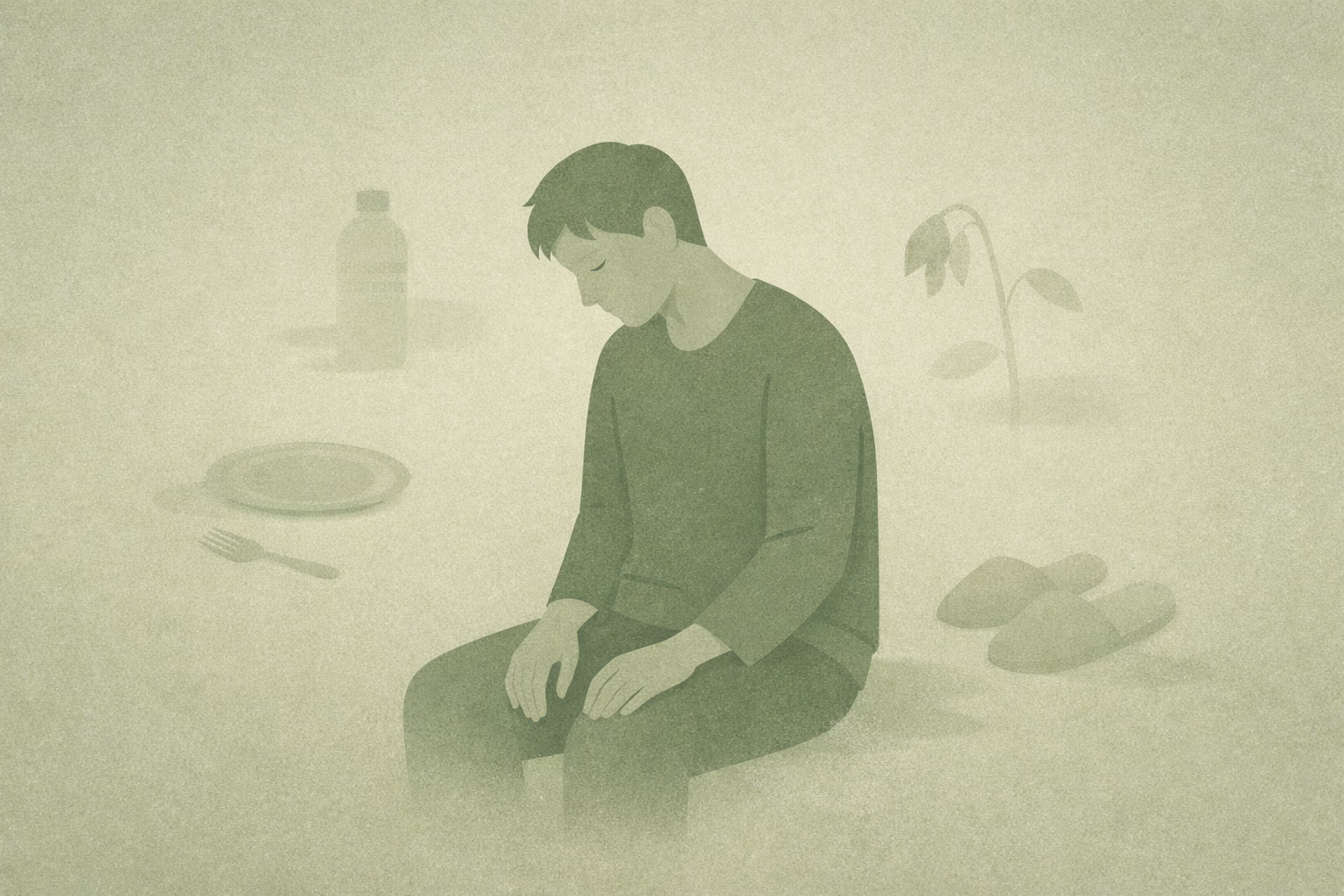
In short: Self-neglect often doesn’t look dramatic. It can look like competence, reliability, and being “the one who handles it.” But inside, there’s a quieter story: your body runs on low power, your needs get postponed indefinitely, and the feeling of being “done” never arrives.
Self-neglect often doesn’t look dramatic. It can look like competence, reliability, and being “the one who handles it.” But inside, there’s a quieter story: your body runs on low power, your needs get postponed indefinitely, and the feeling of being “done” never arrives.
This pattern isn’t a personality flaw or a lack of awareness. It’s a regulatory strategy—one that can form when your system learns that making space for yourself creates friction, risk, or disconnection. Over time, deprioritizing yourself can become the default way your nervous system keeps relationships, roles, and expectations steady.
What if self-neglect isn’t a character issue—but an unfinished loop your body has been carrying?
A common feature of self-neglect is that it hides in plain sight. From the outside, you may look generous, steady, and capable. From the inside, there can be depletion that doesn’t resolve, like your system is always giving out more than it ever takes back in.
In this state, the nervous system often prioritizes output over replenishment. Not because you “don’t care” about yourself, but because your internal signals have learned to stay small and non-urgent. The result can be a strange combination: doing a lot, but feeling less and less real inside your own life. [Ref-1]
It can feel like your life keeps moving forward—without ever circling back to include you.
Humans learn safety through patterns, not pep talks. In early relational environments, attention, comfort, and responsiveness teach the nervous system what “belongs” and what creates strain. When care is inconsistent, conditional, or overloaded, the body can adapt by treating self-directed needs as background noise.
This isn’t about insight or knowing better. It’s about what your system learned would keep connection intact. Over time, “I can manage” becomes a physiological default: needs arise, but the signal gets dampened before it fully registers as something that deserves space. [Ref-2]
Attachment isn’t just emotional; it’s biological. The body tracks what increases closeness and what increases distance. In some histories, having needs led to misattunement, conflict, or being treated as “too much.” So the nervous system makes an elegant trade: reduce need-signaling to reduce relational cost.
When this becomes embedded, self-worth can be shaped around usefulness and low impact. Not as a belief you chose, but as a self-concept built from repeated conditions: “I’m safer when I don’t require much.” [Ref-3]
In that context, self-neglect isn’t confusing—it’s coherent.
Self-neglect can function as social glue. It can reduce negotiations, prevent disappointment, and keep roles stable: the helper, the steady one, the one who doesn’t burden others. In the short term, it can even create a kind of relief—less friction, fewer conversations, fewer moments of being misunderstood.
Structurally, this is an avoidance loop: not avoidance driven by “fear,” but by a learned expectation that self-inclusion carries a cost. The body chooses the path with fewer immediate consequences, even when the long-term consequence is slow depletion. [Ref-4]
Many people were praised for being easy, helpful, and undemanding. Over time, that praise can disguise a biological cost: the body needs restoration, completion, and reciprocity to stay stable. When those are chronically postponed, the nervous system doesn’t interpret it as virtue—it interprets it as ongoing load.
Self-neglect can also narrow identity. If your worth is repeatedly confirmed through giving, then rest, receiving, or asking can start to feel structurally “out of character,” even when your body clearly needs them. The result is not just tiredness, but a gradual thinning of aliveness and personal direction. [Ref-5]
In an avoidance loop, the system learns that not-doing something prevents an immediate spike in tension. With self-neglect, what gets bypassed is self-inclusion: your body’s bids for care, space, and recognition. Each bypass can create a short-term settling—no conflict, no awkwardness, no renegotiation.
But because your need-signal never completes, it doesn’t resolve. It returns later as irritability, numbness, craving, overcontrol, or exhaustion—regulatory substitutes that create temporary state change without true closure. Over time, the loop can become self-reinforcing: the less you’re included, the less include-able you feel. [Ref-6]
This is not “low self-esteem” as a trait. It’s a system staying braced because nothing ever finishes.
Self-neglect is often recognized more by its patterns than by a single moment. The body adapts to being last on the list by muting signals, speeding past transitions, and treating depletion as normal background.
These aren’t moral failings. They’re the nervous system’s way of keeping relational and environmental conditions predictable—especially when self-advocacy has historically been costly. [Ref-7]
When your needs are repeatedly deprioritized, your system loses a basic form of orientation: the sense that your internal signals matter and lead somewhere. Not because you don’t have signals, but because the loop ends before it completes.
Over time, this can erode self-trust. If your body says “I need” and the pattern reliably answers “not now,” the system learns that need-signals are unreliable information. That can flatten fulfillment and make reciprocity feel unfamiliar—not emotionally dramatic, just structurally hard to sustain. [Ref-8]
When you don’t count in your own life, even good things can feel oddly unreachable.
External appreciation can provide a real, immediate stabilizer: you’re seen, you’re needed, you’re doing it right. For a nervous system trained to measure belonging through usefulness, validation can momentarily compensate for the missing internal “I matter” signal.
But validation is not closure. It changes state, then fades. If the underlying loop remains unfinished—needs arising, then being bypassed—the body returns to the same baseline of deprivation and brace. This is why a person can be admired and still feel internally empty: the environment confirms performance, while the self remains uncounted. [Ref-9]
Many people look for the right mindset—permission, reframes, affirmations. Those can be comforting, but integration is different. Integration is what happens when the body repeatedly experiences a complete loop: a signal arises, it is allowed to have consequence, and it reaches a natural “done” point.
In self-neglect, bodily signals (hunger, fatigue, tension, longing for contact, need for quiet) often don’t get to complete. They get overridden by urgency, obligation, or automatic caretaking. Over time, the nervous system learns that self-signals don’t lead to resolution—so it sends them less clearly, or sends them as louder substitutes like agitation or shutdown.
As coherence returns, it often looks less like “understanding yourself” and more like your system gradually treating your signals as real data again—information that belongs in the story of your day and your identity. [Ref-10]
Self-neglect often formed in relational contexts, and it is often softened in relational contexts too—not through forcing vulnerability, but through environments where you are allowed to be a full participant. Mutual relationships provide something many self-neglecting systems rarely receive: repeated evidence that your needs do not automatically create rupture.
When visibility is met with steadiness—when you don’t have to perform wellness or minimize impact—the nervous system can update its predictions. This isn’t a single conversation. It’s a pattern of safe consequence: you take up space and connection remains. Over time, that supports healthier stand-down and reduces chronic stress load. [Ref-11]
As the loop begins to complete more often, many people notice a quieter shift: they can detect needs earlier, before they become emergencies. The system becomes less reliant on extremes—burnout, resentment, numbness—to communicate what was missed.
This can also change the experience of receiving. When receiving has historically signaled danger (owing, burdening, being judged), it can feel tense even when it’s wanted. As capacity returns and the body gathers more “safe enough” data, receiving can become less activating—less like a disruption, more like a normal part of being in a shared world. [Ref-12]
Not dramatic. Just more internal permission that actually lands in the body.
Restored coherence isn’t a constant good feeling. It’s a sturdier orientation: your life decisions start to include you as a non-negotiable variable. Not as a special project, but as a basic assumption.
When self-worth is less dependent on proving usefulness, the nervous system can shift from maintaining belonging at any cost to sustaining belonging with integrity. That shift tends to bring more stable agency: choices feel less like performing and more like aligning with who you are becoming. In attachment terms, this resembles earned security—built through repeated experiences of being real and still connected. [Ref-13]
It’s not that you matter more than others. It’s that you finally stop disappearing from the equation.
In a fragmented world, self-neglect can look like “being good” while quietly costing you your own continuity. Reframing it as dignity changes the moral tone: caring for yourself becomes less about earning rest and more about restoring your right to be included.
Meaning grows where experiences can complete—where your body’s signals are not treated as interruptions, and where your life story has room for reciprocity. When self-attunement returns, it often carries a simple message: you are not an afterthought; you are part of what your life is for. [Ref-14]
Caring for yourself doesn’t have to mean caring less about others. For many people, it’s the moment the system stops choosing invisibility as the price of connection.
When self-neglect loosens, it’s often because your life begins to support a different kind of stability—one where your needs can have consequence and reach closure. That isn’t selfishness. It’s wholeness returning, quietly, to the center of the story. [Ref-15]
From theory to practice — meaning forms when insight meets action.
Because self-neglect isn't a knowledge problem — it's a regulatory strategy. The body learned, through patterns rather than pep talks, that making space for yourself creates friction, risk, or disconnection. So the nervous system makes an elegant trade: reduce need-signaling to reduce relational cost. Needs still arise, but the signal gets dampened before it fully registers as something deserving space. Insight rarely shifts this because the loop is wired into the Attachment & Belonging System, not into thought. I can manage becomes a physiological default, and self-inclusion gets read as a cost rather than a baseline assumption of being alive.
Often yes — and structurally, not morally. Self-neglect functions as social glue: it reduces negotiations, prevents disappointment, and keeps roles stable (the helper, the steady one, the one who doesn't burden anyone). Short term it produces relief — less friction, fewer awkward moments. But it's an Avoidance Loop where what gets bypassed is self-inclusion. Each bypass settles the moment but leaves the need-signal unresolved, so it returns later as irritability, numbness, exhaustion, or craving. The less you're included in your own life, the less include-able you feel. This isn't low self-esteem as a trait. It's a system staying braced because nothing ever finishes.
Because validation changes state but doesn't deliver closure. For a nervous system trained to measure belonging through usefulness, appreciation can momentarily compensate for the missing internal I matter signal. But the underlying loop — needs arising, then being bypassed — remains unfinished, so the body returns to baseline deprivation and brace. This is why someone can be admired and still feel internally empty: the environment confirms performance while the self stays uncounted. The Done Signal that would actually settle the system requires self-signals to have real consequence in the day, not external praise on top of continued self-erasure.
Through repeated experience that self-signals can have consequence and reach a natural endpoint. Permission and reframes can comfort, but integration is different — it's what happens when the body lives a complete loop: a signal arises, it's allowed to matter, and it resolves. Mutual relationships help because they provide repeated evidence that needs don't automatically create rupture. Co-regulation here looks like steady visibility — taking up space and connection remaining. Over time, choices start to include you as a non-negotiable variable, and Loop Sovereignty rebuilds. Not selfishness — wholeness returning, quietly, to the center of the story.
From Science to Art.
Understanding explains what is happening. Art allows you to feel it—without fixing, judging, or naming. Pause here. Let the images work quietly. Sometimes meaning settles before words do.
One Quiet Window, one insight, one reflection — every Sunday