Patterns of Numbing: The Subtle Ways You Escape Yourself
In short: Self-avoidance isn’t a character flaw. It’s a protective pattern that shows up when your system predicts that turning inward will spike load—too much intensity, too much uncertainty, too much that can’t be resolved in the moment.
Self-avoidance isn’t a character flaw. It’s a protective pattern that shows up when your system predicts that turning inward will spike load—too much intensity, too much uncertainty, too much that can’t be resolved in the moment.
In modern life, the fastest way to lower that predicted load is often stimulation: a screen, a task, a conversation, a snack, a scroll. Attention moves outward, the body gets a brief sense of relief, and the inner world stays “not yet.” That is regulation, not weakness.
What if the urge to distract isn’t about lacking self-control, but about a nervous system trying to prevent overwhelm?
For many people, the hardest part isn’t “thinking.” It’s the bodily feeling that arrives when there’s nothing else to track. Silence can amplify signals: unfinished conversations, unresolved decisions, ambiguous relationships, unprocessed stress. The mind doesn’t just wander; it scans.
This is why restlessness often isn’t a preference problem. It can be a state problem. When your system is carrying open loops, stillness doesn’t register as rest—it registers as exposure. Your attention keeps reaching for something to do because “doing” creates immediate structure and reduces uncertainty.
In that sense, distraction can function like a temporary shelter: not a solution, but a quick reduction in perceived threat and complexity. [Ref-1]
Self-avoidance often begins before anything “bad” happens. It begins with prediction: If I turn inward, it will escalate. That forecast alone can activate threat circuitry—heart rate shifts, muscle tone increases, the mind speeds up—and attention goes looking for an exit.
Notice how often the escape route is not dramatic. It’s ordinary: staying busy, adding noise, switching tabs, reorganizing, checking messages. These are quick ways to change state without needing closure. They reduce contact with inner signals by replacing them with clearer external cues. [Ref-2]
So the pattern isn’t “avoiding feelings” as a choice. It’s a system prioritizing the fastest available decrease in predicted load.
Humans are built to allocate attention where it most improves safety. When safety feels stable, inner reflection becomes possible: learning, planning, meaning-making. When safety feels unstable, the priority shifts toward external monitoring—what’s happening, what could happen, what needs responding to.
In self-avoidance, the inner world can start to feel like an unreliable environment: too many variables, no quick feedback, no clear “done” signal. So the system chooses what it can track—tasks, inputs, notifications, other people’s needs—because those offer immediate data and short-term certainty. [Ref-3]
This isn’t irrational. It’s adaptive when your baseline state is already stretched.
Turning inward can contain several kinds of uncertainty at once: what you want, what you regret, what you can’t control, what you may need to grieve, what you may need to change. Not because you’re “afraid of feelings,” but because these are high-information signals with real consequences.
Self-avoidance narrows that exposure. It trades depth for manageability. In the short term, it can reduce intensity, reduce ambiguity, and reduce the sense of being cornered by problems that don’t have immediate solutions. [Ref-4]
The cost is that the underlying loops stay open—still present, just out of focus.
Distraction can create a convincing story: I’m fine when I’m occupied. And it’s true that stimulation changes state. But state-change isn’t the same as completion. What didn’t get metabolized doesn’t vanish; it waits.
Often what intensifies over time isn’t an emotion itself, but the system’s growing backlog: delayed decisions, postponed conversations, unnamed losses, chronic overextension. The inner world becomes louder because it hasn’t been allowed to register an ending. [Ref-5]
Relief can be real without being resolving.
So the problem isn’t that distraction is “bad.” It’s that distraction rarely delivers the physiological closure your system is actually asking for.
Self-avoidance becomes sticky through a simple learning cycle: inward attention raises load; outward attention reduces it. The nervous system doesn’t need a philosophy—just a pattern of cause and effect. Relief becomes the proof that escape was the correct move.
Over time, the threshold for “too much” can drop. Not because you’re getting weaker, but because the loop prevents completion. When signals can’t reach an ending, they remain active in the background, and the system grows more protective about letting them in. [Ref-6]
When relief is immediate and closure is delayed, which one will your body trust?
Self-avoidance is rarely one behavior. It’s a family of strategies that all do the same structural job: reduce inner contact by increasing external cues, urgency, or stimulation.
None of these mean you “can’t face yourself.” They mean your system has learned that inward contact doesn’t reliably end in resolution, so it chooses what reliably ends: the next clip, the next task, the next hit of certainty. [Ref-7]
When inner signals are repeatedly bypassed, it becomes harder to know what is true for you. Not at a philosophical level, but at an orientation level: what matters, what needs attention, what’s finished, what isn’t.
Over time, life can start to feel flatter or more confusing—not because you “lost yourself,” but because your internal data has been kept from completing into coherent narrative. Without completion, experiences stay as fragments: sensations, thoughts, impulses, and half-decisions that don’t consolidate into identity.
This is one reason self-avoidance can coexist with high functioning. You can be productive and still feel oddly unanchored, because productivity can create motion without creating meaning. [Ref-8]
The more relief is paired with escape, the more inward attention can become associated with danger signals: agitation, urgency, dread, mental noise. This isn’t a moral association; it’s a nervous-system association.
So the next time you slow down, the system doesn’t interpret it as a neutral pause. It interprets it as the doorway to an uncontained backlog. Distraction then becomes less like a choice and more like a reflex: a rapid return to whatever lowers arousal fastest. [Ref-9]
In this way, self-avoidance can quietly train the body to treat introspection like a cliff edge, even when nothing is objectively wrong in the present moment.
It can help to separate two experiences that often get conflated: thinking and overload. Many people don’t fear thoughts; they fear the bodily surge that can come with them when capacity is low and loops are unfinished.
When internal safety is present, thoughts and sensations can arise and move without recruiting full threat response. They become information rather than alarms. Not because you “understand” them better, but because the system has enough stability to let signals complete their arc and stand down.
Meaning often returns in the same way: not as a motivational speech, but as a settling—an internal sense that something has landed, clarified, or ended. That settling is what makes room for the next true thing to emerge. [Ref-10]
Humans regulate in connection. When you are with someone who feels steady and non-evaluative, your system receives cues that reduce load: you don’t have to track everything alone, you don’t have to defend every signal, you don’t have to solve the entire backlog in one sitting.
This is one reason supportive relationships can make inner contact more tolerable. Not because someone “fixes” you, but because shared attention can create containment—enough stability for signals to show up without becoming an emergency.
In many models of avoidance, the presence of safety and support is a key factor in reducing the pull toward escape. [Ref-11]
Sometimes what makes truth bearable is not bravery, but context.
As load decreases and more experiences reach completion, a noticeable shift can occur: inner data returns in smaller, more workable doses. The mind may still generate worries or memories, but they carry less insistence. They don’t need to shout to be heard.
This is not the same as constant insight, and it isn’t about “feeling everything.” It’s more like a restored ability to stay present long enough for signals to resolve into clarity—so they can stop repeating. In research discussions of avoidance, repeated bypassing is linked with patterns like rumination, where the mind circles because it can’t reach an endpoint. [Ref-12]
When endpoints begin to occur, the nervous system gets more “done” signals. And with more done signals, capacity returns.
Self-avoidance often crowds out values—not because you don’t have them, but because values require contact. To live from what matters, you need enough internal coherence to sense what fits, what doesn’t, what’s complete, and what is asking for repair.
When self-contact becomes safer, choices can start to feel less like emergency exits and more like direction. Identity becomes less performative and more lived: not an idea about who you are, but a pattern of completed experiences that actually “stays” in the body.
In studies connecting avoidance with loneliness and emotion regulation difficulties, avoidance can act as a bridge between internal dysregulation and disconnection. Reducing the loop supports reconnection—internally and socially—because there is more stable access to your own signals. [Ref-13]
If you keep escaping your own thoughts, it may be because your nervous system has been asked to carry too much without enough closure. In that context, avoidance isn’t a failure of willpower—it’s a strategy that reduces immediate exposure and buys short-term stability.
And yet, the same strategy can quietly keep meaning from consolidating. When experiences can’t complete, they remain active, and the system continues to treat inner contact as risky. Research on avoidance in decision-making suggests that moving through avoidance involves more than “trying harder”—it involves conditions that allow safer engagement with what’s been deferred. [Ref-14]
Agency often returns not as force, but as orientation: the sense that your attention can come home without needing to flee, and that your life can move forward with fewer open loops pulling from behind.
There is a particular kind of calm that doesn’t come from distraction. It comes from completion—when your system can finally register that something has been faced, metabolized, and integrated into the story of you.
Self-avoidance usually begins as protection. When conditions shift and safety increases, the same system that learned to escape can also learn to settle. And as settling becomes possible, direction tends to reappear—not as pressure, but as a quiet, durable sense of what matters. [Ref-15]
From theory to practice — meaning forms when insight meets action.
Because silence amplifies signals. Unfinished conversations, unresolved decisions, ambiguous relationships, unprocessed stress — they don't disappear when you're busy, they just get drowned out. When your system is carrying open loops, stillness doesn't register as rest; it registers as exposure. Your attention keeps reaching for something to do because doing creates immediate structure and reduces uncertainty. Restlessness isn't a preference problem. It's a state problem. Distraction functions like a temporary shelter — not a solution, but a quick reduction in perceived threat and complexity. The discomfort isn't about thinking itself; it's about the bodily surge that arrives when capacity is low and loops are unfinished.
No. Self-avoidance is a protective pattern that shows up when your system predicts inward attention will spike load. The system doesn't need a philosophy — just a pattern of cause and effect. Inward attention raises load; outward attention reduces it. Relief becomes the proof that escape was the correct move. The pattern isn't 'avoiding feelings' as a choice; it's a system prioritizing the fastest available decrease in predicted load. That's an Avoidance Loop driven by structure, not weakness. The body trusts what reliably ends the tension. When relief is immediate and closure is delayed, which one is your nervous system going to learn from?
Because state-change isn't the same as completion. Stimulation reliably changes how you feel in the moment, but what didn't get metabolized doesn't vanish — it waits. Often what intensifies over time isn't an emotion itself but the system's growing backlog: delayed decisions, postponed conversations, unnamed losses, chronic overextension. The inner world becomes louder because it hasn't been allowed to register an ending. Relief can be real without being resolving. That's why the same distractions stop working as well over time, and why busyness can coexist with a faint sense of being haunted by everything you haven't faced.
Inner data returns in smaller, more workable doses. The mind may still generate worries or memories, but they carry less insistence — they don't need to shout to be heard. This isn't constant insight or 'feeling everything.' It's restored capacity to stay present long enough for signals to resolve into clarity, so they can stop repeating. Often what makes truth bearable isn't bravery — it's context. Steady, non-evaluative connection provides safety cues that reduce the load of facing things alone. As endpoints begin to occur, the nervous system gets more Done Signals. With more Done Signals, capacity returns, and inner contact stops being a cliff edge.
From Science to Art.
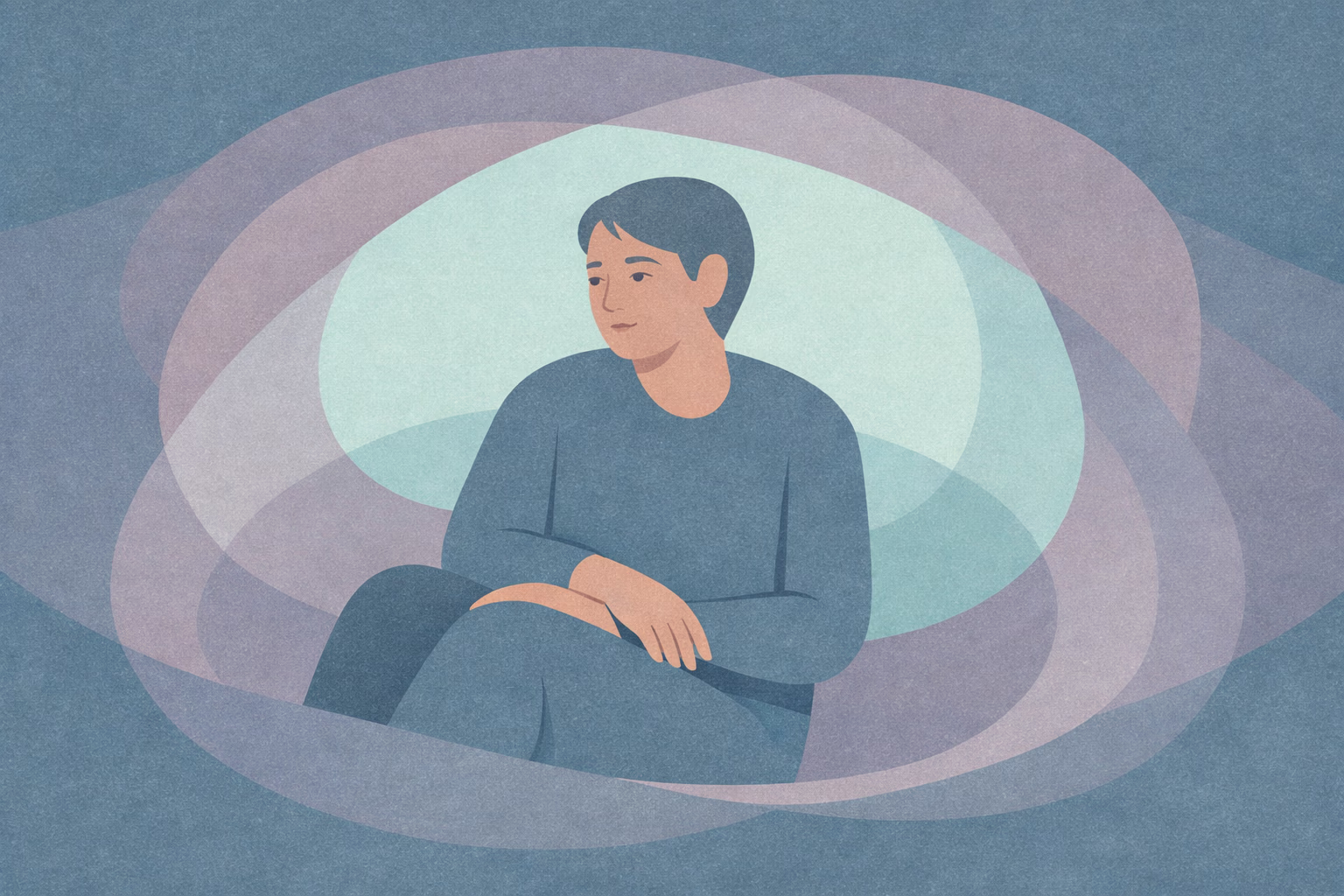
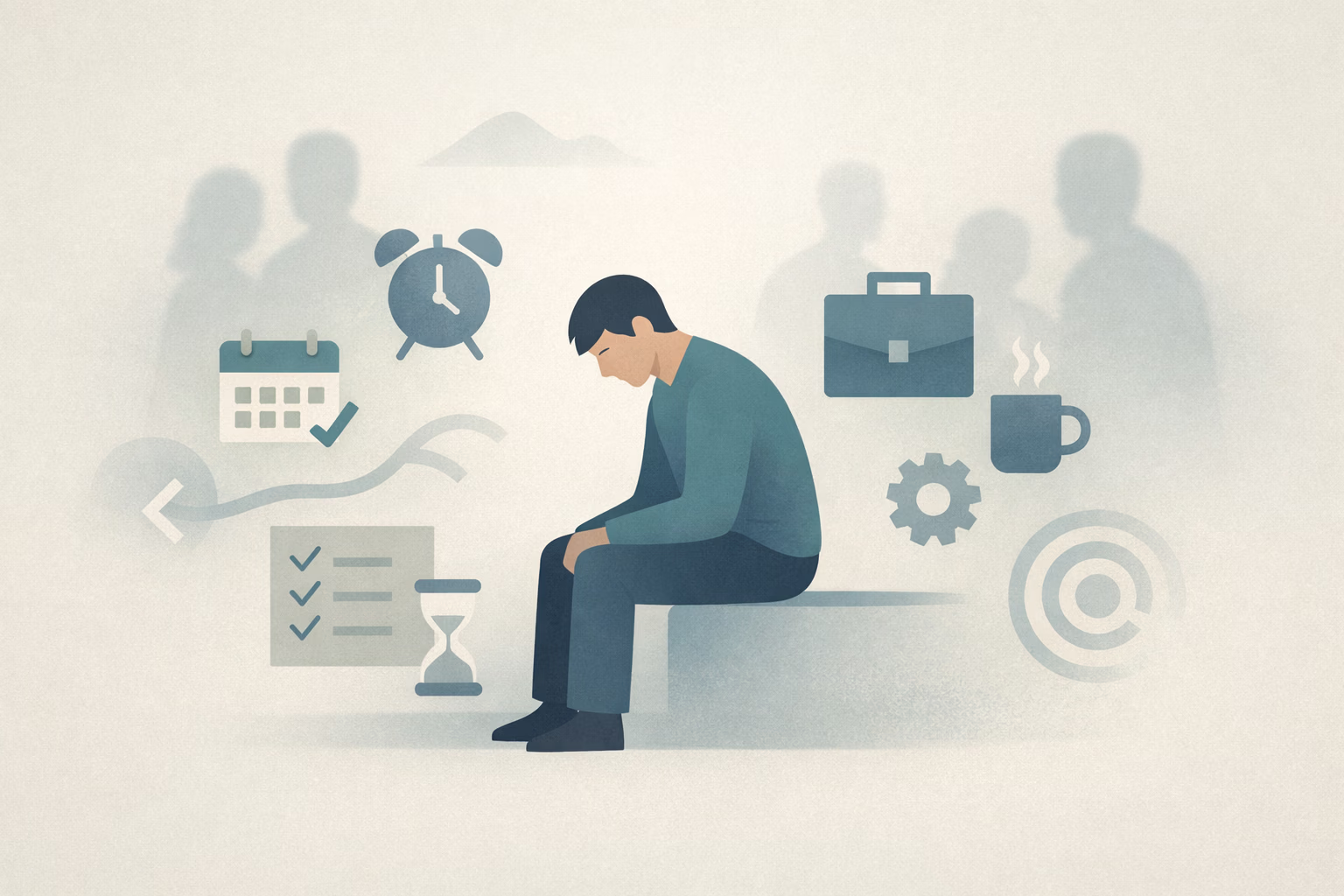
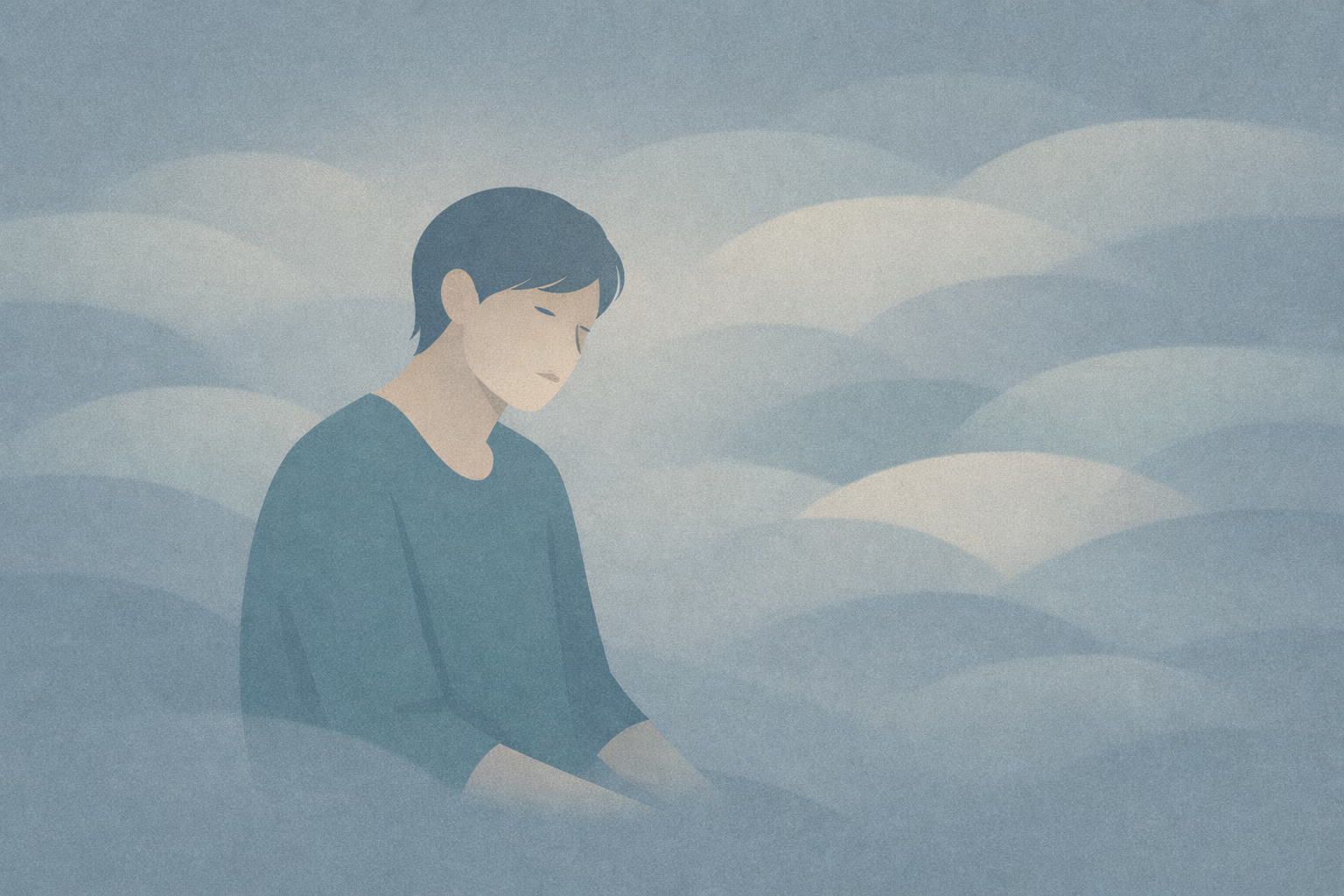
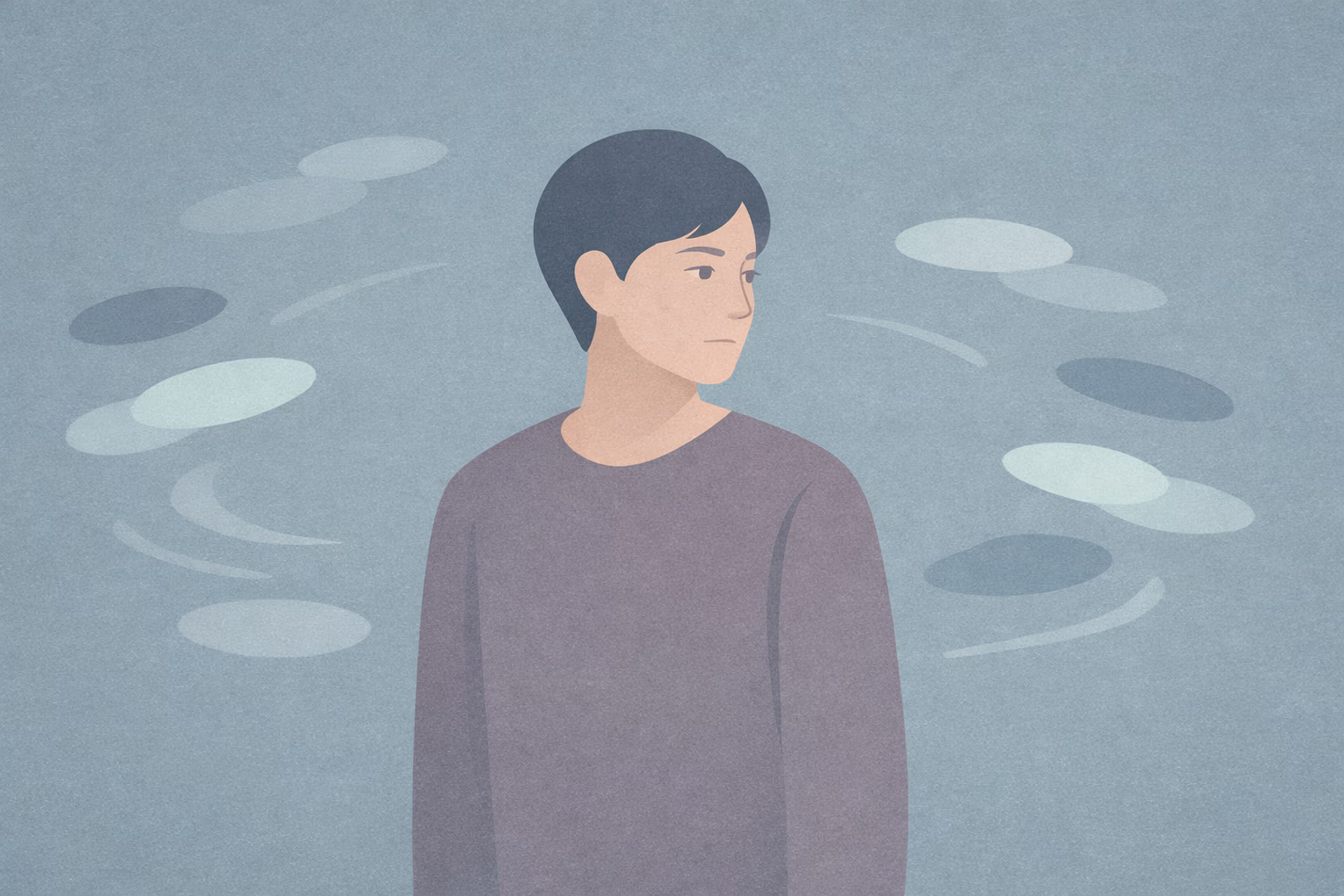
Understanding explains what is happening. Art allows you to feel it—without fixing, judging, or naming. Pause here. Let the images work quietly. Sometimes meaning settles before words do.
One Quiet Window, one insight, one reflection — every Sunday