Nervous System Reset: What Actually Calms the Body?
In short: There are moments when the day doesn’t just feel busy—it feels loud inside your body. Your thoughts speed up, your attention splinters, your tone gets sharper than you meant, or you go strangely blank.
There are moments when the day doesn’t just feel busy—it feels loud inside your body. Your thoughts speed up, your attention splinters, your tone gets sharper than you meant, or you go strangely blank. This isn’t a character flaw. It’s what human systems do when the load outruns the available capacity.
What if “resetting” isn’t self-improvement—but a quick way to restore internal order?
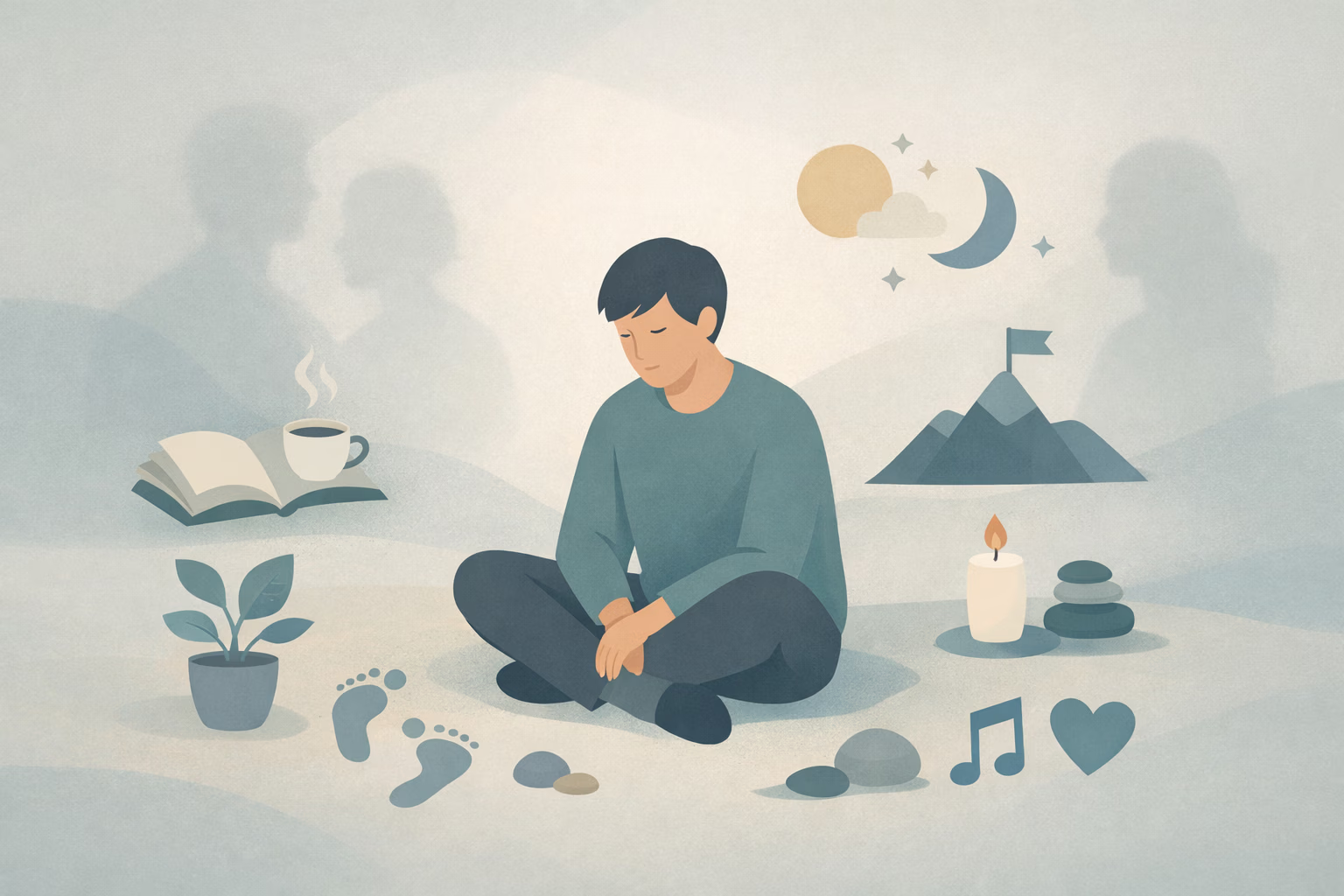
In this context, emotional reset rituals are brief, repeatable actions that function like a familiar signal: we are not in immediate danger; we can come back online. They don’t solve the whole situation. They reduce the spike, create a small “done” signal, and give your system a chance to reorganize.
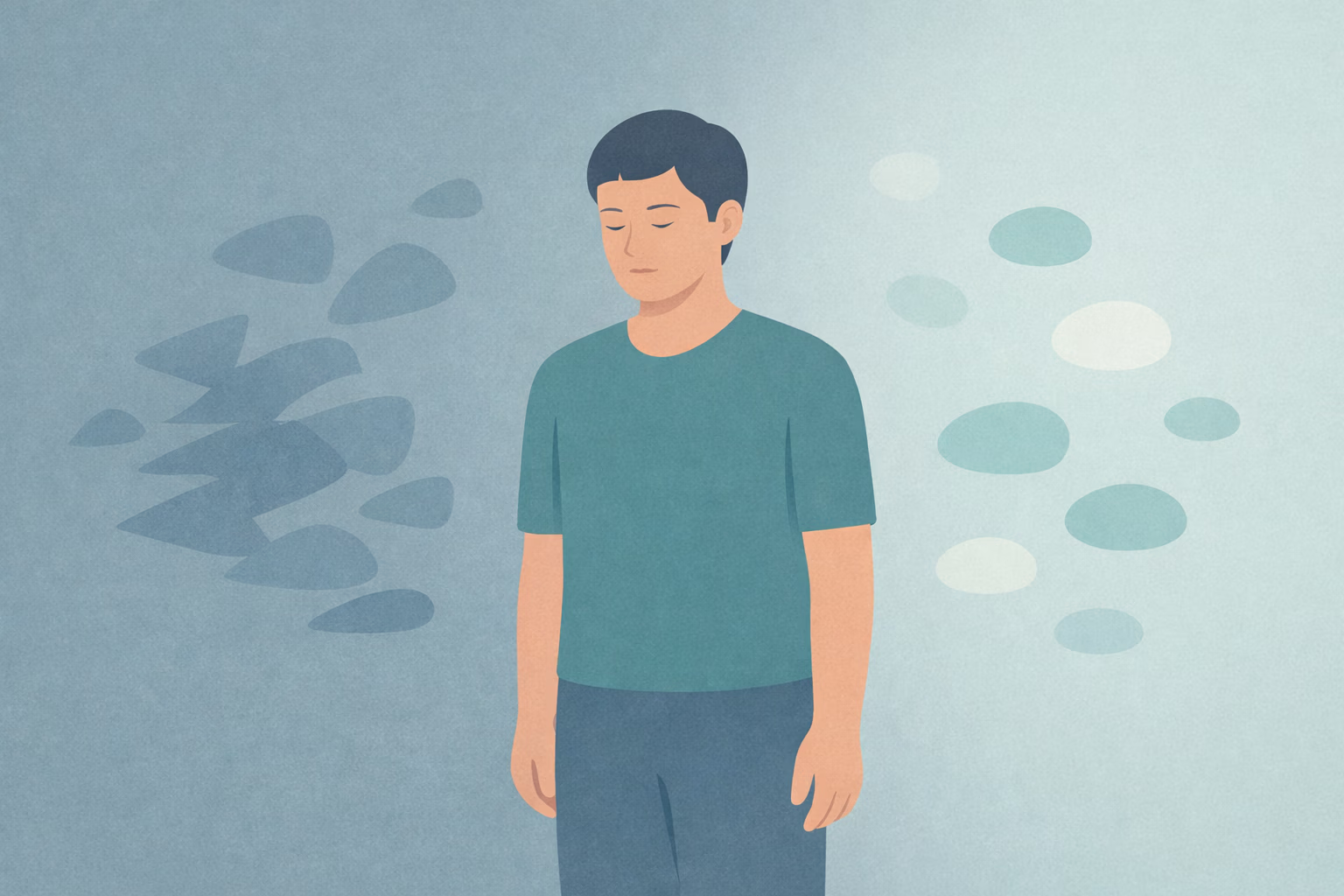
Emotional overload often arrives like a sudden weather change: one more email, one more noise, one more decision, and the system flips from “handling it” to “too much.” The urgency you feel in those moments isn’t drama—it’s biology seeking stabilization.
Under stress, the brain and body prioritize speed and protection. Attention narrows, threat-detection ramps up, and the body mobilizes energy for response. When this activation rises quickly, it can feel like you need relief now, not later. That urgency is a regulatory signal—your system trying to reduce load and regain a workable baseline. [Ref-1]
In a spike, your nervous system isn’t asking for a perfect explanation. It’s looking for predictability—something it already recognizes as “safe enough.” That’s where ritual helps: repetition reduces uncertainty, and reduced uncertainty reduces activation.
A ritual is not powerful because it’s profound. It’s powerful because it’s familiar. When the same small sequence happens again and again, the body starts to associate it with downshifting. Over time, predictability becomes a cue that the environment is manageable and the system can loosen its grip. [Ref-2]
A ritual is like a small promise your body believes because it has evidence.
Humans are rhythmic creatures. Heartbeat, breath, walking, chewing, rocking—our regulation systems are built around tempo and pattern. When stress becomes chronic, the body carries “wear and tear” from staying in high-output mode without enough completion. [Ref-3]
Rituals lean on an old design feature: when the body detects steady rhythm and a known sequence, it can reduce the cost of constant scanning. That doesn’t mean life becomes easy. It means the system spends less energy bracing, and more energy returning to baseline.
Re-centering isn’t a mood trick. It’s a shift in autonomic organization—less defensive activation, more capacity for flexible response. In practical terms, it can look like your shoulders lowering, your jaw unclenching, your attention widening, or your impulse to react becoming less immediate. [Ref-4]
Rituals don’t erase what happened. They interrupt runaway escalation long enough for the system to re-establish a coherent internal map: what’s happening, what matters, and what can wait. That small return of order is often what people mean when they say, “I feel like myself again.”
It’s easy to hear “quick reset” and imagine a hack that deletes stress. But a nervous system doesn’t settle because it was convinced. It settles because it receives enough cues of safety, predictability, and completion to stand down. [Ref-5]
That’s why rituals can feel almost boring when they work. They are not designed to excite you; they are designed to reduce the need for constant vigilance. The goal is less “high performance” and more “safe enough to be real.”
When you can’t change the situation fast, can you change the signal environment?
In overwhelm, experience can become fragmented: sensation without context, urgency without direction, reaction without closure. Rituals help by creating a small container—an organized sequence that tells the body where the beginning and end are.
This matters because regulation isn’t only cognitive. It’s also interoceptive—body-to-brain communication about internal state. When a ritual is repeatable, the body can detect a familiar pattern and update its state estimate: the spike is not the whole story; the system can move toward completion. [Ref-6]
Importantly, this isn’t about pushing feelings away. It’s about reducing noise so the system can process what’s already there without being flooded by it.
Many people don’t notice they’re overloaded until the system is already in a narrow, reactive mode. “Needing a reset” often shows up as a cluster of signals rather than a single emotion.
Emotional flooding: everything feels too intense, too fast, or too close
Panic onset or a sudden rush of urgency in the body
Irritability that feels disproportionate to the trigger
Loss of focus: rereading the same sentence, forgetting why you opened a tab
Overcontrol: getting rigid about details because uncertainty feels unbearable
These are common markers of a system working hard to regulate under pressure—often through narrowing attention, tightening control, or speeding up internal threat-checking. [Ref-7]
If the day keeps escalating and nothing marks an endpoint, the nervous system can learn that activation is the default. Not because you “can’t cope,” but because the environment keeps leaving loops open: unfinished conversations, endless notifications, tasks that multiply faster than they complete.
Without a reliable recovery pattern, the body may start to conserve resources by going numb, checking out, or reaching for fast state-changes (scrolling, snacking, snapping, overworking). These aren’t moral failures; they’re attempts at closure and relief when true completion isn’t available.
Over time, repeated cycles of activation without structured downshift can reinforce instability—making spikes easier to trigger and harder to exit. [Ref-8]
A reset ritual becomes effective partly through learning. When the body repeatedly experiences, “this sequence precedes settling,” it begins to respond earlier and with less effort. That’s not willpower; it’s conditioning—an association between a cue and a state shift.
Breath rhythm is one well-studied pathway into autonomic regulation, with measurable links to heart rate variability and stress response. [Ref-9] But the broader point is simpler: consistent cues reduce the time spent searching for safety.
Trust isn’t a thought. It’s what your body does when it believes an ending is coming.
Under pressure, many people relate to their inner state as an enemy: something to defeat, override, or outlast. That framing increases strain because it adds conflict on top of activation. A personal ritual can quietly change the relationship: not by making you “more aware,” but by giving your system a dependable route back to coherence.
When a ritual is yours—simple, recognizable, repeatable—it functions like an identity-level anchor: I am a person who returns. Not perfectly, not instantly, but reliably. Even small embodied sequences (like a consistent pause, a set of movements, or a familiar sensory cue) can support stress reduction by shifting physiology in the moment and reinforcing recovery capacity over time. [Ref-10]
This is meaning in a practical form: your nervous system recognizes continuity across days, not just intensity inside a single day.
Humans regulate in relationship. Tone of voice, facial softness, predictable pauses, and small gestures can act as safety cues—especially during conflict, caregiving, or high-demand teamwork. Shared rituals don’t require big conversations; they’re often tiny patterns that reduce uncertainty.
Examples of shared reset cues can include a mutual pause before responding, a consistent way of ending a tense discussion, or a familiar transition when coming home. These micro-structures reduce the chance that stress cascades into threat dynamics. In acute stress, predictable social cues can limit escalation and support recovery. [Ref-11]
What changes when “calm” becomes something a relationship signals, not something one person must generate alone?
When the system re-centers, the shift is often subtle: fewer internal alarms, more room for context, and a steadier presence in your own body. You may still have the same problems, but you’re no longer solving them from a state of emergency.
Balance is not the absence of stress; it’s the return of flexible range. Thinking becomes less tunnel-like. Social contact can feel less effortful. You can register signals—hunger, fatigue, concern—without being immediately driven by them. Social buffering also matters here: supportive connection reliably changes stress physiology and improves recovery, even when circumstances remain demanding. [Ref-12]
Stability often feels like “I can hold this” more than “I feel amazing.”
Agency doesn’t come from forcing better behavior during peak activation. It comes back when the nervous system has enough safety signaling to pause between impulse and action. That pause is where choice lives.
From a learning perspective, safety signals reduce defensive responding and allow more nuanced decision-making. [Ref-13] In everyday terms, re-centering makes it easier to respond in ways that match your values—because your system is no longer spending all its resources on immediate protection.
That’s the quiet power of a reset ritual: it doesn’t “fix you.” It restores access to the part of you that can steer.
Emotional reset rituals can be understood as small acts of care for the organism that carries your responsibilities, relationships, and hopes. They mark a boundary in time—an internal closing of a loop—so stress doesn’t have to spill endlessly into the next hour.
In a culture that keeps attention open and urgency high, these brief structures can protect something essential: the capacity to be coherent. Not constantly calm. Not constantly improving. Simply more able to return to what matters. Recovery and rest are not indulgences in that frame; they are the conditions that make sustainable meaning possible. [Ref-14]
When life is chaotic, it’s easy to assume the only answer is bigger effort. But nervous systems often settle through smaller signals: repetition, predictability, and a sense of ending. A reset ritual is one way rhythm re-enters the day—quietly, reliably, without requiring you to become someone else.
Over time, those small returns can add up to something deeply human: a body that expects closure, a mind that can widen again, and an identity that feels less fragmented by the pace of the world. [Ref-15]
From theory to practice — meaning forms when insight meets action.
Distraction changes the channel; a reset closes a loop. The article frames reset rituals as brief, repeatable actions that signal 'we are not in immediate danger; we can come back online.' They don't solve the situation. They reduce the spike, create a small Done Signal, and give the system a chance to reorganize. The marker isn't whether you feel calm afterward but whether the sequence has a recognizable beginning, middle, and end the body can register as complete. Distraction tends to leave activation running underneath; a real reset interrupts the runaway escalation long enough for internal order to return.
Because in a spike the nervous system isn't asking for a perfect explanation — it's looking for predictability, something it already recognizes as safe enough. A ritual is powerful not because it's profound but because it's familiar. Repetition reduces uncertainty, and reduced uncertainty reduces activation. When the same small sequence happens again and again, the body associates it with downshifting. Humans are rhythmic creatures — heartbeat, breath, walking, chewing — and our regulation systems are built around tempo and pattern. A ritual is like a small promise your body believes because it has evidence of past completion.
Many people don't notice they're overloaded until the system is already in a narrow, reactive mode. The signals usually arrive as a cluster: emotional flooding (everything feels too intense, too fast, too close), sudden urgency, irritability disproportionate to the trigger, loss of focus (rereading sentences, forgetting why you opened a tab), overcontrol that gets rigid about details because uncertainty feels unbearable. These are markers of a system working hard to regulate under pressure — narrowing attention, tightening control, speeding up internal threat-checking. They aren't moral failures; they're a request for a recovery signal the day hasn't supplied.
The opposite, usually. A reset becomes more effective through learning. When the body repeatedly experiences 'this sequence precedes settling,' it begins to respond earlier and with less effort. That's not willpower; it's conditioning — an association between cue and state shift. The ritual functions like an identity-level anchor: I am a person who returns. Not perfectly, not instantly, but reliably. Shared rituals between people add another layer through co-regulation, with predictable social cues limiting escalation and supporting recovery. Stability often feels less like 'I feel amazing' and more like 'I can hold this' — the return of capacity rather than euphoria.
From Science to Art.
Understanding explains what is happening. Art allows you to feel it—without fixing, judging, or naming. Pause here. Let the images work quietly. Sometimes meaning settles before words do.
One Quiet Window, one insight, one reflection — every Sunday