Breaking Emotional Loops: The First Step Toward Inner Freedom

In short: Hard feelings aren’t a sign that something is wrong with you. They’re often a sign that something is still active in your system—an unfinished loop, a missing “done” signal, or too much input arriving too fast for your capacity to sequence it.
Hard feelings aren’t a sign that something is wrong with you. They’re often a sign that something is still active in your system—an unfinished loop, a missing “done” signal, or too much input arriving too fast for your capacity to sequence it.
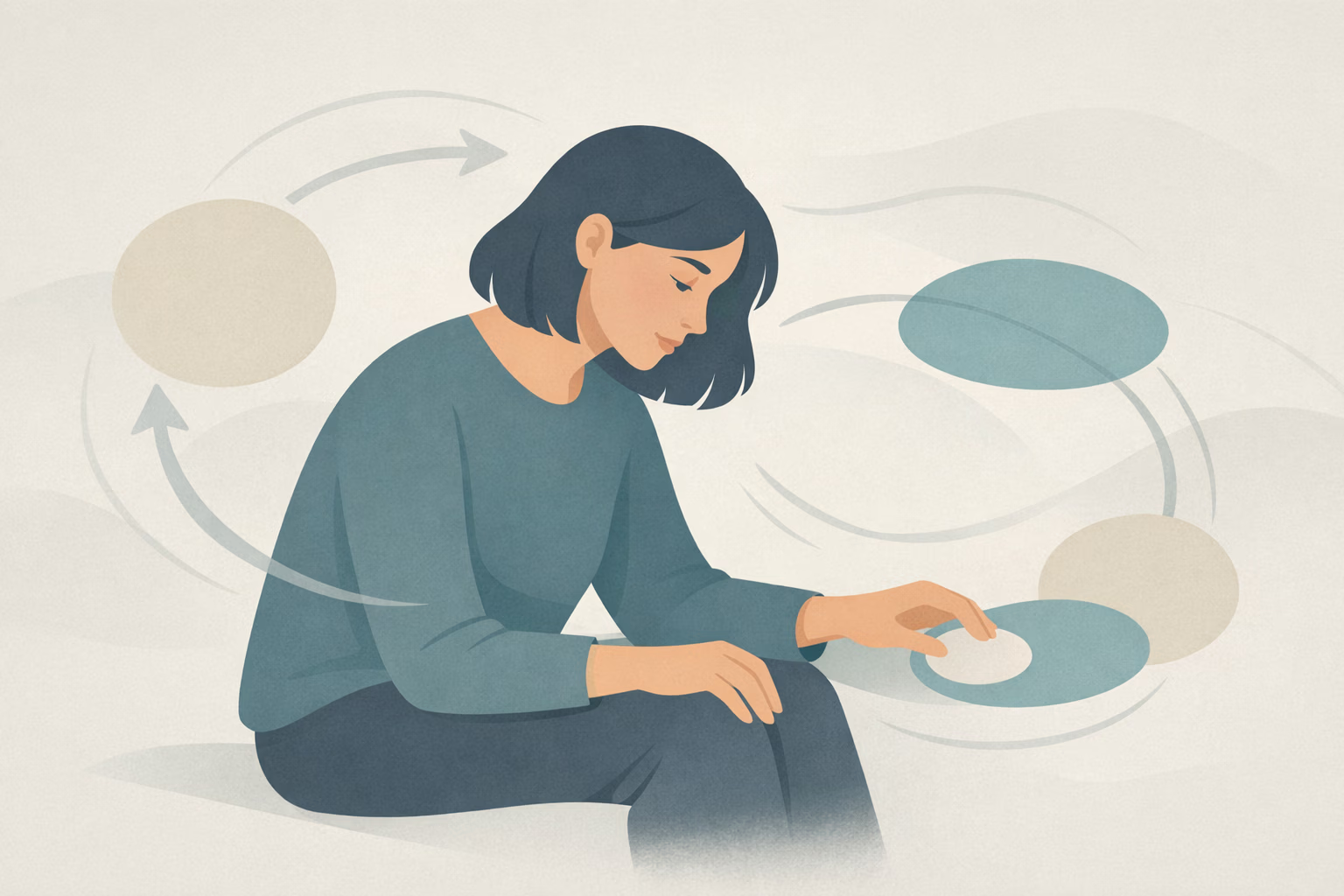
What many people call “emotional strategy” is not a personality trait or a self-improvement project. It’s a structure: a way the mind and body move from activation into orientation—so that responses can become coherent instead of urgent.
What if you don’t need to get rid of hard feelings—only stop getting lost inside them?
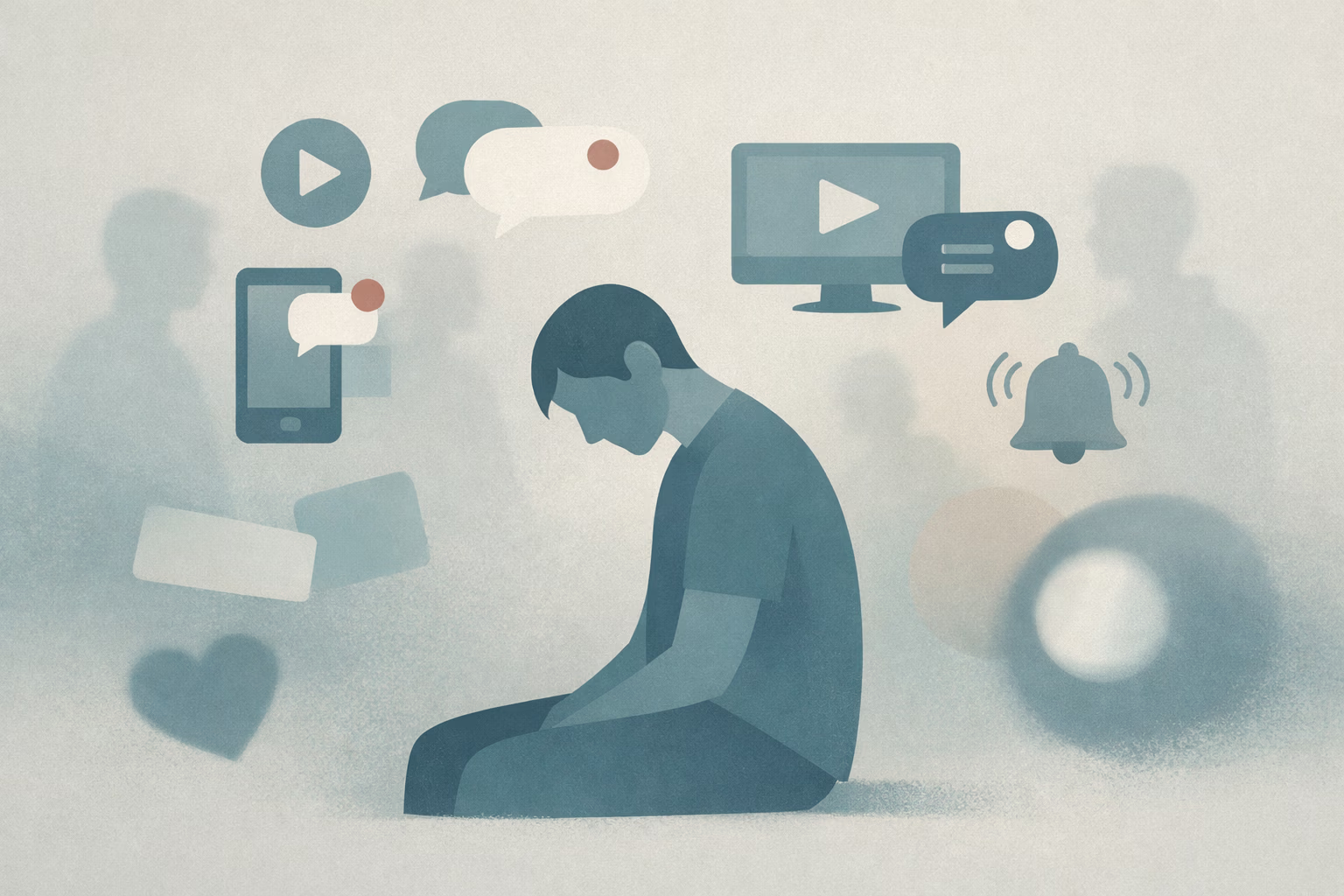
When a strong emotion hits, the problem is rarely the feeling itself. The problem is the loss of a path forward. Attention narrows, time feels strange, and the inner world can become louder than the outer one. In that state, people often default to whatever creates immediate traction: analyzing, reacting, withdrawing, fixing, scrolling, explaining.
These moves aren’t “bad coping.” They’re fast regulatory responses—ways your system tries to reduce uncertainty and regain control when the load is high. Emotion regulation research consistently shows that regulation is not one thing; it’s a set of processes that can work well or poorly depending on context, capacity, and stress level. [Ref-1]
It’s not that the feeling is too much. It’s that there’s no clear sequence for what happens next.
Strategy is what your executive attention does when it can: it places experiences into an order—notice, stabilize, respond—rather than letting everything arrive as one blended emergency. This sequencing matters because overwhelm is often less about intensity and more about simultaneity: body signals, thoughts, memories, and external demands all competing at once.
When people describe “emotion dysregulation,” they often mean that the system can’t reliably move through these steps under stress. It’s not a character flaw; it’s a capacity issue shaped by load, sleep, threat cues, and time pressure. Measures like the DERS point to multiple domains—clarity, impulse control, access to workable responses—suggesting that disorientation is structural, not moral. [Ref-2]
Humans evolved in environments where clarity depended on making sense of complex signals: weather, social dynamics, physical danger, resource scarcity. A nervous system that stayed permanently reactive would waste energy. So we developed higher-order planning systems that can hold multiple inputs, choose a direction, and reduce unnecessary activation.
In modern life, that same planning capacity often gets treated like it should “override” emotion. But its deeper function is gentler: to create flexibility under pressure—so you’re not trapped in one automatic lane. Psychological flexibility is linked with better functioning not because it eliminates discomfort, but because it helps people stay oriented while discomfort passes through. [Ref-3]
Without a strategy, the system usually chooses what feels decisive in the moment: cutting off contact, sending the message, making the purchase, starting the argument, quitting the plan, staying silent. It can feel clean—like a snap-back into control—because the nervous system prefers closure over ambiguity.
But when closure is created by force rather than completion, the underlying loop often stays open. The body may remain activated, the mind keeps replaying, and the same theme returns in a new form. This is why “getting it over with” can still leave fatigue behind: the system never received a true stand-down signal. [Ref-4]
Trying to control emotions often means trying to make them stop. Navigating emotions is different: it means staying in relationship with signals long enough for the system to regain orientation. Control tends to increase internal pressure, because it adds a second task on top of the original load: not only is something happening, but you must also defeat your reaction to it.
Guidance is quieter. It makes room for the nervous system to re-map what’s happening without escalation. This is one reason approaches that emphasize present-moment attention and decentering can reduce reactivity: they shift the system from battling experience to organizing it. [Ref-5]
What changes when the goal isn’t “stop feeling,” but “stay oriented”?
When emotions arrive without a reliable structure for moving through them, many people end up in repeating loops. Not because they “refuse to deal,” but because the environment and internal load make completion difficult. The loop keeps cycling as a way to find an exit.
What often gets labeled “avoidance” can be understood as a nervous system choosing the path of least additional load: postponing a conversation, switching tasks, over-researching, numbing, staying busy. This reduces immediate strain, but it can also mute consequence and delay closure—so the system never gets the evidence that the situation has resolved. [Ref-6]
When the pathway to closure is unclear, the nervous system tends to pick one of a few predictable regulators. These aren’t identities. They’re temporary solutions that work quickly—until they don’t.
Even suppression can be a short-term stabilizer—reducing outward expression so a person can keep functioning—while also increasing physiological strain over time. [Ref-7]
Repeated emotional disorientation doesn’t just feel uncomfortable; it can start to distort self-perception. If your internal world often pulls you off course, it’s easy to conclude that you are unreliable. But what’s usually unreliable is the environment’s ability to offer completion: enough time, safety cues, and coherent feedback for the nervous system to settle.
When experiences don’t integrate, they remain “live.” And when too many experiences are live at once, meaning gets thin. Decisions become about reducing pressure, not about expressing values. Research on acceptance-related processes suggests that making room for experience (without forcing it away) is associated with lower downstream costs compared to chronic suppression. [Ref-8]
When everything is unfinished, even small choices start to feel like tests.
Under sustained stress, the brain learns what to prioritize. If intense emotion repeatedly becomes the loudest signal, the system may begin to treat it as the primary decision-maker—not because emotion is “winning,” but because urgency is being reinforced.
This is how a person can end up living in a reactive economy: choices are organized around immediate relief, immediate certainty, or immediate distance from activation. Over time, present-moment attention can weaken—not as a failure of mindfulness, but as a predictable result of too many competing alarms. Research on being present links attention stability with well-being, suggesting that orientation itself is protective. [Ref-9]
There’s a simple bridge between reactivity and coherence: sequence. Not insight, not self-critique, not a perfect explanation—sequence. When the system can pause long enough to register body state, locate the situation in time, and re-orient to context, load often drops.
This isn’t about “listening to feelings” as an emotional performance. It’s about interoception—the body-to-brain information stream—becoming interpretable again, instead of arriving as undifferentiated pressure. When signals are distinguishable, the nervous system can allocate resources more efficiently. [Ref-10]
Sometimes the most stabilizing question is simply: “Where am I, and what is happening right now?”
Emotional storms rarely stay contained inside one person. Without a shared strategy, relationships can become improvisational under stress: one nervous system escalates, the other withdraws; one pushes for resolution, the other goes quiet. The conflict is often less about disagreement and more about mismatched regulation styles colliding.
When people share a language for what’s happening—“high load,” “too fast,” “need sequencing,” “not oriented yet”—it reduces moral interpretation. That shift can create more humane space: less blame, fewer character conclusions, more time for the system to settle. Research on self-compassion suggests that reducing self-criticism supports resilience and emotional stability, which also changes how we relate to others under pressure. [Ref-11]
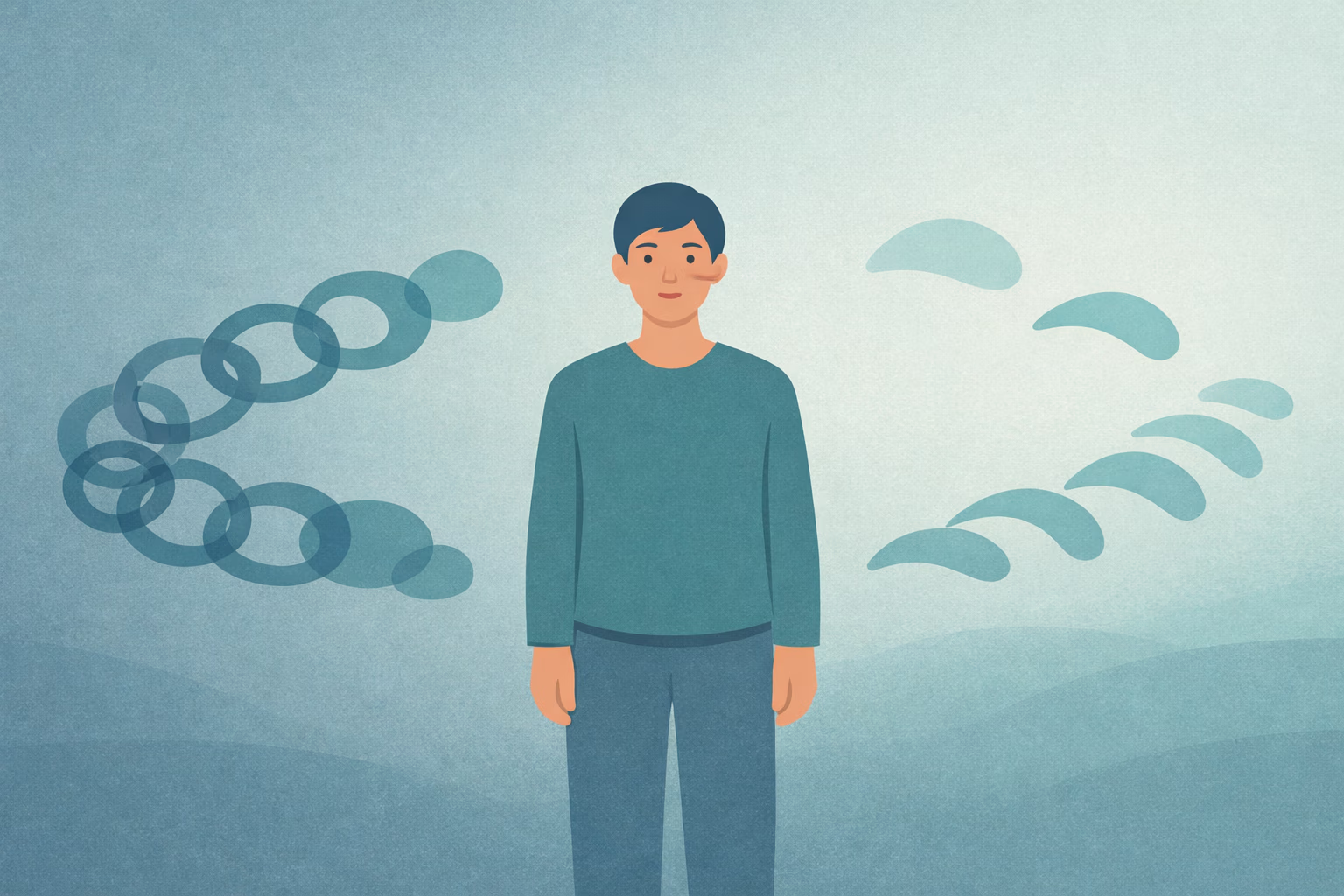
As load decreases and closure becomes more available, the change is often subtle. Not constant calm, not permanent positivity—more like a quicker return. The system spends less time in the “stuck” phase and more time in workable orientation.
This restoration of self-trust is not just a mindset shift; it’s often the result of repeated experiences of successful re-orientation—where the body learns, through completion, that it can move through activation and come back. [Ref-12]
Strategy doesn’t remove emotion. It changes the role emotion plays. Instead of being the steering wheel, emotion becomes information—part of the dashboard—while values supply direction. That’s what coherence looks like: not “never activated,” but guided.
When values guide responses, identity becomes less fragmented. You can recognize yourself across situations, even hard ones. And because humans are social organisms, supportive connection can buffer stress physiology and widen the window where strategy is possible—especially during high-load periods. [Ref-13]
Direction isn’t the absence of storms. It’s knowing what you’re steering by when the weather changes.
Many people carry the quiet belief that hard feelings mean they’re falling behind—behind other people, behind their own expectations, behind who they “should” be. But from a nervous system perspective, hard feelings often mean your system is tracking something unresolved while still trying to keep you safe and functional. [Ref-14]
In that light, emotional strategy is less like a technique and more like a compass: it doesn’t force the weather to change, but it helps life stay oriented toward what matters. When orientation returns, agency returns—not as willpower, but as coherence.
Emotions are part of how the brain and body coordinate adaptation. Under chronic strain they can become louder, not because you are broken, but because the system is working with limited closure and high input. [Ref-15]
A dignified emotional life isn’t one where nothing difficult arises. It’s one where difficult signals can move through without taking over the whole story—where your responses can settle into who you are, not just what your nervous system had to do in the moment.
From theory to practice — meaning forms when insight meets action.
When a strong emotion arrives, the problem is rarely the feeling itself — it's the loss of a path forward. Attention narrows, time feels strange, and the inner world becomes louder than the outer one. People default to whatever creates immediate traction: analyzing, reacting, withdrawing, fixing, scrolling. These aren't bad coping; they're fast regulatory responses trying to reduce uncertainty when load is high. The article reframes overwhelm as less about intensity and more about simultaneity — body signals, thoughts, memories, demands all arriving at once. It's not that the feeling is too much; it's that there's no clear sequence for what happens next.
Control tries to make emotions stop. Navigation stays in relationship with signals long enough for the system to regain orientation. Control adds a second task on top of the original load: not only is something happening, you must also defeat your reaction to it. That increases internal pressure. Guidance is quieter — it makes room for the nervous system to re-map without escalation. The shift is from stop feeling to stay oriented. Strategy doesn't remove emotion; it changes the role emotion plays. Instead of being the steering wheel, emotion becomes information on the dashboard while values supply direction.
Because closure created by force isn't the same as completion. Without a strategy, the system chooses what feels decisive in the moment: cutting off contact, sending the message, quitting the plan. It can feel clean — like a snap-back into control — because the nervous system prefers closure over ambiguity. But when closure is forced rather than completed, the underlying loop stays open. The body remains activated, the mind keeps replaying, and the same theme returns in a new form. That's why getting it over with can still leave fatigue behind: no true Done Signal arrived.
Through sequencing — not insight, not self-critique, just sequence. When the system can pause long enough to register body state, locate the situation in time, and re-orient to context, load drops. Sometimes the most stabilizing question is: where am I, and what is happening right now? This isn't about listening to feelings as performance — it's about interoception becoming interpretable again instead of arriving as undifferentiated pressure. When signals become distinguishable, the system allocates resources more efficiently. Coherence isn't never activated; it's guided. Direction isn't the absence of storms — it's knowing what you're steering by when the weather changes.
From Science to Art.
Understanding explains what is happening. Art allows you to feel it—without fixing, judging, or naming. Pause here. Let the images work quietly. Sometimes meaning settles before words do.
One Quiet Window, one insight, one reflection — every Sunday