
Always-On Society: When Your Rhythm Never Gets to Reset
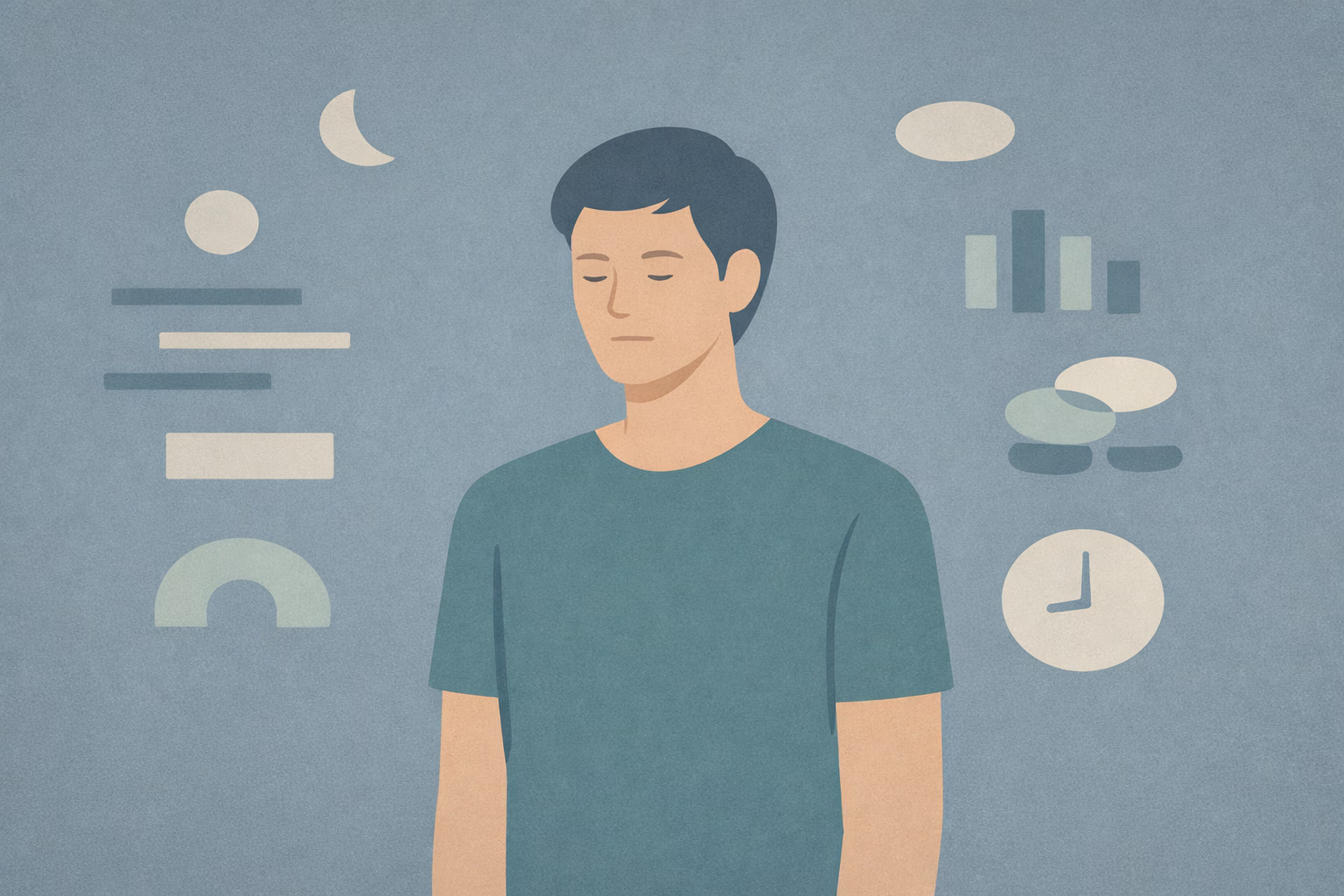
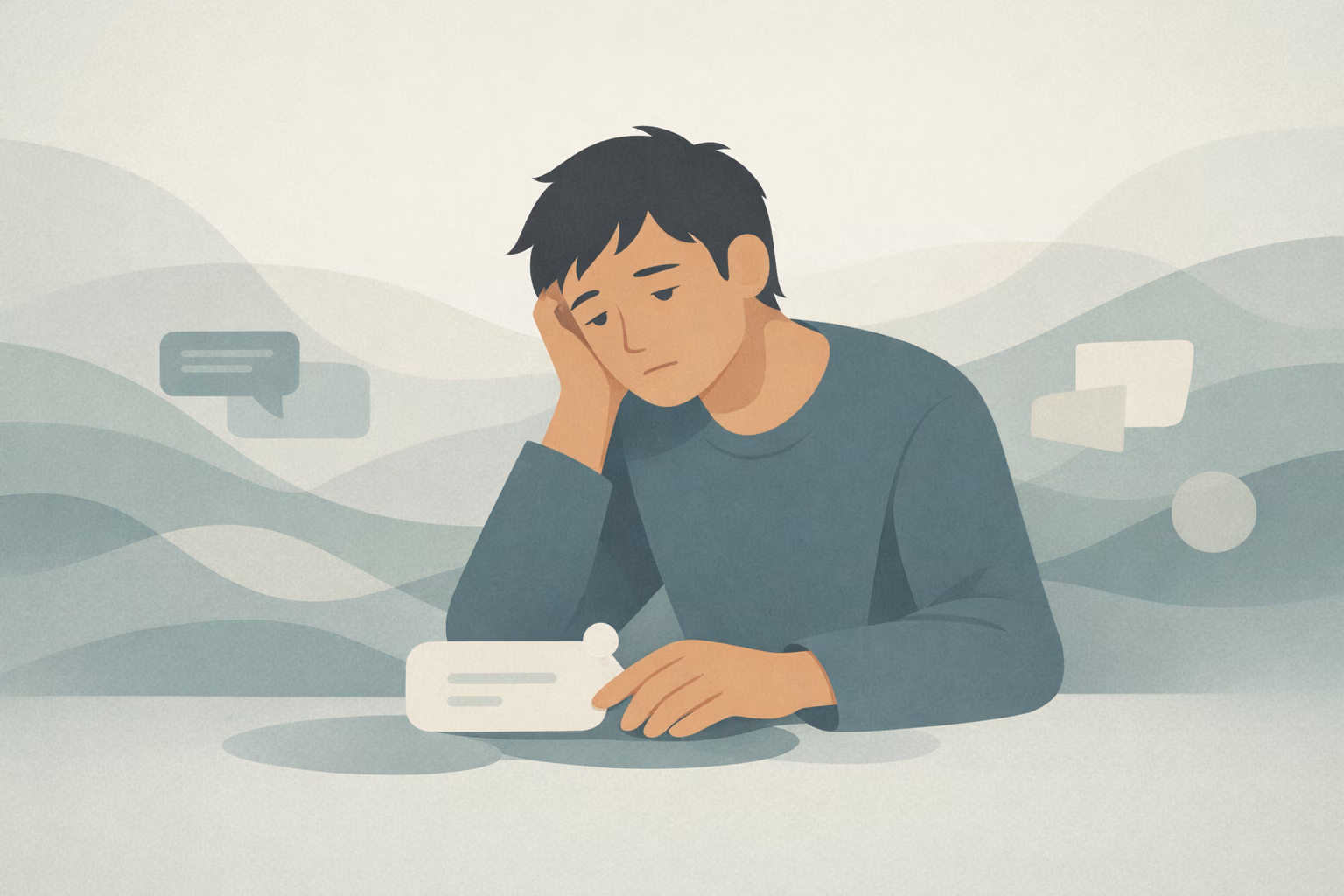
In short: Sometimes stress doesn’t arrive as a dramatic event. It shows up as a low, constant hum: a body that won’t fully unclench, a mind that keeps scanning, a tiredness that doesn’t match the day you had.
Sometimes stress doesn’t arrive as a dramatic event. It shows up as a low, constant hum: a body that won’t fully unclench, a mind that keeps scanning, a tiredness that doesn’t match the day you had.
What if “feeling off” isn’t a personal flaw—just a nervous system living in a rhythm that doesn’t let it land?
Stress alignment is a simple idea: the degree to which your everyday lifestyle patterns support your nervous system’s need for safety cues, pacing, and recovery. When the inputs don’t add up to enough closure, the system stays lightly activated—quietly creating tension that can be hard to name.
Persistent tension without a clear stressor can feel confusing. Nothing is actively on fire, yet your system acts as if it needs to stay ready—muscles tight, attention brittle, patience thin.
This often happens when stress becomes structural rather than situational. Instead of one identifiable threat, there’s a steady accumulation of small demands and incomplete “done” signals. The body doesn’t require a crisis to carry load; it only needs enough ongoing input to prevent stand-down. [Ref-1]
Sometimes the problem isn’t the day. It’s that the day never fully ends inside you.
Your nervous system reads the day through patterns: sleep timing, movement, stimulation level, social contact, food timing, light exposure, and the pace at which demands arrive. These are not “habits” in a moral sense—they’re physiological signals that continuously update your baseline state.
When inputs stack without recovery, the body adapts by raising its readiness level. Over time, that readiness can become the default, a form of wear-and-tear sometimes described as allostatic load. [Ref-2]
Human biology evolved in environments where intensity came in waves: effort followed by recovery, alertness followed by downshift, social engagement followed by quiet. Stress responses are not mistakes—they’re designed to help you meet a moment and then return to baseline.
Modern life often removes the return. Stimulation stays available, demands stay visible, and the boundary between “work,” “social,” and “rest” can blur into one long continuum. Under chronic exposure, stress-related brain and body systems can shift from flexible to sticky—less able to reset on their own schedule. [Ref-3]
Not being able to relax isn’t proof you’re doing something wrong.
It’s often proof that your system hasn’t received enough reliable signals that the loop is complete.
A high-output lifestyle can temporarily create a kind of stability. Productivity, distraction, and social validation can generate short bursts of coherence: a clear target, a quick reward, a sense of being needed.
Biologically, intensity can also narrow attention and mute competing signals—hunger, fatigue, tenderness, uncertainty—because the system prioritizes the next requirement. In the short term, that can feel like focus. Over time, it can look like being “fine” while quietly running hot. [Ref-4]
When performance becomes the main way the day organizes itself, recovery can start to feel optional—until the body makes it non-optional.
Many people assume lifestyle stress is unavoidable: everyone is busy, screens are everywhere, schedules are crowded. But nervous systems don’t process “normal” the way culture does. They process input, load, and recovery.
The strain often isn’t caused by one big factor. It’s the quiet arithmetic of small mismatches:
Even subtle shifts in movement and pacing are associated with how stress accumulates in the body over time. [Ref-5]
It’s tempting to explain misalignment as psychology—avoiding feelings, avoiding problems. But many avoidance loops are simpler and more structural: when baseline strain rises, the system reaches for whatever reduces friction fast.
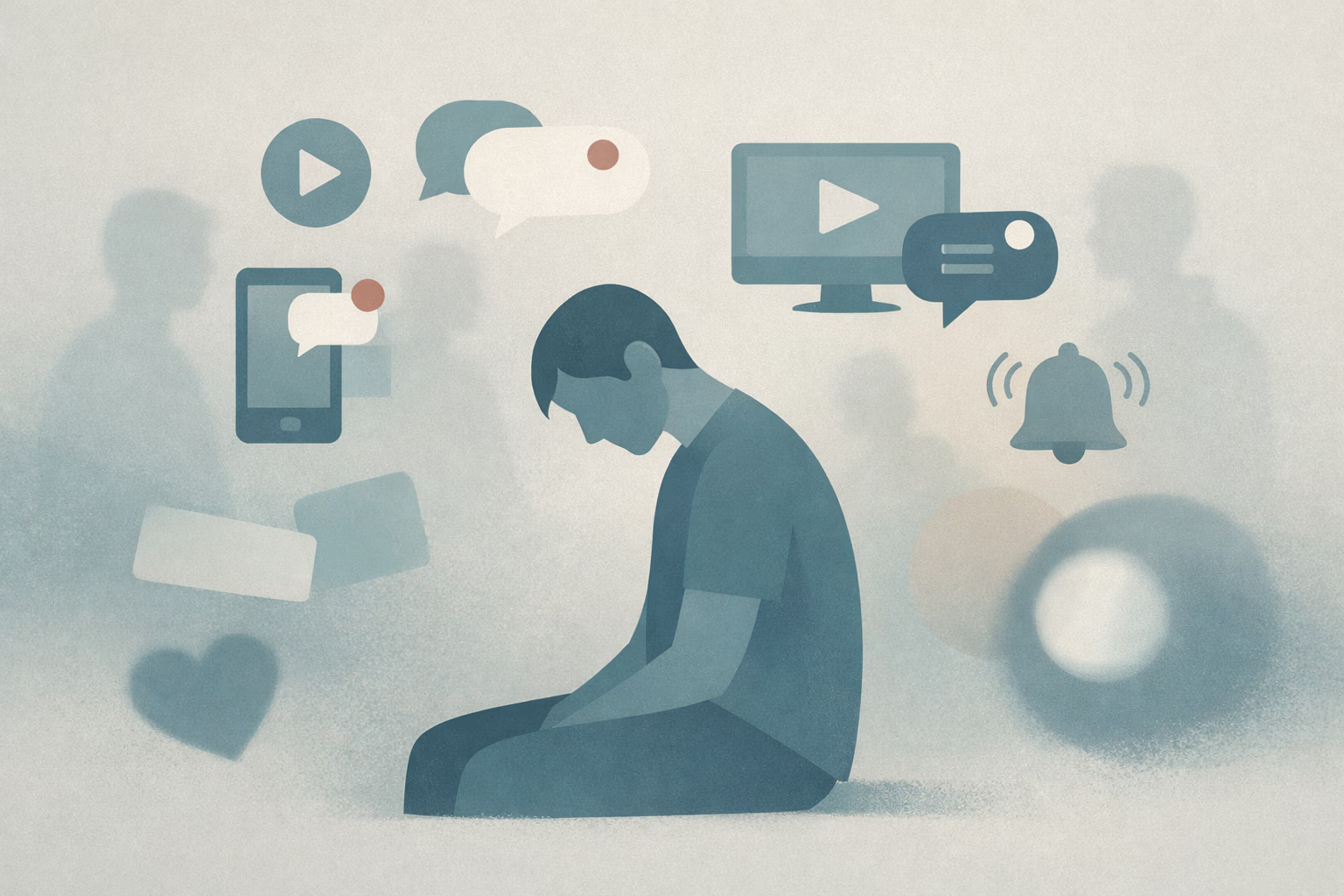
Constant stimulation (scrolling, multitasking, staying busy, staying socially “on”) can function like a mask—not because you’re refusing anything, but because it temporarily changes state. It offers a quick shift in sensation or attention without requiring the day to complete. The underlying load remains, so the need for stimulation returns.
Sleep disruption can intensify this loop: less recovery increases stress sensitivity, and increased stress sensitivity makes deep recovery harder. It’s bidirectional, not a character issue. [Ref-6]
When lifestyle quietly creates tension, the signs are often small and persistent rather than dramatic. They can look like “normal life” until you notice how much capacity has been shaved off.
Digital overload and constant evaluation can add a specific kind of strain: rapid context switching, social comparison, and the sense that something is always pending. [Ref-7]
The body can be “handling it” while also never getting the message that it’s done.
Chronic low-grade activation has a way of spreading. What starts as mild tension can gradually narrow resilience: less buffer for surprises, less clarity in decision-making, less capacity for nuance in relationships.
This isn’t because you’re becoming “more sensitive.” It’s because systems under continuous load allocate resources differently. When there’s no reliable closure, the body protects itself by staying partially mobilized. Over time, that can affect well-being across domains—sleep, digestion, immune function, mood stability.
Information overload and technostress can accelerate this erosion by keeping attention in a perpetual “open tab” state—many small incompletions that never fully resolve. [Ref-8]
Here’s the locking mechanism: the same lifestyle patterns that raise baseline stress can also reduce the signals that would normally help you notice it and recover from it.
When the nervous system has fewer safety cues—steady rhythms, predictable connection, clear endings—it may shift into a protective mode that prioritizes monitoring over integration. In that state, subtle needs (thirst, fatigue, satiety, social hunger) can become harder to register until they’re loud. Recovery then requires more intensity, which can keep the loop going. [Ref-9]
This can feel like “I don’t know what I need.”
Often it’s not ignorance. It’s a signal environment that doesn’t allow quiet information to rise above the noise.
Stress alignment isn’t a self-improvement project. It’s what happens when the day contains enough stabilizing signals that the nervous system can reduce baseline activation without being forced.
When rhythms match physiology—when there are real transitions, predictable downshifts, and fewer “always-on” cues—stress doesn’t have to be managed constantly. It simply has fewer reasons to stay online.
This is the meaning bridge: a body that can stand down more often has more room for coherence. Not because you think differently, but because your internal environment becomes less crowded. Nervous system regulation is strongly shaped by context, not willpower. [Ref-10]
Relief changes the moment. Closure changes the baseline.
Alignment is rarely an individual accomplishment. Humans regulate in groups. Shared routines, clear expectations, and dependable contact can act as external “scaffolding” that helps the body settle.
When households, teams, or friendships normalize constant urgency, everyone’s baseline can drift upward. When they normalize predictability and repair—clear beginnings, clear endings, fewer surprise demands—systems buffer each other more effectively. This is one reason supportive relationships can reduce stress impact. [Ref-11]
It’s not that people “fix” each other. It’s that consistent social cues help the body recognize: you’re not alone, and this moment has edges.
When stress alignment improves, the first change is often not happiness or inspiration. It’s a quieter kind of return: the background tension lowers. The body stops bracing as much.
Ease can look like ordinary functions working again—sleepiness arriving at a reasonable hour, appetite feeling clearer, attention becoming less jagged, social contact feeling less costly. This is increased capacity for signal return: internal cues become readable because the system is no longer drowning them out.
Connection matters here. Perceived isolation isn’t just an emotional story; it can be experienced by the body as reduced safety, which keeps stress circuits more active. [Ref-12]
A misaligned lifestyle often forces constant compensation: more caffeine to override fatigue, more scrolling to override agitation, more control to override unpredictability. As friction drops, the need for compensation drops too.
In that space, agency returns in a specific way: choices feel less like emergency maneuvers and more like expressions of identity. Meaning becomes easier to sense because there’s enough internal quiet for experiences to complete and settle into “this is my life” rather than “I’m just getting through it.”
This isn’t about being perfectly calm. It’s about having enough steadiness that attention can rest, values can guide, and the body can digest the day. Body-based regulation is closely tied to how we relate to experience over time. [Ref-13]
Stress alignment can be understood as a form of respect: not for an ideal schedule, but for the biology that carries your relationships, work, creativity, and care. When the nervous system is continually overdrawn, even meaningful things can start to feel heavy.
When daily life supports recovery, meaning doesn’t have to be chased. It has room to form—through completion, through steadiness, through the sense that effort has an end point. Sustainable performance is less about pushing and more about honoring recovery as part of the system. [Ref-14]
If your lifestyle has been quietly creating tension, it doesn’t mean you’re broken. It means your nervous system has been doing its job in a demanding environment—staying online, staying ready, carrying what hasn’t had a chance to complete.
And when conditions become more supportive, something dignified often happens: the need to prove, manage, or outrun your own state softens. There’s more room for kindness toward the organism you are, and more room for life to feel coherent again. Self-compassion isn’t a slogan here—it’s a stabilizing stance that reduces internal threat and supports regulation. [Ref-15]
From theory to practice — meaning forms when insight meets action.
Because stress can become structural rather than situational. Instead of one identifiable threat, there's a steady accumulation of small demands and incomplete Done Signals. The body doesn't require a crisis to carry load — it only needs enough ongoing input to prevent stand-down. Your nervous system reads the day through patterns: sleep timing, movement, stimulation level, social contact, food timing, light exposure, pacing. These aren't habits in a moral sense; they're physiological signals that continuously update your baseline state. When inputs stack without recovery, the body adapts by raising its readiness level. Sometimes the problem isn't the day — it's that the day never fully ends inside you.
Because nervous systems don't process 'normal' the way culture does. They process input, load, and recovery. The strain isn't usually one big factor — it's the quiet arithmetic of small mismatches: more sitting than walking, more indoor light than daylight, more deadlines than true finishing points, more stimulation than digestion time, more availability than boundary. Human biology evolved for rhythm — intensity in waves, effort followed by recovery, alertness followed by downshift. Modern life often removes the return. Stimulation stays available, demands stay visible, the boundary between work, social, and rest blurs into one continuum. Under chronic exposure, stress systems shift from flexible to sticky.
Because intensity narrows attention and mutes competing signals — hunger, fatigue, tenderness, uncertainty — while the system prioritizes the next requirement. In the short term, that feels like focus. Over time, it looks like being 'fine' while quietly running hot. When baseline strain rises, the system reaches for whatever reduces friction fast: scrolling, multitasking, staying socially on. This isn't avoiding feelings; it's an Avoidance Loop driven by structure. Constant stimulation temporarily changes state without requiring the day to complete. The underlying load remains, so the need for stimulation returns. Sleep disruption intensifies this: less recovery increases stress sensitivity, and increased sensitivity makes deep recovery harder.
It's not a self-improvement project. It's what happens when the day contains enough stabilizing signals that the nervous system can reduce baseline activation without being forced. When rhythms match physiology — real transitions, predictable downshifts, fewer always-on cues — stress doesn't have to be managed constantly. It simply has fewer reasons to stay online. The first change isn't happiness or inspiration. It's a quieter return: background tension lowers, the body stops bracing as much. Sleepiness arrives at a reasonable hour, appetite feels clearer, attention becomes less jagged, social contact feels less costly. Internal cues become readable because the system isn't drowning them out. Relief changes the moment; closure changes the baseline.
From Science to Art.
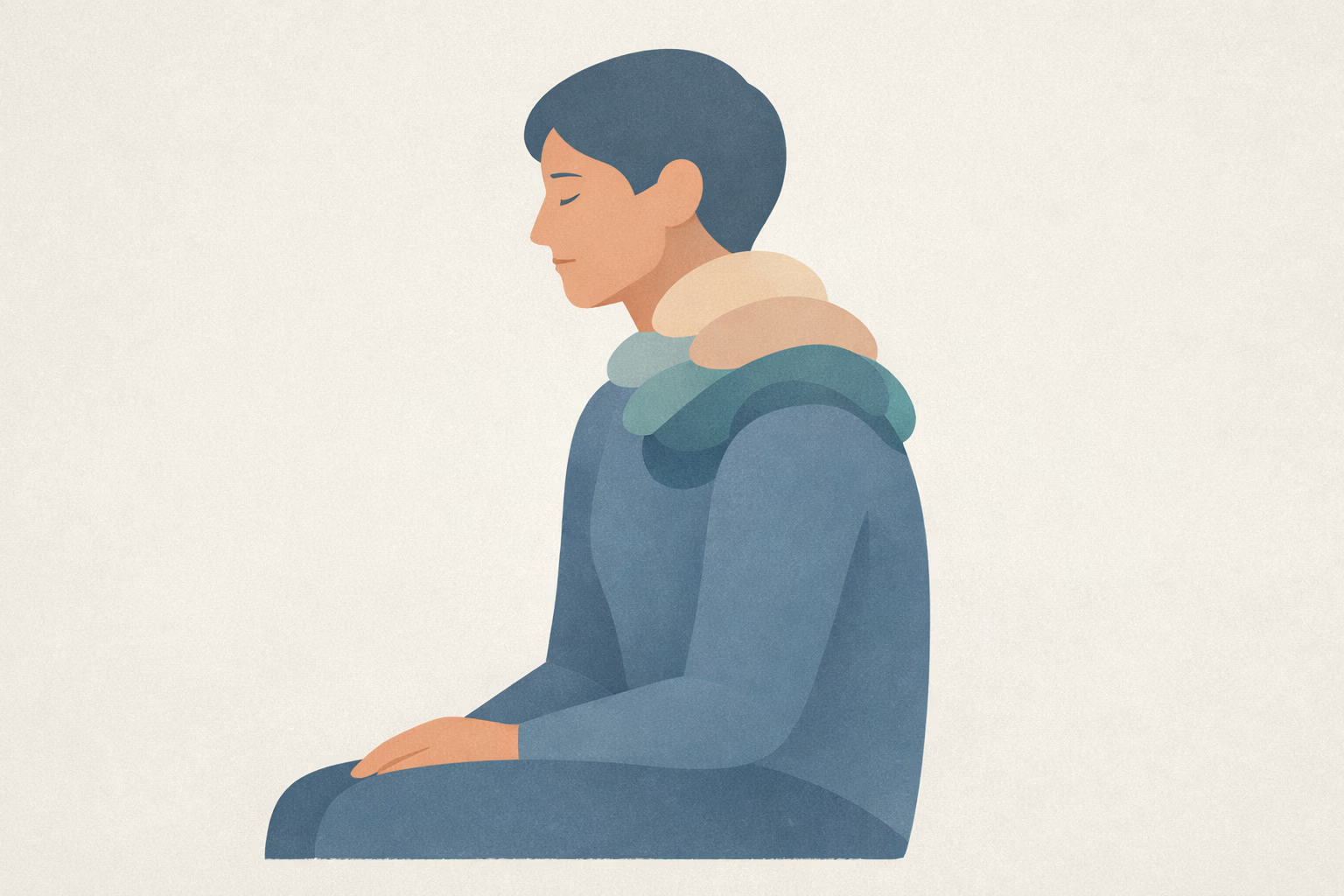
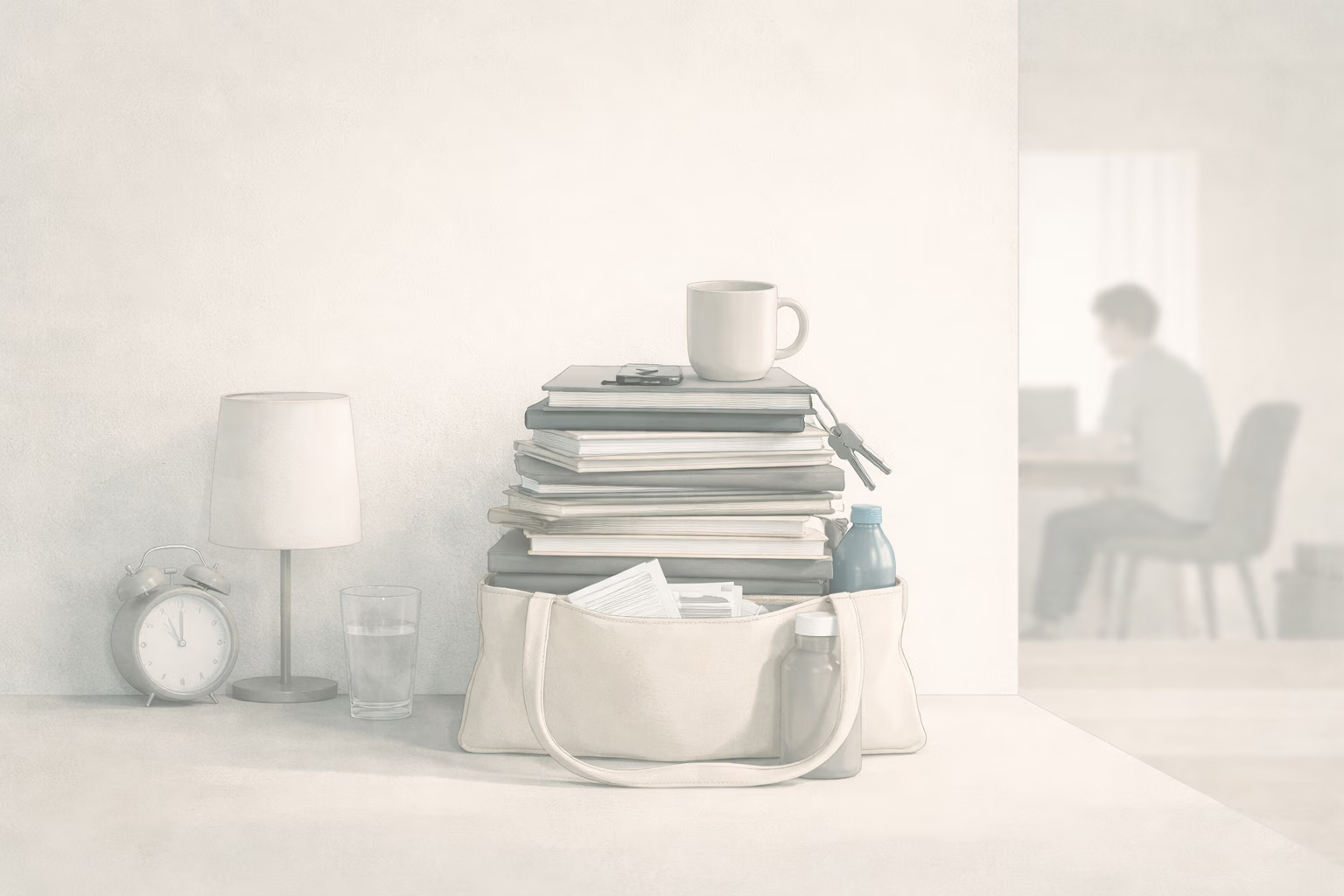
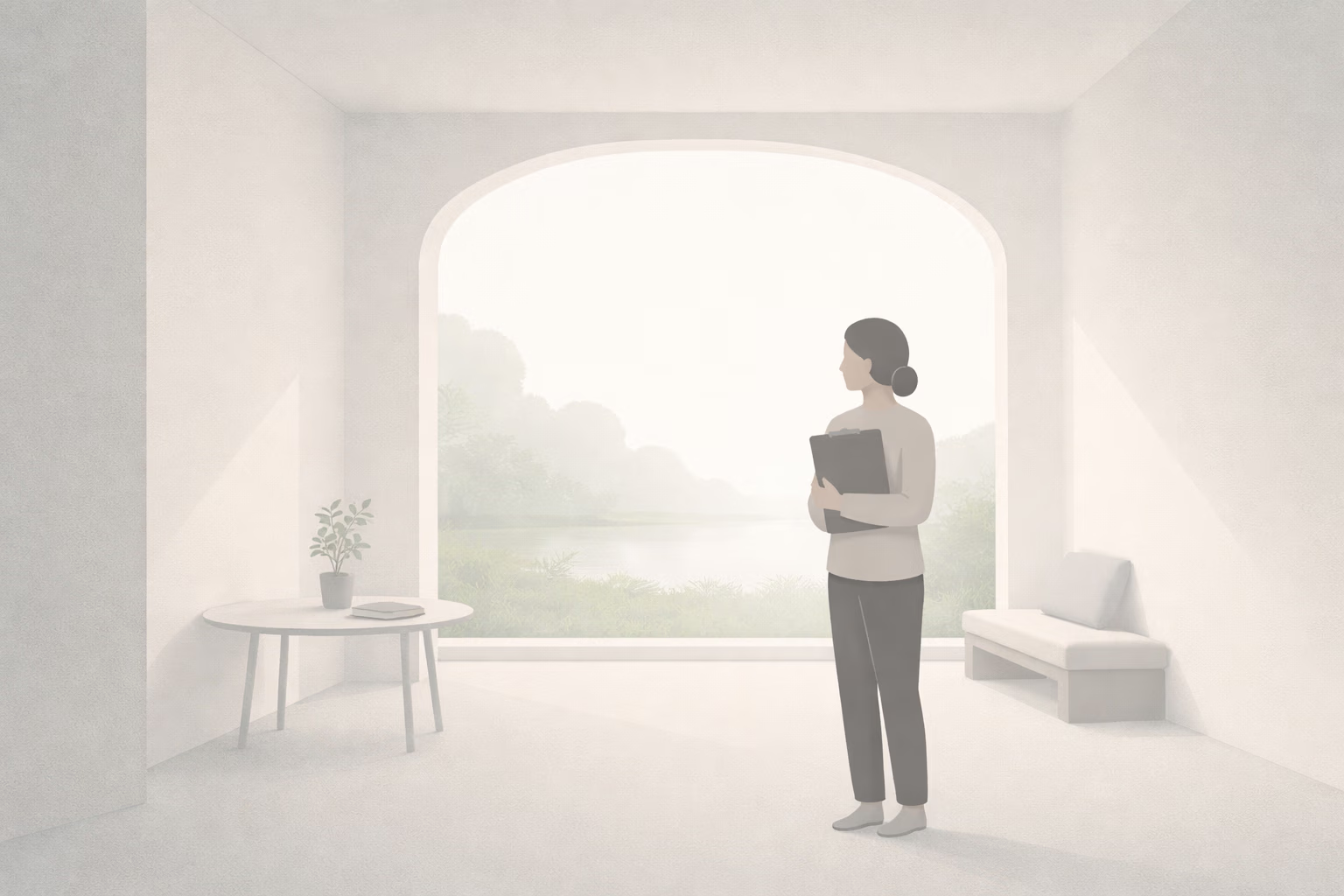
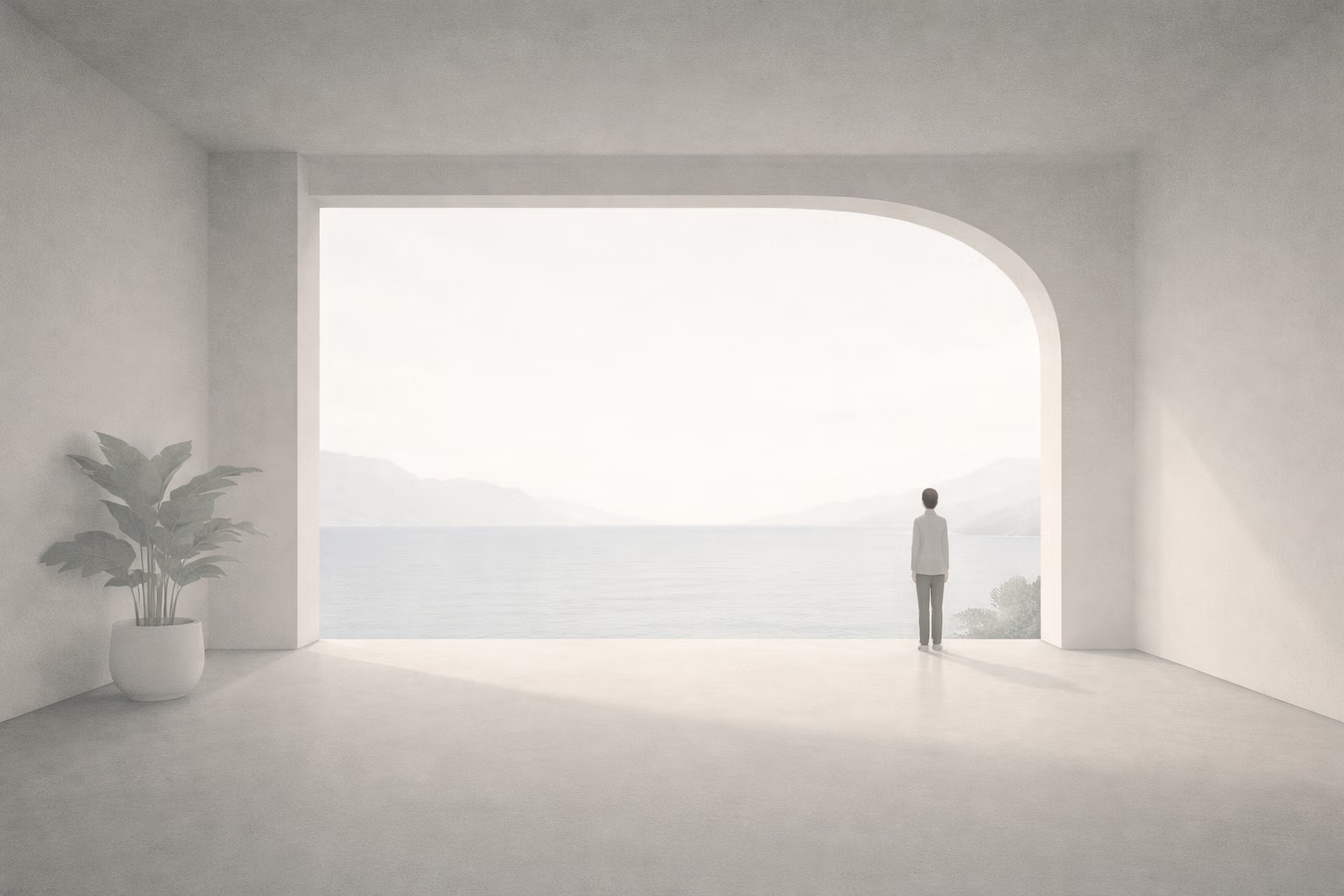
Understanding explains what is happening. Art allows you to feel it—without fixing, judging, or naming. Pause here. Let the images work quietly. Sometimes meaning settles before words do.
One Quiet Window, one insight, one reflection — every Sunday