Stress Conditioning & Learned Reactivity
Discover how your nervous system becomes conditioned to stress—and how to reverse it.
In context: You have likely reached the state where “pressure becomes the background.“ In the Meaning Density Model™, when a load is constant, the Threat & Safety system stops sending acute alarm signals and instead “normalizes“ the high-tension state. You don't feel stressed because your baseline has shifted to a permanent state of bracing.

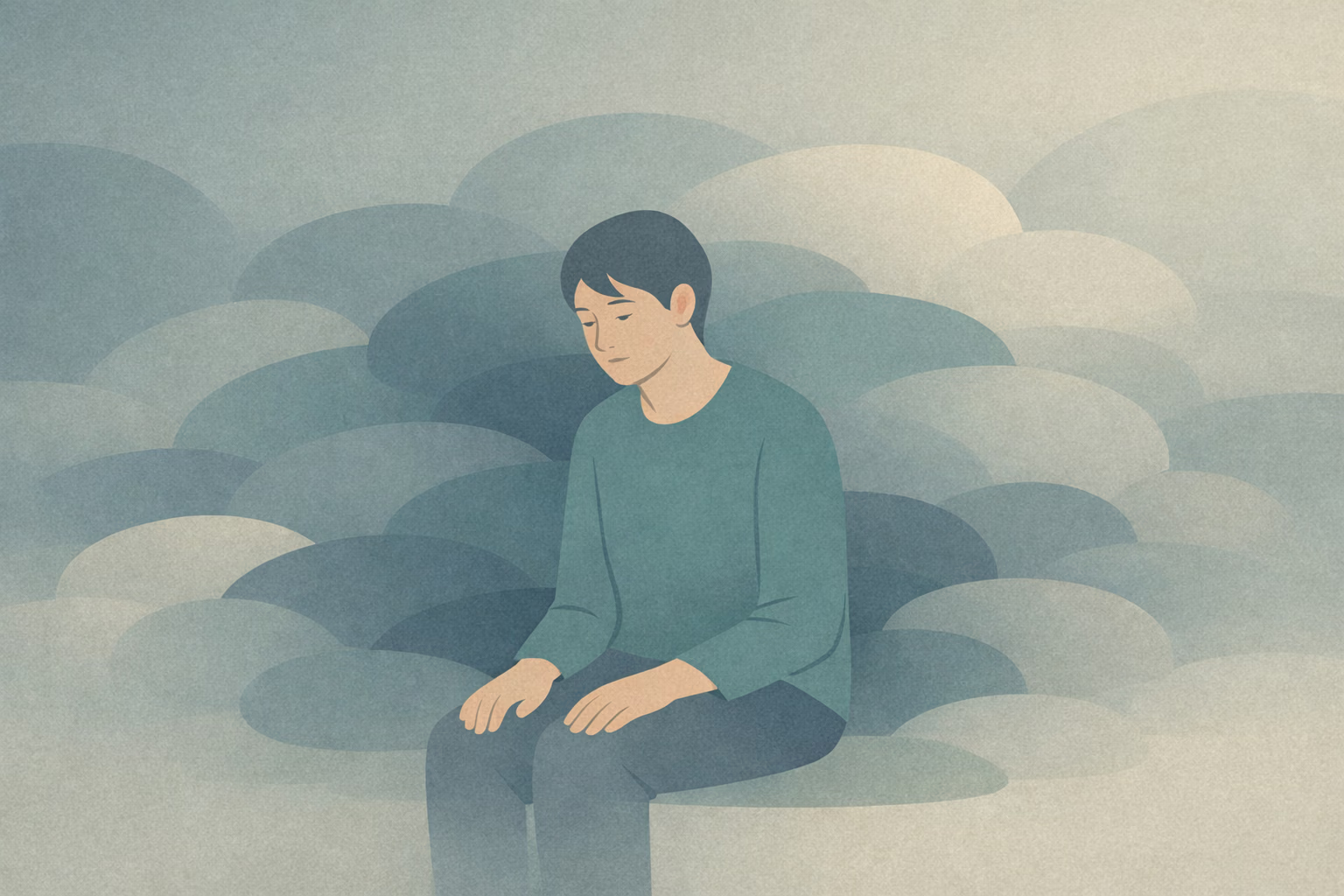
Pressure becomes the background when it never leaves.
It stops announcing itself.
It simply hums beneath everything you do.
This does not mean it is light.
It means you adapted.
The system learned to function with weight as atmosphere.
Naming this matters.
What feels normal can still be heavy.
Recognition brings the pressure back into view, where it can finally be acknowledged instead of silently endured.
Recognize chronic load gently with DojoWell.
Explore DojowellArticles exploring the psychology behind these patterns.
You have likely reached the state where "pressure becomes the background." In the Meaning Density Model™, when a load is constant, the Threat & Safety system stops sending acute alarm signals and instead "normalizes" the high-tension state. You don't feel stressed because your baseline has shifted to a permanent state of bracing. The exhaustion is the metabolic cost of maintaining that high-pressure background without ever returning to a true rest state.
Look for the "absence of lightness." Even if you don't feel "bad," do you ever feel truly "weightless" or spontaneous? If the answer is no, the pressure is there, hiding in the background. DojoWell suggests performing a "contrast check": step into a zero-demand environment for ten minutes. The sudden "drop" or the immediate urge to find a new task will reveal just how much background pressure you were actually carrying.
One Quiet Window, one insight, one reflection — every Sunday