Emotional Awareness: The First Step Toward Meaningful Change

In short: Emotional calibration is the ability to accurately read what is happening inside you in relation to what is happening around you. Not as a performance, and not as a personality trait—more like a signal system that can get noisy under load.
Emotional calibration is the ability to accurately read what is happening inside you in relation to what is happening around you. Not as a performance, and not as a personality trait—more like a signal system that can get noisy under load.
Many people aren’t “out of touch.” They’re carrying too many incomplete loops: too many open tabs in the nervous system, too many half-finished conversations, too many moments that never got a clear “done” signal. When that happens, your inner readout can get blurry, and the blur itself becomes stressful.
Is this tiredness, sadness, stress, or a deeper misalignment?
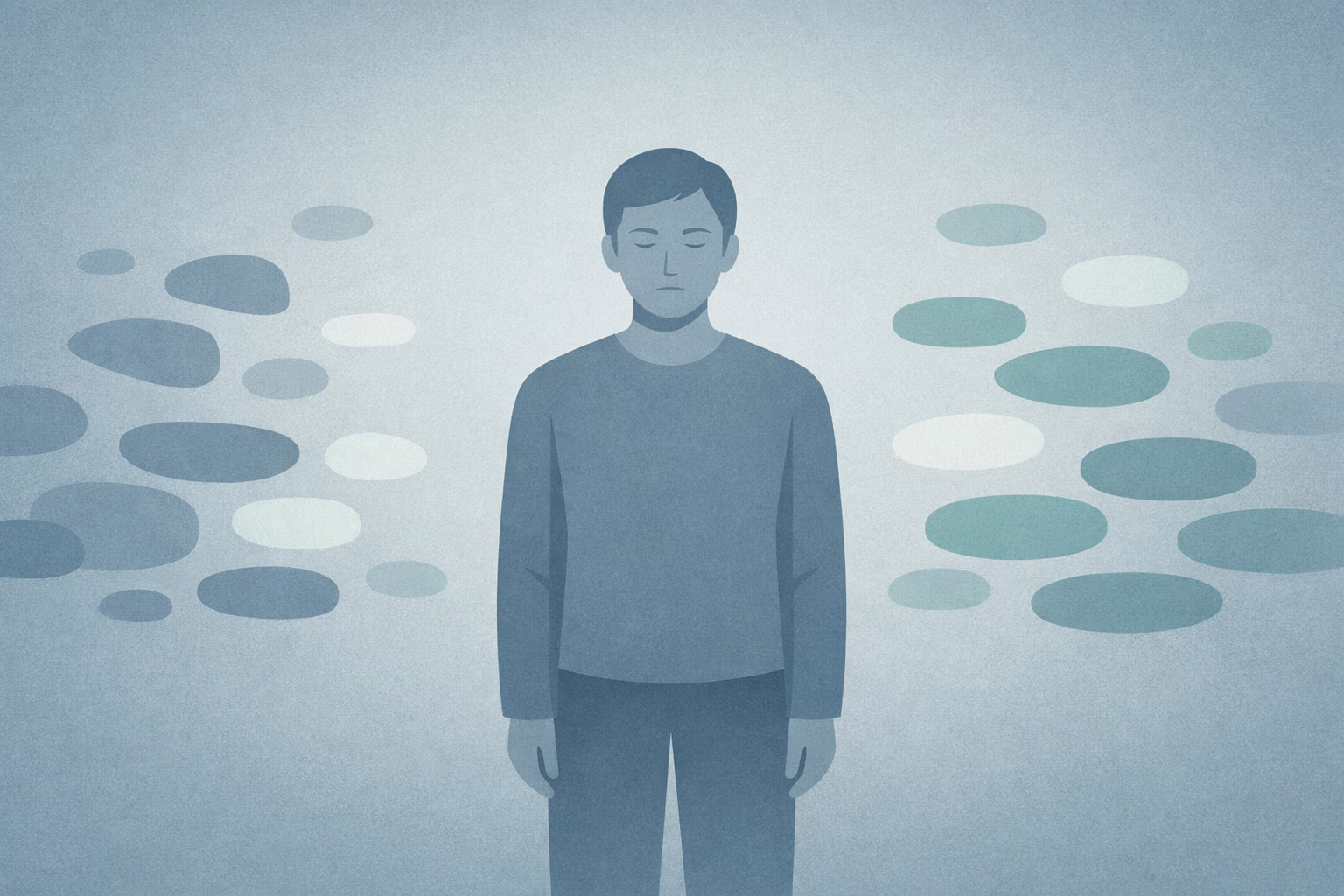
One of the most disorienting experiences is not knowing what state you’re in. You might notice you’re snappier than usual, or strangely flat, or restless without a clear reason. You can function, but it feels like driving in fog.
In that fog, it’s easy to cycle through guesses: “I’m fine, I’m just dramatic,” “I’m overwhelmed,” “I’m bored,” “I’m failing,” “I need something.” The nervous system is still communicating—through tension, urgency, numbness, or irritability—but the message doesn’t land cleanly.
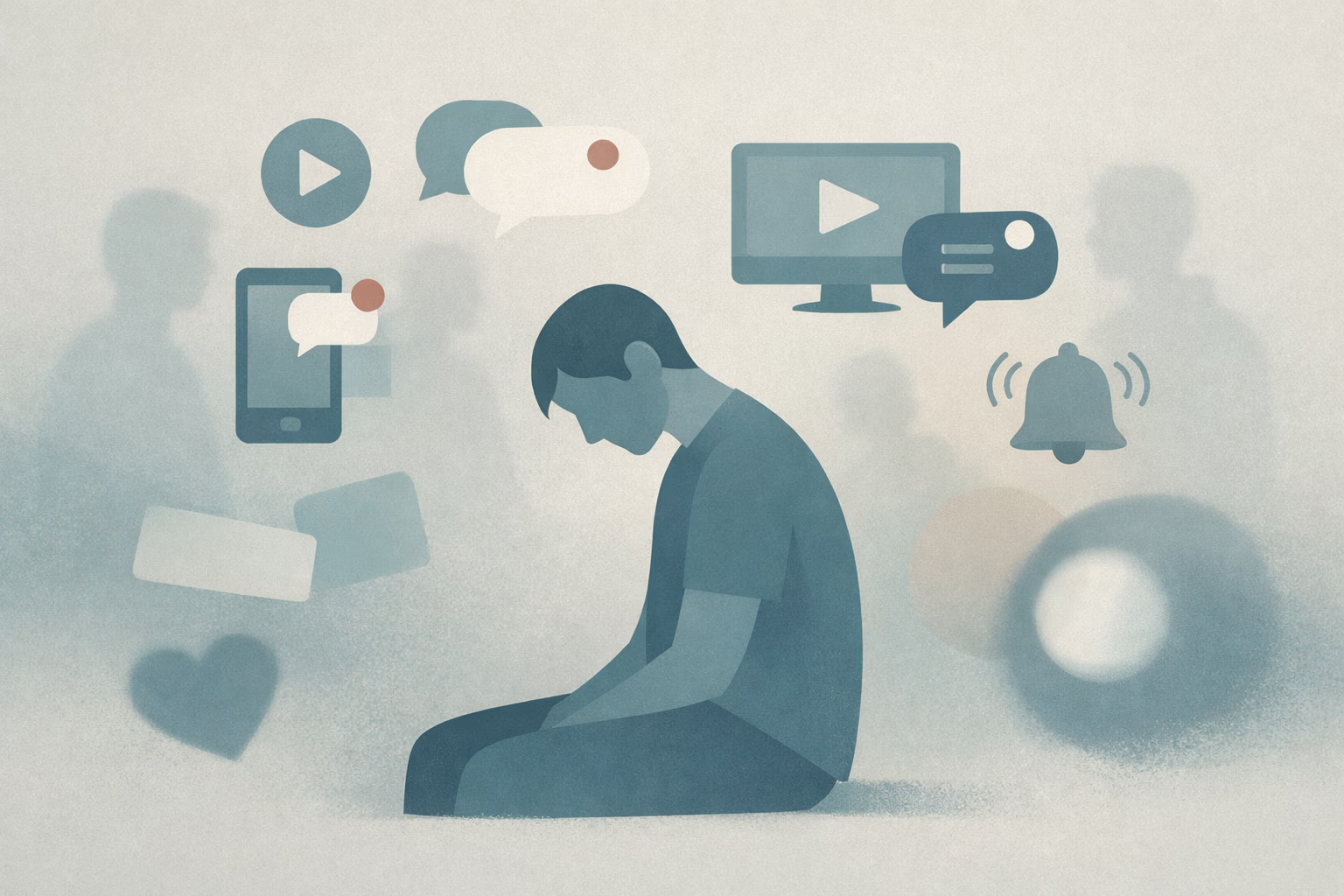
This isn’t a lack of insight. It’s often what happens when internal signals (sleep pressure, hunger, threat cues, social strain) are arriving at the same time and competing for attention. The body’s information stream is real, but the channel is crowded. [Ref-1]
Emotional calibration isn’t only “naming a feeling.” It’s the coordination between interoception (the brain’s read of the body’s internal state) and reflective attention (the mind’s ability to check context and meaning). When these systems cooperate, the internal story matches the actual state more often. [Ref-2]
Without that coordination, a person can be accurate about events but inaccurate about impact, or accurate about bodily strain but unsure what it points to. Calibration is what lets you notice the difference between low fuel and low meaning, between depletion and disappointment, between agitation from speed and agitation from conflict.
Sometimes the problem isn’t that you’re “too emotional.” It’s that the signal is real, but the label is off.
When cognitive load rises and safety cues drop, the nervous system shifts toward efficiency. Attention narrows. The body prioritizes quick categories over nuanced reads: safe/unsafe, go/stop, urgent/not urgent. That’s protective, but it reduces resolution.
In this compressed state, internal experience can become hard to identify or describe, even when the person is intelligent and self-aware. The system isn’t broken—it’s conserving resources. Your brain is more likely to deliver an undifferentiated “bad” or “urgent” than a finely separated mix of grief, fatigue, and disappointment. [Ref-3]
This is why miscalibration often spikes during high-demand seasons: too much input, too little completion, not enough stand-down time for signals to sort themselves.
When you don’t have a clear internal read, guessing can seem like the fastest path forward. A quick label—“anxiety,” “burnout,” “I’m just sensitive”—creates temporary order. It reduces ambiguity, and ambiguity is expensive for the nervous system.
But a guess can also become a substitute for closure. If the label is even slightly off, the response that follows won’t fully resolve the underlying state. The result is ongoing activation: you did something, but the system doesn’t register “complete,” so the signal returns.
Over time, this can look like “I keep doing the right things and nothing works.” In many cases, it’s not that the person is failing at regulation—it’s that the starting read was distorted, so the loop never finishes. [Ref-4]
In modern wellness culture, the pressure is often to change the state quickly: calm down, cheer up, stop overthinking. But regulation works best when it follows an accurate read. Otherwise, you’re adjusting the wrong dial.
Emotional granularity—being able to distinguish similar-feeling states—tends to support steadier responses because it reduces internal mismatch. “Stressed” is different from “lonely.” “Restless” is different from “under-resourced.” “Irritated” is different from “overextended.” Higher resolution doesn’t guarantee relief, but it often reduces thrashing. [Ref-5]
What if the goal isn’t to get rid of the feeling, but to stop misreading it?
When the internal read is inaccurate, the coping response tends to be mismatched. And when the response doesn’t close the loop, the nervous system learns that something is still unresolved. The person may then intensify the same approach, because the continued discomfort looks like proof they “haven’t done enough.”
Stress systems also change how the brain evaluates choices. Under sustained load, short-term relief becomes more attractive, and long-term coherence becomes harder to sense. This isn’t a moral issue; it’s a predictable shift in brain-body priorities when adaptation systems are running hot. [Ref-6]
In that state, people can end up managing symptoms while losing the thread of meaning—because meaning requires enough capacity to integrate experience into a coherent “this is what’s happening to me” narrative.
Emotional miscalibration rarely looks like one obvious problem. More often, it shows up as a pattern of small mismatches—responses that make sense in the moment, but don’t fit the actual situation or don’t settle afterward.
These patterns often intensify when threat physiology is active for long stretches. It becomes harder to tell which signals are current and which are leftovers from earlier, unfinished experiences. [Ref-7]
Chronic miscalibration doesn’t just feel confusing—it can shape the direction of a life. If you repeatedly misread your own state, you may keep choosing environments, commitments, or relationships that don’t fit what your system can sustainably carry.
Over time, this can contribute to burnout: not only exhaustion, but reduced sensitivity to internal feedback and reduced confidence in decision-making. The person might look functional from the outside while feeling increasingly unsure from the inside.
Emotion regulation research often notes that regulation depends on identifying what is happening in the first place. When identification is fuzzy, regulation becomes guesswork, and guesswork is costly. [Ref-8]
Self-trust isn’t built by positive thinking. It’s built when your interpretations reliably lead to outcomes that feel settled. When your inner read is off and your response doesn’t resolve the state, your system receives a repeated message: “My signals aren’t dependable.”
This is one reason people can feel increasingly vigilant about themselves. They monitor, analyze, and second-guess—not because they enjoy it, but because uncertainty creates more load. The nervous system tries to compensate with control.
Body-based attention and present-moment contact are often discussed as pathways back to accuracy because they reintroduce real-time data. Not as a mood hack, but as a way to reduce distortion created by rumination and speed. [Ref-9]
Calibration tends to improve when the nervous system has enough room to update its internal model. That “room” often looks like reduced velocity, fewer competing inputs, and enough quiet to notice what remains when the immediate noise settles.
This is not the same as insight. Understanding your patterns can be useful, but integration is more like a physiological stand-down: the moment the body recognizes that a loop has completed and the signal can retire. Until that happens, even correct explanations can feel oddly unconvincing.
Research on mindfulness-based approaches often describes mechanisms like decentering and improved attentional control—ways the mind stops fusing with the first interpretation and can re-check what’s actually present. In plain language: the system stops auto-labeling and becomes more accurate. [Ref-10]
Humans calibrate in relationship. Not through pressure or fixing, but through attuned feedback that helps your system confirm what is real. When someone reflects you accurately—your pace, your strain, your steadiness—it can reduce internal ambiguity.
This isn’t about depending on others for your truth. It’s about how nervous systems synchronize and exchange safety cues. A steady, respectful presence can lower load enough for your own signals to become more readable.
When a person is caught in avoidance patterns, it’s often less about “not wanting to feel” and more about a structure that has made direct contact feel too expensive. Supportive mirroring can reduce that cost and allow more accurate contact with the present state. [Ref-11]
When calibration improves, people often describe less internal debate and fewer “mystery crashes.” They may still have hard days, but the signal arrives with clearer edges. Decisions become less about forcing and more about fit.
Clarity also supports narrative coherence. You can place experiences in the right category—loss, conflict, overload, transition—so they integrate into identity as lived chapters rather than free-floating alarm. Personal meaning isn’t manufactured; it tends to emerge when experiences are accurately read and sufficiently completed to become part of the story. [Ref-12]
It’s not that life becomes easy. It’s that your inner dashboard becomes trustworthy again.
When you can read your true internal state, choices get simpler in a particular way: they become less reactive. You can tell the difference between a short-term surge and a real need, between urgency and importance, between depletion and disengagement.
This supports values because values require continuity. They depend on being able to sense what is sustainable, what is meaningful, and what actually completes a loop rather than reopening it. In that sense, emotional calibration is not just “self-awareness”—it’s an orientation system for a coherent life.
Social buffering research also suggests that supportive connection can reduce stress responses, which indirectly improves signal clarity and decision quality. When the system is less braced, it can read and choose with more precision. [Ref-13]
If your inner state has been hard to read, it doesn’t mean you’re broken or “behind.” It can mean you’ve been living in conditions that keep experiences unfinished: too much speed, too much evaluation, not enough completion, not enough permission for the nervous system to stand down.
Calibration is the quiet skill of returning to accuracy—so your responses match your reality, and your reality can finally feel lived rather than managed. When that alignment increases, agency increases with it: not as willpower, but as coherence.
And when shame softens, clarity often becomes more available. Self-compassion isn’t a reward for doing well; it’s a condition that reduces internal threat and makes truth easier to detect. [Ref-14]
There’s a particular kind of relief that comes from being correctly oriented inside. Not excitement, not stimulation—just a sense that the message matches the moment.
When emotions are accurately read, they don’t have to shout to be heard, and they don’t have to loop to stay alive. They can do their job and then complete. And as self-trust restores, life often stops feeling mysteriously misaligned—even when it’s still complex. [Ref-15]
From theory to practice — meaning forms when insight meets action.
Because internal signals are arriving simultaneously and competing for attention — sleep pressure, hunger, threat cues, social strain. The body's information stream is real, but the channel is crowded. Under load, the nervous system shifts toward efficiency: attention narrows, and the body prioritizes quick categories (safe/unsafe, urgent/not urgent) over nuanced reads. Internal experience can become hard to identify or describe even when you're intelligent and self-aware. The system isn't broken; it's conserving. You're more likely to get an undifferentiated "bad" or "urgent" than a finely separated mix of grief, fatigue, and disappointment.
Because a guess can become a substitute for closure. When you don't have a clear internal read, a quick label — "anxiety," "burnout," "I'm just sensitive" — creates temporary order. But if the label is even slightly off, the response that follows won't fully resolve the underlying state, and the nervous system never registers complete. Over time this looks like "I keep doing the right things and nothing works." It often isn't a failure of regulation; it's a distorted starting read, so the loop never finishes. The wrong remedy reinforces the wrong story.
Usually it's the opposite. Regulation works best when it follows an accurate read — otherwise you're adjusting the wrong dial. Modern wellness culture often pressures fast state changes (calm down, cheer up, stop overthinking), but emotional granularity — distinguishing similar-feeling states — tends to support steadier responses because it reduces internal mismatch. Stressed is different from lonely. Restless is different from under-resourced. Higher resolution doesn't guarantee relief, but it usually reduces thrashing. The goal isn't to get rid of the feeling. It's to stop misreading it.
When the system has room to update. That room looks like reduced velocity, fewer competing inputs, and enough quiet to notice what remains when noise settles. Attuned mirroring from another person also helps — humans calibrate in relationship, not through pressure or fixing but through being reflected accurately. Over time, calibration leads to less internal debate, fewer mystery crashes, and decisions that feel less like forcing and more like fit. Personal meaning isn't manufactured; it emerges when experiences are accurately read and sufficiently completed to integrate into identity as lived chapters.
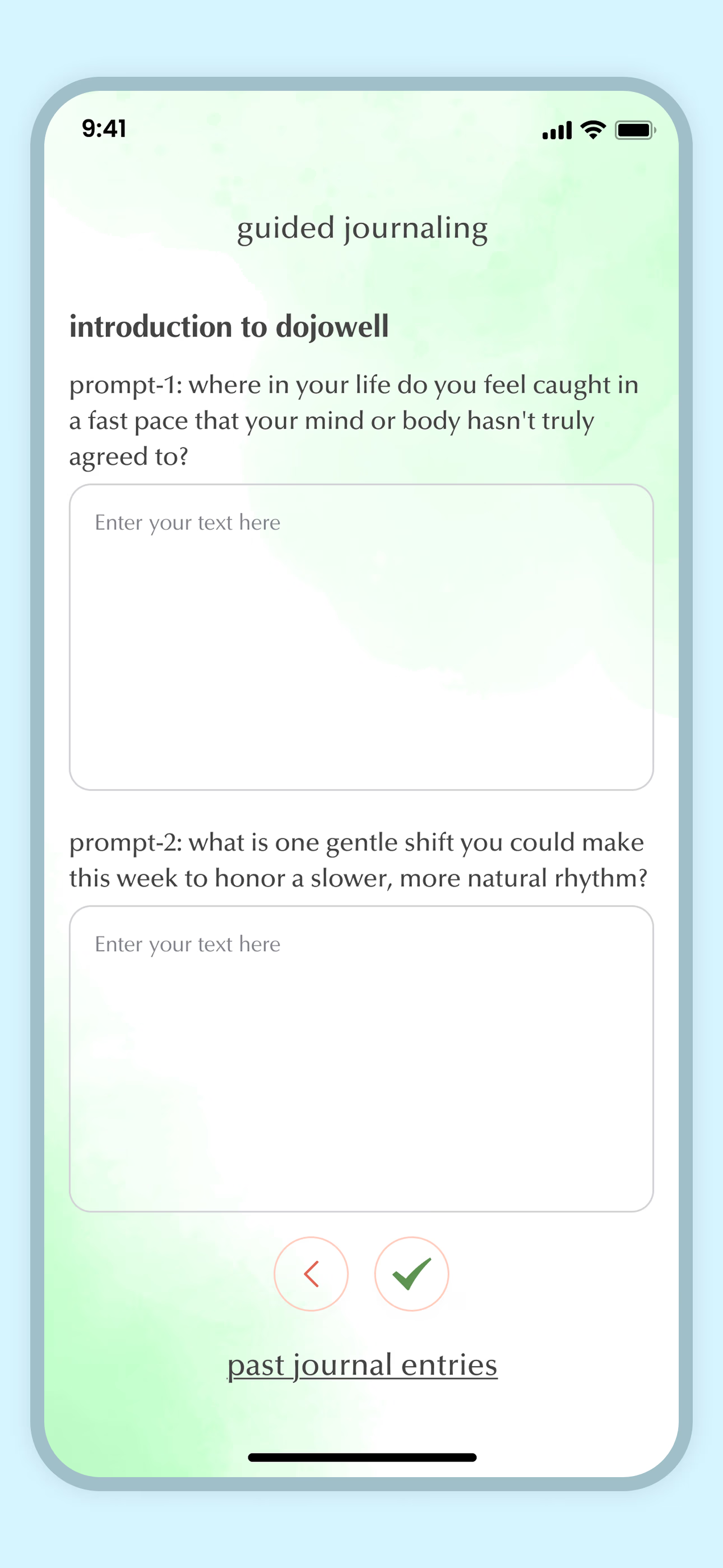
From Science to Art.
Understanding explains what is happening. Art allows you to feel it—without fixing, judging, or naming. Pause here. Let the images work quietly. Sometimes meaning settles before words do.
One Quiet Window, one insight, one reflection — every Sunday