
Stress Alignment: When Your Lifestyle Quietly Creates Tension
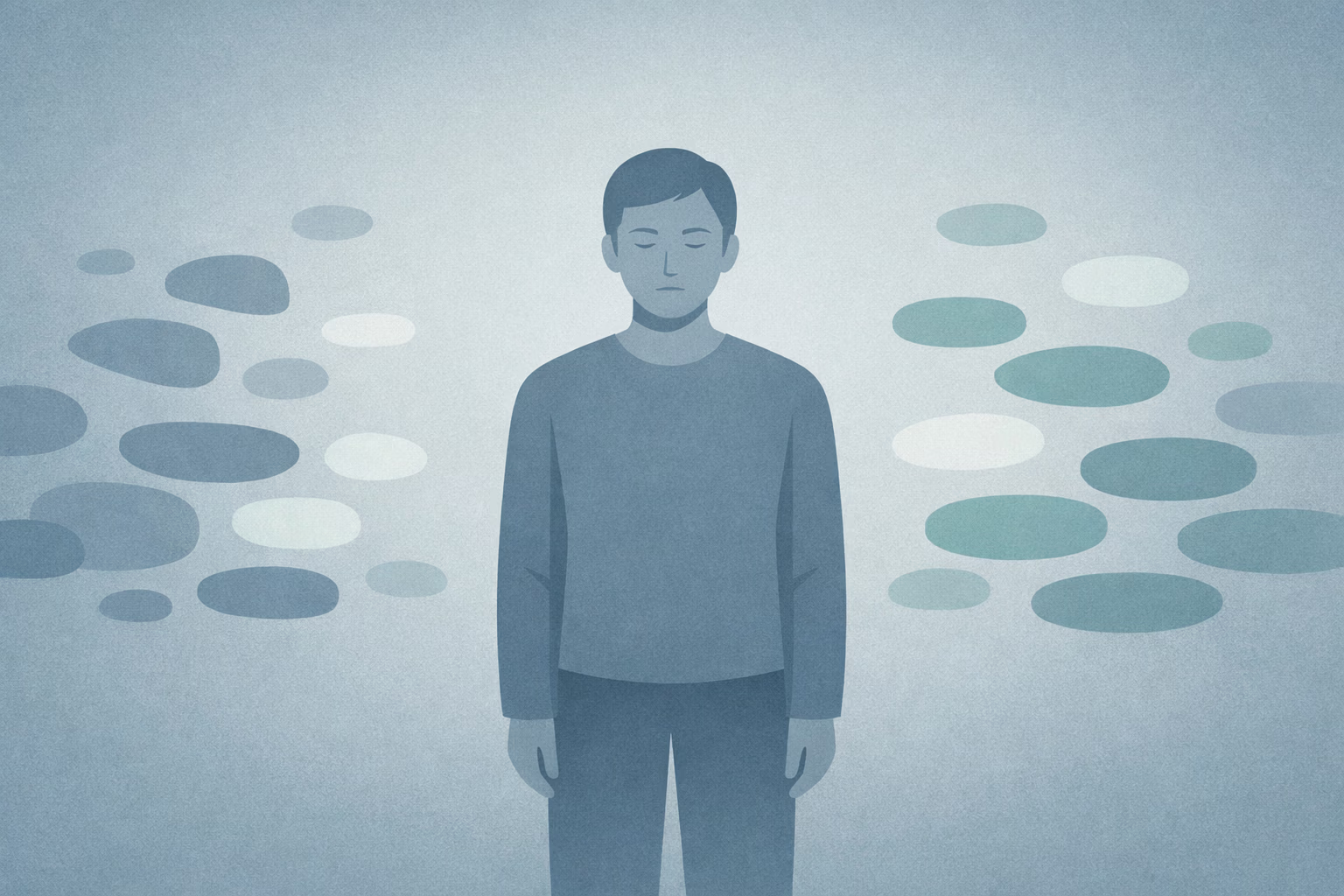
In short: After chaos—an argument, a near-miss, bad news, a long day of caregiving, a month that never slowed down—there’s often a strange afterweather. The event is technically over, but your system isn’t.
After chaos—an argument, a near-miss, bad news, a long day of caregiving, a month that never slowed down—there’s often a strange afterweather. The event is technically over, but your system isn’t. You might look calm from the outside and still feel internally buzzy, flat, tight, or strangely fragile.
What if that lag isn’t a personal flaw, but a normal delay in your nervous system receiving closure?
Emotional recalibration is the name for that return-to-baseline process: the body’s gradual downshifting after disruption. Not “positive thinking,” not “getting over it,” and not a personality trait—more like the physiological reset that lets your mind, attention, and identity stop bracing.
Intense moments can leave residue: jaw tension, shallow breathing, restless legs, a tight chest, a quick temper, or a mind that keeps scanning for what’s next. This isn’t you being “dramatic.” It’s what a mobilized stress system looks like when it hasn’t received the internal signal that the situation is complete. [Ref-1]
From a biology standpoint, stress responses are designed to be fast and protective. They change heart rate, muscle readiness, and attention so you can respond. The mismatch happens when the external situation resolves faster than the internal circuitry can stand down.
Sometimes the hardest part is not what happened—it’s how long your system keeps acting like it might happen again.
Recalibration isn’t primarily cognitive. It’s not won by better arguments in your head. It’s a state transition: the nervous system moving from mobilization toward baseline through signals that communicate safety, predictability, and completion. [Ref-2]
That transition often shows up as very plain things: fuller breathing, softer muscles, warmer hands, the ability to sit still without bracing, easier digestion, less urgency in your thoughts. These are not “mood hacks.” They’re signs the body is changing gears.
And importantly: understanding why you feel off is not the same as being recalibrated. Insight can orient you, but closure is what allows the system to stop spending energy on readiness.
Across species, the stress response is meant to be temporary. After danger, organisms return to routines—eating, grooming, social contact, sleep—because recovery is part of survival, not a luxury.
Humans do something similar, but our “threats” often include prolonged conflict, social evaluation, financial uncertainty, and constant problem-solving. When recovery cycles get interrupted, the cost accumulates as wear-and-tear—what researchers describe as allostatic load. [Ref-3]
Recalibration is the body’s way of paying down that cost. Not by forcing calm, but by completing the cycle so the system can stop acting like it’s still in the middle.
Distraction can reduce distress in the moment by shifting attention and dampening sensation. But often it doesn’t resolve the underlying activation. The nervous system may stay partially mobilized in the background—like an app running quietly, draining battery. [Ref-4]
Closure is different from relief. Relief changes what you notice. Closure changes what your system is signaling. When closure happens, the “not finished” feeling tends to lose traction: less replay, less startle, less readiness.
It’s possible to be functioning and still not be settled.
Many of us have learned to keep going through disruption: finish the shift, answer the message, take the call, handle the children, show up to the meeting. That capacity is real—and it’s often necessary. The issue is what happens afterward.
The mind can decide “it’s fine” faster than the autonomic nervous system can update. Autonomic regulation depends on patterns of activation and recovery, not on willpower or interpretation alone. [Ref-5]
So “moving on” can become a form of social timing: life demands forward motion, even when the body hasn’t completed the loop that says, stand down.
When activation doesn’t complete, it tends to circle. Not always as panic. Sometimes as low-level vigilance, numbness, irritability, compulsive busyness, or a need to control small things because larger things feel unresolved.
This is less about hidden psychological causes and more about incomplete closure. The system initiated a response—mobilize, protect, prepare—but never received the full set of signals that allow deactivation. Over time, that “partly on” state becomes familiar. [Ref-6]
After conflict or overwhelm, many patterns are simply regulation strategies under load. They are not identities. They’re the nervous system choosing what it can afford.
Safety is not only an idea; it’s a set of cues the body recognizes. When those cues are inconsistent, the system leans toward protection. [Ref-7]
If unrecovered stress repeats, the body can start to interpret ordinary sensations as “too much”: hunger feels like panic, a busy store feels like threat, a minor conflict feels catastrophic. This isn’t fragility of character—it’s reduced capacity under sustained load.
Interoception (how the brain reads internal signals like heartbeat, breath, and gut sensation) plays a role here. When signals stay intensified for long periods, the baseline itself shifts. [Ref-8]
It’s not that you can’t handle life. It’s that your system has been handling too much for too long without a clean “done.”
Reactivity isn’t only a reaction to the present. It can become an expectation. When the body repeatedly moves from stressor to stressor without completion, it starts preparing early—anticipating impact, tightening sooner, escalating faster.
This is one reason “small things” can feel big after a chaotic season. The system isn’t responding just to the email, the tone, the mess, or the delay. It’s responding from a context of incomplete loops—unfinished activation still seeking resolution.
Practices that emphasize present-moment body cues are often studied in relation to regulation because they intersect with the physiology of attention and autonomic state. [Ref-9] But again: noticing isn’t the same as settling. Settling is what happens when the loop completes.
From a meaning-and-closure perspective, recalibration is the body completing a sequence: activation → response → resolution. The “resolution” phase often involves signals that are physical and sensory, not conceptual.
Breath, movement, and sensory completion are frequently discussed in autonomic research because they can influence heart rate variability and downshifting pathways. [Ref-10] In plain language: they can help the body register a different state.
Recalibration is less like convincing yourself, and more like letting the system finish what it started.
This is also why some people feel better after a long exhale, a walk that warms the limbs, a shower that changes temperature and pressure, or a quiet room where the senses stop being pinged. These aren’t moral victories; they’re completion cues.
Humans are social regulators. After chaos—especially interpersonal chaos—many nervous systems settle faster when there is repair, reassurance, or simply a non-demanding presence nearby. This isn’t dependence. It’s physiology shaped by evolution: safety is often confirmed relationally.
Even outside relationships, certain forms of co-regulation matter: being around steady voices, predictable interactions, and environments that don’t require constant self-monitoring. Social buffering is a measurable phenomenon in stress physiology. [Ref-13]
Movement is also widely studied as a stress modulator, partly because it metabolizes mobilization. The deeper point is not “do more,” but that the body often completes threat cycles through embodied, contextual signals—frequently supported by other people.
When recalibration happens, people often describe it less as “feeling intense emotions” and more as a return of proportion. Perspective becomes available again. Decisions require less force. Neutral moments stop feeling suspicious.
Capacity returning can look like:
Rest and recovery are not just time-off concepts; they are biological processes that allow performance, connection, and meaning to remain sustainable. [Ref-12]
Without recalibration, life after chaos can become a series of carry-overs: yesterday’s activation shows up as today’s impatience; last week’s conflict shows up as this morning’s numbness; a long season of strain shows up as sudden overwhelm in ordinary errands.
Recalibration supports a different kind of continuity. Not “nothing affects me,” but “events can end.” That ending matters for identity: it allows experience to take its place in your story rather than remaining an open tab that keeps consuming attention.
In that sense, recalibration protects meaning. It lets you re-enter relationships, work, parenting, and creativity with less bracing—so your actions can align with your values instead of being organized around residual threat. And because humans regulate in context, safety cues in the environment and in relationships help the body receive that closure. [Ref-13]
It’s common to treat recovery as optional—something you earn after you’ve proven you can function. But nervous systems don’t interpret it that way. They interpret recovery as the completion signal that prevents chronic activation from becoming your new normal. [Ref-5]
Seen through that lens, recalibration isn’t indulgence, and it isn’t a fix. It’s a form of respect for the organism you are: a living system that stabilizes through safety cues and endings. When your system gets a real “over,” it becomes easier to inhabit your life with coherence rather than pressure.
After chaos, needing time to settle is not weakness and not a character review. It’s the body doing what bodies do: carrying activation until it reaches completion.
When recovery is allowed to count—when the nervous system is permitted to stand down—meaning becomes easier to hold. Not because you forced a better mindset, but because your system is no longer organized around unfinished threat. That is how wholeness is preserved after disruption. [Ref-15]
From theory to practice — meaning forms when insight meets action.
Because the situation resolved faster than your nervous system could stand down. Stress responses are designed for speed: heart rate, muscle readiness, narrowed attention all shift to help you respond. The mismatch happens when the external moment ends but the internal circuitry stays mobilized. You might look calm and still feel buzzy, flat, or fragile. Jaw tension, shallow breath, scanning thoughts — that's a mobilized system that hasn't received the internal signal that the situation is complete. Sometimes the hardest part isn't what happened. It's how long your body keeps acting like it might happen again.
Because recalibration isn't a debate. It's a state transition — the nervous system moving from mobilization toward baseline through signals that communicate safety, predictability, and completion. The mind can decide "it's fine" faster than the autonomic system can update. Autonomic regulation depends on patterns of activation and recovery, not on willpower or interpretation alone. Insight orients you, but closure is what allows the system to stop spending energy on readiness. Closure changes what your system is signaling — less replay, less startle, less bracing. Distraction can change relief; only completion changes the underlying state.
Because unfinished activation circles. Without a clear stand-down, the body stays in partial mobilization — low-level vigilance, irritability, compulsive busyness, overcontrol of small things because larger things feel unresolved. The system isn't responding only to the email or the mess; it's responding from a context of incomplete loops still seeking resolution. When recovery keeps getting skipped, the body becomes less tolerant of life: hunger feels like panic, a busy store feels like threat, minor conflict feels catastrophic. That's not fragile character — it's reduced capacity from sustained load without clean Done Signals.
Embodied, sensory completion cues — not concepts. Breath that lengthens, movement that warms the limbs, a temperature shift, a quiet room where the senses stop being pinged. These aren't moral victories; they're closure cues that influence heart rate variability and downshifting pathways. Co-regulation matters too: steady voices, predictable interactions, repair after interpersonal chaos. Recalibration is the body finishing what it started. Recovery isn't earned by proving you can function; it's the completion signal that prevents chronic activation from becoming your new normal. Letting events end is how a system stays whole.
From Science to Art.
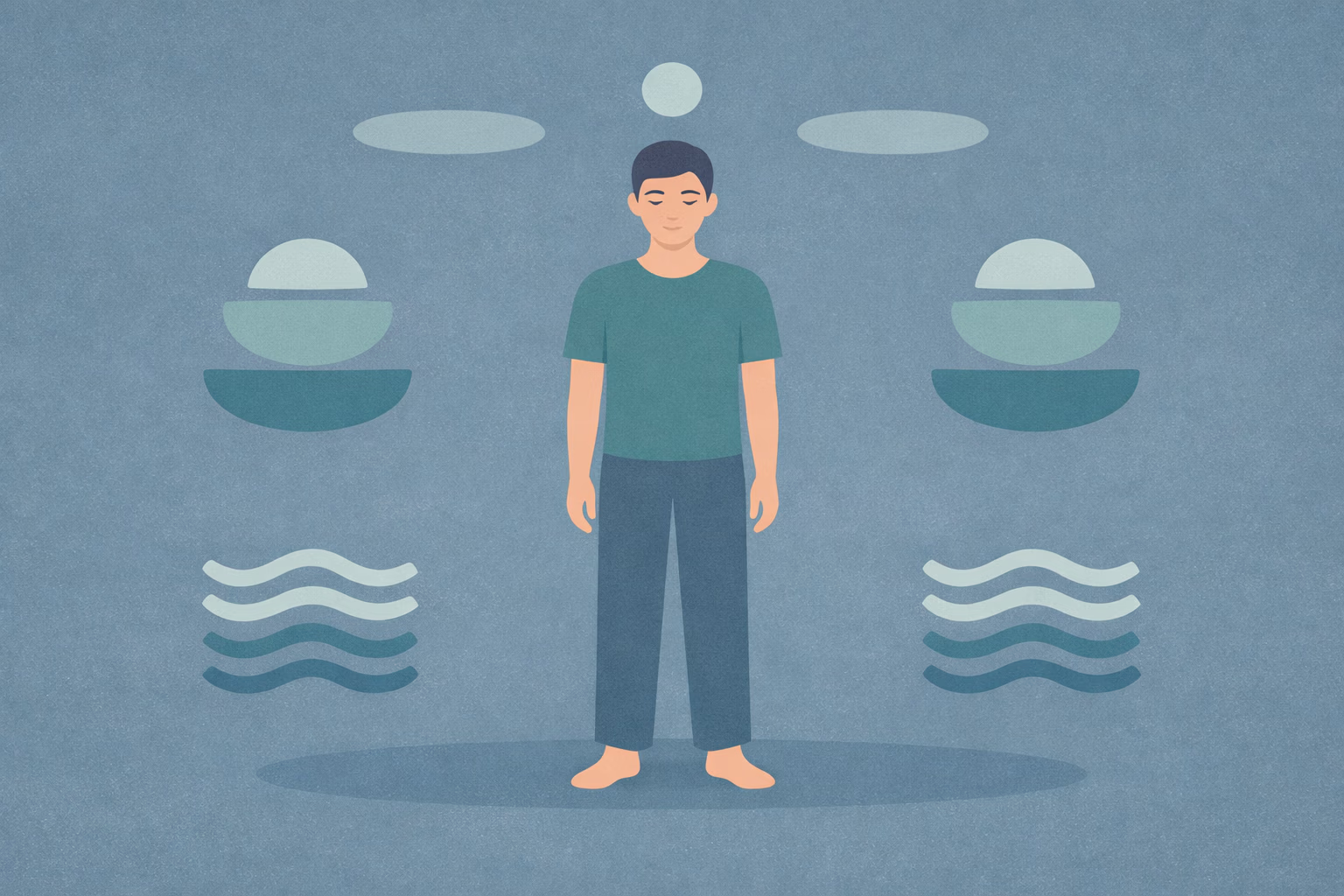
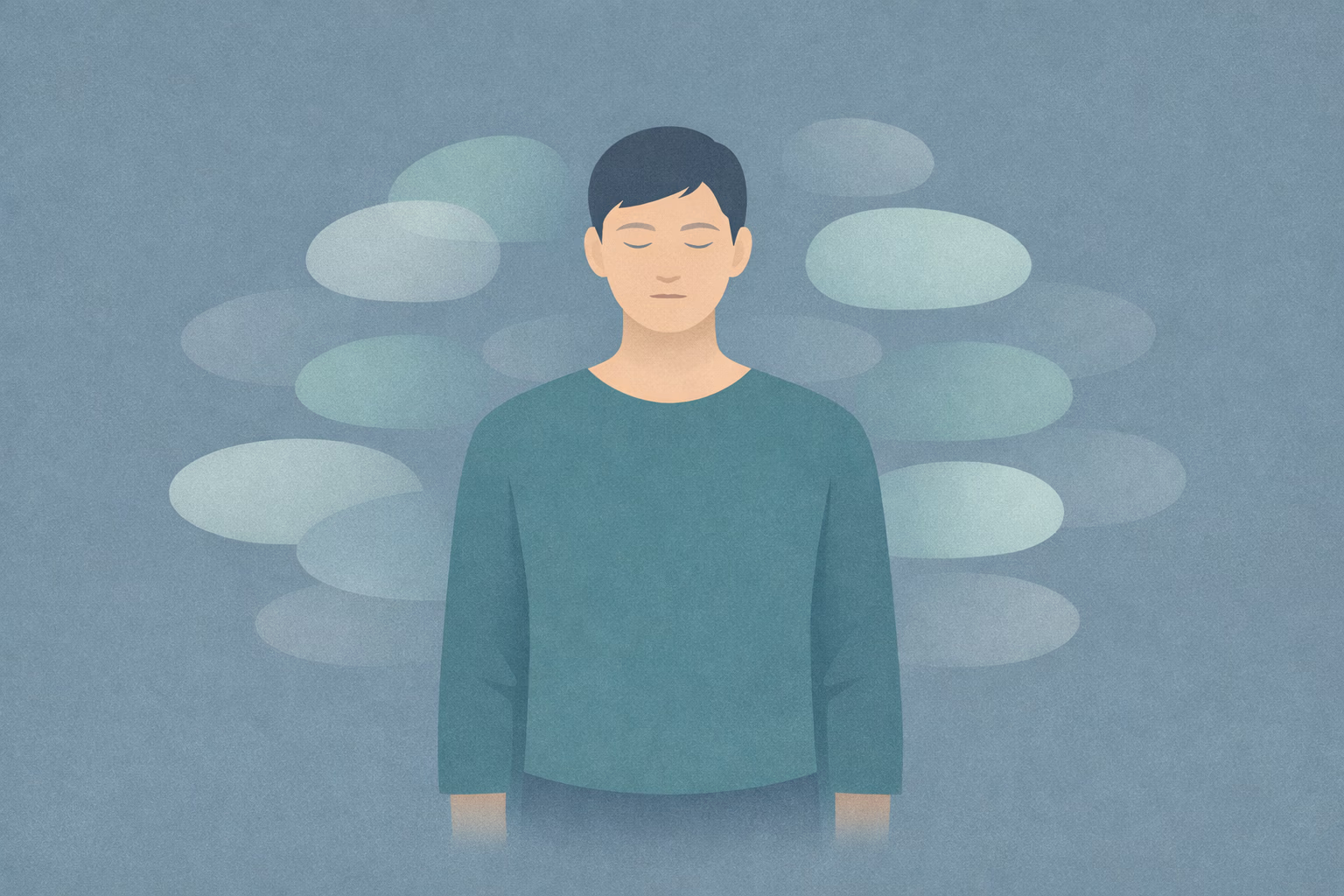
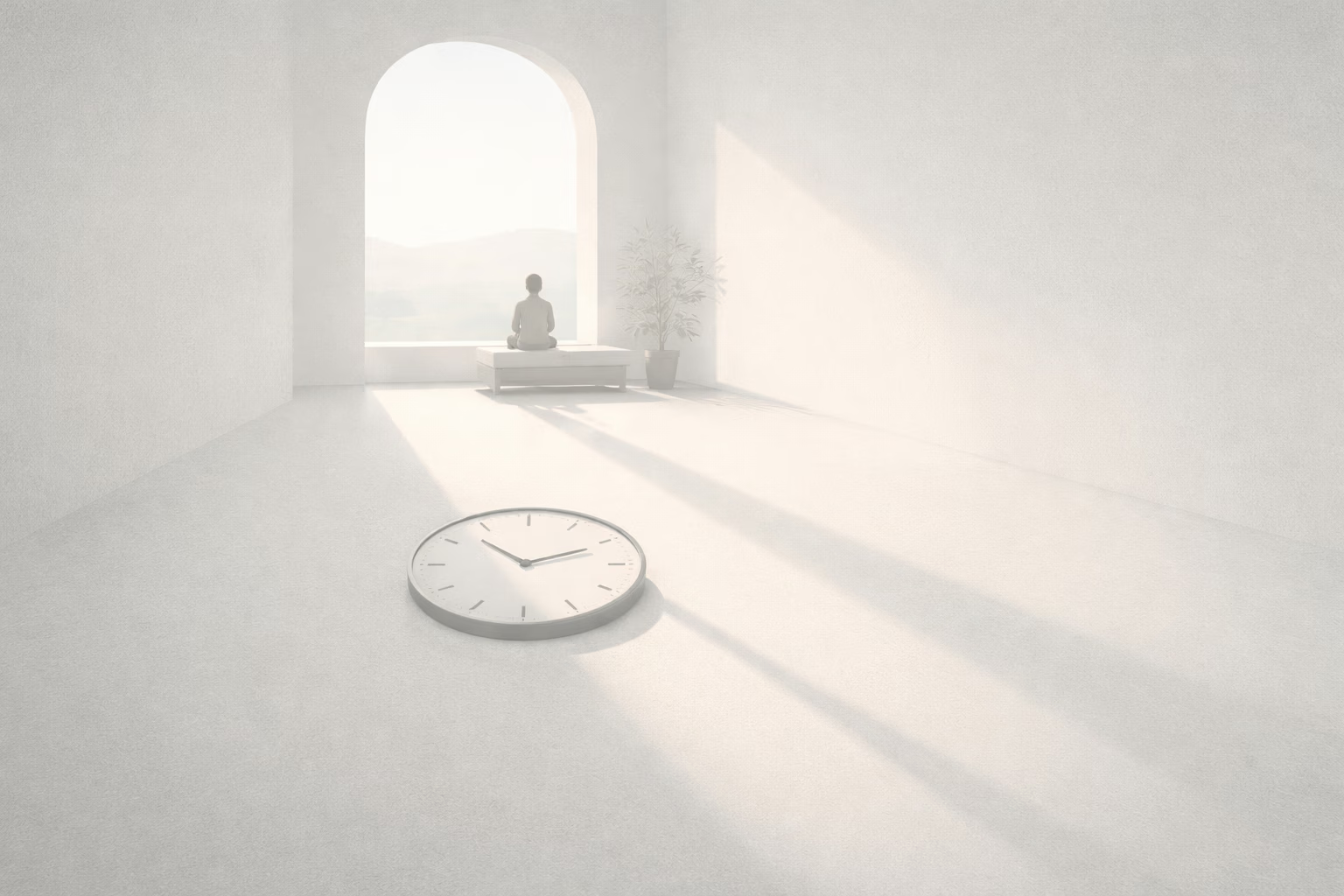
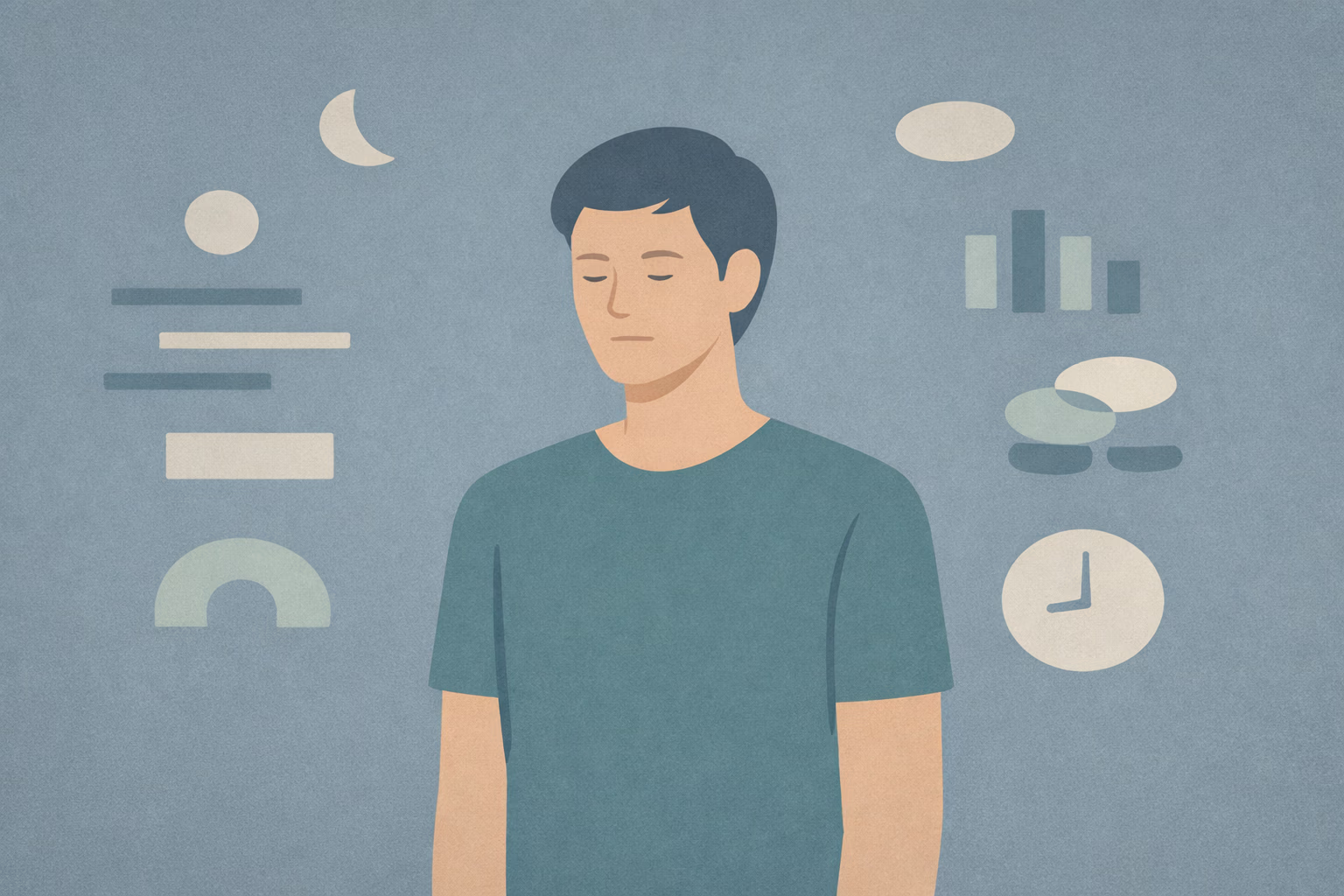
Understanding explains what is happening. Art allows you to feel it—without fixing, judging, or naming. Pause here. Let the images work quietly. Sometimes meaning settles before words do.
One Quiet Window, one insight, one reflection — every Sunday