Emotional Fragmentation: When Parts of You Stop Communicating
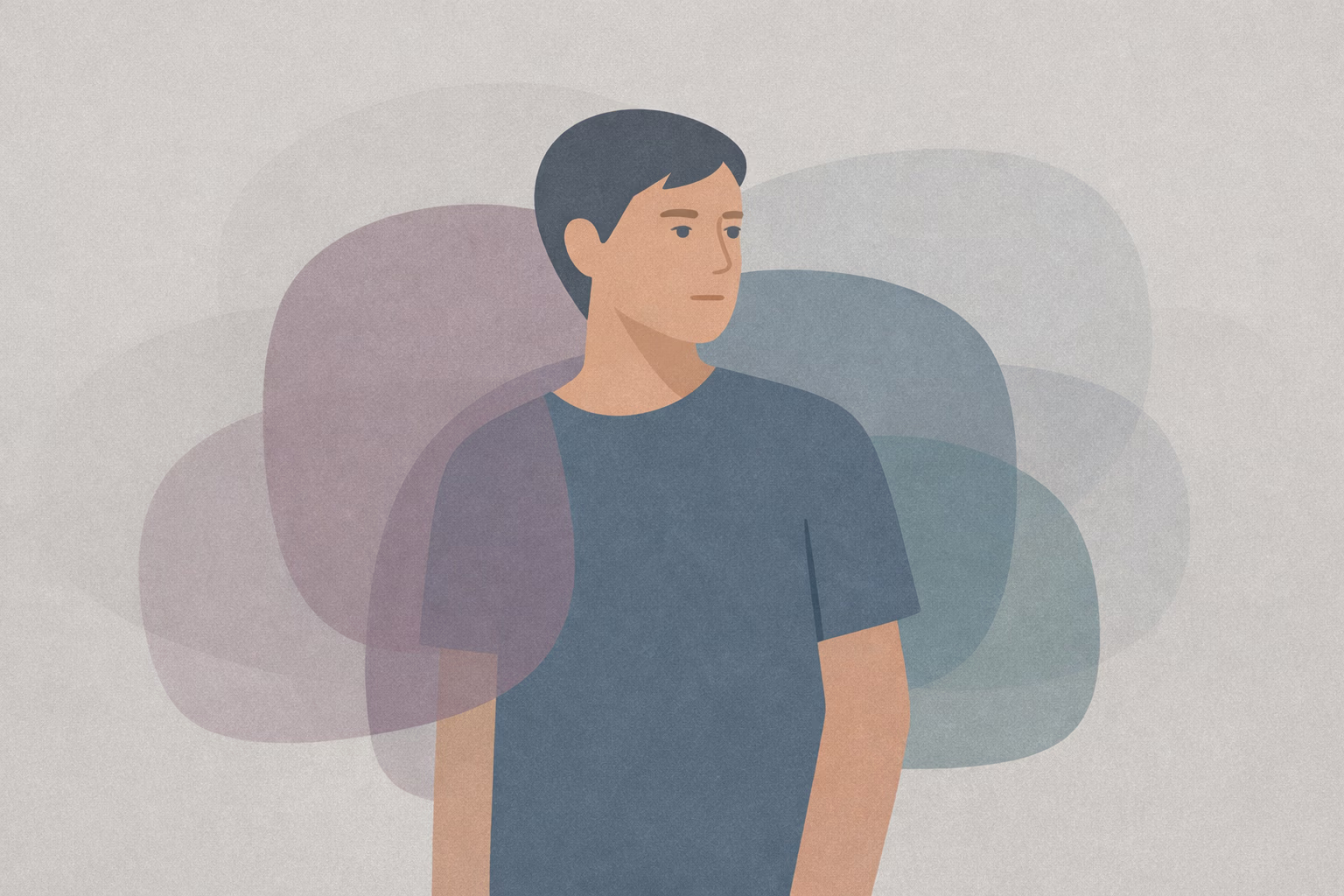
In short: Sometimes what you feel on the surface doesn’t match what your life is actually asking you to process. You might sound sharp, get easily irritated, or go oddly flat—while a quieter part of you senses, this isn’t the whole story .
Sometimes what you feel on the surface doesn’t match what your life is actually asking you to process. You might sound sharp, get easily irritated, or go oddly flat—while a quieter part of you senses, this isn’t the whole story.
What if the “wrong” emotion is actually the safest available one?
Emotional displacement is a protective process where the system routes expression through a feeling that carries less risk—socially, physically, or internally. It can look confusing from the outside, but from the inside it often functions like damage control: a way to release pressure without stepping into what still feels too exposed.
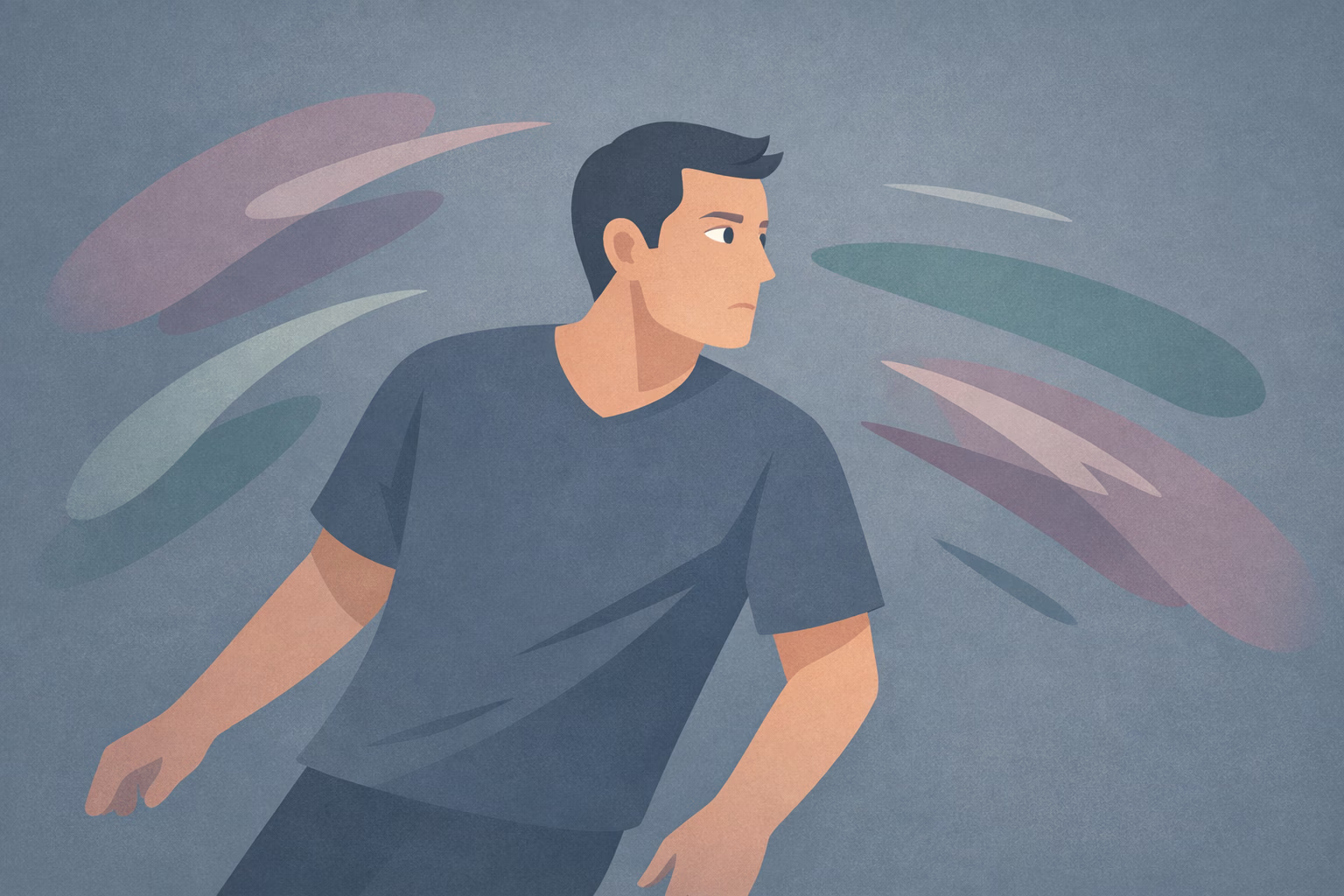
Emotional displacement often shows up as a mismatch: you’re angry, irritated, or numb, yet there’s a subtle sense that something else is underneath. The surface emotion has a clear shape—heat, edge, shutdown—while the deeper feeling is less formed, less nameable, or simply not available in the moment. [Ref-1]
This isn’t “dishonesty.” It’s a sign that your system is prioritizing manageability. When load is high, the nervous system tends to choose what can move through quickly and safely, not what is most accurate.
It can feel like your body is speaking one language while your life is speaking another.
In displacement, the system doesn’t remove emotion—it reallocates it. Expression gets routed away from a channel that feels costly (vulnerability, exposure, potential rejection) and into a channel that feels more survivable (irritation, critique, distance, productivity, humor). [Ref-2]
Structurally, it’s a redirection of pressure. The underlying experience remains incomplete—no “done” signal arrives—so the body looks for another path to discharge activation. This is why displacement can feel both relieving and unsatisfying: something moved, but nothing finished.
Humans are built to stay connected. In many families, workplaces, or relationships, certain emotions have historically carried consequences: dismissal, conflict escalation, shame, or withdrawal. Over time, the nervous system learns what’s “allowed” to show and what tends to cost belonging. [Ref-3]
Displacement can function like an attachment-preserving strategy: it keeps you in relationship (or at least out of danger) by avoiding the kind of emotional exposure that once felt too expensive. This is not about lack of character; it’s about learned safety economics.
Which feelings have tended to be “safe enough” in your environment?
Some emotions place you in a more vulnerable position: grief, longing, tenderness, disappointment, or fear can signal need, dependence, or uncertainty. Other emotions can create distance or control—anger can mobilize, sarcasm can deflect, numbness can reduce contact.
So the system chooses the feeling that reduces exposure while still letting some energy out. It’s a partial release valve: enough expression to lower immediate pressure, not enough contact to risk social or internal consequences. [Ref-4]
Displacement can create a momentary sense of relief because something moved: tone changed, tension released, a boundary got asserted, a conflict got started (or avoided). But relief is not always resolution.
Resolution has a different signature: the system registers completion. The underlying emotion has had enough accurate contact with reality—enough acknowledgement, enough meaning-fit, enough closure—that it can settle. Mislabeling and substitute expression can interrupt that process, keeping the deeper layer unintegrated and therefore still active in the background. [Ref-5]
Displacement often repeats because it “works” in the short term: it reduces immediate vulnerability and shifts activation into something more manageable. In nervous-system terms, that’s reinforcement—lower cost, quick payoff. [Ref-6]
But the original loop stays open. Without completion, the system remains slightly mobilized, scanning for the next moment to offload pressure. This is how an avoidance loop can form without conscious intention: not because you’re refusing truth, but because the environment and the body have learned that direct contact is too expensive right now.
Displacement can look like “having a short fuse,” “being fine,” or “just joking,” while the underlying experience remains unspoken and unfinished. Over time, the substitute emotion can become the default language because it’s the language that has historically been tolerated. [Ref-7]
These aren’t random. They’re often the most socially workable forms of activation available in the moment.
When the outward emotion doesn’t match the inward reality, communication gets distorted. You may argue about the wrong issue, fixate on small problems, or feel misunderstood even when people respond. The conflict becomes misdirected because the true signal never fully arrives.
Inside the body, the cost can be ongoing tension: the system keeps carrying an unfinished load while also managing the fallout of the substitute expression. Over time, this can look like chronic edginess, shutdown, or a persistent sense that life never quite resolves. [Ref-8]
When the real message can’t land, the system keeps sending drafts.
Displacement becomes a habit because it reliably reduces immediate risk. Each time the system swaps a vulnerable feeling for a safer one, it learns: this is how we stay intact. That learning is not cognitive—it’s procedural, encoded in what the body expects will happen next. [Ref-9]
The problem is that the habit can outlast the conditions that created it. Even when your current life is safer than your earlier life, the nervous system may still route emotion along older pathways—especially under stress, speed, or social evaluation.
The deeper emotion doesn’t “hide” because you’re not insightful enough. Often it’s simply not accessible when the system is overloaded. When arousal is high, the body prioritizes mobilization or shutdown over nuanced internal sensing.
As physiological load decreases, interoceptive signals—the body’s internal cues—tend to become more distinguishable. That’s the bridge: not forcing depth, but the system having enough baseline steadiness for the original feeling to register as a tolerable signal rather than an alarm. [Ref-10]
What changes when your system is under less strain—same life, different capacity?
Expression isn’t only personal; it’s relational. If your environment carries strong cues of evaluation—being judged, corrected, mocked, or penalized—your system will naturally choose safer emotional outputs. Social evaluative threat reliably shifts physiology and behavior toward protection, inhibition, or performative control. [Ref-11]
In that context, displacement can be understood as a form of social navigation. The system avoids the consequences of the “root” emotion by presenting an emotion that is more defensible, less revealing, or more culturally acceptable.
When displacement loosens, people often describe a quieter internal atmosphere: fewer emotional whiplashes, less urge to pick fights, less need to go blank. Not because life becomes easy, but because signals become more coherent—what you feel, what you mean, and what you communicate start to match.
This coherence can reduce self-criticism. Instead of “What is wrong with me?” the framing shifts toward “What has my system been carrying, and what has it been trying to protect?” That change in stance is often associated with greater psychological steadiness and less internal hostility. [Ref-12]
Clarity isn’t intensity. It’s accuracy that the body can live with.
The deeper shift is not about becoming more emotive. It’s about fewer detours—less energy spent translating, substituting, or defending. Over time, the system can begin to associate direct contact with safety cues rather than consequences.
When that happens, regulation becomes less effortful: emotions move through with fewer secondary layers, and the body is more able to return to baseline after activation. This is one way emotional regulation becomes embodied—not as constant management, but as a quicker return to coherence after stress. [Ref-13]
When emotions no longer have to disguise themselves, they often resolve with less drama.
Emotional displacement can be reframed as meaningful information: a sign that something real is present, but the system is negotiating how to hold it without losing connection, safety, or dignity. Under the substitute emotion, there is often a need for recognition, repair, rest, reassurance, or truthful contact.
When that underlying experience eventually finds completion, it doesn’t just “make sense” intellectually—it tends to settle into narrative identity as something that happened, mattered, and is now integrated into who you are. That is the kind of coherence that reduces looping. [Ref-14]
Displacement is not proof that you’re broken; it’s proof that your system has been protecting something important. As safety increases—internally or relationally—the need for substitution often decreases.
Clarity begins when emotions no longer have to disguise themselves to keep you connected. And sometimes, the most stabilizing thing isn’t intensity or effort—it’s the quiet relief of being able to be real without losing belonging. [Ref-15]
From theory to practice — meaning forms when insight meets action.
Because your nervous system is rerouting expression toward lower-risk outlets. Some emotions place you in a more vulnerable position — grief, longing, tenderness, fear can signal need or dependence. Others create distance: anger mobilizes, sarcasm deflects, numbness reduces contact. The system chooses the feeling that reduces exposure while still letting some energy out. It's a partial release valve: enough to lower immediate pressure, not enough to risk consequences. The wrong emotion is often the safest available one. This isn't dishonesty — it's damage control when the original feeling still feels too exposed to step into.
Not quite. Suppression pushes emotion down; displacement reallocates it. The system doesn't remove the feeling — it routes expression away from a costly channel (vulnerability, exposure) into a more survivable one (irritation, critique, distance, productivity, humor). Structurally it's a redirection of pressure. The underlying experience remains incomplete — no Done Signal arrives — so the body keeps looking for another path to discharge activation. That's why displacement can feel both relieving and unsatisfying: something moved, but nothing finished. The Avoidance Loop forms when this becomes the default language, because it reliably reduces immediate vulnerability.
Because the outward emotion may not match the inward reality. When you argue from the substitute feeling rather than the root one, communication gets distorted — you fixate on small problems, fight about the wrong issue, feel misunderstood even when people respond. The conflict becomes misdirected because the true signal never arrives. The system keeps sending drafts when the real message can't land. Inside the body, the cost is ongoing tension: you're carrying an unfinished load while also managing the fallout of the substitute expression. Chronic edginess and the sense that life never resolves can both come from this.
Not by forcing depth — by reducing load. The deeper emotion isn't hidden because you lack insight; it's often not accessible when the system is overloaded. Under high arousal, the body prioritizes mobilization or shutdown over nuanced internal sensing. As physiological load decreases, interoceptive signals become more distinguishable. That's the bridge: enough baseline steadiness for the original feeling to register as a tolerable signal rather than an alarm. Emotional safety also matters — environments with strong evaluation cues push the system toward safer outputs. Displacement loosens when direct contact starts associating with safety cues rather than consequences.
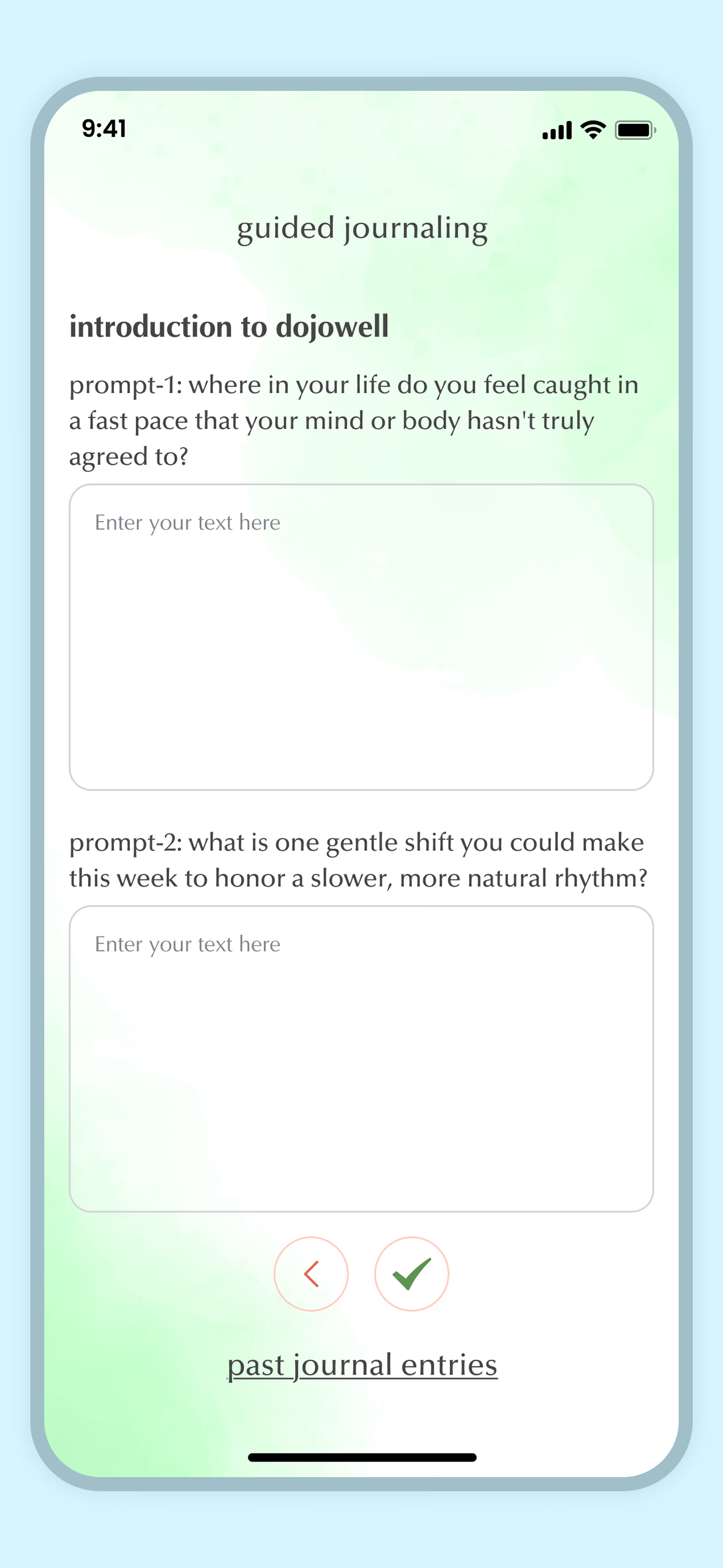
From Science to Art.
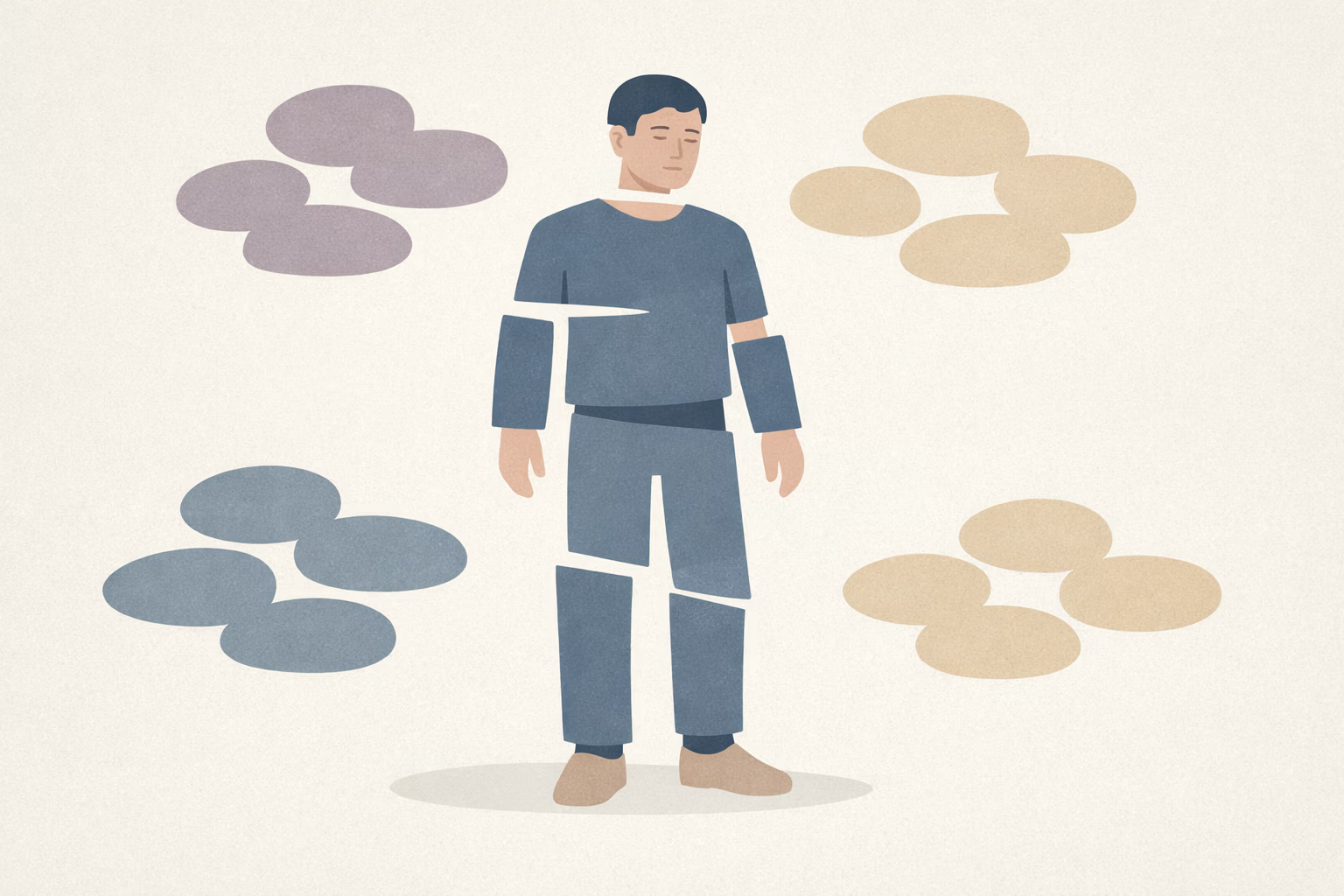
Understanding explains what is happening. Art allows you to feel it—without fixing, judging, or naming. Pause here. Let the images work quietly. Sometimes meaning settles before words do.
One Quiet Window, one insight, one reflection — every Sunday