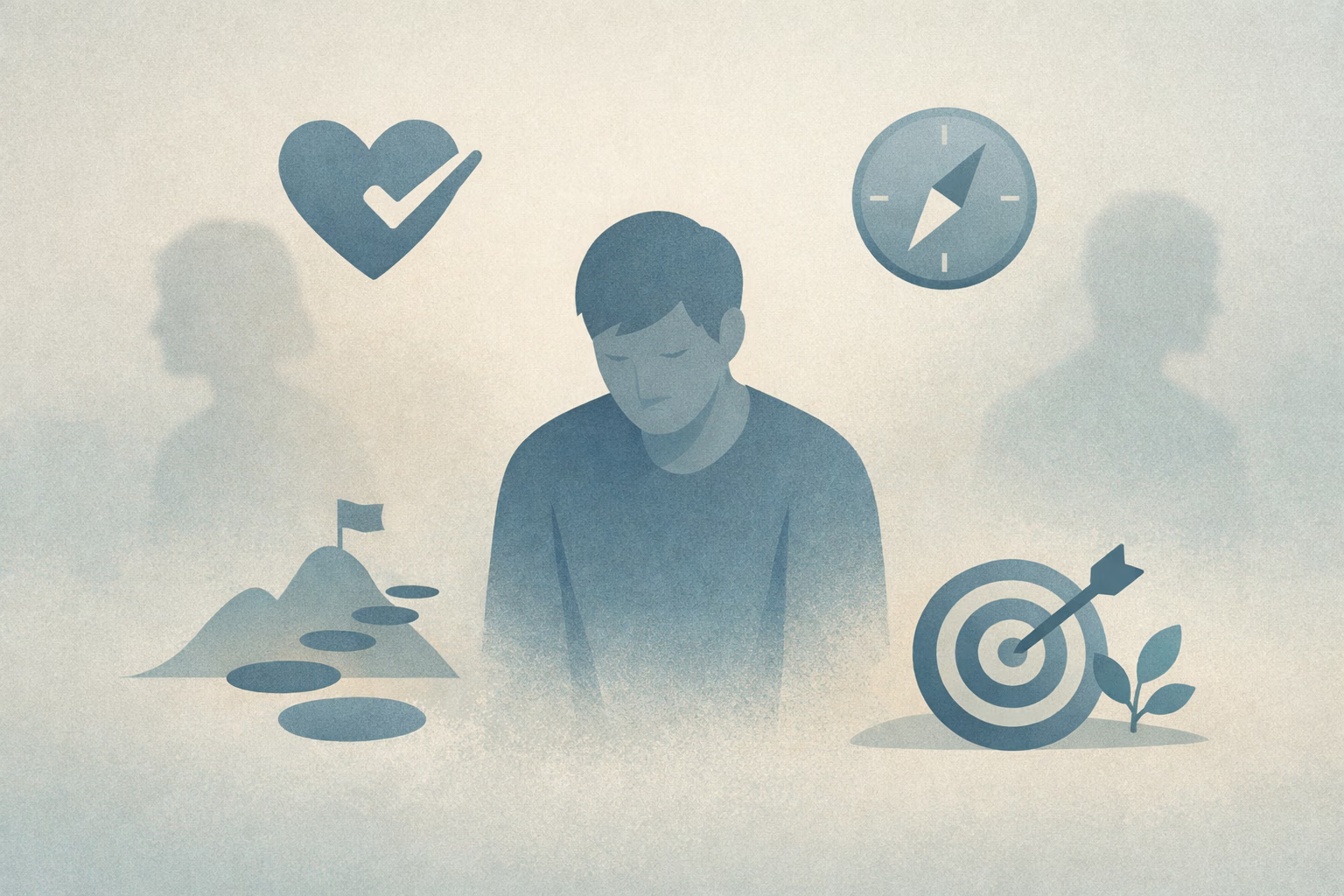

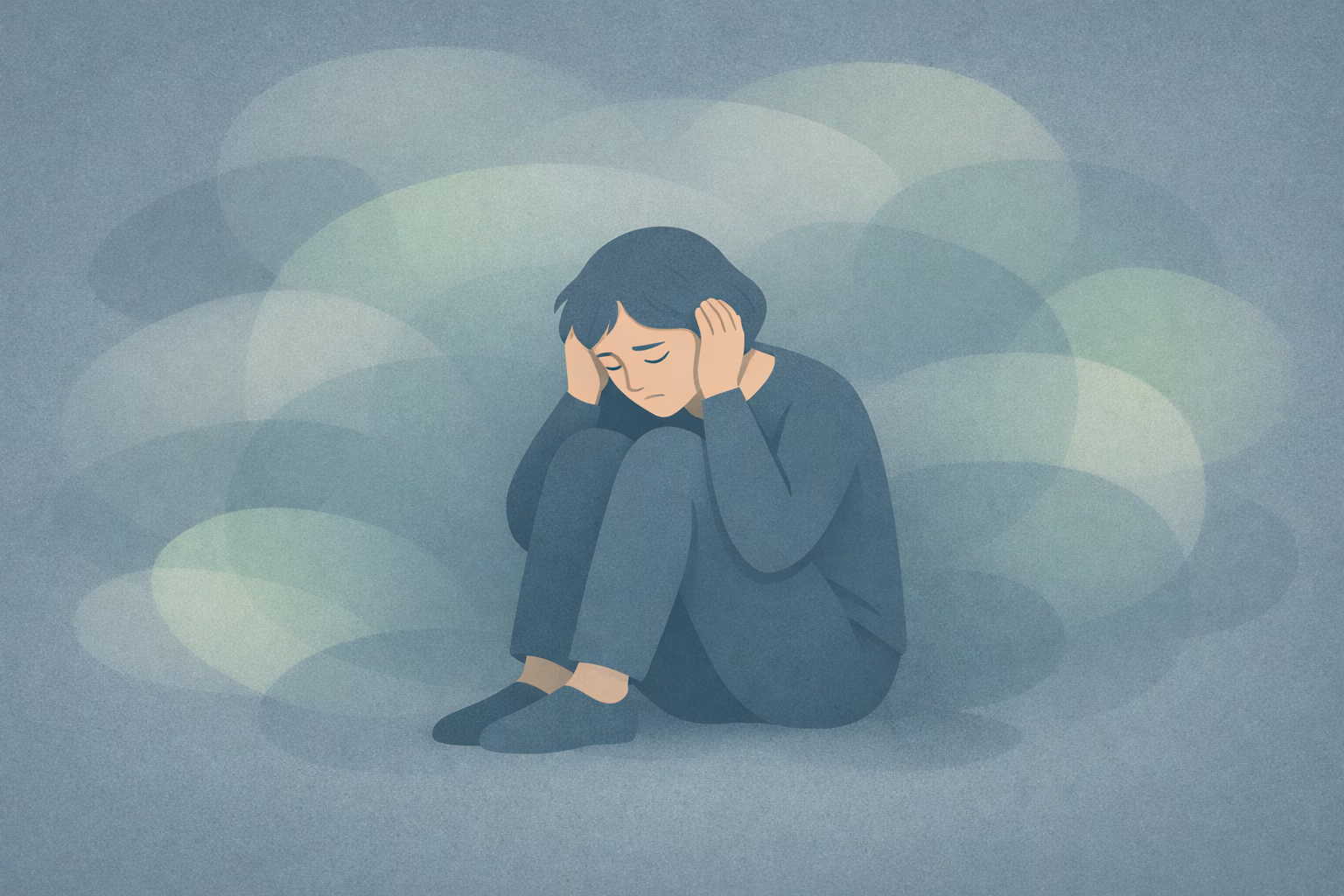
Emotional Overwhelm: When Life Feels Too Loud Inside

In short: “too much,” “too intense,” “too reactive.” But in many bodies, sensitivity is simply a higher-resolution way of registering information—social cues, tone shifts, sensory changes, and the emotional atmosphere in a room. In a supportive environment, that extra signal can become discernment, empathy, and wise timing.
Emotional sensitivity is often described like a problem to manage: “too much,” “too intense,” “too reactive.” But in many bodies, sensitivity is simply a higher-resolution way of registering information—social cues, tone shifts, sensory changes, and the emotional atmosphere in a room.
In a supportive environment, that extra signal can become discernment, empathy, and wise timing. In a high-pressure environment, the same signal can feel like overwhelm—because the nervous system is carrying more input than it can complete.
What if sensitivity isn’t a weakness—what if it’s a capacity that gets misread when life doesn’t allow closure?
Many sensitive people aren’t overwhelmed by “feelings” so much as by volume: too many cues arriving too quickly, with too little time for the nervous system to finish processing what it registered. The result can look like sudden shutdown, tears that feel confusing, irritability, or a strong need to retreat.
Criticism can land especially hard—not because someone is fragile, but because the system tracks more detail: facial micro-changes, subtle disappointment, the relational meaning behind a phrase. When the brain assigns significance to fine-grained information, it can create a full-body alarm even when the moment seems “small” to others. [Ref-1]
“It’s not that I can’t handle life. It’s that life arrives in high definition.”
Sensitivity is not just an emotional trait; it often spans multiple channels—sound, light, texture, social complexity, and moral nuance. Some nervous systems detect smaller shifts and keep them in working memory longer, which increases both insight and load.
This deeper processing can be protective and socially intelligent. It can also mean that environments with constant input (notifications, crowds, fast conversation, layered responsibilities) keep the system “on” without a clear endpoint.
When there is no “done” signal, the body stays in continuation mode: scanning, tracking, preparing. Over time, even ordinary days can start to feel like a test you didn’t agree to take. [Ref-2]
From an evolutionary perspective, it makes sense that not everyone is built the same. Groups benefit from a mix: some who move fast and take risks, and some who detect subtle danger, read social weather, and notice what others miss.
High sensitivity can support early threat detection, careful learning, and strong relational attunement. It can also be linked to heightened responsiveness to social pain—because belonging is a survival signal, and subtle exclusion cues matter to a cooperative species. [Ref-3]
So the trait itself is not an error. The strain often comes from living in conditions that treat high-resolution perception like an inconvenience.
In many lives, the safest-seeming option has been to mute sensitivity: don’t show it, don’t name it, don’t let it register. This can look like becoming “easygoing,” staying agreeable, numbing out, or intellectualizing everything into distance.
Short-term, that can reduce conflict and keep life moving. But internally, it often increases physiological load. The brain still detects cues; it simply loses a clean route to completion. When perception is forced to remain unfinished, the system can cycle between overactivation and flatness. [Ref-4]
Not expressing sensitivity isn’t the same as resolving what the system already took in.
Many cultures reward a narrow form of steadiness: quick recovery, minimal impact, constant availability. In that story, sensitivity gets mislabeled as weakness—when it may actually reflect heightened processing power.
The mismatch shows up when the environment asks for high output with low recovery, high performance with low context, and constant social calibration with little relational safety. Under those conditions, sensitive systems aren’t “worse.” They’re simply more exposed to overload.
Research on sensory processing sensitivity describes meaningful differences in responsiveness and depth of processing, with both benefits and vulnerabilities depending on context. [Ref-5]
Depth becomes a problem when there is no space for completion. Instead of landing as insight, information stays suspended: a conversation that keeps replaying, a tone that keeps echoing, a room that still feels loud hours later.
This is not “overthinking” as a personality flaw. It’s a system trying to finish processing without enough closure cues. When closure is repeatedly bypassed—by speed, pressure, or constant next-task demands—sensitivity can start to look like reactivity or avoidance.
Studies on high sensory-processing sensitivity suggest that well-being is strongly shaped by how reactivity and regulation demands interact with the person’s context. [Ref-6]
Sensitivity often gets summarized as “big feelings,” but the lived reality is usually more structural: a nervous system responding to accumulated, incomplete signals.
Some common expressions include:
In emotion science, “regulation” is less about controlling feelings and more about how systems shift states and return to baseline after activation. When baseline is repeatedly interrupted, reactions become more intense—not because you’re failing, but because the load is higher. [Ref-7]
When sensitivity is treated as inconvenient, many people adapt by turning against their own signal: minimizing it, mocking it internally, or acting as if it shouldn’t exist. That inner conflict adds a second stressor on top of the original input.
Over time, shame can fragment identity: one part of you keeps noticing, another part insists you shouldn’t. This split often leads to burnout (staying “on” while disowning impact) or withdrawal (reducing exposure because the cost is too high).
Body-based research on stress and regulation emphasizes that states are not just mental. When the system stays activated, the body carries it—even when you’re “functioning.” [Ref-8]
It can help to separate two questions: “How much do I register?” and “How supported is my return after I register it?” Sensitivity increases signal. Regulation capacity determines whether the signal completes or keeps looping.
Repeated overwhelm often happens when the system rarely gets to stand down. Not because the person lacks willpower, but because life keeps reactivating before completion: more messages, more evaluation, more social negotiation, more decisions.
When self-criticism gets added, it can intensify the loop by keeping the system in threat-monitoring mode. A kinder inner stance is not a pep talk; it can change physiological threat load and create more room for settling. [Ref-9]
Sensitivity tends to stabilize when it’s treated as signal, not verdict. “Signal” means: information that can guide timing, context, and choice. “Verdict” means: proof that something is wrong with you.
In many people, what looks like “too much” becomes more workable when life includes enough pacing, clear relational expectations, and permission for a response cycle to complete. That isn’t about becoming less sensitive; it’s about making sensitivity livable.
Psychological flexibility research often highlights the value of adapting to context while staying connected to what matters—without turning every internal sensation into an emergency. [Ref-10]
“My sensitivity didn’t need to be removed. It needed a place to land.”
In the right conditions, sensitivity can be a form of social intelligence. It can detect when someone is not okay, when a conversation needs slowing, when a group is quietly drifting toward conflict, or when a person feels unseen.
Support matters because nervous systems regulate in relationship as well as alone. Feeling met—through respect, clarity, and steadiness—can reduce stress activation and help the body complete its response. This is one way connection buffers stress. [Ref-11]
When sensitivity is respected, it often becomes a bridge—not a burden.
When sensitivity is no longer treated as a flaw, something subtle shifts: not necessarily “more emotion,” but more reliable signal return. The system begins to move from spike-and-crash toward steadier waves.
People often describe:
Isolation and chronic self-rejection increase stress load; feeling understood and contextually supported can lower it. Over time, that reduced load can make everyday life feel less like constant bracing. [Ref-12]
Sensitivity becomes heavy when it is forced to operate in conditions that never allow completion. It becomes guidance when it is allowed to inform meaning: what matters, what harms, what nourishes, what is misaligned.
In that role, sensitivity is not a constant emergency signal. It’s a directional sense—helping you detect mismatch early, name what is significant, and orient toward relationships and environments that don’t require self-erasure.
Chronic stress research underscores that persistent activation has real bodily costs. A life with more closure and less ongoing alarm isn’t a moral achievement; it’s a physiological shift toward sustainability. [Ref-13]
If you’ve been told you’re “too sensitive,” it may help to consider a more accurate description: you register more, and you’ve been asked to carry that information without enough closure. That’s not a character issue. It’s a load issue.
When sensitivity is treated with respect—internally and externally—it can serve meaning: empathy with boundaries, discernment without hypervigilance, and depth that contributes rather than drains. Suppression can reduce visible impact, but it often increases invisible cost. [Ref-14]
Agency often returns not through forcing toughness, but through restoring coherence: when your signals make sense, your responses can complete, and your life story includes your actual capacities rather than fighting them.
Emotional sensitivity is one of the ways humans stay connected—to each other, to danger, to beauty, to meaning. When supported, it doesn’t make you unstable; it makes you informed.
Strength isn’t the absence of impact. Often, it’s the ability to let impact move through and settle—so your perception can become wisdom, and your depth can belong in your identity without constant justification. [Ref-15]
From theory to practice — meaning forms when insight meets action.
Because culture often rewards a narrow form of steadiness — quick recovery, minimal impact, constant availability. Sensitivity registers more: facial micro-changes, tone shifts, social weather, sensory detail. When the nervous system holds finer information longer, it can create a full-body alarm even when a moment seems small to others. That isn't fragility; it's higher-resolution input. The mismatch shows up when the environment asks for high output, low recovery, and constant calibration with little relational safety. Sensitive systems aren't worse — they're simply more exposed to overload because life arrives in high definition.
Because muting the signal doesn't end what the system already took in. Acting easygoing, staying agreeable, intellectualizing into distance — these reduce visible impact while increasing invisible cost. The brain still detects the cues; it simply loses a clean route to completion. When perception is forced to remain unfinished, the system cycles between overactivation and flatness. Shame splits identity further: one part keeps noticing, another insists you shouldn't. That inner conflict adds a second stressor on top of the original input. Not expressing sensitivity isn't the same as resolving what your body already absorbed.
Mostly regulation. Two questions matter: how much do I register, and how supported is my return after I register it? Sensitivity increases signal — regulation capacity determines whether the signal completes or keeps looping. Repeated overwhelm happens when the system rarely gets to stand down: more messages, more evaluation, more decisions before the last cycle finishes. Information stays suspended — a conversation replaying, a tone still echoing hours later. That isn't overthinking as a flaw; it's a system trying to finish processing without enough closure cues. Self-criticism keeps it stuck in threat-monitoring; compassion changes the threat climate.
When it's treated as signal, not verdict — information that guides timing, context, and choice rather than proof something's wrong with you. Sensitivity becomes heavy when forced to operate without completion; it becomes guidance when allowed to inform meaning: what matters, what harms, what nourishes, what is misaligned. Co-regulation matters here — feeling met through respect, clarity, and steadiness reduces stress activation and helps the body complete its response. Restored coherence looks like more reliable signal return: fewer aftershocks, more capacity for closeness without losing footing, sensitivity belonging in your identity without constant justification.
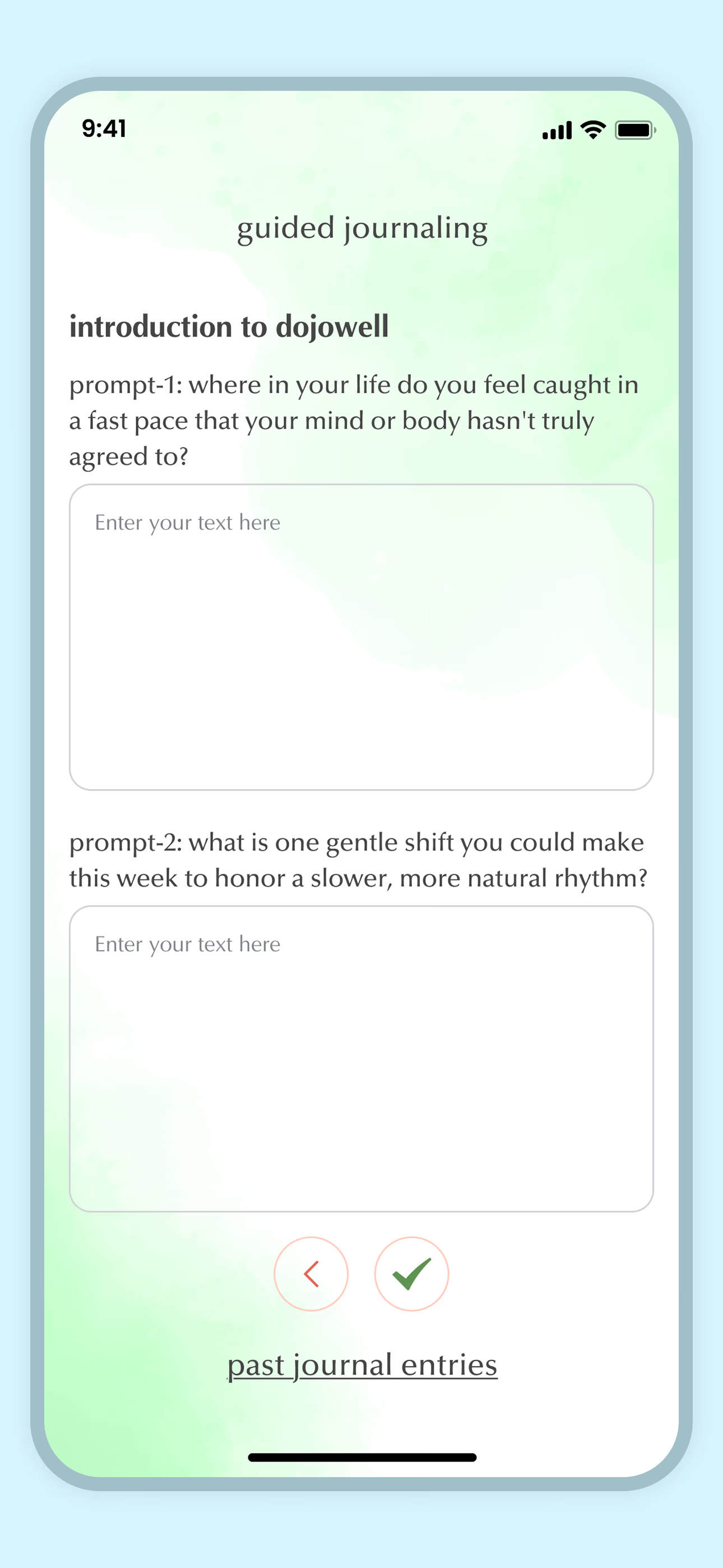
From Science to Art.
Understanding explains what is happening. Art allows you to feel it—without fixing, judging, or naming. Pause here. Let the images work quietly. Sometimes meaning settles before words do.
One Quiet Window, one insight, one reflection — every Sunday