Hyper-Independence: A Trauma Response in Disguise
In short: Being “the strong one” often looks like competence: you handle the logistics, keep the tone steady, and take care of what’s next. From the outside, it can read as maturity or leadership.
Being “the strong one” often looks like competence: you handle the logistics, keep the tone steady, and take care of what’s next. From the outside, it can read as maturity or leadership. From the inside, it can feel like you’re bracing through life with very little room to be human.
This pattern isn’t a personality flaw. It’s frequently a regulation strategy—an organized way a nervous system reduces uncertainty by tightening the circle of reliance. When support feels unreliable, strength becomes a form of self-protection: contain your needs, manage your impact, and keep moving.
What if “strength” isn’t who you are, but how you learned to stay safe?
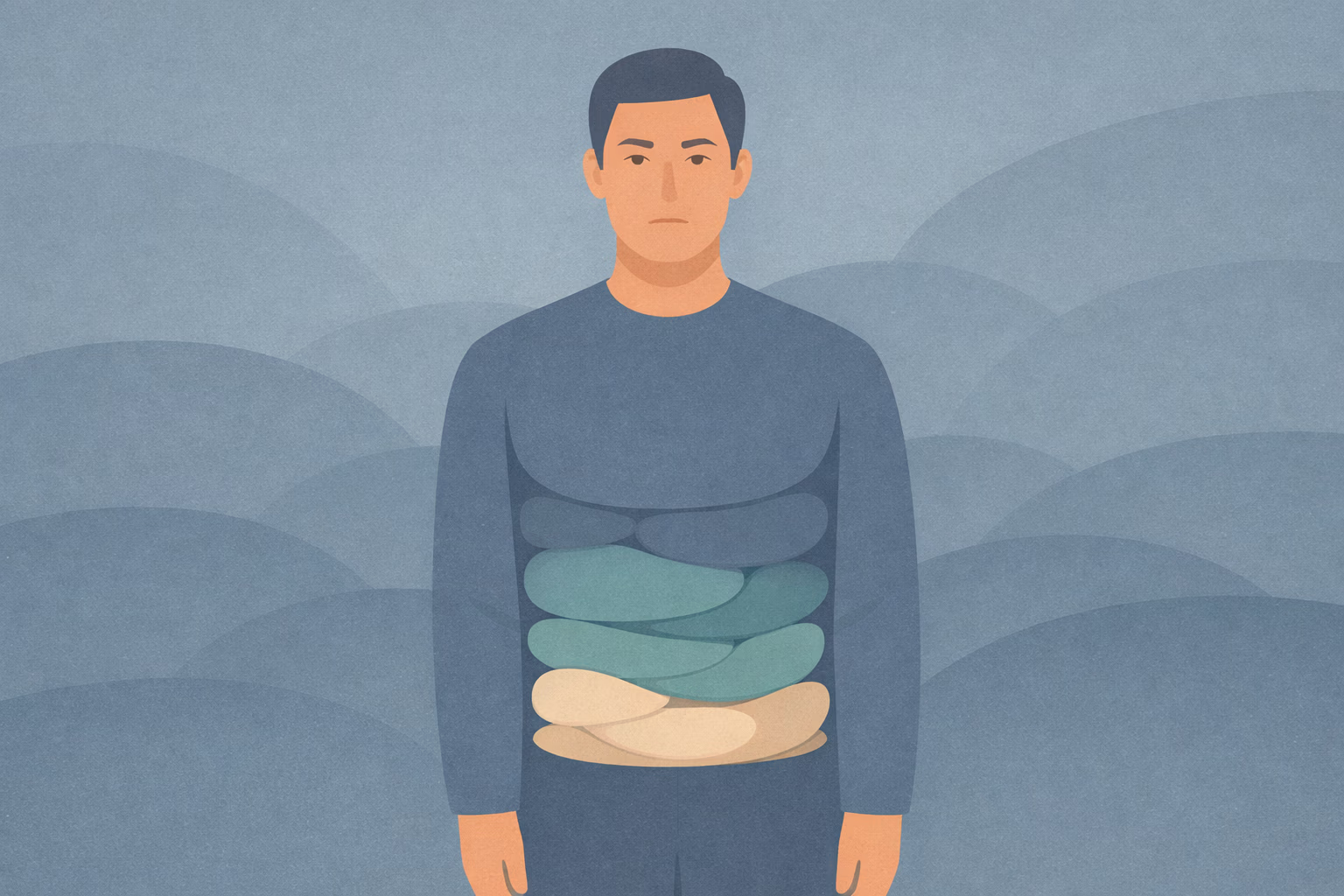
One of the quiet costs of always being strong is that responsibility doesn’t end when the day ends. The mind keeps scanning: what still isn’t handled, who might need you, what could go wrong if you soften. This is less about dramatic stress and more about continuous load—the background processes that never fully power down.
In that state, being “fine” can become a requirement rather than a preference. Needs get treated like delays. Support gets treated like risk. Over time, this creates a particular exhaustion: not only from doing a lot, but from doing it while staying sealed.
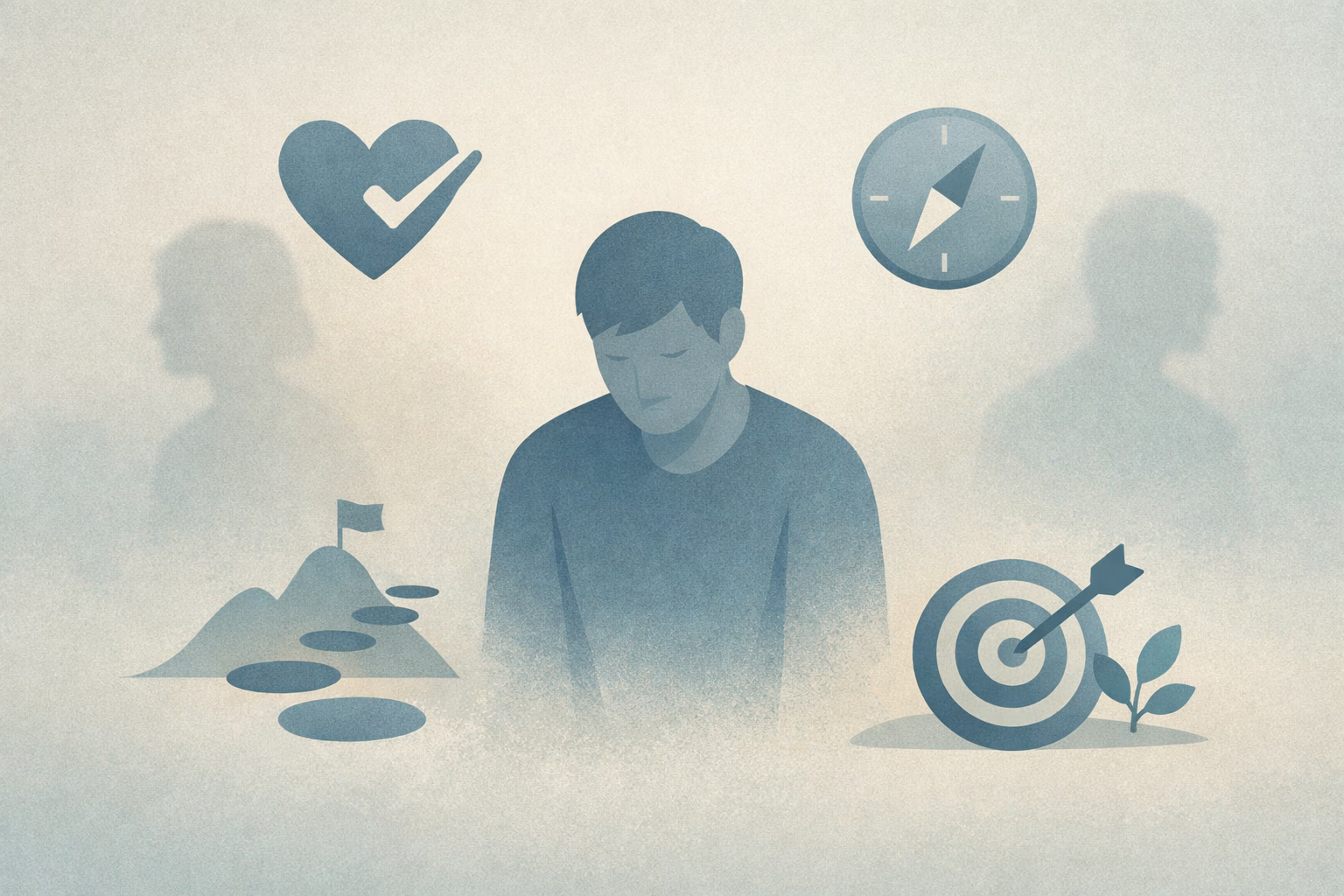
There’s also the experience of being unseen—not because people don’t care, but because the system you’ve built doesn’t easily transmit signals of need. You may be surrounded by people and still feel like you’re carrying life alone. [Ref-1]
When emotional self-containment is the default, the body often shifts into control-based regulation: tighten, manage, anticipate, prevent. Help-seeking becomes less automatic, not because you “don’t want it,” but because the nervous system has learned that reaching outward doesn’t reliably produce closure.
This can show up as chronic tension, difficulty settling after stress, or an almost reflexive impulse to handle things privately. The system stays on standby, maintaining readiness. Even positive connection can feel subtly activating because it introduces unpredictability: someone might notice; someone might ask; someone might disappoint.
Over time, the cost isn’t just emotional. It’s physiological: fewer “done” signals, less stand-down, and more sustained arousal that looks like productivity on the outside and pressure on the inside. [Ref-2]
Hyper-independence is often an adaptation that forms when closeness doesn’t reliably equal safety. If support is inconsistent, conditional, or complicated, the nervous system may choose a different route: reduce dependence, reduce exposure, and become the person who can’t be “caught off guard” by needing too much.
This is not a conscious decision so much as a learned structure. The system organizes around what works: if relying on others introduces disappointment, conflict, or shame, the body learns to minimize those inputs. Self-sufficiency becomes a stabilizer.
Importantly, this isn’t about a hidden fear that needs to be excavated. It’s about a history of incomplete loops: moments where reaching out didn’t resolve, didn’t land, or didn’t lead to reliable care—so the system stopped spending energy there. [Ref-3]
Strength offers something the nervous system values: predictability. If you handle it, you know how it will be handled. If you don’t ask, you don’t have to wait. If you keep your needs small, you reduce the chance of being dismissed, misunderstood, or made into a problem.
In this way, “being strong” can be a protective architecture. It keeps disappointment at a distance. It prevents the messy negotiations of needing something from someone who might not deliver. It also protects others from your impact—especially if you learned early that your needs created strain in the room.
Strength can become the safest way to stay connected: you contribute, you don’t require.
That bargain can make sense in the short term. The cost shows up later, when the system no longer remembers how to receive without bracing. [Ref-4]
Hyper-independence can look stable because it reduces visible conflict and keeps life moving. But stability isn’t the same as resilience. Resilience includes the ability to distribute load, recover after stress, and re-enter connection without losing yourself.
When strength becomes the only acceptable mode, isolation can grow even in relationships. You may have people who admire you, depend on you, or feel comforted by you—while the part of you that needs care remains out of reach. That creates a form of emotional malnourishment: not a dramatic collapse, but a gradual thinning.
The nervous system notices this. When support doesn’t arrive, the body compensates with more control. The pattern becomes self-reinforcing: the more you hold alone, the more alone you feel. [Ref-5]
In modern life, self-containment is frequently rewarded. People praise the one who doesn’t need much, doesn’t “make it a thing,” doesn’t slow the pace. Competence becomes social safety. Composure becomes currency.
This can create a Power Loop: the system gets short-term relief through control, and the world mirrors back approval. That approval strengthens the strategy. Meanwhile, the parts of life that require mutuality—receiving, resting into someone else’s care, letting something be unfinished in your hands—get deferred.
It’s not that connection disappears. It becomes managed. And managed connection rarely provides the kind of closure that lets a nervous system stand down. [Ref-6]
This pattern is often recognizable less by what you feel and more by what your system consistently does. It’s an organized way of keeping life coherent when relying on others hasn’t felt coherent.
These are not “bad habits.” They’re regulatory choices your system learned to make quickly—often before there was time to evaluate alternatives. [Ref-7]
Always being strong can slowly narrow what intimacy is allowed to be. If closeness is mostly you providing stability, the relationship may never fully develop the muscle of mutual support. You can be deeply involved and still feel alone.
Over time, emotional range can also compress—not because you’re disconnected from yourself, but because the system has prioritized steadiness over variability. There’s less room for states that feel disruptive: needing, wavering, resting, grieving, receiving. The nervous system learns to flatten peaks and valleys to maintain control.
The result can be burnout that doesn’t look like collapse. It looks like functioning with a dullness, a quiet irritability, or a persistent sense that life is handled but not held. [Ref-8]
When you don’t let people see what you genuinely need, relationships can’t deliver a specific kind of completion: the lived experience of being supported in the exact place you expected to be alone. Not reassurance. Not insight. Actual closure—where the system updates because the outcome is different than the old template.
Without those experiences, the nervous system keeps treating self-reliance as the only dependable route. The belief “I have to handle it” isn’t a thought you chose; it’s a summary the body keeps generating because the loop has never been allowed to fully resolve.
This is how the pattern stays stable. Not through willpower, and not through denial—but through lack of completed evidence that support can be real, tolerable, and reliable in your life. [Ref-9]
There’s a subtle shift that sometimes begins when needs are no longer treated as inconveniences that must be justified. Not as a sudden emotional breakthrough, but as a quieter reorganization: the sense that you don’t have to prove your place by carrying everything.
In this shift, strength becomes less fused with identity. It can still be present—capacity, steadiness, competence—but it isn’t the entry fee for belonging. The system starts to recognize that being valued and being burden-free are not the same thing.
When endurance stops being the only way you feel legitimate, your body finds more ways to settle.
This isn’t about understanding the concept of “you deserve support.” Integration looks more like reduced bracing and a greater ability to let something be held outside your own grip. [Ref-10]
Mutual support changes the shape of connection. When one person is always stable and the other is always receiving stability, the relationship can become functional but not fully relational. Depth tends to grow when both people are allowed to be impacted, to need, and to repair.
When vulnerability is permitted, relationships often gain new information: you’re not only the caretaker; you’re someone who can be cared for. You’re not only the problem-solver; you’re someone whose experience matters even when nothing is solved. That shared reality can create a stronger sense of “we.”
This kind of closeness isn’t built from big confessions. It’s built from repeated moments where support is exchanged and the nervous system learns it can return to baseline afterward. [Ref-11]
Many people who are “always strong” also carry invisible caretaking roles: emotional coordinator, stability provider, crisis buffer. When those roles become automatic, the system rarely receives a clear signal that the job is done.
Relief often shows up not as dramatic release, but as practical lightness: fewer internal checklists, less constant monitoring, more capacity for ordinary moments. Shared load doesn’t just reduce tasks; it changes the nervous system’s math about the future. If support is possible, tomorrow is less threatening.
Burnout in this context isn’t a personal weakness. It’s what happens when the output stays high while closure stays low. When closure returns—through being met, through real distribution—capacity returns with it. [Ref-12]
Restored safety doesn’t erase competence. It changes its meaning. Strength can become something you can access rather than something you must perform. You can be solid without being sealed.
In a more coherent system, identity widens: you’re not only reliable; you’re also reachable. Not only capable; also connected. Life begins to feel less like a solitary project and more like a lived relationship—with people, with time, with yourself.
When strength is optional, care becomes easier to receive. Connection stops feeling like a risk to manage and starts feeling like a place where the system can land. Meaning grows there—not as an idea, but as a settled sense that you don’t have to earn your right to be held. [Ref-13]
For many people, “always being strong” began as a protective story that worked. It created safety where safety was uncertain. It kept things moving when help didn’t come, or came with strings. It made life survivable. [Ref-14]
But protective stories can outlive the conditions that formed them. When the environment changes—new relationships, new resources, new seasons—the old strategy may still run, even if it now costs more than it gives. That doesn’t make you wrong. It makes you adapted.
Agency often returns when the story expands: strength is something you’ve used, not the only way you can belong. And support is not a test you must pass—it’s part of what makes a life coherent.
There is a kind of strength that looks like endurance—and another that looks like allowing support to be real. The second one isn’t softer because you’re weaker. It’s softer because your nervous system has enough safety to stop gripping so hard.
When strength no longer replaces connection, meaning has more room to form. Not through effort or explanation, but through lived completion: moments where you don’t have to carry everything, and your system finally registers, in its own time, that you are not alone. [Ref-15]
From theory to practice — meaning forms when insight meets action.
Because responsibility doesn't end when the day ends — the mind keeps scanning what isn't handled, who might need you, what could go wrong if you soften. That's continuous load: background processes that never fully power down. Being 'fine' becomes a requirement rather than a preference. Needs get treated like delays, support gets treated like risk. The system shifts into control-based regulation: tighten, manage, anticipate. Even positive connection feels subtly activating because someone might notice or ask. The cost isn't just emotional; it's physiological — fewer Done Signals, less stand-down, sustained arousal that looks like productivity outside and pressure inside.
Often, yes — it's an attachment adaptation that forms when closeness doesn't reliably equal safety. If support was inconsistent, conditional, or complicated, the nervous system chose a different route: reduce dependence, reduce exposure, become the person who can't be caught off guard by needing too much. It's not a conscious decision; it's a learned structure organized around what worked. The system isn't holding a hidden fear that needs excavating — it's responding to a history of incomplete loops where reaching out didn't resolve. Self-sufficiency became a stabilizer because the Attachment & Belonging system had too many unfinished cycles.
Because strength can become the safest way to stay connected — you contribute, you don't require. That bargain protects you from disappointment, prevents messy negotiations of needing something from someone who might not deliver, and protects others from your impact (especially if you learned early that your needs created strain). When you don't let people see what you genuinely need, relationships can't deliver a specific kind of completion: the lived experience of being supported in the exact place you expected to be alone. Without those experiences, the body keeps treating self-reliance as the only dependable route. The pattern stays stable through lack of completed evidence that support can be real and reliable.
The shift is structural, not motivational. When endurance stops being the only way you feel legitimate, the body finds more ways to settle. Strength becomes less fused with identity — still present (capacity, steadiness, competence) but not the entry fee for belonging. Mutual support changes the shape of connection: depth grows when both people can be impacted, need, and repair. Closeness isn't built from big confessions but from repeated moments where support is exchanged and the nervous system learns it can return to baseline afterward. Strength that allows being held isn't softer because you're weaker; it's softer because your system has enough safety to stop gripping so hard.
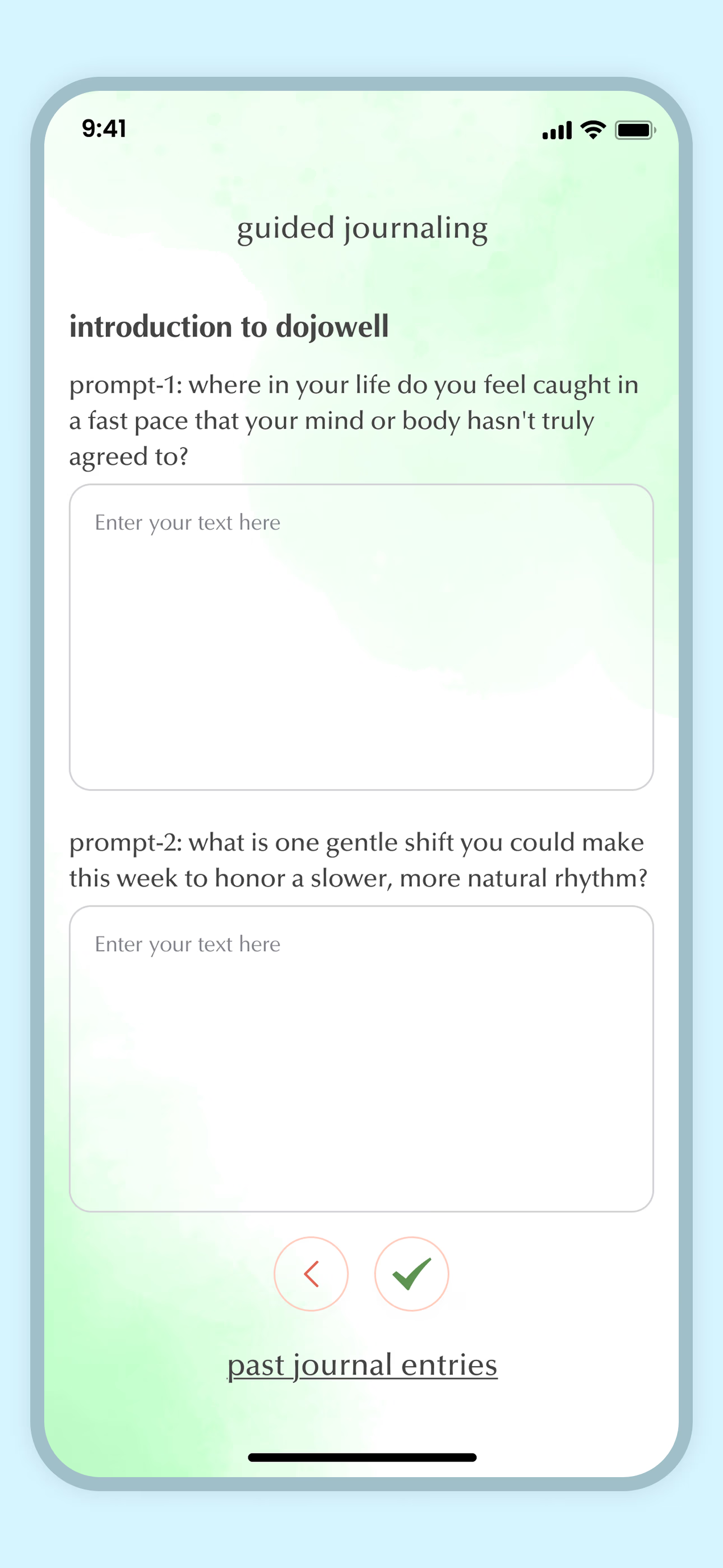
From Science to Art.
Understanding explains what is happening. Art allows you to feel it—without fixing, judging, or naming. Pause here. Let the images work quietly. Sometimes meaning settles before words do.
One Quiet Window, one insight, one reflection — every Sunday