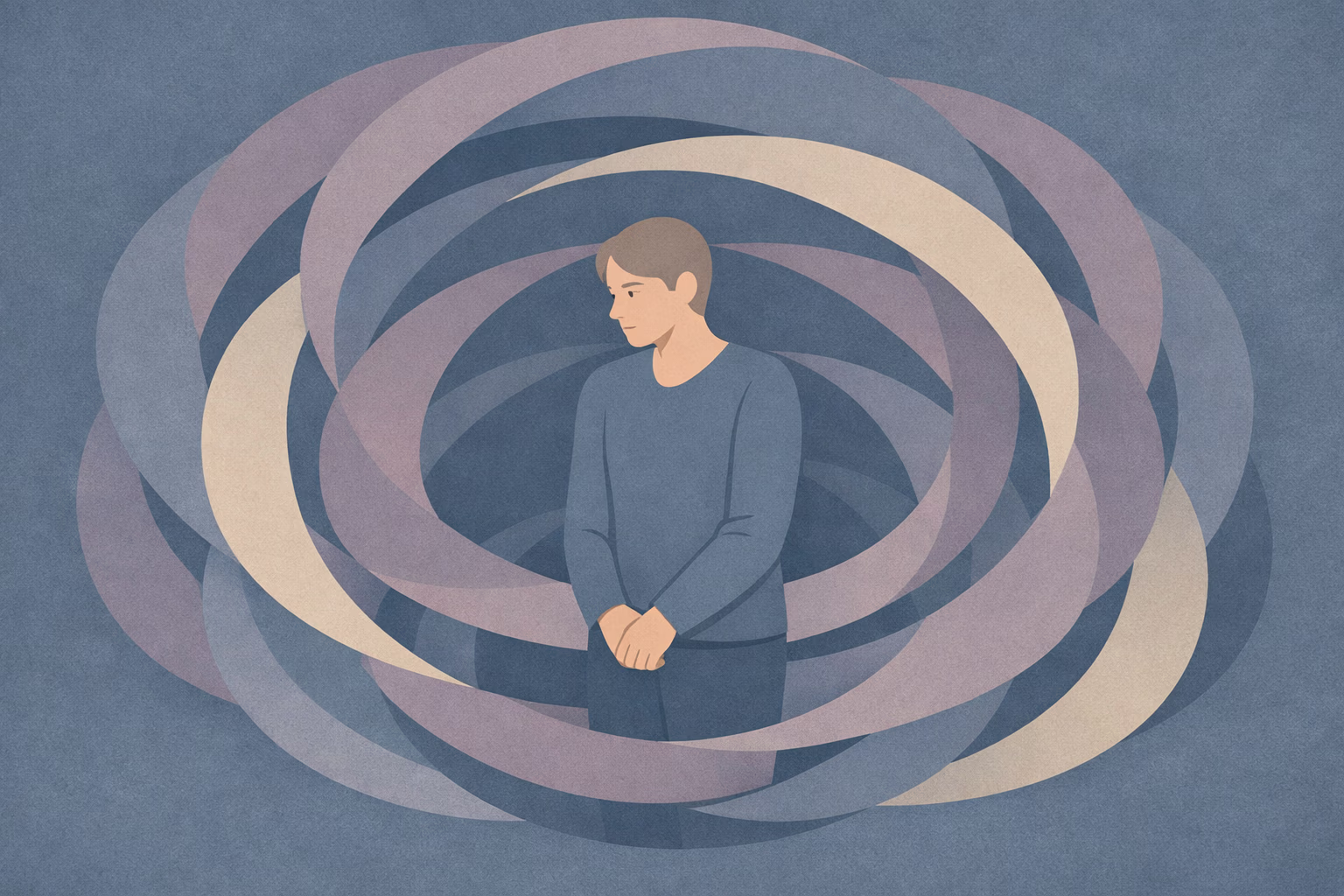
Self-Avoidance: When You Keep Escaping Your Own Thoughts

In short: As if some people are “better at feelings” and others are simply not. But most emotional “skill” is actually about conditions—how much load your nervous system is carrying, how much closure you’ve had lately, and whether your life allows experiences to finish instead of looping.
Emotional maturity is often talked about like a character upgrade: as if some people are “better at feelings” and others are simply not. But most emotional “skill” is actually about conditions—how much load your nervous system is carrying, how much closure you’ve had lately, and whether your life allows experiences to finish instead of looping.
What if the problem isn’t that you feel too much—but that your system rarely gets to complete what it starts?
In that light, escaping a feeling—through distraction, numbing, analysis, or control—isn’t a moral failure. It’s a regulatory move. It reduces intensity fast. The cost is that the original experience doesn’t get to land, settle, and become part of your lived identity. Over time, that can make emotions feel more urgent, more disruptive, and harder to trust.
When a difficult emotion arrives, the body doesn’t experience it as an idea. It experiences it as a state shift: changes in breathing, muscle tension, gut sensation, heat, speed, and attention. This is why people often “leave” in practical ways—scrolling, snacking, working, joking, fixing, explaining—before they even have words for what’s happening. [Ref-1]
In high-load seasons, the nervous system becomes efficient at exiting discomfort quickly. It learns shortcuts: minimize the signal, replace it with stimulation, or convert it into something more actionable (like blame, urgency, or over-planning). These are not personality flaws. They’re strategies that reduce immediate activation.
Emotional maturity is less about “handling emotions well” and more about having enough internal capacity to remain present while the body runs a strong signal. That capacity is a combined system: noticing what’s happening, staying within a tolerable range, and allowing the experience to move toward completion rather than being repeatedly interrupted. [Ref-2]
This is why maturity can look uneven. Someone may be steady at work but fragmented in conflict. Someone may speak fluently about feelings yet still exit the moment the body tightens. Knowing the concept isn’t the same as having the physiological room for the experience to finish.
In mature presence, emotion isn’t treated as an enemy to defeat or a fire to put out. It’s treated as information moving through a living system—something that can crest, resolve, and stand down when it isn’t constantly re-triggered by escape or self-attack.
Humans aren’t only stimulus-response creatures; we are meaning-making creatures. We don’t just endure discomfort—we organize it. When an experience can be placed into a coherent story of “what matters to me,” the nervous system often tolerates more intensity without breaking into panic, collapse, or compulsive relief-seeking. [Ref-3]
This is not about positive thinking. It’s about coherence: an internal sense that what is happening connects to identity, values, and relational reality. Without coherence, pain can feel like random noise—pure cost with no context. With coherence, the same pain can feel like part of a larger continuity of self.
When something has a place in your life, your system doesn’t have to treat it as an emergency.
Escape works because it changes state quickly. The body gets a short-term drop in intensity—sometimes through stimulation, sometimes through numbness, sometimes through certainty. But that relief can mimic closure. It feels like “done” even when the underlying experience hasn’t completed. [Ref-4]
Over time, this can train a loop: discomfort appears, exit behavior runs, intensity drops, and the system learns that the emotion itself is incompatible with safety. The next time the emotion arrives, the nervous system escalates faster because it expects it to require immediate removal.
So the issue isn’t that you’re “avoiding feelings.”
The issue is structural: repeated interruption prevents emotional experiences from reaching their natural settling point, so they return as unfinished business—louder, sharper, and more insistent.
People often confuse mature presence with suppression: holding everything in, staying composed, not reacting. But suppression is still a form of fight—an internal clamp that keeps the nervous system working overtime. Presence is different. It’s the ability to stay connected to reality while the body carries discomfort, without needing to force it away or turn it into performance. [Ref-5]
In a flexible system, discomfort doesn’t automatically become a problem to solve. It becomes a signal that can be held alongside other signals: values, context, relationship, timing, and limits. That “alongside” is important. It’s not about intensifying attention. It’s about not losing orientation.
Emotional escape is common because it is reliable. It converts diffuse internal discomfort into a clear behavioral sequence: do something, get a shift, feel better. The nervous system likes predictable cause-and-effect—especially when life is already uncertain.
But this conversion has a hidden cost: it can replace completion with cycling. The feeling doesn’t integrate into identity-level “I lived through that and it’s now part of me.” Instead, it stays suspended—reappearing as tension, irritability, cravings, or a sense of unfinishedness that doesn’t have an obvious source. [Ref-6]
From the outside, this can look like someone who is “fine” and then suddenly not. From the inside, it can feel like living under a low-grade alarm that never fully powers down.
Escape doesn’t always look dramatic. Often it looks socially acceptable, even praised. Many people develop polished ways of leaving discomfort that keep them functional—until the system’s capacity shrinks and the same strategies stop working.
These patterns are best understood as regulatory responses: ways the nervous system tries to manage intensity when closure is missing. [Ref-7]
None of these mean a person lacks depth. They often mean the person has been carrying more than their system can complete.
Meaning deepens when experiences can be metabolized into narrative identity: “this happened, I moved through it, and it changed how I live.” That process requires completion—real endings, real acknowledgments, real consequences, real repairs. When escape interrupts the process, life can start to feel like many partial tabs open at once. [Ref-8]
People in this state often describe a specific kind of fatigue: not only tiredness, but a lack of “landing.” Even good things may not register fully because attention is trained to move on before the system absorbs what happened.
The result isn’t just stress. It’s a reduction in meaning density: fewer experiences feel integrated, so identity feels less anchored. And when identity feels less anchored, discomfort feels more threatening—because there’s less internal continuity to hold it.
Nervous systems learn from pairings. If strong emotion repeatedly predicts rupture, isolation, punishment, or chaos, the body encodes it as danger. If strong emotion repeatedly predicts escape and quick relief, the body also encodes it as danger—because the system never learns what happens when the wave completes. [Ref-9]
This learning can show up as instant bracing at the first hint of sadness, anger, or tenderness. Not because the person is “afraid of feelings” in a simplistic sense, but because the body has a history of incomplete loops: the signal starts, something interrupts it, and the nervous system never receives the data that “this is survivable and finite.”
In that context, urgency makes sense.
Urgency is what a system uses when it expects escalation and lacks reliable closure.
People often imagine that staying present with difficult emotion is a mental decision. In reality, it’s usually an environmental-and-physiological condition. When the body receives enough safety cues—enough steadiness, enough time, enough social buffering—emotion becomes more tolerable because the system can downshift without needing to flee. [Ref-10]
Words like grounding, pacing, and self-compassion are sometimes treated as techniques. But they can also be understood as a different relational stance toward your own nervous system: less force, less internal threat, more permission for the experience to move toward completion.
Not everything needs to be solved in the moment for the moment to be livable.
This is where emotional maturity becomes a bridge to meaning: when you can remain oriented, you’re more likely to stay connected to what matters—rather than being recruited into whatever provides the fastest relief.
In relationships, emotional escape often creates confusion. One person’s system escalates to get contact; the other person’s system disappears to get relief. Or both people manage discomfort by switching into blame, analysis, or performance. The common thread isn’t bad intention—it’s nervous systems searching for regulation.
Emotional maturity adds stability because it reduces these emergency dynamics. When people can remain present enough to complete interactions—clarifying, repairing, ending, or pausing with dignity—relationships stop carrying so many unfinished loops. Over time, that can decrease loneliness even when life is busy, because connection feels more real and less precarious. [Ref-11]
Relational safety isn’t created by never feeling upset. It’s created when upset doesn’t automatically trigger disappearance, punishment, or runaway escalation.
When emotional maturity grows, the most noticeable shift is often not “bigger feelings.” It’s more return of signal: a clearer sense of what you want, what you don’t want, what matters, and what is actually happening—without needing to spin up a whole escape sequence.
This can look like steadier self-respect: not in the sense of constant confidence, but in the sense of being less split from yourself. Less apologizing for your own humanity. Less internal punishment for having needs or limits. [Ref-12]
Importantly, this is not a purely mental achievement. It reflects a system that is carrying less uncompleted load.
Life will always include uncertainty, grief, conflict, longing, and change. Emotional maturity doesn’t remove those realities. It changes how much they fragment you. With more capacity for staying present, challenges become experiences you can move through rather than alarms that reorganize your entire identity around escape.
This is where dignity returns. When you’re not constantly trying to outrun internal signals, you can make contact with values again—what you stand for, what you’re willing to carry, what you’re no longer willing to trade away for relief. That alignment tends to make behavior more coherent over time, because it’s anchored in identity rather than pressure. [Ref-13]
In this sense, maturity is not “being unbothered.” It is being able to remain yourself while bothered—until the experience completes and the system can settle.
In a fragmented world, emotional escape is a predictable adaptation. It makes sense that nervous systems reach for fast exits when there’s constant stimulation, constant evaluation, and not enough true closure. That context matters. It means you’re not broken—you’re responding to conditions that rarely let experiences finish.
Emotional maturity can be understood as a form of courage, but not the dramatic kind. The quiet kind: the capacity to stay oriented long enough for reality to become coherent again. When that happens, meaning isn’t something you force yourself to believe. It’s something that reappears as your system gets more completion and less noise. [Ref-14]
Emotional maturity isn’t the absence of strong emotion. It’s the ability to remain present without needing to abandon yourself for relief.
And when experiences are allowed to complete—when the nervous system finally gets a real “done” signal—stability tends to follow not as a performance, but as a natural stand-down after load. That is not a moral accomplishment. It is a human nervous system doing what it was built to do when life gives it the chance. [Ref-15]
From theory to practice — meaning forms when insight meets action.
No — it's mostly about conditions, not character. How much load your nervous system carries, how much closure you've had lately, whether your life lets experiences finish instead of looping. Maturity is capacity: awareness, regulation, and meaning all staying in the same room while the body runs a strong signal. That's why someone can be steady at work and fragmented in conflict, or speak fluently about feelings yet still exit when the body tightens. Knowing the concept isn't the same as having physiological room for the experience to finish. The problem isn't feeling too much — it's that the system rarely gets to complete what it starts.
Because relief mimics closure without being closure. Escape works fast — distraction replaces feeling with input, intellectualizing replaces it with explanation, busyness replaces it with motion, control replaces it with certainty-seeking. Each gets a state shift. But the body learns that the emotion itself is incompatible with safety, so next time it escalates faster expecting immediate removal. The Avoidance Loop strengthens: discomfort appears, exit runs, intensity drops, and the system never receives 'this is survivable and finite.' The original experience returns as unfinished business — louder, sharper, more insistent. Repeated interruption prevents emotions from reaching their natural settling point.
Suppression is still a form of fight — an internal clamp that keeps the nervous system working overtime to eliminate the feeling. Presence is flexibility under load: staying connected to reality while the body carries discomfort, without forcing it away or turning it into performance. Suppression narrows the system to one goal. Presence keeps the system wide enough for choice, values, context, and meaning to remain available. In presence, emotion isn't enemy or fire to put out — it's information moving through a living system, something that can crest, resolve, and stand down when it isn't constantly re-triggered by escape or self-attack.
Because Meaning Density forms when experiences metabolize into narrative identity: 'this happened, I moved through it, it changed how I live.' That requires completion — real endings, real acknowledgments, real repairs. When escape interrupts the process, life becomes many partial tabs open at once. People in this state describe a particular fatigue: not just tiredness but a lack of landing. Even good things don't register fully because attention is trained to move on before absorption. Identity feels less anchored, so discomfort feels more threatening. The result isn't just stress — it's reduced coherence, fewer integrated experiences, less continuity to hold what's happening now.
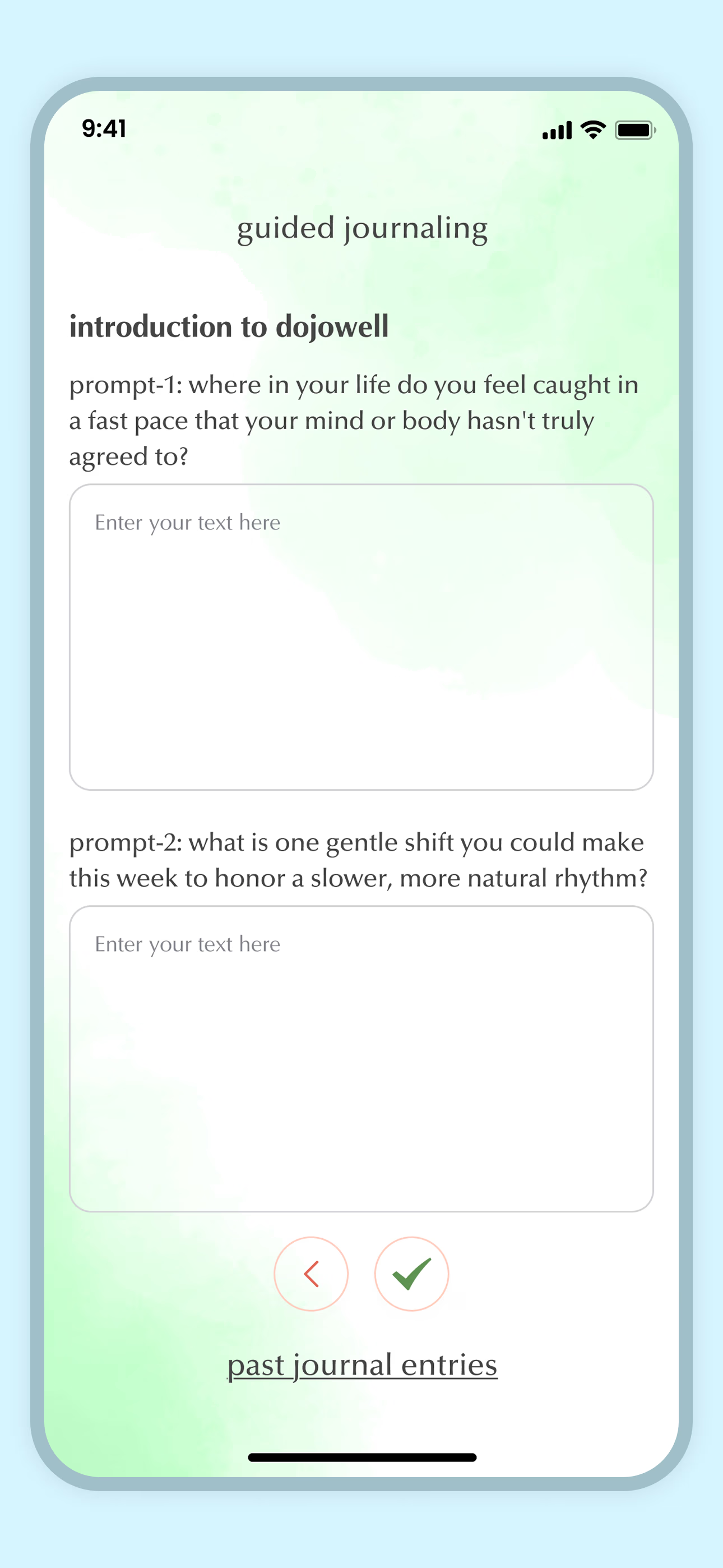
From Science to Art.
Understanding explains what is happening. Art allows you to feel it—without fixing, judging, or naming. Pause here. Let the images work quietly. Sometimes meaning settles before words do.
One Quiet Window, one insight, one reflection — every Sunday