Simple Somatic Grounding Practices for Anxiety Relief
In short: Grounding is often described as “coming back to the present.” In a nervous-system sense, it’s the return of internal safety cues: your body re-detects what is true right now , not what your mind is simulating, predicting, or bracing for. When grounding is hard, it’s rarely because you’re doing it “wrong.
Grounding is often described as “coming back to the present.” In a nervous-system sense, it’s the return of internal safety cues: your body re-detects what is true right now, not what your mind is simulating, predicting, or bracing for.
When grounding is hard, it’s rarely because you’re doing it “wrong.” It’s usually because your system is carrying more load than it can comfortably process, and it’s scanning for closure—something that signals, this is handled, this is finished, you can stand down.
What if “needing to ground” isn’t a weakness—just a normal response to a world that rarely lets anything feel done?
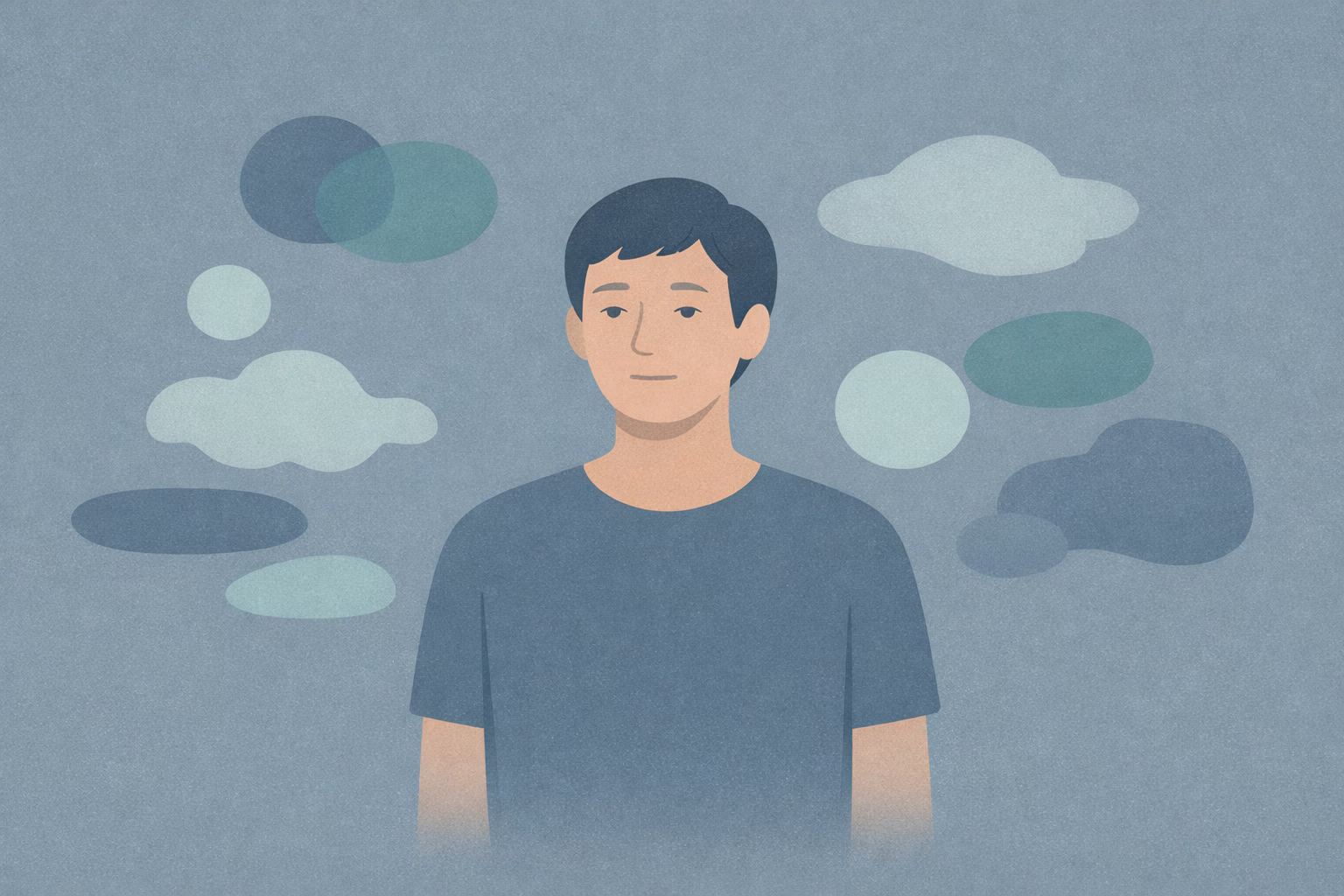
Some moments don’t arrive gently. A sudden rush of anxiety, a wave of disconnection, or a spike of overwhelm can feel like your body is moving faster than your thoughts can keep up.
In those moments, the system isn’t asking for a perfect mindset. It’s asking for immediate orientation: a signal that you are here, in a specific place, in a specific body, at a specific time—rather than inside a rapidly multiplying “what if.”
This urgency is not drama or fragility. It’s a protective circuit doing its job: mobilizing attention and energy when safety feels uncertain. [Ref-1]
Threat spirals often run on imagined time: replayed past scenes, future projections, mental argument loops, or background dread. Grounding works because it shifts the system from simulation to contact—toward real-time sensory input that can be verified.
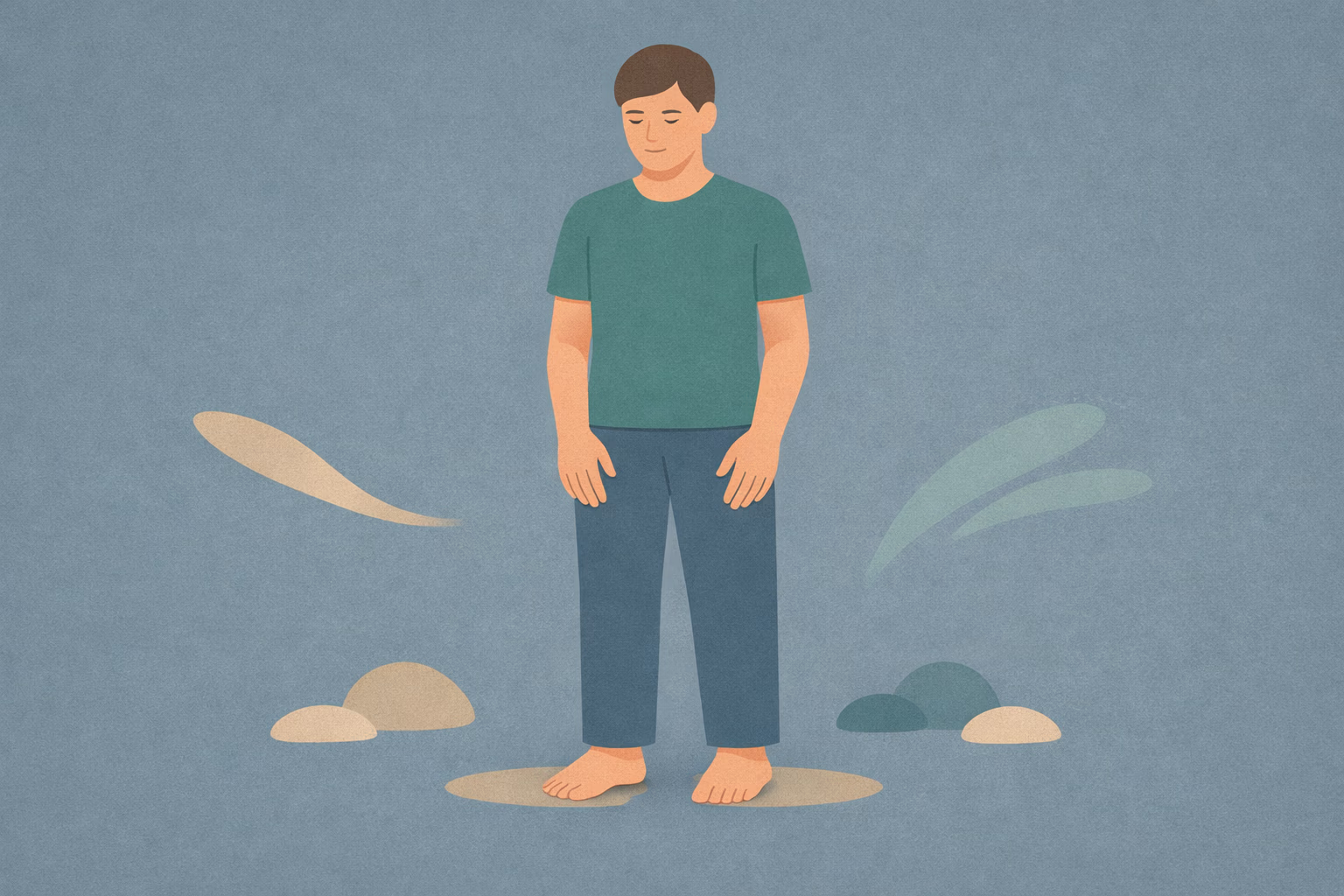
When attention settles on concrete data (pressure in the feet, temperature of air, the edges of an object), the brain receives an updated report: “I can locate myself.” That doesn’t erase stress, but it can slow the cascade that builds when the system can’t find a stable reference point. [Ref-2]
Grounding, in this sense, isn’t “thinking positive.” It’s supplying the nervous system with present-moment evidence.
Human regulation isn’t built primarily on reassurance; it’s built on cues. Safety is inferred from breath rhythm, muscle tone, facial and vocal signals around you, and whether the environment feels navigable.
That’s why grounding tends to be body-forward. Interoception (the sensing of internal state) and external sensory input work together to tell the brain whether to keep mobilizing or to soften its guard. [Ref-3]
If the body can’t find reliable cues, it may stay “partly braced” even when life looks fine on paper. That bracing is often a sign of incomplete closure: too many open loops, too few clear endings.
Grounding doesn’t require a life overhaul to have an effect. Even brief, specific orientation can reduce arousal because it changes the informational landscape: it tells the brain what is happening, where you are, and what is not happening.
As threat signaling slows, breathing often becomes less jagged, the eyes track more smoothly, and the body regains a sense of “edges.” This is not a moral victory—it’s physiology shifting states. [Ref-4]
Sometimes the most regulating sentence is: “I know where I am.”
Many people assume calm comes from controlling thoughts. But a nervous system doesn’t settle because it’s been argued with; it settles when it receives enough safety cues to stop spending energy on vigilance.
Trying to force calm can add pressure on top of pressure: now there’s the original activation and the evaluation of how you’re doing. Grounding is different. It’s not a performance. It’s a return to cues that the body can actually use.
In other words: regulation tends to arrive through signals, pacing, and contact—not through winning an internal debate. [Ref-5]
When the nervous system is overloaded, attention often narrows into loops: scanning, checking, rehearsing, or mentally bracing. These loops can look like anxiety, avoidance, craving, or overcontrol—but at their core they are attempts to restore stability without enough closure.
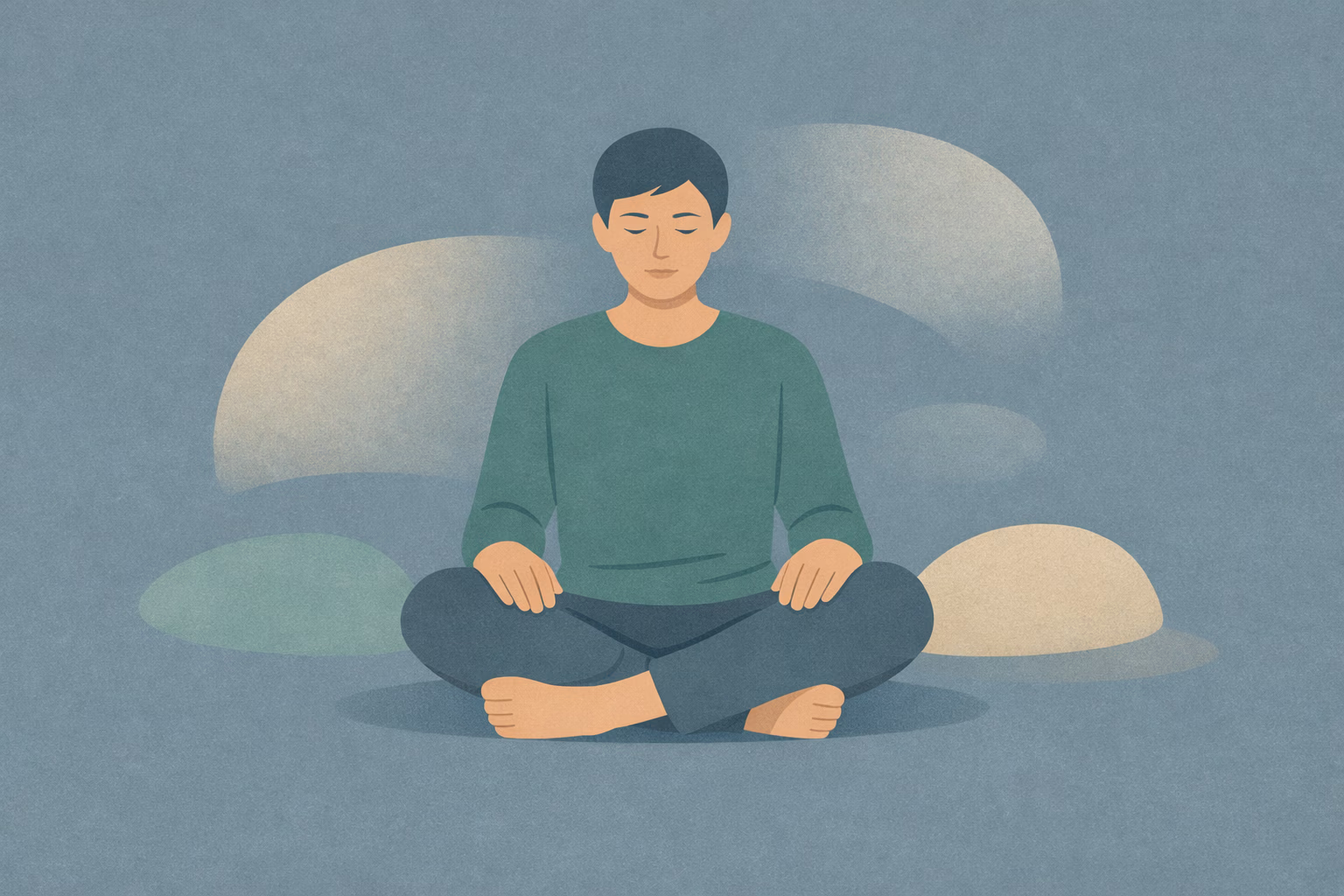
Grounding interrupts the loop structurally. It relocates the center of gravity from abstract uncertainty to immediate reality, which gives the system a chance to complete a small cycle: orient → confirm → settle.
That completion matters. It’s one of the simplest ways the body receives a “done signal,” even if the larger life situation is still in progress. [Ref-6]
Being ungrounded isn’t a personality. It’s a state—often a predictable result of stress load, sleep debt, constant input, or prolonged uncertainty.
It can show up in many ways, including:
These are not character flaws. They are regulatory responses that often appear when stress systems are repeatedly activated without enough recovery and completion. [Ref-7]
Modern life can keep the system in partial activation: notifications, open tabs, unresolved conversations, constant news, constant self-monitoring. Even enjoyable stimulation can prevent the body from receiving a clean “stand down” signal.
When grounding doesn’t happen—when the system stays un-oriented—stress activation tends to linger. Over time, that can look like emotional fatigue, reduced concentration, more startle, and less capacity for complexity.
It’s not that you’re getting “worse.” It’s that the load is staying online, and the nervous system is doing what it does under ongoing demand: conserving resources and narrowing focus. [Ref-8]
Nervous systems learn from repetition. If days are repeatedly experienced as unpredictable, pressured, or unfinished, the system may begin to expect threat as the default setting.
This expectation can persist even when the immediate environment is relatively safe—because the body is tracking patterns, not promises. It remembers the cost of being caught off guard and adapts by staying slightly ahead of the next hit.
That adaptation is understandable. It’s also exhausting. The more often the body has to mobilize without clear closure, the more “normal” mobilization can start to feel. [Ref-9]
Over time, repeated grounding experiences can make calm more accessible—not because you’ve mastered a technique, but because the body has collected enough instances of successful re-orientation.
This is a kind of learning that doesn’t live primarily in insight. It lives in the body’s updated probability estimates: “When activation rises, I can locate myself. When I locate myself, the surge passes.” That shift is gradual and often quiet.
It also tends to be relational and contextual. Safety cues from environment and people—tone, pacing, predictability—can strengthen the learning, because the nervous system regulates through more than individual effort. [Ref-10]
Humans are built for co-regulation. A steady voice, unhurried pacing, and a sense of being accompanied can provide safety signals that the body trusts faster than internal self-talk.
This doesn’t mean you must rely on others. It means that, when safe relationships are available, the nervous system can borrow stability through connection—especially when words are simple and the moment is concrete.
Even brief interactions can carry powerful cues: facial softness, predictable timing, and non-escalating energy. These are “safety signals” the brain knows how to read. [Ref-11]
Grounding isn’t always dramatic. Often it’s a subtle return of capacity: breathing slows without being forced, vision widens, the jaw unclenches, and decisions feel a little less urgent.
Clarity can reappear as simple sequencing: one thing at a time feels possible again. The body feels more “inhabited,” not through emotional intensity, but through steadiness and contact.
In regulation research terms, this is a shift toward a more workable state—where signals can be received and responded to with less distortion from overload. [Ref-12]
Not “perfectly calm”—just more here, more oriented, more able to choose?
When a system is ungrounded, coping often becomes reactive. Not because you’re irrational, but because the body is prioritizing immediate relief, certainty, or control. It will reach for whatever reduces activation fastest—even if it doesn’t align with your values.
Grounding changes the terrain. By restoring present-moment contact, it makes space for choices that are guided by meaning rather than urgency. This is where agency lives: not in pushing harder, but in having enough internal stability to select what fits your life.
In trauma-informed neuroscience, this is part of why body-based orientation matters: it supports the return of choice, not just the reduction of distress. [Ref-13]
It can help to think of grounding as a form of self-respect: a refusal to abandon your own present moment. Not as a trick, and not as a demand to feel better—more like a quiet statement that your body deserves accurate information and a chance to settle.
When you ground, you’re not escaping life. You’re returning to the only place where life can be met cleanly: the here-and-now, where signals can complete and the nervous system can receive closure. [Ref-14]
Grounding is sometimes described as “getting out of your head.” A gentler framing is: coming back into contact—into time, place, and body. That return is not avoidance; it’s the restoration of orientation that makes coherent living possible.
When the world is fragmented and fast, choosing presence is a biological reset and a meaning reset. Not a performance. Just a return to the part of you that can stand here, notice what’s real, and move forward with dignity. [Ref-15]
From theory to practice — meaning forms when insight meets action.
Grounding usually feels difficult not because you're doing it wrong, but because your nervous system is carrying more load than it can comfortably process. It's scanning for closure — something that signals "this is handled, you can stand down" — and the surrounding life rarely supplies that. When too many open loops are running, your body is busy with vigilance, so present-moment cues struggle to land. The work isn't to push harder into a technique; it's to interrupt the loop structurally so the system can complete a small cycle: orient, confirm, settle. That micro-completion is itself a Done Signal, even when the larger life situation is still in progress.
No, and conflating the two is one of the most common misreads. Forcing calm is a Power Loop trap: you're telling your Threat & Safety System that the current state is unacceptable, which adds pressure on top of pressure. Grounding works differently. It supplies the nervous system with present-moment evidence — the floor under your feet, the temperature of the air, the edges of an object — so the body can update its own report on safety. Calm doesn't get argued into existence; it arrives as a byproduct of cues the body can verify. Regulation moves through signals and pacing, not through winning an internal debate.
Nervous systems learn from repetition. If your days are repeatedly experienced as unpredictable, pressured, or unfinished, the body begins to expect threat as the default — even when the immediate environment is calm. This is the system tracking patterns rather than promises. Modern life rarely lets anything feel done: notifications, open tabs, unresolved conversations, constant self-monitoring. Each open loop keeps the system in partial activation. Grounding, in this sense, isn't a fix for a problem; it's a small, repeatable proof that orientation is still possible — and over time, the body collects enough of those instances that calm becomes more accessible by default.
Humans are built for co-regulation. A steady voice, unhurried pacing, and the felt sense of being accompanied can deliver safety cues that the body trusts faster than internal self-talk. This is what "shared grounding" describes: when safe relationships are available, the nervous system can borrow stability through connection — facial softness, predictable timing, non-escalating energy. None of this means you must rely on others to settle. It means co-regulation is a legitimate part of the toolkit, not a workaround. The Threat & Safety System reads relational signals as evidence; using them is wiring as designed, not weakness.
From Science to Art.
Understanding explains what is happening. Art allows you to feel it—without fixing, judging, or naming. Pause here. Let the images work quietly. Sometimes meaning settles before words do.
One Quiet Window, one insight, one reflection — every Sunday