Emotional Flexibility: The Skill That Makes Life Feel Lighter

In short: Emotional agility is often described as the ability to move through emotions without getting stuck, overwhelmed, or reactive. But in real life, it can feel less like a “skill” and more like a weather system: some days everything passes; other days a single interaction echoes for hours, or a vague heaviness shapes every decision.
Emotional agility is often described as the ability to move through emotions without getting stuck, overwhelmed, or reactive. But in real life, it can feel less like a “skill” and more like a weather system: some days everything passes; other days a single interaction echoes for hours, or a vague heaviness shapes every decision.
From a nervous-system perspective, this isn’t a character issue. It’s frequently a sign that something didn’t reach closure—an internal loop stayed open—so the body keeps allocating attention, energy, and threat-detection to an experience that still feels unfinished.
What if “getting stuck” isn’t weakness, but an organism waiting for completion?
Many people notice a gap between what happened and how long their body stays with it. The event ends, but the activation doesn’t. A comment replays. A worry reorganizes the day. A wave of irritation colors everything that follows.
This lingering often has a simple function: it keeps a problem “active” so it can be resolved. Human regulation systems evolved to hold onto unfinished information long enough to protect us, repair bonds, and update future behavior. When closure doesn’t arrive—through resolution, repair, or a clear “done” signal—emotion can stay online as a form of continued orientation. [Ref-1]
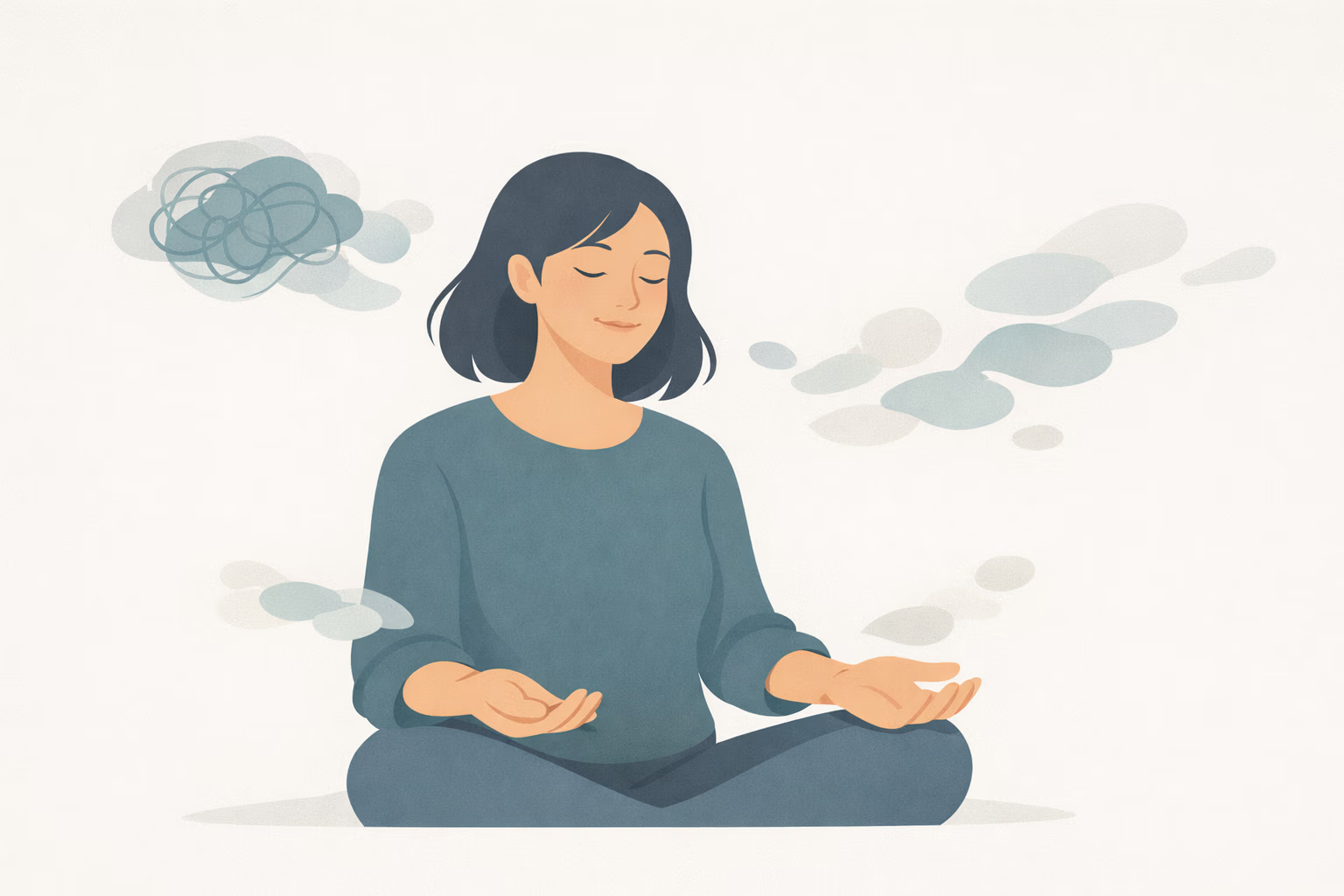
Emotional agility isn’t about feeling less. It’s more like having enough internal flexibility to let attention move where it’s needed—toward the feeling when it contains important data, and away when continued focus only adds load.
That flexibility depends on two things working together: an executive system that can choose where attention goes, and a nervous system that can reduce arousal once the signal has been received. When those systems are taxed, the mind often becomes “sticky,” not because someone is doing it wrong, but because the organism is prioritizing safety, prediction, and unfinished meaning-making. [Ref-2]
Sometimes the problem isn’t the emotion. It’s the lack of an internal “all clear.”
Emotions are not only sensations; they’re also organizing signals. They sort experiences into categories like “approach,” “avoid,” “repair,” “protect,” “connect,” and “change course.” In uncertain environments, this is adaptive: it helps a person revise plans, renegotiate relationships, and respond to shifting conditions.
The executive system—attention, working memory, and interpretation—helps transform raw experience into a coherent story: what happened, what it means, what matters now. When that meaning remains unresolved or contradictory, regulation becomes harder. The system keeps scanning for an update that hasn’t arrived yet. [Ref-3]
In high-load seasons, it makes sense that the system would conserve time and energy by moving on quickly. The body can dampen signals, narrow awareness, and push for function. In the short term, this can reduce disruption and keep life running.
The cost is that what didn’t receive completion can remain “open” in the background. Not as a dramatic secret, but as ongoing physiological allocation: tension held, vigilance sustained, attention repeatedly pulled back to the same theme. Over time, this can make emotional responses feel less fluid, more all-or-nothing, and harder to settle. [Ref-4]
There is a difference between bypassing a signal and allowing it to complete its arc. Rushing past often means the body never gets the information it needs to stand down; moving through means the system receives enough clarity to shift states without continuing to escalate.
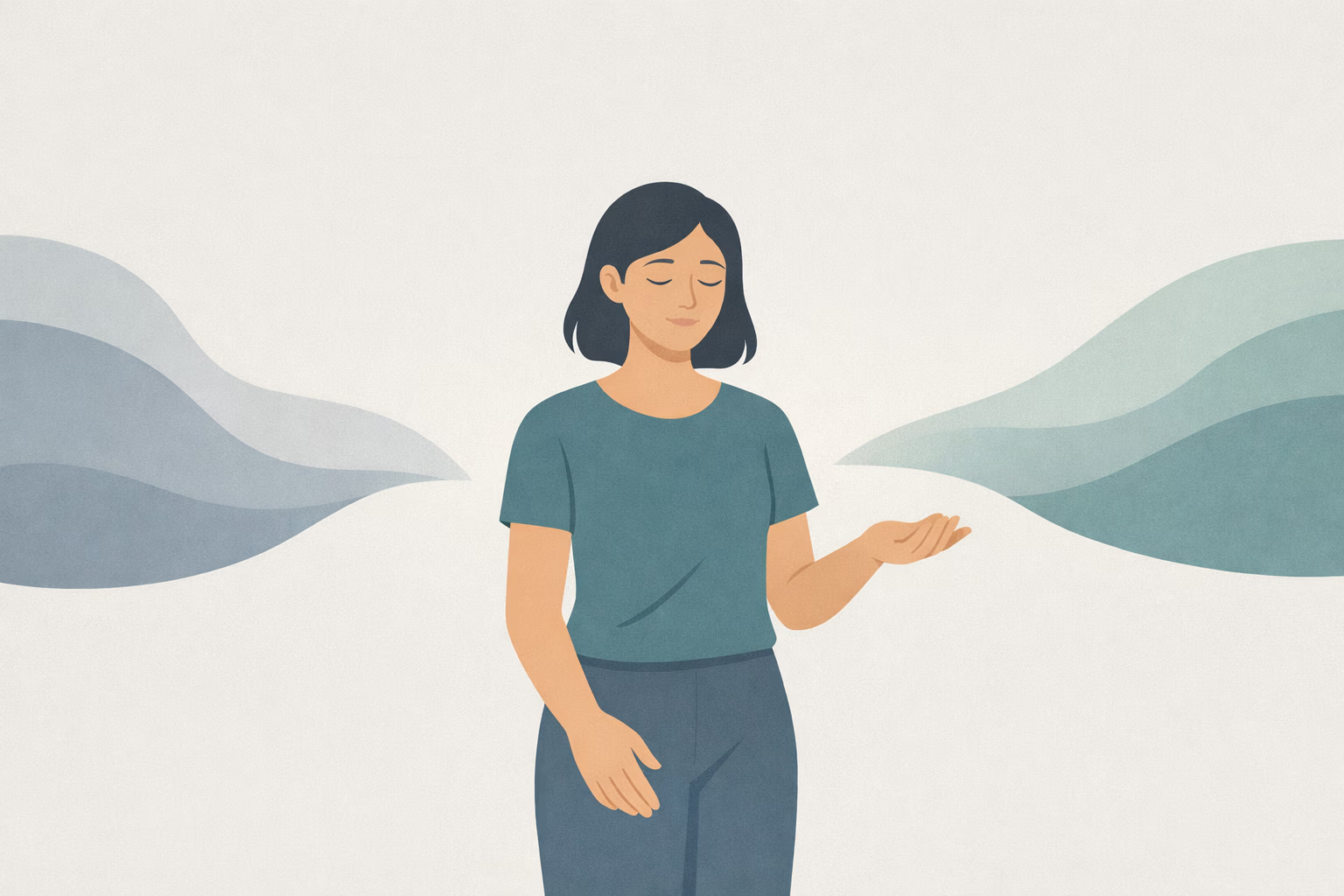
Flow here doesn’t mean constant calm. It means emotions can rise, inform, and then reduce—because their job is done. When the organism recognizes completion, attention becomes available again, and the day can regain momentum without inner drag. [Ref-5]
What changes when the goal isn’t “feel better,” but “let the loop finish”?
A short-lived emotion can become long-lived suffering when it gets turned into a loop. The original feeling is one signal; the loop is repeated activation without closure. The body stays recruited—scanning, preparing, replaying—because it hasn’t registered an endpoint.
This isn’t best explained as someone “not wanting to feel.” Often it’s structural: consequences are muted, repair is delayed, context is unclear, or the nervous system is overloaded and can’t complete the cycle. In these conditions, avoidance and control are regulatory strategies that reduce immediate load while leaving the underlying loop open. [Ref-6]
When emotional agility is low, the system tends to rely on strategies that create quick state shifts or quick certainty. They can work momentarily, especially under pressure, but they often keep the loop active underneath.
None of these are identities. They’re protective patterns shaped by load, context, and the availability of closure. [Ref-7]
Low emotional agility often narrows life in subtle ways. People may become less willing to enter situations that are unpredictable, relationally complex, or internally activating—not because they’re afraid in a simple sense, but because their system has learned that activation doesn’t reliably resolve.
When the body expects prolonged loops, it starts preferring environments with fewer variables: fewer conversations, fewer risks, fewer transitions. The loss isn’t only enjoyment; it’s meaning. With reduced variety and connection, there are fewer chances for experiences to complete, integrate, and become part of a stable identity story. [Ref-8]
Emotional loops are often reinforced in two opposing ways: by pushing away what’s present, or by holding onto it too tightly. Both keep attention locked and prevent the nervous system from receiving a clean update.
Resistance can look like immediate mental argument, rapid distraction, or tightening into control. Clinging can look like repeatedly revisiting the same memory, repeatedly seeking reassurance, or repeatedly trying to “solve” an emotion as if it were a math problem. In both cases, the system is working hard to create certainty and safety—but the effort itself can keep arousal online.
Psychological flexibility research often describes the value of stepping back from thoughts and sensations without being fused to them, which can reduce escalation and allow a more adaptive response. [Ref-9]
Awareness and naming can help, but they are not the same thing as integration. Understanding a feeling doesn’t automatically close the loop. What it can do, however, is reduce unnecessary escalation—so the system has a better chance to reach completion.
When a person can gently recognize “this is activation” rather than “this is who I am,” the emotion has more space to do its job: signal, orient, and pass. This is less a mindset victory and more an attentional posture that decreases friction. It’s a bridge between raw physiology and coherent meaning—without forcing an outcome. [Ref-10]
“A feeling can be important without being in charge.”
In human life, many emotional loops are relational. A nervous system often settles through contact, clarity, and repair—not through solitary analysis. When agility is present, people are more able to stay oriented to connection even while experiencing strong internal signals.
This can make communication cleaner: less defending, less collapsing, less over-explaining. It also supports empathy, because attention isn’t entirely consumed by self-protection. Over time, a compassionate inner stance tends to reduce harsh self-judgment, which lowers threat load and makes repair more available. [Ref-11]
As emotional loops complete more reliably, many people notice not constant positivity, but a faster return to baseline. The system becomes less afraid of activation because activation is no longer synonymous with getting stuck.
This often shows up as increased trust in one’s own signals: the ability to sense “something matters here” without immediately escalating into urgency or shutting down into numbness. The experience is lighter not because life is easier, but because fewer internal processes are left running in the background. [Ref-12]
What changes when your system expects recovery?
Emotional agility ultimately restores momentum: the ability to keep living in alignment even when internal weather shifts. When emotions can rise and settle, values become more accessible as an organizing compass—relationships, integrity, creativity, responsibility, care.
This is where meaning becomes stabilizing. Not as a motivational speech, but as a lived coherence: actions reflect what matters, experiences reach completion, and identity feels less fragmented. Social support can strengthen this process by offering safety cues that reduce stress load and help the nervous system stand down. [Ref-13]
Emotional agility isn’t a promise that you’ll always respond “well.” It’s the growing freedom to meet changing life conditions without losing inner alignment. When closure becomes more available, the system doesn’t have to rely as heavily on urgency, avoidance, or overcontrol to get through the day.
In that sense, agility is less about managing emotions and more about restoring coherence: fewer open loops, clearer meaning, and more room for choice. Under stress, the nervous system prioritizes survival and speed; with reduced load and more completion, it can prioritize connection, learning, and orientation again. [Ref-14]
A human life can’t be lived without emotion; it can only be lived with varying degrees of closure. When experiences are allowed to complete—physiologically and narratively—identity becomes steadier, and the future feels less like a threat and more like a place you can walk into.
Emotional agility is that return of rhythm: activation, information, completion, release. Not a personal overhaul—just a nervous system finally receiving enough “done” signals to let meaning settle into who you are. [Ref-15]
From theory to practice — meaning forms when insight meets action.
Emotional agility isn't feeling less — it's having enough internal flexibility to let attention move where it's needed: toward a feeling when it contains important data, and away when continued focus only adds load. That flexibility depends on two systems working together: an executive that chooses where attention goes, and a nervous system that can reduce arousal once the signal is received. When those are taxed, the mind becomes sticky — not because someone is doing it wrong, but because the organism is prioritizing safety and unfinished meaning-making. Sometimes the problem isn't the emotion. It's the lack of an internal all-clear.
Many people notice a gap between what happened and how long their body stays with it. The event ends, but the activation doesn't. This lingering has a function: it keeps a problem active so it can be resolved. Human regulation systems evolved to hold onto unfinished information long enough to protect us, repair bonds, and update behaviour. When closure doesn't arrive — through resolution, repair, or a clear Done Signal — emotion stays online as continued orientation. This isn't getting stuck as weakness; it's an organism waiting for completion. The body keeps allocating attention and threat-detection to an experience that still feels unfinished.
Loops are reinforced two opposing ways: by pushing away what's present, or holding onto it too tightly. Both keep attention locked and prevent the nervous system from receiving a clean update. Resistance looks like immediate mental argument, rapid distraction, or tightening into control. Clinging looks like repeatedly revisiting the same memory, seeking reassurance, or trying to solve an emotion as if it were a math problem. In both cases the system is working hard to create certainty — but the effort itself keeps arousal online. Stepping back from thoughts and sensations without being fused to them reduces escalation and allows more adaptive response.
Not constant positivity, but a faster return to baseline. The system becomes less afraid of activation because activation is no longer synonymous with getting stuck. It shows up as increased trust in your own signals: the ability to sense something matters here without immediately escalating into urgency or shutting down into numbness. Life feels lighter not because it's easier, but because fewer internal processes are left running in the background. When emotions can rise, inform, and reduce — because their job is done — values become accessible again as an organizing compass. Meaning Density grows through completion, not catharsis.
From Science to Art.
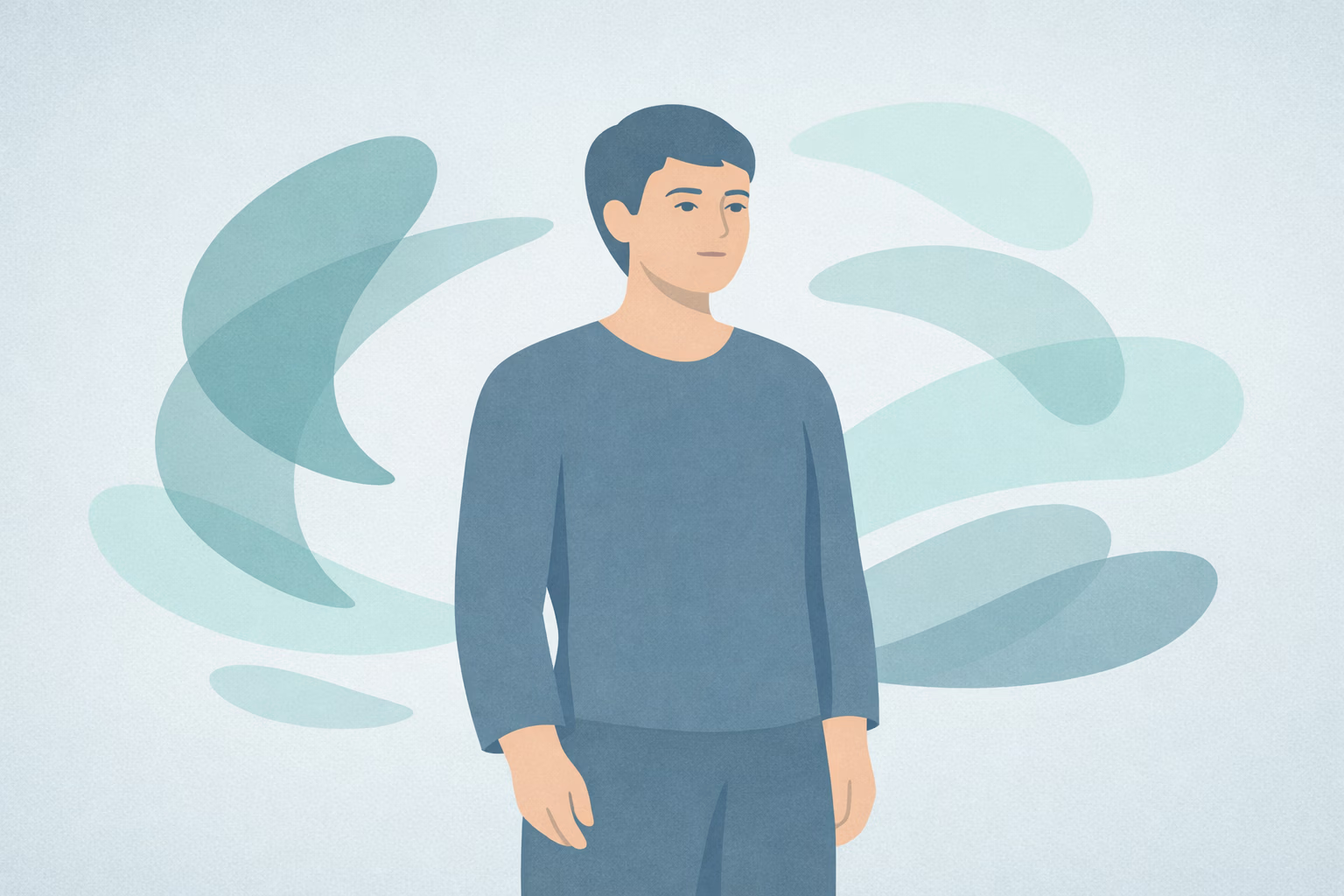
Understanding explains what is happening. Art allows you to feel it—without fixing, judging, or naming. Pause here. Let the images work quietly. Sometimes meaning settles before words do.
One Quiet Window, one insight, one reflection — every Sunday