Economic Instability: Why the Future Feels Unsafe
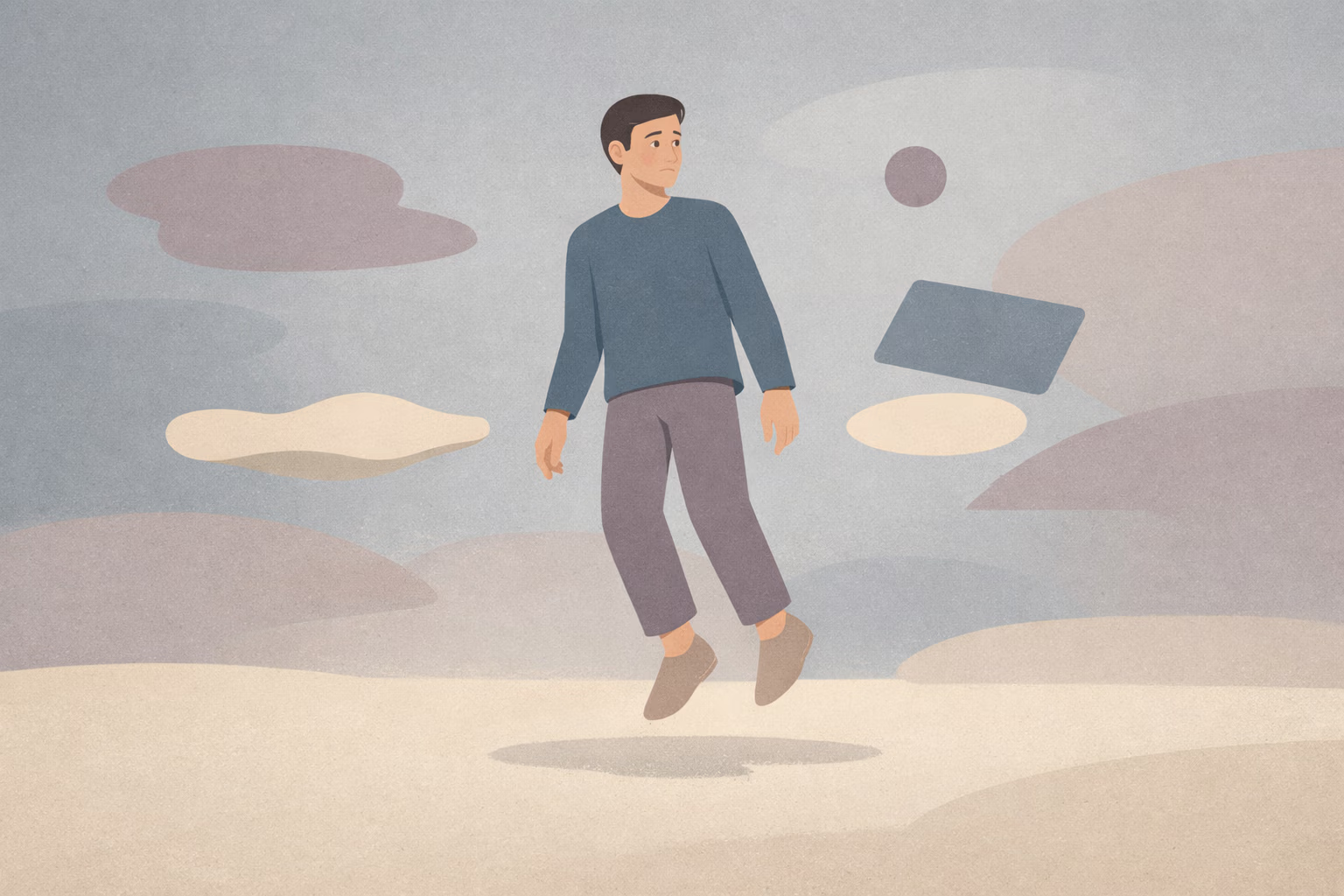
In short: Gig work can look flexible from the outside, but from the inside it often feels like living without a reliable “floor.” When money, hours, ratings, and demand shift week to week, the body may not register that life is basically okay—even if you’re competent, hardworking, and doing everything “right.” This isn’t a personal weakness problem. It’s a stability problem.
Gig work can look flexible from the outside, but from the inside it often feels like living without a reliable “floor.” When money, hours, ratings, and demand shift week to week, the body may not register that life is basically okay—even if you’re competent, hardworking, and doing everything “right.”
This isn’t a personal weakness problem. It’s a stability problem. Human regulation depends on predictability, recovery time, and completion. When the environment keeps changing, your system may stay braced, scanning for the next disruption.
What if the tension isn’t your personality—what if it’s your nervous system responding to permanent uncertainty?
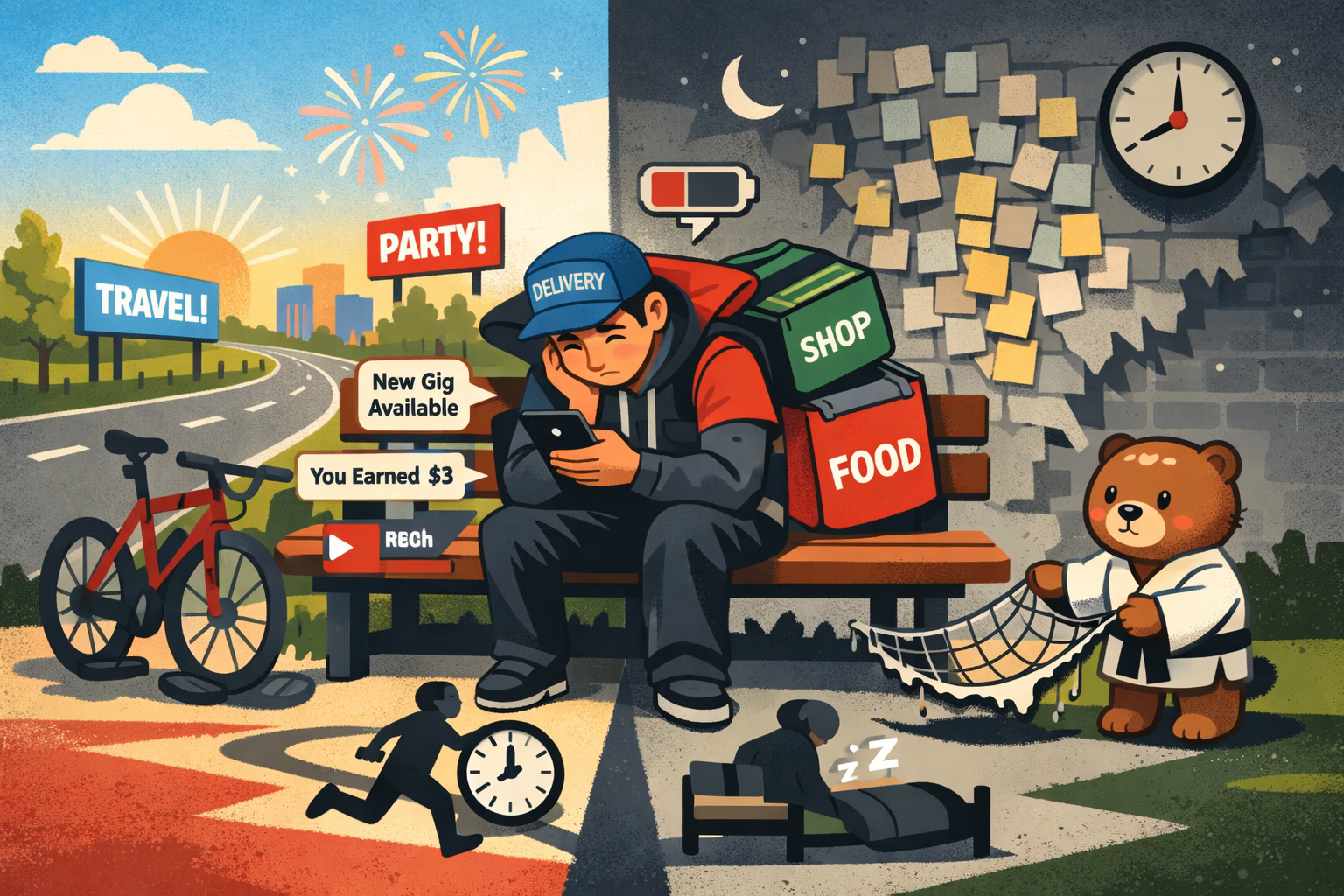
One of the most distinctive experiences of gig-economy uncertainty is a constant, low-grade alertness. Even on quiet days, the mind can keep doing math in the background: the next bill, the next booking, the next algorithm change, the next slow week.
Physiologically, this can look like a stress response that doesn’t fully turn off. Not dramatic panic—more like a persistent readiness. Over time, that readiness can accumulate as allostatic load: the body paying the cost of staying adjusted for threat longer than it was built to. [Ref-1]
“I’m not falling apart. I just can’t find the off switch.”
Nervous systems settle when they get dependable signals: time boundaries, reliable resources, and clear “done” moments. Unpredictability disrupts those signals. If income can drop suddenly, the system may treat relaxation as premature—because the next demand could arrive without warning.
In stress physiology, repeated activation without enough closure can move from short-term adaptation into wear-and-tear. The body becomes skilled at mobilizing, but less practiced at returning to baseline. [Ref-2]
It can feel like you’re resting, but your system is still on duty.
Humans evolved to track resources closely because resources meant safety: food, shelter, protection, social standing, and future access. When resources were uncertain, the most adaptive state was vigilance—more scanning, more readiness, fewer long recovery periods.
Gig-economy instability can echo those ancestral conditions. Even if you’re not in immediate danger, the nervous system often responds to resource unpredictability as a scarcity signal. Stress circuitry becomes more sensitive to change, and the threshold for “I’m safe enough” rises. [Ref-3]
It’s important to name what this state is doing for you. A mobilized system can be fast: quicker to respond to messages, quicker to accept work, quicker to adapt. It can increase opportunity scanning and protect against sudden drops.
This is why the pattern can persist. It is not irrational; it is functional under unstable conditions. Stress responses are designed for adaptation—until the duration becomes the problem. [Ref-4]
The gig economy is often framed as choice: pick your hours, be your own boss, move quickly. But the nervous system doesn’t primarily respond to the story of freedom—it responds to the consistency of inputs: predictable income, stable expectations, and the ability to stop without consequence.
When you are always “available,” the day may never fully close. Even if you technically have time off, your system can interpret that time as a vulnerable gap rather than recovery. Over time, sustained insecurity can amplify stress burden and health strain at a population level, not just an individual level. [Ref-5]
In a chronically uncertain environment, the nervous system often reorganizes around immediate solvability. The most “real” question becomes: What will stabilize today? This isn’t a lack of ambition. It’s a regulatory shift toward what can close quickly.
That shift can create an avoidance loop—not avoidance as cowardice, but avoidance as structural narrowing. Long-term planning, identity-building, and meaning-making require spare capacity and reliable closure. When the system is loaded, it may bypass those slower processes and keep returning to short-term income problems because they offer rapid feedback and temporary relief.
Job insecurity is consistently associated with worse health and well-being outcomes, in part because chronic uncertainty keeps the stress response engaged. [Ref-6]
Under gig uncertainty, the body and mind often develop predictable strategies to manage load. These strategies can look like “habits,” but they’re frequently state-dependent responses to unstable conditions, not character traits.
Some common patterns include: [Ref-7]
These are coherence-seeking behaviors: attempts to create certainty, closure, and safety cues inside an uncertain system.
When the cycle repeats long enough, the cost is not only fatigue. It can be a slow erosion of identity: you may know what you do to earn, but feel less sure what you’re building. Not because you don’t care—because the system keeps pulling you back into immediate stabilization.
Burnout is often described as exhaustion, cynicism, and reduced efficacy, but under chronic instability it can also show up as narrowed time horizons and reduced capacity to care about anything beyond the next demand. Burnout is associated with measurable health strain across many studies. [Ref-8]
“I can handle hard work. I can’t handle never knowing if it will be enough.”
Gig work can create powerful reinforcement: a notification arrives, you respond fast, money comes in, pressure drops—for a moment. That moment matters. It’s a real reduction in threat.
The problem is structural: the relief is tied to activation. The system learns that staying on high alert is what produces safety. Over time, this can increase allostatic load—because the body repeatedly cycles through mobilization without building durable stability. [Ref-9]
When safety only arrives through urgency, urgency becomes the default.
There’s a quiet distinction between relief and stability. Relief is the pressure dropping after a good day. Stability is the nervous system beginning to recognize “I can stand down” even when the future is not fully solved.
This is not about positive thinking or convincing yourself you’re safe. It’s about how regulation works: the body responds to cues of predictability, boundaries, and completion. Emotion regulation research describes regulation as a set of processes that shape which states arise and how long they last—not a moral achievement. [Ref-10]
In the gig economy, external certainty can be limited. So the deeper question becomes less “How do I force calm?” and more “What signals of completion and continuity can exist alongside uncertainty?” That question is a bridge back toward coherence—where life is not only a series of urgent closes, but also a lived direction.
Humans don’t regulate in isolation. Predictable relationships, fair systems, and shared support reduce threat load because they provide continuity beyond the individual day’s outcome. When you can rely on something outside your own constant effort, the body gets a different kind of safety cue.
Community and predictability can buffer stress, not by erasing uncertainty, but by distributing it—making it less solitary and less total. Values-based behavior and psychological flexibility are also linked with improved functioning under stress, partly because values provide a stable orientation when circumstances fluctuate. [Ref-11]
In practical terms, this can be felt as less internal bargaining, fewer emergency calculations, and a greater ability to let one slow day be just one slow day.
When stress load reduces—even slightly—the first thing many people notice is not happiness. It’s timing. Decisions take less force. You can pause without losing the thread. Your attention becomes less fragmented, and your mind can hold a longer sequence without immediately snapping back to income threat.
This is a capacity shift: the system regains room to track the future. Research connecting socioeconomic stressors with cortisol and allostatic load helps explain why chronic uncertainty can shrink planning bandwidth and increase physiological strain. [Ref-12]
As coherence rebuilds, the central question can slowly change. Not “What will keep me safe today?” but “What kind of life is this work serving?” That shift is not a motivational pep talk—it’s what becomes possible when the nervous system is less dominated by immediate threat.
Values-aligned livelihood design doesn’t mean rejecting reality or ignoring bills. It means that choices begin to organize around identity and meaning rather than pure reactivity. Social buffering and supportive contexts make this more possible, because stability is easier to build when it is not carried alone. [Ref-13]
“I still need income. I just don’t want my whole self to be organized around chasing it.”
Gig-economy instability is not merely an “attitude challenge.” It is an ongoing nervous-system load that can keep your biology in a survival posture. When rest doesn’t restore and work doesn’t feel done, it makes sense that life can feel thin, urgent, and hard to trust.
In that context, agency often begins as orientation: noticing what supports closure, what reduces fragmentation, and what helps your system receive a “stand down” signal. Recovery states are not only psychological; they show up as measurable shifts in stress and restoration over time. [Ref-14]
Meaning doesn’t arrive from pushing harder. It tends to reappear when life contains enough continuity to let experiences complete—so identity can feel like a place you live, not a role you perform under pressure.
External stability matters. And for many people, it is genuinely constrained. But even before circumstances change, the nervous system can begin to recognize continuity: that you are more than this week’s numbers, more than a rating, more than the last slow stretch.
Over time, a coherent narrative identity—one that can include uncertainty without being defined by it—becomes a quiet form of security. Not a fantasy of control, but a settled sense of who you are in motion. [Ref-15]
From theory to practice — meaning forms when insight meets action.
Because nervous systems settle when they get dependable signals: time boundaries, reliable resources, clear Done moments. Gig work disrupts those. Even on quiet days, the mind keeps doing background math — next bill, next booking, next algorithm change. The system treats relaxation as premature because the next demand could arrive without warning. Repeated activation without enough closure moves from short-term adaptation into wear-and-tear. The body gets skilled at mobilizing but less practiced at returning to baseline. You're not falling apart — you just can't find the off switch, because the conditions for one aren't reliably present.
Because humans evolved to track resources closely — resources meant safety, and uncertainty meant vigilance. Gig-economy instability echoes those ancestral conditions. Even if you're not in immediate physical danger, the nervous system responds to resource unpredictability as a scarcity signal. The Threat & Safety system becomes more sensitive to change, and the threshold for I'm safe enough rises. This isn't catastrophizing; it's biology accurately reading variable income as a continuous demand for vigilance. The body doesn't primarily respond to the story of freedom or flexibility — it responds to the consistency of inputs.
Because under chronic uncertainty, the system reorganizes around immediate solvability. The most real question becomes: what stabilizes today? This isn't a lack of ambition — it's regulatory narrowing. Long-term planning, identity-building, and meaning-making require spare capacity and reliable closure. When the system is loaded, it bypasses those slower processes and returns to short-term income problems because they offer rapid feedback and temporary relief. The Avoidance Loop here isn't cowardice; it's structural. When safety only arrives through urgency, urgency becomes the default mode for everything.
External certainty may stay limited, so the deeper question shifts from how do I force calm? to what signals of completion and continuity can exist alongside uncertainty? Stability isn't only financial — it's the nervous system recognizing I can stand down even when the future isn't fully solved. Shared relationships, predictable rhythms, and values-aligned direction provide continuity beyond the day's outcome. Community distributes uncertainty rather than erasing it. As coherence rebuilds, the central question slowly changes from what keeps me safe today? to what life is this work serving? — not as pep talk, but as what becomes possible when threat eases.
From Science to Art.
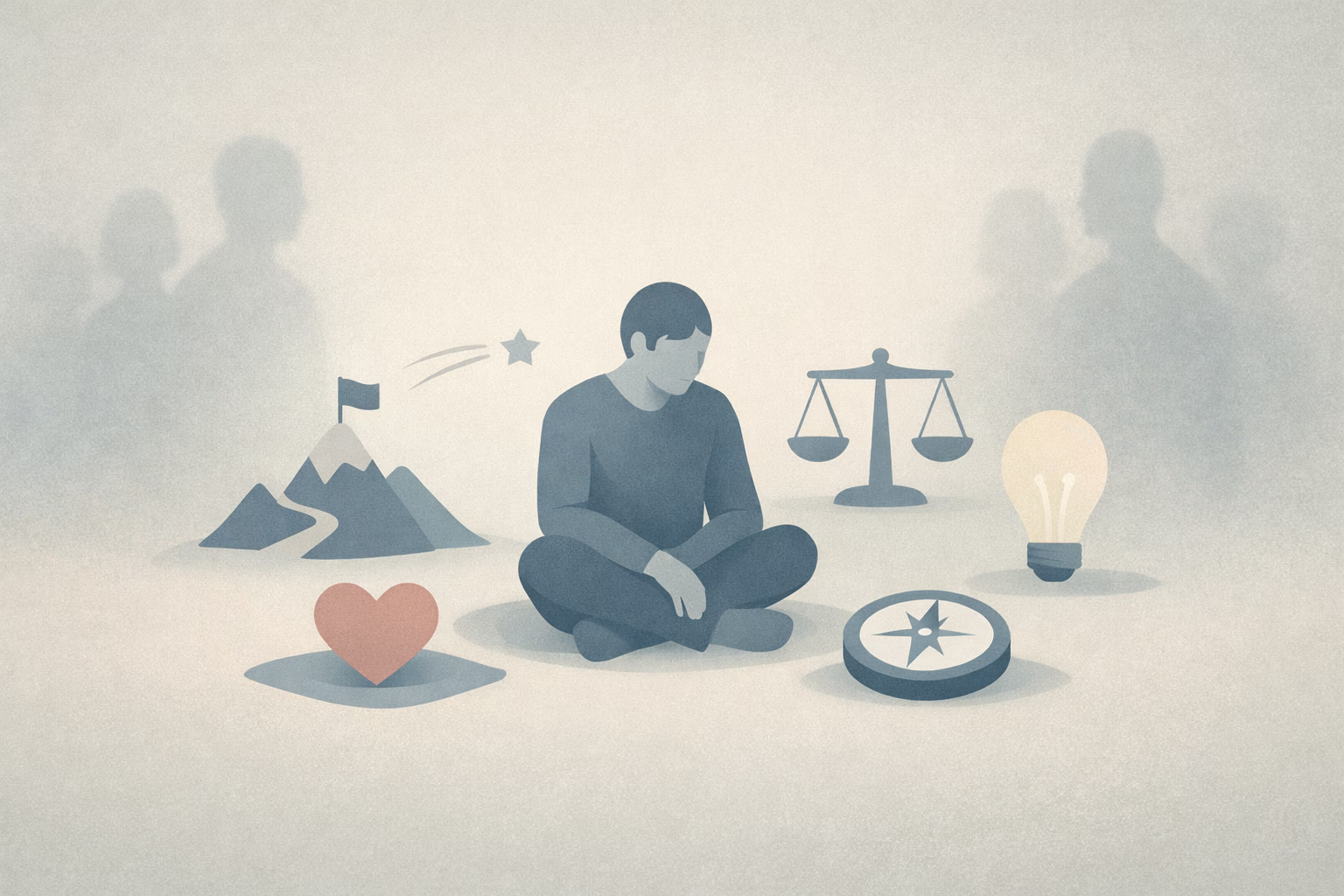
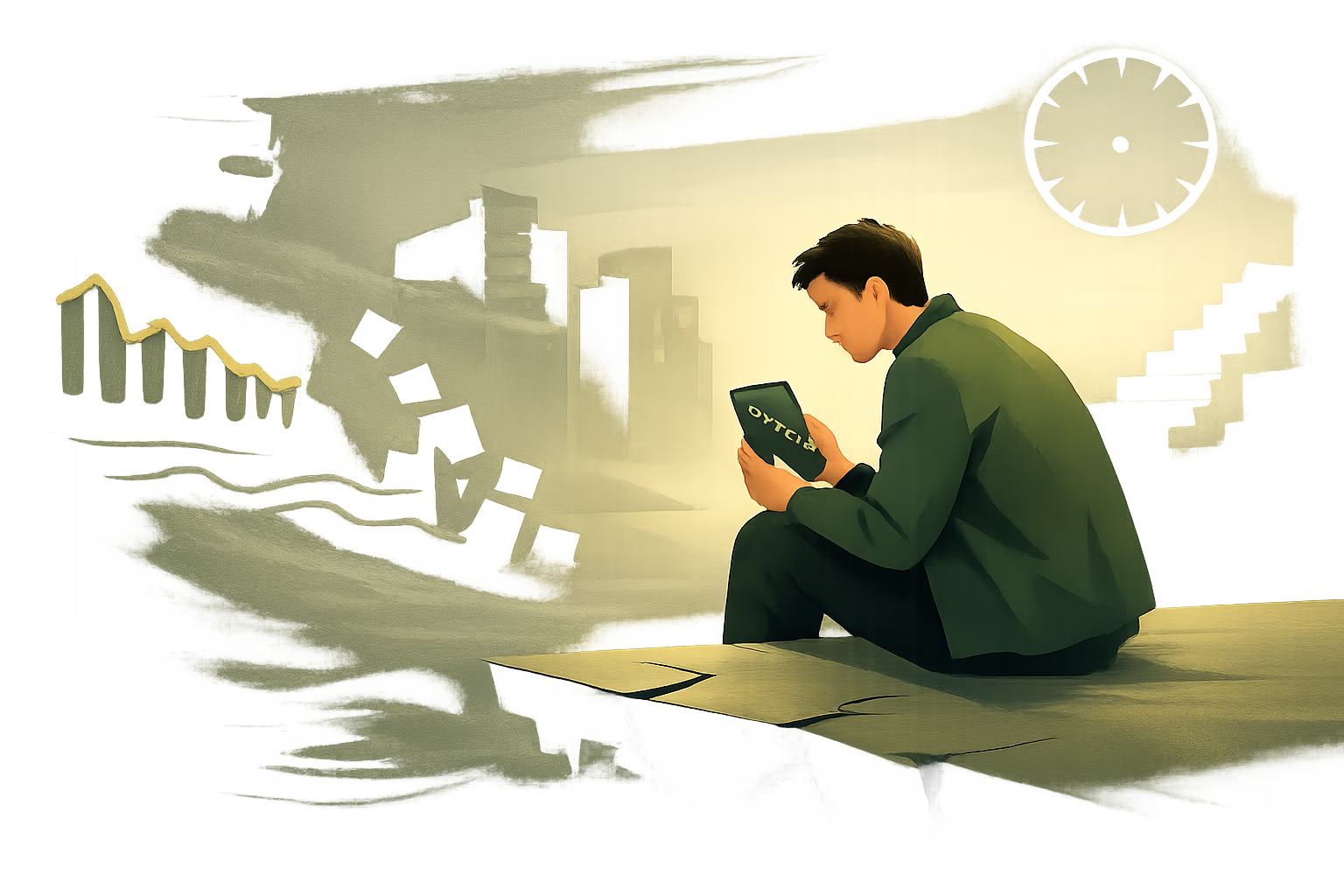
Understanding explains what is happening. Art allows you to feel it—without fixing, judging, or naming. Pause here. Let the images work quietly. Sometimes meaning settles before words do.
One Quiet Window, one insight, one reflection — every Sunday