Economic Uncertainty: Why Money Stress Feels Like Survival Threat
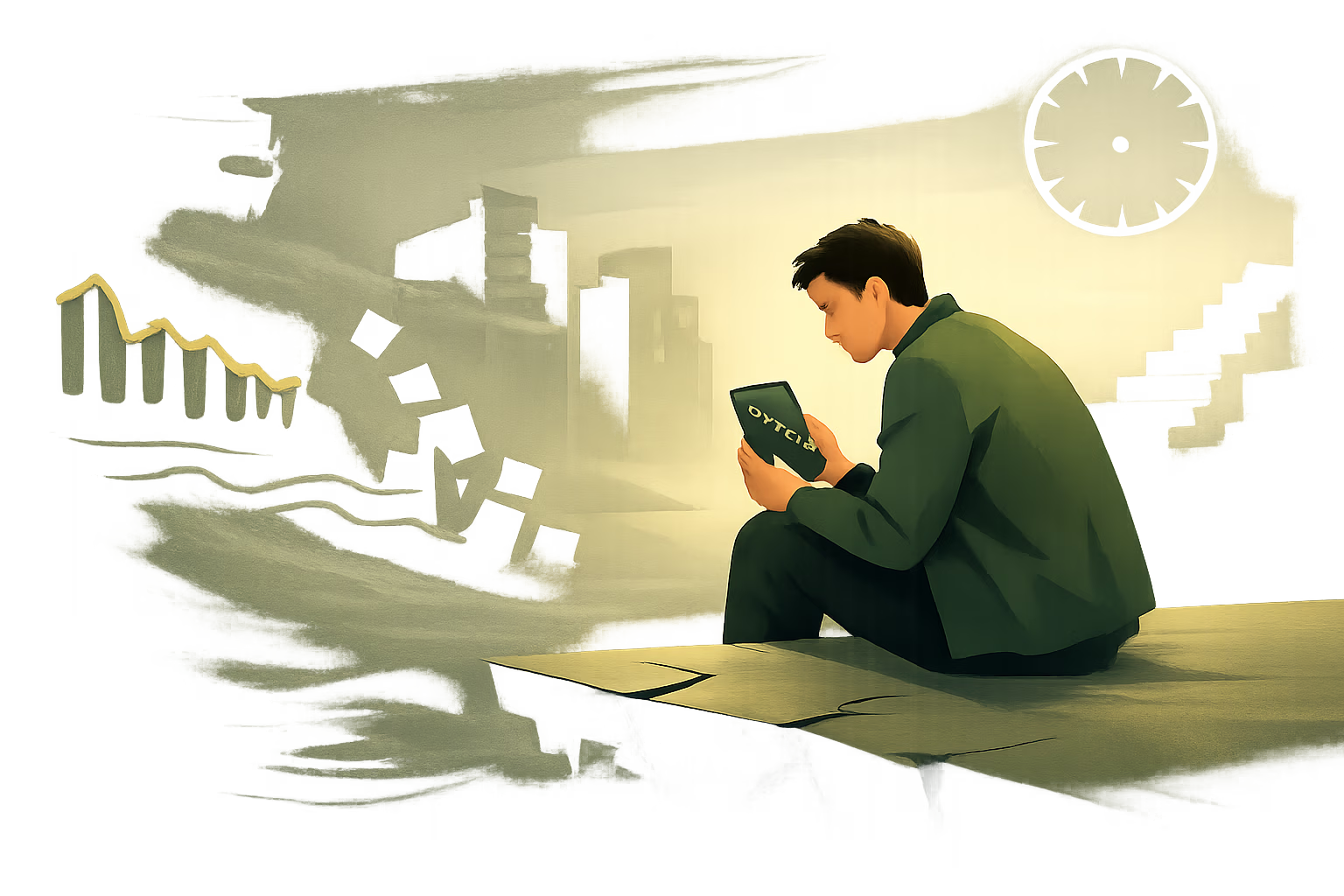
In short: When the economy feels unpredictable, it can create a quiet, persistent sense that the ground is not dependable. This isn’t just “worrying about money.” It’s a full-body orientation: scanning, bracing, and trying to forecast what’s coming so you won’t be caught off guard.
When the economy feels unpredictable, it can create a quiet, persistent sense that the ground is not dependable. This isn’t just “worrying about money.” It’s a full-body orientation: scanning, bracing, and trying to forecast what’s coming so you won’t be caught off guard.
Why does the future feel unsafe even when nothing terrible is happening today?
In many people, economic instability activates the same survival systems that respond to more direct threats—because the brain treats resource uncertainty as a signal that safety could be withdrawn without warning. Under that kind of open-ended strain, it becomes harder to feel “done,” to relax into plans, or to trust your own timeline.
Economic instability often shows up less as a single fear and more as a climate inside the body: an ongoing readiness that doesn’t fully turn off. The future can feel like something you’re supposed to defend yourself from, rather than a place you’re allowed to move toward.
In that state, long-term plans may start to feel strangely pointless—not because you don’t care, but because your system can’t find reliable footing. Even enjoyable moments can carry a second layer of tension, like relief has to be monitored. This kind of unease is a nervous system response to a world that keeps changing its rules. [Ref-1]
Uncertainty is demanding for the brain because it prevents closure. When outcomes are unclear, the body can’t easily complete the loop of “assess → respond → stand down.” Instead, stress physiology stays partially activated, ready to update the forecast at any moment.
Over time, attention narrows toward risk scanning: headlines, account balances, job signals, and subtle social cues that might hint at what’s next. This isn’t a personality flaw—it’s what happens when the system is asked to maintain vigilance without a reliable endpoint. Population-level evidence links economic uncertainty with increased stress and health strain, consistent with prolonged activation rather than short-lived alarms. [Ref-2]
When the future won’t hold still, the body tries to hold still for it—bracing, monitoring, and waiting.
Human nervous systems formed in environments where resources could be scarce, but often followed recognizable patterns: seasons, migration, social reciprocity, and shared signals about what mattered. Predictability—more than abundance—was a kind of safety cue.
Modern economic instability can remove that cue. Even if you are currently housed, employed, or supported, the larger environment can still broadcast “conditions may change quickly.” In the body, that can register as danger without a single immediate loss, because the survival system is designed to respond to probability and volatility, not just to disaster. [Ref-3]
When the future feels unreliable, the nervous system often reduces exposure by contracting: fewer hopes, fewer commitments, fewer risks taken in relationships or plans. This can look like pessimism, emotional flattening, or a preference for “not getting too excited.” These are not moral failures; they are short-term protections that attempt to reduce the shock of disappointment.
Another common pattern is expectation-lowering: mentally rehearsing worst-case scenarios so nothing can “surprise” you. It can provide a brief sense of control because it creates an illusion of preparedness, even while it keeps the system oriented toward threat. Public mental health perspectives on economic uncertainty often note this kind of chronic strain and defensive adaptation as a predictable response to unstable conditions. [Ref-4]
What if your heaviness isn’t defeat—what if it’s your system trying to prevent impact?
Vigilance can feel like responsibility: “If I keep track, I won’t fall behind.” But constant alertness is metabolically expensive. It reduces recovery time, compresses attention, and makes ordinary life feel like it has to justify itself.
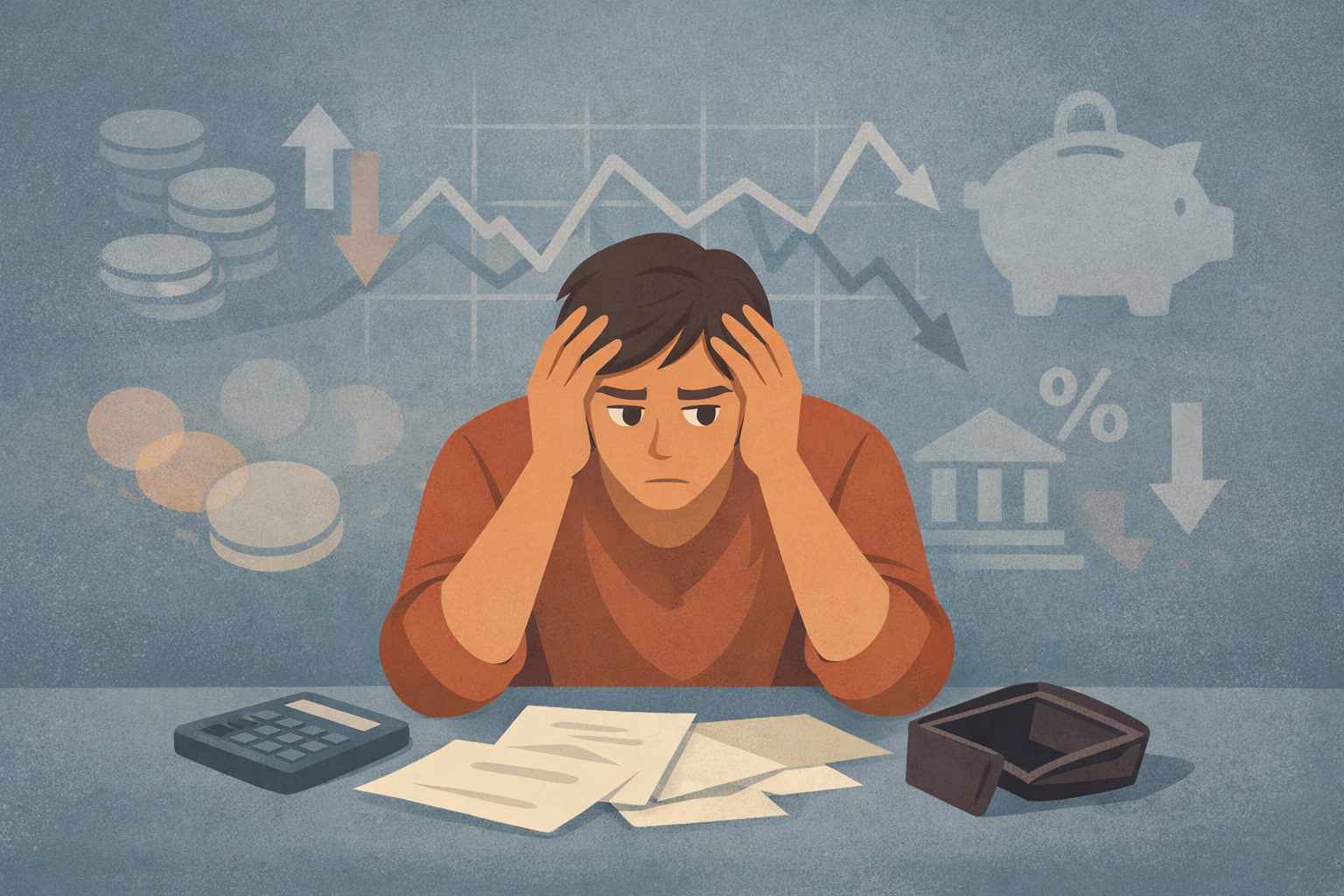
Under chronic financial strain, people often report more depressive symptoms and lower wellbeing—not because they lack effort, but because prolonged stress reduces the body’s capacity to experience completion and safety. In research, financial stress is repeatedly associated with mental health burden, reflecting how sustained pressure can erode resilience over time. [Ref-5]
When the system is always “on call,” meaning thins out. Not as an idea—but as a lived sense that life is coherent, that actions add up, that the future is something you can inhabit rather than merely survive.
One of the most painful parts of economic uncertainty is how it can create a loop: uncertainty triggers contraction, and contraction makes life smaller, which then increases the sense that the future is precarious. The system tries to reduce vulnerability by pulling back, but that same pulling back can prevent the very experiences that build stability.
In this loop, the issue isn’t “fear causing avoidance.” It’s structural: reduced closure and muted “done” signals. When plans are postponed, conversations delayed, and decisions held open indefinitely, the nervous system receives fewer completion cues—and stays more activated. Large-scale evidence connects economic uncertainty to population health impacts, consistent with this kind of prolonged load. [Ref-6]
Because the loop is about regulation, it often shows up as behaviors that change state quickly—without providing completion. They can reduce discomfort in the moment, yet keep the future feeling unresolved.
These patterns are understandable. They’re what a nervous system does when it’s asked to stay prepared without receiving reliable closure.
Over time, economic instability can impact more than mood. It can change how reality feels: less trustworthy, more conditional, more easily revoked. When the environment keeps signaling volatility, people may reduce social risk, reduce long-term investment, and rely more on immediate certainty.
This is one reason motivation can drop. Motivation often relies on a believable bridge between effort now and stability later. When that bridge feels shaky, the nervous system may conserve energy—less as “giving up,” more as load management in a context that doesn’t promise payoff.
Global evidence links economic uncertainty with mental health strain, supporting the idea that these are not isolated private struggles but predictable outcomes when a society runs hot with instability. [Ref-8]
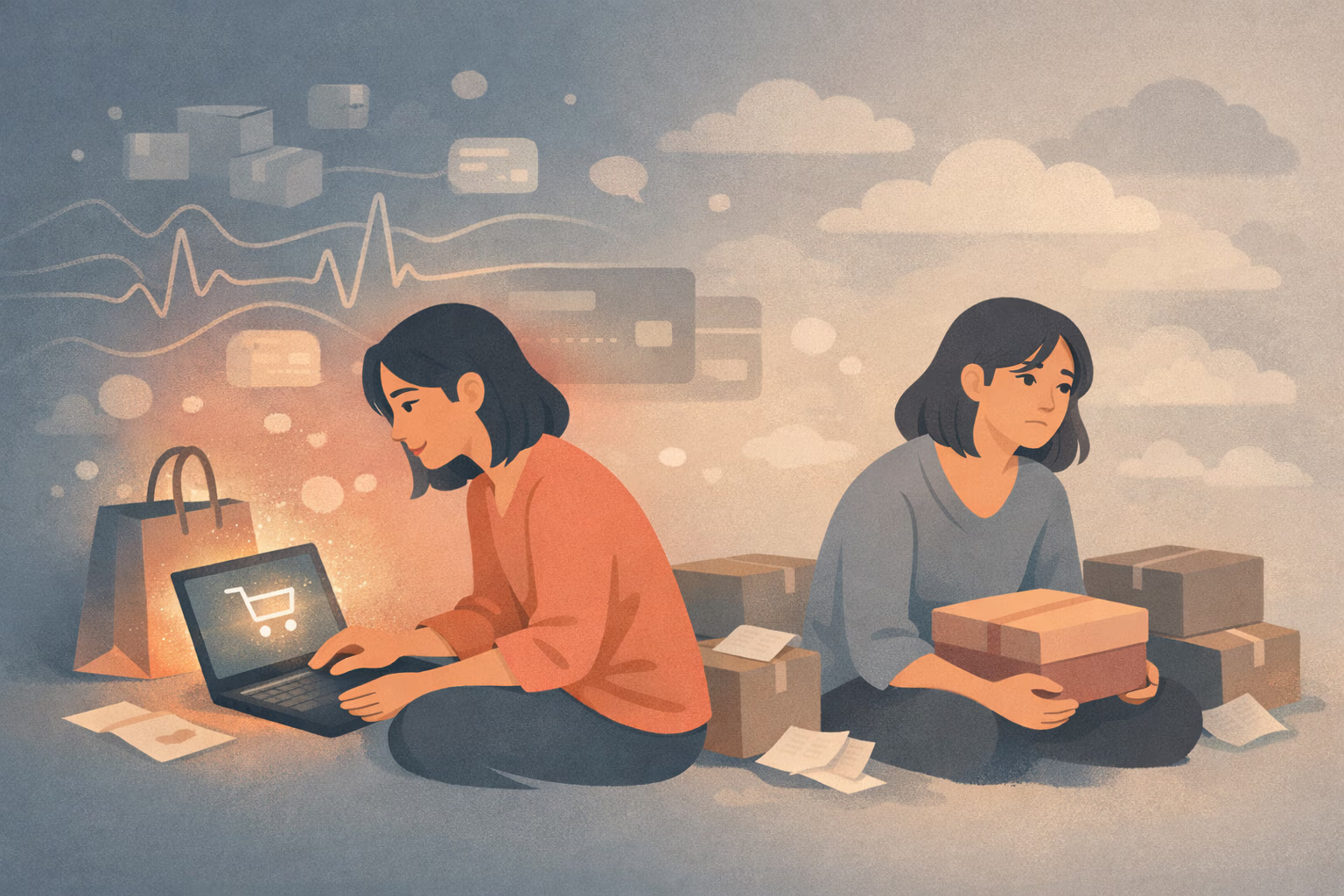
Modern life doesn’t just contain uncertainty; it streams it. Constant exposure to crisis framing—markets, layoffs, housing, geopolitical stress—can keep the nervous system in anticipation mode even during otherwise ordinary days.
Doomscrolling is a clear example of how information environments can intensify threat activation: not because information is “bad,” but because rapid, repetitive updates rarely provide completion. They produce more open loops than closed ones. Research has found doomscrolling associated with worse mental health outcomes, consistent with sustained arousal and reduced recovery. [Ref-9]
When every update implies “you should be ready,” readiness becomes the default state.
There is a difference between being told “you’re safe” and having your system register enough safety to stand down. The second is not a thought; it’s a shift in physiology and identity-level orientation—when uncertainty can be present without collapsing your sense of continuity.
This kind of internal grounding often shows up as a quieter mind, a wider time horizon, and a return of proportion. Not because risk disappears, but because the body is no longer spending all its energy trying to predict and prevent every outcome. Some writers describe this as learning to live in an unstable world without being organized by instability. [Ref-10]
What changes when uncertainty becomes information—not a command to brace?
Economic stress can isolate people. Not only practically, but psychologically: “I’m alone in this,” “I can’t burden anyone,” “I have to handle it privately.” Isolation removes one of the nervous system’s strongest safety cues: reliable connection.
Shared meaning—being part of a “we” that holds reality together—can buffer instability. This doesn’t require perfect agreement or constant togetherness. It’s the sense that your life is witnessed, your efforts make sense in context, and you are not the only one tracking the storm.
Public mental health perspectives emphasize mutual support and community factors as meaningful buffers during economic uncertainty. [Ref-11]
When threat systems are less dominant, attention widens. People often regain the ability to think in sequences, not emergencies: to consider options, to notice nuance, to interpret sensations as signals rather than alarms.
This isn’t a constant calm or a permanent sense of certainty. It’s a return of capacity: more rest between spikes, more flexibility after surprises, and more ability to take in good news without immediately scanning for the catch. In broader research, reducing chronic uncertainty exposure and strain is linked with improvements in wellbeing markers, consistent with the nervous system moving out of sustained activation. [Ref-12]
Perspective returns not as positivity, but as proportion—where today is not forced to carry every future.
When a system is overloaded, identity can shrink to one job: “prevent collapse.” Under that pressure, values may still exist, but they become harder to feel as living orientation. Life becomes management.
As regulation and closure re-enter—through completed conversations, stabilized routines, reliable connection, and fewer open loops—values can become actionable again. Not as a motivational slogan, but as a quieter “this is who I am” that the body can inhabit. People often find they can contribute, create, and commit in modest, real ways even while the larger economy remains uncertain.
Research on economic uncertainty and mental health highlights how uncertainty can weigh on wellbeing, reinforcing that the struggle is contextual; and when load is reduced, agency and future-building become more available. [Ref-13]
Economic instability is a condition—an external volatility that can press on the nervous system until life feels smaller and the future feels unsafe. When that happens, many “symptoms” are actually reasonable regulatory responses to an environment that withholds closure.
It can be clarifying to separate identity from context: you are not your vigilance, your numbness, your postponement, or your constant scanning. Those are states shaped by load, uncertainty, and incomplete loops—not character.
Meaning-based anchors tend to be the most stable in unstable times: the parts of life that remain coherent even when metrics fluctuate—belonging, dignity, care, craft, responsibility to what matters. Public mental health framing around economic uncertainty supports the idea that restoring stability is not only an individual task, but also a relational and societal one. [Ref-14]
The future can feel unsafe when the world keeps signaling volatility. That feeling isn’t irrational—it’s the nervous system doing its job in conditions that don’t offer easy completion.
And still, uncertainty is not a verdict on your life. It’s a feature of the environment. Meaning doesn’t erase instability, but it can give the body and the self something coherent to stand inside—so your days are not only about bracing, but also about being here, in a life that can still belong to you. [Ref-15]
From theory to practice — meaning forms when insight meets action.
Because the Threat & Safety System responds to probability and volatility, not just to actual loss. Even if you're housed and employed today, an environment broadcasting 'conditions may change quickly' registers as danger. The body doesn't file the future away as paperwork; it tracks resource uncertainty as an unresolved claim on safety. Long-term plans can start to feel pointless not from apathy but because the system can't find reliable footing. Even pleasant moments can carry a second layer of tension, like relief has to be monitored. That's not irrational — it's a nervous system doing its job in conditions that don't offer easy completion.
Likely yes, structurally. The information environment doesn't only contain uncertainty; it streams it. Rapid, repetitive crisis updates rarely provide completion — they produce more open loops than closed ones. That keeps the nervous system in anticipation mode even on otherwise ordinary days, and research has linked doomscrolling with worse mental health outcomes consistent with sustained arousal and reduced recovery. The article frames this as a regulatory bypass: checking changes state quickly without delivering closure, so the system stays mobilized waiting for the next update. When every signal implies 'you should be ready,' readiness becomes the default state.
Because motivation depends on a believable bridge between effort now and stability later. When that bridge feels shaky, the nervous system conserves energy — less as 'giving up,' more as load management in a context that doesn't promise payoff. Vigilance and withdrawal can both feel protective: lowering hopes, fewer commitments, mentally rehearsing worst-case scenarios so nothing surprises you. These are short-term protections against impact, not character flaws. The cost is that life narrows, fewer experiences complete, and the sense of being in danger reinforces itself. The article calls this an Avoidance Loop driven by structurally muted Done Signals.
Meaning doesn't erase volatility, but it gives the body and self something coherent to stand inside while volatility continues. There's a difference between being told 'you're safe' and the system registering enough safety to stand down — the second is a physiological shift, not a thought. As scanning slows, perspective often returns as proportion: today no longer has to carry every future. Shared meaning is one of the strongest buffers — being part of a 'we' that holds reality together. Belonging, dignity, care, craft, responsibility to what matters — these tend to remain coherent even when metrics fluctuate.
From Science to Art.
Understanding explains what is happening. Art allows you to feel it—without fixing, judging, or naming. Pause here. Let the images work quietly. Sometimes meaning settles before words do.
One Quiet Window, one insight, one reflection — every Sunday