

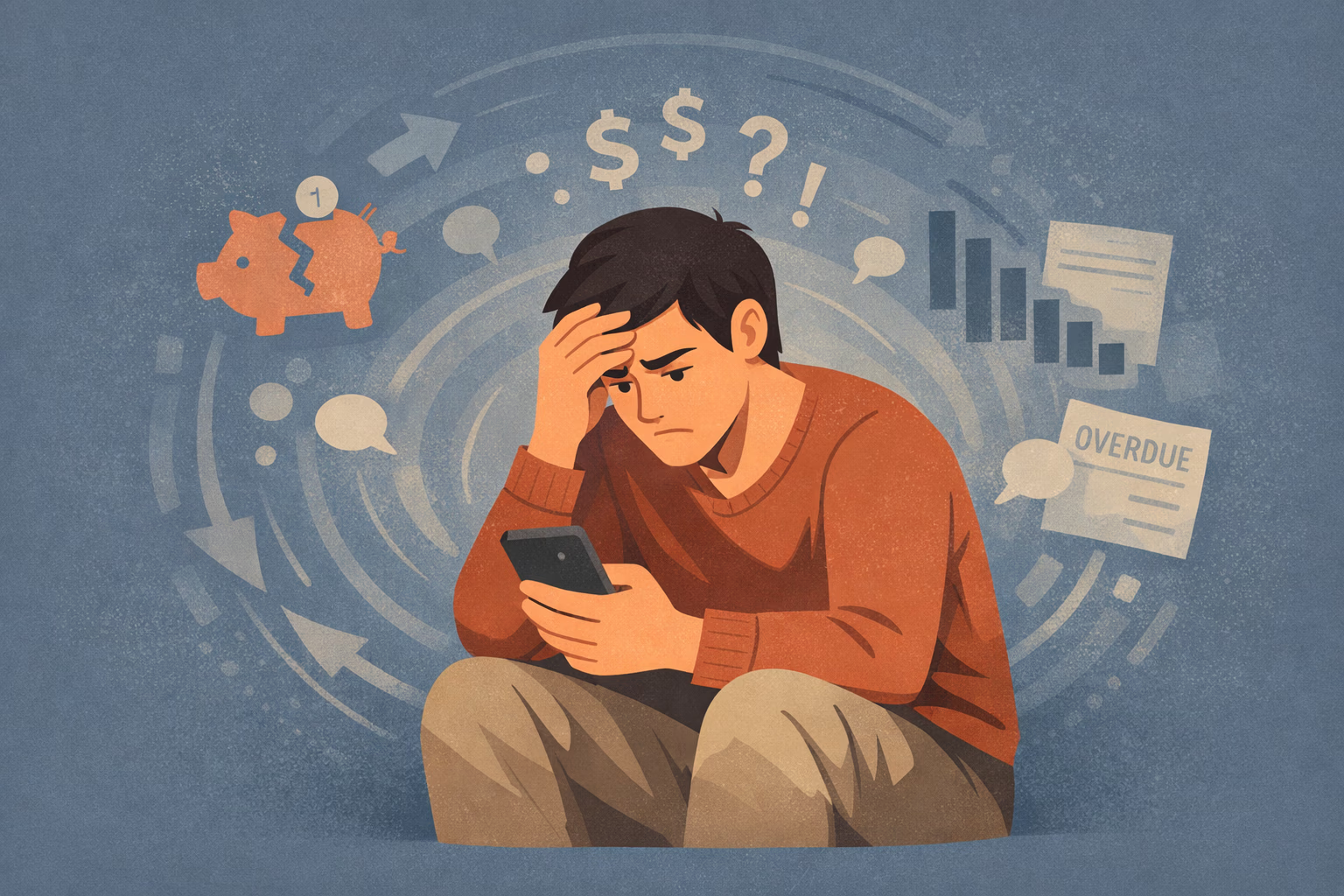
Financial Anxiety Loop: When Uncertainty Becomes a Daily Threat
Money stress activates survival circuits.
Read articleModern work and money systems often behave like survival environments: uncertainty, evaluation, comparison, and constant access. These articles explore how financial pressure, career identity, and hustle culture activate threat circuits, distort meaning, and trap people in loops.
Money is a modern proxy for safety, resources, and status. When uncertainty rises, the nervous system reads it as threat—creating avoidance, compulsive control, comparison, and “never enough” pressure.
Money stress activates survival circuits.
Read article
Old survival patterns keep people in scarcity.
Read article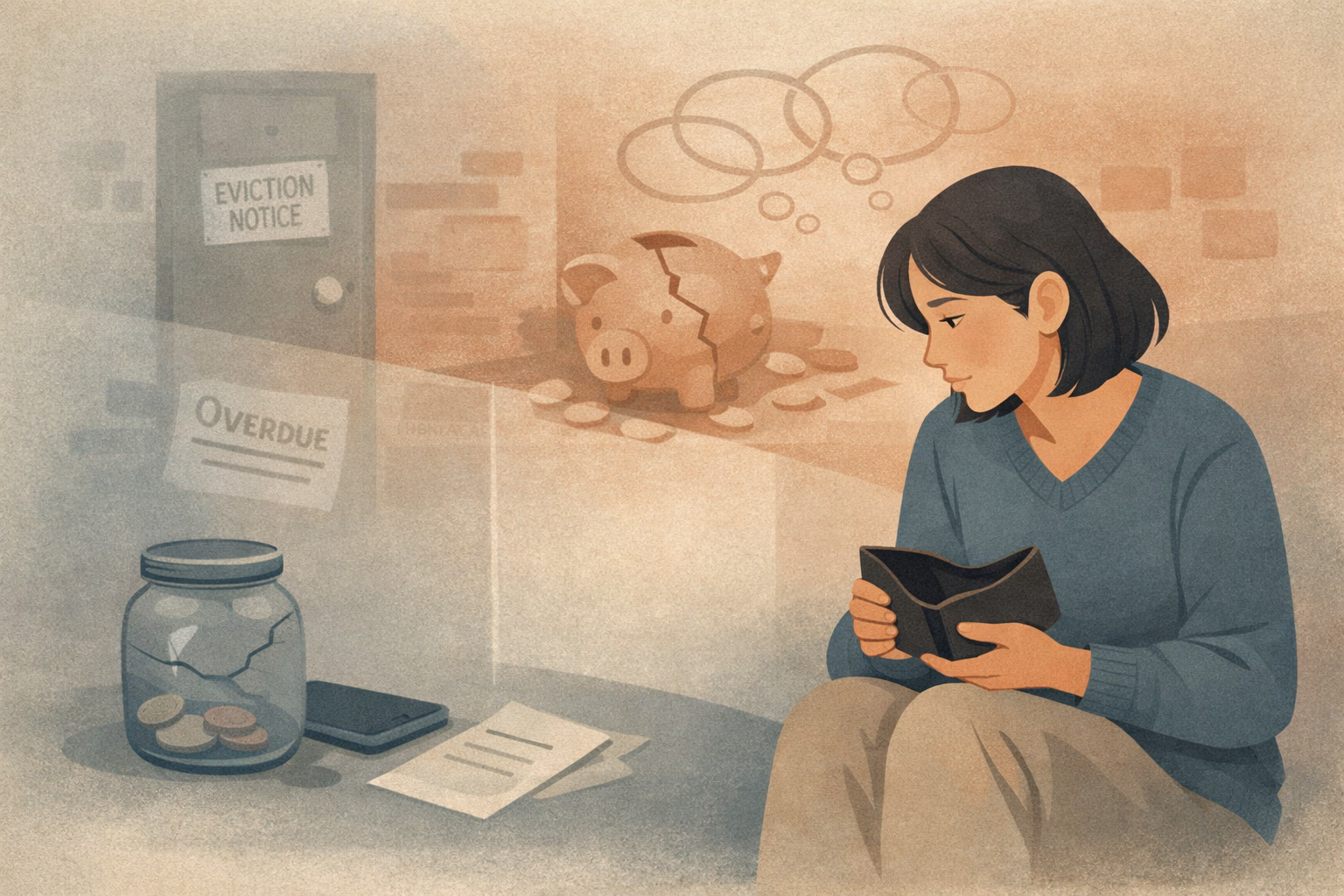
Early instability shapes adult responses.
Read article
Spending used as emotional anesthesia.
Read article
Global uncertainty activates survival networks.
Read article
Debt creates long-term threat activation.
Read article
Money avoidance = freeze response.
Read article
High-choice environments activate threat loops.
Read article
Salary becomes identity signal.
Read article
Rising expectations raise the baseline.
Read articleThis is Financial Avoidance. Your brain has categorized money cues as threats, triggering a Freeze Response. Avoidance provides a temporary relief hit, but it keeps the Avoidance Loop open in the background, draining your energy. Healing begins by re-engaging with money tasks in "Micro-Doses" to prove to your brain that you are safe even while looking at the data.
You are experiencing a Scarcity Mindset. This is often a "Protective Inheritance" from past Money Trauma where your nervous system is stuck in a survival loop, believing that hypervigilance equals safety. Settlement occurs when you train your nervous system to believe it is finally safe to enjoy stability, shifting your focus from "Protection" to Contribution.
This is Emotional Spending. You are using the Pleasure Loop as a form of emotional anesthesia. The brain seeks the quick dopamine spike of a purchase to dampen the cortisol of a stressful day. We reframe this not as a lack of discipline, but as a signal of unmet emotional needs. True calm comes from Regulation Rituals that address the stress directly, not from the receipt.
You are caught in Money Comparison. This is a Power Loop where your Social System has fused "Net Worth" with "Self-Worth," using salary as a Status Signal to determine your tribal rank. This thins your meaning because you are chasing a number to satisfy a need for belonging. We invite you to ground your identity in your Character and Direction, treating income as a tool rather than a verdict on your value.
This is Lifestyle Inflation. Your Reward System quickly resets your baseline, turning yesterday’s luxury into today’s necessity and creating a "Satisfaction Treadmill." In our model, "Enough" is not a number; it is a state of alignment. You find security when your resources are placed in service of your Meaning, rather than your status.
Work now changes faster than identity can adapt. Status evaluation, AI-era obsolescence fear, constant reskilling, and unstable paths can fuse self-worth to performance—making feedback feel like threat.

Mismatch destabilizes identity.
Read article
AI threatens perceived usefulness.
Read article
Change overwhelms cognition.
Read article
Modern careers lack long-term “tribe.”
Read article
Disengagement as self-protection.
Read article
Hierarchy mismatch → confidence collapse.
Read article
Emotional management = invisible workload.
Read article
Lost cues increase stress.
Read article
Evaluation triggers hierarchy alarms.
Read article
Skill-role mismatch drains meaning.
Read article
Dopamine adapts; reward loses effect.
Read articleNot at all. You are likely in a Career Identity Crisis. Your values have evolved, but your role remained static, creating an "Identity Mismatch." This is an Avoidance Loop where you perform the work but "absent" your true self to protect your energy. In the Dojo, we view this as a signal for reorientation. Losing interest in a role isn't losing yourself—it’s your Narrative System making room for a truer direction.
This is Workplace Imposter Syndrome. It happens when your Social System interprets professional hierarchy as a high-stakes "Status Threat." You are stuck in a Power Loop, believing that any mistake will lead to tribal rejection. At Dojowell, we reframe this as a misfiring survival signal. Confidence returns when you ground your worth in your Contribution and Values, not in the approval of the hierarchy.
This is often "Quiet Quitting," which is a Somatic Defense. When your effort no longer yields meaning or safety, your nervous system initiates a "Partial Shutdown" to conserve capacity. It’s an Avoidance Loop designed to stop you from being "consumed" by a role that doesn't nourish you. Engagement returns not through "trying harder," but by finding a way for your work to serve your identity again.
To your brain, a review is an Evaluation of Belonging. Your Threat & Safety System interprets negative feedback as a signal that you might be "cast out of the tribe," triggering a massive Power Loop of defensiveness. We help you reframe feedback as "Navigation Data"—information that is useful for your growth, but never a verdict on your soul or your right to exist.
This is Remote Work Isolation. Digital meetings lack the "Micro-Social Signals" (eye contact, shared space) that your Attachment System uses to confirm you are safe and belong. You are "Connected" but not "Regulated." Settlement requires building small, physical human anchors in your day to prove to your biological self that you are still part of a living tribe.
Hustle culture often turns performance into survival. “Always prove,” “always available,” and “optimize everything” messaging can become a socially rewarded avoidance strategy—driving burnout, boundary collapse, and chronic vigilance.

Work becomes socially rewarded avoidance.
Read article
Work as addictive avoidance pattern.
Read article
Adrenaline masquerading as energy.
Read article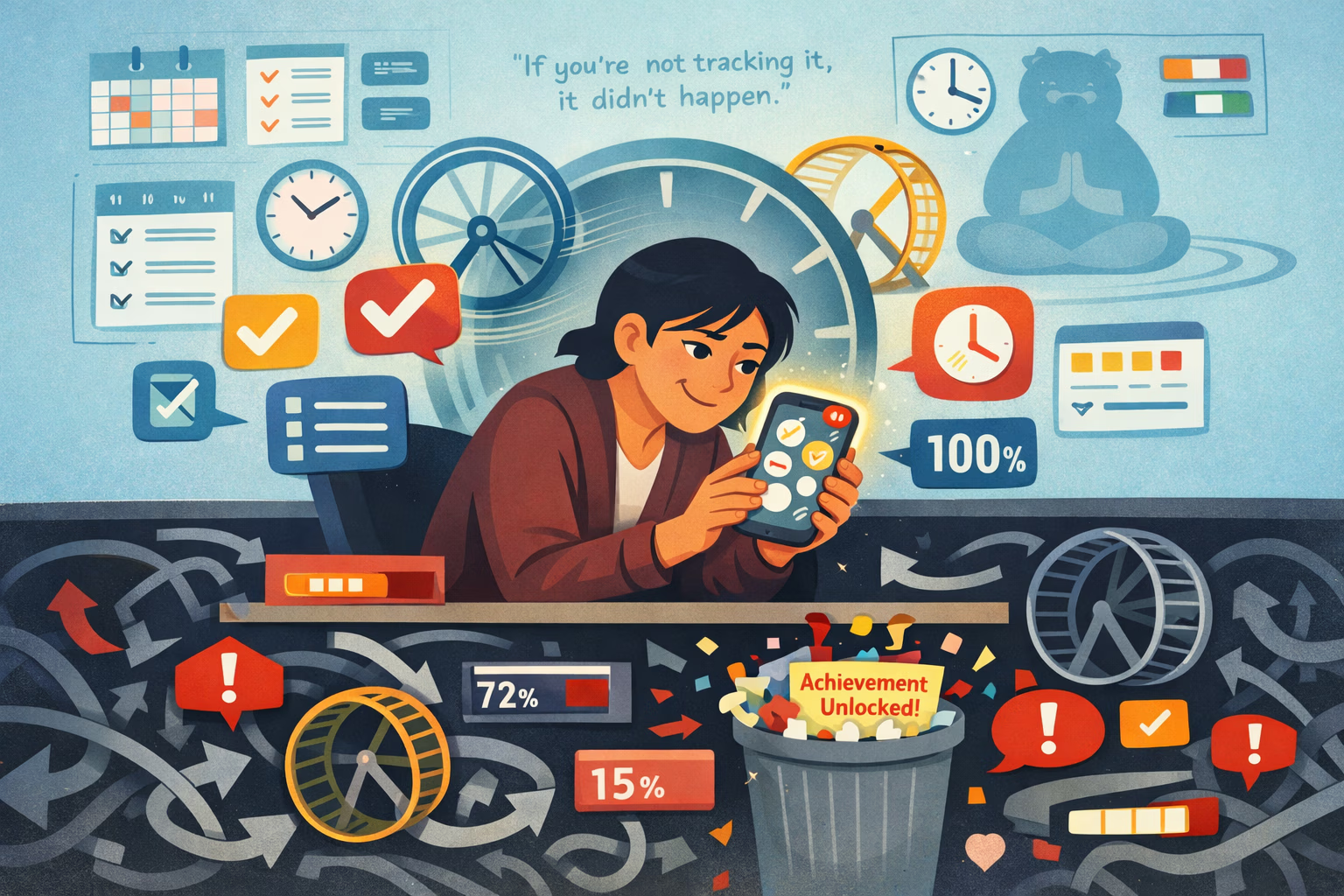
Tools reinforce overperformance identity.
Read article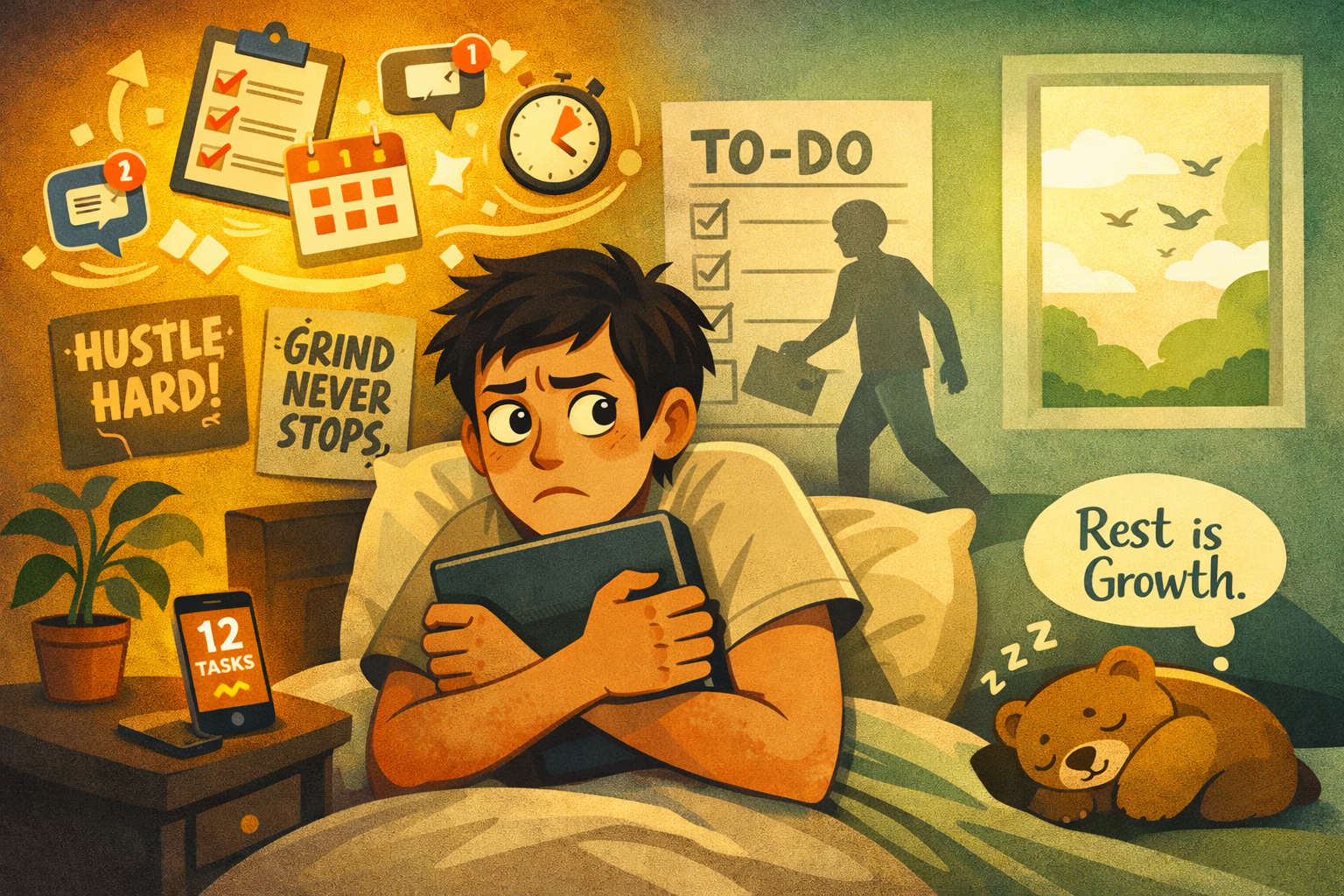
Rest guilt becomes self-worth mechanism.
Read article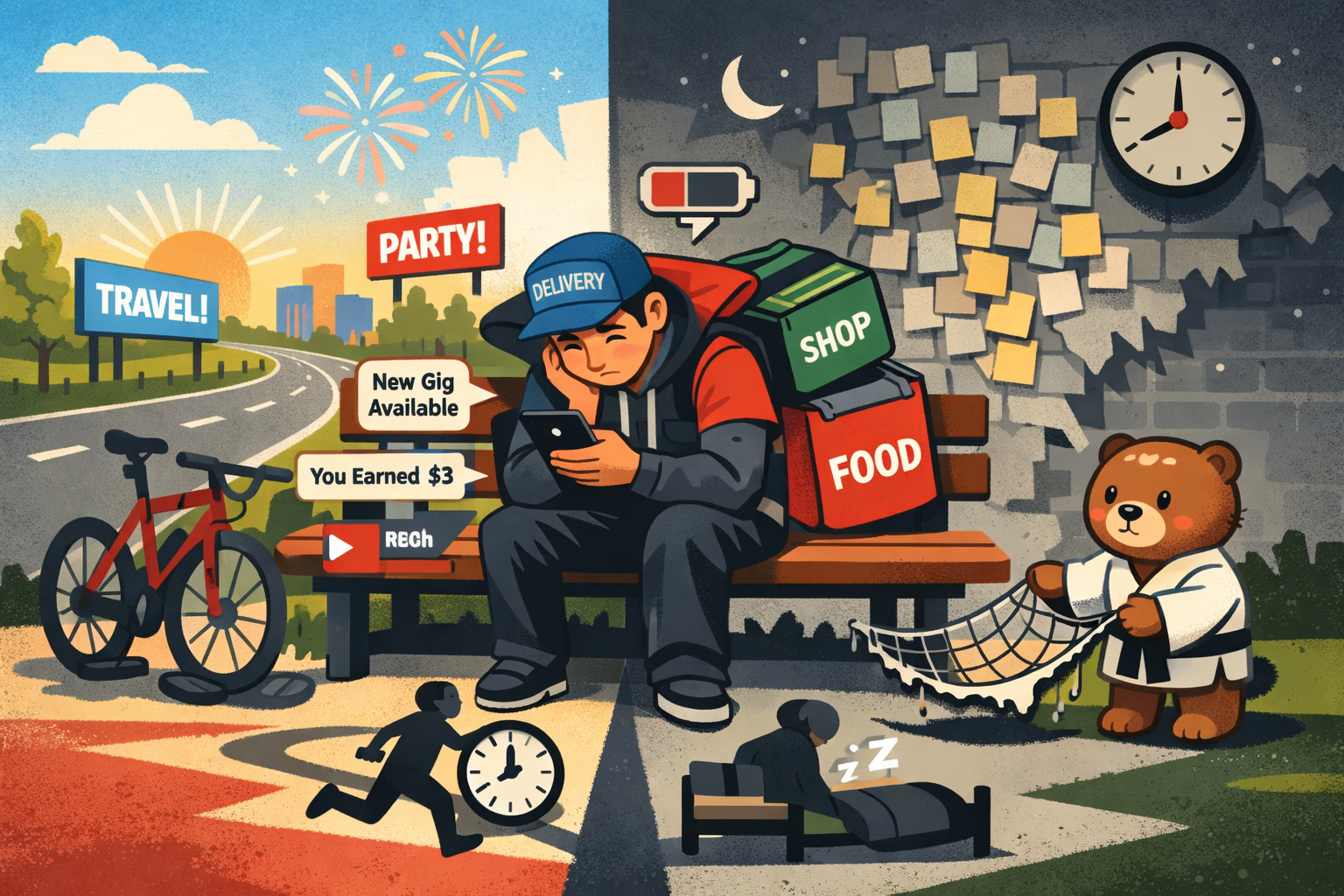
Freelance work triggers vigilance.
Read article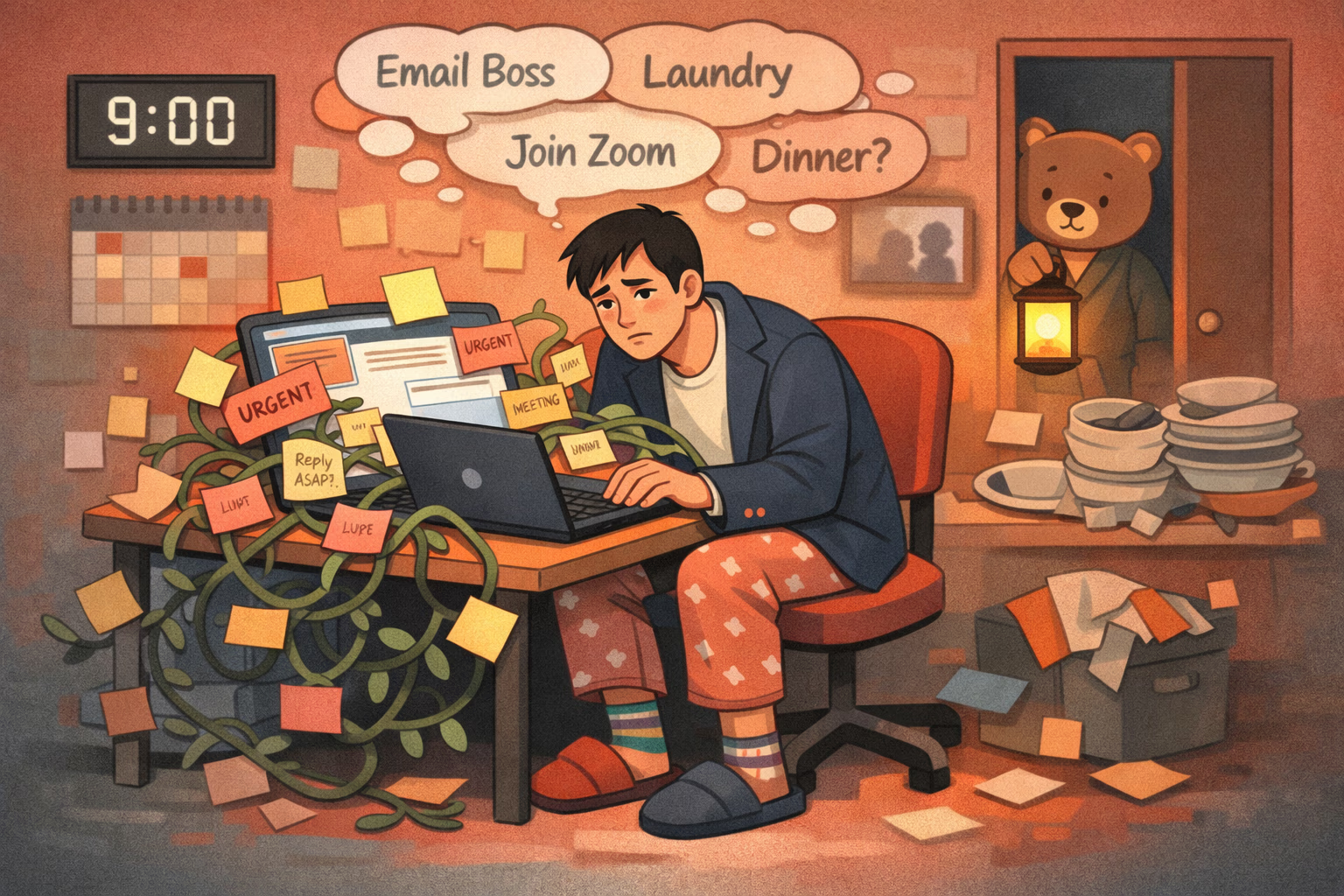
No boundaries = cognitive overload.
Read article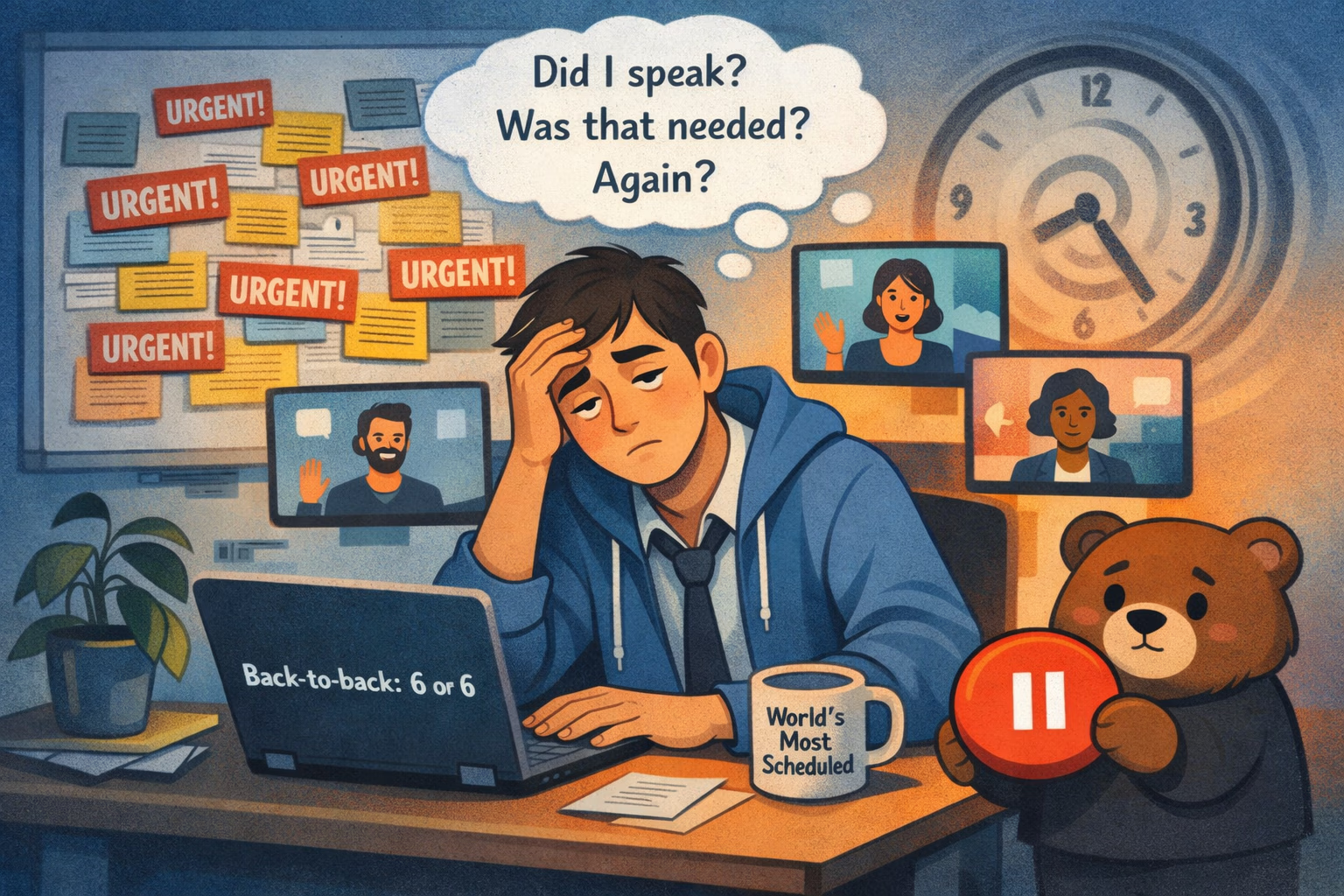
Meetings break attention cycles.
Read article
Inbox signals threat + responsibility.
Read article
Comparison activates status anxiety.
Read article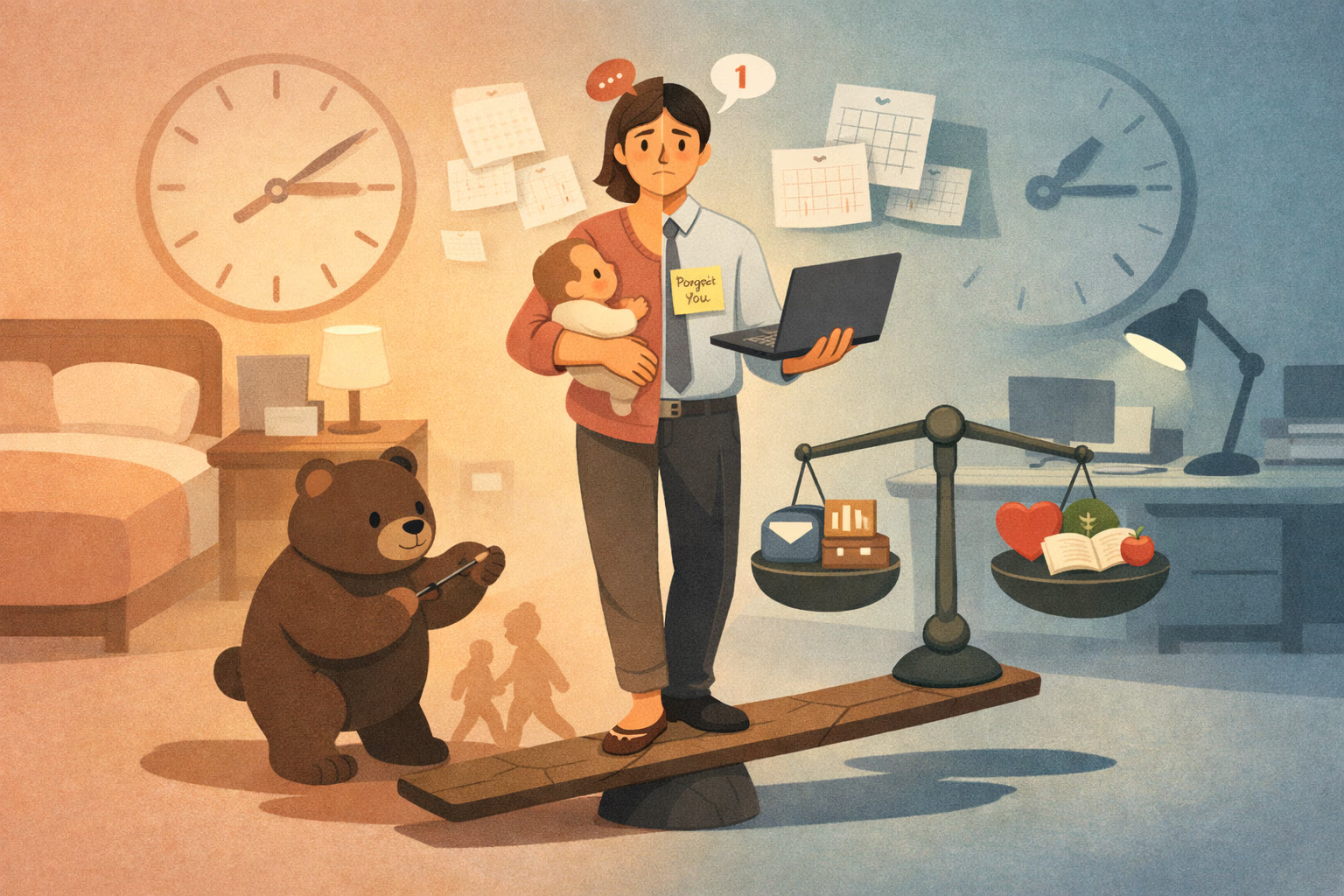
Modern structure makes balance unrealistic.
Read article
Burnout needs identity repair too.
Read article
24/7 access activates threat detection.
Read articleThis is Toxic Productivity. Your brain has fused your "Self-Worth" with your "Output." When you stop working, your Power Loop breaks, and the underlying fear—that you are "not enough" unless you are producing—surfaces. In the Dojo, we reframe rest as an Act of Alignment. You don't "earn" rest; you require it to integrate your experiences and restore the identity that hustle culture tries to erase.
You are hitting a Burnout Recovery Myth. Rest alone cannot fix a "Meaning Collapse." If you return to the same identity that caused the burnout, the Avoidance Loop simply restarts. Recovery requires Reorientation. It’s not just about sleeping more; it’s about updating your internal narrative so your work serves your life instead of consuming it.
This is Always-Available Pressure. Your Threat System is in continuous alert mode, treating a notification like a potential predator. This is a Power Loop where you stay "on" to maintain a sense of control and safety. True sovereignty comes from reclaiming your attention. Not every message is an emergency, and meaning requires Protected Attention to grow.
You were likely running on "Emergency Fuel"—Adrenaline and Cortisol. This "Hustle Energy" is a Power Loop triggered by threat and urgency. It is biologically expensive and unsustainable. The "flatness" you feel is your Biology & Health System demanding a reset. To move forward, you must shift from being "Threat-Driven" to being Purpose-Driven, using steady rhythm rather than constant pushes.
It’s not just you. Many tools feed the Hustle Trap. When a dashboard turns into a measure of your worth, it becomes a Power Loop of constant comparison. These tools should be servants, not masters. Clarity returns when you use them to track what matters to your values, rather than just how much you can do.
One Quiet Window, one insight, one reflection — every Sunday